SMSL DL300 Product Spotlight: A Compact DAC and Headphone Hub Built Around AKM’s Flagship Architecture
The SMSL DL300 is a compact DAC and headphone amplifier that builds on the DL200 with AKM AK4191 and AK4499EX chips, USB-C, Bluetooth 5.1, I2S over HDMI, balanced XLR output and two front-panel headphone connections.

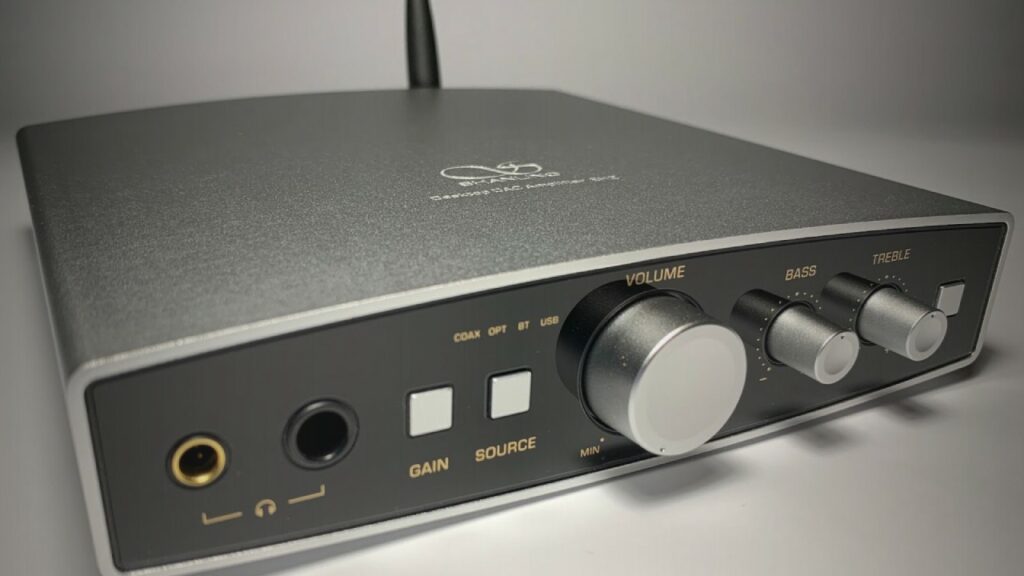
The SMSL DL300 is positioned as a compact digital audio control point for listeners who want one box to handle desktop decoding, headphone listening, wireless playback and connection to a larger hi-fi system. As the successor to the DL200, it keeps the familiar DAC/headphone-amplifier concept but updates several parts of the platform, most notably with an AKM AK4191 digital interface paired with an AK4499EX DAC chip. That combination gives the DL300 broad format support, while the surrounding feature set makes it more than a simple USB DAC. With USB-C, optical, coaxial, Bluetooth, I2S over HDMI, RCA and balanced XLR outputs, plus 6.35mm and 4.4mm headphone sockets, the DL300 is designed to sit comfortably between computers, streamers, CD transports, active speakers, integrated amplifiers and headphones.
A modern AKM-based digital platform
At the heart of the SMSL DL300 is a two-chip AKM arrangement: the AK4191 handles digital interface duties, while the AK4499EX performs digital-to-analog conversion. This is a meaningful design choice because it separates key parts of the digital audio path instead of relying on a single-chip solution. For prospective owners, the practical result is broad compatibility with current high-resolution formats and a specification set that suits both computer-audio users and more traditional hi-fi sources.
The DL300 supports PCM streams up to 32-bit/768kHz via USB, along with DSD DoP256 and native DSD512. It also supports MQA and MQA-CD material. Not every user needs file support at these upper limits, but their inclusion gives the unit flexibility across large digital libraries and different playback software. A listener using conventional CD-quality files, high-resolution downloads and DSD archives can keep the same DAC in the signal chain rather than changing hardware to accommodate different formats.
The published performance figures also point to a technically ambitious compact DAC. SMSL specifies THD+N for the DAC section at 0.00006% (-124 dB, unweighted), with a dynamic range and signal-to-noise ratio of 132 dB through the XLR outputs. These numbers should not be treated as a substitute for system matching or listening preference, but they show that the DL300 is designed around low-noise, low-distortion conversion rather than convenience features alone. The inclusion of five OPA1612 op-amps further underlines that the analog output stage is a considered part of the design.

USB-C and XMOS for computer audio
The DL300’s USB-C input is supported by a third-generation XMOS XU-316 USB interface operating in asynchronous USB mode. For many desktop listeners, this may be the most important input on the unit. A computer is now often the primary audio source, whether it is running a local library, a streaming application or specialist playback software, and the USB implementation determines how cleanly the DAC can receive and process those digital streams.
Compatibility is broad: Windows 7, 8, 8.1, 10 and 11 are supported with a driver, while Mac OS X 10.6 or later and Linux are also listed. This makes the DL300 relevant beyond a single operating system or a single generation of computer hardware. The USB path is also where the DL300 reaches its highest stated format support, including PCM 32-bit/768kHz, DSD512 and MQA. For a desktop system, the appeal is straightforward: one USB-C connection can turn a laptop or small computer into a high-resolution digital source feeding headphones, active speakers or an amplifier.

Useful input options beyond USB
While USB-C is central to the DL300’s appeal, SMSL has not limited the device to computer audio. Optical Toslink and coaxial SPDIF inputs allow connection to sources such as TVs, CD players, network transports or other digital components with conventional digital outputs. Over optical and coaxial, the DL300 supports PCM up to 24-bit/192kHz and DSD DoP64, and the specification also lists MQA-CD support. These inputs are valuable because they allow the DL300 to serve as the DAC for several devices at once rather than being tied exclusively to a computer desk.
The presence of I2S via HDMI adds another option for users with compatible digital transports. I2S is not as universal as optical or coaxial, and HDMI-style I2S connections can involve compatibility considerations between brands, but its inclusion shows that the DL300 is aimed at enthusiasts who may want to explore more specialized digital links. In a compact DAC/headphone amplifier, having USB-C, optical, coaxial, Bluetooth and I2S together gives the unit a wide functional range without forcing the owner into one source ecosystem.

Bluetooth 5.1 with high-definition codec support
The DL300 also includes a Qualcomm QCC5125 Bluetooth 5.1 receiver. This is important because wireless audio is often treated as a secondary convenience feature on desktop DACs, yet it can be one of the most frequently used modes in daily life. The DL300 supports SBC and AAC, along with aptX, aptX HD, aptX Adaptive and LDAC. The range of codecs means it can work with common phones, tablets and computers while also taking advantage of higher-bitrate Bluetooth options when the transmitting device supports them.
Bluetooth does not replace the DL300’s wired digital inputs for users who want the most controlled connection path, but it makes the unit more adaptable. A household member can send music from a phone without moving cables. A tablet can become a casual source. A desktop system can remain usable even when the main computer is switched off. For many owners, that kind of everyday flexibility is as important as headline sampling-rate support.

Balanced and single-ended outputs for system integration
One of the DL300’s notable updates is the addition of balanced stereo output on XLR, replacing the 6.35mm balanced line output arrangement used on the DL200. This makes the DL300 easier to integrate into hi-fi systems and desktop setups that accept balanced analog input. The XLR output is specified at 5Vrms, while the RCA stereo line output is specified at 2.5Vrms. Having both output types is useful because it lets the DL300 connect to a wide range of amplifiers, powered speakers and recording-style desktop monitors.
Balanced XLR can be especially attractive in systems where the receiving component is designed around balanced input or where longer cable runs are needed. RCA remains essential for conventional integrated amplifiers, powered speakers and headphone amplifiers. The DL300 therefore avoids a common limitation of compact DACs: it does not ask the owner to choose between traditional hi-fi compatibility and balanced connectivity. Both are present in the same chassis.
Headphone listening is built in, not added as an afterthought
The front panel provides two headphone outputs: a 6.35mm socket and a 4.4mm balanced output. This immediately broadens the DL300’s practical appeal. Many full-size headphones still use 6.35mm plugs, while a growing number of balanced headphone cables and portable-oriented audiophile headphones use 4.4mm Pentaconn-style termination. Offering both sockets makes the unit more convenient for users with multiple headphones or cable types.
The headphone amplifier section is specified at 2 x 2W into 16 ohms and 2 x 1W into 32 ohms, with near-zero output impedance and selectable gain: low at 0 dB and high at +7 dB. These are useful details for system matching. Gain adjustment helps accommodate both more sensitive headphones and models that require more drive. Near-zero output impedance is also relevant because it helps minimize interaction between the amplifier output and headphone impedance behavior. SMSL specifies headphone-output THD+N at 0.0001% (-120 dB, unweighted), with 127 dB dynamic range and 127 dB signal-to-noise ratio.
Filters and tone controls for tailoring a system
The DL300 includes PCM filters that affect the audio signal, along with four tone-control options. These features matter because digital systems are not used in isolation. A DAC may feed bright headphones, warm powered speakers, a reflective room, a nearfield desk setup or a more traditional rack-based system. Limited adjustment can help an owner adapt the presentation to the source material, the connected equipment and personal preference without adding an external equalizer or processor.
The key point is not that filters and tone controls make the DL300 universal, but that they give the user some room to refine how it behaves in a particular system. Some listeners prefer a purist fixed-output approach; others appreciate carefully implemented adjustment. By including both filter selection and tone options, SMSL gives the DL300 a degree of day-to-day usability that is often overlooked in specification-focused digital products.
Conclusion
The SMSL DL300 is best suited to listeners who want a compact DAC/headphone amplifier with broad connectivity rather than a single-purpose converter. Its strongest documented qualities are the AKM AK4191 and AK4499EX digital platform, high-resolution USB-C support through XMOS XU-316, Bluetooth 5.1 with LDAC and aptX-family codecs, dual headphone outputs, selectable headphone gain, RCA and balanced XLR line outputs, and the addition of I2S over HDMI. It will be most attractive to desktop users, headphone listeners and system builders who need one small component to bridge computers, wireless sources, digital transports and analog amplification. Those who only need a basic DAC for one source may not use its full feature set, but for owners who value format support, connection flexibility and compact integration, the DL300 presents a well-equipped and thoughtfully specified option.