
A digital-to-analog converter can be a pocketable partner for wired headphones, the control center of a desktop system, or a full-size source component for a dedicated hi-fi setup.
This selection reflects that breadth, covering battery-powered Bluetooth DAC/headphone amplifiers, compact USB models, streaming-equipped designs and ambitious discrete R-2R converters.
The right choice depends less on headline format support than on how the DAC will fit into your system. Portable listeners may prioritize battery power, headphone outputs and wireless reception, while a home system can benefit from multiple digital inputs, balanced analog connections, preamplifier facilities or streaming. Features such as selectable filters, OS and NOS modes, configurable I2S and modular hardware matter most when they solve a specific compatibility or system-building need. These recommendations are grounded in the features and design information available in the supplied source articles. They cover markedly different use cases and should not be read as direct listening-test rankings against one another.
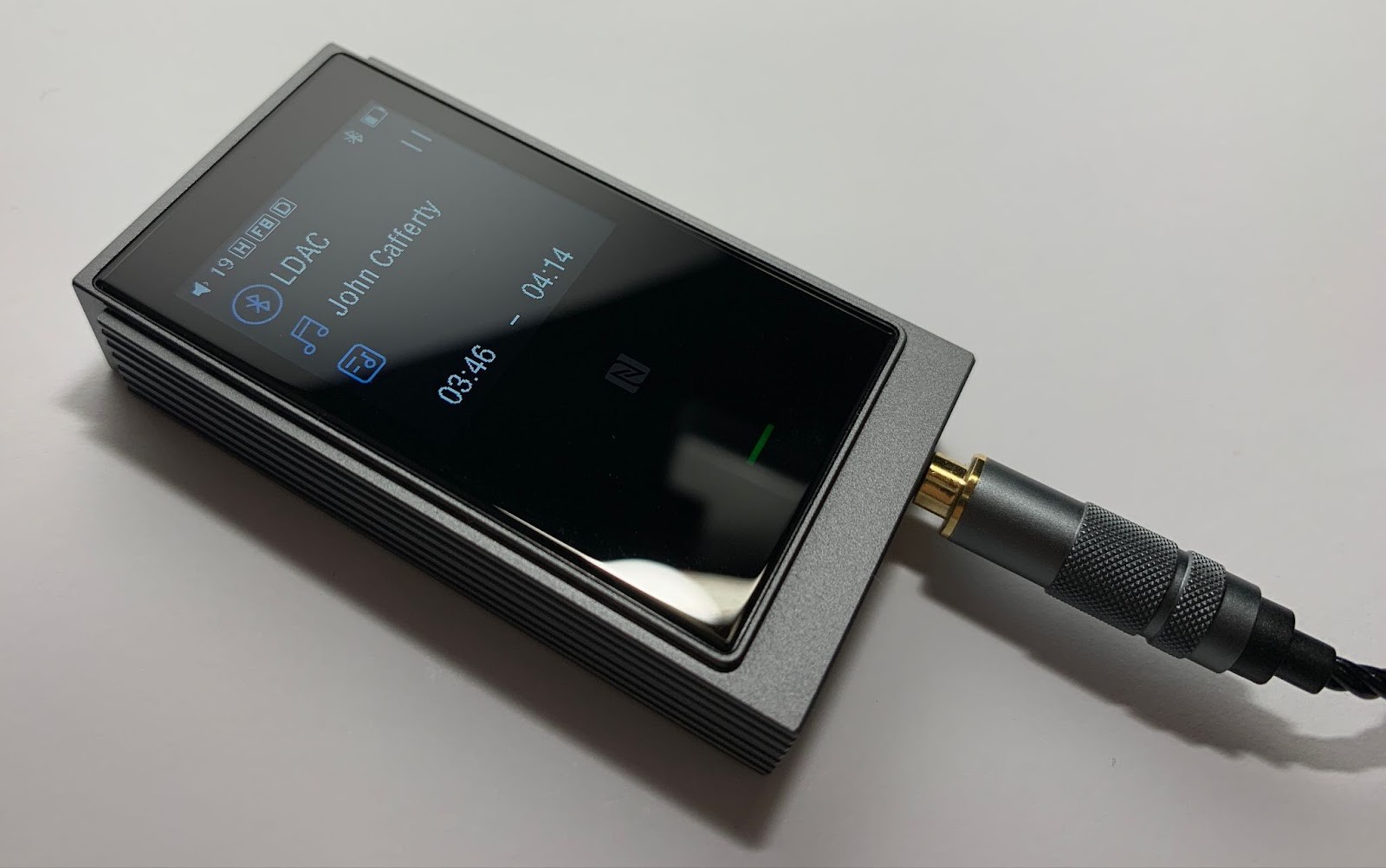
1. Shanling UP6
The compact Shanling UP6 combines a display, internal battery and wired or wireless DAC and headphone-amplifier operation.
The Shanling UP6 is an ultra-portable DAC and headphone amplifier that can operate through wired or wireless connections.
Its internal battery removes the need to keep a dongle physically tethered to a phone, while the display makes it easier to check settings and operating information on the move.
It is intended for loads ranging from IEMs to mid-tier full-size headphones and comes with USB-A-to-USB-C and short USB-C-to-USB-C cables, plus a USB-C-to-USB-A adapter. The supplied package is generous, although anyone carrying it daily may want to account for the absence of a protective case.
Best for: Portable wired-headphone listening without a phone-tethered dongle
- Wired and wireless operation
- Built-in battery and display
- Suitable for IEMs and mid-tier full-size headphones
- Useful selection of USB cables and adapter
Verdict: The UP6 combines the mobility of a Bluetooth DAC/amp with the option of a direct wired connection and a more informative interface than a basic dongle.

2. Mytek Brooklyn DAC+
The Mytek Brooklyn DAC+ uses dual OLED screens and an adjustable illuminated logo within its compact front panel.
The Mytek Brooklyn DAC+ is a compact standalone converter built around the ESS ES9028Pro, replacing the ES9018K2M used in the preceding Brooklyn DAC.
Its front panel brings visual distinction to an otherwise space-conscious design: a perforated, illuminated Mytek logo can be adjusted for color and brightness, while a dual OLED display presents operating information.
Four buttons positioned around the displays handle mode selection. Changes to the power supply are also identified as part of the revision, making the plus designation more than a cosmetic update.
Best for: Listeners seeking a compact standalone DAC with a distinctive interface
- Compact component format
- ESS ES9028Pro conversion
- Dual OLED information display
- Adjustable illuminated logo
Verdict: The Brooklyn DAC+ packages a revised conversion platform and clear front-panel operation into a comparatively compact enclosure.

3. BLON V1
The BLON V1 pairs an aluminum-alloy and tempered-glass enclosure with 3.5 mm and 4.4 mm headphone outputs.
BLON’s V1 is a portable DAC/amplifier housed in aerospace-grade aluminum alloy and tempered glass, with the transparent section exposing its internal construction.
Dual CS43131 DAC chips decode the left and right channels independently and support a four-channel balanced arrangement.
Both 3.5 mm and 4.4 mm balanced headphone outputs are fitted. A replaceable Type-C connection lets users select an appropriate OTG cable for Android, iOS or PC use, while supported decoding extends to 32-bit/384 kHz PCM and DSD256.
Best for: Portable users who want both conventional and balanced headphone connections
- Dual CS43131 DAC chips
- 3.5 mm and 4.4 mm headphone outputs
- Replaceable Type-C connection
- Supports up to 32-bit/384 kHz PCM and DSD256
Verdict: The V1 is a flexible portable option distinguished by dual DAC chips, two headphone-output formats and a replaceable Type-C interface.

4. Audio-GD HE-8
The full-size Audio-GD HE-8 houses four PCM1704U-K chips, discrete audio circuitry and a regenerative power architecture.
The Audio-GD HE-8 takes a large-scale approach to digital conversion, using four PCM1704U-K chips in an R2R topology with symmetrical architecture and discrete audio circuits.
Clocking combines an Accusilicon femtosecond clock with FPGA control.
Its regenerative power system converts incoming AC to DC before generating a low-distortion 50 Hz waveform, with separate Class A supplies feeding the left- and right-channel preamplifier sections. This elaborate power architecture is intended to isolate the audio circuitry from mains interference and maintain clean power through the conversion and analog stages.
Best for: Full-size systems built around elaborate R2R and power-supply engineering
- Four PCM1704U-K DAC chips
- Symmetrical architecture with discrete audio circuits
- FPGA-controlled Accusilicon clock
- Regenerative system with Class A power supplies
Verdict: The HE-8 is a substantial R2R DAC whose defining feature is the depth of its symmetrical conversion, clocking and regenerative power design.

5. Audiolab D7 and D9
Audiolab’s compact D7 is designed for desktop systems, while the larger D9 is proportioned for integration with other hi-fi components.
Audiolab’s D7 and D9 address different installation needs: the D7 is the compact desktop model, while the larger D9 is intended to sit alongside other full-width hi-fi components.
More detail is supplied for the D7, which uses an ESS ES9038Q2M DAC with a precision master clock and proprietary Class A post-DAC filtering.
It offers multiple USB and S/PDIF inputs, Bluetooth 5.1 with aptX HD, selectable digital filters and upsampling. USB playback supports PCM up to 32-bit/768 kHz and DSD512, with MQA support also included.
Best for: Buyers choosing between a desktop DAC and a larger system-matching component
- Choice of compact D7 or larger D9 format
- Multiple USB and S/PDIF inputs on the D7
- Bluetooth 5.1 with aptX HD on the D7
- Selectable filters and upsampling on the D7
Verdict: Audiolab’s two-model range offers a clear choice of form factor, with the D7 providing especially broad digital and wireless flexibility for desktop use.

6. Gold Note DS-10
The Gold Note DS-10 integrates streaming, digital conversion, analog preamplification, headphone amplification and user-configurable profiles.
The Gold Note DS-10 combines a DAC and network streamer with an all-analog line preamplifier, headphone amplifier and Bluetooth 5.0 reception.
Its unusual feature is a set of three user-configurable profiles that can store different conversion settings.
Parameters include low-pass filtering and high-pass attenuation, with adjustments available through the front-panel display and rotary control or the remote. That combination makes the DS-10 relevant to listeners who want one component to manage network, digital, analog and headphone duties while retaining access to deeper DAC tuning.
Best for: Systems needing streaming, preamplification and headphone listening in one component
- Integrated network streamer
- All-analog line preamplifier and headphone amplifier
- Bluetooth 5.0 support
- Three configurable DAC profiles
Verdict: The DS-10 stands out for combining broad system duties with three savable profiles for user-adjustable conversion settings.

7. iBasso D16 Taipan
The iBasso D16 Taipan uses FPGA control, 128 PWM DAC elements and a Super Class A transistor amplifier in a portable chassis.
The portable iBasso D16 Taipan uses the company’s FPGA-Master 2.0 platform to control 128 cascaded PWM DAC elements in a discrete 1-bit conversion system.
The FPGA reorganizes and transcodes the incoming signal before generating the PWM data used by the conversion stage.
Each channel employs 32 PWM DACs in a parallel-delay arrangement that functions as a hardware analog FIR filter, averaging differences among the elements. Amplification is handled by a transistor-based Super Class A section related to the architecture used in the DX320MAX.
Best for: Portable enthusiasts interested in discrete conversion and FPGA-controlled processing
- Discrete 1-bit conversion architecture
- FPGA-Master 2.0 signal processing
- 128 PWM DAC elements
- Super Class A transistor amplifier section
Verdict: The D16 Taipan brings an unusually elaborate discrete PWM conversion and analog-filter architecture to a portable DAC and amplifier.
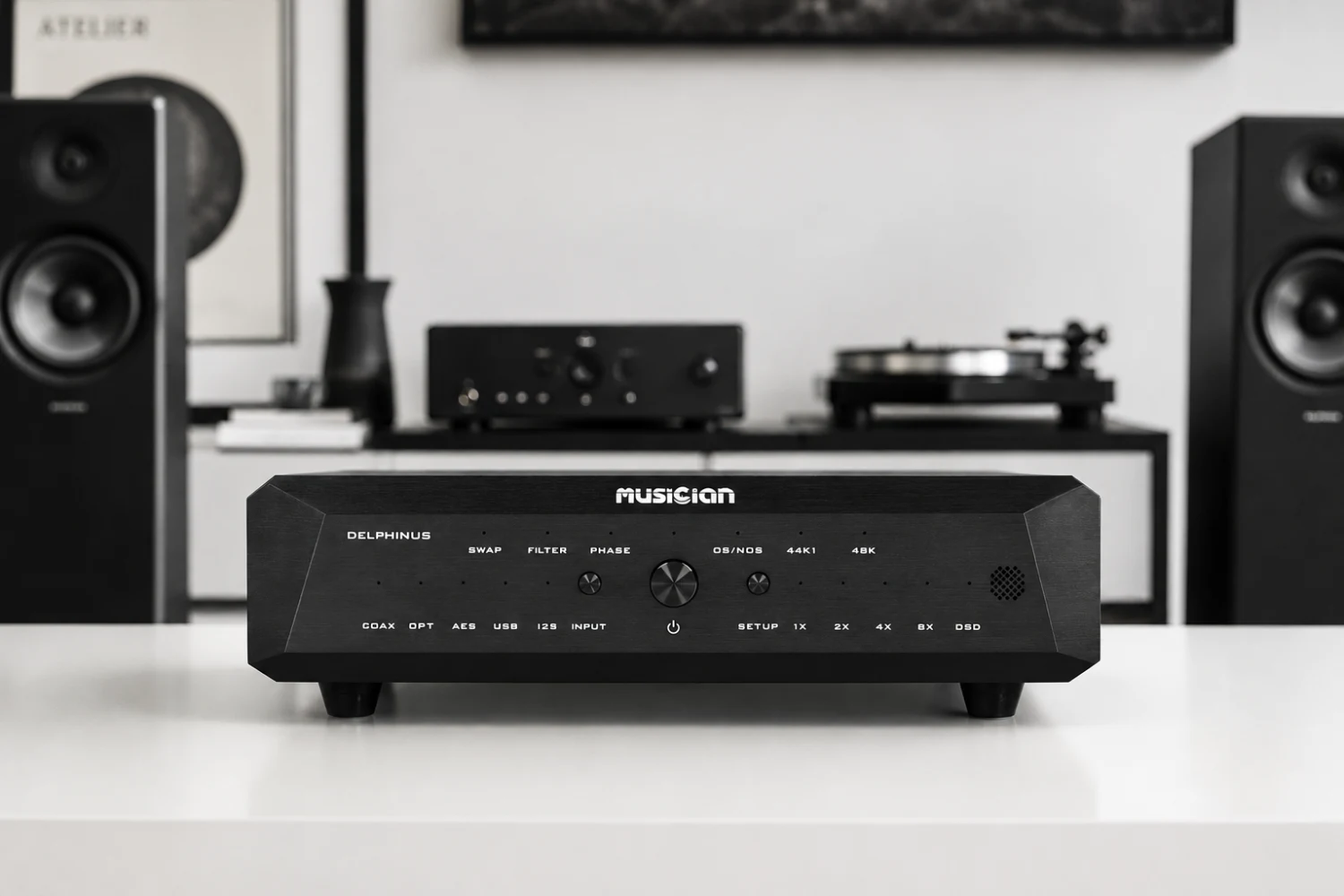
8. Musician Delphinus
The Musician Delphinus displays its input and processing status while offering discrete R-2R conversion, dedicated DSD handling and configurable I2S.
The Musician Delphinus is a desktop DAC built around a discrete R-2R ladder assembled from resistors specified to 0.005% precision, accompanied by a separate conversion section for DSD.
Users can switch between oversampling and non-oversampling operation, select Fast or Slow filtering and invert phase.
Five digital inputs cover USB, I2S, coaxial, optical and AES/EBU, while eight configurable I2S modes help accommodate variations among compatible transports. USB and I2S accept PCM up to 32-bit/1536 kHz and DSD1024; the front panel reports the active input, sampling frequency, oversampling ratio, DSD format and phase setting.
Best for: Desktop systems needing R-2R conversion and unusually flexible I2S compatibility
- Discrete R-2R ladder with separate DSD section
- Selectable OS and NOS operation
- Five digital input types
- Eight configurable I2S modes
Verdict: The Delphinus combines discrete ladder conversion with useful operating choices and extensive input configuration rather than relying on format support alone.

9. McIntosh MDA200
The McIntosh MDA200 combines the brand’s black-glass styling with an upgradeable DA2 module and seven digital inputs.
The McIntosh MDA200 is based on the company’s upgradeable DA2 digital audio module and uses a quad-balanced eight-channel 32-bit converter.
Its seven digital inputs include two coaxial, two optical, USB, a dedicated MCT connection for compatible McIntosh SACD/CD transports and HDMI ARC for television audio.
Balanced and unbalanced analog outputs support different system configurations, and the unit is Roon Tested. USB accepts native DSD up to DSD512 and DXD up to 384 kHz, while the familiar black-glass front panel, illuminated logo, rotary controls and aluminum end caps maintain the brand’s established visual identity.
Best for: McIntosh-centered systems and hi-fi installations that also need TV audio
- Upgradeable DA2 digital audio module
- Seven digital inputs including HDMI ARC
- Balanced and unbalanced analog outputs
- Native DSD512 and DXD support through USB
Verdict: The MDA200 offers broad digital connectivity, modular conversion hardware and HDMI ARC in a design suited to a full McIntosh system.

10. AmazingWave X20 Pro
The aluminum-alloy AmazingWave X20 Pro features an OLED display, volume control, R2R conversion and dual toroidal transformers.
The AmazingWave X20 Pro combines digital conversion with volume control, allowing it to serve as a preamplifier when connected to a suitable power amplifier or active system.
Its aluminum-alloy enclosure carries an OLED status display and minimalist front-panel controls.
Internally, FPGA and CPLD processing feed a 24-bit R2R resistor array, while the power section uses two oxygen-free-copper toroidal transformers with multilayer magnetic insulation and a Sigma22 regulation system. Connectivity includes coaxial, optical, USB, HDMI IIS and balanced XLR, and supported digital formats extend to DSD512.
Best for: Listeners seeking an R2R DAC that can also control system volume
- Integrated volume control for preamplifier use
- 24-bit R2R resistor array
- Dual toroidal transformers with Sigma22 regulation
- Coaxial, optical, USB, HDMI IIS and balanced XLR connectivity
Verdict: The X20 Pro combines R2R conversion and substantial power-supply engineering with the practical option of direct preamplifier operation.
Frequently asked questions
Should I choose a portable DAC/amp or a desktop DAC?
Choose a portable model when battery operation, wireless reception and direct headphone outputs are central to how you listen.
A desktop DAC is generally the more appropriate category when you need several fixed digital sources, balanced analog connections, integration with a full-size system or specialized inputs such as AES/EBU, I2S or HDMI ARC.
Do I need a 4.4 mm balanced headphone output?
Only if your headphones or IEM cable has a compatible 4.4 mm plug and you intend to use that connection.
A product such as the BLON V1 provides both 3.5 mm and 4.4 mm outputs, which is useful when you own headphones terminated in both formats; the balanced socket alone does not establish that a DAC is the right choice for your headphones.
What is the difference between OS and NOS operation?
OS means the DAC applies oversampling, while NOS bypasses that process.
The Musician Delphinus provides both modes as well as Fast and Slow filter choices, making direct user selection possible.
Treat these settings as tuning and implementation options rather than assuming one mode is universally preferable.
Which connections should I check before buying a DAC?
Start with the outputs on each digital source and the inputs on your amplifier, active speakers or headphones.
USB is common for computers and mobile devices, coaxial and optical suit many conventional digital sources, HDMI ARC can simplify television integration, and I2S requires particular care because connector compatibility and pin configurations can vary.
Also confirm whether you need fixed analog output, volume-controlled preamplifier operation, balanced XLR connections or a built-in headphone amplifier.
How to Choose the Right DAC for Your System
Begin with the signal path rather than the longest specification list.
Identify every source you intend to connect, including a computer, phone, streamer, disc transport, television or games system, and make sure the DAC has the required inputs.
USB, coaxial and optical cover many installations, but AES/EBU, MCT, HDMI ARC and I2S serve more specialized roles. In the case of I2S, configurable compatibility modes such as those offered by the Musician Delphinus can be especially relevant. Next, decide what the DAC must do after conversion. A fixed-output model is suitable when an integrated amplifier or preamplifier already controls volume. A DAC with volume control, such as the AmazingWave X20 Pro, can take on preamplifier duties in an appropriately matched system. The Gold Note DS-10 goes further by combining streaming, analog preamplification and headphone amplification, while portable products such as the Shanling UP6, BLON V1 and iBasso D16 Taipan are designed around direct headphone use. Do not pay for features that have no clear place in your system. Extremely high PCM and DSD limits are useful only when your library, software and chosen input can supply those formats. Balanced outputs matter when the receiving component accepts them, Bluetooth is valuable when convenience is a priority, and selectable filters or OS and NOS modes are most worthwhile for listeners who want hands-on control. Physical size, display legibility, included cables and protection for portable use may affect daily ownership more than a rarely used decoding mode. Finally, consider how the rest of the system may develop. The McIntosh MDA200’s modular conversion hardware addresses future upgrading within its ecosystem, while models with several input standards leave more room for adding sources. The strongest purchase is therefore not necessarily the DAC with the most ambitious architecture, but the one whose connections, output functions, format support and physical design match the system you actually use.


Sound Off
0Join the discussion if you have something to add.