
Amplifier shopping begins with system architecture.
An integrated amplifier combines control and power amplification in one chassis, while a power amplifier requires a separate preamplifier or another suitable source with volume control.
The products gathered here span integrated, stereo power, mono, streaming and custom-installation designs, so they are not interchangeable solutions. Match the format to your sources and speakers before comparing headline power figures. The Exposure 5510 is primarily an analog integrated amplifier with optional modules, while the Matrix Audio MD-1 and MD-1P and Onkyo Muse models place streaming at the center of the system. The Riviera Audio AFM70, Luxman M-700u and Soulnote A-3 Core are power amplifiers intended for systems with separate control components. Channel count and installation requirements matter as well. Bowers & Wilkins provides four channels for built-in speakers and multi-zone projects, whereas Riviera uses one AFM70 per channel. One entry in the supplied material, the Softear Tremolo, is an in-ear headphone rather than an amplifier; it is identified accordingly rather than presented as an amplifier recommendation.

1. Riviera Audio AFM70: Impressive mono power amplifier from Italy
The Riviera Audio AFM70 mono power amplifier combines a triode voltage-gain stage with a semiconductor output section.
The AFM70 is a mono power amplifier built around Riviera Audio Labs’ hybrid, zero-feedback architecture.
A triode tube provides voltage gain, while twelve semiconductor devices form the output stage.
It operates in pure Class A and is rated at 70 watts into eight ohms, rising to 140 watts into four ohms. As a monoblock, it requires one amplifier for each channel in a stereo system and should be considered alongside the necessary preamplifier and additional cabling.
Best for: Separate systems seeking Class A monoblocks
- Pure Class A operation
- Hybrid tube and solid-state circuit
- 70 watts into eight ohms
- Zero-feedback design
Verdict: The AFM70 is a specialized hybrid monoblock for buyers prepared to build a full separates-based system around pure Class A amplification.

2. Pearl Acoustics unveils Updated 170 SE Tube Amplifier and New 7040 Class D Power Amplifier
Pearl Acoustics pairs the revised 170 SE integrated tube amplifier with the separately announced 7040 Class D power amplifier.
This announcement covers two contrasting Pearl Acoustics products rather than a single amplifier.
The revised 170 SE is an integrated tube amplifier with a simplified architecture, improved internal layout and upgraded components, although the source states that it was still in the final development phase.
The 7040 is a new Class D power amplifier. Buyers should therefore distinguish between the 170 SE’s integrated tube format and the 7040’s dedicated power-amplifier role before treating them as alternatives.
Best for: Buyers comparing tube integration with Class D separates
- Choice of tube integrated or Class D power amplification
- Revised 170 SE internal layout
- Upgraded 170 SE components
- Custom chassis colors mentioned
Verdict: Pearl Acoustics presents two substantially different routes, but the developmental status of the 170 SE makes confirmation of final details essential.

3. Exposure 5510: Flagship Integrated Amplifier with 120W Power and Upgrade Options
The Exposure 5510 is an analog integrated amplifier with six line inputs and a single bay for an optional DAC or phono module.
Exposure’s 5510 is an analog integrated amplifier rated at 120 watts per channel into eight ohms.
Six RCA line inputs are standard, and connections are provided for two pairs of speakers.
Its modular bay can accept either a DAC or one of three phono options covering moving-magnet, moving-coil and DS Audio optical cartridges, but there is room for only one module. That limitation makes the initial choice important for anyone who needs both onboard digital conversion and phono support.
Best for: Analog systems needing a configurable integrated amplifier
- 120 watts per channel into eight ohms
- Six RCA line inputs
- Optional DAC or phono module
- Connections for two speaker pairs
Verdict: The 5510 offers substantial analog connectivity and useful modular choices, provided one optional expansion slot is sufficient.
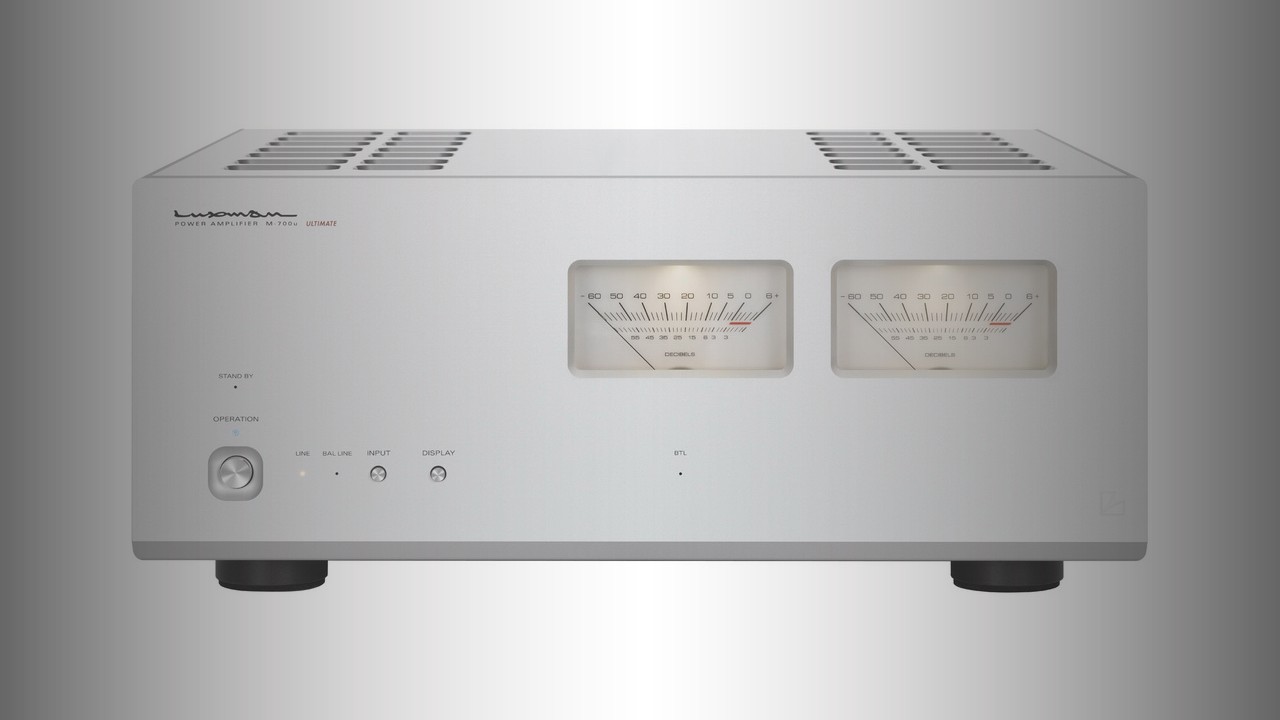
4. Luxman M-700u: Fully equipped amplifier
The Luxman M-700u stereo power amplifier features front-panel level meters and can also operate in a bridged mono configuration.
The Luxman M-700u is a stereo power amplifier designed as a partner for the C-700u preamplifier.
It is rated at 120 watts per channel into eight ohms and 210 watts per channel into four ohms, with a mono operating mode rated at 420 watts into eight ohms.
Bridged BTL operation adds flexibility for systems that need a monoblock configuration. Its front panel follows Luxman’s restrained styling and includes signal-level meters.
Best for: Flexible stereo or bridged separates systems
- Stereo and mono operating modes
- 120 watts per channel into eight ohms
- 210 watts per channel into four ohms
- Bridged BTL connection available
Verdict: The M-700u suits buyers who want a dedicated power amplifier that can be deployed in either stereo or higher-output mono configurations.

5. Softear Tremolo: Anatomically shaped in-ear headphones
The Softear Tremolo in-ear headphones use anatomically shaped resin housings and a detachable cable with a 4.4 mm connection.
The Softear Tremolo is not an amplifier and should not be evaluated as one.
It is an anatomically shaped in-ear headphone using a 10 mm dynamic driver with a beryllium-coated diaphragm.
Its specified sensitivity is 122 dB and nominal impedance is 16 ohms, which the source describes as a light amplifier load. A detachable cable terminates in a 4.4 mm plug, with a 3.5 mm adapter included. It is relevant here only as an example of a listening device whose connector and electrical requirements must be checked against an amplifier.
Best for: Checking in-ear headphone and amplifier compatibility
- 122 dB specified sensitivity
- 16-ohm nominal impedance
- Detachable 0.78 mm cable
- 4.4 mm plug with 3.5 mm adapter
Verdict: Tremolo is an in-ear headphone rather than an amplifier, so it belongs on a compatibility checklist rather than an amplifier shortlist.

6. Burmester 232: Modular integrated amplifier from Germany
The Burmester 232 integrates prominent cooling fins, a mirrored display and the multifunction HaptiControl dial into its front panel.
The Burmester 232 is a modular Class AB integrated amplifier with an analog circuit design.
Its distinctive heatsinks extend across part of the front panel; Burmester says this arrangement lowers internal temperatures by approximately 10 degrees Celsius to reduce thermal stress.
Operation is centered on the pressure-sensitive and rotational HaptiControl dial, which provides adaptive tactile feedback. A high-resolution display sits behind mirrored glass and disappears from view in standby mode.
Best for: Systems prioritizing modularity and tactile operation
- Modular integrated design
- Class AB operation
- Adaptive haptic control dial
- High-resolution concealed display
Verdict: The 232 combines Class AB amplification with a modular platform and an unusually streamlined control interface.
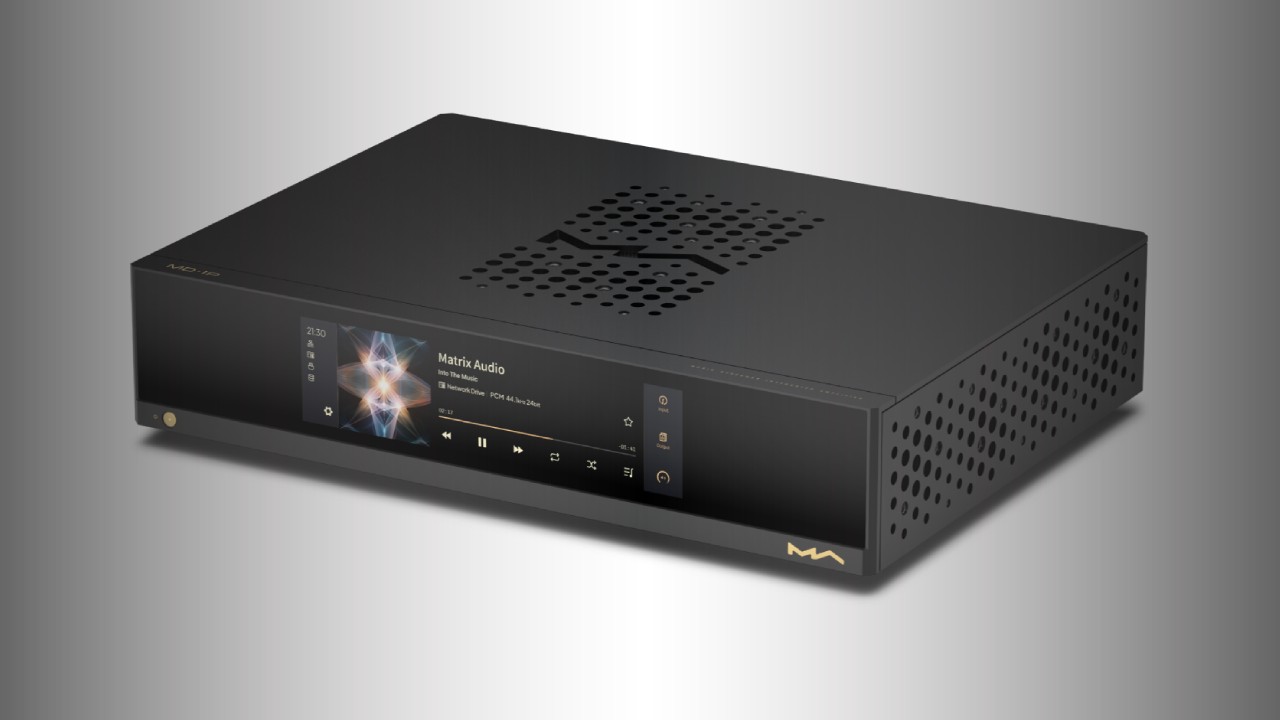
7. Matrix Audio MD-1 & MD-1P: High-End Streaming Integrated Amplifiers
The Matrix Audio MD-1 and MD-1P combine integrated amplification, network playback, mixed-format inputs and a color display.
The Matrix Audio MD-1 and MD-1P are integrated amplifiers with analog and digital inputs, network streaming and a turntable input.
Both use Matrix Audio’s Player app and include a color front-panel display.
The two models differ in finish and rated output: the source identifies one at 150 watts and the other at 300 watts per channel, although the excerpt does not assign each figure to a specific model. They are intended as all-in-one solutions that can connect directly to speakers.
Best for: All-in-one systems with streaming and vinyl sources
- Analog and digital inputs
- Integrated network streaming
- Turntable input
- Color front-panel display
Verdict: The MD-1 and MD-1P consolidate source handling, streaming and speaker amplification, but buyers should verify the output rating assigned to each model.
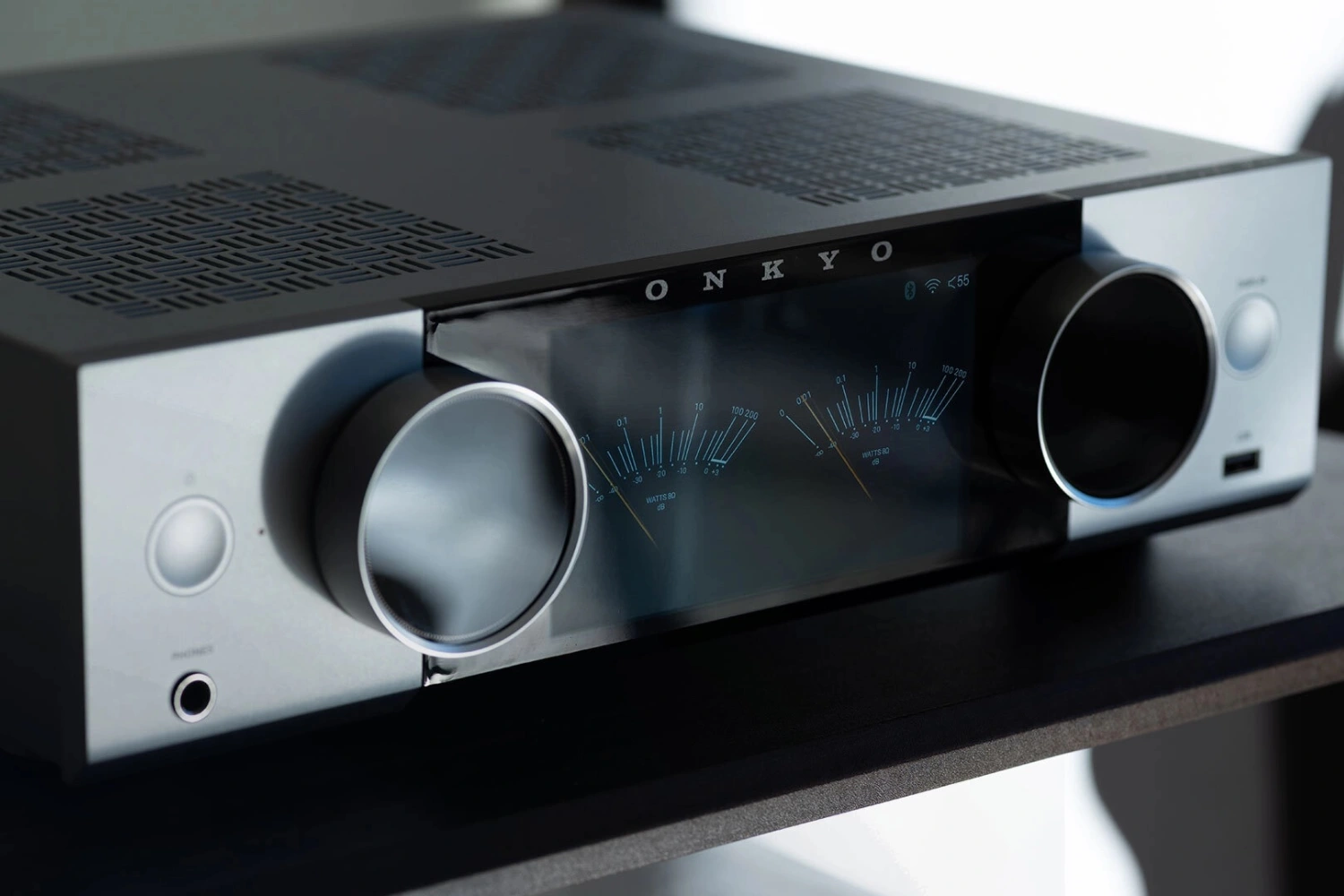
8. Onkyo Muse Y-40 and Y-50 Bring High-Power Streaming to Compact Hi-Fi Systems
The compact Onkyo Muse Y-40 and Y-50 network amplifiers feature a large color display and a prominent physical volume control.
Onkyo’s Muse Y-40 and Y-50 are compact network amplifiers based on a fully digital signal path and Axign Class D amplification.
The Y-40 is rated at 75 watts per channel into eight ohms and 150 watts into four ohms, while the Y-50 increases those figures to 125 and 250 watts respectively.
Both models stand under 10 cm tall and use the same chassis dimensions. A 5.46-inch color display presents album artwork, track information and VU-meter graphics.
Best for: Compact streaming systems with passive speakers
- Integrated network playback
- Fully digital signal path
- Class D amplification
- 5.46-inch color display
Verdict: The Muse range provides two clearly differentiated power levels in the same compact streaming-amplifier format.

9. Soulnote A-3 Core: Stereo power amplifier boasting unique technology
Inside the Soulnote A-3 Core, separate transformers feed the two channels while a copper plate acts as both heat sink and busbar.
Soulnote’s A-3 Core is a stereo power amplifier incorporating design ideas from the company’s P-3 preamplifier, A-3 integrated amplifier and M-3 monoblock.
Each channel has its own 700-watt toroidal transformer, while the non-negative-feedback circuit uses a single push-pull output stage controlled by a four-fold Darlington circuit.
The cabinet is kept free from the circuit ground through Soulnote’s ground-separation approach. A copper plate serves as both the main heat sink and a power busbar for the TO3 transistor.
Best for: Advanced separates systems centered on dual-mono construction
- Separate 700-watt transformer for each channel
- Non-negative-feedback circuit
- Ground-separation design
- Copper heat sink and busbar
Verdict: The A-3 Core is a technically distinctive stereo power amplifier for buyers specifically interested in Soulnote’s ground separation and non-feedback design choices.
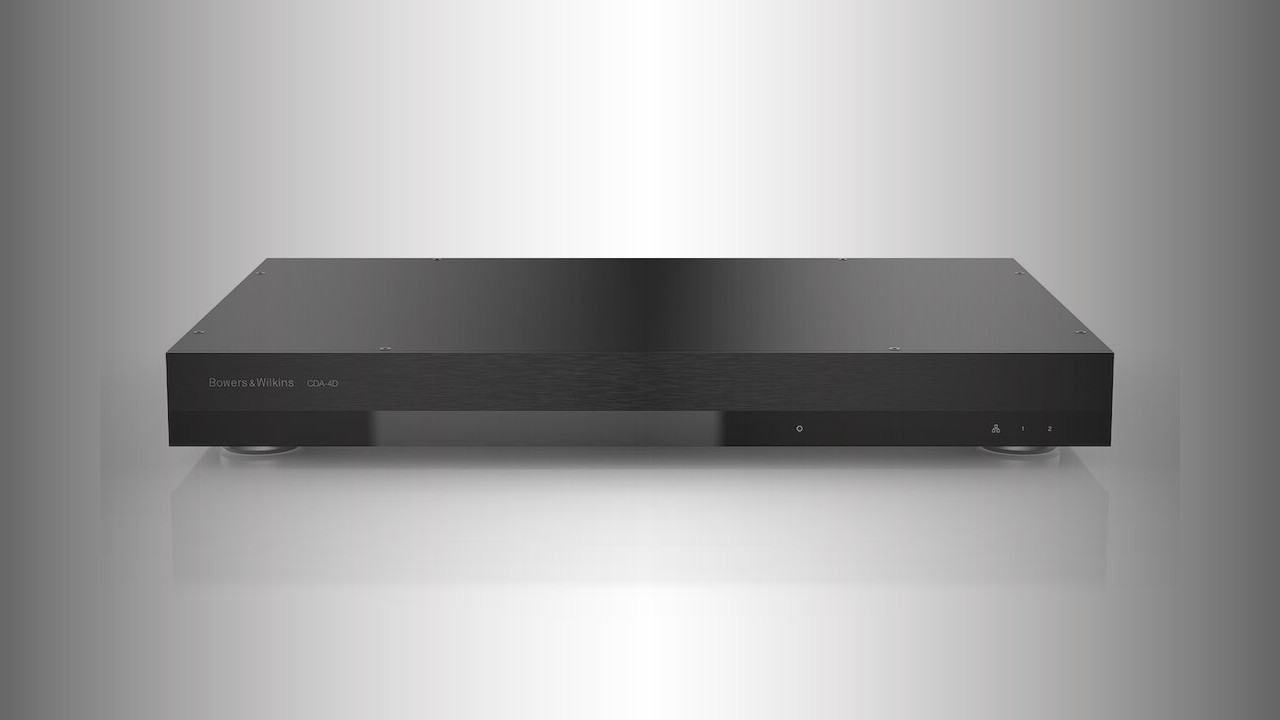
10. Bowers & Wilkins CDA-4D: Compact and powerful 4-channel power amplifier
The Bowers & Wilkins CDA-4D supplies four channels for built-in or multi-zone speakers and supports bridged configurations.
The Bowers & Wilkins CDA-4D is a compact four-channel power amplifier intended for custom installation, built-in speakers and multi-zone systems.
ICEpower amplification provides a stated 125 watts for each of its four channels.
Bridging raises the stated output to 250 watts per channel into eight ohms, enabling configurations such as two bridged channels or two standard channels plus one bridged channel. Digital signal processing and a web interface support installation setup and adjustment.
Best for: Custom installations and multi-zone speaker systems
- Four amplification channels
- 125 watts per channel
- Bridgeable to 250 watts into eight ohms
- DSP with web-based control
Verdict: The CDA-4D is the most installation-focused option here, combining four channels, bridgeable output and browser-based DSP control in a compact chassis.
Frequently asked questions
Should I choose an integrated amplifier or a power amplifier?
Choose an integrated amplifier if you want source selection, volume control and speaker amplification in one unit.
A power amplifier such as the Riviera AFM70, Luxman M-700u, Soulnote A-3 Core or Bowers & Wilkins CDA-4D needs a suitable preamplifier, processor or source with volume control.
How much importance should I place on the wattage rating?
Use wattage as one part of the matching process rather than the sole measure of suitability.
Compare ratings at the same impedance, consider the demands of your speakers and room, and note whether the figure applies per channel, in stereo, or only when channels are bridged.
When does a streaming amplifier make sense?
A streaming amplifier is useful when network playback and a reduced box count are priorities.
The Matrix Audio MD-1 and MD-1P and the Onkyo Muse Y-40 and Y-50 combine streaming with integrated amplification, whereas several other products here require separate source components.
What should I check before choosing optional amplifier modules?
Confirm which functions are standard, how many module spaces are available and whether options can be installed together.
The Exposure 5510, for example, can accept a DAC or one of its phono modules, but its single expansion space prevents both from being installed at the same time.
Match the amplifier to the system, not just the specification sheet
Start by deciding whether the amplifier must include source selection, volume control, digital conversion, phono support or network playback.
That quickly separates traditional power amplifiers from integrated and streaming models.
It also prevents paying for functions that duplicate equipment already in the system. Next, check the speaker arrangement. A conventional stereo system needs two channels, a pair of Riviera AFM70 monoblocks requires two separate units, and an installation with several built-in speakers may be better served by the four-channel Bowers & Wilkins CDA-4D. If bridging is being considered, confirm the resulting channel count, output rating and speaker compatibility rather than assuming that every bridged configuration will suit every load. Finally, inspect the practical details behind the headline features. Verify input types, connector formats, optional-module limits, impedance-based power ratings, cooling requirements and the need for a separate preamplifier. For products described during development or through manufacturer claims, confirm the final production specification before making a decision. The most appropriate amplifier is the one whose architecture, connections and channel layout fit the complete system without unnecessary workarounds.

Sound Off
0Join the discussion if you have something to add.