

Amplifiers now take many forms, from compact power stages and traditional integrated designs to streaming systems, active speakers and subwoofers with dedicated onboard amplification.
The products gathered here reflect that breadth rather than following a single template.
The selection includes high-output solid-state models, a fully balanced tube power amplifier, a pure Class A design and feature-rich integrated systems. It also covers powered loudspeakers and subwoofers whose amplification is inseparable from their intended role. These are not interchangeable products, so their positions should be read as an editorial sequence rather than a direct performance ranking. Before choosing, establish whether you need a power amplifier, an integrated amplifier or a complete powered system. Speaker impedance, required inputs, room size, source equipment, ventilation and physical dimensions should all influence the decision. Where the source material reports manufacturer specifications or design claims, those details are presented as such rather than as independent test results.

1. SMSL PA-X
The compact SMSL PA-X power amplifier, featuring a front-panel display and volume control.
The SMSL PA-X is a compact power amplifier based on Infineon gallium nitride transistors.
It can operate as a conventional stereo amplifier or be configured as a monoblock, making it adaptable to systems that may expand over time.
The stated outputs are 250 watts per channel into 4 ohms and 200 watts per channel into 8 ohms, rising to 500 watts into 8 ohms in mono mode. RCA and XLR inputs, an audio-focused switching power supply, protection against overheating and overload, a front display, volume control and remote handset give it a notably practical specification for a dedicated power stage.
Best for: Compact systems needing flexible, high-output amplification
- Stereo and mono operating modes
- RCA and XLR inputs
- Compact enclosure
- Overheating and overload protection
Verdict: The PA-X combines substantial claimed output, balanced connectivity and monoblock flexibility in a compact power-amplifier format.

2. NAD C 3030 and C 3030S
The NAD C 3030 and streaming-equipped C 3030S, both distinguished by illuminated VU meters and classic styling.
NAD’s C 3030 and C 3030S are compact integrated amplifiers that combine contemporary engineering with visual references to the original NAD 3030.
Both use a black front panel, vintage-style branding and illuminated VU meters.
The important distinction is streaming: the C 3030S incorporates the BluOS platform associated with Bluesound, while the standard C 3030 is the more conventional choice. That separation lets buyers choose the same heritage-inspired presentation with or without an integrated network-music platform.
Best for: Listeners choosing between traditional and streaming-focused integrated amplifiers
- Illuminated VU meters
- Compact integrated-amplifier format
- BluOS streaming on the C 3030S
Verdict: The C 3030 pairing offers NAD’s retro-influenced design in two forms, with the C 3030S adding BluOS for network playback.
3. Klipsch Reference Premier RP-SW Subwoofers
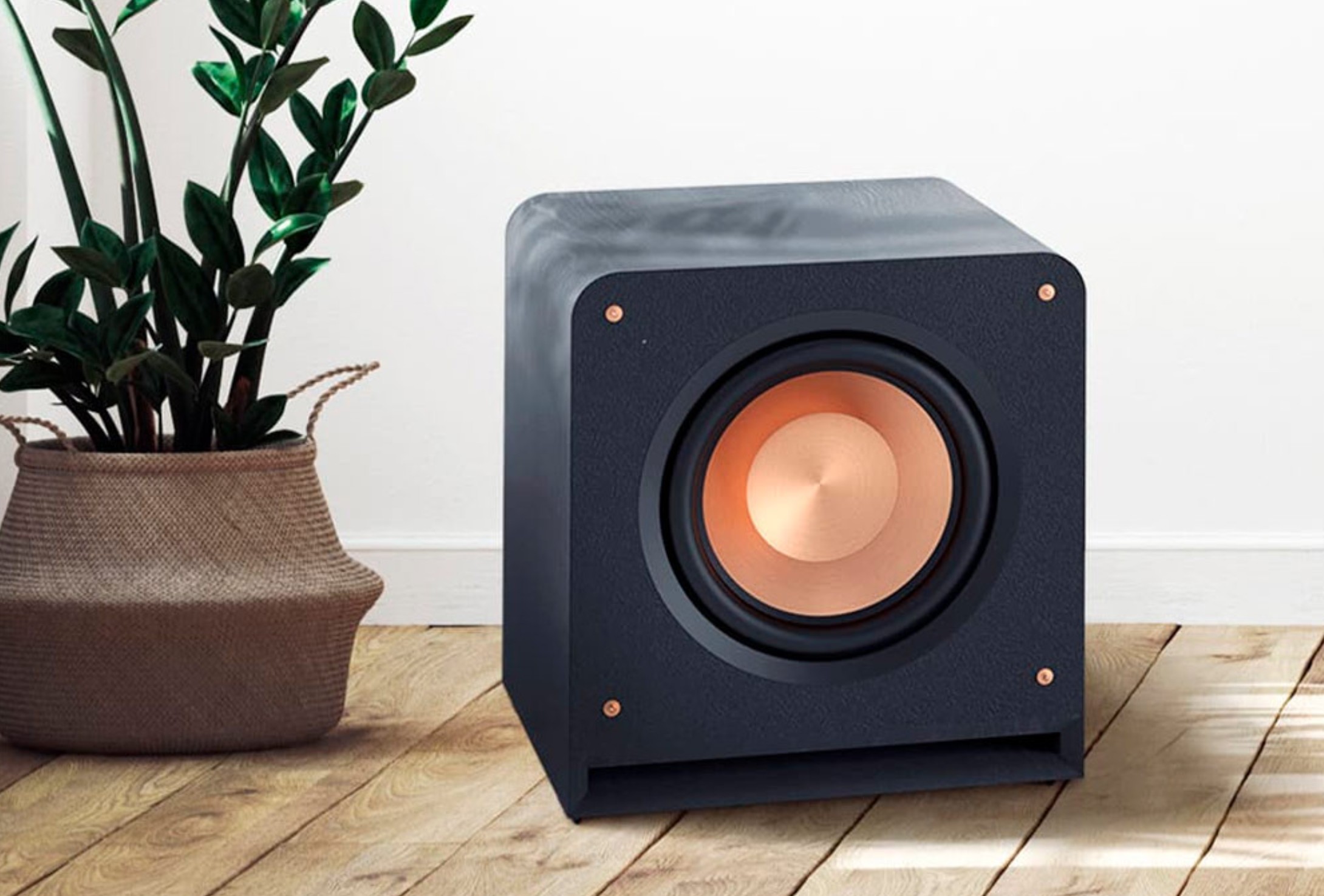
Klipsch Reference Premier active subwoofers, offered with Cerametallic drivers ranging from 10 to 16 inches.
Klipsch’s Reference Premier subwoofer range comprises the RP-1000SW, RP-1200SW, RP-1400SW and RP-1600SW, with 10-, 12-, 14- and 16-inch Cerametallic drivers respectively.
Each is an active, bass-reflex design using a Class D amplifier and a front-mounted Aerofoil slotted port.
Reported peak amplifier output ranges from 600 watts for the 10-inch model to 1.6 kilowatts for the 16-inch version. RCA connections are standard, while optional wireless operation requires the separate Klipsch WA-2 kit. Thick MDF cabinets and shock-absorbing feet complete a range designed to cover different bass-output and cabinet-size requirements.
Best for: Systems needing a choice of active subwoofer sizes
- Four driver-size options
- Built-in Class D amplification
- Optional wireless connection with the WA-2 kit
- Thick MDF cabinets
Verdict: The Reference Premier range provides four clearly differentiated routes to adding amplified low-frequency support, with wireless use available through an optional accessory.

4. Audio Research D-80
The Audio Research D-80, a fully balanced tube power amplifier using matched KT150 output tubes.
The Audio Research D-80 is a two-channel tube power amplifier rated at 70 watts per channel.
Its fully symmetrical, differential architecture keeps the signal balanced from the input through to the speaker terminals, while pentode operation and automatic bias control are intended to provide consistent, practical operation.
Each channel uses a matched pair of KT150 power tubes supported by two 6H30 tubes. Audio Research has deliberately omitted switchable operating modes and unrelated features, concentrating the design on balanced signal transmission, stability and repeatability. The amplifier is manufactured in the United States and is subjected to multiple test cycles, including comparison with the company’s reference system.
Best for: Balanced systems built around a dedicated tube power amplifier
- Fully balanced signal path
- Automatic tube-bias control
- 70 watts per channel
- Individually tested by the manufacturer
Verdict: The D-80 is a focused KT150 power amplifier for buyers who value a fully balanced architecture and automatic biasing over extensive operating options.

5. Accuphase A-80
The 44.6-kilogram Accuphase A-80 Class A power amplifier with prominent output-level meters.
The Accuphase A-80 is a substantial pure Class A stereo power amplifier rated at 65 watts per channel into 8 ohms.
Its stated output doubles as impedance halves, reaching 130 watts into 4 ohms, 260 watts into 2 ohms and 520 watts into 1 ohm.
Bridge mode allows the A-80 to serve as a monoblock, with a specified 260 watts into 8 ohms. Internally, the design uses a shielded toroidal transformer, 120,000 microfarads of filter capacitance and an output stage containing 20 MOSFETs. This is physically demanding hardware: the chassis measures 465 by 240 by 515 millimetres and weighs 44.6 kilograms, so installation planning is essential.
Best for: Large, permanent systems requiring a heavyweight Class A power amplifier
- Pure Class A operation
- Bridgeable for monoblock use
- Large toroidal power supply
- Output specified down to a 1-ohm load
Verdict: The A-80 is a formidable Class A design whose load capability and bridge mode are matched by serious space, weight and ventilation requirements.
6. Musical Fidelity M6s PRX
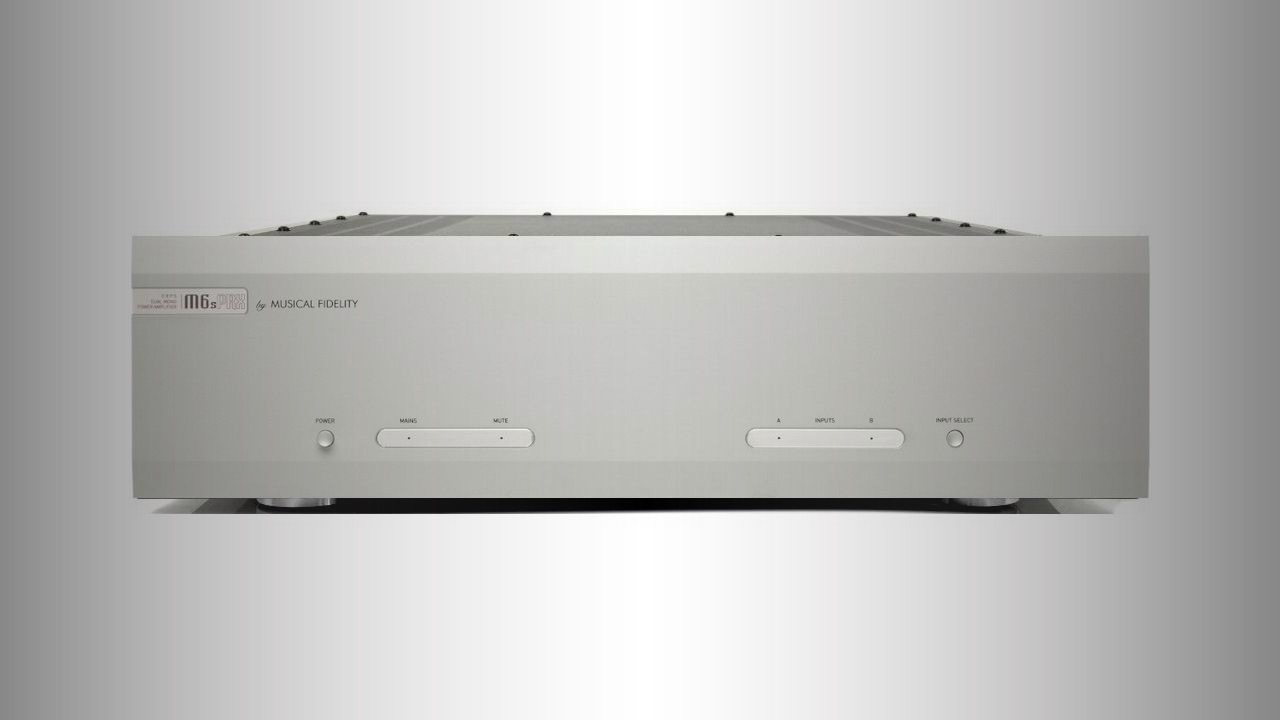
The Musical Fidelity M6s PRX, identified on its front panel as a CRPS dual-mono power amplifier.
The Musical Fidelity M6s PRX is a transistor power amplifier built around dual-mono amplifier boards and a Choke Regulated Power Supply.
Its choke filter is designed to suppress noise from both the power supply and electrical network, while 72,000 microfarads of filter capacitance provide stored energy for the amplifier stages.
Musical Fidelity also uses chokes with double bifilar windings, an unusual solution in a solid-state design. The result is an amplifier whose distinction lies less in added functions than in the scale and configuration of its power supply.
Best for: Systems where power-supply design and dual-mono construction are priorities
- Dual-mono amplifier topology
- Choke-regulated power supply
- 72,000 microfarads of filter capacitance
- Double bifilar-wound chokes
Verdict: The M6s PRX stands apart through its uncommon application of choke regulation to a dual-mono solid-state power amplifier.

7. Focal Sub12 ST6
The Focal Sub12 ST6 professional subwoofer, built around a 13-inch driver and 1,000-watt BASH amplifier.
The Focal Sub12 ST6 is a professional active studio subwoofer with a 13-inch W-cone driver and a 1,000-watt BASH amplifier.
Its specified operating range is 30 to 400 Hz, with a stated maximum sound-pressure level of 124 dB.
Rear-panel facilities include variable phase, frequency controls, balanced XLR connections for LFE and stereo channels, and TRS bypass and focus connections. At 600 by 487 by 568 millimetres and 58 kilograms, it is a large, specialised component that requires adequate floor space and careful positioning rather than casual placement.
Best for: Professional studios needing a large, configurable active subwoofer
- Thirteen-inch W-cone driver
- 1,000-watt BASH amplifier
- Balanced XLR connectivity
- Variable phase and frequency controls
Verdict: The Sub12 ST6 is a purpose-built studio subwoofer with extensive balanced connectivity, powerful onboard amplification and substantial installation demands.

8. House of Marley Get Together Duo
House of Marley Get Together Duo powered speakers with bamboo panels and a recycled-composite chassis.
The House of Marley Get Together Duo is a pair of miniature two-way powered Bluetooth speakers rather than a conventional separate amplifier.
Each enclosure combines a 30-millimetre tweeter with a 115-millimetre mid-bass driver, while the two speakers communicate wirelessly in stereo.
The right speaker includes a rechargeable battery and can operate independently as a mono wireless speaker. RCA and 3.5-millimetre analogue inputs provide alternatives to Bluetooth. Natural bamboo front and rear panels are paired with a composite chassis made from cotton, hemp fibres and recycled plastic, giving the system a clear material and design identity.
Best for: Compact desktop listening with minimal separate equipment
- Battery-powered standalone use for the right speaker
- Bluetooth stereo connection
- RCA and 3.5-millimetre inputs
- Bamboo and recycled-material construction
Verdict: The Get Together Duo offers amplification, wireless stereo operation and source connectivity in a small speaker pair with an environmentally conscious material specification.

9. Cambridge Audio EVO 150
The Cambridge Audio EVO 150 streaming amplifier with its 6.8-inch colour display and multifunction control dial.
The Cambridge Audio EVO 150 is an integrated streaming amplifier centred on a 6.8-inch colour display and a combined rotary and push control for volume, input selection and menu navigation.
Digital conversion is handled by an ESS Sabre Reference ES9018K2M DAC, with stated support for PCM up to 32-bit/384 kHz and DSD256.
Network access is available over dual-band Wi-Fi or Ethernet, while Bluetooth 4.2 with aptX HD provides another wireless route. A full MQA decoder is also included. It is the most overtly all-in-one proposition in this selection, bringing control, conversion and streaming into a single chassis.
Best for: Listeners seeking a display-led all-in-one streaming amplifier
- Large 6.8-inch colour display
- Integrated network streaming
- Wi-Fi and Ethernet connectivity
- PCM, DSD and MQA support
Verdict: The EVO 150 consolidates amplification, high-resolution digital conversion and network playback into a clean, centrally controlled component.

10. McIntosh MA12000
The McIntosh MA12000 hybrid integrated amplifier with blue power meters, tube preamplification and solid-state output stages.
The McIntosh MA12000 is a hybrid integrated amplifier that uses four 12AX7A dual-triode tubes in its preamplifier section and solid-state power amplification.
It is rated at 350 watts per channel across speaker impedances from 2 to 8 ohms.
Its extensive equipment includes an eight-band analogue tone control, a High Drive headphone amplifier with crossfeed processing, PassThru integration and McIntosh protection systems for both speakers and amplifier circuitry. The replaceable DA2 digital module accepts native DSD512 and PCM up to 384 kHz over USB, while its coaxial and optical inputs support signals up to 24-bit/192 kHz. This broad specification makes the MA12000 a system hub as much as an amplifier.
Best for: Complex systems requiring high output and broad analogue and digital integration
- 350 watts per channel from 2 to 8 ohms
- Hybrid tube and solid-state architecture
- Extensive digital-input support
- Speaker and amplifier protection systems
Verdict: The MA12000 combines high-output hybrid amplification with comprehensive source handling, headphone facilities and system-integration features.
Frequently asked questions
Should I choose a power amplifier or an integrated amplifier?
A power amplifier requires a separate preamplifier or source with volume control.
An integrated amplifier combines volume control and source selection with the power stage, while models such as the EVO 150 and MA12000 add digital conversion and other system functions.
How should amplifier power be matched to speakers?
Check the speaker manufacturer’s impedance, sensitivity and recommended amplifier range, then compare those requirements with the amplifier’s stated output into the relevant load.
Power ratings alone do not establish compatibility; the intended listening level, room size and the amplifier’s ability to handle impedance changes also matter.
When is mono or bridged operation useful?
Mono or bridged operation can provide more output from one amplifier chassis, as offered by the SMSL PA-X and Accuphase A-80.
It requires one amplifier per channel for stereo and must only be used with speaker impedances permitted by the manufacturer.
What practical issues should be checked before installation?
Confirm the component’s dimensions, weight, ventilation requirements, input types and speaker connections.
Large Class A amplifiers, tube designs and heavyweight studio subwoofers need especially careful placement, while streaming models also require suitable network access.
How to Choose the Right Amplifier for Your System
Begin with system architecture.
If source selection and volume are already handled elsewhere, a dedicated power amplifier such as the PA-X, D-80, A-80 or M6s PRX may be appropriate.
For a simpler installation, an integrated model can reduce the number of boxes and cables. Streaming amplifiers add further convenience, but their network platforms, digital formats and control arrangements should match the way you actually listen. Compatibility comes before headline output. Check the nominal and minimum impedance of the speakers, their sensitivity and the manufacturer’s recommended amplification. Also examine whether the amplifier specifies output into the load your speakers present. Bridged and monoblock modes can increase available power, but they may impose stricter impedance limits and require additional chassis. Connections are another useful dividing line. Balanced XLR inputs can suit systems built around balanced source components or long cable runs, whereas RCA may be sufficient for a compact domestic setup. Digital inputs, network streaming, Bluetooth, headphone circuitry, home-theatre integration and tone controls are valuable only when they address a genuine requirement. Finally, plan for the hardware itself. The Accuphase A-80, Focal Sub12 ST6 and other substantial components demand strong support and adequate room. Class A and tube amplifiers also need appropriate ventilation. Choosing the correct amplifier is therefore not simply a matter of finding the largest power figure; it means matching electrical requirements, source facilities, operating format and physical installation to the complete system.


Join the discussion
Share your thoughts, listening impressions or product experience.