
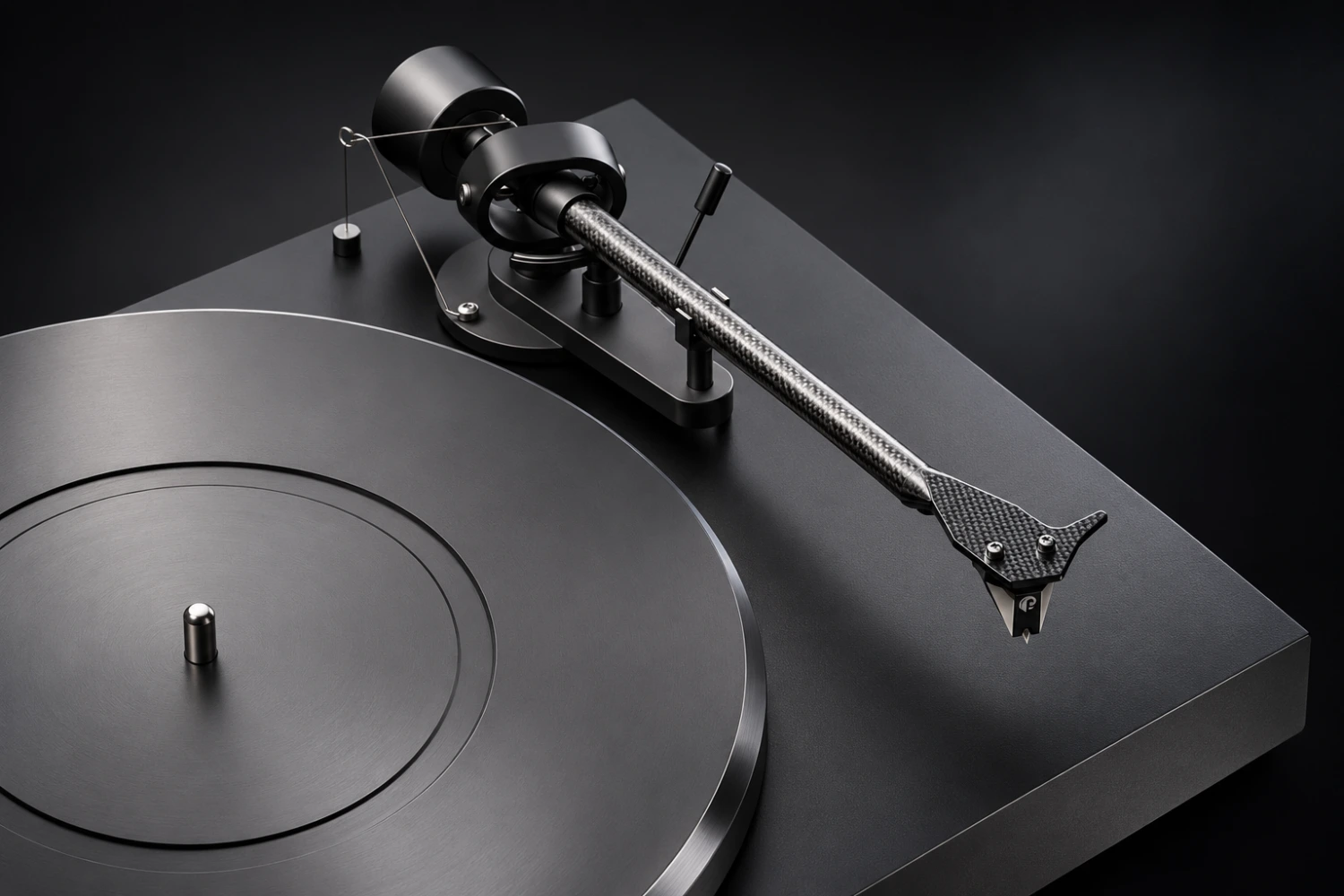
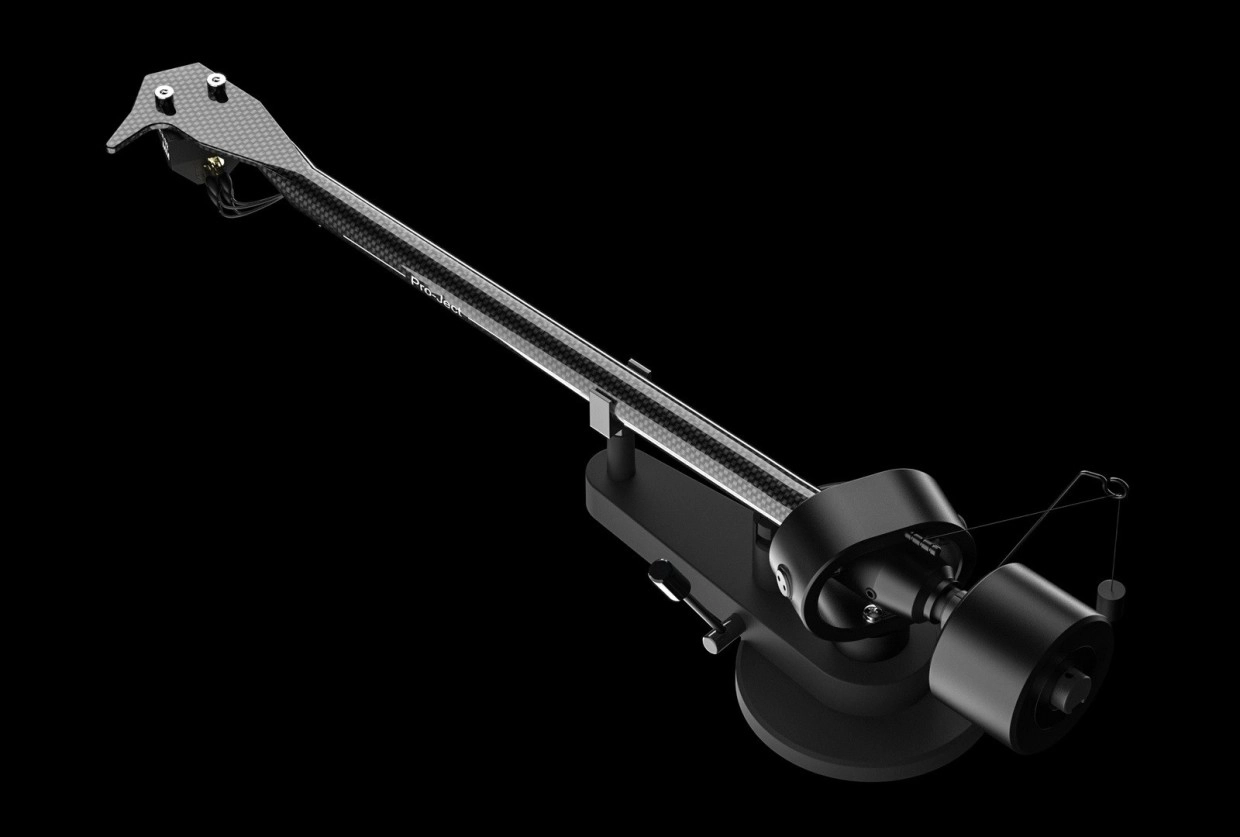
Pro-Ject’s latest Debut turntable returns to a familiar idea: give vinyl listeners a serious tonearm and a fitted cartridge without making cartridge installation the first task. The Debut Carbon The Original combines an 8.6-inch carbon-fiber arm with a Pick it S2 moving-magnet cartridge made by Ortofon and adjusted by Pro-Ject. Beneath its restrained exterior is a belt drive with manually selected record speeds and a motor supplied by a DC/AC generator. The result is a turntable aimed at uncomplicated ownership, although buyers will still need to consider how it fits into their existing audio system.
A Debut with the cartridge already in place
The Pick it S2 arrives mounted and adjusted, removing a potentially delicate part of initial turntable setup. It uses an elliptical stylus, split pole pins and a robust DJ-type cantilever. The cartridge is a moving-magnet design, an important detail when matching the turntable to a phono input or separate phono stage.
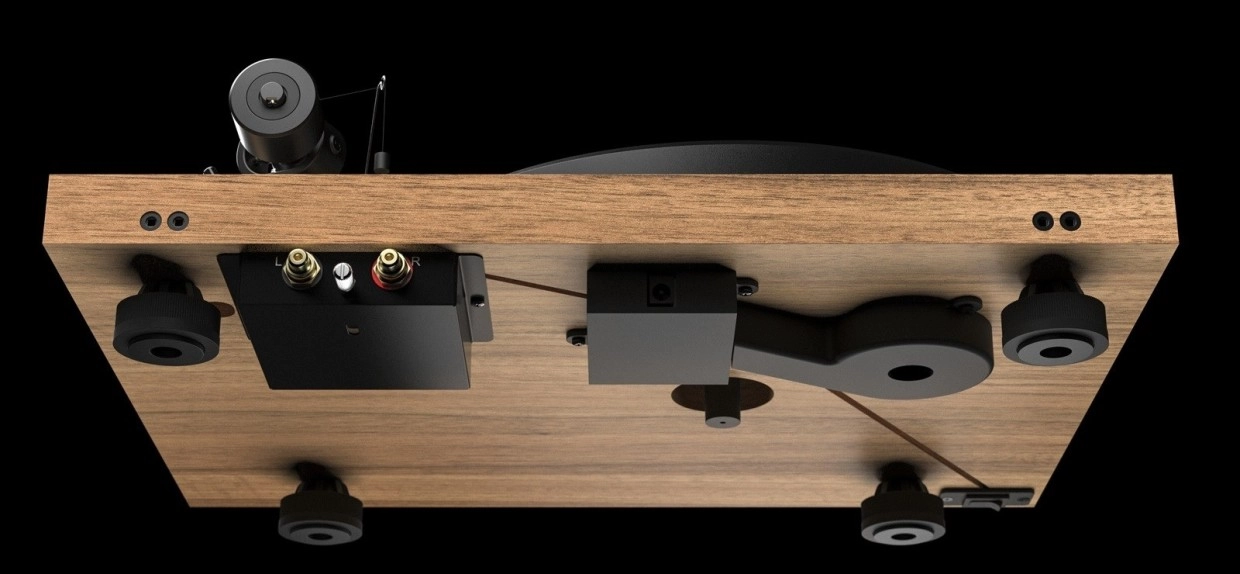
Pro-Ject includes its Connect it Phono E RCA cable, along with a power supply, felt mat, acrylic dust cover and adapter for 7-inch records. Those accessories cover several of the items an owner needs to place and use the deck, rather than leaving the buyer to select a cartridge or cable before playing a record.
The supplied information does not specify a built-in phono stage. Before buying, owners should therefore check the phono facilities in their amplifier or plan for a compatible separate stage. The inclusion of an RCA cable establishes an analog connection, but it does not on its own establish what amplification is built into the turntable.
The carbon arm returns to a familiar role
The Original draws on a line that began with the Debut in 1998. Pro-Ject developed that earlier model as an accessible turntable for younger listeners, at a time when CDs dominated but interest in analog audio was returning. The Debut Carbon followed in 2012, introducing the carbon-fiber tonearm that gives the present model its name.
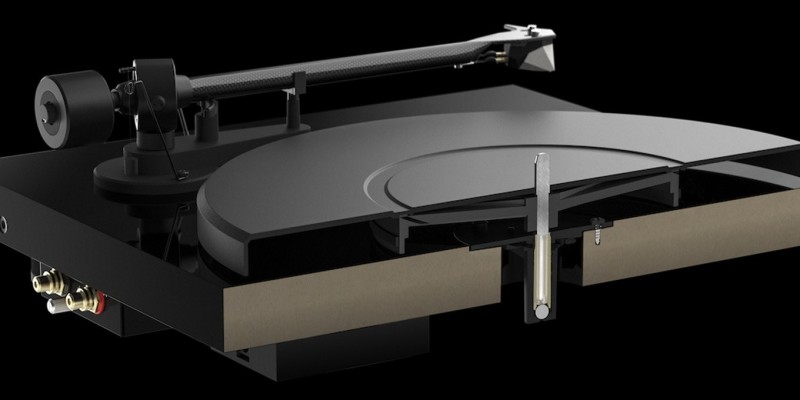
On the new deck, the tapered arm tube and headshell are formed as one piece. A solid, CNC-machined aluminum bearing block supports the arm, which uses low-friction precision bearings. Its effective length is 218.5 mm, effective mass is 7 g and overhang is 18.5 mm.
For everyday operation, a silicone-damped arm lift raises and lowers the stylus, while adaptive anti-skating is intended to compensate for changing forces during playback. A TPE-damped counterweight is also fitted; Pro-Ject claims it reduces arm-and-cartridge resonance by up to 50%. That figure is a manufacturer claim, not an independently established listening result.
Two speeds, selected by hand
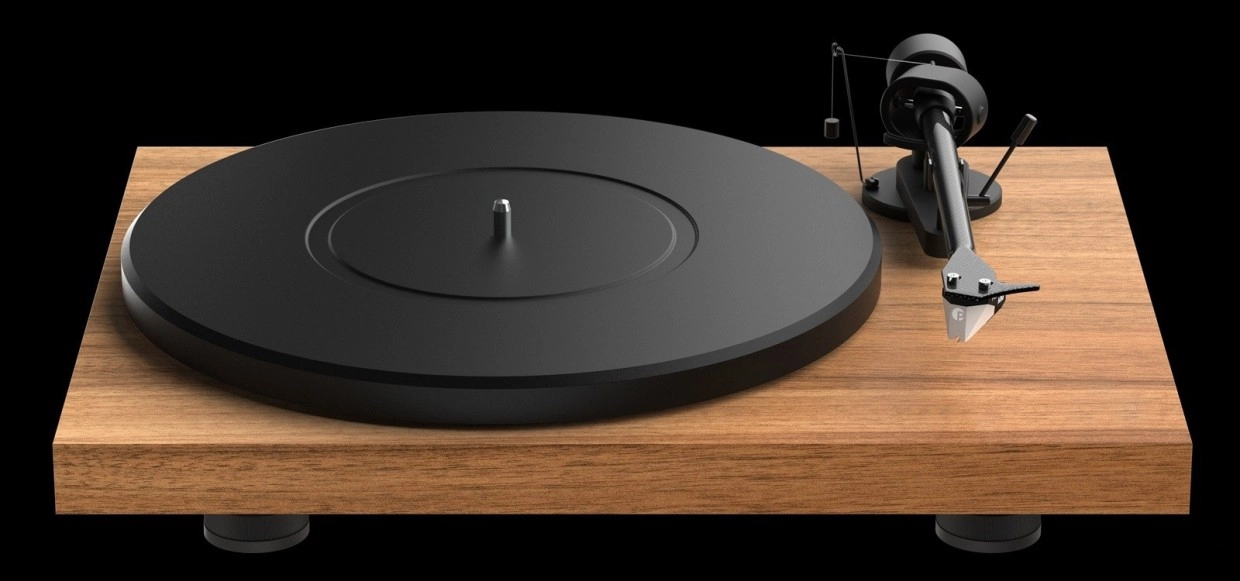
The belt-drive mechanism supports 33 1/3 and 45 rpm, covering the two speeds specified for the turntable. Speed selection is manual, so listeners who regularly move between records cut at different speeds should expect an adjustment rather than assume electronic push-button switching.
A 300 mm steel platter weighing 1.7 kg sits above a lightweight, rigid sub-platter made from fiberglass-reinforced ABS. A precision belt connects the sub-platter to an aluminum motor pulley. The spindle and ball bearing are stainless steel, running in a brass bearing housing; Pro-Ject specifies a machining tolerance of 1/1000 mm for the pulley.
The synchronous motor is isolated from the plinth by TPE suspension. A DC/AC generator converts the DC input into a controlled AC signal for the motor. Pro-Ject says this makes motor speed independent of mains voltage and helps control vibration and noise. The published specifications list wow and flutter of ±0.17% at 33 rpm and ±0.15% at 45 rpm, alongside speed drift of ±0.50% and ±0.60%, respectively.
A restrained plinth and three finishes
Rather than a radical departure from the Debut shape, The Original uses a minimalist plinth CNC-machined from solid MDF. Buyers can choose high-gloss black, satin black or real walnut wood, offering a choice between understated black finishes and a visible wood surface.
The deck is built in Europe and measures 415 mm wide, 320 mm deep and 118 mm high, with a weight of 5.5 kg. Those dimensions provide a starting point for checking shelf space; the supplied information does not give a separate clearance measurement for the dust cover when open.
The included phono cable has a semi-symmetrical construction, metal connectors and gold-plated RCA plugs. It is intended for phono connections, so its inclusion is useful when planning a conventional wired installation, although the rest of the signal path depends on the owner’s equipment.
Parts support beyond the initial setup
Pro-Ject says it guarantees spare-parts availability for its phono products for 25 years. Its stated commitment for hi-fi electronics is 10 years. The longer phono-products commitment is relevant to a turntable intended to remain in service rather than be treated as disposable equipment.
The commitment does not identify individual replacement parts or their future cost, but it gives prospective owners a useful question to raise with a dealer: how servicing and parts ordering will work in their region. The turntable’s design is also described as modular and maintainable, although the supplied details do not set out specific upgrade options.
The Debut Carbon The Original looks best suited to a listener who wants a traditional component turntable with the cartridge decision and initial cartridge adjustment already handled. Manual speed selection keeps the operating arrangement straightforward, but it is also a detail to weigh if a collection involves frequent changes between 33 1/3 and 45 rpm. System matching deserves attention before purchase: the announcement does not establish whether a phono stage is built in, so the receiving amplifier or a separate component must be considered. Pro-Ject has also given a long-term parts commitment for its phono products, though local servicing arrangements remain worth checking. No US price or specific US availability has been supplied.


Sound Off
0Join the discussion if you have something to add.