
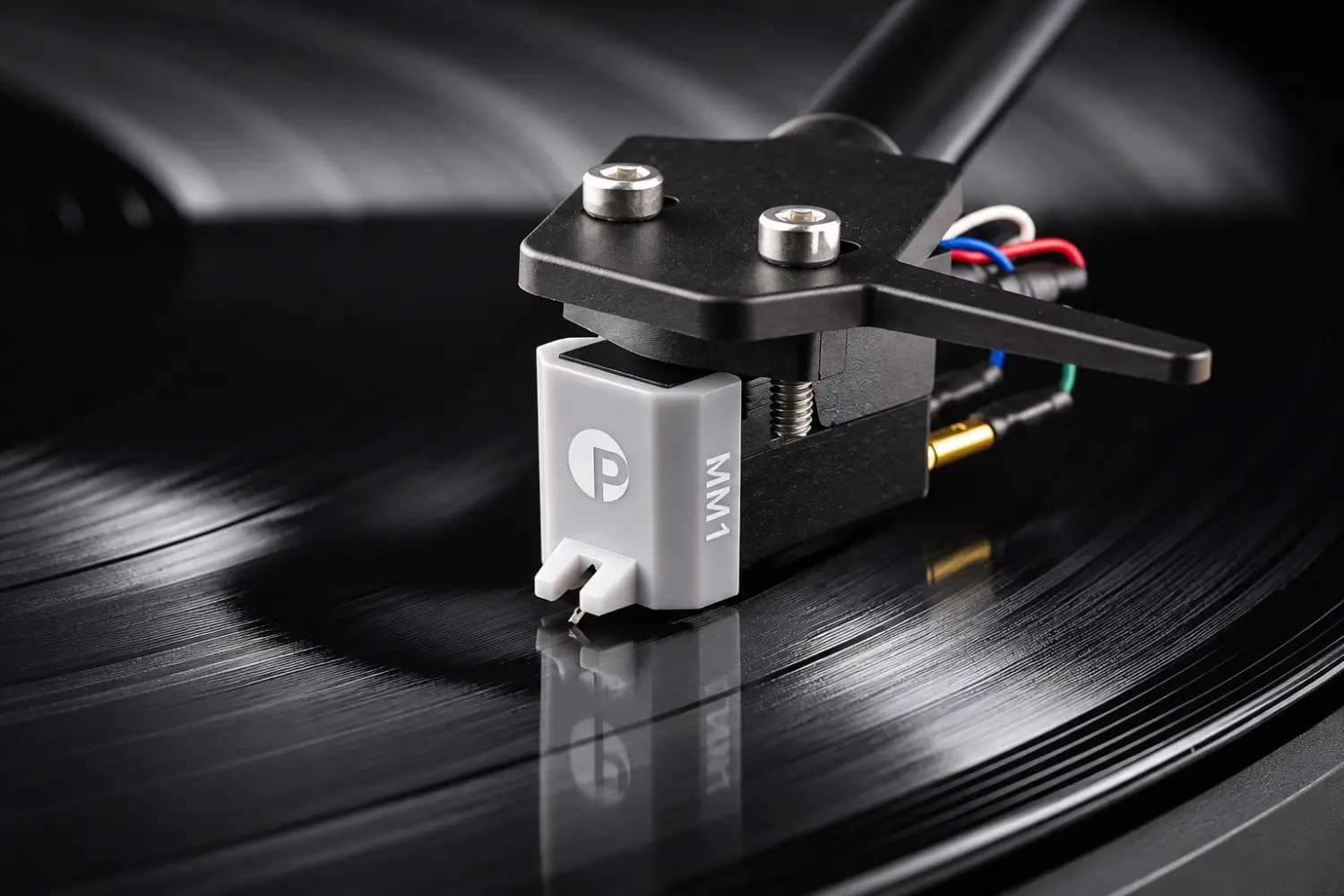
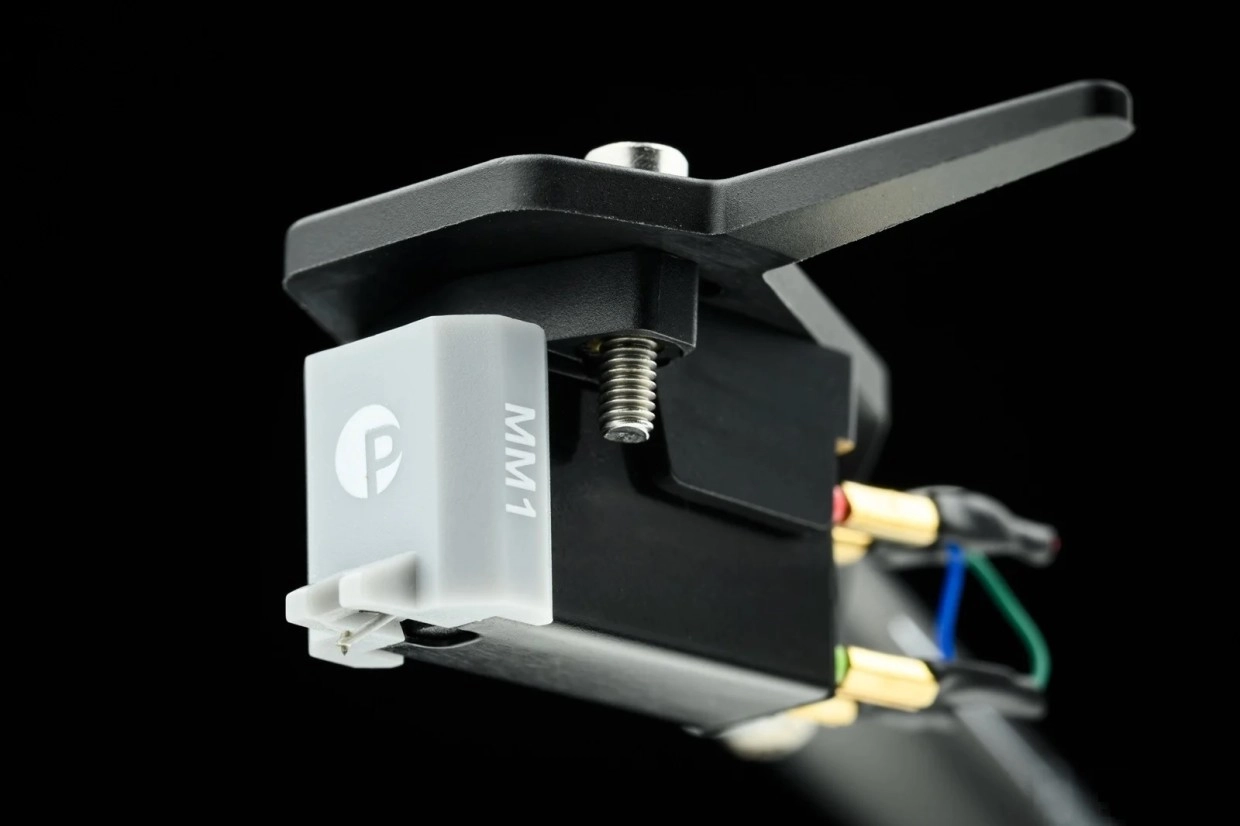
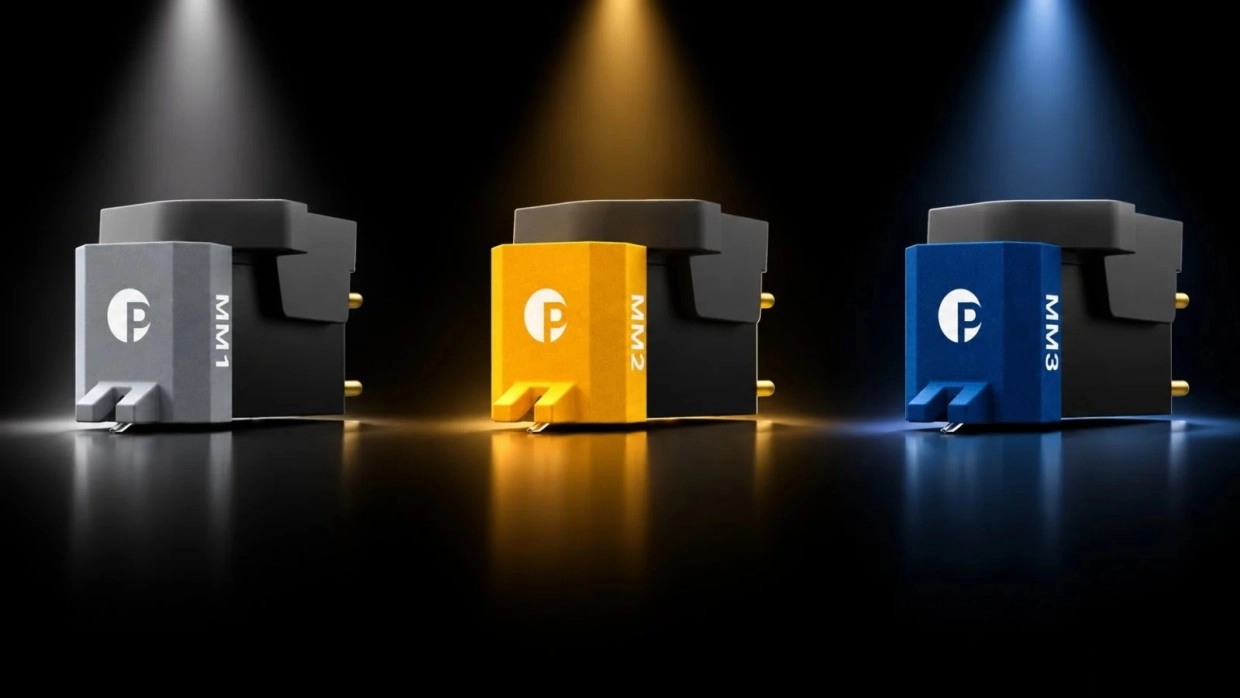
Pro-Ject Audio’s new Pick it MM family is aimed at the affordable end of its cartridge range, with three models built around a common platform rather than three entirely separate designs. The Austrian manufacturer has differentiated the MM 1, MM 2 and MM 3 chiefly through their diamond stylus profiles and magnetic-system details, alongside changes in specified frequency response, channel separation and output. The result is a choice that starts with a cartridge intended for well-played records and moves through an all-rounder to a higher-output model. All three use moving-magnet technology and standard half-inch mounting.
One cartridge platform, three stylus profiles
The family shares a lightweight moving-magnet system, a heavily damped ABS body and a cantilever made from an aluminum alloy. Each cartridge weighs 5.5 grams and uses a standard half-inch mount. Pro-Ject claims low coloration and minimal playback noise, although those are manufacturer claims rather than independently established results.
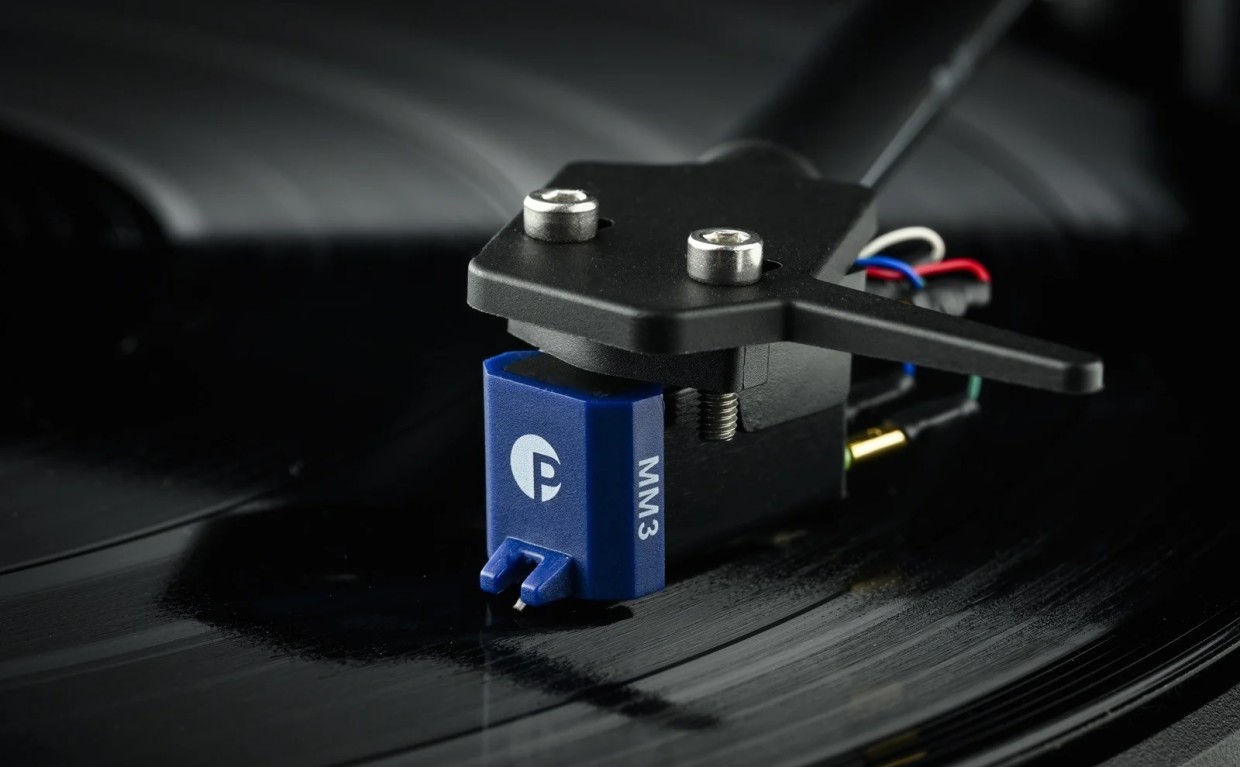
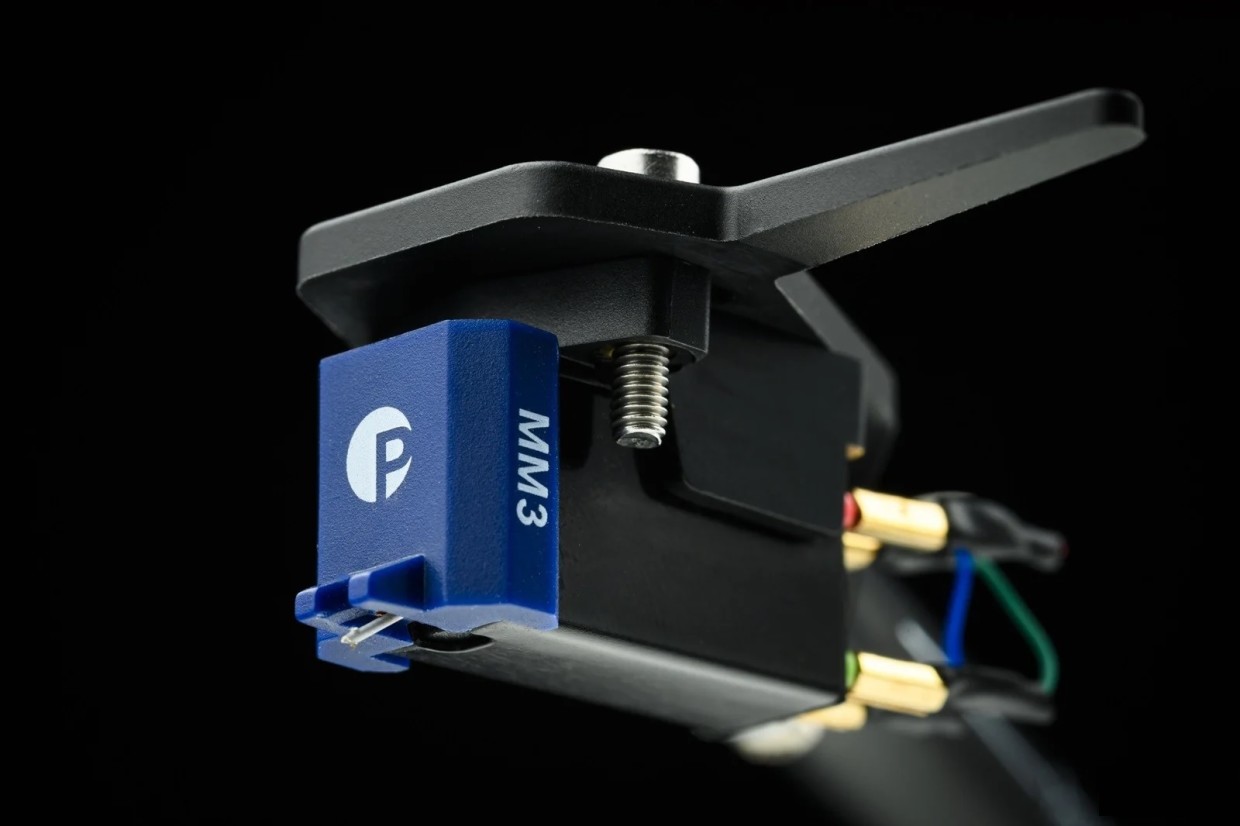
A protective lip at the front extends over the stylus tip to guard the diamond against accidental knocks from that direction. It is an unusual detail with a straightforward purpose: the protection is built into the cartridge rather than relying on a separate stylus cover that could be misplaced. It should not be taken as protection against every possible impact.
The shared platform gives buyers a consistent starting point, but the three models are not distinguished by stylus shape alone. Their published electrical and channel-separation figures also change, particularly at the top of the range.
MM 1 starts with well-played records
The Pick it MM 1 uses a hyperconical diamond and is positioned for cherished records and secondhand copies. Pro-Ject describes its intended presentation as warm and musical, with a subtle lift in the higher frequencies, and says the design aims to reveal detail without emphasizing sharpness, clicks or crackle.
Those are design intentions, not a guarantee that worn or damaged records will play quietly. For someone whose collection includes plenty of used vinyl, however, the MM 1’s stated priorities offer a different starting point from choosing solely by the widest published frequency range.
Its specified output is 2.2 mV, and channel separation is greater than 24 dB at 1 kHz. The stated frequency response is 10 Hz to 30 kHz, within ±2 dB. As with the other models, the output figure is specified at 1 kHz and a groove velocity of 3.54 cm/sec.
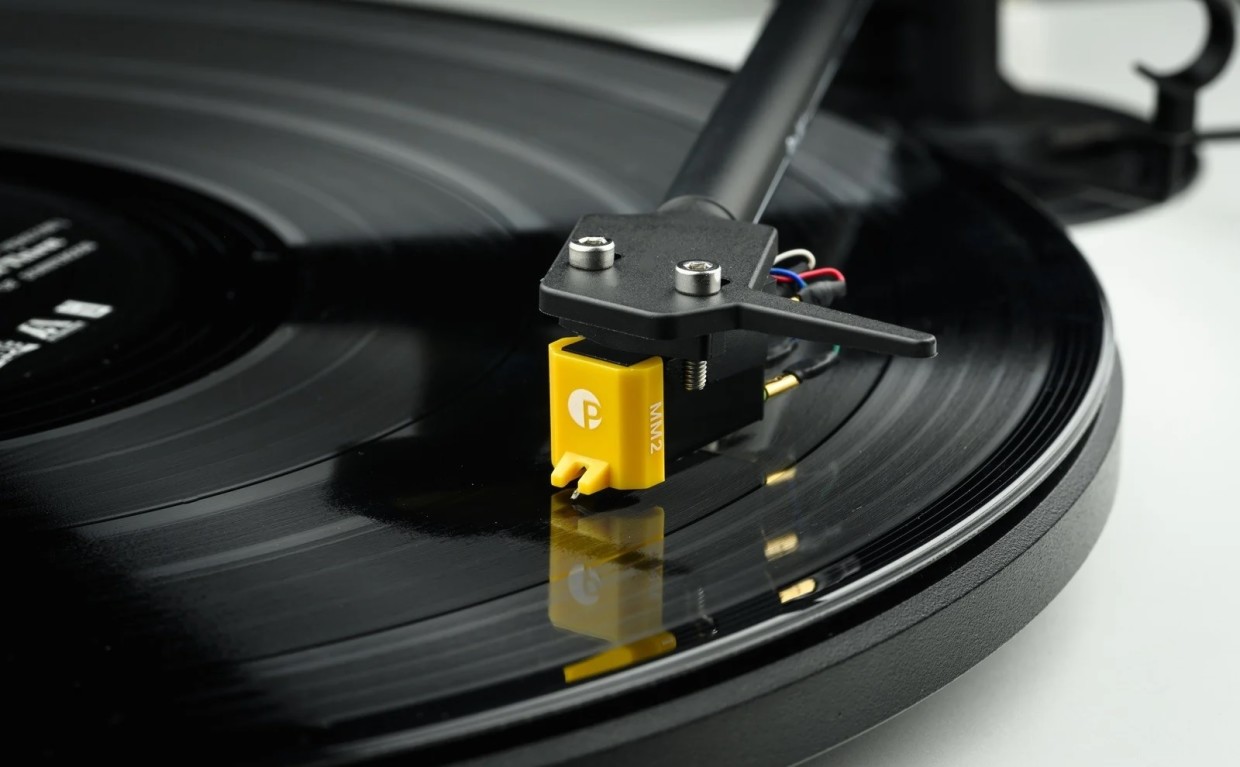
MM 2 changes the diamond and magnetic circuit
The middle model moves to an elliptical diamond and is presented as the all-rounder of the group, intended for records ranging from classic pressings to modern releases. Pro-Ject associates the profile with more precise groove tracing, finer detail and a more defined stereo image. Those benefits are claims for the design, rather than listening impressions.
There are changes behind the stylus, too. The MM 2 has an improved self-stabilizing magnetic shunt and reduced winding inductance. Pro-Ject says these refinements help keep high frequencies clear, while low moving mass and inertia help the stylus handle demanding passages.
Output remains 2.2 mV, but the published separation rises to more than 26 dB at 1 kHz. The stated frequency response extends from 10 Hz to 35 kHz, within ±2 dB. Those figures give a buyer something to compare with the MM 1, without establishing how large the audible difference will be in a particular system.
MM 3 adds output as well as a finer profile
At the top of the family, the MM 3 combines a superelliptical diamond with a refined magnetic system, an improved self-stabilizing magnetic shunt and low inertia. Pro-Ject claims a notably flat response and closely matched channels, aiming for a neutral balance and a tightly focused stereo image.
The manufacturer also says the finer contact profile can retrieve more groove information and reduce groove distortion, with claimed gains in high-frequency resolution and instrument separation. The specifications alone do not verify those sound-quality claims, but the different stylus profile is a clear part of the MM 3’s positioning.
Its output rises to 4.0 mV, compared with 2.2 mV for each of the other two models. Pro-Ject says the higher output improves the signal-to-noise ratio across a broad range of phono preamplifiers. Channel separation is specified at more than 27 dB at 1 kHz, while the frequency response is given as 10 Hz to 40 kHz, within ±2 dB.
Shared setup figures simplify the choice
The three cartridges have the same recommended load of 47 kOhms, making a moving-magnet phono input with that load the relevant starting point when checking a system. Their standard mounting and identical weights also give turntable owners common reference points when assessing fit and setup, although the announcement does not establish compatibility with every tonearm.
Pro-Ject recommends a tracking force of 1.8 grams, within a stated range of 1.6 to 2.0 grams. Dynamic compliance is 14 µm/mN, the tracking angle is 23 degrees, and tracking ability is specified as 70 µm at 315 Hz. These common figures do not remove the need to set up the cartridge correctly, but they do mean the choice between models need not start with three different recommended tracking forces.
Replacement styli are listed for all three cartridges. The supplied information does not establish whether styli can be exchanged between models, so buyers considering a future change should check compatibility rather than assume the shared platform makes them interchangeable.
The most useful decision point in the Pick it MM range may be the role the cartridge will play in a particular collection. The MM 1 is explicitly aimed at well-loved and secondhand records; the MM 2 is framed as a general-purpose choice; and the MM 3 adds both a superelliptical profile and a materially higher specified output. Owners should still check mounting, tonearm suitability and phono-stage requirements before buying. Pro-Ject has launched the three models and lists replacement styli, but the supplied announcement does not give USD prices or establish a US release date. Independent comparisons would also be needed to establish how the claimed differences in tracing, noise and stereo presentation translate into audible performance.


Sound Off
0Join the discussion if you have something to add.