
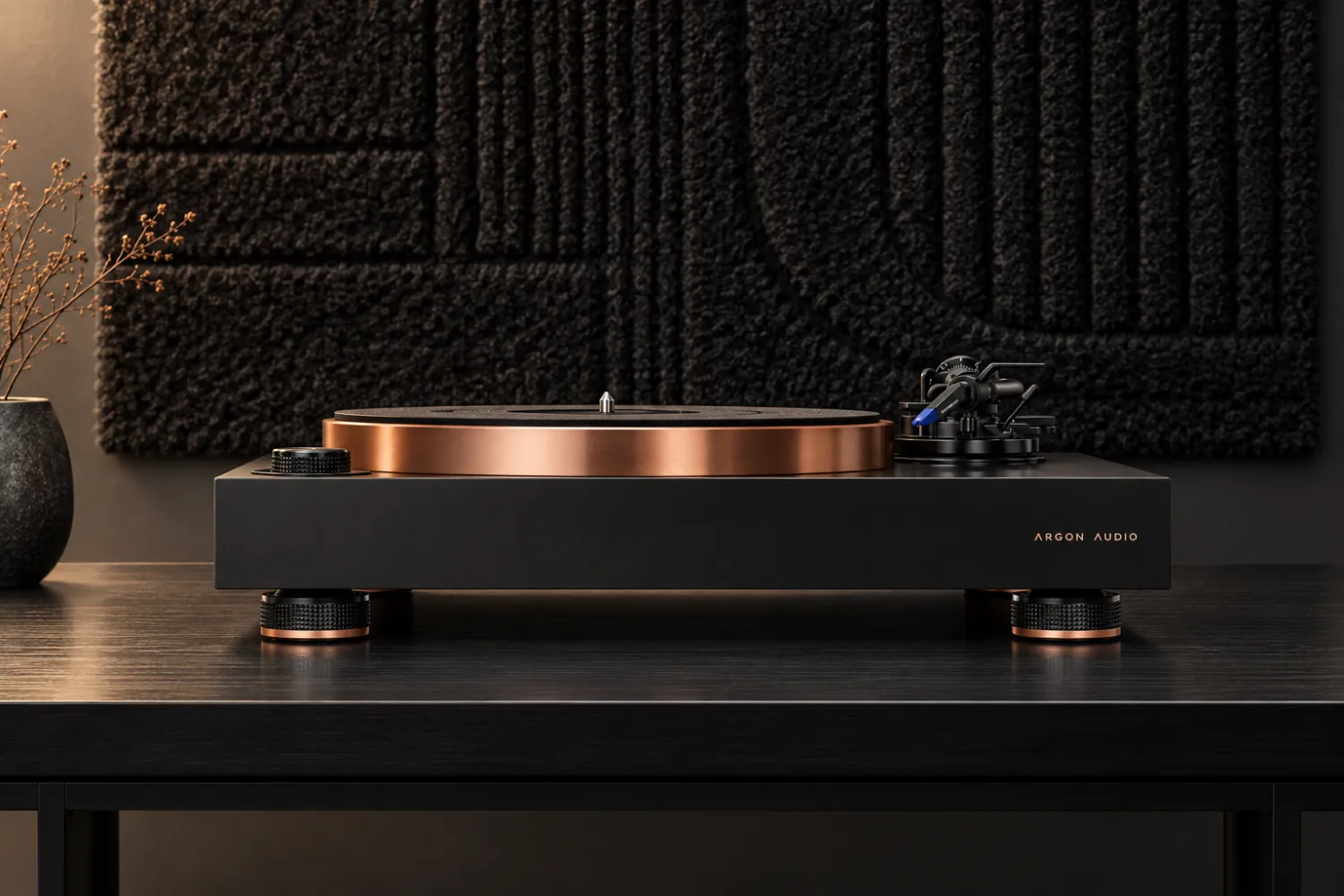
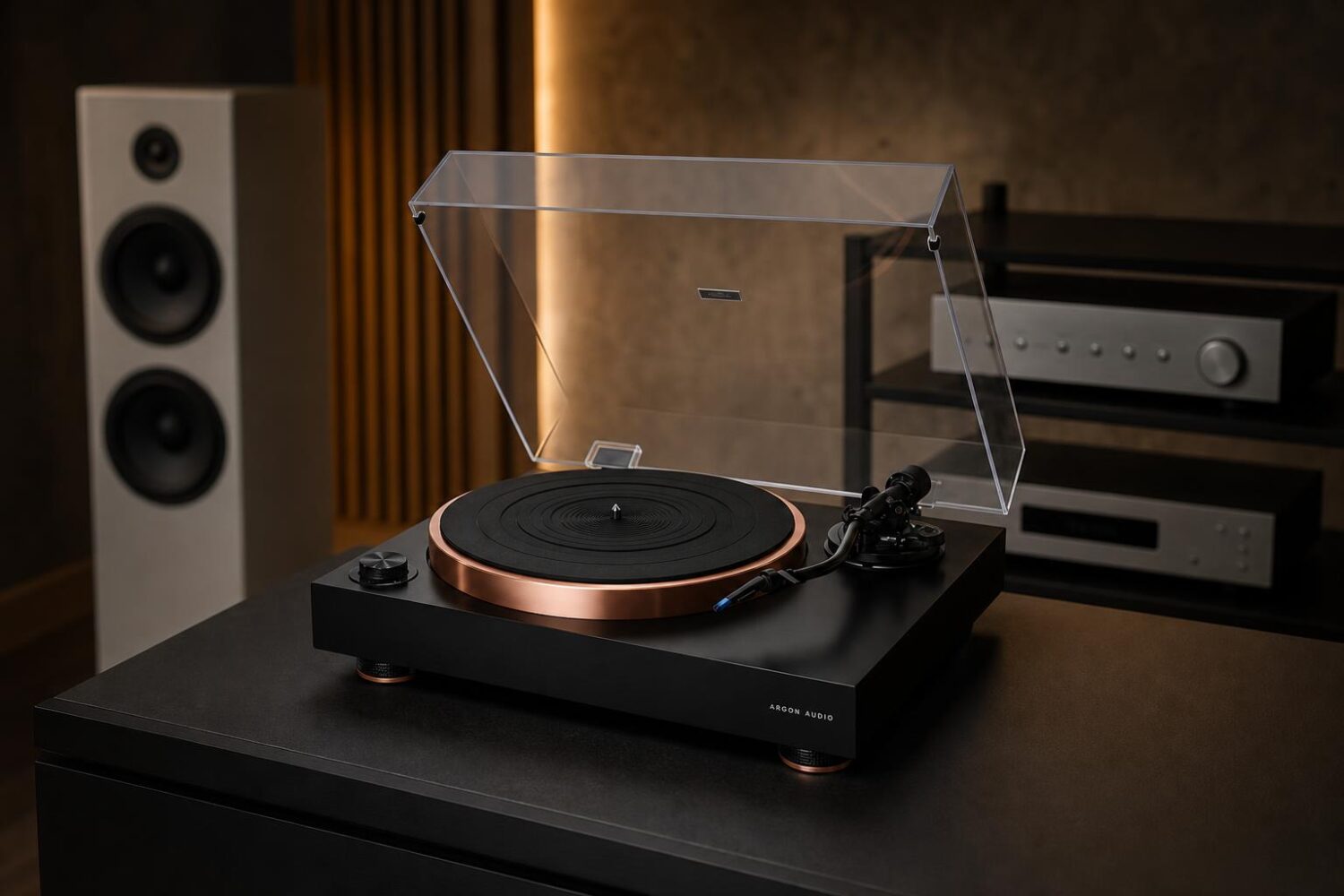
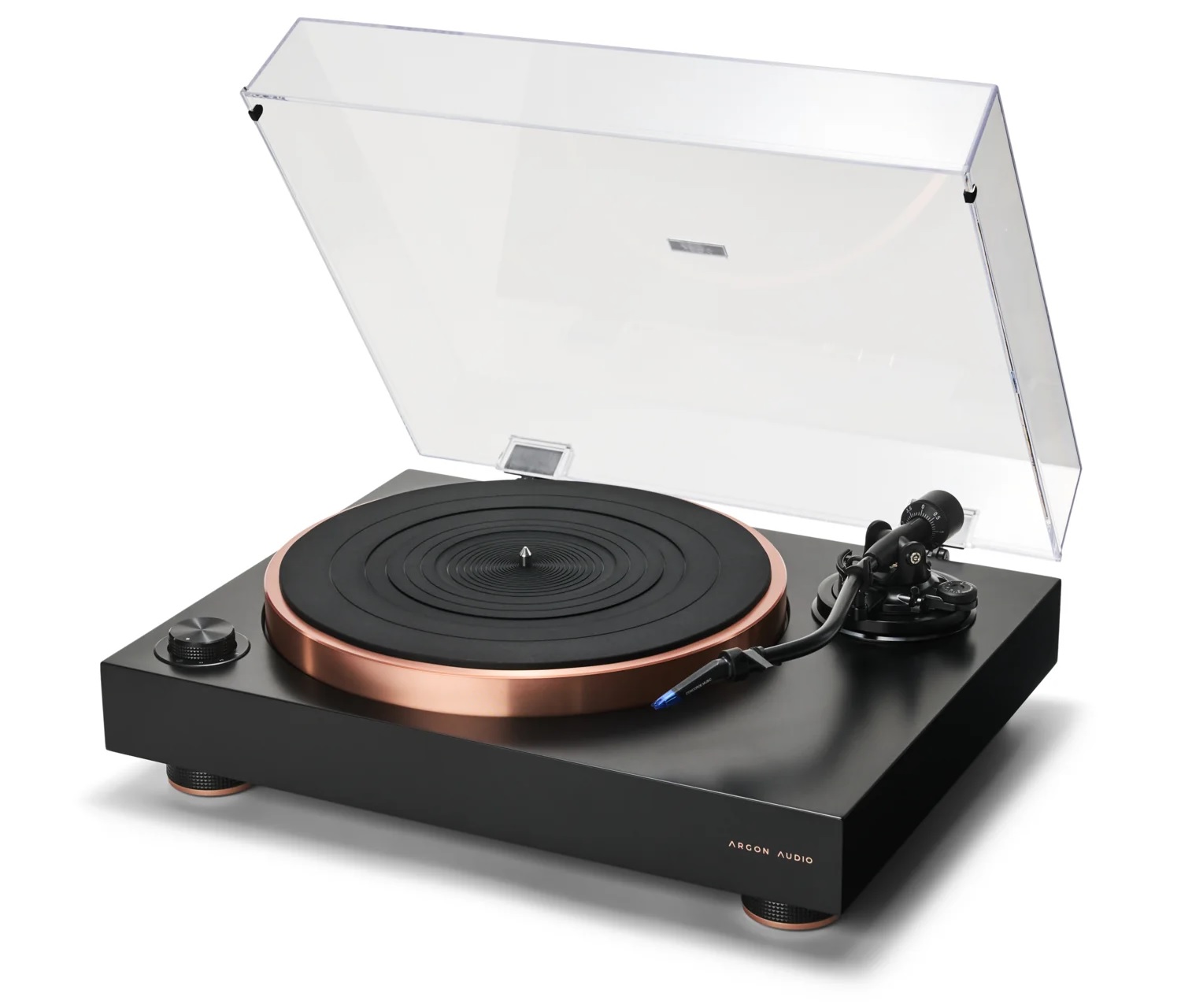
The Aurora represents a new technical direction for Argon Audio. Rather than following the belt-drive architecture used elsewhere in the company’s turntable range, it is built around a brushless direct-drive motor, an isolated bearing assembly and a substantial MDF plinth. Those choices are joined by a custom S-shaped tonearm, a factory-installed Ortofon Concorde Music Blue moving-magnet cartridge and a switchable onboard phono stage. The result is a turntable designed to be accessible at initial setup without closing off the possibility of later system changes. Its appeal lies not in any single specification, but in the way its motor system, vibration-control measures, cartridge format and connectivity have been assembled for practical domestic use.
Direct drive designed for a home hi-fi system
The Aurora is Argon Audio’s first direct-drive turntable. Its platter is driven by a brushless motor using an eight-pole coil structure, an arrangement developed to maintain stable rotation while minimizing wow and flutter. Direct drive removes the belt found between the motor and platter on many domestic decks, but Argon Audio has also paid attention to the possibility of motor energy entering the playback system.
To address that issue, the bearing assembly is acoustically isolated from the drive system. This is an important part of the Aurora’s design rationale: it seeks to combine the rotational consistency associated with direct drive with mechanical separation intended for critical listening at home. Argon Audio is therefore not presenting direct drive merely as a convenience feature, but as part of a wider vibration-management strategy.
Dedicated controls provide direct selection of 33, 45 and 78 rpm. The first two settings cover conventional LPs and singles, while the third adds support for compatible 78 rpm records. Owners interested in older record formats should still ensure that the record and stylus combination is appropriate, but the presence of all three speeds gives the deck broader format flexibility than a two-speed design.
Substantial construction and layered damping
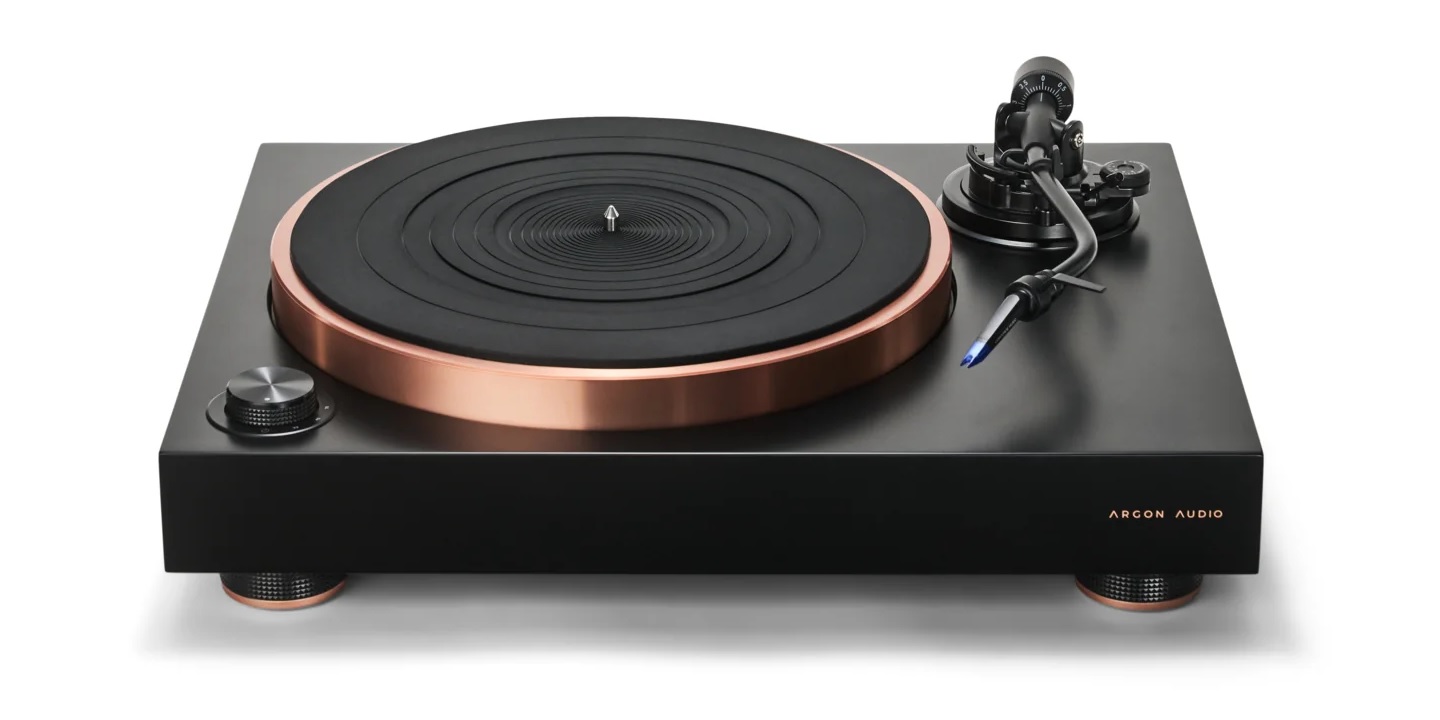
A 55 mm-thick MDF plinth forms the Aurora’s structural foundation. It is the thickest base Argon Audio has used on one of its turntables to date, and its combination of mass and rigidity is intended to create a stable platform while reducing sensitivity to vibration in the listening room.
The recessed aluminum platter weighs nearly 1.5 kilograms and incorporates rubber damping. Argon Audio also supplies a thick rubber mat, adding another layer of resonance control at the interface between platter and record. These elements show a consistent approach: rather than relying on the plinth alone, the Aurora applies mass and damping at several points in the mechanical assembly.
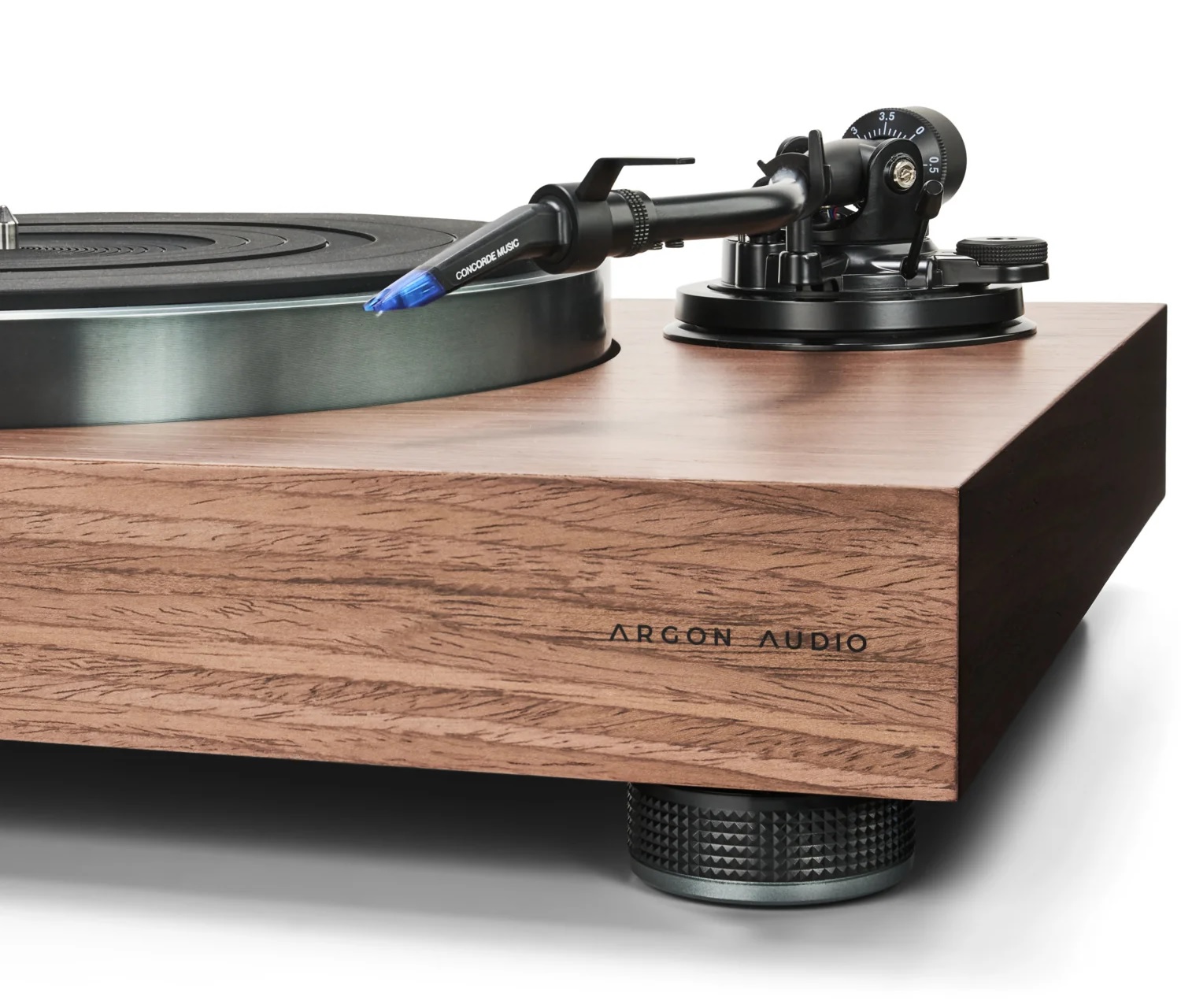
New vibration-damping feet provide separation from the supporting rack, cabinet or turntable platform. Each foot can be adjusted independently for height, allowing the deck to be leveled when the supporting surface is not completely even. Accurate leveling is a fundamental part of turntable installation, so integrating adjustment into all four feet should make proper setup more manageable in real living spaces.
A tonearm and cartridge combination intended to simplify setup
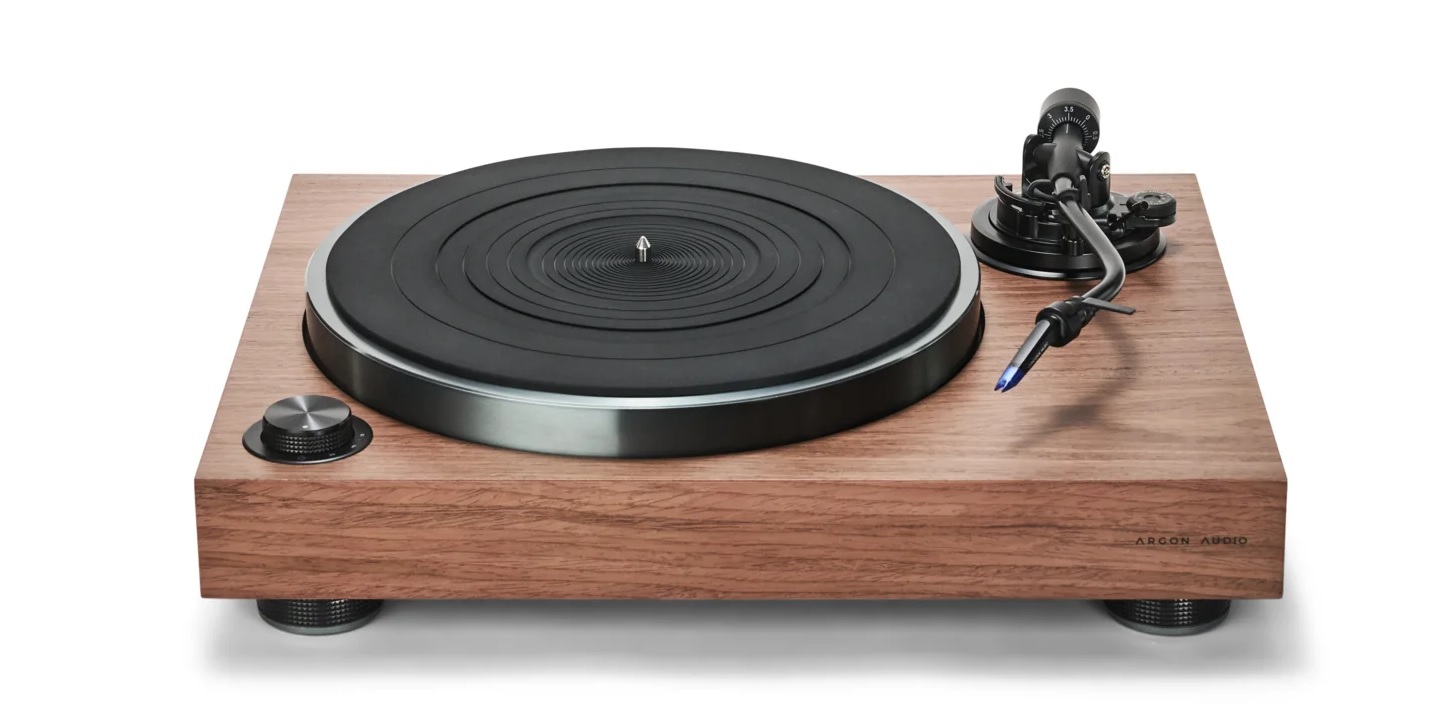
The Aurora uses a rigid, statically balanced S-shaped aluminum tonearm. It incorporates Argon Audio’s patented ATS technology and includes vertical tracking angle adjustment. The latter gives owners additional setup flexibility, particularly if changes elsewhere in the record interface alter the arm’s working height.
An Ortofon Concorde Music Blue moving-magnet cartridge is fitted at the factory. The Concorde’s integrated cartridge-and-headshell construction attaches directly to the tonearm, avoiding the conventional alignment process associated with installing many separate cartridge bodies into detachable headshells. That can remove one of the more exacting stages of initial turntable preparation while also making later replacement more straightforward.
There is a useful upgrade path within Ortofon’s Concorde Music family. The range uses a shared cartridge body, allowing an owner to make a future change within that family by replacing the stylus rather than fitting and aligning a completely new cartridge. This does not make the Aurora universally cartridge-free in terms of setup decisions, but it offers a clearly defined route for owners who want to retain the integrated Concorde format.
A switchable phono stage broadens system compatibility
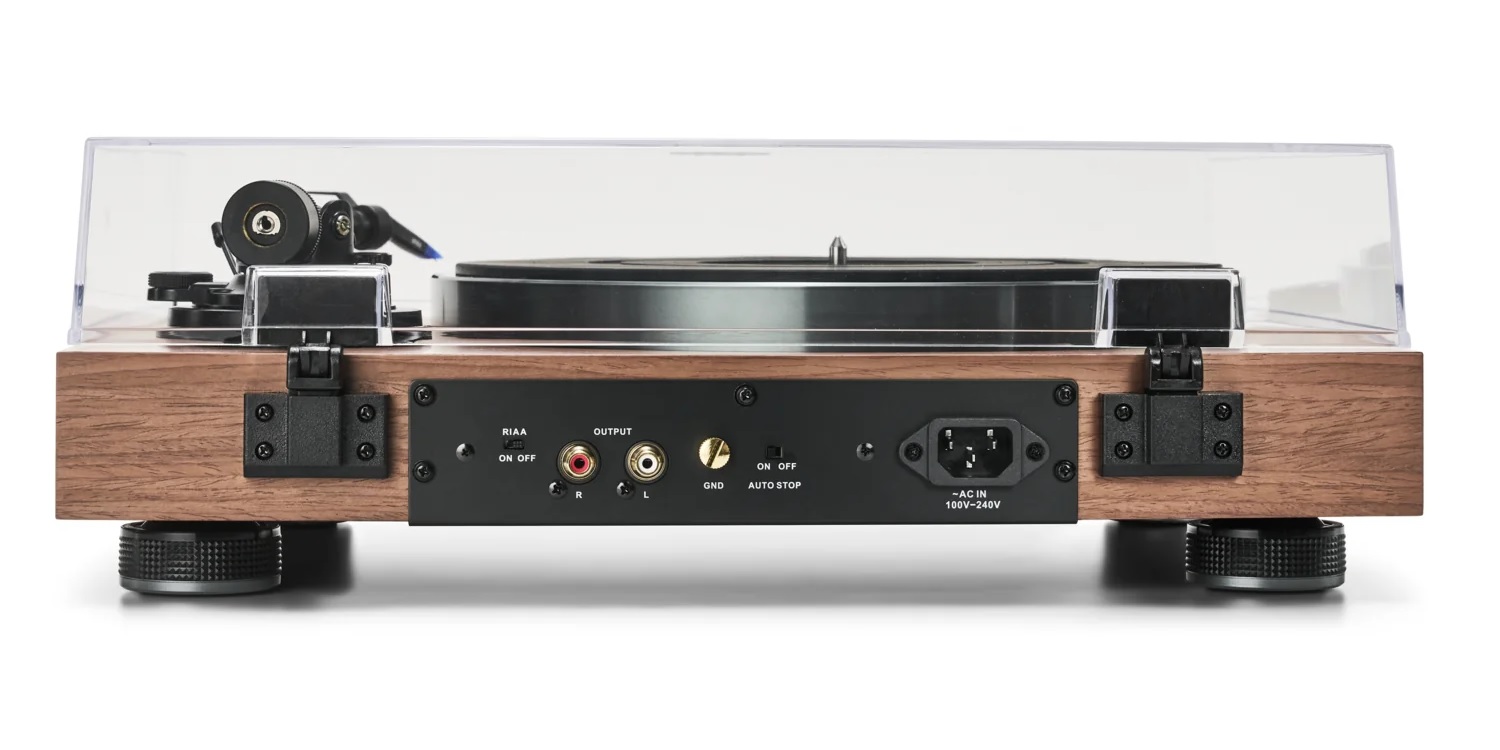
The Aurora includes a moving-magnet phono preamplifier. With the internal stage active, the turntable can connect to an amplifier, active-speaker system or other audio product that provides a suitable line-level input but lacks a dedicated phono connection. This can reduce the number of components and cables required for a first vinyl system.
Crucially, the phono stage can also be bypassed. An owner can instead use a compatible phono input built into an amplifier or add a preferred external phono preamplifier. The switchable arrangement prevents the Aurora from being confined to the simplest type of installation and allows it to move into a more component-based system over time.
This flexibility is especially relevant because the supplied Ortofon is a moving-magnet design and the internal phono stage is intended for moving-magnet cartridges. Users considering a different cartridge type in the future would need to account for its phono-stage requirements, but the bypass option preserves room for external electronics.
Small usability features with everyday value
Automatic stop halts platter rotation at the end of playback. It is a focused convenience feature rather than a fully automatic operating system: the Aurora is not described as automatically placing or returning the tonearm. Nevertheless, stopping rotation after a record finishes can be useful for listeners who do not always reach the deck immediately.
An automatic standby mode activates after 20 minutes, reducing unnecessary power use when the turntable has been left idle. Argon Audio has also integrated the power supply into the deck, avoiding the need to position a separate external power unit during installation.
Finish options consist of matte black lacquer and walnut veneer. The black version offers a restrained technical appearance, while the veneer provides an alternative for systems or furniture where a warmer material finish is preferred. Both enclose the same combination of direct drive, damped construction and onboard amplification.
Who the Argon Audio Aurora is best suited to
The Aurora is particularly relevant to listeners who want the consistency and direct speed selection of a direct-drive platform in a turntable designed explicitly for domestic hi-fi use. Its preinstalled cartridge and internal phono stage should also suit people assembling a vinyl system without wanting to select and align a cartridge or purchase a separate phono preamplifier at the outset.
It may also appeal to experienced owners looking for a relatively streamlined deck that still permits selected changes. The phono stage can be bypassed, vertical tracking angle is adjustable, the feet can be individually leveled and the Concorde Music cartridge format provides a straightforward stylus-based path within that range. Three-speed support adds relevance for collections extending beyond standard LPs and 45 rpm singles.
There are, however, distinctions worth noting. Buyers wanting fully automatic cueing and tonearm return should not confuse automatic stop with full automation. Those planning extensive experimentation with unrelated cartridge designs may prefer a more conventional cartridge-and-headshell arrangement, while anyone intending to use a moving-coil cartridge would need suitable external phono amplification. The Aurora’s strongest fit is therefore with listeners who value a largely prepared, easy-to-integrate package but still want meaningful control over setup and system matching.
Conclusion
The Argon Audio Aurora brings together an isolated brushless direct-drive system, a thick MDF plinth, a damped aluminum platter and independently adjustable feet in a design centered on stable, practical vinyl playback. Its factory-installed Ortofon Concorde Music Blue reduces initial cartridge setup, while the shared Concorde Music body creates a straightforward route for future stylus changes. Three playback speeds, automatic stop, standby operation and an integrated power supply support everyday usability. Most importantly, the bypassable moving-magnet phono stage allows the turntable to serve either a compact system with active speakers or a more traditional component setup using external phono electronics. That balance makes the Aurora most suitable for listeners seeking an approachable direct-drive turntable with substantial construction, broad connectivity and carefully retained upgrade flexibility.

Sound Off
0Join the discussion if you have something to add.