
Choosing a turntable involves more than comparing plinths, platters and tonearms.
Cartridge compatibility, phono-stage requirements, speed control and setup complexity can have just as much influence on long-term satisfaction.
A convincing choice should suit both the rest of the system and the amount of adjustment the listener is willing to undertake. This selection ranges from substantial audiophile decks to accessible, ready-to-use players. The Music Hall mmf-9.3 emphasizes mechanical isolation, the Pro-Ject X1 B provides a route toward balanced moving-coil playback, and the factory-adjusted Roksan Attessa prioritizes uncomplicated installation. The compact Kestrel KT-100 and suitcase-style Mixx Revival 55 address very different definitions of convenience and value. The source material also includes a rare IKEDA cartridge and practical explainers covering phono stages, drive systems and tonearm design. These are not direct turntable alternatives, but they clarify the decisions that determine whether a vinyl system will be compatible, usable and appropriate for its owner.

1. Most common questions about vinyl players and
Phono-stage selection depends on cartridge type, available adjustments and the connections provided by the rest of the system.
This system-planning primer explains why a phono preamplifier is not merely an accessory.
It distinguishes moving-magnet and moving-coil compatibility, outlines the differences between integrated and standalone phono stages, and notes the value of adjustment switches when matching different cartridges.
The discussion also connects phono-stage quality with background noise, RIAA correction and tonal balance. It is particularly relevant before buying a turntable without a built-in phono stage or upgrading from a basic integrated module.
Best for: Planning a compatible vinyl system
- Explains MM and MC compatibility
- Covers integrated and standalone phono stages
- Highlights the value of cartridge adjustment
- Connects RIAA accuracy with tonal balance
Verdict: A useful starting point for understanding how cartridge and phono-stage choices affect the wider playback chain.
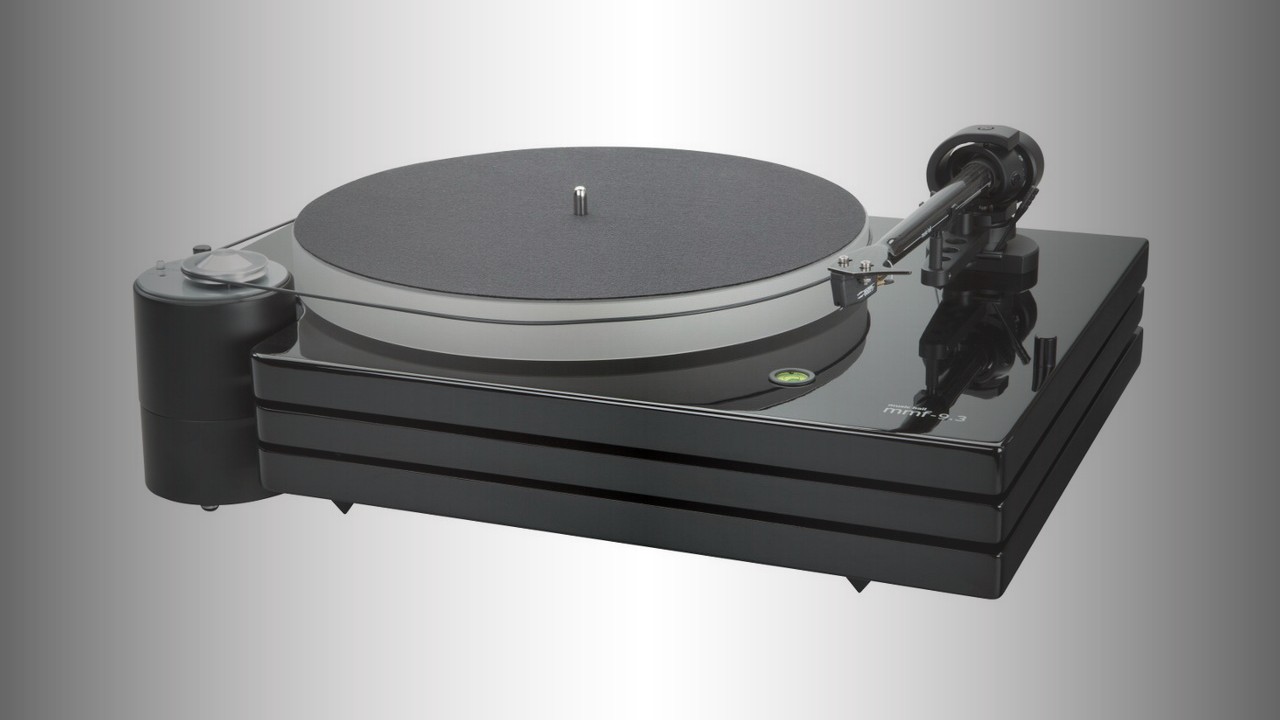
2. Music Hall mmf-9.3: Plug and play turntable in a High Gloss finish
The Music Hall mmf-9.3 combines a three-layer plinth, separate motor support and thick acrylic platter.
The Music Hall mmf-9.3 takes an unusually comprehensive approach to vibration management.
Its structure uses three MDF boards separated by sorbothane pads, while the AC motor sits mechanically isolated from the chassis on a separate cylindrical support with silicone feet.
A 25 mm acrylic platter, ceramic bearing, adjustable steel cones and an integrated spirit level support accurate installation. Electronic buttons handle 33 and 45 rpm selection, avoiding manual belt repositioning. The result is a substantial belt-drive design with several practical aids for setup and isolation.
Best for: Isolation-focused audiophile systems
- Three-layer MDF structure with sorbothane isolation
- Mechanically isolated AC motor
- Electronic 33 and 45 rpm selection
- Integrated spirit level and adjustable feet
Verdict: A carefully isolated, setup-friendly turntable for listeners who value substantial mechanical engineering and electronic speed selection.

3. 30 Pieces Worldwide: The Ultra-Rare IKEDA KOHAKU MC Cartridge
The limited-edition IKEDA KOHAKU features platinum-plated components, a solid-diamond cantilever and a symbolic silkscreen emblem.
The IKEDA KOHAKU is a moving-coil cartridge rather than a complete turntable, and its production is limited to 30 examples worldwide.
Developed as an anniversary model, it uses a solid-diamond cantilever, a silver wire-wound coil and a dual-damper system.
Platinum plating extends across the body, base, contact pins and screws, while a multilayer silkscreen emblem distinguishes the exterior. Its rarity and specialized construction place it firmly in collector territory, and any prospective owner would need to confirm compatibility with the chosen tonearm and phono stage.
Best for: Collectors seeking a rare MC cartridge
- Solid-diamond cantilever
- Silver wire-wound coil
- Dual-damper system
- Production limited to 30 examples
Verdict: A highly specialized cartridge whose distinctive materials and extreme scarcity matter as much as its place in a playback system.
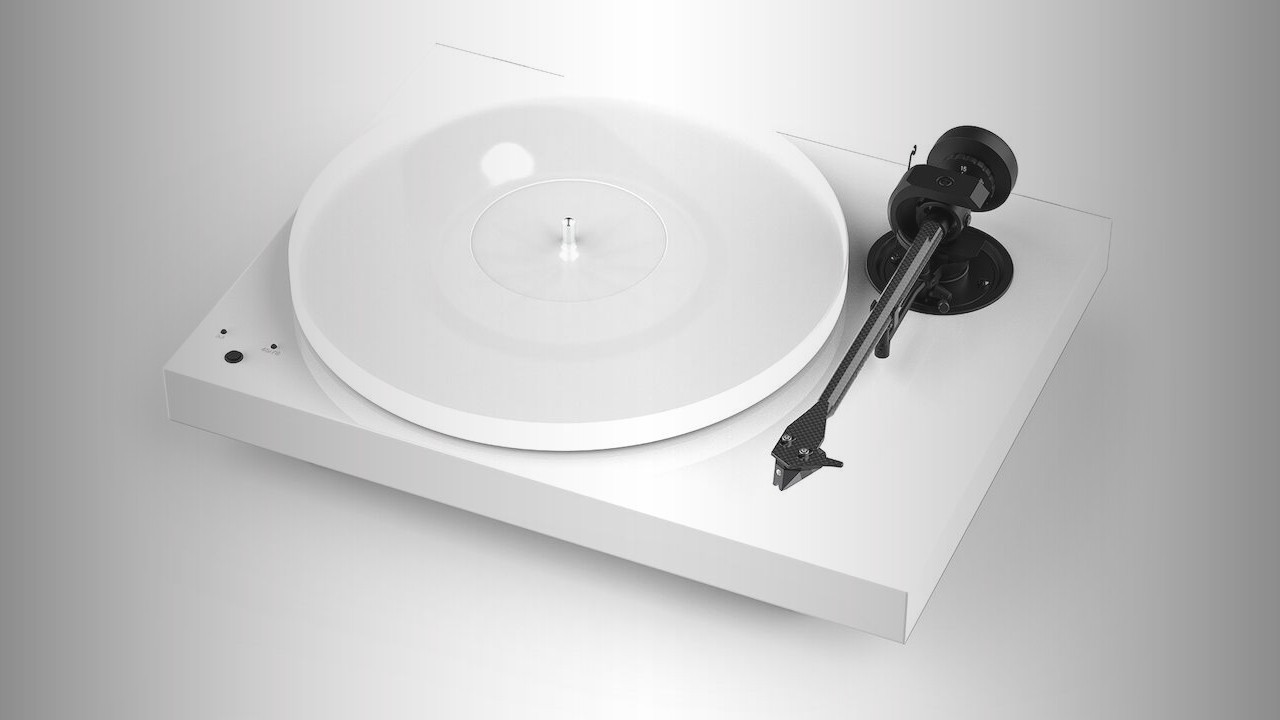
4. Pro-Ject X1 B: A sleek and sophisticated turntable
The Pro-Ject X1 B pairs a refined plinth finish with electronic speed control and an upgrade-ready balanced signal path.
The Pro-Ject X1 B is designed to work as a conventional moving-magnet turntable initially while leaving room for a balanced moving-coil upgrade.
It is supplied with an Ortofon Pick it S2 MM cartridge, but its True Balanced signal path can be used with a suitable MC cartridge and compatible balanced RIAA amplifier.
Electronic switching covers 33 and 45 rpm, making everyday operation easier than a design that requires belt relocation. Eight layers of lacquer finish the plinth, with real walnut veneer also available for listeners who prefer a natural appearance.
Best for: Listeners planning a balanced MC upgrade
- True Balanced signal path for a compatible MC setup
- Supplied with an Ortofon Pick it S2 MM cartridge
- Electronic 33 and 45 rpm switching
- Lacquered or real-walnut finish options
Verdict: A flexible turntable that is usable with its supplied MM cartridge while providing a defined route into balanced moving-coil playback.
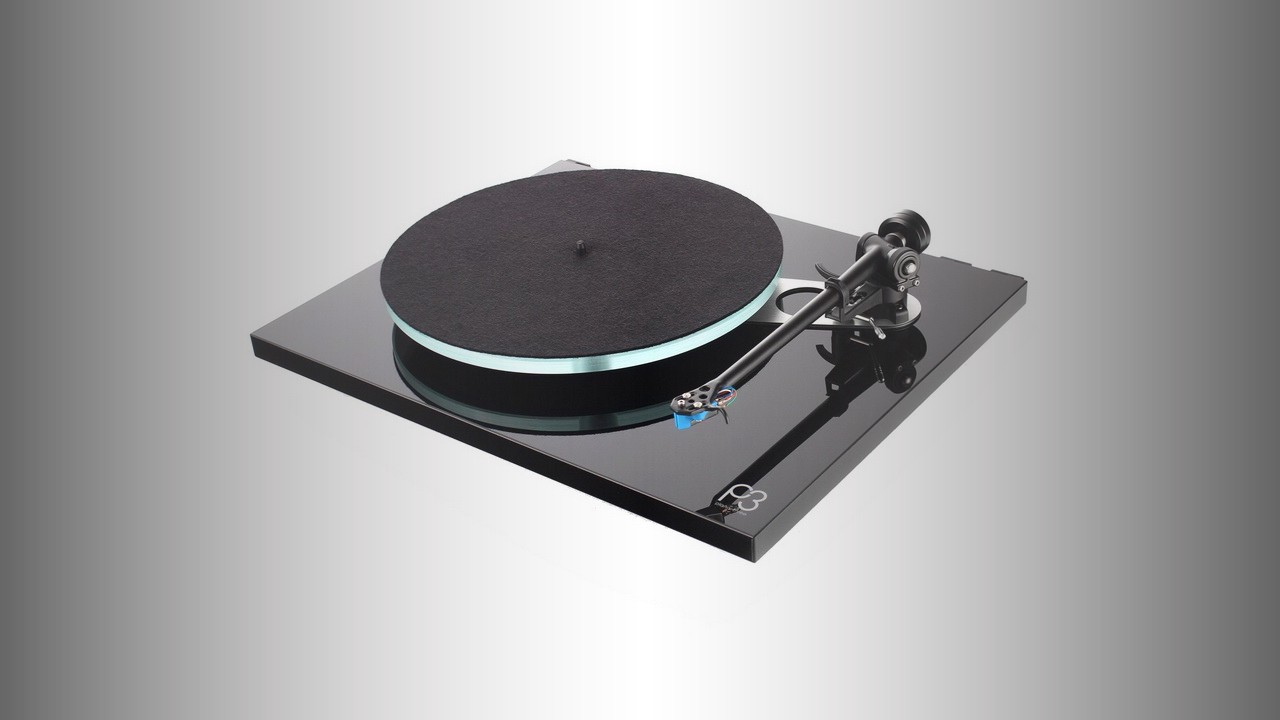
5. The Rega Planar 3 is a really really ridiculously good looking turntable
The Rega Planar 3 uses Double Brace reinforcement between the RB330 tonearm mounting area and the main bearing.
The Rega Planar 3 follows the brand’s established belt-driven, non-suspended formula while concentrating its engineering around rigidity and the tonearm.
Its RB330 arm has a tapered tube, integrated headshell, steel counterweight and high-precision, low-friction bearings.
Rega’s Double Brace Technology links the tonearm base with the main bearing area to reinforce the plinth where mechanical loads are concentrated. A proprietary Elys 2 moving-magnet cartridge is pre-installed, and the supplied low-capacitance interconnect terminates in Neutrik RCA connectors. Glossy black and white acrylic finishes keep the presentation deliberately restrained.
Best for: A focused, minimalist belt-drive system
- RB330 tonearm with low-friction bearings
- Pre-installed Elys 2 MM cartridge
- Double Brace plinth reinforcement
- Low-capacitance cable with Neutrik RCA connectors
Verdict: A straightforward Rega design built around a rigid plinth, dedicated tonearm engineering and a factory-installed MM cartridge.

6. Kestrel KT-100: Durable turntable with a 9.5-inch A5 CARBON tonearm
The Kestrel KT-100 combines a compact plinth, opal acrylic platter and 9.5-inch A5 Carbon Uni-Pivot tonearm.
The Kestrel KT-100 combines a small-format plinth with a 9.5-inch A5 Carbon Uni-Pivot tonearm and electronic adjustment between 33 1/3 and 45 rpm.
Its drive system uses a 24-volt AC motor described as low-noise and low-vibration, while the platter assembly includes an acetal sub-platter, a 10 mm opal acrylic platter and a 12 mm brass bearing with a steel ball.
Nine finish choices give it unusually broad visual flexibility. A clear Z-type dust cover is included, and an integrated phono option is available for buyers seeking simpler system connection.
Best for: Compact systems with personalized styling
- 9.5-inch carbon-fibre uni-pivot tonearm
- Electronic speed change
- Nine finish choices
- Optional integrated phono stage
Verdict: A compact and configurable turntable distinguished by its carbon uni-pivot arm, electronic speed control and broad choice of finishes.

7. Roksan Attessa Turntable: Beautiful Plug and Play recordplayer
The Roksan Attessa arrives with its single-point tonearm and Dana MM cartridge adjusted at the factory.
The Roksan Attessa is configured at the factory to reduce the work normally associated with installing a cartridge and setting up a tonearm.
Its proprietary 9.4-inch single-point arm is made from aluminium and composite materials, with an integrated headshell intended to avoid additional resonances.
The supplied Dana moving-magnet cartridge is also factory adjusted. A switchable built-in phono stage allows connection to systems with or without a separate phono input. Chassis supports derived from the Xerxes design and a 10 mm tempered-glass platter with an aluminium coating complete the package.
Best for: Low-fuss installation and system integration
- Factory-adjusted tonearm and Dana MM cartridge
- Switchable built-in phono stage
- 9.4-inch single-point tonearm
- Tempered-glass platter with aluminium coating
Verdict: A genuinely convenience-led design that combines factory setup with a switchable phono stage and proprietary arm and cartridge.

8. Belt Drive vs. Direct Drive Turntables: Everything You Need to Know
Direct-drive turntables place the motor beneath the platter, while belt-drive designs transfer rotation from a motor positioned to the side.
This explainer separates two fundamental turntable architectures without treating specifications as an end in themselves.
A direct-drive design places the motor beneath the platter and turns it directly, whereas a belt-drive model positions the motor to the side and transfers rotation through a rubber belt.
The article also offers sensible buying context: budget and essential requirements should narrow the field, but the final decision should not be reduced to terminology or a crowded specification sheet. It is a helpful reference for buyers who encounter both designs while comparing turntables.
Best for: Comparing belt and direct drive
- Clearly distinguishes the two drive layouts
- Decodes potentially confusing terminology
- Keeps budget and practical requirements in focus
Verdict: A clear technical primer that helps buyers understand drive architecture without presenting one layout as a universal answer.

9. Check out the Mixx Revival 55: A suitcase-style vinyl record player for just $100!
The Mixx Revival 55 packages three-speed playback and Bluetooth functionality in a colorful suitcase-style enclosure.
The Mixx Revival 55 is aimed at newcomers and casual users who want a self-contained record player rather than a conventional turntable requiring separate components.
Its suitcase-style synthetic-leather enclosure has chrome clasps, a carrying handle and a choice of cream, green, pink or turquoise finishes.
The belt-driven mechanism supports 33, 45 and 78 rpm records, and a 45 rpm adapter is included. Compact dimensions, lightweight construction and a Bluetooth adapter reinforce its emphasis on portability and straightforward use rather than the modular upgrade path of a separates-based vinyl system.
Best for: First-time and portable vinyl listening
- Supports 33, 45 and 78 rpm records
- Portable suitcase-style enclosure
- Included 45 rpm adapter
- Bluetooth adapter
Verdict: An accessible all-in-one option for convenience-minded users, though it serves a different purpose from the component turntables elsewhere in this guide.

10. Tonearms for Turntables: Fundamental concepts and various ways to set them up
Tangential tonearms travel linearly across a record, while pivoting designs rotate around a fixed support point.
This guide examines the tonearm as the mechanism responsible for maintaining accurate, consistent cartridge contact with a record groove.
It contrasts tangential arms, which move linearly in a manner comparable to a mastering cutter, with the pivoting arms used by nearly all modern turntables.
The discussion also explains why theoretical advantages do not automatically translate into practical simplicity: tangential systems can be costly to manufacture, sensitive to horizontal alignment and dependent on an additional movement mechanism. It is valuable background for understanding why tonearm geometry, construction and setup deserve attention during turntable selection.
Best for: Understanding tonearm design choices
- Explains the tonearm’s role in groove tracking
- Compares tangential and pivoting designs
- Addresses alignment, complexity and reliability trade-offs
Verdict: A useful conceptual guide for assessing tonearm architecture and the practical compromises behind different tracking methods.


Sound Off
0Join the discussion if you have something to add.