
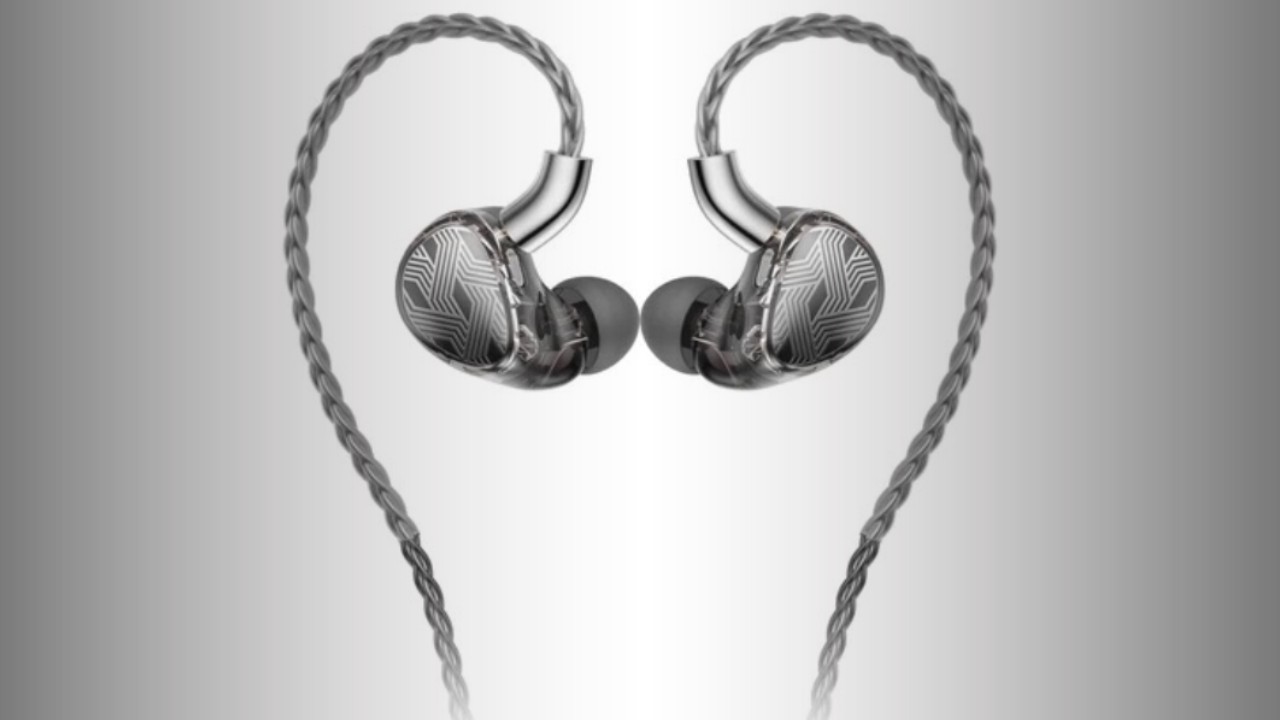
The FiiO FA19 approaches flagship in-ear monitor design with a clear engineering brief: extract substantial low-frequency performance from an entirely balanced-armature configuration while preserving the detail and smoothness expected from a sophisticated multi-driver design. Priced at $999, it combines ten Knowles balanced-armature drivers with a dedicated bass-enhancement system, carefully optimized midrange and treble units, and a DLP 3D-printed housing designed to manage acoustic energy. Rather than adopting the increasingly common hybrid formula of mixing armatures with a dynamic bass driver, FiiO has remained committed to a pure-BA architecture. That choice gives the FA19 a distinctive position for listeners interested in the speed, compactness, and multiway tuning potential of balanced armatures without accepting that restrained bass must be part of the package.
A Pure Balanced-Armature Flagship
The FA19’s central attraction is its ten-driver balanced-armature architecture. Multi-BA earphones allow different drivers to be assigned to particular portions of the audible range, giving the manufacturer considerable scope to shape the overall frequency response. The challenge is not simply adding more drivers, but making their contributions behave as a unified system. FiiO says it spent three years refining the FA19, with particular attention paid to the cohesion and resolving ability of the complete frequency response.
FiiO developed the driver system in close cooperation with Knowles, an established specialist in miniature balanced-armature technology. This was more involved than selecting standard components from a catalog. According to FiiO, the two companies created a bass armature specifically for the FA19 and also optimized its mid- and high-frequency drivers. That coordinated approach is important in a product with this many acoustic elements: the drivers, enclosure, and tuning need to be treated as parts of one design rather than as isolated specifications.
Bass Engineering Without a Dynamic Driver
Low-frequency reproduction is the FA19’s most distinctive technical focus. Balanced-armature drivers are valued for their small size and precision, but pure-BA earphones are not always associated with the physical depth or weight that some listeners seek from bass. FiiO’s response was to retain an all-armature layout while developing a specialized low-frequency driver and a bass-enhancement system using negative feedback.
This arrangement is intended to deliver deeper and richer bass than is commonly expected from a pure balanced-armature IEM. The significance lies in how FiiO has pursued that goal: it has not added a conventional dynamic driver or changed the FA19 into a hybrid design. For prospective owners who specifically prefer an all-BA configuration, the FA19 offers a technically interesting attempt to extend bass performance while preserving the core architecture they want. The dedicated low-frequency work also indicates that bass was treated as a primary engineering objective rather than left as a secondary consequence of the driver count.
The Housing Is Part of the Acoustic System
The FA19’s enclosure is formed using precise DLP 3D-printing technology. In an advanced multi-driver IEM, this production method can serve a more meaningful purpose than creating an intricate external shape. It allows internal acoustic structures to be formed with the repeatability and geometric control required to route energy within a very small space.
FiiO uses the printed housing to direct low-frequency energy and reduce resonance at the rear of the earphone. Those functions are closely connected to the FA19’s broader bass strategy. A specialized armature cannot operate independently of the volume and pathways around it; unwanted internal resonance or poorly controlled rear energy could undermine the intended response. By designing the enclosure around the acoustic system, FiiO has made the shell an active part of the low-frequency solution.
This integrated construction also illustrates why the FA19 took an extended development period. Fitting ten armatures into an in-ear format is only one part of the task. Their acoustic paths and the behavior of the surrounding enclosure must also be considered. DLP printing gives FiiO a practical way to realize internal forms that would be difficult to produce through simpler manufacturing methods.
Midrange and Treble Receive Equal Attention
Although the bass system is the headline feature, the FA19 was not developed solely as a low-frequency showcase. FiiO and Knowles also worked together to optimize the midrange and high-frequency drivers. The stated aim was to combine high detail with a smooth presentation, avoiding a design in which resolution is pursued without regard for tonal continuity.
That matters because a ten-driver arrangement creates both opportunities and complications. Assigning specialized drivers to different frequency regions can support fine control, but each section must hand over cleanly to the next. FiiO describes the FA19 as being carefully tuned across the entire frequency-response curve, with cohesion forming part of the design objective. While that description is not a substitute for personal audition, it clarifies the product’s intent: the driver count is meant to support an integrated tuning rather than function merely as an attention-grabbing number.
A Premium IEM with a Specific Identity
At $999, the FA19 occupies premium territory and is positioned as an ambitious multi-BA model. Its value proposition rests on the depth of its engineering: ten Knowles armatures, a bass driver developed for this particular earphone, negative-feedback bass enhancement, optimized midrange and treble units, and an acoustically purposeful 3D-printed shell. These are concrete design features rather than cosmetic distinctions.
The product also has a clear identity within the broader IEM market. Many high-end models use hybrid combinations to divide low, middle, and high frequencies among different driver types. The FA19 instead explores how far a pure balanced-armature platform can be taken. That makes it relevant to buyers who care about driver topology and want a model whose bass ambitions do not depend on adding a dynamic unit.
No impedance, sensitivity, cable interface, or source-power requirements are specified in the available product details, so system matching should not be assumed from the driver count alone. Prospective owners should confirm those practical points for their intended portable player, DAC-headphone amplifier, or other source. As with any premium in-ear monitor, fit and personal tuning preferences also remain important considerations.

Who the FiiO FA19 Is Most Suitable For
The FA19 is most likely to appeal to listeners seeking a premium, technically elaborate IEM with an entirely balanced-armature design. It is particularly relevant to those intrigued by the precision and multiway tuning flexibility of BA systems but who also want bass extension to be an explicit design priority. Buyers interested in the collaboration between an IEM manufacturer and a specialist driver supplier may also appreciate the custom development work with Knowles.
It is less clearly suited to someone who specifically wants a hybrid earphone, a large dynamic bass driver, or a simpler and more affordable design. Nor should its ten-driver specification be treated as an automatic guarantee of personal preference. The FA19’s real distinction is not the number alone, but the way FiiO has combined those drivers with purpose-built bass technology and a carefully formed enclosure. At this price, an audition remains advisable wherever possible, especially for buyers with strong preferences regarding fit or tonal balance.
Conclusion
The FiiO FA19 stands out as a focused exercise in pure balanced-armature engineering. Its strongest documented qualities are the ten-driver Knowles architecture, the specially developed bass armature, negative-feedback low-frequency enhancement, and a DLP 3D-printed housing designed to direct bass energy and reduce rear resonance. FiiO’s work on the midrange and treble drivers, together with three years of refinement, shows that integration was as important as scale. At $999, the FA19 is aimed at enthusiasts who want a premium multi-BA IEM with an unusually serious approach to bass, yet who prefer to remain within an all-armature design.


Sound Off
0Join the discussion if you have something to add.