A capable home cinema system is rarely built from one type of component.
The most convincing rooms usually depend on a careful match between video, amplification, processing, sources and speakers, which is why this editorial selection spans AV receivers, projectors, disc players, a full surround package, and higher-end processing hardware.

1. Sony STR-DN1080
Sony STR-DN1080 AV receiver with Dolby Atmos, DTS:X, multiple HDMI inputs and dual HDMI outputs for home theater use.
The Sony STR-DN1080 remains an appealing AV receiver for a home theater centered on immersive formats without becoming unnecessarily complex.
The source highlights its 5.1.2 or 7.1-channel configuration, support for Dolby Atmos and DTS:X, six HDMI inputs, and two HDMI outputs.
That second output is especially useful for systems that need to send 4K video and surround sound to two different living areas. Its streaming support is also broad, with Chromecast, UPnP and Spotify Connect alongside Wi-Fi, Ethernet and Bluetooth.
Best for: Flexible AV receiver for surround movie systems
- Dolby Atmos and DTS:X support
- 5.1.2 or 7.1-channel configuration
- Six HDMI inputs and two HDMI outputs
- Chromecast, UPnP and Spotify Connect
Verdict: The STR-DN1080 is a strong all-round AV receiver for users who want immersive surround, useful HDMI flexibility and convenient streaming in one box.

2. Optoma UHZ68LV
Optoma UHZ68LV dual-laser 4K UHD projector with Dolby Vision, HDR10+ and flexible installation options.
The Optoma UHZ68LV is presented as a high-performance 4K ultra HD projector built around dual-laser technology.
Its most notable home cinema credentials are Dolby Vision and HDR10+ support, 5,000 lumens peak brightness, and 90% DCI-P3 color coverage.
The source also notes a 1.6x zoom, lens shift and 360-degree projection options, giving installers more freedom for front, rear or ceiling setups. PureEngine Ultra is included for motion, detail and color processing.
Best for: Bright-room 4K projection with advanced HDR support
- 4K UHD dual-laser projection
- Dolby Vision and HDR10+ support
- 5,000 lumens peak brightness
- 1.6x zoom, lens shift and 360-degree projection
Verdict: The UHZ68LV is the projector in this list for rooms that need high brightness, installation flexibility and modern HDR format support.

3. Onkyo HT-S3705
Onkyo HT-S3705 home cinema system built around the TX-SR333 receiver with five-channel amplification and multiple HDMI inputs.
The Onkyo HT-S3705 article focuses on an entry-level home cinema route built around the TX-SR333 receiver.
The package is positioned around true high-resolution surround sound, five channels of amplification, WRAT wideband amplification technology and six HDMI inputs.
Built-in Bluetooth, HDMI pass-through, Hybrid Standby mode and USB high-resolution audio transmission add convenience. The receiver is also described as supporting ultra-high-definition video signals with frame rates up to 60 Hz.
Best for: Entry-level component-style surround systems
- Five-channel surround amplification
- WRAT wideband amplification technology
- Six HDMI inputs
- Built-in Bluetooth
Verdict: The HT-S3705 is a sensible option for buyers who want a traditional surround receiver foundation with core HDMI, Bluetooth and high-resolution audio support.

4. MiniDSP Tide16
MiniDSP Tide16 AV DSP processor with OLED front display, HDMI connectivity, eARC and sixteen balanced XLR outputs.
The MiniDSP Tide16 is aimed at more ambitious home cinema installations that need a processor rather than a conventional receiver.
It is described as a 16-channel Dolby Atmos and DTS:X AV DSP processor with 16 fully balanced XLR outputs, three HDMI inputs and eARC for sources routed through a compatible television.
MiniDSP also includes Dirac Live, Dirac Bass Control and Dirac Active Room Treatment licenses at no extra cost, according to the source. Its rack-mountable design, matrix mixer, advanced bass management and processing across all sixteen outputs point toward custom and multi-subwoofer systems.
Best for: Advanced processor-based immersive theaters
- Up to 16-channel decoding depending on content and speaker layout
- Dolby Atmos and DTS:X support
- Dirac Live, Bass Control and Active Room Treatment licenses included
- 16 balanced XLR outputs
Verdict: The Tide16 is the specialist choice here for installations that prioritize channel count, balanced outputs and deep room-correction tools.
5. Magnetar UDP900MkII and UDP800MkII
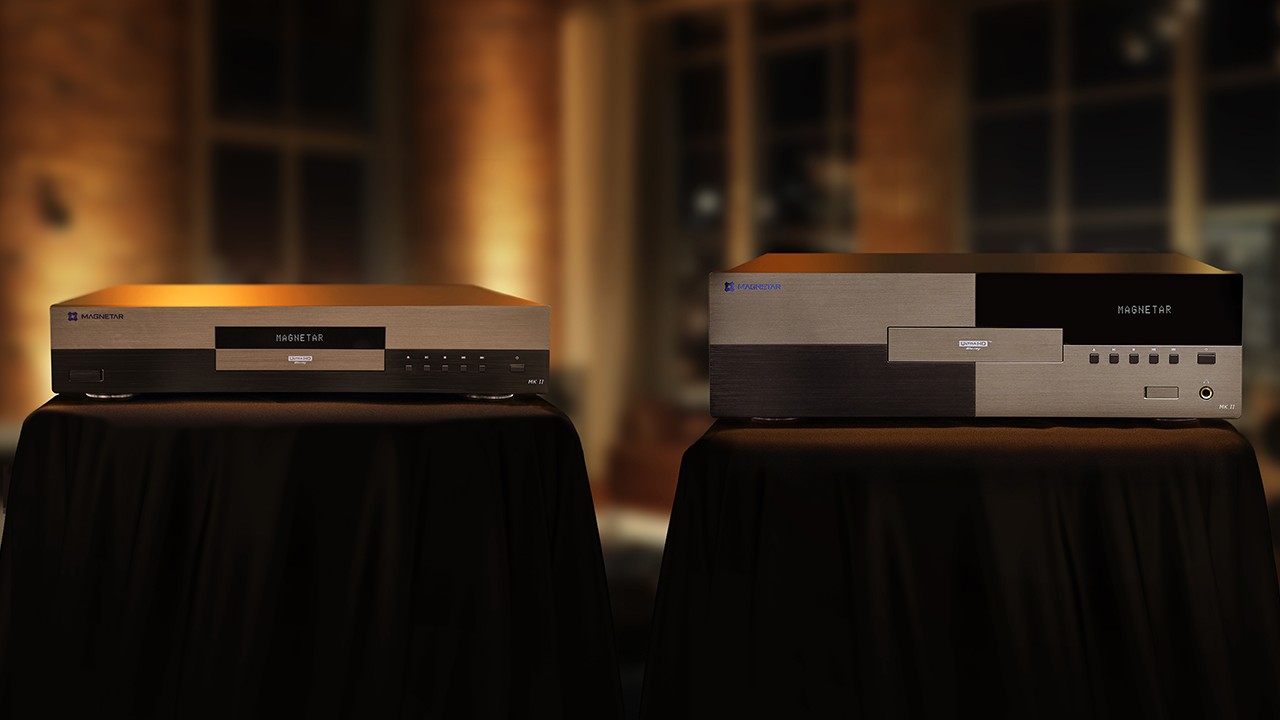
Magnetar UDP900MkII and UDP800MkII premium optical disc players for high-quality home cinema disc playback.
The Magnetar UDP900MkII and UDP800MkII are for home cinema owners who still value physical media.
The source describes them as a new generation of Blu-ray players capable of playing previous optical disc formats, aimed at digital movie collections in higher quality than streaming services can provide.
The article also frames Magnetar as a specialist in premium, format-independent optical disc players for users who want high-end disc playback rather than relying solely on streaming.
Best for: Disc collectors and physical-media home cinemas
- Designed for optical disc movie collections
- Playback of previous optical disc formats
- Positioned as premium media players
- Format-independent player approach
Verdict: The UDP900MkII and UDP800MkII stand out for viewers who want a dedicated premium player for UHD Blu-ray and legacy disc libraries.
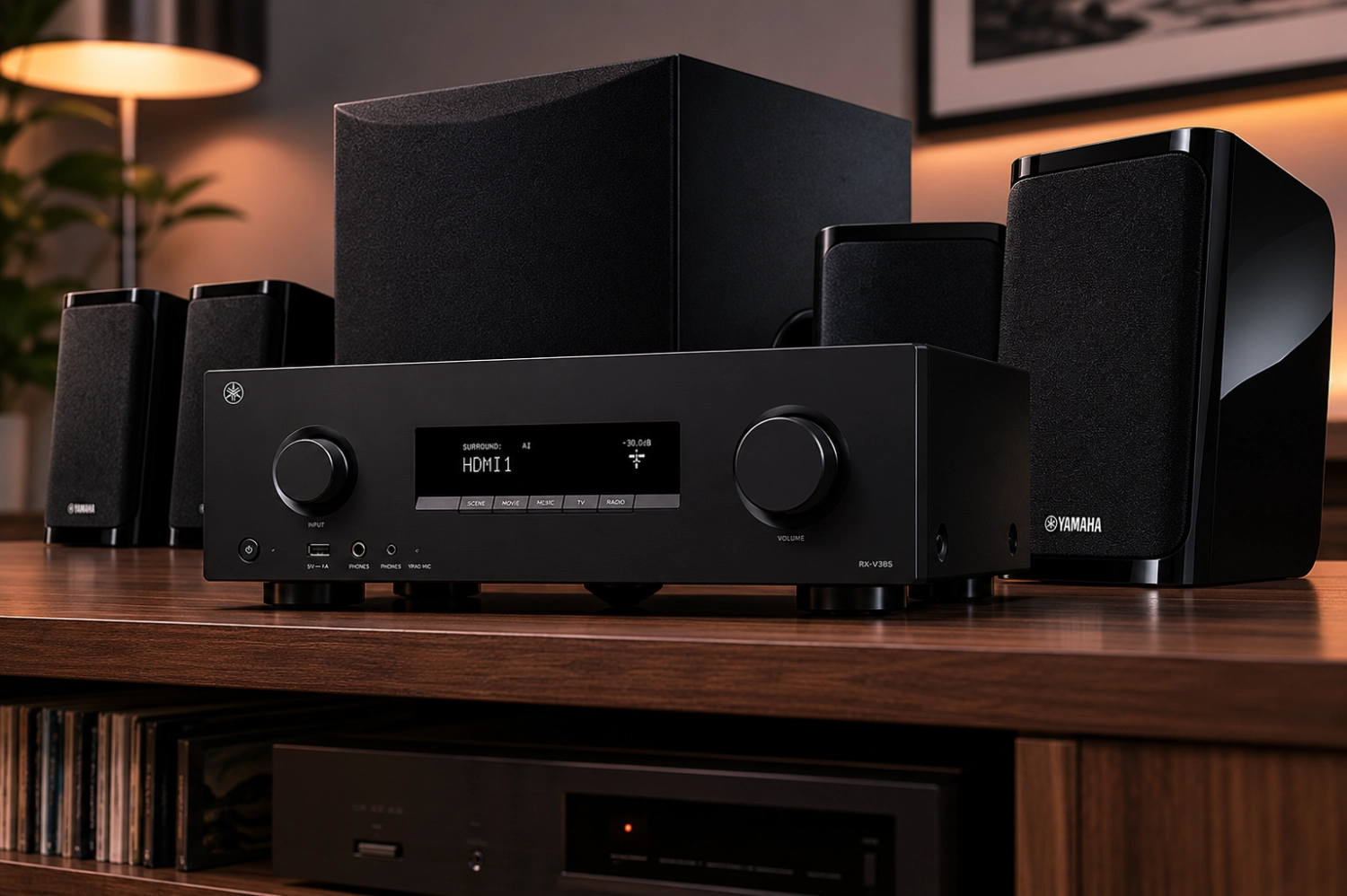
6. Yamaha YHT-4970U
Yamaha YHT-4970U complete 5.1 home theater package with RX300A receiver, compact speakers and active subwoofer.
The Yamaha YHT-4970U is a complete 5.1-channel home theater system for buyers who do not want to assemble receiver, speakers, subwoofer and accessories separately.
The package includes the RX300A AV receiver, five compact satellite speakers, an active subwoofer with an 8-inch driver, speaker cable and setup accessories.
Its receiver update is the main attraction, with HDMI 2.1 ports, support for 8K/60 Hz and 4K/120 Hz video, HDR10+, Dolby Vision, VRR, ALLM, Bluetooth 5.3 Multipoint and Dolby Atmos decoding listed in the source.
Best for: Buyers wanting a complete surround system in one package
- Complete 5.1-channel system package
- Includes AV receiver, five satellites and active subwoofer
- HDMI 2.1 with 8K/60 Hz and 4K/120 Hz support
- HDR10+, Dolby Vision, VRR and ALLM support
Verdict: The YHT-4970U is the most straightforward route in this selection for moving from TV audio or a soundbar-style setup into a component-based 5.1 system.

7. Denon AVR-S770H
Denon AVR-S770H seven-channel AV receiver with Dolby Atmos, DTS:X, Audyssey MultEQ and six HDMI inputs.
The Denon AVR-S770H is a seven-channel AV receiver with Dolby Atmos and DTS:X decoding, suitable for a 5.2.2 immersive speaker layout in an ordinary living room.
The source notes a maximum output power of up to 140 W, Audyssey MultEQ room calibration, virtual surround for systems without height speakers, and an Eco mode intended to reduce energy use without reducing sound quality.
It also includes six HDMI inputs, with three supporting 8K video, making it a practical hub for modern sources.
Best for: Living-room Atmos receiver setups
- Seven built-in amplification channels
- Dolby Atmos and DTS:X decoding
- Audyssey MultEQ auto calibration
- Six HDMI inputs, including three with 8K support
Verdict: The AVR-S770H is a well-rounded receiver for users building a 5.2.2 system or wanting virtual height effects before adding extra speakers.

8. Onkyo PR-RZ91
Onkyo PR-RZ91 flagship AV preamplifier preview showing the brand’s next-generation home cinema design direction.
The Onkyo PR-RZ91 is included as a forward-looking preview rather than a fully specified recommendation.
The source describes it as a high-end AV preamplifier in Onkyo’s latest design language, with official specifications still under wraps.
Early material points to a matching receiver platform with support for up to 15 channels, while future versions are expected to support THX Certified Dominus. Dirac Live is confirmed as part of the room-correction direction, with Dirac ART also planned.
Best for: Readers tracking future flagship home cinema platforms
- High-end AV preamplifier preview
- Fresh Onkyo design language
- Early material points to up to 15-channel support
- Dirac Live room correction direction confirmed
Verdict: The PR-RZ91 is not a final-spec buying choice yet, but it is notable for anyone watching Onkyo’s return to ambitious high-end cinema processing.

9. Onkyo TX-8470
Onkyo TX-8470 two-channel receiver with HDMI, network streaming, phono input and Class G amplification.
The Onkyo TX-8470 is not a surround receiver; it is a two-channel receiver intended for music lovers and movie enthusiasts who do not need multichannel sound.
Its appeal is versatility: the source lists 110 watts per channel into 8 ohms, Class G amplification, an AKM DAC handling signals up to 32-bit/768 kHz, four HDMI connections with HDMI ARC and 8K/40 Gbps video support.
Network connection is available via Ethernet or Wi-Fi, with Bluetooth, Google Chromecast and Apple AirPlay also supported. A turntable input and two pairs of speaker connections broaden its stereo-system role.
Best for: Stereo-first TV and music systems
- Two-channel receiver with HDMI connectivity
- 110 watts per channel into 8 ohms
- AKM DAC up to 32-bit/768 kHz
- Wi-Fi, Bluetooth, Chromecast and AirPlay
Verdict: The TX-8470 is the pick for listeners who want a serious two-channel hub that can also handle television and movie sources through HDMI.

10. Optoma UHZ58LV
Optoma UHZ58LV dual-laser 4K projector with HDR10+, Filmmaker Mode and ISF Day and Night calibration modes.
The Optoma UHZ58LV is a dual-laser 4K projector focused on cinematic image quality in the home.
The source lists 3,000 lumens brightness, 95% DCI-P3 color coverage, HDR10+ support and a dual-laser light source rated up to 30,000 hours.
PureEngine Ultra is used for dynamic contrast, sharpness and motion refinement, while Filmmaker Mode preserves original frame rate, aspect ratio and color settings. ISF Day and Night modes are also included for professional calibration in different lighting conditions.
Best for: Cinematic projection with calibration-friendly picture modes
- Dual-laser 4K projection
- 3,000 lumens brightness
- 95% DCI-P3 color coverage
- HDR10+, Filmmaker Mode and ISF Day and Night modes
Verdict: The UHZ58LV is a strong projector option for viewers who want wide color coverage, HDR10+ and picture modes aimed at faithful presentation.
How to choose the right home cinema component
Start by deciding whether your system needs to solve sound, picture, source playback or installation flexibility first.
If the priority is immersive surround in a living room, receivers such as the Sony STR-DN1080 and Denon AVR-S770H are the most direct candidates here, while the Yamaha YHT-4970U is more appropriate when you want a complete 5.1 package rather than separate component shopping.
For users who want stereo music quality with TV connectivity rather than surround, the Onkyo TX-8470 is the better fit because it is explicitly a two-channel receiver with HDMI rather than an AV receiver. Projector choice should be guided by room conditions and HDR needs. The Optoma UHZ68LV has the higher stated peak brightness and adds Dolby Vision alongside HDR10+, making it the more ambitious specification for demanding projection spaces. The Optoma UHZ58LV counters with dual-laser 4K projection, 95% DCI-P3 coverage, HDR10+, Filmmaker Mode and ISF Day and Night modes, which will matter to viewers who value calibration-friendly picture control. Disc collectors should not overlook the Magnetar UDP900MkII and UDP800MkII, since they address a different need from streaming devices: premium optical playback for UHD Blu-ray and earlier disc formats. At the other end of system complexity, the MiniDSP Tide16 is for processor-led theaters with balanced outputs, extensive Dirac room correction and advanced bass management, not casual plug-and-play systems. The Onkyo PR-RZ91 should be treated as an early preview until final specifications are available; it is interesting, but not yet the same kind of confirmed purchase candidate as the fully described products in this selection. The safest approach is to match the component to the part of your room that is currently limiting performance. A brighter projector will not fix weak dialogue, and a better receiver will not make a poor projection setup look cinematic. Prioritize the bottleneck, check that the HDMI and speaker configuration matches your sources and layout, and choose the product whose strengths align with how your room is actually used.