
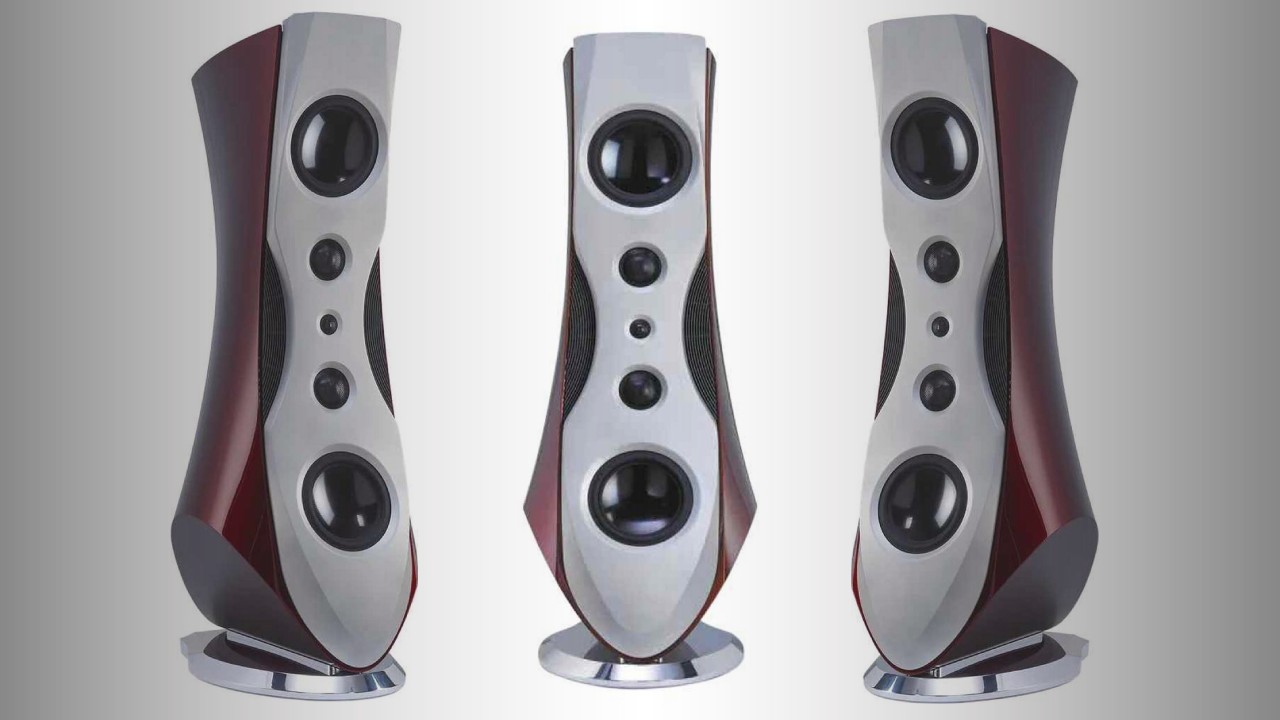
Oneiros Audio enters the loudspeaker market with a product that is clearly intended to make a statement. Developed under the leadership of Jerry Bloomfield, CEO of Falcon Acoustics and Oneiros Audio, the company’s first speaker is a three-way floorstanding model scheduled for availability in early Q1 2025. At $650,000 per pair, it occupies an extremely rarefied part of the hi-fi market, but the interest here is not only the price. The Oneiros loudspeaker is notable for the way it brings together advanced cabinet construction, in-house driver development, premium crossover execution, and a design language rooted in high-performance engineering.
A cabinet concept borrowed from motorsport thinking
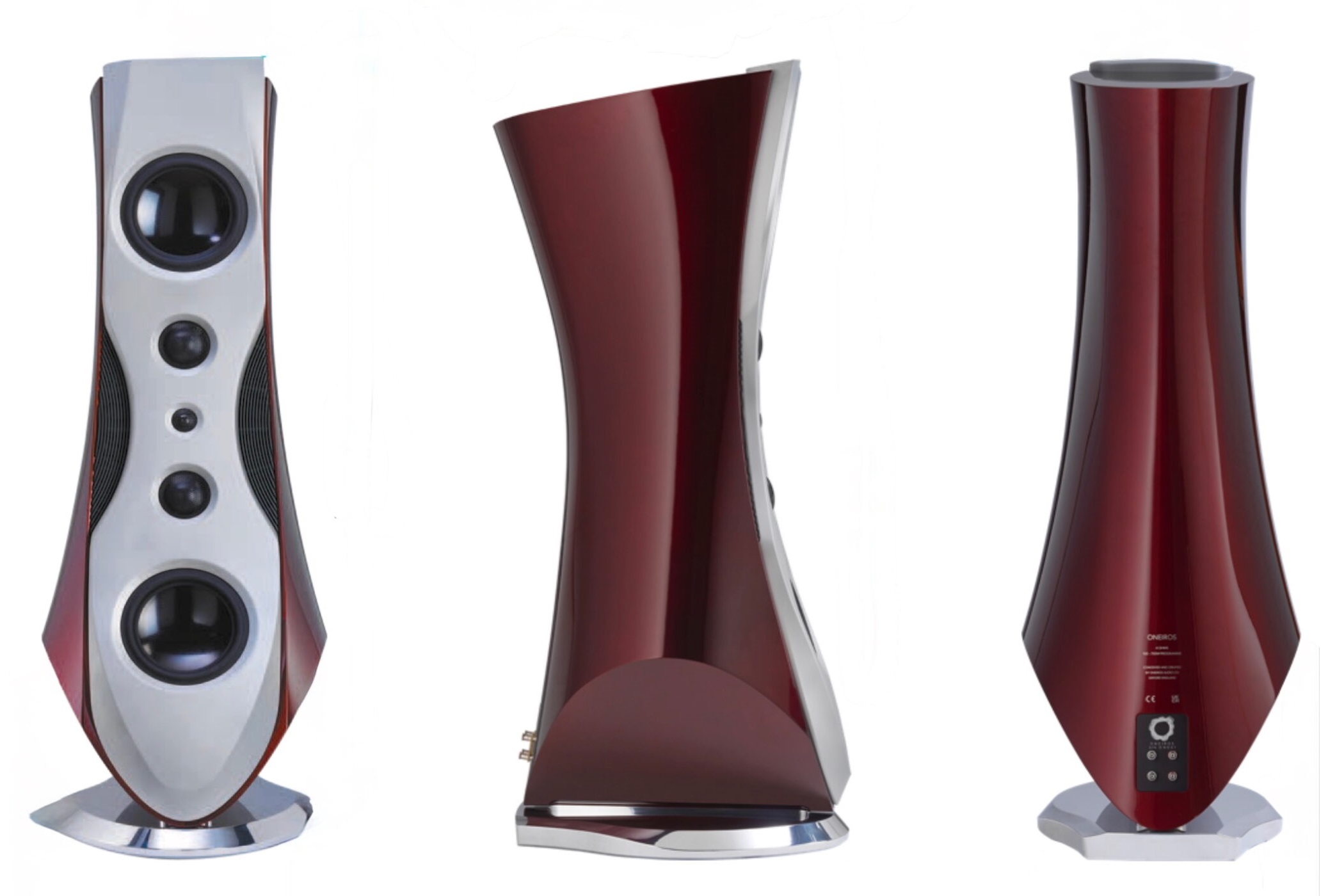
One of the most distinctive aspects of the Oneiros loudspeaker is its cabinet. The company is based in the UK’s Motorsport Valley, and the speaker’s construction reflects that environment. Rather than using a conventional wooden enclosure, Oneiros specifies a monocoque carbon fibre pre-preg sandwich system, described as identical in principle to structures used in Formula 1 car bodies.
That matters because the cabinet is one of the most important mechanical elements in a loudspeaker. A loudspeaker enclosure must support the drivers securely, manage internal and external vibration, and resist adding its own unwanted resonances to the output. By adopting a monocoque approach, Oneiros is treating the cabinet not as a simple box but as a structural shell engineered for stiffness, damping, and controlled behaviour.
The company also states that Tier 1 specialists in Finite Element Analysis validated the acoustic properties and resonance damping of the cabinet. Finite Element Analysis is widely used in engineering to predict how structures respond to stress, vibration, and other forces. In a loudspeaker context, that kind of analysis can help designers identify areas where a cabinet may flex, store energy, or interact with the drivers. The result, according to the documented design brief, is a structure intended to be both robust and comparatively lightweight for its construction approach, though the completed speaker still weighs a substantial 140 kilograms.
A three-way architecture with serious driver allocation
The Oneiros loudspeaker is a three-way floorstanding design, using dedicated bass, midrange, and treble drivers. This layout allows each driver group to work across a more focused part of the frequency spectrum rather than asking one driver to cover too wide a range. In high-end loudspeaker design, that separation can be useful because bass, midrange, and high-frequency reproduction all place different mechanical demands on a driver.
For low frequencies, the Oneiros uses two in-house designed 10-inch woofers. These are specified with Twaron Graphene nano-composite cones. The use of advanced composite cone materials is a notable part of the product’s engineering identity. Cone materials must balance stiffness, mass, and damping; the aim is typically to move air accurately while resisting breakup or deformation within the intended operating range.
The midrange is handled by two 3-inch drivers using Dyneema Graphene composites. The presence of two dedicated midrange units suggests that Oneiros has paid close attention to the frequency band where much musical information is concentrated. Voices, acoustic instruments, and many harmonic textures sit in the midrange, so giving this region its own driver complement is a logical design choice in a loudspeaker positioned at this level.
For treble, Oneiros specifies a 1-inch OEM diamond dome tweeter. Diamond dome tweeters are used in some very ambitious loudspeaker designs because the material can offer high stiffness with low moving mass. The source information does not identify the tweeter manufacturer, and it would be wrong to infer specific performance characteristics beyond the published specification. Still, its inclusion indicates that Oneiros has chosen a high-technology high-frequency driver to complement its custom bass and midrange units.
Crossover execution and component choices
The crossover is another area where Oneiros has emphasized premium construction. The speaker uses custom-designed gold-plated printed circuit boards and Mundorf components, including Supreme EVO Silver/Gold/Oil capacitors. In any multi-way loudspeaker, the crossover is central to the way the drivers are integrated. It determines which frequencies are sent to each driver and helps shape the electrical and acoustic relationship between them.
The use of custom PCBs suggests that the crossover has been laid out specifically for this loudspeaker rather than assembled as a generic off-the-shelf network. Gold plating can be valued for corrosion resistance and connection reliability, while the choice of named high-grade capacitors reflects an attempt to build the crossover with components appropriate to the speaker’s positioning. These details will matter most to buyers who view internal execution as part of the product’s long-term engineering credibility, not merely as a hidden detail.
Specifications that point to careful system matching
The documented frequency range is 20 Hz to 35 kHz. On paper, that spans from very low bass into ultrasonic territory. As always with loudspeaker specifications, the conditions behind the stated range are important but not provided here, so the figure should be read as part of the manufacturer’s description rather than a substitute for independent measurement. Even so, the specification indicates that Oneiros has designed the speaker as a full-range floorstander rather than as a model intended to rely on a subwoofer for foundational bass.
Sensitivity is specified at 90 dB for 2.83 volts, which places the speaker in a relatively accessible range for many high-quality amplifiers in terms of output level. However, the impedance is four Ohms, with a minimum of 2.6 Ohms at 90 Hz. That minimum is an important practical detail. A loudspeaker that dips to 2.6 Ohms can present a demanding load, particularly in the bass region where amplifiers may be asked to deliver significant current.
For a prospective owner, this means amplifier selection should not be treated casually. The Oneiros loudspeaker is likely to be partnered with electronics capable of stable operation into low impedances and comfortable current delivery. The published sensitivity figure is useful, but the impedance behaviour is equally relevant when thinking about system matching. This is a speaker whose specification encourages pairing with serious amplification rather than merely high nominal wattage.
Scale, weight, and installation realities
At 140 kilograms per loudspeaker, the Oneiros is not a casual installation. Its mass may be connected to the complexity of the cabinet, driver complement, and structural design, but it also has practical consequences. Owners will need to think carefully about delivery access, room placement, flooring, and setup logistics. This is not a loudspeaker that will be frequently repositioned by one person during experimentation.
That weight also underlines the difference between the term lightweight in an engineering-material sense and the reality of a completed high-end floorstanding loudspeaker. Carbon fibre construction can be valued for stiffness-to-weight efficiency, but the total product still includes multiple large drivers, crossover hardware, internal structure, and a physically substantial enclosure. The result is a speaker that demands planning and a room suited to a major audio installation.
Aesthetic and market position
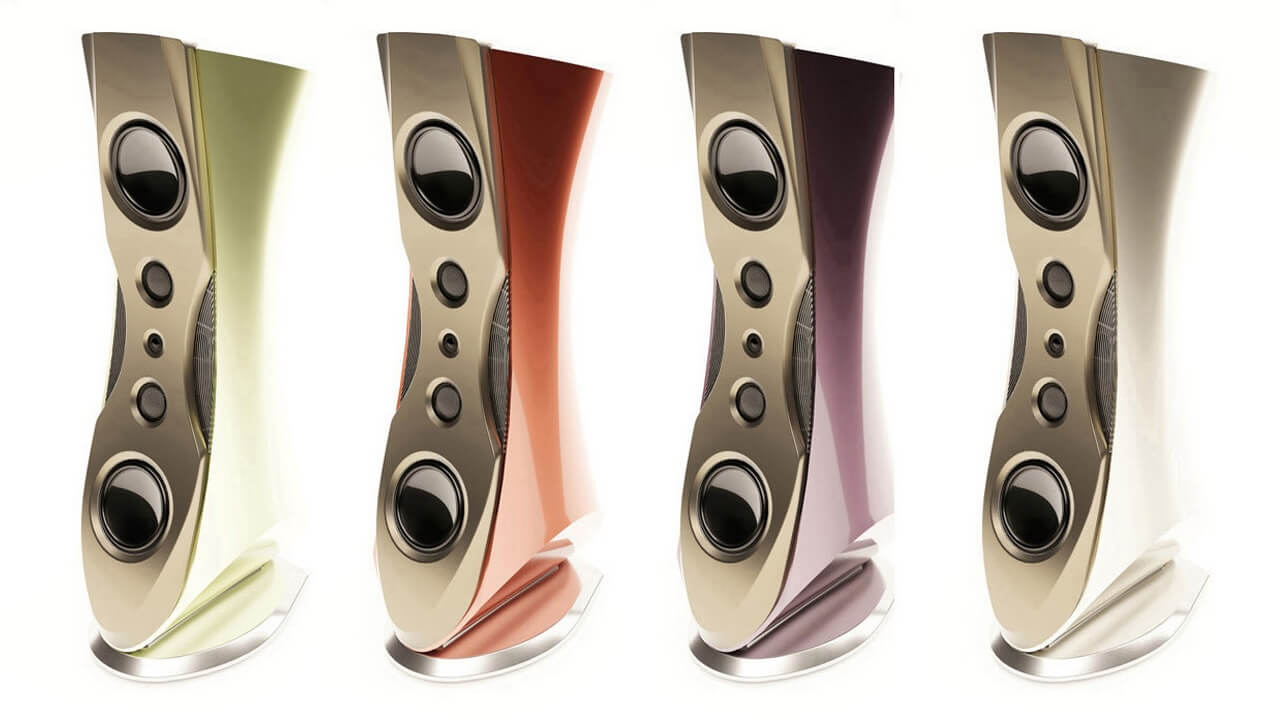
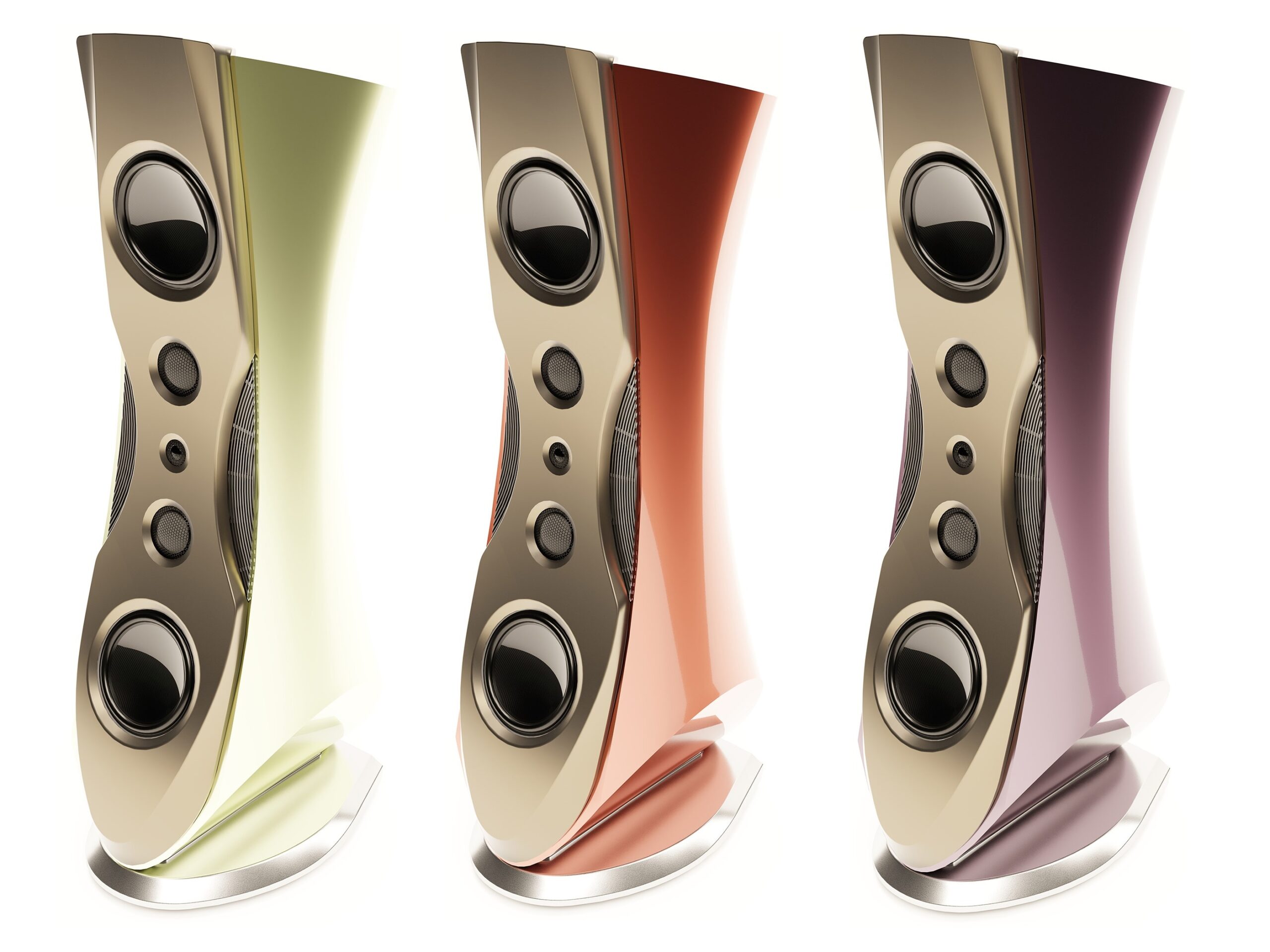
Oneiros presents the loudspeaker as a combination of striking aesthetics and advanced acoustic engineering. The design’s connection to Formula 1 materials and analysis is central to its identity, and that gives the product a different narrative from traditional luxury loudspeakers based primarily on fine cabinetry or heritage woodworking. This is a technical-object approach: the cabinet, materials, and internal engineering are part of the appeal.
At $650,000 per pair, the Oneiros loudspeaker is positioned far beyond the mainstream high-end market. Its likely audience is not simply someone seeking a capable floorstander, but a buyer interested in rare engineering, unusual materials, and a highly exclusive first product from a new brand linked to Falcon Acoustics leadership. The price also places a responsibility on the rest of the system and room. Electronics, source components, acoustic setup, and installation quality would all need to be considered at a level consistent with such an ambitious loudspeaker.
Who the Oneiros loudspeaker is most suitable for
The Oneiros is most suitable for experienced high-end audio owners who want a large, statement-level floorstanding loudspeaker built around advanced materials and a highly engineered cabinet concept. It may particularly appeal to listeners who value the application of motorsport-derived manufacturing ideas, who appreciate composite driver technology, and who want a product that stands apart from more conventional enclosure construction.
It is also a plausible match for owners with dedicated listening rooms, robust amplification, and the ability to manage a 140-kilogram loudspeaker installation properly. The four-Ohm impedance and 2.6-Ohm minimum suggest that partnering electronics should be chosen with care. Prospective owners should also be comfortable with the practical realities of a very large investment in a new loudspeaker from a new brand.
It will be less suitable for buyers looking for compact speakers, simple placement, modest amplification requirements, or conventional luxury furniture styling. It is also not aimed at listeners who want value in the everyday sense. Its attraction lies in its unusual construction, ambitious driver and crossover specification, and exclusivity rather than broad accessibility.
Conclusion
The first Oneiros Audio loudspeaker is a distinctive entrant into the ultra-high-end floorstanding category. Its strongest documented qualities are its monocoque carbon fibre pre-preg sandwich cabinet, motorsport-influenced engineering process, in-house composite bass and midrange drivers, diamond dome tweeter, premium Mundorf-based crossover, and full-range design ambitions. It is best understood as a statement product for experienced owners with suitable rooms, capable amplification, and an interest in advanced materials as much as traditional loudspeaker craftsmanship.


Sound Off
0Join the discussion if you have something to add.