


The Quad Platina series is positioned as a modern hi-fi platform for listeners who want traditional two-channel engineering without giving up today’s digital convenience. Its first two components, the Quad Platina Integrated and Quad Platina Stream, address different but closely related needs: one is a full integrated amplifier with analog and digital inputs, while the other is a dedicated network player designed to bring streaming services, Roon integration, high-resolution playback, and flexible outputs into a serious audio system. Together, they show a clear design brief: combine familiar hi-fi values such as robust amplification, phono support, balanced connectivity, and solid casework with contemporary features including HDMI ARC, app control, wireless networking, and broad streaming-service compatibility.
A New Quad Platform With a Two-Component Starting Point
The Platina line begins with the Platina Integrated and the Platina Stream. That is a sensible foundation for a modern stereo range because these two categories cover the core of many present-day systems: amplification and source management. The Integrated can sit at the center of a speaker-based setup, accepting turntables, line-level analog sources, digital components, and even a television via HDMI ARC. The Stream, meanwhile, is intended for listeners who want a dedicated network audio source that can feed an amplifier, a power amplifier, or active loudspeakers.
Quad has also announced a future Platina CDT CD transport, although no detailed information has been released. Its mention is still relevant because it suggests that the Platina concept is not limited to streaming and amplification. The range appears designed to accommodate both physical and network-based music libraries, which remains important for many listeners who own CDs but also use subscription services or local digital files.
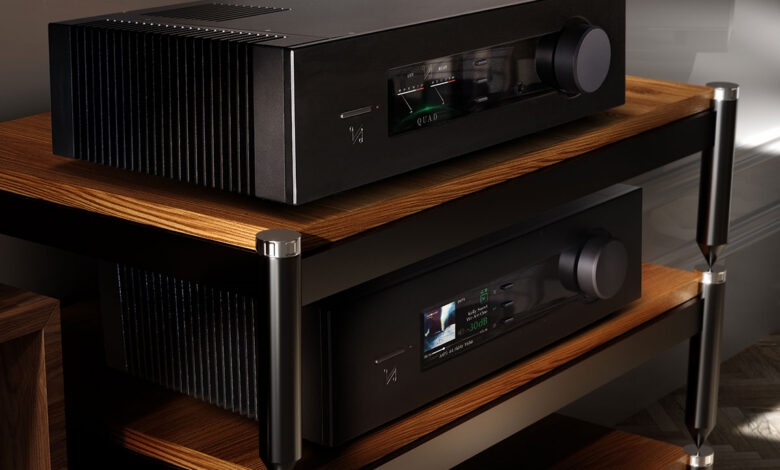
Quad Platina Integrated: Power, Inputs, and System Centrality
The Quad Platina Integrated is built around Class AB amplifier technology and a dual-mono power amplifier layout. Its stated output is 200 watts per channel into eight ohms, which places it in a category intended for more than compact desktop use or very small-room listening. While power ratings alone do not define an amplifier’s character, meaningful output capability can matter when partnering with full-size loudspeakers, playing dynamic recordings, or listening in larger rooms.
The power supply is a notable part of the design. Quad specifies a 630 VA toroidal transformer and 44,000 μF of filter capacitance per channel. Those figures point to an amplifier architecture that gives attention to current delivery and supply stability, rather than treating the amplifier stage as an afterthought beside the digital features. For prospective owners, that matters because an integrated amplifier is expected to provide both source flexibility and the electrical foundation for the loudspeakers. A strong power-supply specification supports the broader aim of control and consistency across varied musical demands.
The Integrated is also not a purely analog amplifier with a token digital input. Its digital section is built around the ESS ES9038PRO DAC chip and supports PCM up to 32-bit/768 kHz and DSD up to DSD512. Two master clocks are included to minimize jitter. These features are relevant for users who want to connect a computer, streamer, television, or other digital transport directly to the amplifier without adding an external DAC. In a simplified system, the amplifier can become the main conversion and control point.
Connectivity That Reflects Modern Living Rooms
The input selection on the Platina Integrated is one of its most practical strengths. On the digital side, it includes S/PDIF optical, S/PDIF coaxial, USB-C, and HDMI ARC. The inclusion of HDMI ARC is especially useful for listeners who want a two-channel hi-fi system to take over television audio duties without building a separate home-theater setup. It allows the amplifier to connect directly to compatible modern TVs, making the stereo system more relevant in a shared living space.
Analog connectivity includes both XLR and RCA inputs. Balanced XLR connections can be useful in systems where the source component supports them, particularly when longer cable runs or balanced-output source gear are part of the setup. RCA remains essential for broad compatibility with traditional line-level components. This mix allows the Integrated to serve both new and legacy equipment, which is important for owners who may already have a turntable, CD player, DAC, streamer, or tuner.
The front-panel experience has also been considered. A color display, intuitive menu navigation, and robust rotary knobs are listed among the amplifier’s physical design elements. In practice, this kind of interface matters because a component with digital inputs, phono settings, and menu-based options should remain easy to use without forcing every adjustment through an app or remote control.
A Thoughtful Phono Stage for Vinyl Users
The Platina Integrated includes an adjustable phono amplifier with a JFET input stage and support for both moving-magnet and moving-coil cartridges. That is a meaningful inclusion because many integrated amplifiers either omit phono entirely or provide only basic MM support. By accommodating MM and MC cartridges, the Platina Integrated can work with a wider range of turntables and cartridge upgrade paths.
The ability to adjust phono settings via the front panel is also significant. Cartridge matching is not only about having an input labeled “phono”; gain and loading flexibility can influence compatibility and usability. While the available setting ranges are not specified here, the fact that Quad has made the phono stage adjustable and accessible from the amplifier itself makes the Integrated more attractive as a long-term hub for vinyl playback.

Quad Platina Stream: A Dedicated Network Source
The Platina Stream is designed for listeners who want network audio handled by a purpose-built component rather than a general-purpose computer or a small add-on device. Like the Integrated, it uses the ESS ES9038PRO DAC chip and supports PCM up to 32-bit/768 kHz and DSD up to DSD512. That high-resolution support gives it the technical headroom to handle demanding digital libraries and hi-res streaming where available.
Streaming-service integration is broad. The unit supports Tidal Connect, Qobuz Connect, Spotify Connect, and Apple AirPlay 2, allowing users to control playback directly from familiar service apps where Connect-style operation is supported. This can reduce friction compared with systems that require a proprietary app for every listening session. Roon Ready support further expands its appeal for users who manage music through Roon, including those who combine local files, streaming libraries, metadata-rich browsing, and multi-room playback.
The Platina Stream is controlled through the Quad Platina app for Apple iOS and Google Android, or directly from compatible streaming services. Network connection is available through Gigabit Ethernet or dual-band Wi-Fi. Ethernet will be attractive for those who want a wired network path in a fixed hi-fi rack, while Wi-Fi gives more placement flexibility when running a cable is inconvenient.

Displays, Outputs, and System Flexibility
The Platina Stream includes a 4.3-inch color display that can show album art, playback data, and a pair of animated VU meters. A display of this kind is more than decoration. In a living-room or rack-based system, it gives immediate feedback about what is playing without requiring the listener to check a phone or tablet. Album art and playback data help the component feel like a complete source rather than a hidden network endpoint.
Output flexibility is another important part of the design. The Platina Stream offers analog outputs on both XLR and RCA, plus digital outputs on RCA and optical S/PDIF. That means it can operate as a full network player with its internal DAC feeding an integrated amplifier, preamplifier, power amplifier, or active speakers. Alternatively, it can serve as a digital transport feeding an external DAC or digital input on another component.
This flexibility widens its relevance. Someone building a minimalist active-speaker system could connect the Stream directly if the wider system configuration supports that approach. A listener with a traditional integrated amplifier could use the analog outputs. A user who already owns a preferred DAC could use the digital outputs. The product is therefore not locked into a single type of system.
Industrial Design and Build Details
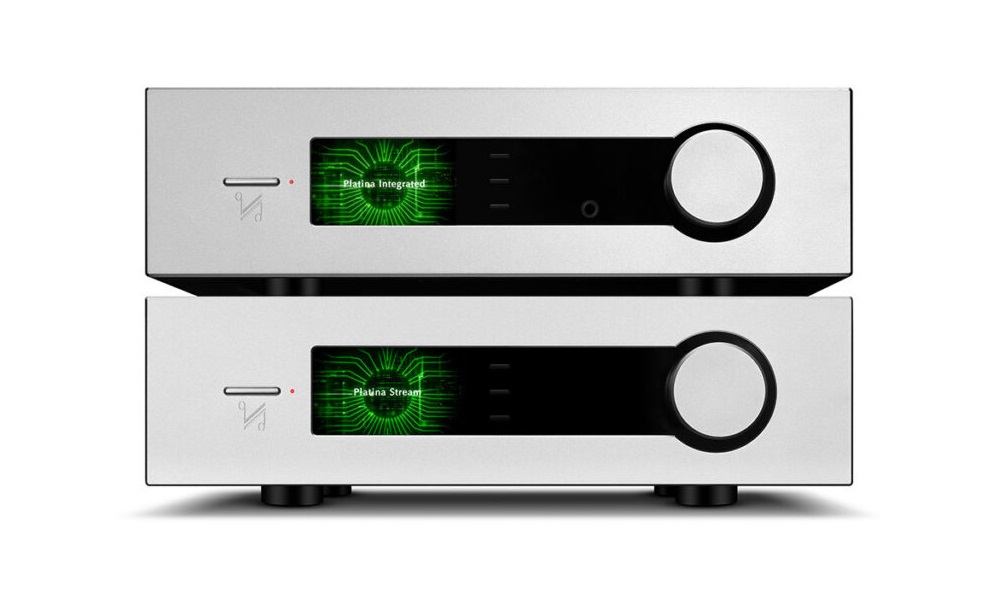
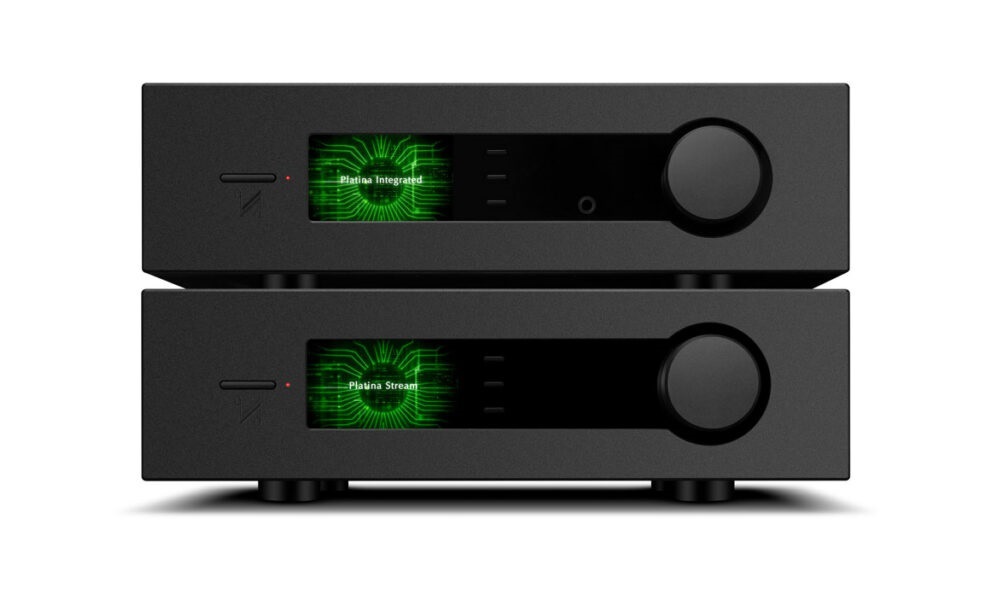
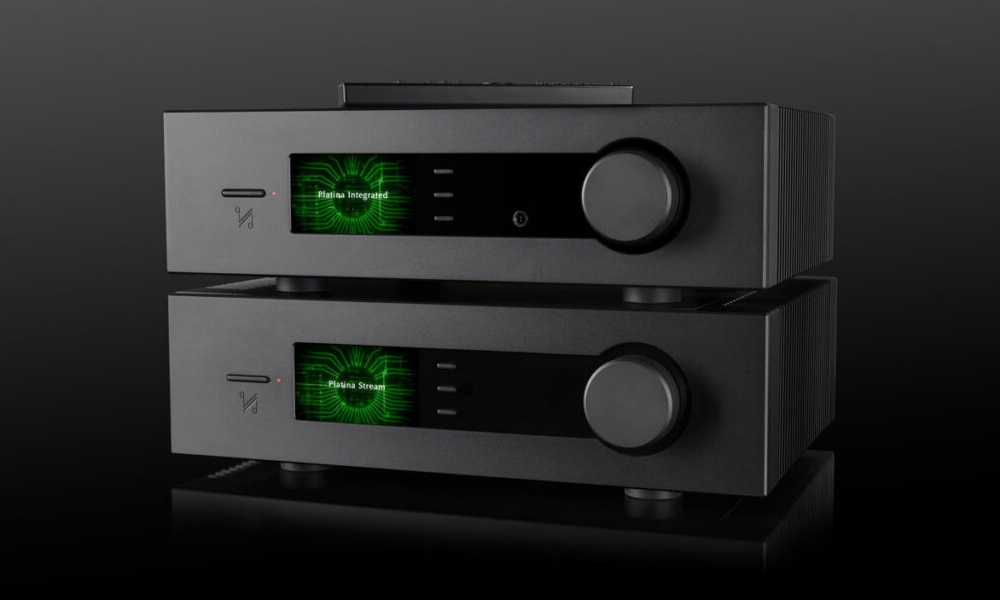
Both Platina components use sturdy steel enclosures, milled aluminum front panels, and gold-plated connectors. These are not unusual materials in serious hi-fi, but they are important because they support the product’s role as a long-term system component rather than a disposable digital accessory. The range is available in black or silver, and the stated design direction is clean and timeless.
That visual restraint may be one of the line’s practical advantages. Components that combine streaming, amplification, displays, and multiple connection types can easily look busy or overly technical. The Platina approach appears to favor a more composed hi-fi presentation, suitable for modern living spaces as well as dedicated listening rooms. For many owners, visual integration matters almost as much as connection count, especially when the equipment is placed in a shared room.
Conclusion
The Quad Platina Integrated and Platina Stream are most suitable for listeners who want a serious two-channel system that bridges traditional hi-fi and modern digital use. The Integrated’s documented strengths are its Class AB dual-mono amplifier design, substantial power-supply specification, broad analog and digital inputs, HDMI ARC, high-resolution ESS-based DAC section, and adjustable MM/MC phono stage. The Stream’s strongest qualities are its Roon Ready status, support for major Connect streaming platforms, high-resolution DAC capability, wired and wireless networking, informative color display, and flexible analog and digital outputs. Together, they form a versatile platform for owners who value robust stereo fundamentals but also expect convenient streaming, TV integration, app control, and a clean, durable design.


Join the discussion
Share your thoughts, listening impressions or product experience.