

The Rega Isis occupies a distinctive place in Rega’s catalogue. Better known for turntables, tonearms, cartridges, phono stages, amplifiers, and loudspeakers, Rega has also built several generations of CD players. The Isis is positioned as the company’s top CD model and represents the seventh generation of Rega’s CD-player development. Rather than treating disc playback as a legacy convenience, the Isis is built as a substantial digital source component, with attention paid to transport behavior, conversion architecture, analog output design, power regulation, and mechanical resonance control. Its appeal lies not in a long list of fashionable features, but in a focused set of engineering choices intended to make CD replay and basic computer-audio playback as stable and carefully managed as possible.
A high-end Rega source with a deliberately focused brief
The Isis is notable because it comes from a brand whose identity has long been tied to analog replay, yet it is clearly not a token digital component. Rega describes the model as the result of several years of development, and the player’s construction reflects a product designed for a serious two-channel system rather than casual disc playback. At 19 kg, it is unusually heavy for a CD player and is housed in a metal case with an anti-resonance chassis. That mass and construction are relevant because a disc player is both a digital device and a mechanical one: the disc must spin, the laser must track, and the servo must operate under stable conditions.
The Isis also signals a shift in Rega’s historical positioning. The company is often associated with the idea of strong sound quality at attainable prices, but the Isis was created for high-end enthusiasts. That market position matters because it helps explain the concentration of resources inside the machine: a proprietary transport arrangement, extensive regulated supplies, discrete analog stages, balanced connectivity, and the ability to use the internal DAC from a computer via USB. It is not trying to be an all-purpose streamer, network hub, or home-theater processor. Its purpose is narrower and more traditional: to serve as a dedicated stereo source for CD collections and compatible computer audio.
Top-loading mechanism and disc-reading control
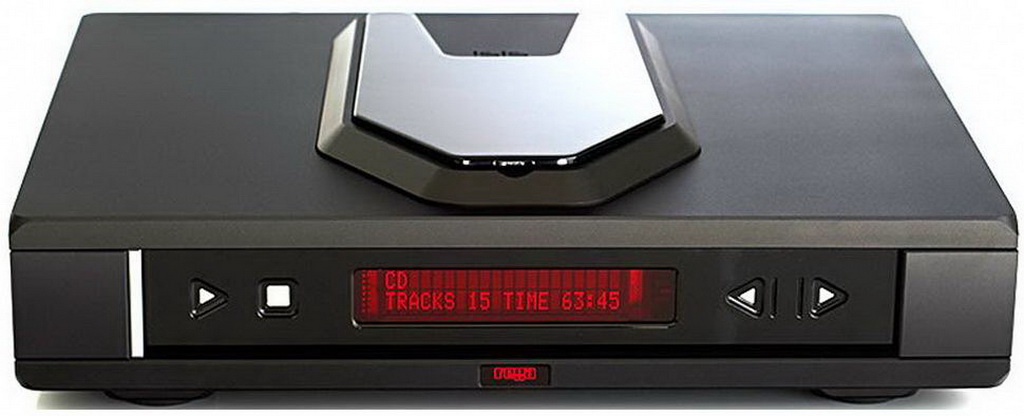
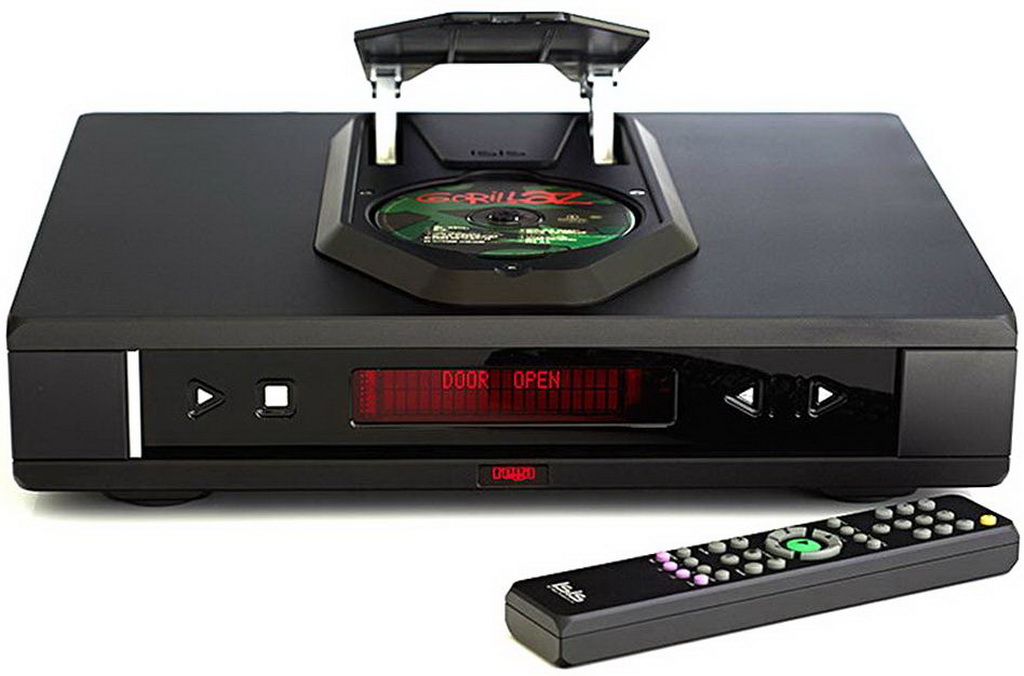
One of the most visible design choices is the proprietary top-loading disc mechanism. Top-loading CD players often appeal to listeners who prefer a direct, mechanical interaction with the disc rather than a drawer mechanism. In the Isis, the source material notes attention to the chosen weight of the disc-tray lid, suggesting that the tactile and mechanical aspects were not treated as afterthoughts. A stable lid and carefully implemented transport are part of the player’s broader emphasis on controlling the physical conditions around disc playback.
The Isis also includes a disc pre-tuning system designed to support error-free playback, including discs with damaged surfaces. This is paired with a new error-correction system and a digitally controlled servo motor. These elements may matter to owners with large CD libraries, especially collections that include older, frequently handled, or imperfectly preserved discs. While no CD mechanism can make every damaged disc usable in every circumstance, a player designed around reading stability, servo control, and error correction gives the transport stage a more prominent role than it receives in many modern digital products.
This focus is important because the transport is the first stage in a CD player’s signal path. Before conversion, filtering, or analog output design can do anything useful, the machine has to retrieve the data from the disc reliably. The Isis addresses that task not only through electronics, but through a dedicated mechanical platform and disc-handling system.
Dual Burr-Brown DACs in a parallel mono arrangement
The digital-to-analog section is built around Burr-Brown PCM1794 DAC chips operating in dual parallel mono mode. This is one of the Isis’s most significant internal design choices. A dual-mono approach separates the handling of left and right channels more explicitly than a single shared stereo implementation, and a parallel configuration can be used as part of an effort to improve conversion behavior. The source material also notes that the DAC devices have no built-in amplifiers, which places greater importance on the external analog filtering and output circuitry that follows.
For prospective owners, the relevance is straightforward: the Isis is not simply a transport feeding a generic output stage. Rega placed meaningful design emphasis on the conversion section, using two parallel dual Burr-Brown PCM1794 DACs and then following them with discrete circuitry. The documented aim is a wide dynamic range and low distortion, but the most practical takeaway is that the DAC architecture is part of a complete internal signal path rather than a bolt-on feature.
The player also provides coaxial and optical digital outputs. That gives system builders flexibility if they want to feed an external DAC or digital recorder, while still retaining the Isis as a disc transport. However, the inclusion of a substantial onboard DAC stage suggests that the player is primarily intended to be used as a complete CD source component, with its own conversion and analog outputs forming a central part of its identity.
Discrete Class-A analog stages and component selection
After digital conversion, the Isis uses DAC output filters built from discrete elements operating in Class A. Its analog output stages also operate in Class A. This is a meaningful distinction because the analog stage of a CD player shapes how the converted signal is buffered and delivered to the amplifier. By using discrete filters and Class-A amplification channels, Rega avoids relying on a simplified integrated output solution and instead gives the analog section its own dedicated architecture.
The component choices listed for the player include polypropylene capacitors, electrolytic audio capacitors, high-quality polymer capacitors, and Rega K-Power smoothing capacitors. These details matter because a CD player’s analog output is sensitive to power delivery, filtering, and layout choices. The source material also highlights attention to reducing crosstalk, including interference on the ground bus. That tells prospective owners that the Isis was designed as a complete electrical environment, not only as a collection of headline parts.
Connectivity reinforces the seriousness of the analog section. The Isis provides both single-ended and balanced analog outputs. Single-ended outputs make it easy to integrate with a wide range of integrated amplifiers and preamplifiers, while balanced outputs are useful for systems built around balanced line stages or longer interconnect runs. The presence of both options gives the player broader system compatibility without forcing one connection philosophy on the owner.
Power supply architecture and isolation
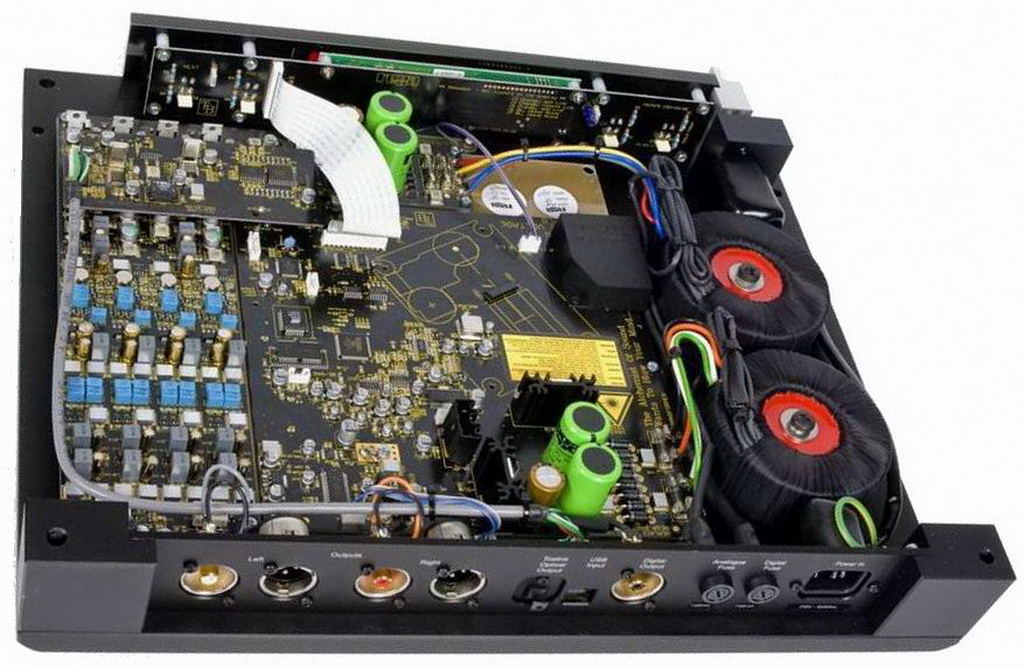
Power supply design receives unusually explicit attention in the Isis. The analog and digital circuits each use ten stabilized voltage sources, for a total of twenty isolated regulated supplies across those sections. The power supply also includes a proprietary 50VA transformer. In a digital source component, this level of regulation is relevant because the transport, digital processing, DAC stage, clocking-related circuitry, USB input, and analog outputs all have different electrical demands.
Keeping digital and analog sections well supplied and properly isolated can help reduce unwanted interaction between parts of the circuit. The source material specifically mentions protection from crosstalk and interference on the ground bus. For a prospective owner, this points to a design philosophy centered on separation and control: keep the mechanical, digital, conversion, and analog stages from disturbing one another as much as possible.
The USB interface also has its own stabilized voltage source and dual digital synchronization. That is a useful detail because USB computer audio can place different demands on a player than disc playback. By giving the USB input its own supporting power arrangement, Rega appears to treat it as a serious secondary input rather than a convenience socket added without much engineering context.
USB DAC functionality with a clear scope
The Isis includes a USB input that allows a computer to use the player’s internal DACs as an external sound card. This is a practical feature for owners who still prioritize CDs but also keep music files on a computer. The supported USB playback is specified for 44.1/48 kHz audio files at 16-bit resolution. That makes the scope of the USB input clear: it is aimed at standard-resolution digital audio rather than high-resolution file playback.
This limited but useful USB capability may suit listeners who want one high-quality disc player to also handle basic computer audio without adding a separate DAC. It also keeps the Isis’s role simple. It does not attempt to replace a modern network streamer, and the supplied information does not describe app control, wireless playback, streaming service integration, or high-resolution PCM support. Instead, USB extends the value of the internal DAC section for common computer-audio use cases while preserving the player’s central identity as a CD-focused source.
Physical design, usability, and system integration
The Isis measures 112 x 434 x 350 mm and consumes 23 W, according to the supplied specifications. Its 19 kg weight means it should be installed on a stable rack or support surface, and owners should allow convenient access above the unit for the top-loading mechanism. That top-loading format can be very satisfying in daily use, but it is not ideal for every furniture arrangement, especially enclosed cabinets with limited clearance.
The rear-panel connector block is described as carefully executed, and the inclusion of single-ended analog, balanced analog, coaxial digital, optical digital, and USB connections makes the Isis adaptable within traditional stereo systems. It can be used directly into an integrated amplifier, into a preamplifier, into balanced electronics where appropriate, or as a transport feeding an external DAC via coaxial or optical output.
The player is supplied with an updated remote control with improved ergonomics, powered by two AAA batteries. That detail may seem small, but it matters for a source component intended for everyday use. A high-end CD player still needs to be straightforward to operate from the listening position, and remote ergonomics contribute to the product’s long-term livability.
Conclusion
The Rega Isis is most suitable for listeners who have a serious CD collection, want a dedicated high-end disc player, and value a carefully engineered internal signal path over broad modern streaming features. Its strongest documented qualities are its proprietary top-loading mechanism, disc pre-tuning and error-correction approach, dual parallel mono Burr-Brown PCM1794 DAC architecture, discrete Class-A filtering and analog output stages, extensive regulated power supplies, balanced and single-ended outputs, and useful USB DAC input for standard-resolution computer audio. It is less suited to buyers seeking network streaming, wireless playback, or broad high-resolution file support. For a two-channel system built around physical media and conventional hi-fi connectivity, the Isis stands out as a substantial, focused Rega flagship designed around mechanical stability, electrical isolation, and flexible integration.


Sound Off
0Join the discussion if you have something to add.