Piega Premium 801: Aluminum Flagship with an SSD Ribbon Horn
The Piega Premium 801 is the flagship of the company’s Premium line, combining an extruded aluminum cabinet, a new horn-loaded SSD ribbon tweeter, FSD midrange and bass drivers, and flexible amplifier matching in a slim floorstanding format.

The Piega Premium 801 is positioned as the flagship floorstanding speaker in Piega’s Premium range, sitting above the Premium 701 Gen2 and below the company’s Coax 611 in concept and ambition. Its appeal lies in the way it combines several recognizable Piega ideas: a slim aluminum enclosure, ribbon high-frequency technology, careful driver integration, and a design brief that aims to deliver scale without turning the loudspeaker into a visually dominant object. Rather than simply enlarging an existing model, Piega has given the Premium 801 a new high-frequency system and a more substantial driver complement, while retaining a form factor that remains narrow and architectural.
A flagship Premium model with a clear place in the range
The Premium 801 is described by Piega as a bridge between the Premium 701 Gen2 and the Coax 611. That matters because it gives the model a specific role rather than making it only a larger version of a familiar speaker. It is intended for listeners who want more scale, bass capability, and technical sophistication than the smaller Premium models provide, but who are not necessarily looking for the coaxial architecture of the Coax series.
As the largest and most acoustically advanced model in the Premium line, the Premium 801 brings additional low-frequency capacity through four woofers and introduces a new SSD ribbon tweeter mounted in a horn. The combination suggests a product designed for larger rooms, higher playback demands, and systems where both visual restraint and acoustic ambition are important considerations. Its specified sensitivity of 90 dB also indicates that Piega has not designed the speaker solely around very high-powered amplification.
Extruded aluminum cabinet with internal acoustic control
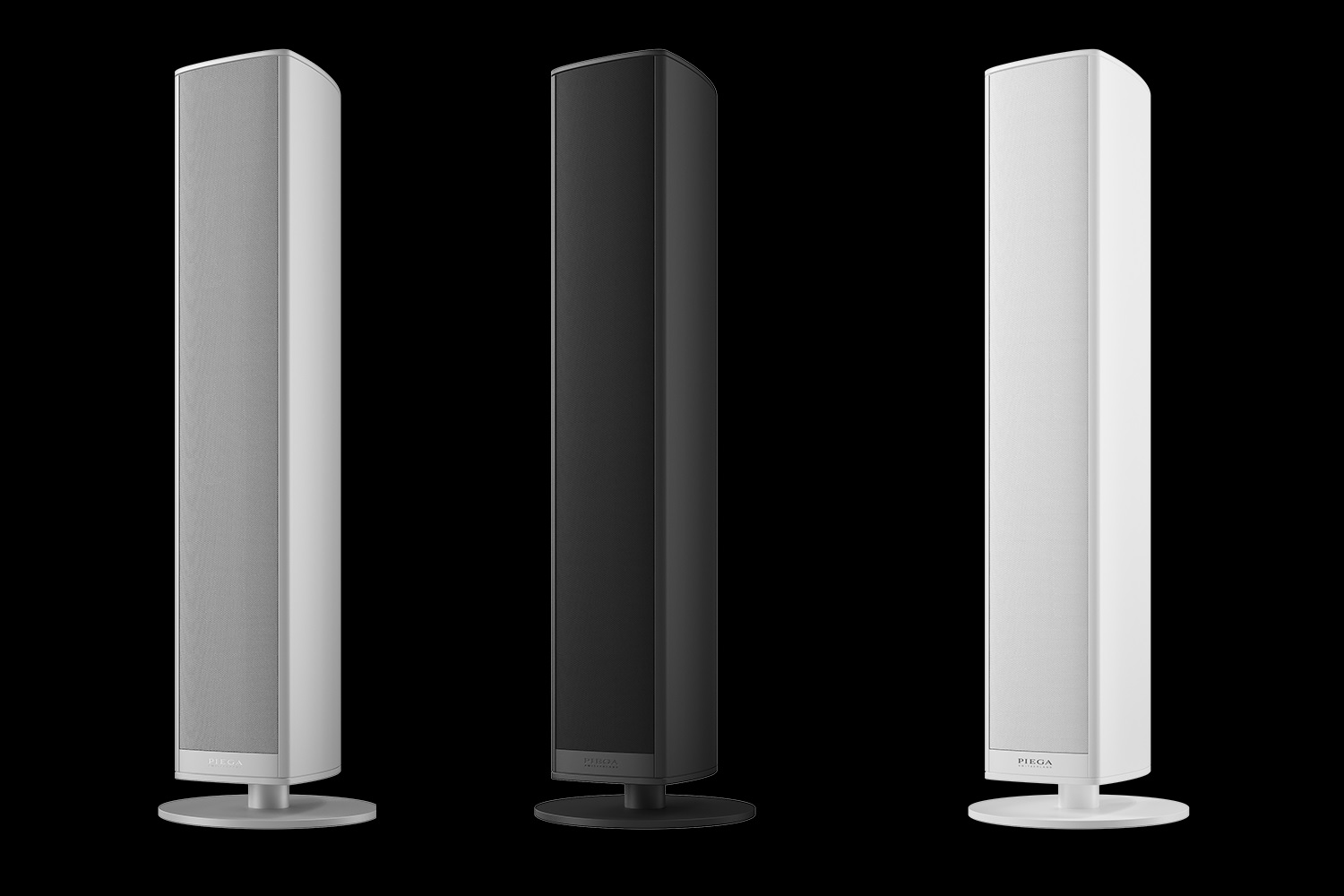
One of the most distinctive aspects of the Premium 801 is its cabinet construction. The speaker uses the robust extruded aluminum profile associated with the Coax 611. Piega forms the cabinet under pressure of more than 5,000 tons, a process the manufacturer presents as unusual in loudspeaker production. The practical purpose is to create a slim enclosure with high rigidity and reduced resonance behavior.
This is not simply an aesthetic decision. In loudspeakers, the cabinet must resist adding its own stored energy and vibration to the output of the drivers. Piega’s use of an aluminum profile, internal longitudinal bracing, a damping layer, and a newly developed wood-matrix bracing system is aimed at keeping the enclosure mechanically stable. For a prospective owner, this means the speaker’s elegant, narrow shape is not being treated as separate from its acoustic function; the structure is part of the engineering strategy.
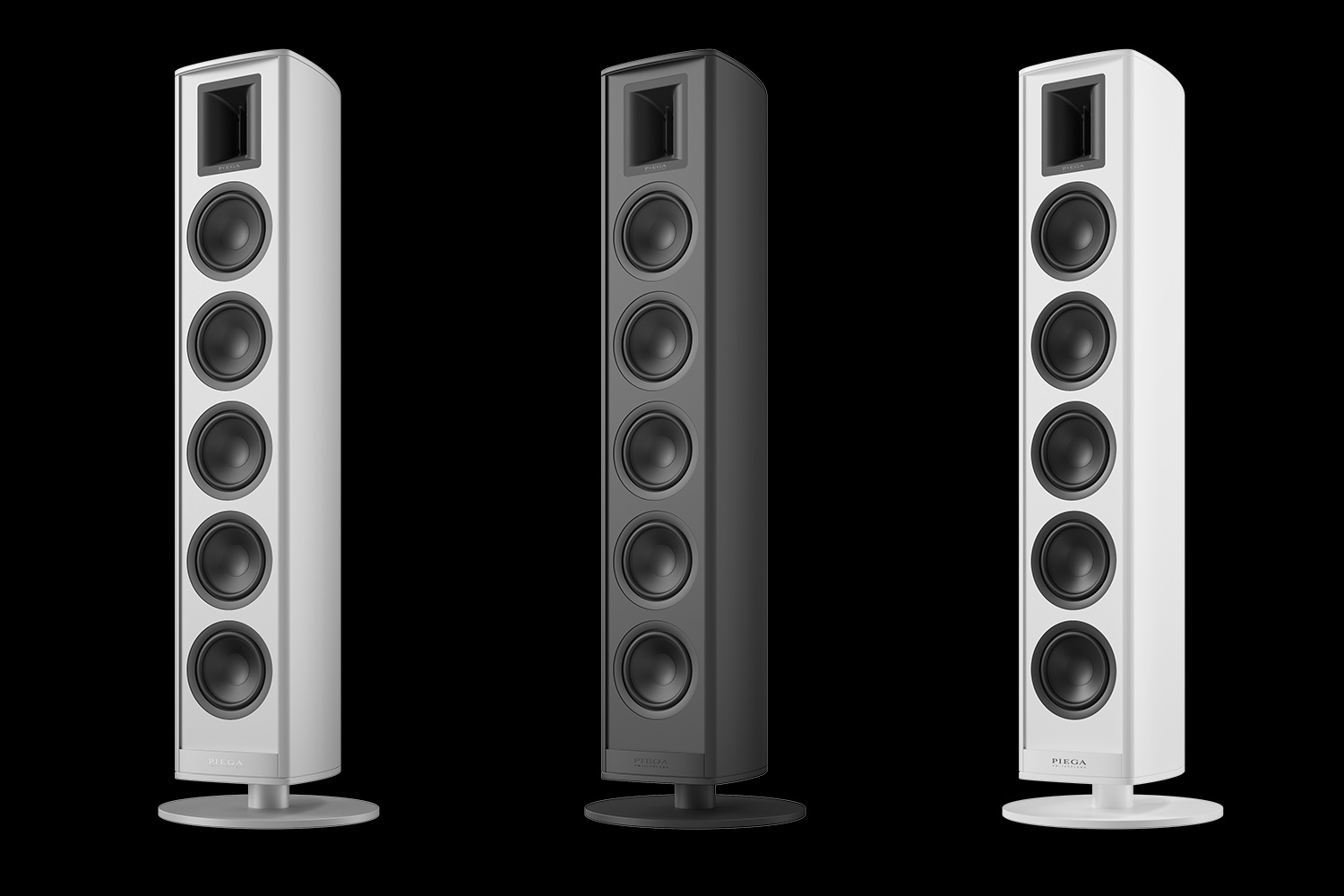
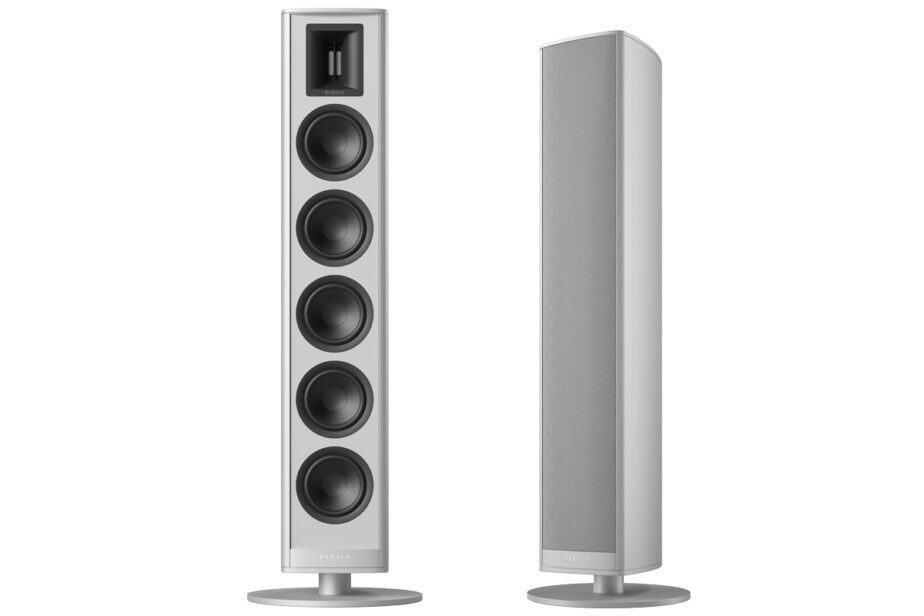
The dimensions reinforce the design intent. At 116 x 21 x 31 centimeters, the Premium 801 is tall and slim, while its 35-centimeter-diameter base provides a broader footprint for support. Its weight of 39.6 kilograms reflects the substantial cabinet and driver assembly. This is a serious floorstanding speaker, but not one with the wide frontal area often associated with large multi-driver designs.
The SSD ribbon horn tweeter is the central innovation
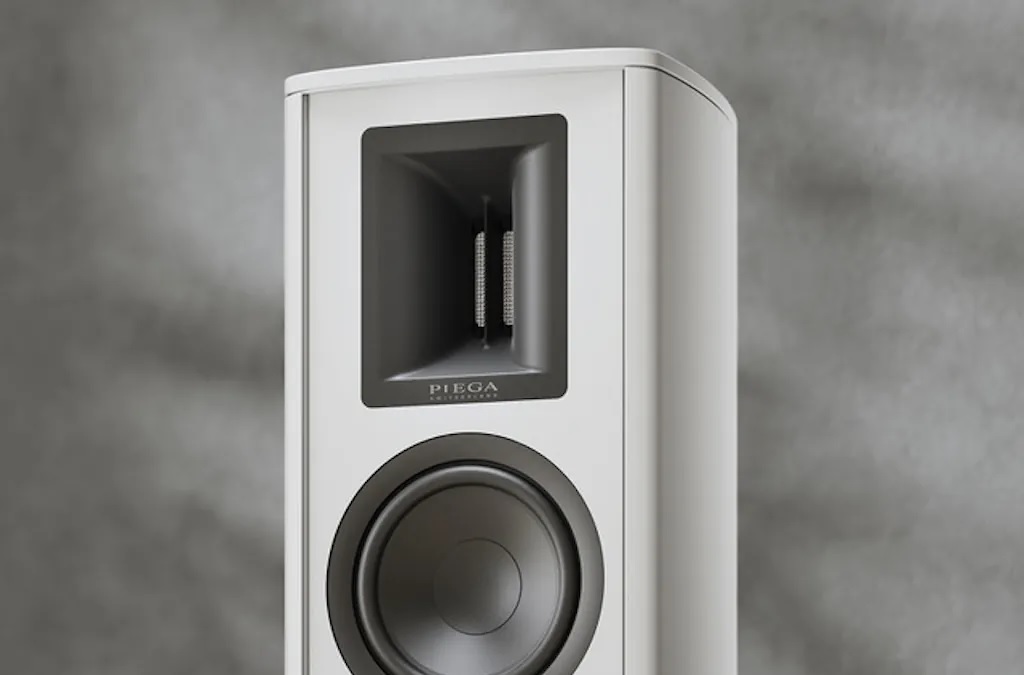
The most important new technology in the Premium 801 is the SSD, or Super Symmetric Drive, ribbon tweeter RM 01-24. Piega specifies the moving mass of its diaphragm at just 0.03 grams. Low moving mass is significant in a tweeter because the diaphragm must start and stop quickly at high frequencies, and the design is intended to support fast impulse behavior and fine detail retrieval.
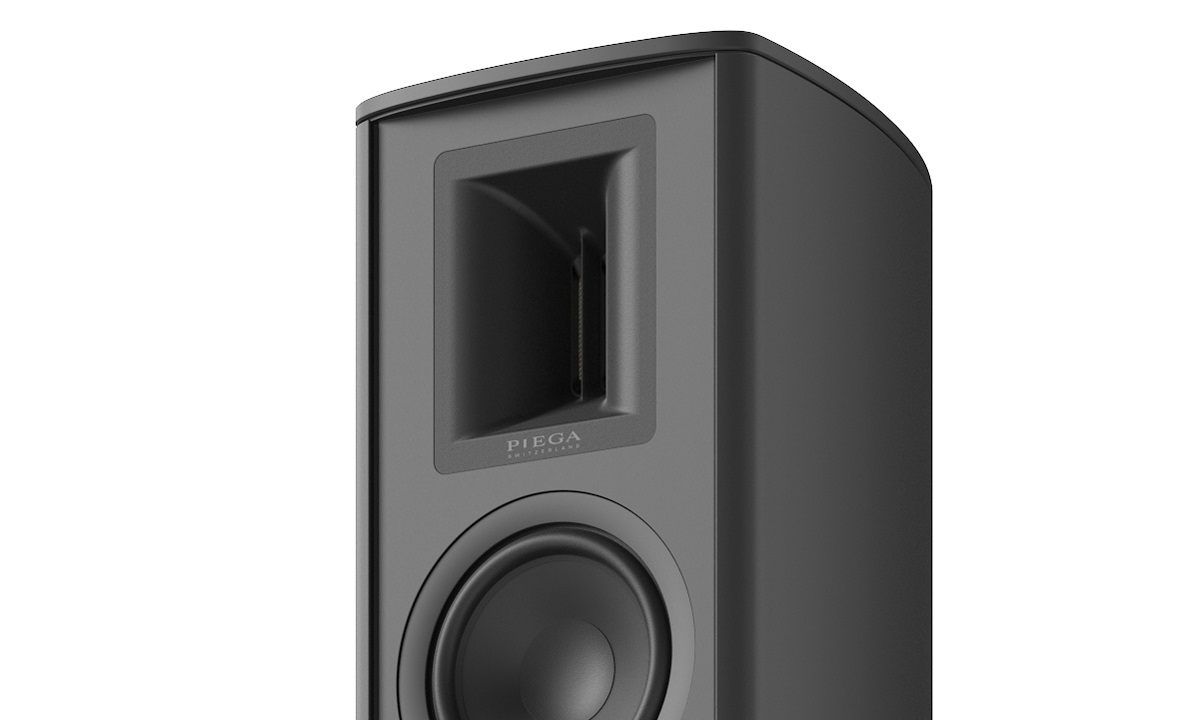
For the first time in the Premium Series, this ribbon tweeter is mounted in a specially developed horn. Horn loading is used here not as a retro styling cue, but as a way to increase efficiency and shape dispersion. According to Piega, the horn nearly doubles efficiency and allows a lower crossover frequency of around 2.7 kHz. A lower handover point can help the tweeter take over earlier from the midrange driver, provided the integration is handled carefully.
The horn also serves another practical purpose: controlling where the high-frequency energy goes. Piega says it focuses the sound, reduces unwanted floor and ceiling reflections, and moves the high-frequency acoustic center closer to the midrange driver. For listeners, the importance of these design choices is not about one specification in isolation. It is about the potential for more consistent integration between the tweeter and midrange, particularly in real rooms where reflections and driver alignment affect perceived clarity and imaging.
FSD midrange and four FSD woofers for scale and control
Below the SSD ribbon horn, the Premium 801 uses an FSD midrange driver operating in its own sealed enclosure. Isolating the midrange from the bass system is a familiar but important loudspeaker design decision. It helps protect the midrange driver from pressure changes created by the woofers, allowing that driver to work within a more controlled acoustic environment.
The midrange driver is paired with a newly tuned crossover and uses Piega’s FSD, or Full Symmetric Drive, technology. In this approach, the voice coil is designed to remain symmetrical to the magnetic field. Piega’s stated goal is linear motion and natural reproduction. While the result always depends on full system implementation, the engineering emphasis is clear: the midrange is not treated as an afterthought between a prominent tweeter and powerful bass section.
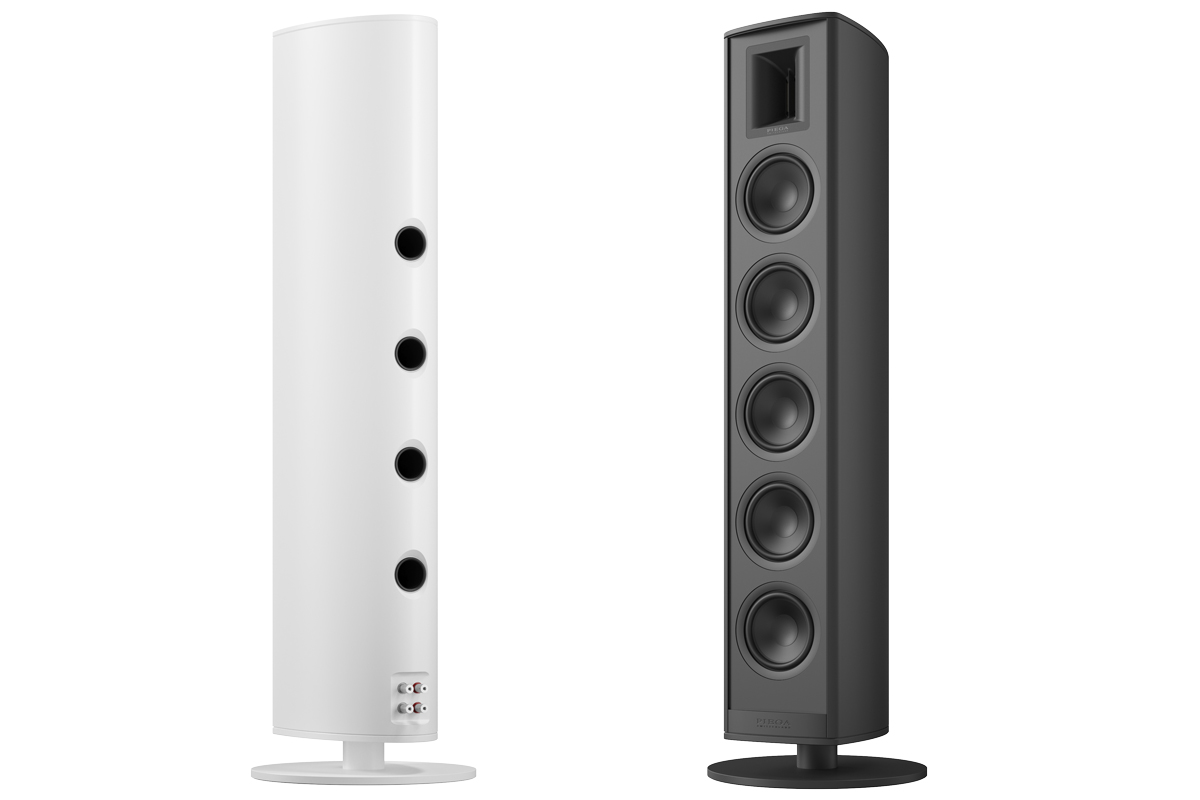
Low frequencies are handled by four FSD woofers operating in a bass-reflex system. Piega states that this configuration provides high power output, reliable bass control, and a maximum sound pressure level approximately 6.5 dB higher than the Premium 701 Gen2. That increase is useful context for understanding the model’s market position. The Premium 801 is not only designed to reach lower or play louder on paper; it is intended to offer greater dynamic headroom than the smaller model in the same family.
Connectivity and amplifier matching
The Premium 801 is specified with a four-ohm impedance and a 90 dB sensitivity rating. Piega also notes that the crossover filter is tuned for a smooth impedance curve and amplifier-friendly behavior. Those details matter because a loudspeaker’s nominal impedance alone does not tell the full story of how demanding it will be for an amplifier. A smoother impedance load can make system matching more predictable.
Piega states that the Premium 801 is suitable for powerful transistor amplifiers, modern Class-D amplifiers, and high-quality tube amplifiers. That breadth is useful for owners who may want to build the speaker into different kinds of systems rather than being forced into one narrow amplification path. The speaker is not presented as requiring extreme amplifier power, though careful matching remains sensible for any large floorstander with four-ohm impedance and substantial bass capability.
Dual speaker connections are provided for bi-wiring and bi-amping. Not every owner will use those options, but their inclusion gives the Premium 801 additional flexibility. A system can begin with conventional single amplification and later be configured with separate amplifier channels or cable runs if the owner chooses to experiment within the supported connection scheme.
Frequency range and room considerations
The specified frequency response is 32 Hz to 50 kHz. The low-frequency figure suggests that the Premium 801 is intended to operate as a full-range floorstander for many music systems, while the extended high-frequency specification reflects the use of Piega’s ribbon tweeter technology. As always, in-room bass behavior will depend on placement, room size, and acoustics, but the documented driver complement and cabinet size place the speaker firmly in the category of substantial floorstanding loudspeakers.
The horn’s controlled dispersion is also relevant to placement. Piega highlights reduced floor and ceiling reflections and even horizontal dispersion. These are useful goals for domestic rooms, where the listening experience is shaped not only by direct sound but also by how the speaker energizes the surrounding space. The Premium 801’s slim profile may make it easier to integrate visually, but it remains a 39.6-kilogram speaker with a defined base and should be treated as a serious installation in both physical and acoustic terms.
Who the Piega Premium 801 is most suitable for
The Premium 801 is best suited to listeners building a high-quality two-channel system around a full-size floorstanding speaker that does not have a broad, boxy visual presence. Its aluminum construction, slim proportions, and Premium Series styling make it relevant for living spaces where industrial precision and understated design are part of the appeal.
It is also a logical candidate for owners who value ribbon tweeter technology but want more output capability and bass authority than smaller floorstanders in the range can provide. The four-woofer arrangement, sealed midrange chamber, horn-loaded SSD tweeter, and amplifier-friendly crossover all point toward a speaker designed for broad musical use rather than a narrow technical showcase.
It may be less appropriate for very small rooms, casual systems, or installations where compactness and easy repositioning are the main priorities. At nearly 40 kilograms per speaker and with bass extension specified to 32 Hz, it deserves space, stable placement, and partnering electronics chosen with care. For listeners who want a visually slim but technically substantial loudspeaker, however, the Premium 801 occupies a distinct position in Piega’s lineup.
Conclusion
The Piega Premium 801 stands out for its combination of a rigid extruded aluminum cabinet, a newly developed horn-loaded SSD ribbon tweeter, FSD midrange and bass drivers, and practical amplifier flexibility. Its design choices focus on controlled dispersion, coherent driver integration, cabinet stability, and greater dynamic capacity than the Premium 701 Gen2. It is aimed at listeners who want a serious full-range floorstanding speaker with refined industrial design, flexible system matching, and a clear step up within Piega’s Premium series without moving into a visibly bulkier loudspeaker format.