
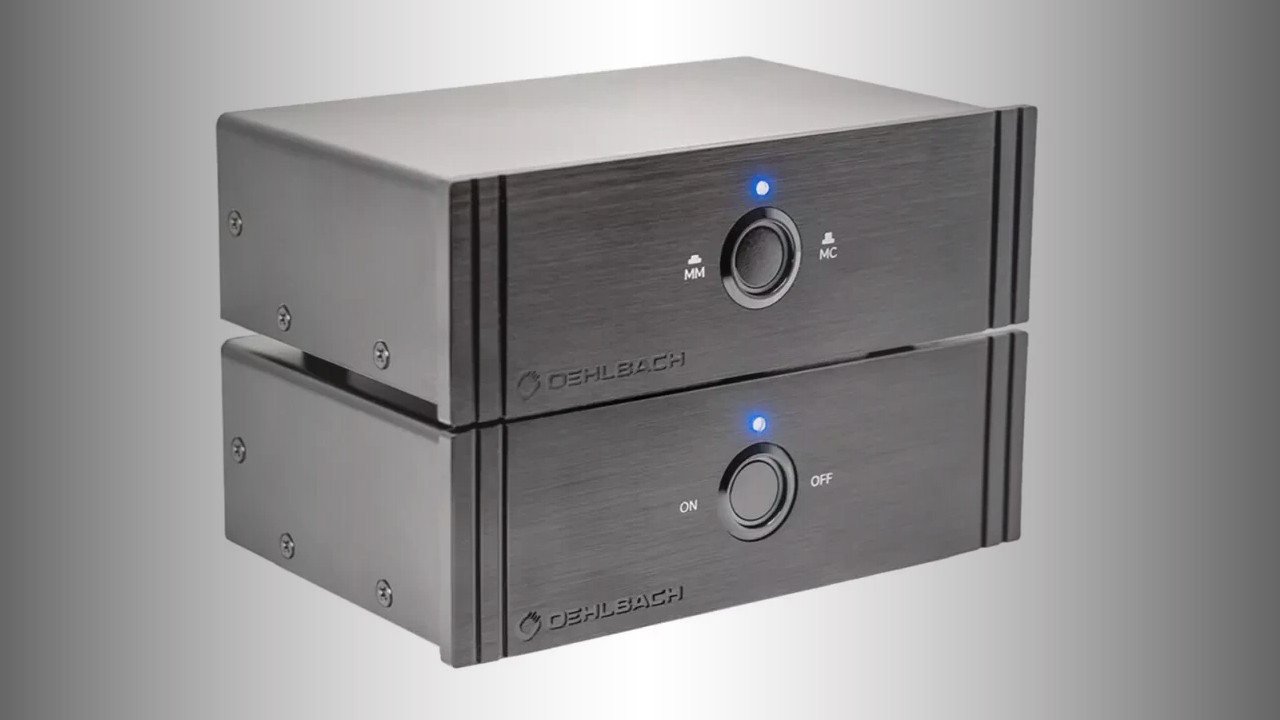
A dedicated phono preamplifier has a demanding job. It must amplify the very small signal produced by a phono cartridge, apply the necessary RIAA equalization and pass that signal to an amplifier without adding unnecessary noise or interference. The Oehlbach Twin Amp Ultra addresses those requirements through a deliberately focused design: support for both moving-magnet and moving-coil cartridges, a separate power supply, carefully arranged signal circuitry and a compact all-metal enclosure. Priced at $399, it occupies an accessible position for listeners who want more flexibility than a basic MM-only phono input without moving into a more elaborate high-end component.
A Useful Link Between Turntable and Amplifier
The Twin Amp Ultra is a transistorized, dual-block phono preamplifier intended to sit between a turntable and a conventional line-level input on an amplifier. That makes it relevant to systems in which the amplifier has no integrated phono stage, as well as setups where an owner wants to use a separate phono component rather than the circuitry built into an amplifier.
Its role is more specialized than that of an ordinary line preamplifier. A cartridge produces a signal that requires substantial amplification and frequency correction before it can be handled by a standard input. Oehlbach uses precise RIAA equalization, operational amplifiers and a purpose-designed signal-path topology to perform those tasks. The manufacturer associates this design with clear, natural reproduction and strong dynamics, although the more concrete attraction is the care given to the technically sensitive first stage of a vinyl playback system.
Separating phono amplification into its own component can also add system flexibility. The Twin Amp Ultra does not tie the turntable to a particular integrated amplifier or receiver, allowing the owner to change other electronics while retaining the same cartridge interface and equalization stage.
Front-Panel Switching for MM and MC Cartridges
Support for both moving-magnet and moving-coil cartridges is one of the Twin Amp Ultra’s most useful features. These cartridge types have different output characteristics and cannot always be used interchangeably with a single fixed phono input. A switch on the front panel changes the operating mode, avoiding the need to open the enclosure or reach behind the system whenever the cartridge type changes.
This arrangement gives the Oehlbach a wider potential lifespan within a vinyl system. Many turntables are supplied with MM cartridges, making that mode a logical starting point for someone building a first separates-based setup. If the owner later adopts an MC cartridge, the phono preamplifier does not automatically need to be replaced. It is also convenient for enthusiasts who alternate between turntables or cartridge-equipped tonearms, provided the relevant cartridge requirements fall within the unit’s supported configuration.
The emphasis is on uncomplicated selection rather than a large menu of setup controls. No additional loading, gain or capacitance adjustments are specified in the available product information. Owners of cartridges with unusual electrical requirements should therefore confirm compatibility, but listeners seeking a simple MM-or-MC choice may find the direct front-panel control more approachable than a bank of internal switches.
Why the External Power Supply Matters
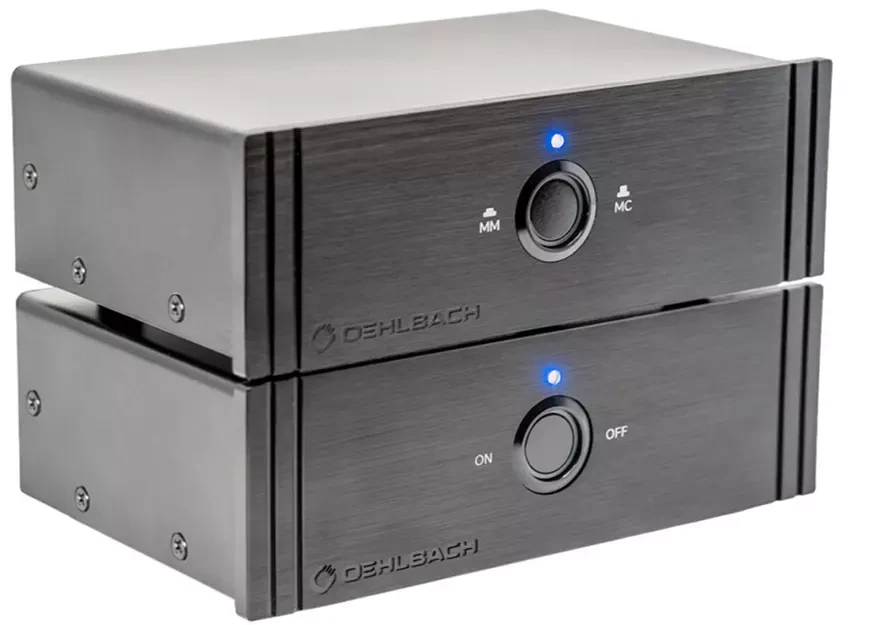
Oehlbach places the power supply outside the main phono-stage enclosure. This is not merely a space-saving measure: it keeps the components operating directly from 230V mains power physically separated from the sensitive audio signal path. Because a phono cartridge produces such a low-level output, controlling potential electrical interference is especially important at this point in the playback chain.
The company says this separation provides stable, clean operating conditions and contributes to a low-noise presentation. Without independent measurements, those performance results should be understood as the manufacturer’s stated objective. Even so, the engineering rationale is clear. Moving the mains section away from the amplification and equalization circuitry reduces one potential source of electromagnetic interaction inside the main chassis.
An external supply also allows the signal enclosure to remain compact. The trade-off is the need to accommodate an additional power component and cable, so the installation is not literally a single-box solution. For many systems, however, the small main enclosure and the ability to position the power supply away from low-level analog cables should make sensible equipment placement relatively straightforward.
Metal Construction with Practical Shielding
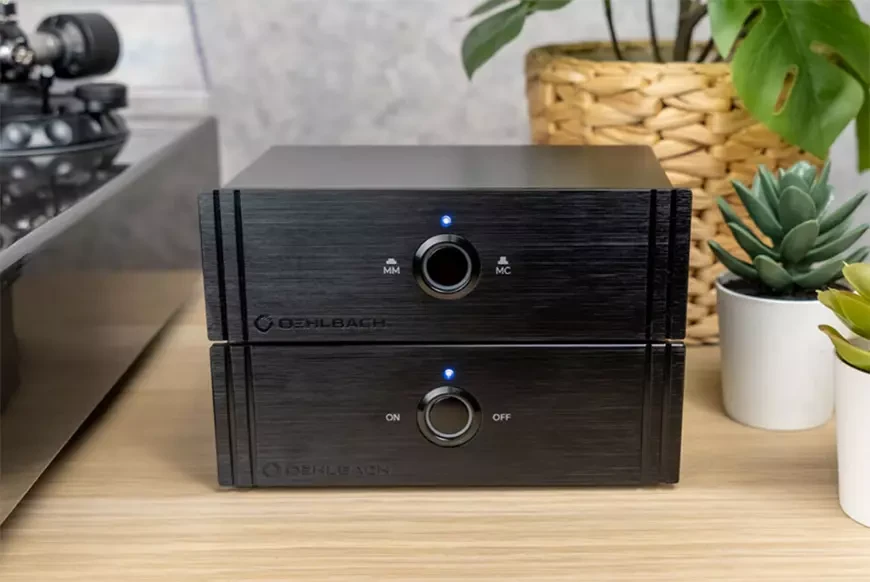
The Twin Amp Ultra uses an all-metal enclosure with a brushed stainless steel front panel. This gives the product a restrained appearance that should fit alongside a broad range of traditional and contemporary audio equipment. More importantly, the metal case is intended to provide protection from electromagnetic interference, connecting the visual design to a practical requirement of low-level signal handling.
Oehlbach has also specified shielded internal wiring. Together with the external power arrangement and metal enclosure, this shows a consistent approach to interference management rather than reliance on one isolated feature. These choices are particularly relevant when the phono stage must share a rack or shelf with amplifiers, digital components, network hardware and multiple power cables.
At 15.5 x 11 x 10.5 cm, the main unit has a compact footprint. It should be easier to accommodate than a full-width component, whether placed near the turntable or integrated into an equipment rack. Owners should still leave appropriate room for the rear cables and external supply rather than considering only the enclosure dimensions.
Connections Designed for Conventional Vinyl Systems
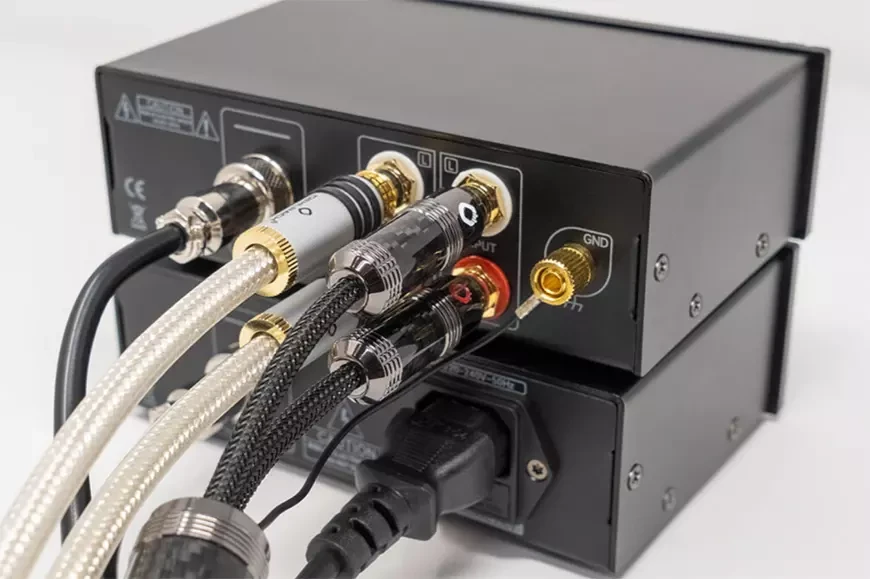
The connection layout centers on gold-plated RCA sockets, matching the single-ended analog connections used by most turntables and integrated amplifiers. Gold plating is useful primarily for its resistance to surface corrosion and its ability to maintain consistent contact over time; it should not be treated as evidence of sound quality by itself.
A substantial screw-type ground terminal is also included. Turntable grounding can be essential for minimizing hum, and a large terminal is easier to secure than a small, lightweight fitting, particularly when dealing with forked ground leads or bare wire. This is a modest detail, but it can have an outsized effect on the ease of installing and troubleshooting a vinyl source.
The specified connectivity keeps the Twin Amp Ultra focused on its intended function. It is not presented as a digital interface, headphone amplifier or multi-input control center. Instead, it provides the core analog connections needed to place a turntable into a conventional hi-fi system.
Who the Twin Amp Ultra Is Most Suitable For
The strongest match is a listener who wants a dedicated phono stage with both MM and MC capability but does not need an extensive set of cartridge-tuning controls. It could suit someone moving beyond an amplifier’s basic phono input, adding vinyl playback to an amplifier without one, or planning a future transition from an MM cartridge to MC.
Its compact dimensions also make it relevant to systems where shelf space is limited. The brushed metal design and conventional RCA connectivity allow it to integrate without demanding a specialized installation. The $399 price places it at the entry point of Oehlbach’s traditional standalone phono-stage proposition rather than in the territory of highly configurable analog electronics.
It may be less suitable for users who require documented, fine-grained adjustment of loading, capacitance or gain for multiple cartridges. Likewise, anyone seeking balanced connections or additional integrated functions should verify whether a more feature-heavy product is needed. The Twin Amp Ultra’s appeal lies in combining the two principal cartridge modes with a straightforward interface and interference-conscious construction.
A Focused Position in the Vinyl Market
The Twin Amp Ultra is designed for buyers who value purposeful engineering but want to avoid unnecessary operational complexity. Its feature set is broader than that of an MM-only phono stage, yet its controls remain simple. That balance helps distinguish it from both basic fixed-format models and specialist units that require more detailed cartridge setup.
Several design decisions support the same objective: the external supply moves mains circuitry away from the audio electronics, the metal chassis and shielded wiring address interference, and the front switch makes cartridge-mode changes immediately accessible. None of those elements is unusual in isolation, but together they create a coherent product intended to make dedicated phono amplification easier to adopt.
Conclusion
The Oehlbach Twin Amp Ultra concentrates on the features that matter most in a straightforward standalone phono stage: MM and MC compatibility, front-panel mode selection, precise RIAA equalization, an external power supply and a shielded metal enclosure. Gold-plated RCA connections, a substantial ground terminal and compact dimensions further support practical installation. At $399, it is best suited to vinyl listeners who want a dedicated, upgrade-friendly link between turntable and amplifier without the complexity of extensive cartridge-adjustment menus. Owners of cartridges requiring specialized loading or gain settings should confirm compatibility, but for conventional MM and MC systems, the Twin Amp Ultra presents a thoughtfully focused combination of flexibility, construction and ease of use.



Sound Off
0Join the discussion if you have something to add.