
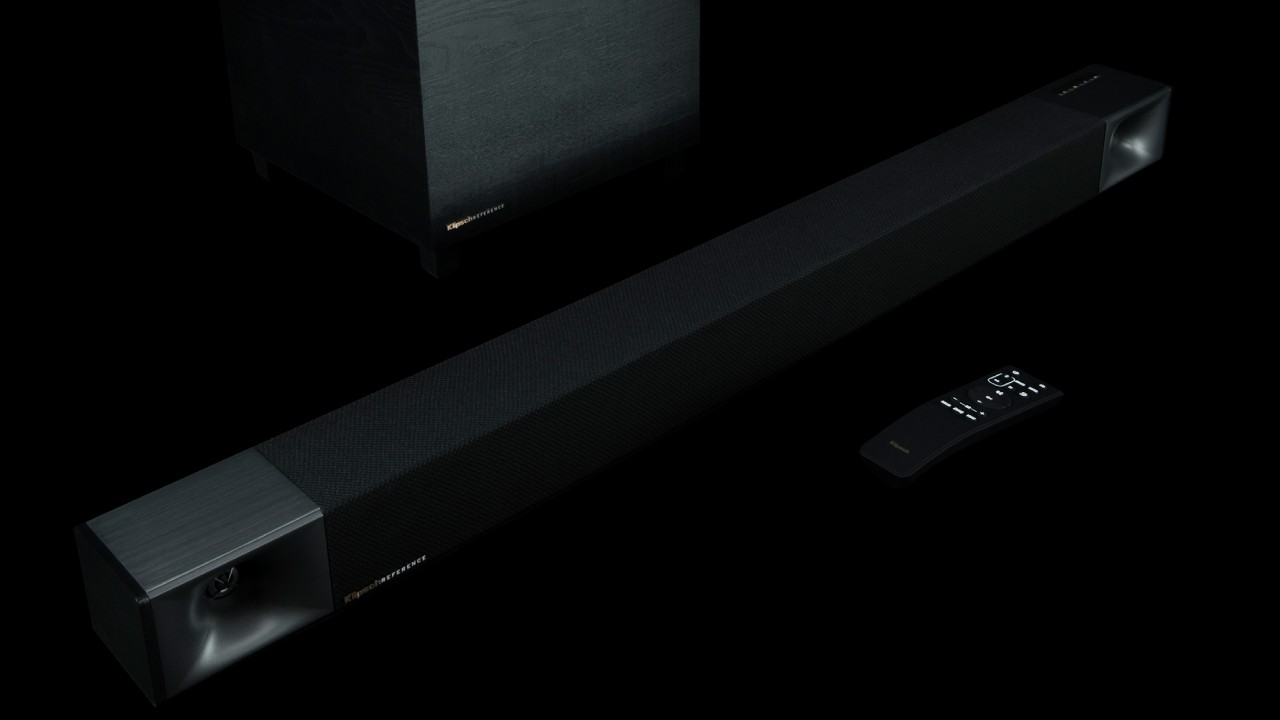
The Klipsch Cinema 400 Sound Bar occupies a straightforward place in the home entertainment category: it is a 2.1-channel system intended to give a television a more capable audio foundation without demanding the complexity, space, or wiring of a full surround system. It is the smallest model in Klipsch’s Cinema family and is recommended for TVs up to 50 inches, which makes its priorities clear. This is not a feature-heavy flagship soundbar, but a compact system built around familiar Klipsch design ideas, a separate wireless subwoofer, and a connection set suited to everyday viewing and casual music playback.
A soundbar cabinet with a more speaker-like approach
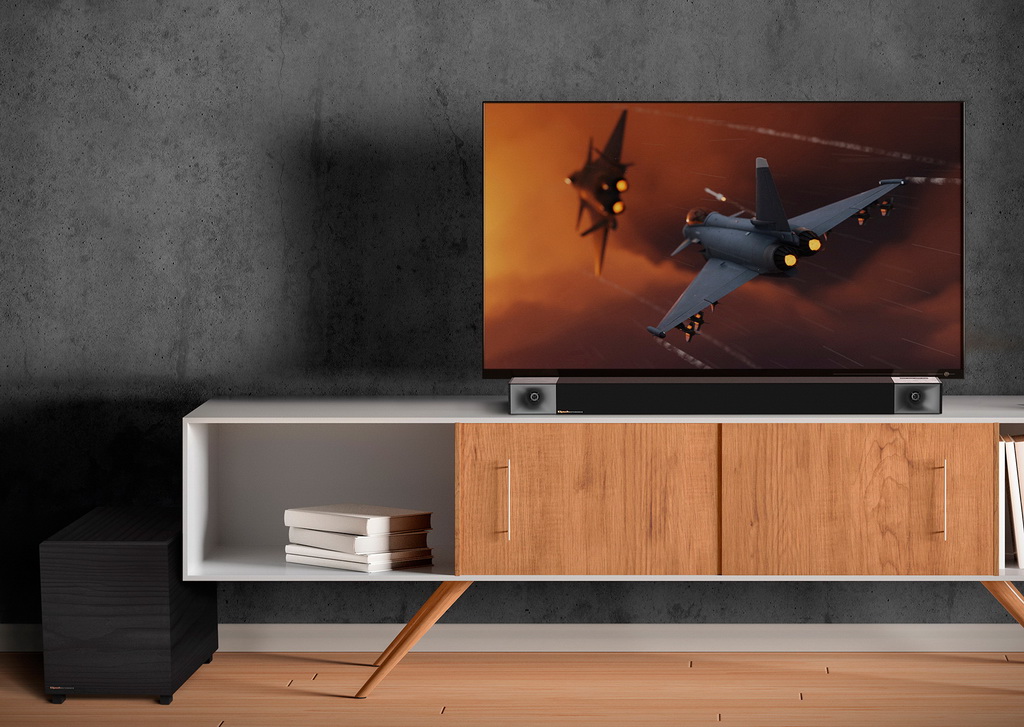
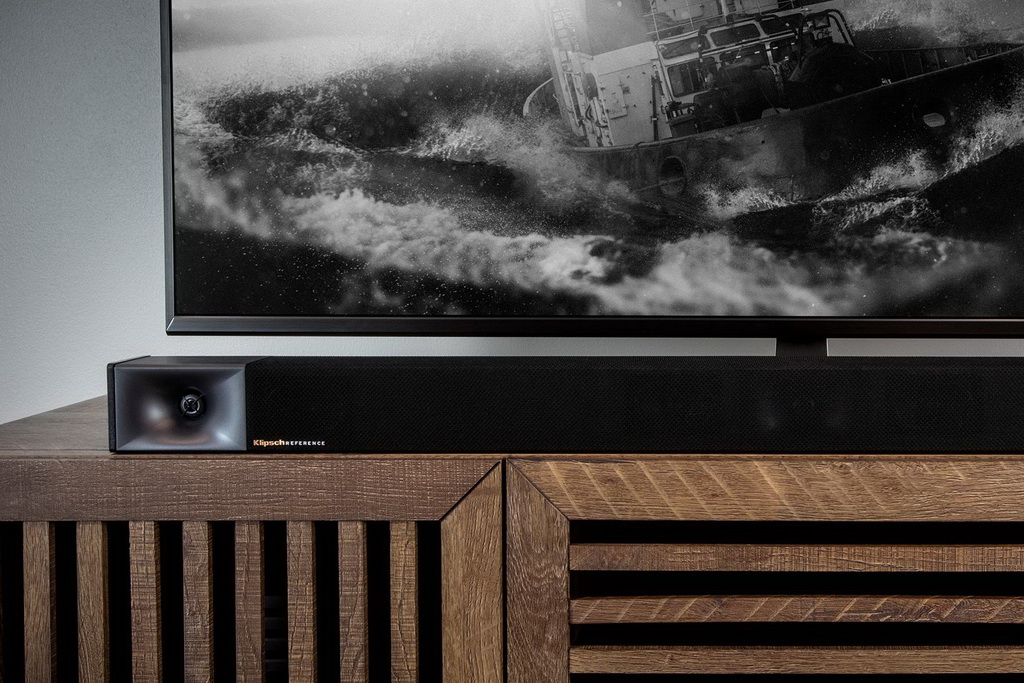
One of the more distinctive design choices in the Cinema 400 is its use of a wood cabinet rather than the plastic construction common to many soundbars. That matters because a soundbar is still a loudspeaker enclosure, even when it is shaped to sit beneath a television. A more substantial cabinet can help support a product’s acoustic and aesthetic goals while giving the bar a less disposable feel in a living-room system.
The soundbar itself is low in height, with documented dimensions of 1014 x 73 x 86 mm. That profile is useful for placement on a media unit in front of a television, where a taller bar can obstruct the screen or interfere with a TV’s infrared receiver. The Cinema 400 can also be wall-mounted, and the inclusion of a mounting stencil is a small but practical detail for owners who want the bar positioned directly below a wall-mounted display.
Klipsch horn technology in a compact TV system
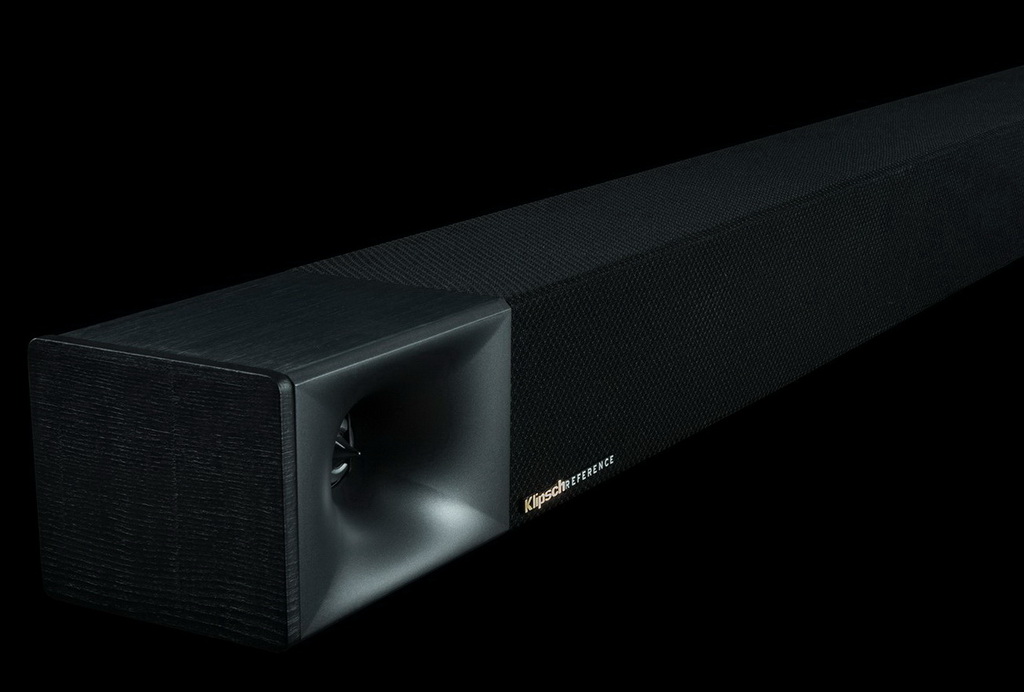
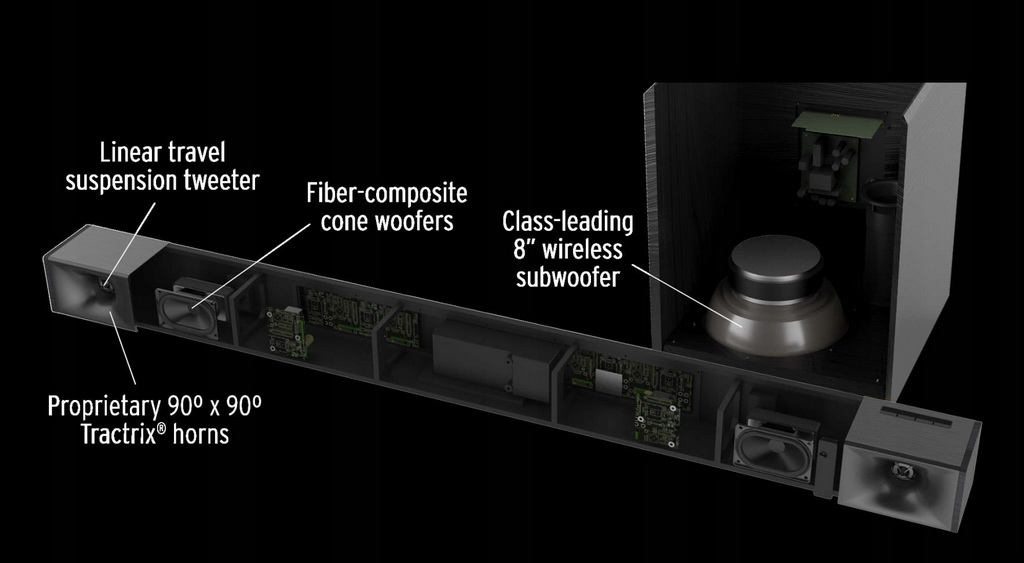
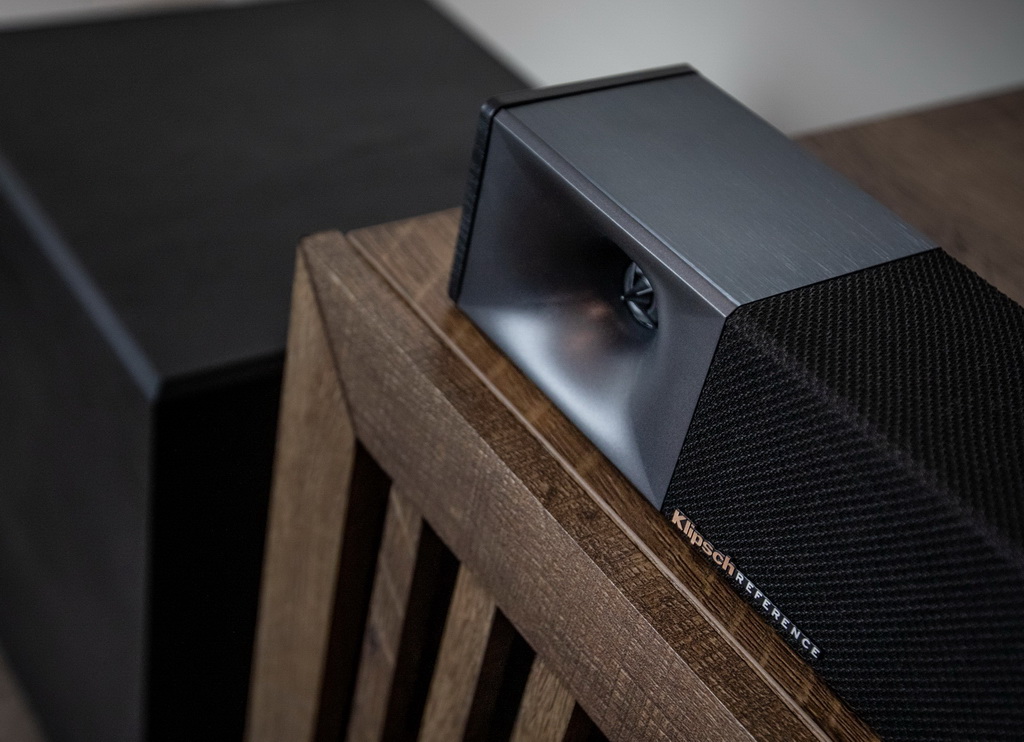
The Cinema 400 uses 19 mm soft-dome tweeters mounted in Klipsch’s patented Tractrix horns, with a 90 x 90 degree dispersion pattern. Horn loading is one of Klipsch’s signature technologies, and in this context it gives the product a clear identity within a crowded soundbar market. Rather than relying solely on small full-range drivers, the Cinema 400 uses a more conventional speaker layout with dedicated high-frequency units.
Each channel also includes low/mid-frequency drivers with composite-fiber diaphragms. The system is documented as using 3-inch woofers in the bar, allowing Klipsch to maintain a relatively slim cabinet while still giving the left and right channels more driver area than a minimal TV speaker arrangement. For a prospective owner, this approach is attractive because it keeps the installation simple while still separating the roles of high-frequency and mid/low-frequency reproduction inside the bar.
A 2.1 layout with a dedicated wireless subwoofer
The Cinema 400 is a 2.1-channel system: left and right channels in the soundbar, plus a separate subwoofer for the lowest frequencies. That architecture is easy to understand and easy to install. It does not attempt to be a full multi-speaker surround package, but it addresses one of the biggest limitations of thin televisions: the inability to move enough air for convincing low-frequency support.
The supplied wireless subwoofer uses a downward-firing driver in a damped MDF enclosure with a bass-reflex design. The downward-firing arrangement is intended to help distribute bass more evenly into the room and can make placement less fussy than a strictly forward-firing box in some setups. The wireless link between the bar and subwoofer operates over 2.4 GHz and is designed to connect automatically, reducing cable clutter and simplifying installation. The documented maximum distance of 9 meters should be sufficient for many normal living rooms.
Klipsch also includes an LFE subwoofer output, a noteworthy flexibility point at this level of simplicity. This means an owner can connect an active subwoofer by cable, either to add a second subwoofer or to replace the supplied wireless unit with another compatible powered subwoofer. That kind of upgrade path is not always present on straightforward soundbar packages, and it gives the Cinema 400 more system-matching flexibility than its minimalist layout might suggest.
Connectivity for modern and legacy sources
The connection set is practical rather than extravagant. The Cinema 400 includes HDMI connectivity with HDCP 2.2 support, optical digital input, a 3.5 mm analog input, USB for flash media, and Bluetooth. HDMI ARC support is especially useful in a TV-based system because it can allow audio from the television to return to the soundbar over HDMI and can enable more convenient control from a TV remote in compatible installations.
The optical input remains important for televisions or source setups where HDMI ARC is unavailable or not preferred, while the analog mini-jack gives the bar a simple route for older devices. Bluetooth adds direct wireless playback from compatible portable devices, and the source material documents aptX support for compatible Bluetooth sources. For households that use the same system for TV sound, streaming from a phone, and occasional music playback, that breadth of input options is one of the Cinema 400’s more useful everyday strengths.
DSP modes aimed at common viewing situations
The Cinema 400 includes a Dolby Digital decoder for digital multichannel audio processing and built-in DSP modes for different listening needs. The documented modes include Virtual Surround, Dialog Enhance, and Night Mode. These are not unusual features in soundbars, but they are highly relevant to how people actually use a TV audio system.
Virtual Surround is intended to create a wider presentation from the 2.1-channel hardware. Dialog Enhance focuses on speech intelligibility, which can be useful for news, talk shows, documentaries, and films where voices need to remain clear against music or effects. Night Mode limits dynamic range and reduces the impact of loud passages, making it more suitable for late-night viewing when household disturbance is a concern. The important point is not that these modes replace a full surround system, but that they give the owner quick, practical ways to adapt the bar to different content and listening conditions.
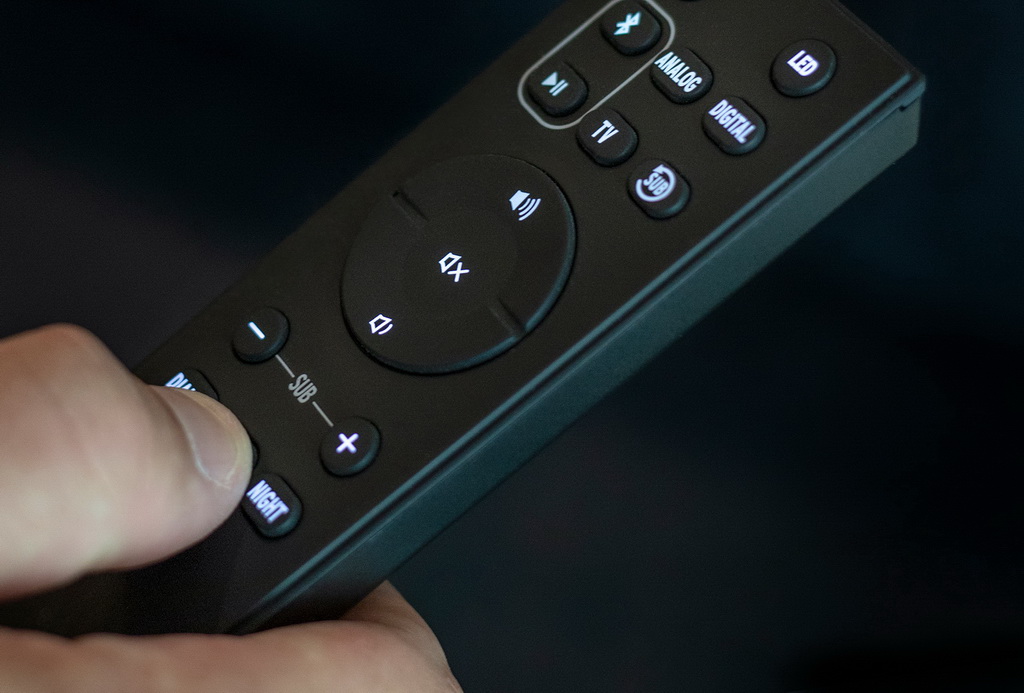
Control is handled through a compact remote, with separate adjustment for the soundbar and subwoofer volume. A column of LEDs on the right side of the bar indicates level, and the indication can be switched off from the remote if a darker, less distracting front-of-room setup is preferred.
Designed for simpler systems, not maximum channel count
The Cinema 400’s 2.1 architecture is part of its appeal. Some soundbars emphasize large channel counts, upward-firing drivers, app ecosystems, or immersive audio processing. Klipsch’s smaller Cinema model takes a more restrained route: stereo channels, a subwoofer, core TV connections, and a few targeted processing modes. For many owners, especially those upgrading from built-in TV speakers, that may be easier to live with than a more complicated soundbar system.
Its documented recommendation for screens up to 50 inches also helps define its market position. It is aimed less at oversized theater rooms and more at modest to medium living spaces, bedrooms, apartments, and TV areas where a full AV receiver and speaker package would be impractical. The low cabinet height, wireless subwoofer, wall-mount option, and TV-remote integration all support that role.
Who the Klipsch Cinema 400 is most suitable for
The Cinema 400 is best suited to listeners who want a simple, space-conscious TV audio upgrade with a real subwoofer and recognizable loudspeaker engineering. It will make the most sense for owners of smaller and mid-sized televisions, particularly where ease of setup and a clean front-of-room appearance are priorities. It is also appealing for users who value HDMI ARC convenience, Bluetooth playback, and the option to fine-tune dialogue or reduce late-night dynamics without entering a complex menu system.
It is less suited to someone seeking a full surround speaker layout, height-channel effects, advanced app control, or the most expansive specification set in the Cinema range. The product’s strengths are concentrated in simplicity, cabinet design, horn-loaded tweeters, wireless bass support, and practical connectivity. Buyers who understand that positioning are the most likely to appreciate what the Cinema 400 is designed to do.
Conclusion
The Klipsch Cinema 400 Sound Bar stands out as a compact 2.1 TV audio system with several well-documented strengths: a wood soundbar cabinet, Tractrix horn-loaded soft-dome tweeters, composite-fiber low/mid drivers, a wireless downward-firing subwoofer, HDMI ARC, optical and analog inputs, Bluetooth with aptX support for compatible devices, Dolby Digital decoding, and useful DSP modes for surround effect, dialogue clarity, and night-time viewing. Its low-profile form and wall-mounting provision make it easy to integrate with a television, while the LFE output adds welcome subwoofer flexibility. The ideal audience is the viewer who wants a cleaner, more capable alternative to built-in TV speakers without moving into a large, multi-box home theater system.


Sound Off
0Join the discussion if you have something to add.