


The iFi Zen DAC 3 is built around a straightforward but increasingly important idea: many listeners want a compact desktop component that can handle serious digital audio duties without taking over the system. It is both a DA converter and a headphone amplifier, designed to sit near a computer and turn a USB-C digital music signal into analog output for headphones, a preamplifier, an integrated amplifier, or active speakers. Its appeal lies less in one headline feature than in the way it combines several practical ones: balanced and unbalanced connectivity, wide file-format support, a small minimalist chassis, and user-adjustable analog processing modes. At $229, it also occupies a price point that makes it relevant to computer-based listeners who want a dedicated audio component rather than relying solely on a laptop, monitor, or basic USB adapter.
A desktop-first DAC with broader system ambitions
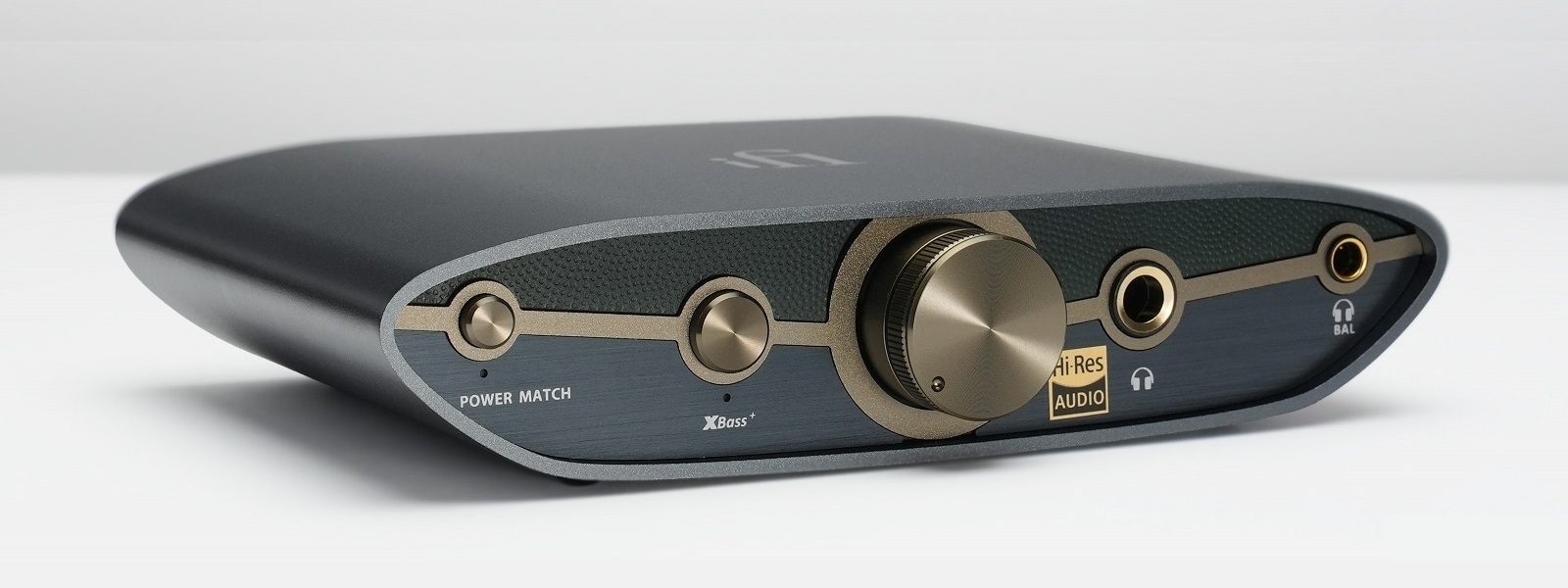
The Zen DAC 3 appears primarily intended to accompany a desktop computer, and that role makes sense. A modern desktop audio chain often starts with a laptop or PC, but the built-in audio hardware in those machines is rarely designed with hi-fi flexibility in mind. By accepting its digital music signal over USB-C, the iFi gives a computer-based setup a dedicated external conversion stage and a headphone amplifier in one compact unit.
What makes the Zen DAC 3 more useful is that it is not limited to headphone listening. It can also feed other analog equipment, including a preamplifier, amplifier, or a set of active speakers. That means it can serve as the central digital-to-analog bridge for a small desk system, a nearfield speaker arrangement, or a headphone-focused workspace that may later expand into speakers. For many prospective owners, that flexibility is more valuable than a single-purpose component, because it allows the same device to remain useful as the system changes.
Balanced and unbalanced connections for practical flexibility
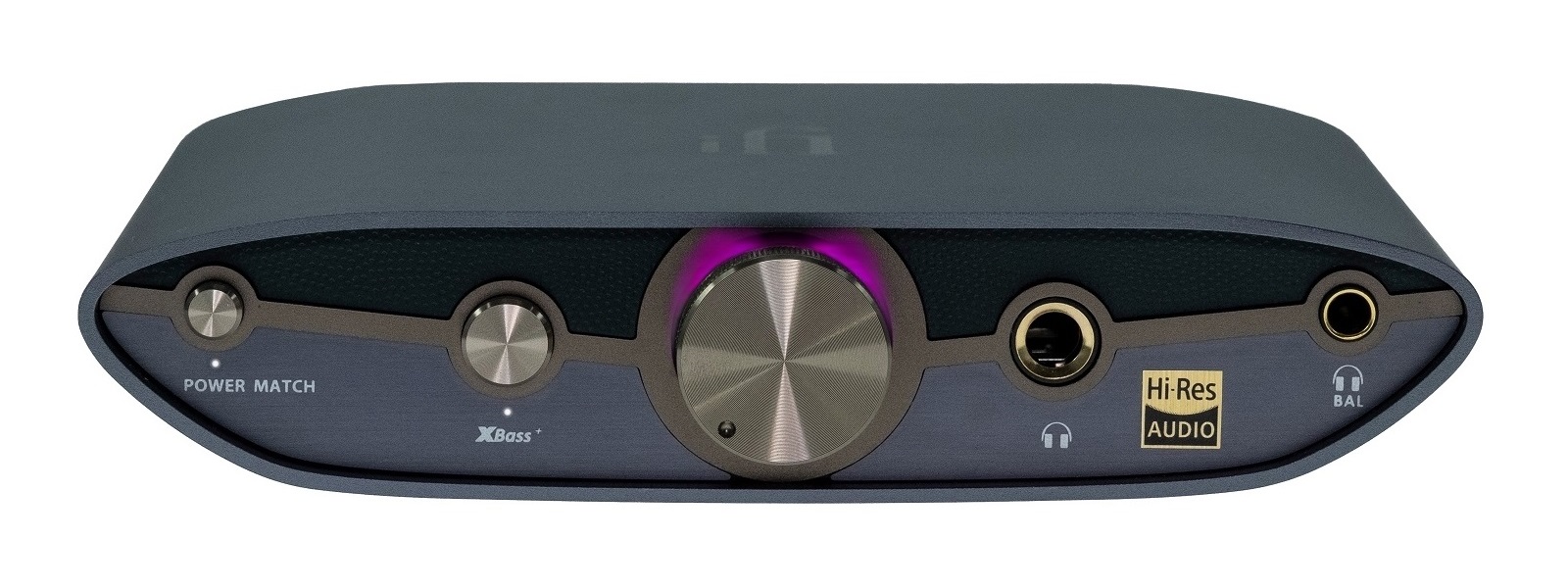
A notable part of the Zen DAC 3’s design is its attention to both balanced and asymmetrical, or unbalanced, analog connection options. On the front panel, iFi has provided a 4.4 millimeter balanced headphone output. For users with compatible headphone cables, this gives the unit a connection standard that has become common in compact headphone amplifiers and portable audiophile equipment. It avoids the size of traditional full-size balanced connectors while still offering a dedicated balanced headphone path.
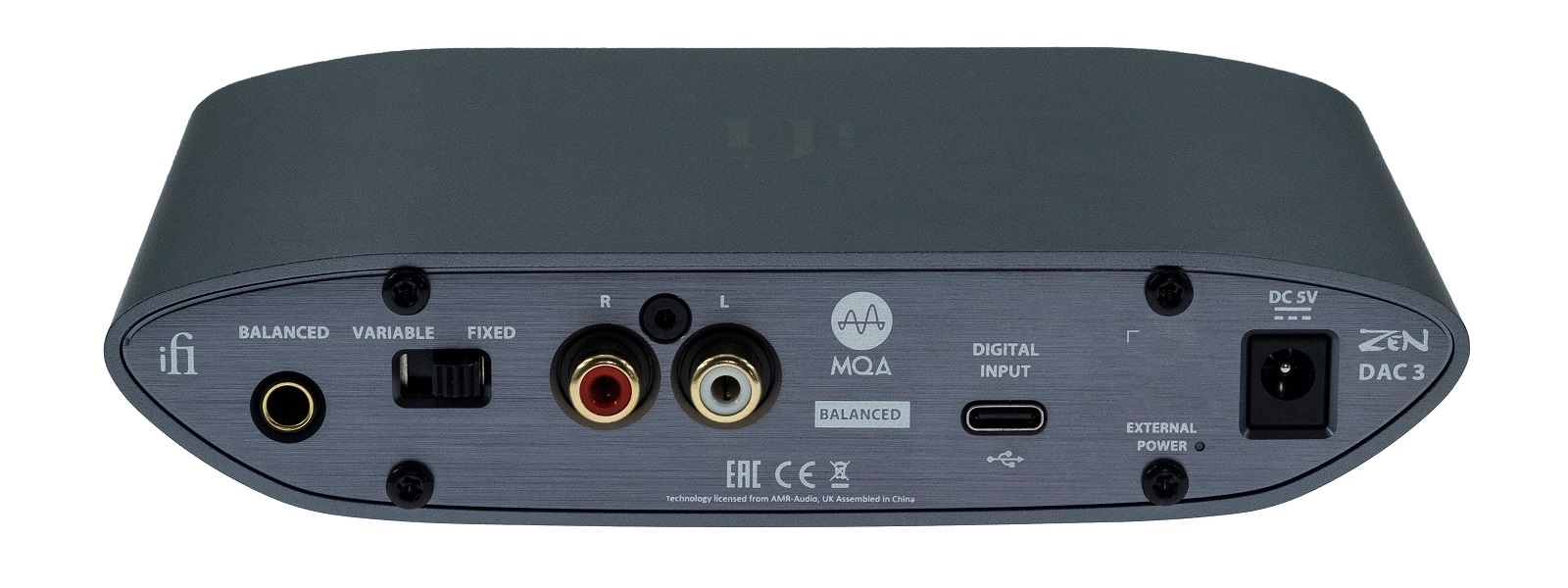
The rear panel also includes a 4.4 millimeter balanced output for connection to other hi-fi equipment. This is especially useful for desktop systems where space is limited but balanced connectivity is still desired. Alongside that, the Zen DAC 3 includes a stereo cinch output, commonly referred to as RCA, for conventional unbalanced connection to amplifiers, powered speakers, or other analog devices. The result is a connection layout that does not force the owner into one ecosystem. A user can run standard RCA cables today and make use of balanced connection options later, provided the rest of the system supports them.
High-resolution file support and MQA decoding
On the digital side, the Zen DAC 3 is specified to accept high-resolution PCM signals up to 32-bit/768 kHz and DSD up to DSD512. Those figures give it compatibility with a broad range of high-resolution music files and playback software. While not every listener owns material at such upper limits, wide format support can still matter because it reduces the chances that the DAC becomes the limiting factor in a computer-audio setup.
MQA decoding is also part of the feature package. For listeners who have MQA-encoded music in their library, this provides a direct way to handle that content within the same compact device. The important point is not that every owner will use every supported format, but that the Zen DAC 3 is designed to accommodate many of the file types and resolutions associated with current computer-based audio. That makes it a more complete digital front end than a basic USB audio output.
Analog listening tools: XBass+ and PowerMatch
iFi has also included two of its familiar analog processing features: XBass+ and PowerMatch. These are user-selectable tools intended to let the listener tailor operation to the headphones and listening situation. XBass+ is described as an analog processing mode, giving users a way to adjust the presentation without relying on software equalization in the computer. For listeners who move between different headphones or recordings, having a hardware-level option can be convenient because it keeps the adjustment within the audio device itself.
PowerMatch is another practical feature, particularly in a product that is meant to drive headphones. Headphones vary widely in how much power they need, and a desktop amplifier benefits from having a mode intended to help match output behavior to the connected headphone. The value here is usability: instead of treating all headphones as if they present the same load and sensitivity, the Zen DAC 3 gives the owner a dedicated control intended for matching the amplifier stage more appropriately. As always, such features are most useful when applied thoughtfully rather than left permanently engaged by habit.
Protection updates and design continuity
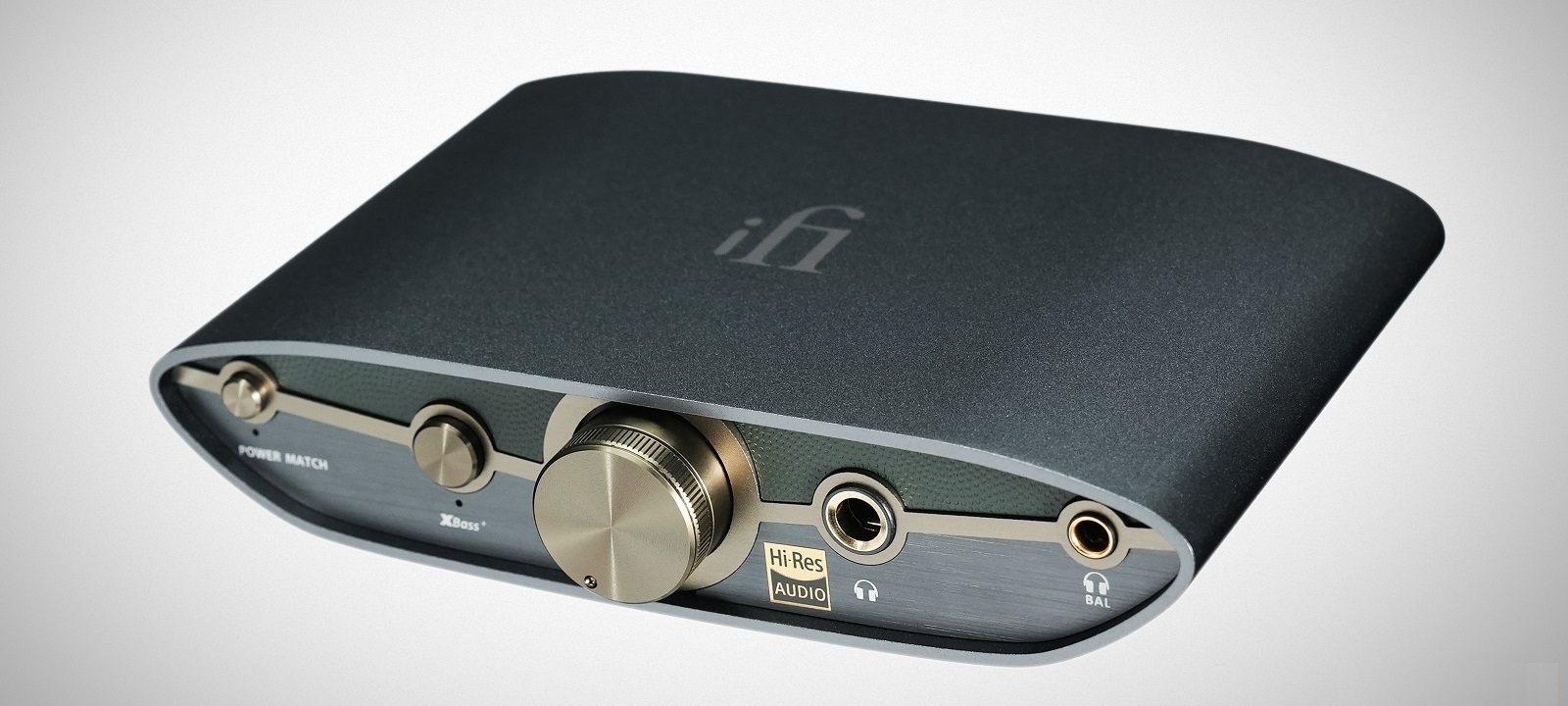
The Zen DAC 3 continues iFi Audio’s recognizable design language, with a solid shape and minimalist style. In a desktop product, that matters because the component is likely to live in plain sight beside a monitor, keyboard, headphone stand, or compact speakers. A restrained industrial design helps it fit into a workspace without appearing like a piece of full-width rack equipment compressed onto a desk.
The technical updates include improved DC offset and USB-C input surge protection. These are not glamorous features, but they are meaningful in everyday use. Desktop systems are frequently connected and disconnected, moved between computers, or used in environments with multiple USB-powered devices. Better input protection and attention to DC offset are the kinds of engineering details that support reliability and stable operation, even if they are less visible than a new output socket or format logo. For a device expected to act as a regular link between a computer and analog listening equipment, such refinements contribute to its practical appeal.
Who the iFi Zen DAC 3 is most suitable for
The Zen DAC 3 is likely to suit listeners who use a desktop computer as a main music source and want one compact component to handle both headphone playback and analog output to a speaker system. It is also a logical fit for owners who value balanced connection options in a small chassis, especially those with 4.4 millimeter balanced headphone cables or compatible downstream equipment. Its stereo RCA output keeps it approachable for more conventional hi-fi systems, while the rear balanced output adds room for a more specialized connection path.
It is less obviously aimed at someone seeking a full-size traditional hi-fi DAC with multiple digital inputs, because the documented digital input is USB-C. Nor is it the right product for a listener who has no need for headphone amplification or computer audio. Its strengths are concentrated around the desk: USB-based playback, headphone use, active speaker or amplifier connection, and convenient analog adjustment modes. For that audience, the combination of DAC, headphone amplifier, balanced connectivity, and compact form is the central attraction.
Market position at $229
At $229, the Zen DAC 3 is priced as an accessible dedicated component rather than a luxury desktop centerpiece. That positioning is important because its intended owner may be building a first serious computer-audio setup, upgrading from a basic output device, or consolidating headphone and speaker duties into one compact box. The product’s value proposition rests on functional density: USB-C input, high-resolution decoding, MQA support, balanced headphone output, rear balanced output, RCA output, and iFi’s analog processing modes are all contained in a small desktop-friendly design.
The strongest argument for the Zen DAC 3 is therefore not that it tries to replace every component in a system. Rather, it gives a computer-based listener a more capable analog hub than the computer alone can provide. It is especially attractive where space is limited, where headphones and speakers are both part of daily listening, and where the owner wants connection options that can support system changes over time.
Conclusion
The iFi Zen DAC 3 stands out as a compact, desktop-oriented DAC and headphone amplifier with a useful mix of modern and practical features: USB-C digital input, support for PCM up to 32-bit/768 kHz and DSD512, MQA decoding, balanced 4.4 millimeter outputs for headphones and hi-fi equipment, a conventional stereo RCA output, and the XBass+ and PowerMatch analog modes. Its minimalist chassis and added protection measures reinforce its role as an everyday computer-audio component. It is best suited to listeners who want a small, flexible digital hub for headphones, active speakers, or an amplifier-based desktop system, rather than a large multi-input hi-fi DAC.


Join the discussion
Share your thoughts, listening impressions or product experience.