
Choosing a home cinema component starts with identifying the part of the system that needs attention.
An AV receiver combines surround processing, source switching and power amplification, while an AV processor such as the NAD M17 V2 or McIntosh MX170 requires separate power amplifiers.
The Magnetar UDP800 serves a different role as a physical-media player, and the Yamaha R-N600A is intended for two-channel listening rather than surround sound. Room size, speaker layout and video requirements should guide the shortlist. Some of these models support compact 5.1 or 5.1.2 systems, while others can process or power more elaborate immersive layouts. Room-correction systems including ARC Genesis, Dirac Live, Audyssey MultEQ and RoomPerfect can also be significant when speakers must work within a real living space. The recommendations below retain their distinct purposes rather than treating every product as interchangeable. The right choice may be a flexible receiver, a dedicated processor, a universal disc player or a music-focused stereo receiver, depending on the system you are building.

1. Anthem MRX 740: Mid-range AV receiver with powerful features
The Anthem MRX 740 combines seven-channel amplification with ARC Genesis room correction for adaptable home cinema installation.
The Anthem MRX 740 is a seven-channel AV receiver capable of powering 7.1 or 5.1.2 speaker layouts, with stereo operation available for a second zone.
Its defining feature is ARC Genesis room correction, which provides adjustable target curves and uses digital signal processing to account for the interaction between the system and the room.
Rated at 140 watts into 8 ohms under the stated conditions, it suits buyers who want integrated amplification with extensive acoustic adjustment.
Best for: Room-correction-focused surround systems
- Seven channels of amplification
- Supports 7.1 and 5.1.2 layouts
- ARC Genesis room correction
- Stereo operation for zone two
Verdict: Choose the MRX 740 when seven amplified channels and Anthem's detailed ARC Genesis calibration are more important than moving to a larger channel count.
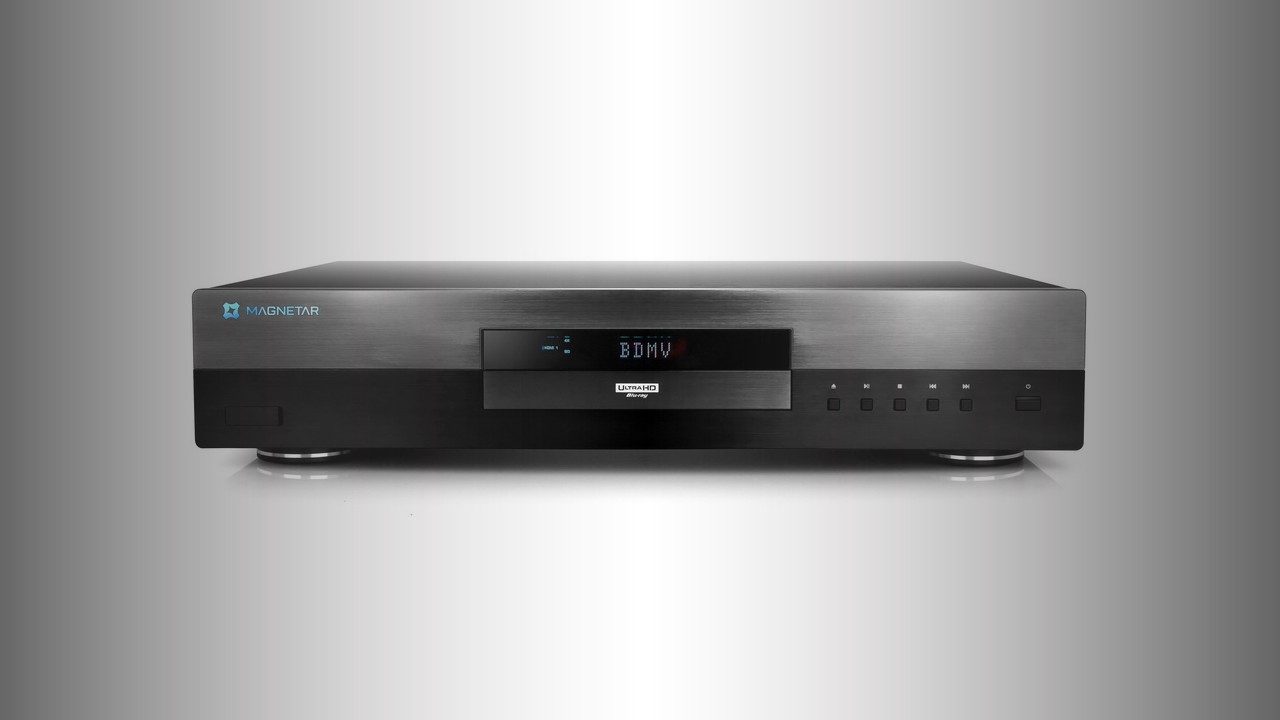
2. Magnetar UDP800: Classic 4K UHD Blu-ray Player
The full-size Magnetar UDP800 is designed to play DVD, Blu-ray, 4K UHD and compatible digital media formats.
The Magnetar UDP800 is a full-size media player for DVD, Blu-ray, 4K UHD discs and compatible media files.
Its video support includes Dolby Vision, HDR10 and HDR10+, along with HDR-to-SDR conversion and 4K upscaling at up to 50 or 60 frames per second.
Audio compatibility extends to DSD64/128, multichannel DSD64 and PCM files up to 192 kHz/24-bit, making this the specialist source component in the selection rather than a receiver or processor.
Best for: Physical-media film and music collections
- DVD, Blu-ray and 4K UHD playback
- Dolby Vision, HDR10 and HDR10+ support
- 4K video upscaling
- DSD and high-resolution PCM decoding
Verdict: The UDP800 is the appropriate choice for viewers who need a dedicated 4K disc and media player with broad HDR and high-resolution audio support.

3. Pioneer VSX-LX305: 9.2 Channel Powerhouse
The Pioneer VSX-LX305 brings 9.2-channel processing, Direct Power amplification and connected music features to one chassis.
The Pioneer VSX-LX305 is a 9.2-channel AV receiver positioned in the premium part of Pioneer's range.
Direct Power amplification is intended to provide substantial output from a relatively compact chassis, while broad wireless functionality includes Sonos compatibility and access to services such as Deezer, TIDAL and Amazon Music.
Its hardware was also designed with IMAX Enhanced compatibility in mind, although the supplied material notes that full use depends on software support.
Best for: Multichannel systems with wireless music needs
- 9.2-channel configuration
- Direct Power amplifier technology
- Sonos compatibility
- Support for major music services
Verdict: The VSX-LX305 is a strong fit for buyers who need nine-channel home cinema capability alongside multiroom and streaming integration.
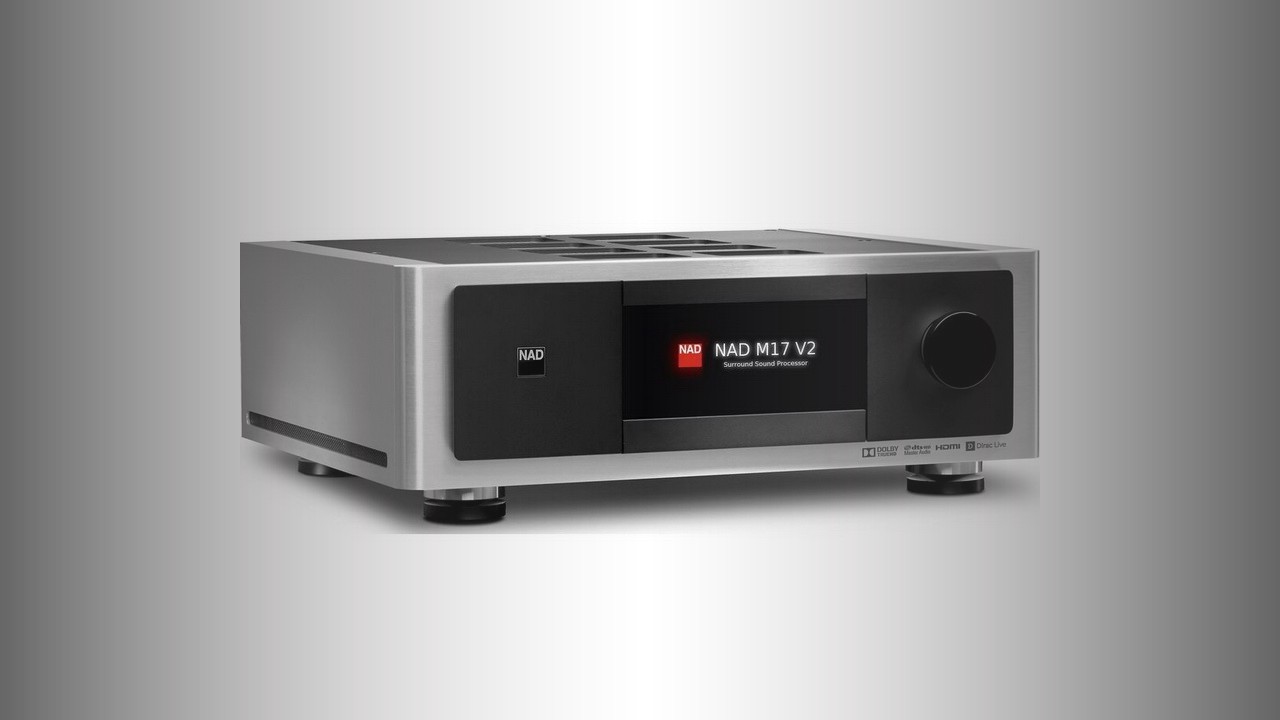
4. NAD M17 v2: Next-generation AV processor
The NAD M17 V2 is an AV processor with Dirac Live, BluOS and modular MDC hardware for use with external power amplification.
The NAD M17 V2 is a processor-preamplifier rather than an amplified AV receiver, so it belongs in a system built around separate power amplifiers.
It supports Dolby Atmos, Dolby TrueHD and DTS-HD Master Audio, while Dirac Live provides automatic room correction.
NAD's replaceable MDC module concept is intended to accommodate newer formats and technologies, and BluOS gives the processor an additional role as a high-resolution network music player.
Best for: Separate-component cinema and music systems
- Dirac Live room correction
- Dolby Atmos support
- Replaceable MDC module design
- BluOS music platform
Verdict: Select the M17 V2 for a separates-based installation that values Dirac Live, balanced connectivity, modular construction and BluOS playback.

5. Marantz NR1711: AV receiver equipped with advanced sound optimization
The low-profile Marantz NR1711 accommodates seven amplifier channels, Audyssey calibration and 5.1.2 immersive audio.
The Marantz NR1711 packages seven discrete amplifier channels into a low-profile enclosure approximately half the height of a conventional full-size receiver.
It supports Dolby Atmos and DTS:X in a 5.1.2 configuration, as well as height virtualization for systems without physical height speakers.
Audyssey MultEQ XT handles speaker calibration, complemented by Dynamic Volume and Dynamic EQ, while the video section supports 8K at 60 Hz and 4K at up to 120 Hz.
Best for: Space-conscious 5.1.2 installations
- Low-profile receiver design
- 5.1.2 Dolby Atmos and DTS:X support
- Audyssey MultEQ XT calibration
- 8K/60 Hz and 4K/120 Hz video support
Verdict: The NR1711 makes sense when cabinet height is limited but seven-channel amplification, immersive audio and modern video support are still required.

6. Onkyo TX-SR393: AV receiver equipped with an automatic sound calibration system
The Onkyo TX-SR393 offers virtual height and surround processing for home cinema systems with limited speaker space.
The Onkyo TX-SR393 is the most affordable model identified in its range and is aimed at straightforward home cinema installations.
Dolby Atmos Height Virtualizer and DTS Virtual:X can simulate height and surround effects when the corresponding physical speakers are absent, making the receiver easier to accommodate in a small room.
It also provides four HDMI inputs and pre-out connections for a second audio zone.
Best for: Small rooms and simpler surround systems
- Dolby Atmos Height Virtualizer
- DTS Virtual:X processing
- Four HDMI inputs
- Second-zone pre-out connections
Verdict: The TX-SR393 is the practical option for a compact, accessible system where virtualized immersive sound is preferable to installing additional speakers.

7. Yamaha RX-A1080: High-performance AV receiver
The Yamaha RX-A1080 uses a seven-channel Aventage platform with an aluminum front panel and vibration-controlling ART Wedge support.
The Yamaha RX-A1080 belongs to the performance-oriented Aventage range and uses a seven-channel amplifier rated at 110 watts per channel into 8 ohms with two channels driven.
Its construction includes an aluminum front panel and Yamaha's additional central ART Wedge support, both intended to address interference or vibration.
The receiver can be used with a height-channel arrangement or with front-speaker bi-amping, giving owners a choice in how the available amplifier channels are assigned.
Best for: Buyers prioritizing chassis design and flexible amplification
- Seven-channel amplification
- ART Wedge chassis support
- Aluminum front panel
- Height-channel or front bi-amping options
Verdict: The RX-A1080 suits a seven-channel system whose owner values Aventage construction and the ability to choose between height-channel use and front-speaker bi-amping.

8. Denon AVC-X4700H: Fully equipped AV receiver
The Denon AVC-X4700H provides nine-channel amplification, 11.2-channel outputs and support for several immersive surround formats.
The Denon AVC-X4700H combines nine amplified channels with 11.2-channel line outputs, allowing it to support layouts such as 7.2.2 or 5.2.4 and to expand with external amplification.
Surround decoding includes Dolby Atmos, DTS:X, IMAX Enhanced and Auro-3D.
Its stated 125-watt output into 8 ohms, substantial power supply and multichannel processing architecture make it the high-channel-count integrated option in this guide.
Best for: Larger immersive speaker layouts
- Nine amplified channels
- 11.2-channel line outputs
- Dolby Atmos, DTS:X, IMAX Enhanced and Auro-3D
- Supports 7.2.2 and 5.2.4 layouts
Verdict: The AVC-X4700H is the most suitable receiver here for buyers who want nine onboard amplifier channels and a route to an 11.2-channel separates-assisted system.

9. Yamaha R-N600A: Powerful Entry-level Stereo Receiver
The Yamaha R-N600A is a stereo receiver built around ToP-ART circuitry, an ESS DAC and a Pure Direct listening mode.
The Yamaha R-N600A is a two-channel stereo receiver, not a multichannel home cinema receiver.
It uses Yamaha's ToP-ART design approach, separate power supplies for digital and analog sections, an ESS Sabre ES9010K2M DAC and an ART Base chassis intended to reduce the effects of noise, vibration and resonance.
Pure Direct bypasses the tone, balance and buffer stages, making this model relevant to a television-based system only when stereo music reproduction takes priority over surround sound.
Best for: Music-first two-channel television systems
- Separate digital and analog power supplies
- ESS Sabre ES9010K2M DAC
- Pure Direct signal path
- ART Base chassis design
Verdict: Choose the R-N600A only when stereo playback is the goal, as it should not be treated as a substitute for a multichannel AV receiver.

10. McIntosh MX170: Reference AV Processor built for uncompromising audiophile home theater performance
The McIntosh MX170 is a surround processor with extensive HDMI routing, RoomPerfect calibration and an HDBaseT output for custom installations.
The McIntosh MX170 is an AV processor for a high-end separates system and therefore needs external power amplification.
Its eight HDMI inputs and four HDMI outputs support 4K Ultra HD, HDCP 2.2, 18 Gbps bandwidth and 4:4:4 color, with HDR10, Dolby Vision and HLG compatibility.
Dolby Atmos, DTS:X and Auro-3D handle immersive audio, while RoomPerfect measures and adjusts output for the room's acoustic properties; a dedicated HDBaseT output is provided for installations where the display is far from the processor.
Best for: High-end custom cinema systems with external amplifiers
- Eight HDMI inputs and four outputs
- Dolby Atmos, DTS:X and Auro-3D
- RoomPerfect room correction
- HDBaseT output for long display runs
Verdict: The MX170 is intended for an ambitious separates installation requiring extensive HDMI routing, immersive format support, RoomPerfect correction and long-distance video connectivity.
Frequently asked questions
Should I buy an AV receiver or an AV processor?
Choose an AV receiver when you want surround processing and power amplification in one enclosure.
A processor such as the NAD M17 V2 or McIntosh MX170 requires separate power amplifiers, but it may better suit a modular or custom-installed system.
How many channels does a home cinema system need?
Match the receiver to the speaker layout you can actually install.
A seven-channel receiver can support arrangements such as 7.1 or 5.1.2, while nine amplified channels allow layouts such as 7.2.2 or 5.2.4; additional processed channels may require external amplification.
Is room correction worth prioritizing?
Room correction can help account for speaker placement and the acoustic behavior of the room.
ARC Genesis, Dirac Live, Audyssey MultEQ and RoomPerfect offer different levels of adjustment, so buyers should consider calibration alongside channel count and connectivity.
Do I need a dedicated 4K UHD Blu-ray player?
A dedicated player is appropriate if physical discs or compatible local media are central to the system.
The Magnetar UDP800 supports DVD, Blu-ray, 4K UHD, major HDR formats and high-resolution audio files, but it still needs to be connected to a display, receiver or processor.
How to choose the right home cinema component
Begin by deciding whether the system needs a source player, an amplified AV receiver, a processor for external power amplifiers or a simple stereo receiver.
These categories are not interchangeable: the Magnetar UDP800 plays media, the NAD M17 V2 and McIntosh MX170 manage signals for separates systems, and the Yamaha R-N600A is intended for two-channel listening.
For an integrated surround system, choose the channel count from the planned speaker layout rather than from the largest number available. The Onkyo TX-SR393 addresses smaller and simpler rooms, the Marantz NR1711 fits low-profile furniture and 5.1.2 systems, and the Anthem MRX 740 emphasizes seven-channel operation with ARC Genesis. The Pioneer VSX-LX305 and Denon AVC-X4700H provide more channels for larger installations, with the Denon also offering 11.2-channel line outputs for expansion. Check video compatibility against every source and display in the signal chain, especially if high-frame-rate 4K, 8K, Dolby Vision or HDR10+ matters. Connectivity should also account for the required number of HDMI sources, second-zone operation, streaming services and any long cable run to a projector or television. Finally, allow for the room itself. A sophisticated speaker layout cannot compensate for unsuitable placement, and room correction is most useful when followed by careful review rather than treated as a replacement for sensible installation. Select the product whose amplification, processing, physical dimensions and calibration tools fit the room you have, not the system you might never build.


Sound Off
0Join the discussion if you have something to add.