
The turntables gathered here approach vinyl replay from markedly different directions.
Some concentrate on mechanical isolation and carefully selected materials, while others prioritize straightforward setup, cartridge flexibility or convenient features such as an integrated phono stage and wireless audio.
This is not a like-for-like ranking. The selection ranges from accessible manual decks to limited editions and ambitious anniversary models, with one specialist tonearm included for readers building or upgrading a separate turntable system. Each recommendation reflects the design details and intended use described in our source coverage rather than a direct comparative listening test. Before choosing, consider the whole playback chain: turntable, tonearm, cartridge, phono amplification and supporting surface. Features that look attractive in isolation matter only if they fit your system, setup preferences and willingness to make manual adjustments.
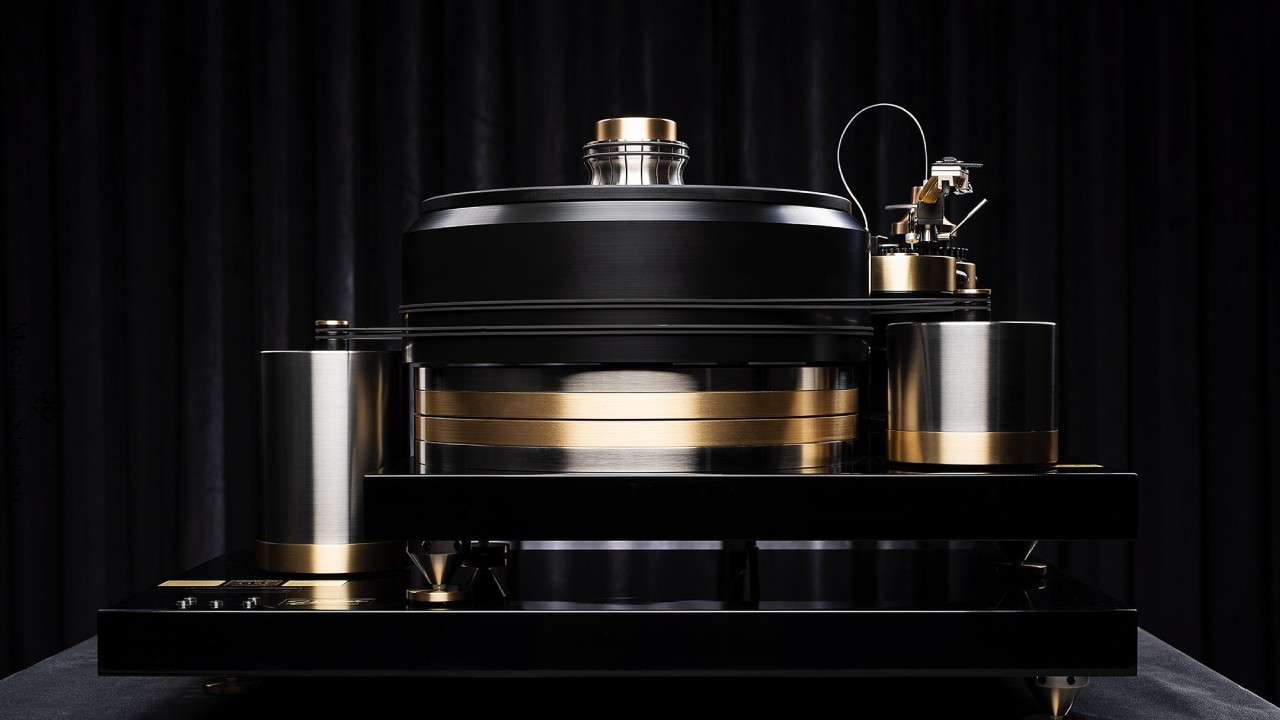
1. J.Sikora Standard MAX Anniversary Turntable
The J.Sikora Standard MAX anniversary model uses brass, copper, steel and stainless-steel elements in its revised structure.
J.Sikora’s anniversary version of the Standard MAX incorporates technology derived from the company’s Leadware Reference turntable.
Aluminum suspension components were replaced with brass, while the separating layers beneath the turntable combine steel, copper and solid brass plates.
The motor housings use thick stainless steel with improved internal damping, reflecting an extensive effort to control resonance through carefully chosen metals and alloys. This is an ambitious reinterpretation of an established design rather than a cosmetic commemorative finish, although the available source presents the engineering from the manufacturer’s perspective rather than through an independent comparison.
Best for: Enthusiasts interested in advanced resonance control
- Reference-derived technology
- Brass suspension components
- Multi-metal separating layers
- Improved motor-housing damping
Verdict: A materially substantial evolution of the Standard MAX built around extensive changes to isolation, damping and metal composition.

2. Audio-Technica AT-LP7X
The matte-black Audio-Technica AT-LP7X combines an acrylic platter with a J-shaped aluminum tonearm.
The AT-LP7X is a fully manual belt-drive turntable designed for listeners who want room to develop their vinyl system.
Its solid MDF plinth supports a 20 mm acrylic platter, while a J-shaped aluminum tonearm uses a two-axis gimbal bearing system intended to reduce friction and maintain stable tracking.
Audio-Technica supplies the deck with an AT-VM95E moving-magnet cartridge mounted on an AT-LT10 headshell. The modular VM95 cartridge platform is especially useful because its stylus can be upgraded to other profiles, including Microlinear and Shibata options, without replacing the complete cartridge.
Best for: Manual-turntable buyers planning future stylus upgrades
- 20 mm acrylic platter
- Two-axis gimbal tonearm bearings
- Upgrade-friendly VM95 cartridge platform
- AT-VM95E cartridge included
Verdict: A purposeful belt-drive design whose modular cartridge platform and substantial platter provide a clear route for system development.
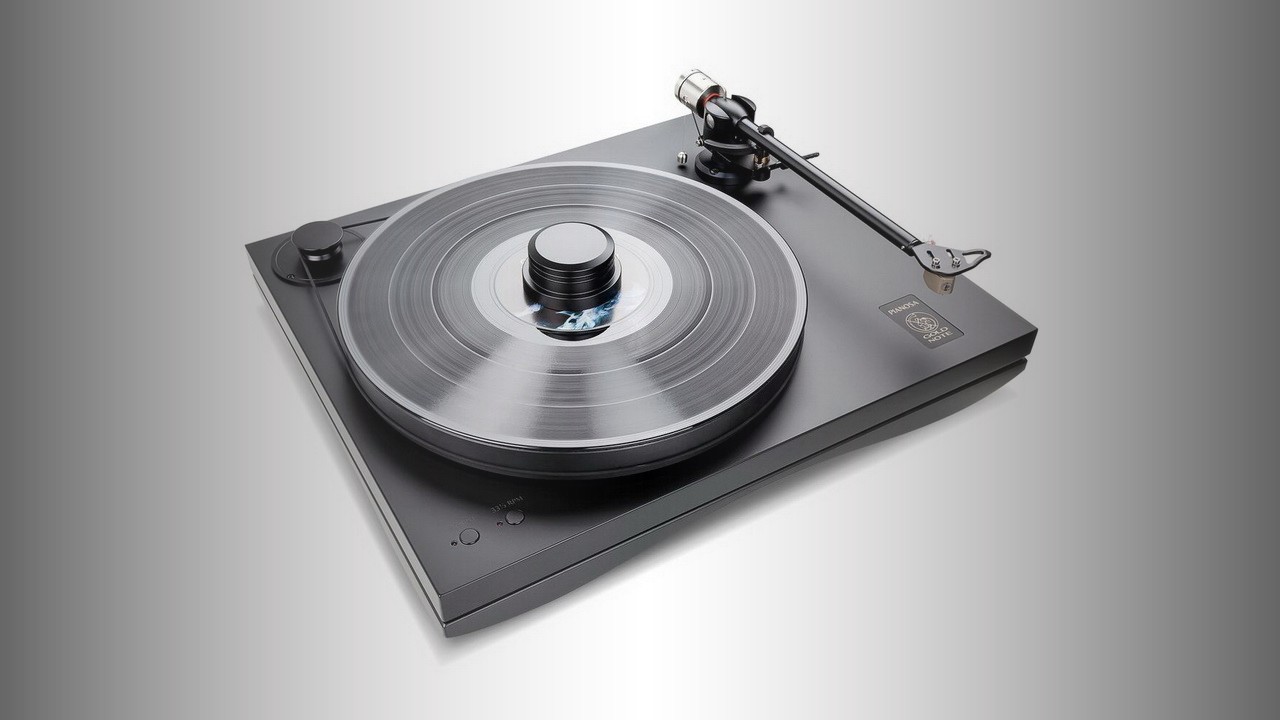
3. Gold Note Pianosa
Gold Note’s Pianosa features a curved solid-walnut lower body beneath its technical upper structure.
The Pianosa applies ideas developed for Gold Note’s Mediterraneo and Giglio models in a distinctive curved structure.
Its solid Italian-walnut lower body is shaped to increase rigidity as well as give the turntable its recognizable appearance.
The motor and power supply draw on components from the Giglio but are optimized for the Pianosa’s MDF construction. A pulse-width-modulation power supply converts AC to DC and then back to AC to support stable platter rotation, while an hourglass-shaped pulley is intended to transfer drive accurately. The platter is made from Sustarin, a hard technical polymer.
Best for: Listeners who value distinctive materials and sculptural design
- Curved solid-walnut lower body
- Pulse-width-modulation power supply
- Sustarin polymer platter
- Giglio-derived motor components
Verdict: The Pianosa combines a rigid curved structure, specialized platter material and controlled motor supply in an unusually elegant belt-drive design.

4. Technics SL-40CBT
The Technics SL-40CBT combines an S-shaped aluminum tonearm with integrated phono and Bluetooth functions.
The SL-40CBT brings several practical features to Technics’ direct-drive format.
It has an iron-core-less direct-drive motor and a precision S-shaped aluminum tonearm, alongside an integrated phono amplifier and Bluetooth connectivity.
That combination allows it to accommodate both a conventional wired hi-fi system and more streamlined wireless listening arrangements. Technics positions the model for newcomers as well as existing vinyl listeners seeking an entry-level option. Its strongest distinction within this selection is convenience: fewer external components are needed to start playing records, without abandoning the company’s established direct-drive approach.
Best for: Listeners seeking direct drive with simple system integration
- Iron-core-less direct-drive motor
- Built-in phono amplifier
- Bluetooth connectivity
- S-shaped aluminum tonearm
Verdict: A practical Technics deck that pairs core direct-drive engineering with built-in phono amplification and wireless audio.

5. Graham Engineering Phantom III SE
The Graham Engineering Phantom III SE uses a tapered titanium arm tube and is offered in three lengths.
The Phantom III SE is a tonearm rather than a complete turntable, so it belongs on the shortlist only for readers assembling or upgrading a compatible deck.
Graham Engineering offers tapered titanium arm tubes in 9-, 10- and 12-inch lengths.
The material and tapered profile are used to combine rigidity with reduced mass toward the end of the arm. Graham’s Magneglide stabilization system is designed to permit vertical movement without azimuth deviation, while silver-plated copper internal wiring supports conductivity and flexibility. A dedicated VTA adjustment tower provides a direct way to refine arm height during cartridge setup.
Best for: Specialist turntable builds requiring an adjustable premium tonearm
- Three arm-length options
- Tapered titanium arm tube
- Magneglide stabilization system
- Adjustable VTA tower
Verdict: A highly configurable titanium tonearm for experienced users who need precise setup facilities and a choice of arm lengths.
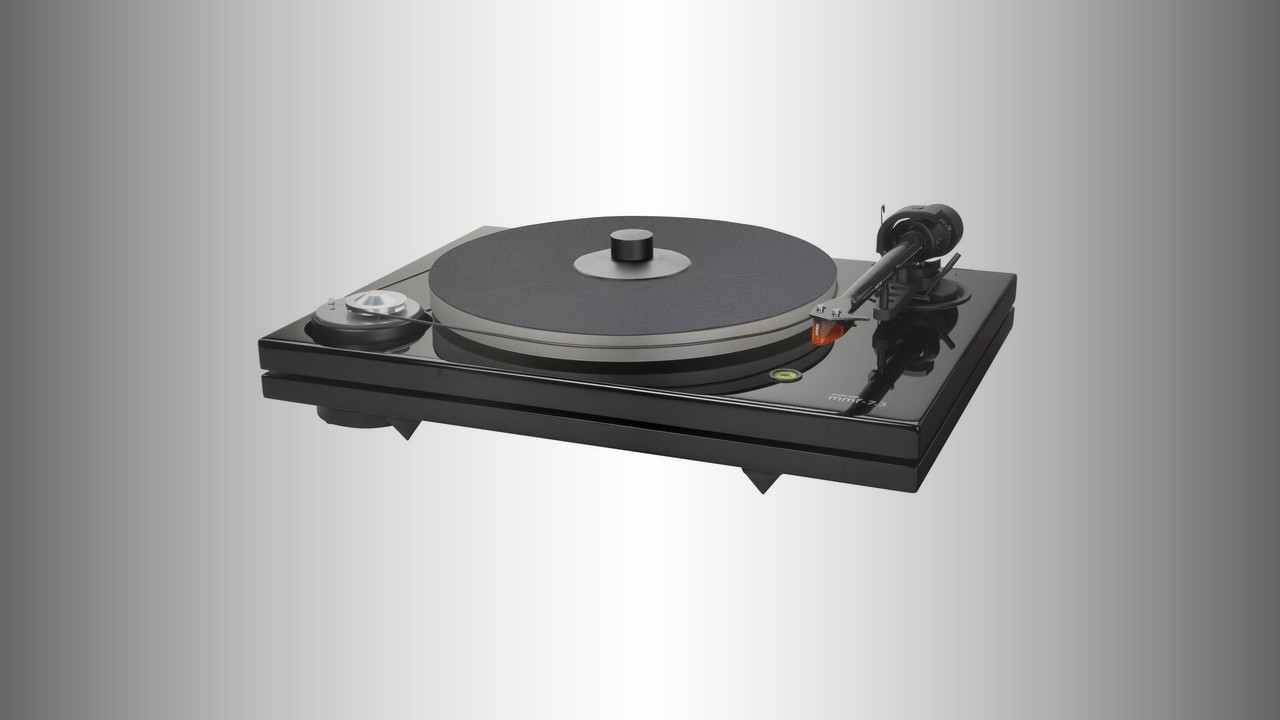
6. Music Hall MMF-7.3
The Music Hall MMF-7.3 separates its motor and electrical parts from the platter and tonearm on a dual chassis.
The MMF-7.3 is built around a dual-chassis arrangement intended to isolate the platter and tonearm from vibration.
Synthetic-rubber inserts separate the two platforms, with the AC motor and electrical wiring mounted on the lower chassis and the playback components positioned above.
Its carbon-fiber tonearm has a damped counterweight whose center of gravity is lowered to the level of the stylus for improved stability. An acrylic platter is used to limit self-resonance. The deck supports two playback speeds, changed manually by moving the belt between motor-pulley positions; the exposed motor placement makes that procedure more accessible.
Best for: Listeners prioritizing mechanical isolation over automatic convenience
- Isolated dual-chassis construction
- Carbon-fiber tonearm
- Damped low-center-of-gravity counterweight
- Acrylic platter
Verdict: A deliberately separated belt-drive design that addresses vibration through its dual chassis, remote motor mounting and acrylic platter.
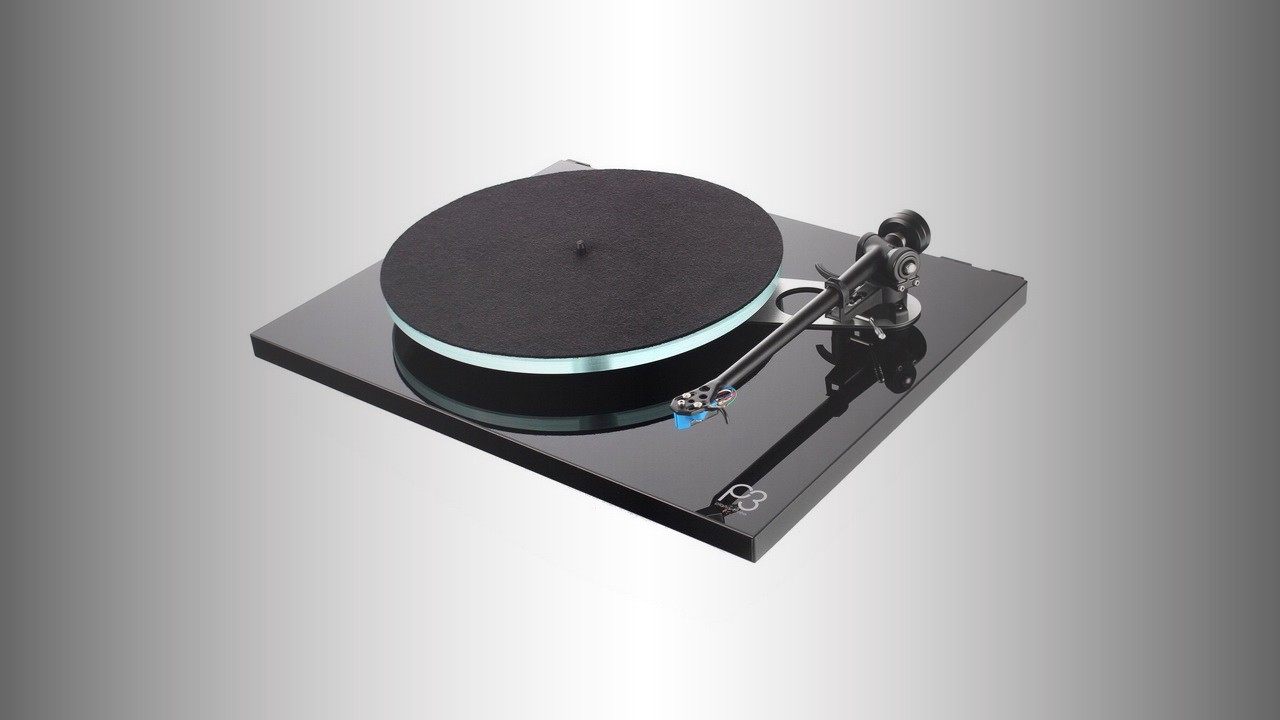
7. Rega Planar 3
The Rega Planar 3 pairs its RB330 tonearm with a braced plinth and a factory-installed Elys 2 cartridge.
The Planar 3 follows Rega’s lightweight, non-suspended belt-drive philosophy.
Its RB330 tonearm has a tapered tube, integrated headshell, steel counterweight and low-friction bearings, with mass distribution designed to reduce resonance.
Rega’s Double Brace Technology links the tonearm mounting area to the main bearing block with reinforcing plates, increasing rigidity where it matters most. The covered configuration also includes an Elys 2 moving-magnet cartridge and a low-capacitance interconnect terminated with Neutrik RCA connectors. Glossy black and white acrylic finishes give the restrained structure a polished appearance.
Best for: Listeners wanting a focused manual belt-drive package
- RB330 low-friction tonearm
- Double Brace reinforcement
- Elys 2 moving-magnet cartridge
- Low-capacitance RCA interconnect
Verdict: The Planar 3 concentrates on rigidity, low-friction tracking and a straightforward factory-fitted cartridge arrangement.

8. Rega Planar 3 Eco Special
The Rega Planar 3 Eco Special reuses operational components that have minor cosmetic imperfections.
The Planar 3 Eco Special uses components with minor cosmetic imperfections that would not qualify for Rega’s standard-grade production.
According to the company, these blemishes do not affect operation, and the turntable retains the full manufacturer’s warranty.
The initiative is intended to keep usable components out of landfill while offering a fully functional Planar 3 at a reduced cost. Buyers should be comfortable accepting visible cosmetic variation, but the concept provides a practical alternative for listeners who care more about function than flawless presentation.
Best for: Value-conscious buyers comfortable with cosmetic blemishes
- Uses fully functional cosmetically imperfect parts
- Full manufacturer’s warranty
- Reduced waste
- Lower cost than standard-grade production
Verdict: A sensible Planar 3 variation for listeners willing to trade perfect cosmetics for reduced waste and a lower purchase cost.

9. Elipson Chroma 400
The Elipson Chroma 400 includes a carbon tonearm, cueing lift and pre-installed Ortofon OM-10E cartridge.
The Chroma 400 is a manual belt-drive turntable supplied with an Ortofon OM-10E moving-magnet cartridge.
Its carbon tonearm is designed to reduce vibration and is paired with a cueing lift for controlled lowering and raising.
Elipson also equips the deck with a digitally controlled ASC motor system for precise speed regulation. The motor is mechanically suspended to limit vibration, while a revised platter and bearing arrangement aims to provide high inertia and stable rotation. These features make it a relatively complete package for buyers who want manual operation without having to select a cartridge separately.
Best for: Buyers seeking an equipped and approachable manual turntable
- Ortofon OM-10E cartridge included
- Carbon tonearm with cueing lift
- Digital automatic speed control
- Mechanically suspended motor
Verdict: An accessible belt-drive package distinguished by its supplied Ortofon cartridge, carbon arm and electronically regulated motor.

10. SteinMusic Arco 40 Limited Edition
The SteinMusic Arco 40 Limited Edition features a 10-inch tonearm made from a section of violin bow.
The Arco 40 Limited Edition is a highly restricted commemorative turntable, with only 20 units described in the source.
Its most unusual element is a 10-inch tonearm fashioned from part of a violin bow.
The platter combines wood and metal beneath a cherry-wood veneer and is paired with a precision double bearing. SteinMusic also uses a hand-built tonearm cable made from aged copper without plastic insulation. The manufacturer presents these choices as methods of managing resonance, stabilizing rotation and preserving signal integrity. Its rarity and unconventional construction make it more relevant to collectors and specialist analog enthusiasts than to general buyers.
Best for: Collectors drawn to rare and unconventional analog engineering
- Limited production of 20 units
- Violin-bow 10-inch tonearm
- Wood-and-metal composite platter
- Precision double bearing
Verdict: An exceptionally limited turntable whose violin-bow tonearm and composite platter make craftsmanship central to its appeal.
Frequently asked questions
Should I choose a belt-drive or direct-drive turntable?
Belt-drive models such as the AT-LP7X, Pianosa and MMF-7.3 separate motor drive from the platter through a belt, while the Technics SL-40CBT uses a direct-drive motor.
Choose according to the design, setup and features you need rather than assuming that either drive type is universally superior.
Do I need a separate phono amplifier?
Check both the turntable and your amplifier before buying.
The Technics SL-40CBT has a phono amplifier built in, but many manual turntables require a separate phono stage or an amplifier with a compatible phono input.
The phono stage must also support the cartridge type in use.
How important is the supplied cartridge?
A fitted cartridge can simplify setup, as shown by the AT-LP7X, Rega Planar 3 and Elipson Chroma 400.
Also consider the upgrade path: Audio-Technica’s VM95 platform allows different stylus profiles to be fitted without replacing the complete cartridge.
What should I check before buying a separate tonearm?
Confirm that the turntable supports the arm’s length, mounting geometry and required adjustment range.
Cartridge compatibility and setup facilities also matter.
The Graham Phantom III SE is available in three lengths, but it is a specialist component rather than a universal drop-in upgrade.
How to Choose the Right Turntable for Your System
Begin with compatibility and daily use.
If your amplifier lacks a phono input, budget for an external phono stage or choose a model with one built in.
Bluetooth can make placement and system integration easier, but listeners building a conventional wired setup may prefer to direct their budget toward the turntable, cartridge and phono stage. Next, decide how much setup you are prepared to undertake. Fully manual models require the user to cue the record and may involve manual speed changes. Factory-fitted cartridges reduce the initial work, while modular cartridge systems can make later upgrades more manageable. Separate tonearms demand much closer attention to mounting geometry, cartridge matching, tracking force, azimuth and vertical tracking angle. Mechanical design should be considered in the context of placement. Dual chassis, suspended motors, rigid bracing, acrylic platters and mixed-material structures all address vibration or resonance in different ways, but every turntable still benefits from a stable, level supporting surface away from speakers and footfall. Finally, distinguish functional value from finish and exclusivity. A cosmetically imperfect Eco Special may suit a practical buyer, whereas limited editions and elaborate material combinations primarily serve enthusiasts who specifically value rarity, construction and design.



Sound Off
0Join the discussion if you have something to add.