
Choosing a DAC starts with the role it must play.
A fixed-output converter can sit between a digital source and an integrated amplifier, while a model with volume control may also serve as the control point for active speakers or a power amplifier.
Streaming, Bluetooth, headphone amplification and portable operation are separate requirements rather than automatic features of every DAC. This selection spans full-size high-end converters, desktop and portable models, a USB digital bridge and an important DAC chip intended for manufacturers. The variety makes direct ranking less useful than matching each component to a particular system. Input compatibility, output type, format support and control arrangements should therefore take priority over headline specifications. Several performance statements in the source material originate from manufacturers, so they are treated as claims rather than independent listening conclusions. Where an entry is not itself a complete consumer DAC, its place in the digital audio chain is made clear.

1. Hegel HD30: DAC with built-in AirPlay technology
The full-size Hegel HD30, with its central information display, source selector and stepped volume control.
The Hegel HD30 is designed as more than a fixed-output converter.
Built-in AirPlay adds network playback, while its stepped volume control allows connection to active speakers or a power amplifier.
Users can set a startup volume or bypass the control when a separate preamplifier is preferred. Conversion is handled by two AK4490EQ chips, one for each channel, with an AK4137EQ sample-rate converter. Separate toroidal transformers supply the digital and analog sections, and Hegel’s analog stage uses its feedforward-based SoundEngine topology. The front display reports the selected source, volume and sampling frequency.
Best for: Full-size systems needing DAC and preamplifier functions
- Built-in AirPlay streaming
- Adjustable or bypassable volume control
- Separate digital and analog power supplies
- Clear source and sampling-frequency display
Verdict: A flexible digital control centre for listeners who want AirPlay, source selection and direct volume control in one component.

2. SimAudio Moon Neo 280D: DAC with coaxial, optical and balanced inputs
The SimAudio Moon Neo 280D combines traditional digital inputs with USB, optional network playback and Bluetooth.
The SimAudio Moon Neo 280D combines conventional digital connections with a USB interface supporting PCM up to 32-bit/384 kHz and DSD64 through DSD256.
Its input selection includes coaxial, optical and balanced digital connections, making it suitable for systems built around several wired sources.
An optional network card adds wired and wireless playback from UPnP servers, although the source states that DSD is not accepted over the network. Internet radio, Tidal access and aptX Bluetooth broaden its everyday usefulness, particularly when quick playback from a phone or tablet matters.
Best for: Multi-source systems combining USB, network and Bluetooth playback
- PCM and DSD playback over USB
- Coaxial, optical and balanced digital inputs
- Optional wired and wireless UPnP streaming
- Bluetooth with aptX support
Verdict: A broadly connected DAC whose optional network functions make it especially adaptable, provided network DSD is not required.

3. AKM has introduced its latest DAC chip, the AK4498EXVQ
The AKM AK4498EXVQ is a stereo conversion chip intended for integration into complete DAC designs.
The AK4498EXVQ is a stereo DAC chip from Asahi Kasei Microdevices rather than a finished converter for an audio system.
It uses AKM’s Switched Capacitor Filter Voltage Output Velvet Sound technology and is offered to equipment manufacturers for product design and testing.
Its inclusion is useful context for DAC buyers because the conversion chip is only one part of a finished component. Power supplies, clocking, digital processing, output circuitry and the quality of the surrounding electronics can produce materially different designs based on the same chip. A chip model alone should not determine a purchase.
Best for: Product designers and buyers researching DAC architecture
- Stereo premium DAC architecture
- Switched-capacitor filter voltage output technology
Verdict: An important component-level development, but not a consumer DAC or a substitute for assessing the complete implementation.

4. Accuphase DC-950: Classic High-end digital-analog player
The Accuphase DC-950 pairs an anodized aluminum front panel with a polished Japanese persimmon top cover.
The Accuphase DC-950 is a substantial digital-to-analog player designed for SACD material, DSD files at several rates and PCM files up to 32-bit/384 kHz.
Its internal construction follows a fully balanced dual-mono layout, with circuit blocks separated and shielded to limit interaction.
Digital and analog circuits receive power from separate stabilized supplies with screened toroidal transformers. The digital inputs are galvanically isolated, while each channel uses eight ESS ES9032 Pro chips in parallel. Externally, the double housing combines an anodized aluminum front panel, anti-resonance feet and a polished Japanese persimmon top cover.
Best for: Elaborate high-end systems using disc and file sources
- Fully balanced dual-mono construction
- Separate digital and analog power supplies
- Galvanically isolated digital inputs
- Support for SACD, DSD and high-resolution PCM material
Verdict: A heavily engineered digital player for systems that can accommodate its extensive isolation, power-supply and balanced-circuit design.

5. Soundaware DAM1 15TH: High-end DAC for discerning audiophiles
The Soundaware DAM1 15TH is a configurable DAC with five digital input types and separate power-supply options.
The Soundaware DAM1 15TH develops the company’s original DAC concept around its proprietary Jingling DSP.
This processor permits adjustments to bit depth and sampling rate and incorporates Soundaware’s own filtering system.
The company reports a signal-to-noise ratio and dynamic range of 129 dB, total harmonic distortion below 0.0001 percent and a noise floor of 800 nV; these figures are manufacturer claims in the supplied material. Five digital inputs are provided: USB with the PA1 filter module, optical, coaxial, AES/EBU and I2S. Balanced XLR and unbalanced RCA outputs are included, while power is supplied by a choice of two external units, the LP1 15TH or LPX 15TH.
Best for: Advanced systems requiring varied inputs and configurable processing
- USB, optical, coaxial, AES/EBU and I2S inputs
- Balanced XLR and unbalanced RCA outputs
- Adjustable bit depth and sampling rate
- Choice of two external power units
Verdict: A specialist DAC distinguished by proprietary DSP, broad wired connectivity and a choice of external power supplies.
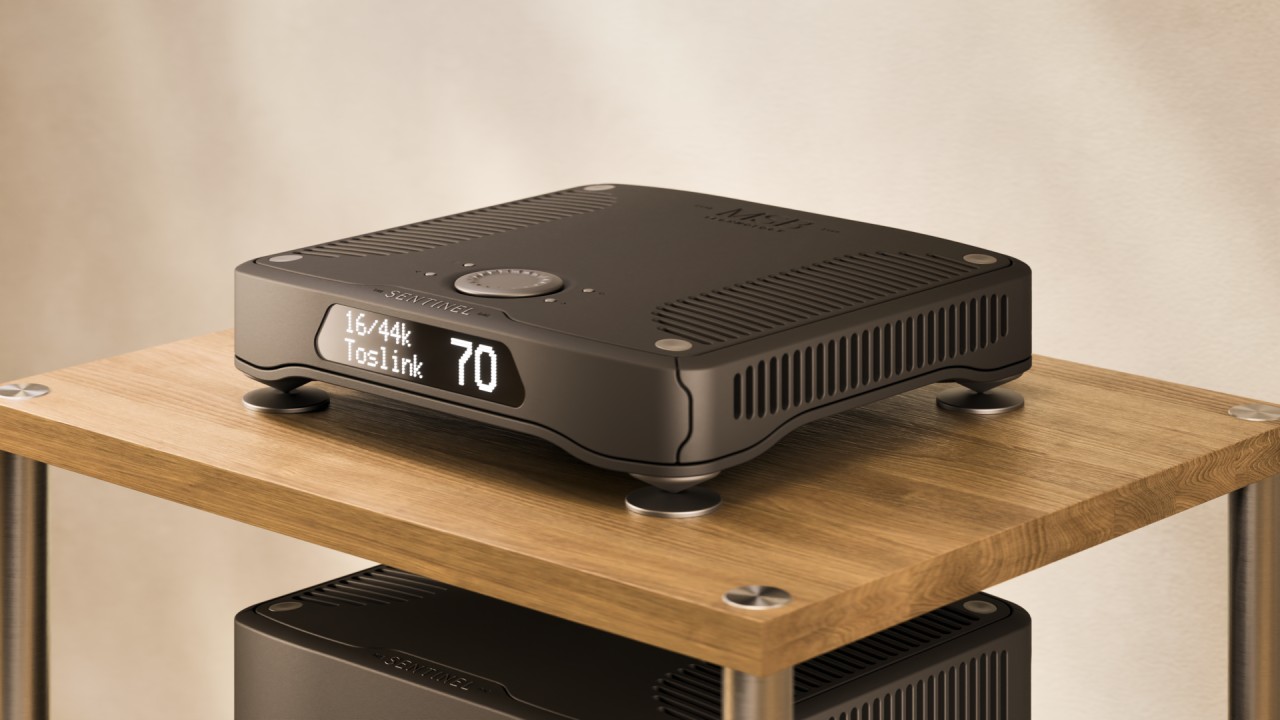
6. MSB Technology Sentinel: The World’s Most Advanced Digital-to-Analog Converter
The MSB Technology Sentinel uses a three-part architecture with complex circuitry concealed beneath a restrained matte exterior.
The MSB Technology Sentinel is presented as a three-body digital-to-analog converter system built with performance as its overriding design objective.
Its internal architecture uses concealed, complex three-dimensional layouts intended to reduce visible system clutter while improving the interaction between electronic sections.
The supplied material offers limited information about connections, supported formats, pricing and availability. Its descriptions of performance and listening quality come from MSB Technology, so the Sentinel is better viewed here as an ambitious statement design than as a model that can be compared feature by feature with the other entries.
Best for: Reference systems where engineering ambition takes precedence over compactness
- Three-body system architecture
- Concealed three-dimensional internal layouts
- Streamlined matte exterior design
Verdict: An uncompromising statement project on the available evidence, though essential buying details remain unspecified.
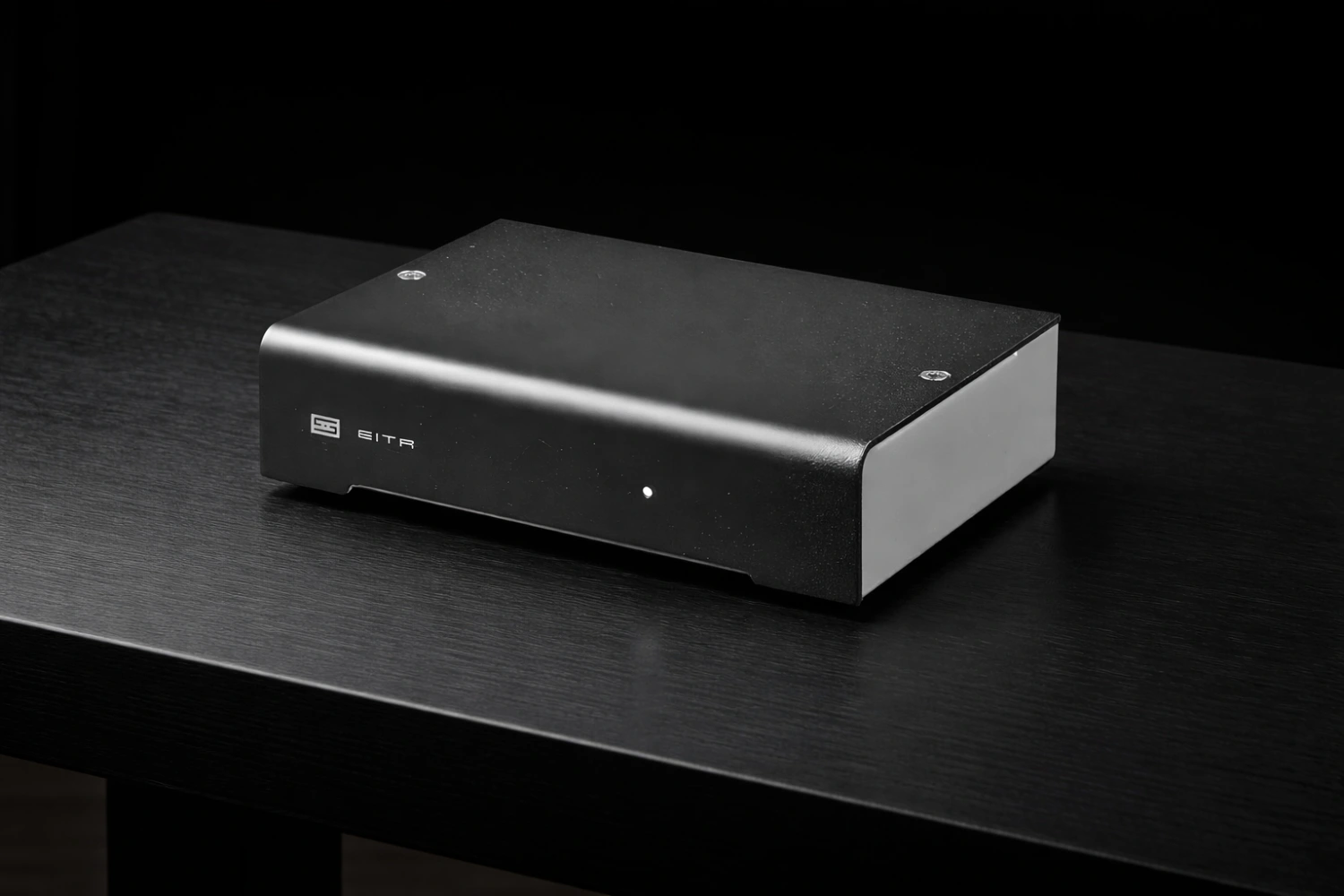
7. Schiit Audio Eitr 2: A Smarter, Cleaner Path from USB to High-End Digital Audio
The compact Schiit Audio Eitr 2 bridges USB sources to coaxial, AES/EBU or optical digital inputs on a separate DAC.
The Schiit Audio Eitr 2 is a digital-to-digital converter, not a DAC.
It sits between a USB source and a separate converter, accepting audio from computers, tablets or smartphones before regenerating the signal for delivery over coaxial, AES/EBU or optical output.
Schiit’s Unison USB interface is central to the design, while the coaxial output is transformer-isolated. The optical connection supports PCM up to 24-bit/192 kHz. This is a focused option for systems whose preferred DAC lacks USB or where the user wants to convert USB into another digital interface.
Best for: Adding a dedicated USB bridge ahead of an existing DAC
- USB-to-coaxial, AES/EBU and optical conversion
- Transformer-isolated coaxial output
- Proprietary Unison USB interface
- Optical PCM support up to 24-bit/192 kHz
Verdict: A purposeful digital bridge for converting USB audio into commonly supported hi-fi digital connections, rather than a standalone analog-output solution.

8. PS Audio Stellar DAC: High-end DAC boasting a range of premium features
The PS Audio Stellar DAC integrates digital conversion, Digital Lens reclocking and volume control for direct system use.
The PS Audio Stellar DAC combines conversion and preamplifier duties, with integrated volume control permitting direct connection to a power amplifier.
Its ESS ES9018K2M conversion chip is partnered with PS Audio’s Digital Lens system, which identifies the sample rate, reclocks incoming data and is designed to reduce jitter.
Connectivity includes I2S, while format support covers PCM up to 384 kHz and DSD up to DSD256. The analog section uses a hybrid balanced Class A topology, an oversized analog power supply and a capacitor-free output signal path. This combination makes the Stellar particularly relevant to systems seeking a DAC that can also manage level control.
Best for: Systems needing a DAC with direct power-amplifier control
- Integrated volume control
- I2S digital inputs
- PCM up to 384 kHz and DSD256 support
- Hybrid balanced Class A output stage
Verdict: A versatile converter-preamplifier built around reclocking, I2S connectivity and a substantial analog output stage.

9. FiiO BTR17: A compact masterpiece
The FiiO BTR17 portable DAC and headphone amplifier features an OLED display, aluminum housing and two headphone outputs.
The FiiO BTR17 combines a portable Bluetooth DAC with a headphone amplifier.
Its dual ESS DAC chips and THX amplification feed both balanced 4.4 mm and standard 3.5 mm headphone outputs, while an OLED display shows information such as battery condition and audio format.
Bluetooth 5.4 support includes LDAC, aptX Lossless and AAC, giving users several wireless options across compatible source devices. The BTR17 can also operate as a USB DAC, supporting PCM up to 32-bit/384 kHz and DSD256. An aluminum housing and leather back panel complete a design intended for portable use.
Best for: Portable wired and Bluetooth headphone listening
- Balanced 4.4 mm and 3.5 mm headphone outputs
- LDAC, aptX Lossless and AAC support
- USB DAC mode with high-resolution format support
- OLED status and format display
Verdict: A compact choice for listeners who need wireless reception, USB conversion and headphone amplification in one device.
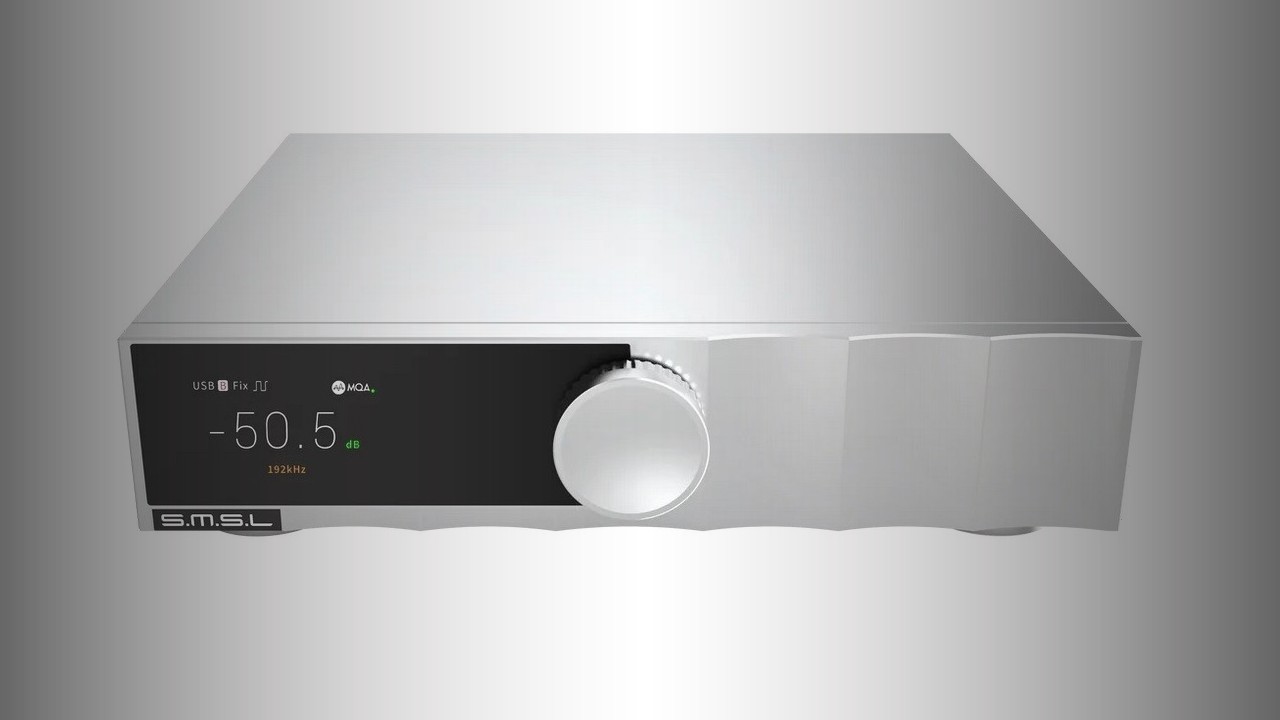
10. SMSL D200: High-End ROHM Sound, MQA Support, LDAC Bluetooth & Stunning Clarity
The SMSL D200 desktop DAC uses a laminated tempered-glass display for playback information and lyrics.
The SMSL D200 is a desktop DAC and preamplifier based on the ROHM BD34352EKV conversion chip.
Its CK-03 circuit is intended to reduce jitter, while two NJU72315 chips form the balanced preamplifier stage.
The supplied manufacturer figures specify distortion of 0.00019 percent and SINAD up to 115.9 dB. USB, optical, coaxial and Bluetooth inputs are included, with LDAC and aptX HD available for wireless playback. The D200 supports PCM up to 32-bit/768 kHz, DSD512, MQA and MQA-CD decoding. Balanced XLR and unbalanced RCA outputs are joined by an external clock input compatible with a standard 10 MHz signal or an atomic clock. Its integrated display can show track information and lyrics when available.
Best for: Feature-rich desktop systems with wired and wireless sources
- USB, optical, coaxial and Bluetooth inputs
- Balanced XLR and unbalanced RCA outputs
- LDAC and aptX HD wireless playback
- External 10 MHz clock input
Verdict: A highly equipped desktop DAC and preamplifier for users who value broad format support, Bluetooth and external clocking.
Frequently asked questions
Should a DAC include volume control?
Choose volume control if the DAC will connect directly to active speakers or a power amplifier.
The Hegel HD30, PS Audio Stellar DAC and SMSL D200 are designed to provide level control, but startup level, control range and bypass behavior should be checked before removing a separate preamplifier from the system.
How important is the DAC chip itself?
The chip matters, but it does not define the finished component on its own.
Clocking, power supplies, digital filtering, circuit layout and the analog output stage all affect the implementation, so two products using related conversion technology can differ substantially in features and design.
Do I need network streaming or Bluetooth in a DAC?
Only if those sources are part of the intended system.
AirPlay on the Hegel HD30, optional network playback on the Moon Neo 280D and Bluetooth on models such as the FiiO BTR17 and SMSL D200 can simplify playback, but a wired-only DAC remains appropriate when streaming is handled by a separate transport.
Is a digital-to-digital converter the same as a DAC?
No.
A digital-to-digital converter such as the Schiit Audio Eitr 2 changes USB audio into another digital connection but does not produce an analog output.
It must feed a separate DAC, whereas a conventional DAC can connect to an amplifier, preamplifier, active speakers or headphones when the required output stage is included.
How to choose the right digital component
Begin with system architecture rather than the highest supported sample rate.
List every source that must connect, then confirm that the DAC provides the required USB, optical, coaxial, AES/EBU, I2S, network or Bluetooth interfaces.
Format support should match the files and services actually used; capability beyond that is not automatically a practical advantage. Next, decide where volume control and amplification will occur. A DAC with a suitable variable output can simplify a system built around active speakers or a power amplifier, while a fixed-output model is often the clearer fit when an integrated amplifier or dedicated preamplifier already controls volume. Portable headphone products such as the FiiO BTR17 solve a different problem from full-size converters, and the Schiit Audio Eitr 2 requires a separate DAC because it remains entirely in the digital domain. Balanced outputs, external clocking, galvanic isolation, separate power supplies and elaborate internal construction may matter in a carefully planned system, but they should be evaluated as parts of a complete design. Likewise, impressive manufacturer measurements are useful only when their test conditions and relevance are understood. The strongest choice is the component whose connections, control scheme and physical format fit the rest of the system without unnecessary duplication.



Sound Off
0Join the discussion if you have something to add.