An AV receiver is often treated as a checklist product: count the HDMI inputs, check the surround formats, and move on.
The more interesting question is how it behaves as the center of a real system, where video sources, speaker matching, room calibration, vinyl playback, wireless music, and bass integration all matter.

1. Zidoo Z3000 PRO
Zidoo Z3000 PRO media player with aluminum casework, LED display, wireless antennas, and dual HDMI outputs.
The Zidoo Z3000 PRO is not an AV receiver, but it is relevant to home-theater buyers who want to improve the source side of a system before replacing the main receiver.
Its dual HDMI output can separate audio and video streams, allowing 4K video and HD audio to be handled at the same time, while HDMI 2.1 support enables 8K at 60 Hz output and compatibility with HDR10, HLG, HDR10+, and Dolby Vision.
The Amlogic S928X-K processor, 8 GB of DDR4 RAM, 64 GB of eMMC storage, Android 11 platform, aluminum construction, LED display, built-in Wi-Fi and Bluetooth antennas, and concealed hard-drive bay up to 16 TB make it a serious media player rather than a simple streamer.
Best for: Home-theater users upgrading the media source rather than the receiver
- Dual HDMI output for separating audio and video
- HDMI 2.1 with 8K at 60 Hz output
- HDR10, HLG, HDR10+, and Dolby Vision support
- Concealed hard-drive bay supporting up to 16 TB
Verdict: The Zidoo Z3000 PRO is a strong source-component option for systems where media handling, HDR support, and HDMI flexibility are the main priorities.

2. DALI Fazon SUB 1
DALI Fazon SUB 1 compact subwoofer with a floor-firing bass driver and closed enclosure.
The DALI Fazon SUB 1 is a compact subwoofer, not an AV receiver, but it addresses one of the most common weaknesses in living-room systems: bass quality.
The source describes bass that is lively and dynamic without rolling overtones, distortion, or booming resonances.
Its 165 mm long-stroke driver fires toward the floor for uniform low-frequency radiation, and the closed cabinet helps placement near walls and corners. It is not ideal for every setup, because the source notes that highly sensitive speakers may expose a lack of gain even at maximum setting; its most natural partners are mini-monitors or designer satellites from the Fazon series.
Best for: Compact systems needing cleaner, faster bass
- Lively bass dynamics
- Closed cabinet suited to wall or corner placement
- Floor-firing 165 mm long-stroke driver
- Pairs well with mini-monitors or Fazon satellites
Verdict: The DALI Fazon SUB 1 is a compact bass upgrade best used with smaller speakers rather than highly sensitive full-range systems.

3. Onkyo TX-SR3100
Onkyo TX-SR3100 AV receiver designed for big-screen movie playback, gaming sources, and surround-sound formats.
The Onkyo TX-SR3100 is the first true AV receiver in this selection and is presented as a complete home entertainment center for films and gaming.
It supports HDMI 2.1a, 8K60, 4K120, Dolby Atmos, DTS:X, Dolby Vision, and HDR10+, making it suitable for modern video sources as well as surround formats.
Its five amplification channels use discrete-element circuitry, backed by output stages designed for high current and a powerful power supply that the source says can work successfully with large floor-standing speakers. For setup and processing, it includes AccuEQ auto-calibration with AccuReflex, Dolby Atmos Height Virtualizer, Vocal Enhancer, Music Optimizer, and tone adjustments for low and high frequencies.
Best for: Movie and gaming systems needing current HDMI and surround support
- HDMI 2.1a with 8K60 and 4K120 support
- Dolby Atmos and DTS:X decoding
- AccuEQ calibration with AccuReflex
- High-current output stages
Verdict: The Onkyo TX-SR3100 is a practical AV receiver for users who want modern video compatibility, immersive-format decoding, and guided room setup in one unit.

4. Pioneer VSX-532
Pioneer VSX-532 AV receiver with HDMI connectivity, Bluetooth input, USB playback, and MCACC room calibration.
The Pioneer VSX-532 is positioned as an affordable centerpiece for building a home theater system.
Four HDMI inputs can transmit UltraHD video to a TV or projector, and the receiver decodes multichannel HD formats from Dolby and DTS.
Pioneer's MCACC automatic acoustic calibration adjusts playback to the room, speakers, and speaker placement. It also covers everyday music use through built-in Bluetooth, analogue and digital inputs, and a front-panel USB port that can charge a mobile device or play MP3, WMA, and AAC files from a USB drive. Advanced Sound Retriever is included to restore lost signal components in compressed files.
Best for: Affordable home-theater setups with several HD sources
- Four HDMI inputs for UltraHD video sources
- Dolby and DTS multichannel decoding
- MCACC automatic acoustic calibration
- Bluetooth and front USB playback
Verdict: The Pioneer VSX-532 is a straightforward AV receiver for users who want HDMI switching, room calibration, and easy wireless music without overcomplication.
5. Yamaha TT-S303
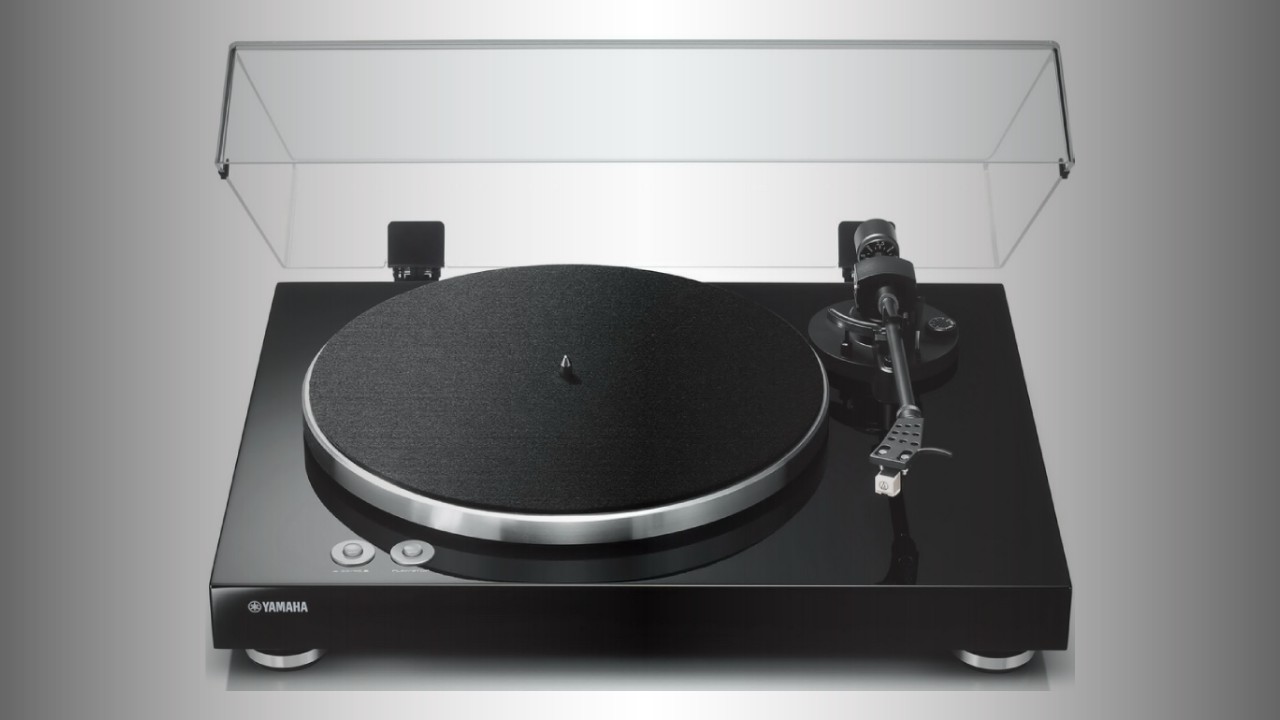
Yamaha TT-S303 turntable with built-in correction amplifier and switchable phono output for flexible system matching.
The Yamaha TT-S303 is a turntable rather than an AV receiver, but it matters for buyers who want an AV-based system to include vinyl playback.
Its built-in correction amplifier allows connection to a line input on an amplifier, an AV receiver, or even directly to active speakers, while a phono output mode is available for systems with a phono preamp.
The design follows classic Yamaha hi-fi aesthetics, and the package includes the turntable with tonearm installed, a support disc, and related setup parts described in the source. Its role in an AV receiver system is clear: it gives vinyl listeners a flexible way to add records without necessarily buying a separate phono stage.
Best for: Vinyl listeners adding a turntable to an AV system
- Built-in correction amplifier
- Switchable phono output mode
- Can connect to an AV receiver line input
- Classic hi-fi styling
Verdict: The Yamaha TT-S303 is a flexible vinyl source for systems where the receiver may not include a dedicated phono stage.

6. Denon SC-N10
Denon SC-N10 compact two-way speakers with removable grilles, MDF cabinets, and rear phase-inverter ports.
The Denon SC-N10 is a compact speaker pair, not an AV receiver, but speakers determine much of what a receiver can deliver in a small room.
The source describes them as suitable for small living areas and as a soundbar alternative when paired with a suitable subwoofer.
They use damped MDF enclosures, a two-way layout, a 12 cm woofer, and a 30 mm dome tweeter with an oval chassis that helps protect against vibration and improves heat dissipation. A rear phase-inverter outlet of small diameter allows placement fairly close to the wall, and the source notes particular suitability for acoustic music thanks to smoother midrange tuning.
Best for: Small-room speaker systems paired with a receiver and subwoofer
- Damped MDF enclosures
- Two-way design with 12 cm woofer and 30 mm dome tweeter
- Can be placed fairly close to a wall
- Well suited to acoustic music
Verdict: The Denon SC-N10 is a compact speaker option for modest living spaces where an AV receiver system needs neat placement and clear midrange priorities.

7. Yamaha CRX-N470
Yamaha CRX-N470 CD receiver with aluminum front panel, network audio, CD playback, USB, radio, AirPlay, Bluetooth, and MusicCast.
The Yamaha CRX-N470 is a CD receiver rather than an AV receiver, so it belongs more to stereo and multi-source listening than surround cinema.
It combines CD, USB, radio, Wi-Fi, MusicCast, AirPlay, and Bluetooth, and it can expand with other MusicCast-enabled components.
The source highlights Yamaha's digital amplification technology, a minimized signal path, galvanic isolation between the switching power supply, processor, and amplifier, and separate circuit boards for CD/DAC and network-audio signal processing. For a buyer comparing AV receivers with simpler music-first alternatives, the CRX-N470 is the reminder that not every living-room system needs multichannel decoding.
Best for: Music-first rooms that do not require surround decoding
- CD, USB, radio, Wi-Fi, MusicCast, AirPlay, and Bluetooth sources
- Yamaha digital amplification technology
- Separate boards for CD/DAC and network audio paths
- Aluminum front panel
Verdict: The Yamaha CRX-N470 is a compact music hub for listeners who value source variety and Yamaha's hi-fi design more than AV receiver features.

8. Onkyo A-9150
Onkyo A-9150 integrated amplifier with aluminum front panel, analogue controls, and MM/MC phono support.
The Onkyo A-9150 is an integrated stereo amplifier, not an AV receiver, and its strengths are firmly analogue.
The source emphasizes its thick aluminum faceplate, physical tone and balance controls, and classic design approach.
More importantly, it includes a full phono stage for both MM and MC cartridges, with a front-panel cartridge type switch and a phono section built from discrete elements on a separate board. For home-theater shoppers, it is a useful contrast: if vinyl and two-channel listening are the main priorities, a dedicated integrated amplifier may be a better fit than an AV receiver.
Best for: Two-channel vinyl systems rather than surround home theater
- MM and MC phono stage
- Discrete phono stage on a separate board
- Front-panel cartridge type switch
- Physical bass, treble, and balance controls
Verdict: The Onkyo A-9150 is a music-focused alternative for buyers whose system revolves around analogue sources instead of HDMI switching and surround formats.

9. Pioneer VSX-835
Pioneer VSX-835 AV receiver with seven-channel amplification, 8K HDMI support, MCACC calibration, and Dolby Atmos/DTS:X processing.
The Pioneer VSX-835 is a seven-channel AV receiver that sits closer to the heart of the category than many items here.
Its discrete power amplifiers are described as capable of substantial output current, with a proprietary low-impedance design for reliable use with speakers rated at 4 ohms and a custom transformer intended to reduce external interference.
Surround support includes Dolby Atmos and DTS:X, with a 5.2.2 configuration available from the seven built-in amplifiers, plus Dolby Atmos Height Virtualizer and DTS Virtual:X for simulated ceiling effects. MCACC calibration covers the surround setup with subwoofer-channel enhancements and 3D audio compatibility, while four HDMI inputs support 8K video, Dolby Vision, and HDR10, with 1080p-to-4K upscaling also included.
Best for: Living-room Atmos systems needing seven channels and modern HDMI features
- Seven-channel design with 5.2.2 support
- Dolby Atmos and DTS:X decoding
- MCACC calibration with subwoofer-channel enhancements
- Four HDMI inputs with 8K, Dolby Vision, and HDR10 support
Verdict: The Pioneer VSX-835 is a well-rounded AV receiver for buyers who want 5.2.2 immersive audio, automatic calibration, and current video-format support in a competitively positioned unit.
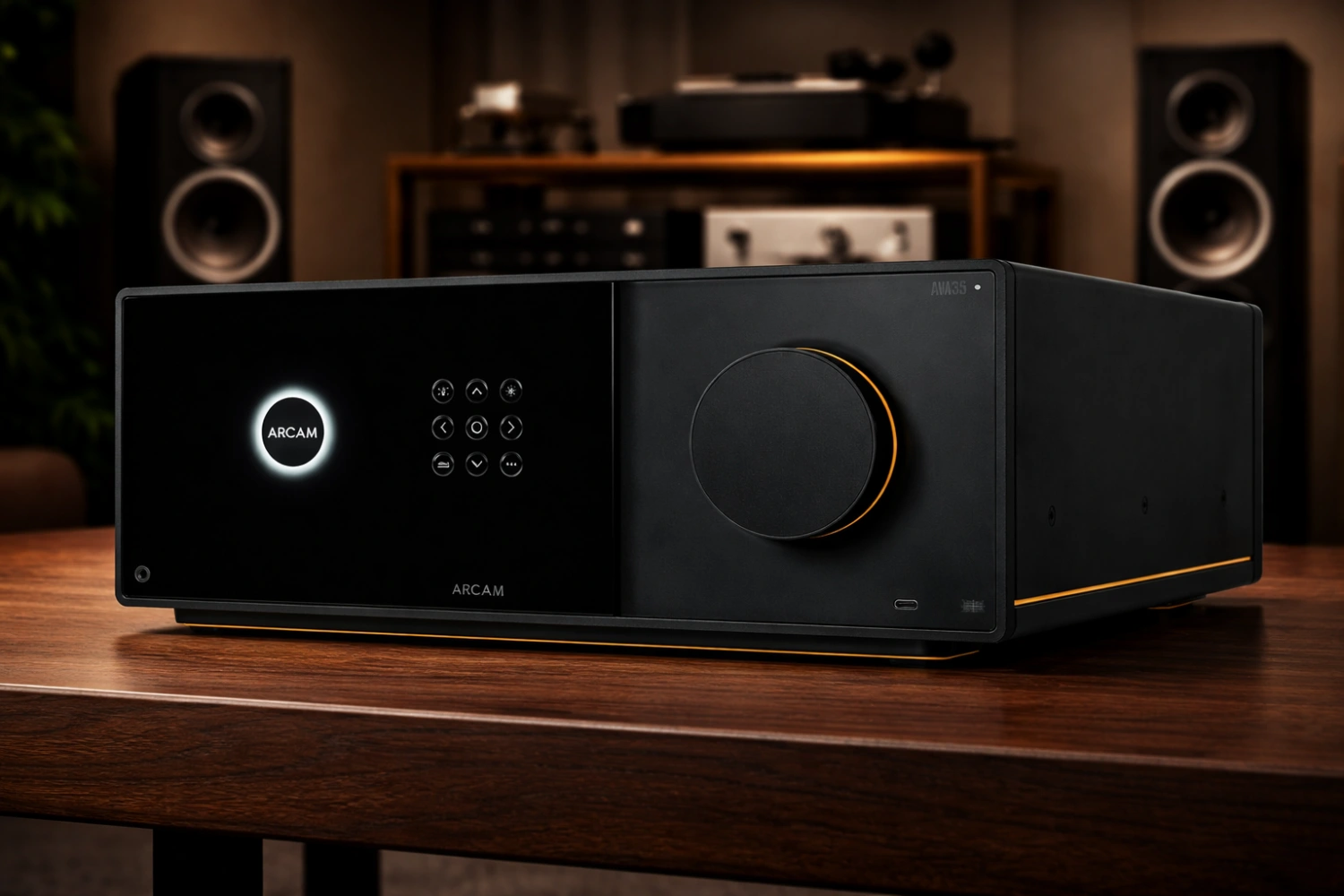
10. Arcam AVA35
Arcam AVA35 flagship AV receiver with Class G amplification, Dirac Live, 16-channel processing, and 8K HDMI capability.
The Arcam AVA35 is the flagship model in the Arcam Radia AV receiver lineup and the most ambitious AV receiver described in the source material.
It adds Class G amplification, a more advanced DAC platform, matrix channel assignment, and high-level audio processing compared with the AVA15 and AVA25.
Its proprietary Class G amplifier is rated at 100 watts per channel into 8 ohms across nine channels, while the ESS Hyperstream IV DAC Pro architecture is derived from Arcam's flagship stereo products. The source also describes 16-channel processing, Dirac Live, 8K HDMI, and a design goal of combining flexibility, sonic power, and musical refinement in a single chassis.
Best for: Ambitious single-chassis home theaters needing advanced processing
- Class G amplification across nine channels
- 100 watts per channel into 8 ohms
- ESS Hyperstream IV DAC Pro architecture
- Dirac Live and 16-channel processing
Verdict: The Arcam AVA35 is the premium choice in this group for enthusiasts who want extensive processing, Class G amplification, Dirac Live, and 8K HDMI in one AV receiver.
How to choose from this mixed AV receiver shortlist
Start by separating true AV receivers from supporting components.
If the goal is surround cinema with HDMI switching, immersive decoding, and room calibration, focus first on the Onkyo TX-SR3100, Pioneer VSX-532, Pioneer VSX-835, and Arcam AVA35.
The Onkyo TX-SR3100 suits users who want a complete home entertainment receiver with HDMI 2.1a, gaming-friendly video support, Dolby Atmos and DTS:X. The Pioneer VSX-532 is the simpler route into home theater, with four HDMI inputs, Dolby and DTS decoding, Bluetooth, USB playback, and MCACC calibration. The Pioneer VSX-835 adds a seven-channel layout, 5.2.2 capability, 8K HDMI support, Dolby Atmos and DTS:X, virtual height processing, and enhanced MCACC features. The Arcam AVA35 is the high-end option here, built around Class G amplification, 16-channel processing, Dirac Live, 8K HDMI, and a more advanced DAC platform. The remaining products should be viewed as system-building pieces rather than AV receiver alternatives. The Zidoo Z3000 PRO can strengthen a theater as a capable media player with dual HDMI outputs and broad HDR support. The DALI Fazon SUB 1 and Denon SC-N10 address speaker and bass choices for compact spaces. The Yamaha TT-S303 adds vinyl flexibility, while the Yamaha CRX-N470 and Onkyo A-9150 show when a music-first stereo component may make more sense than a surround receiver. The most sensible buying path is to define the system first: choose an AV receiver when movies, games, HDMI video, and multichannel formats are central; choose the supporting components only when they solve a specific source, speaker, bass, or vinyl need within that system.