
Amplifier choice begins with function, not reputation.
This selection spans integrated amplifiers, a dedicated power amplifier, a tube preamplifier and a portable headphone amplifier, so the right option depends on whether a system needs source control, speaker drive, headphone support or a combination of those roles.
The products also approach system building in markedly different ways. The Fosi Audio P3 adds tubes, Bluetooth and headphone amplification without driving passive speakers, while the Rega Brio and Yamaha A-S801 are conventional integrated designs. The Leema Elements Power Amp offers unusually flexible stereo, monoblock and multi-amplifier configurations, and the PrimaLuna EVO 400 combines tube operation with adaptive bias management. Two entries require additional context. Peachtree Audio’s BluOS article describes plans for future components rather than a specific amplifier available for assessment, while the Falcon Acoustics IMF 200 is a DIY loudspeaker kit rather than an amplifier. Both remain included in their supplied positions, but neither should be treated as a direct amplifier recommendation.

1. Fosi Audio P3: Tube preamplifier with BT and aptX HD/aptX LL codecs
The compact Fosi Audio P3 tube preamplifier provides Bluetooth and RCA inputs alongside line, auxiliary and headphone outputs.
The Fosi Audio P3 is a tube preamplifier and headphone amplifier rather than a power amplifier for passive speakers.
Its circuit raises the operating voltage to 54V for the tubes, while Bluetooth 5.1 through a Qualcomm QCC3031 chip provides aptX HD and aptX LL support.
Bluetooth and RCA inputs are joined by RCA, AUX and 3.5mm headphone outputs, allowing the P3 to feed active speakers, a separate amplifier or a subwoofer-equipped 2.1 system. The headphone stage is specified for impedances from 16 to 300 ohms, and bass and treble controls provide straightforward tonal adjustment.
Best for: Adding tubes, Bluetooth and headphones to a compact system
- Bluetooth 5.1 with aptX HD and aptX LL
- Headphone support from 16 to 300 ohms
- RCA, AUX and headphone output options
- Adjustable bass and treble
Verdict: A flexible tube preamplifier for listeners who already have active speakers or a separate power amplifier and want wireless playback plus headphone support.

2. BluOS multi-room audio platform coming to Peachtree Audio models
Peachtree Audio plans to incorporate the BluOS multi-room platform into future components, although specific models were not identified.
This entry concerns Peachtree Audio’s decision to adopt BluOS for future components, not a named amplifier with confirmed specifications.
Peachtree selected the platform after considering multi-room control options, with the stated aim of making high-resolution multi-room audio available through forthcoming products.
Because no models, features or release details were supplied, buyers should regard this as a platform announcement rather than evidence that a particular Peachtree amplifier currently includes BluOS.
Best for: Following Peachtree Audio’s future multi-room direction
- BluOS selected for future Peachtree components
- Planned focus on high-resolution multi-room audio
Verdict: A noteworthy ecosystem announcement, but not enough information for a product recommendation or purchase decision.
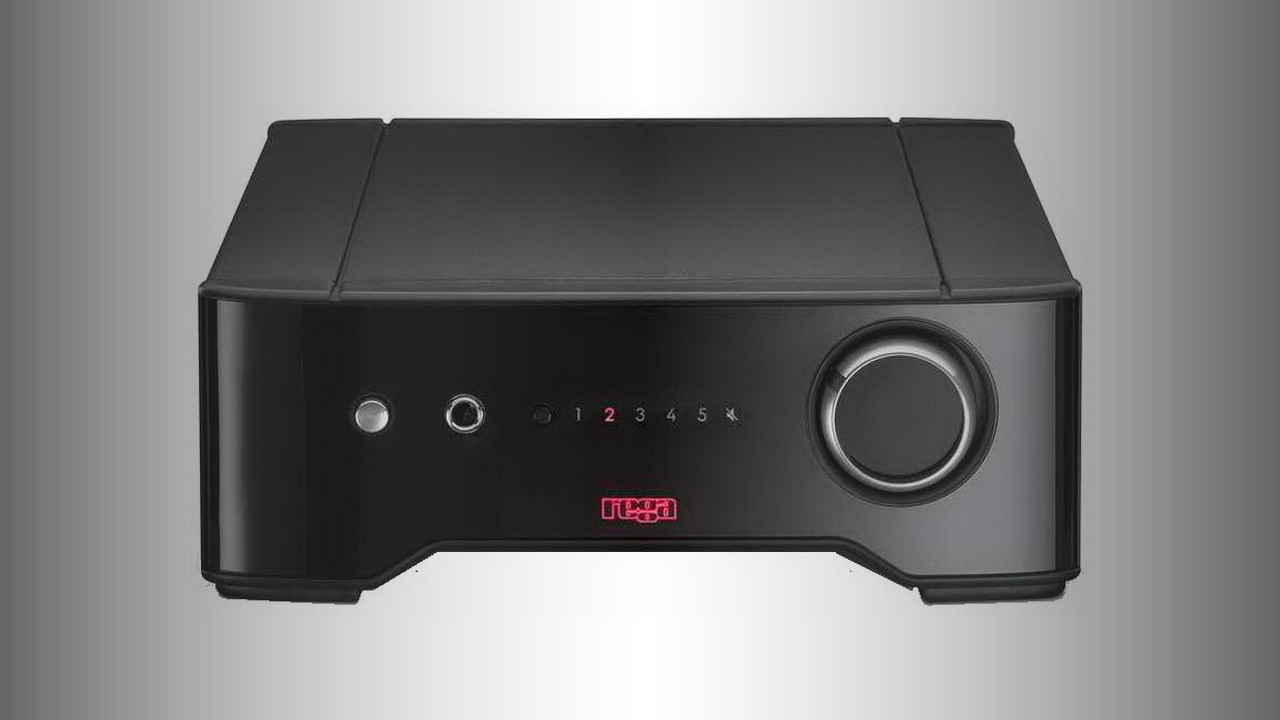
3. Rega Brio: Reliable integrated amplifier redesigned
The compact Rega Brio places its input selector, volume control and headphone connection on a restrained front panel.
The redesigned Rega Brio retains the compact half-width format while introducing revised power and signal wiring, new operational amplifiers in its line and phono circuits, and a separate headphone amplifier.
Input selection is handled by electromagnetic relays, while volume remains under the control of a motor-driven potentiometer.
Its aluminum enclosure uses substantial metal sides as heatsinks. Speaker matching deserves attention: the supplied material identifies 8-ohm speakers as optimal, 6 ohms as normal and 4 ohms as a compromise that limits maximum power.
Best for: Compact integrated systems using compatible speakers and vinyl sources
- Separate headphone amplifier
- Reworked line and phono circuitry
- Relay-based input switching
- Compact aluminum enclosure
Verdict: A thoughtfully redesigned integrated amplifier whose compact format, phono circuitry and headphone output are balanced by the need for careful speaker matching.

4. The Leema Elements Power Amp is an incredibly versatile amplifier
The Leema Elements Power Amp combines a compact enclosure and front display with extensive rear-panel configuration controls.
The Leema Elements Power Amp is distinguished by configuration flexibility.
Rear-panel switches and an internal analog volume control allow stereo or monoblock operation, while multiple units can be incorporated into stereo, multi-channel, bi-amping or tri-amping systems.
It can partner an Elements DAC preamplifier, a Pyxis preamplifier or an existing integrated amplifier in an expanded installation. Stereo-to-mono switching, LIPS control compatibility and the unusual inclusion of a front-panel display further separate it from more conventional power amplifiers.
Best for: Flexible pre/power and multi-amplifier installations
- Switchable stereo and monoblock operation
- Suitable for bi-amping and tri-amping configurations
- Switchable internal analog volume control
- LIPS system-control compatibility
Verdict: An adaptable power amplifier for systems that may evolve beyond a straightforward two-channel preamp-and-power-amp arrangement.

5. Yamaha A-S801: Reliable integrated amplifier
The Yamaha A-S801 uses a reinforced metal chassis, central brace and ART support base to strengthen its internal structure.
The Yamaha A-S801 emphasizes symmetrical construction, component selection and mechanical control.
Its ToP-ART design uses matching left- and right-channel layouts with a direct signal path, supported by single-point grounding, selected relays, custom capacitors and a W-core transformer.
A double-bottom chassis with an additional 1mm steel plate, an ART base under the transformer and heatsinks, and a central structural brace are all intended to improve rigidity and suppress unwanted vibration. High-capacity 12,000uF buffer capacitors are also specified in the power supply.
Best for: Listeners prioritizing robust integrated-amplifier construction
- Symmetrical left- and right-channel layout
- Single-point grounding
- Reinforced anti-vibration chassis
- 12,000uF power-supply buffer capacitors
Verdict: A substantially engineered integrated amplifier built around symmetrical circuitry, a reinforced chassis and a carefully supported power supply.

6. Astell & Kern launches PA10 Portable Headphone Amplifier
The portable Astell & Kern PA10 offers 4.4mm balanced and 3.5mm unbalanced headphone connections with adjustable operating options.
The Astell & Kern PA10 is a portable Class A headphone amplifier with balanced 4.4mm and unbalanced 3.5mm outputs.
Three-stage current regulation adjusts operation according to headphone impedance, addressing the power-management demands of portable Class A amplification.
A selectable crossfeed function blends a portion of each channel into the other with a short delay to approximate aspects of loudspeaker presentation. Battery life is stated as up to 12 hours, but that figure applies at 30 percent volume with low gain and the unbalanced output, so real use will vary with configuration.
Best for: Portable headphone systems needing balanced and unbalanced connections
- Balanced 4.4mm and unbalanced 3.5mm outputs
- Three-stage current regulation
- Selectable crossfeed processing
- Up to 12 hours under stated test conditions
Verdict: A purpose-built portable Class A amplifier with useful output choices and crossfeed, provided its conditional battery figure suits the intended listening setup.
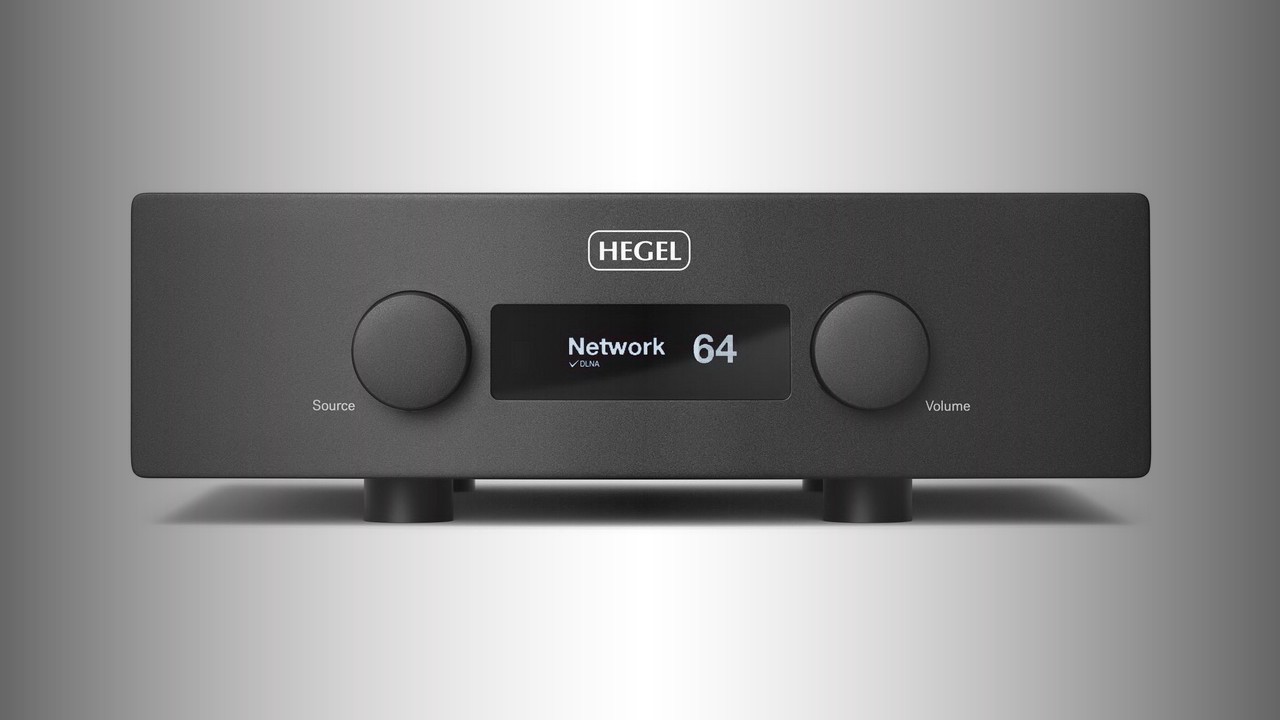
7. Hegel H390: Pure balance
The Hegel H390 integrates speaker amplification, digital conversion and network functionality in a single full-size component.
The Hegel H390 combines integrated amplification with a built-in DAC, network functions and software-update capability.
Its analog connections include one pair of balanced XLR inputs and two pairs of RCA inputs, with variable or fixed levels available.
Digital inputs are routed through the DSP and USB section, enabling MQA and DSD playback over SPDIF according to the supplied material, while USB Volume allows a connected USB device to control amplifier volume. Hegel also identified additional platform features for subsequent software updates, so prospective owners should verify the current firmware rather than assume every announced integration is already present.
Best for: Digitally focused systems requiring integrated amplification and networking
- Built-in DAC and network platform
- Balanced XLR and RCA analog inputs
- Variable or fixed input-level options
- Internet-based software update capability
Verdict: A versatile integrated design that brings analog, digital and network functions together, with current firmware support worth confirming before purchase.
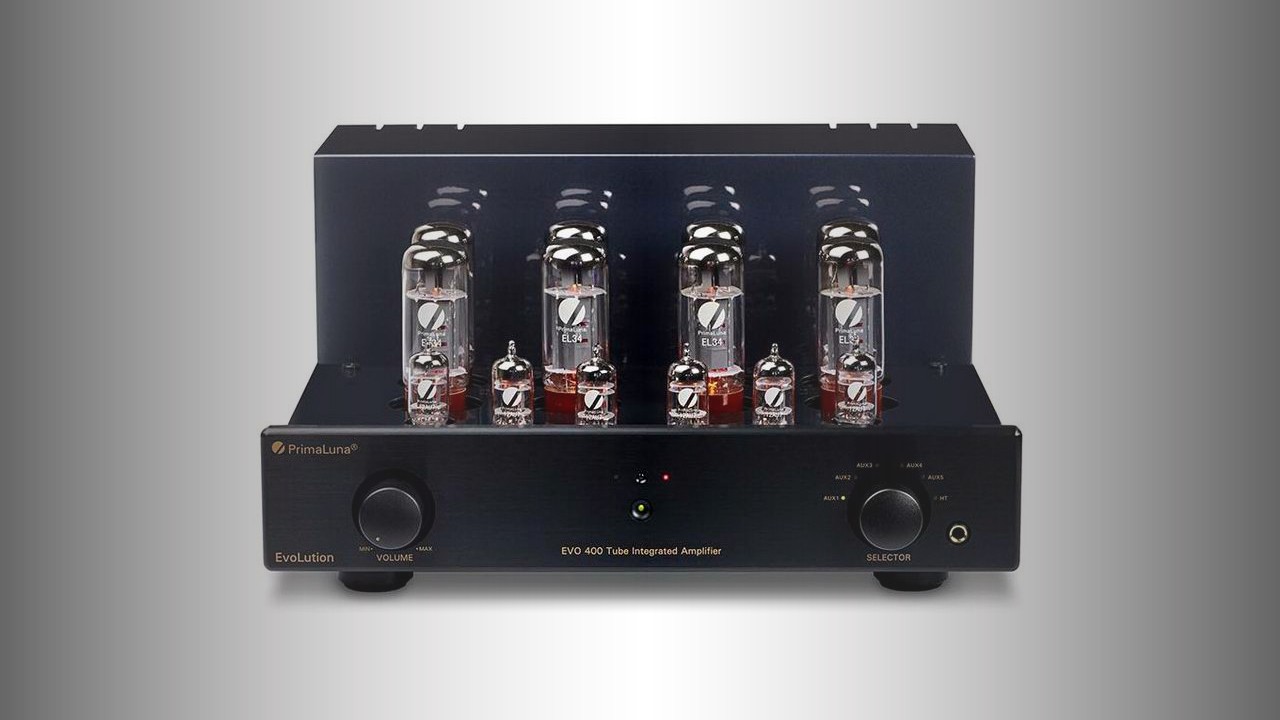
8. PrimaLuna EVO 400: Extremely powerful integrated tube amplifier
The PrimaLuna EVO 400 Integrated uses an adaptive bias system and supports switching between triode and ultra-linear operation.
The PrimaLuna EVO 400 Integrated provides 2 x 38W in triode mode or 2 x 70W in ultra-linear mode when using EL34 tubes.
Its operating-mode switching also applies to the headphone amplifier, which uses the main power tubes with a voltage divider to reduce output to an appropriate headphone level.
PrimaLuna’s Adaptive AutoBias system monitors tube condition and adjusts operation in real time, reducing routine bias maintenance. A selector accommodates EL34 and KT88, KT120 or KT150 tube families, giving owners room to change compatible output tubes without relying on a single type.
Best for: Tube enthusiasts seeking flexible operation and simplified bias management
- Switchable triode and ultra-linear modes
- Adaptive automatic bias adjustment
- Headphone stage driven by the power tubes
- Supports several output-tube families
Verdict: A feature-rich integrated tube amplifier that combines two operating modes, adaptable tube support and an unusually involved headphone implementation.

9. Falcon Acoustics IMF 200: Affordable 3-way DIY floor stand
The Falcon Acoustics IMF 200 kit contains matched three-way drivers, birch-plywood cabinets and prewired crossover components for home assembly.
The Falcon Acoustics IMF 200 is not an amplifier but a three-way floorstanding loudspeaker kit, so its relevance here is limited to amplifier matching.
The completed speakers have a nominal impedance of 8 ohms, a sensitivity of 86dB and a stated amplifier-power allowance of up to 200W per channel.
The kit includes pair-matched Falcon B139 woofers, B110 midrange drivers and T27 tweeters, birch-plywood cabinets, prewired crossovers and the tools needed for assembly. No soldering is required according to the supplied material.
Best for: DIY loudspeaker builders researching a suitable amplifier match
- Nominal 8-ohm impedance
- Drivers matched in pairs
- Prewired crossovers require no soldering
- Assembly tools included
Verdict: A well-specified self-assembly speaker kit rather than an amplifier, included here only as a reminder that loudspeaker impedance and sensitivity influence amplifier selection.

10. FX-Audio XL01: Compact Class D integrated amplifier with Bluetooth
The compact FX-Audio XL01 combines two speaker channels, a passive-subwoofer channel, Bluetooth and front-panel tone controls.
The FX-Audio XL01 is a compact Class D integrated amplifier designed for a passive 2.1 speaker system.
Its CS8673E amplifier stage is rated at 2 x 40W plus 75W into 4 ohms, or 2 x 24W plus 40W into 8 ohms, with the third channel intended for a passive subwoofer.
Connectivity is deliberately simple: Bluetooth and stereo RCA are the input choices, while speaker terminals handle the outputs. Independent bass and treble adjustment allows basic tonal tailoring, and the specified speaker-impedance range is 4 to 8 ohms.
Best for: Small passive 2.1 systems with straightforward source requirements
- Dedicated passive-subwoofer channel
- Bluetooth and stereo RCA inputs
- Bass and treble controls
- Compact aluminum enclosure
Verdict: A compact route to a Bluetooth-enabled passive 2.1 system, although its limited physical inputs make it most suitable for simple installations.
Frequently asked questions
Should I choose an integrated amplifier, preamplifier or power amplifier?
Choose according to the missing role in the system.
An integrated amplifier combines source control and speaker amplification, a preamplifier such as the Fosi Audio P3 needs active speakers or a separate power amplifier, and a power amplifier such as the Leema Elements requires a source with suitable volume control or a dedicated preamplifier.
How should an amplifier be matched to passive speakers?
Check the speaker’s nominal impedance, sensitivity and recommended amplifier range, then compare them with the amplifier’s stated load compatibility.
The Rega Brio material, for example, identifies 8 ohms as optimal and 4 ohms as a compromise, while the FX-Audio XL01 is specified for 4-to-8-ohm speakers.
Do tube amplifiers require manual bias adjustment?
That depends on the design.
The PrimaLuna EVO 400 uses Adaptive AutoBias to monitor and adjust tube operation automatically, while other tube amplifiers may have different maintenance requirements.
Always follow the manufacturer’s instructions and confirm which replacement tube types are supported.
Which connections should be checked before buying an amplifier?
List every source, speaker and headphone connection the system needs.
Bluetooth codec support, balanced XLR inputs, USB control, phono circuitry, passive-subwoofer outputs and 4.4mm headphone connections appear on different products here, but no single model supplies all of them.
How to Choose the Right Amplifier for Your System
Start by defining the amplifier’s job.
A conventional system built around passive speakers will usually need an integrated amplifier or a preamp-and-power-amp combination.
The Fosi Audio P3 cannot drive passive speakers by itself, the Leema Elements is a dedicated power amplifier, and the Astell & Kern PA10 is intended specifically for headphones. Establishing that distinction immediately removes unsuitable options. Next, verify electrical and physical compatibility. Speaker impedance matters, as the Rega Brio’s stated preference for 8-ohm loads demonstrates. Output requirements also vary: the FX-Audio XL01 includes a channel for a passive subwoofer, whereas the Fosi P3 supplies line-level connections suitable for feeding active equipment. For headphones, check both the connector format and supported impedance rather than assuming that every headphone output will suit every pair. Connectivity should reflect sources already owned and those genuinely likely to be added. Bluetooth with aptX support may make the Fosi P3 convenient in a compact system, while the Hegel H390 is more relevant where digital conversion and networking are central. The Leema’s stereo, monoblock and multi-amplifier options make sense for an expandable installation, but that flexibility is unnecessary in a simple single-amplifier setup. Finally, separate confirmed product capabilities from future plans. The Peachtree Audio entry announces BluOS adoption without identifying a specific model, and the Falcon Acoustics IMF 200 is a loudspeaker kit rather than an amplifier. A sound buying decision should rest on the specifications and functions of the exact component under consideration, matched carefully to the speakers, sources, headphones and available space.



Sound Off
0Join the discussion if you have something to add.