
A digital-to-analog converter sits between a digital source and the analog part of a hi-fi system.
The right DAC can also solve practical problems, adding headphone amplification, preamplifier control, balanced outputs or a compact connection for a phone or laptop.
The choices here cover several distinct roles. T+A and Hegel focus on full-size digital conversion, while Aune, D&A and Audiolab combine conversion with broader desktop duties. EPZ, Audirect and iFi provide smaller alternatives for wired listening away from a conventional hi-fi rack. One entry is a wider portable-DAC guide rather than a single product, giving newcomers an additional starting point for comparison. Specifications alone should not determine the choice. Consider whether you need a fixed-output DAC, volume control, a preamplifier, a headphone amplifier or a portable device. Inputs, headphone connections, available output power and compatibility with the formats you actually use are more important than buying the highest headline sampling rate.

1. T+A DAC 200: DAC capable of working with ultra-high resolution files
The T+A DAC 200 combines separate PCM and DSD conversion architectures with a discrete Class A preamplifier.
The T+A DAC 200 is a full-size converter with separate architectures for PCM and DSD.
Its PCM section uses a double-symmetrical differential arrangement with four 32-bit Burr-Brown chips per channel, while T+A handles DSD through its true 1-bit converter.
Supported data extends to DSD1024 and 32-bit/768 kHz PCM. Users can also choose among FIR, Bezier and non-oversampling filter approaches. Galvanic isolation, separated digital and analog paths, precision clock generators and T+A’s second-generation De-Jitter system address incoming noise and timing errors. A discrete, dual-mono Class A preamplifier and relay-based volume control make it suitable for direct system control as well as conversion.
Best for: Full-size systems needing advanced conversion and preamplifier control
- Supports DSD1024 and 32-bit/768 kHz PCM
- Separate conversion paths for PCM and DSD
- Galvanic isolation and dedicated de-jitter system
- Discrete dual-mono Class A preamplifier
Verdict: The DAC 200 is the most technically extensive option here for listeners who want format flexibility, selectable filtering and an integrated analog preamplifier.

2. Hegel D50: Powerful DAC nicknamed The Raven
Hegel’s D50, known as The Raven, omits streaming and volume control to concentrate on digital conversion.
Hegel’s D50, also called The Raven, takes a deliberately narrow approach: it converts digital audio without adding streaming or volume adjustment.
That makes it more appropriate for systems that already have source management and analog volume control.
Its power supply uses two low-noise toroidal transformers, separating digital processing and standby duties from analog and sensitive digital circuitry. Steel shielding around the transformers and additional interference-reduction measures reinforce that separation. Hegel also describes sophisticated filtering at the power input, although any effect on other equipment connected to the same circuit will depend on the installation and use of a grounded outlet. An aluminum chassis and machined front bezel complete the purist design.
Best for: Purist systems with separate streaming and volume control
- Dedicated digital-to-analog conversion
- Separate toroidal transformers for key circuit sections
- Shielded power-supply design
- Aluminum chassis with machined front bezel
Verdict: The D50 is a focused choice for listeners who want a dedicated DAC rather than an all-in-one digital control center.
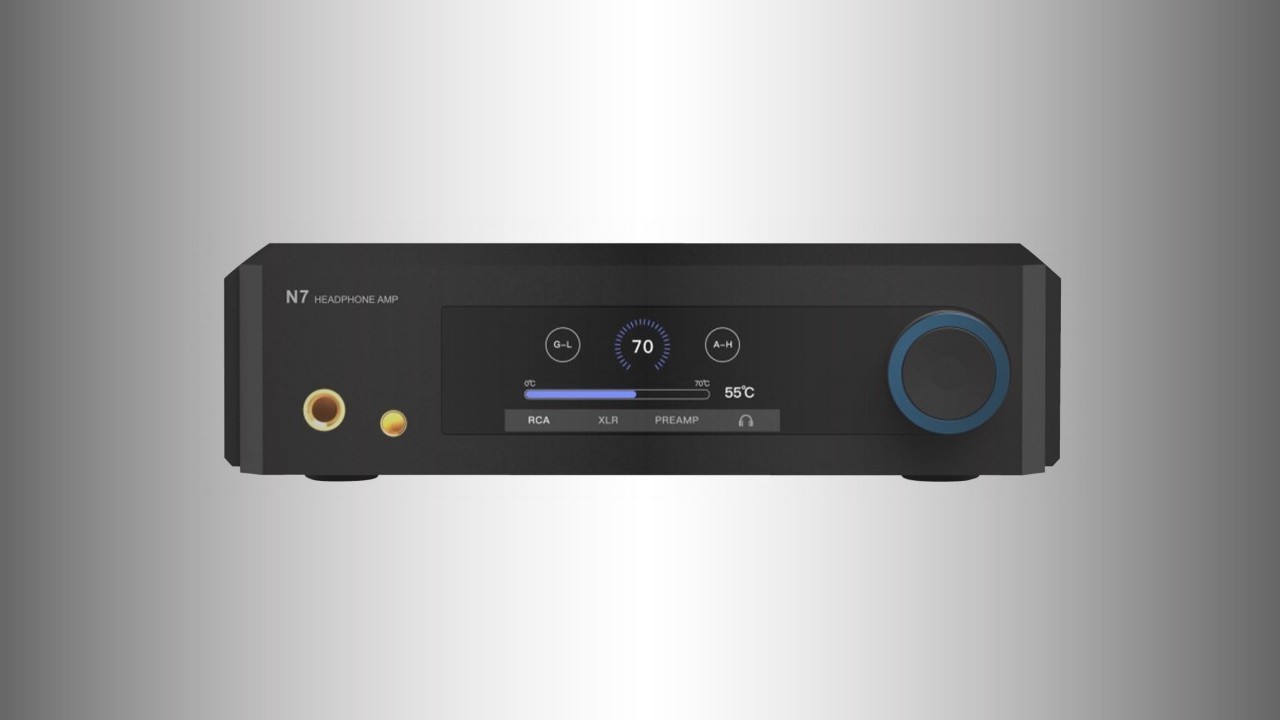
3. Aune N7 DAC Edition: Versatile DAC, Headphone Amplifier, and Preamplifier in One
The Aune N7 DAC Edition integrates dual-chip conversion, a discrete JFET headphone stage and preamplifier control.
The Aune N7 DAC Edition combines three useful desktop functions: digital conversion, balanced Class A headphone amplification and preamplifier control.
Two Cirrus Logic CS43198 chips support PCM up to 32-bit/384 kHz and DSD256 through USB-C.
Its analog section uses discrete JFET transistors, while a four-channel R2R volume circuit is intended to maintain channel balance and provide precise control. The headphone section accepts loads from 16 to 600 ohms, with quoted output reaching 1,900 mW at 32 ohms through the 6.35 mm connection and 6,570 mW at 32 ohms from the balanced 4.4 mm output. This breadth makes the N7 particularly relevant to headphone systems that also need preamplifier duties.
Best for: Desktop headphone systems needing high output and preamplifier control
- DAC, Class A headphone amplifier and preamplifier
- Dual CS43198 conversion architecture
- Supports 32-bit/384 kHz PCM and DSD256 over USB-C
- 6.35 mm and balanced 4.4 mm headphone capability
Verdict: The N7 DAC Edition offers the broadest desktop headphone functionality in the selection, backed by substantial quoted balanced output.

4. EPZ TP35: High-performance portable DAC and headphone amplifier
The EPZ TP35 pairs dual CS43198 converters with single-ended and balanced headphone outputs in a CNC-machined enclosure.
The EPZ TP35 puts dual CS43198 conversion into a portable DAC and headphone amplifier.
It supports PCM up to 32-bit/384 kHz and DSD256, while offering both 3.5 mm single-ended and 4.4 mm balanced headphone outputs.
Quoted power is 65 mW into 32 ohms from the single-ended connection and 150 mW into 32 ohms from the balanced output. Low- and high-gain modes help adapt the output to different headphones, with an LED showing the selected setting. Five digital filters provide another level of adjustment. The CNC-machined aluminum construction and transparent window give the TP35 a more substantial physical design than a basic cable-style dongle.
Best for: Portable listeners wanting balanced output and adjustable gain
- Dual CS43198 DAC chips
- 3.5 mm and 4.4 mm headphone outputs
- Switchable low- and high-gain modes
- Five selectable digital filters
Verdict: The TP35 is a flexible pocket DAC for users who value two headphone connections, gain selection and filter control.

5. D&A Alpha: Dual-Mono Precision in a Compact DAC and Headphone Amplifier
The compact D&A Alpha uses independent DAC signal paths and a discrete four-channel balanced amplifier.
The D&A Alpha is a compact desktop component able to work as a DAC, analog preamplifier or headphone amplifier.
Its dual-mono architecture assigns an ES9039Q2M DAC, clocking arrangement and signal path to each channel, with the aim of reducing crosstalk and preserving channel separation.
The analog section follows a fully discrete, four-channel balanced design rather than using integrated amplifier chips. D&A positions that stage for use with loads ranging from sensitive in-ear monitors to high-impedance dynamic and planar-magnetic headphones. Analog volume adjustment is handled by an NJU72315 chip, avoiding reliance on digital attenuation when the Alpha is used as a preamplifier. Femtosecond oscillators and a two-stage PLL system manage clock stability.
Best for: Compact desktop systems requiring balanced headphone and preamplifier functions
- Dual-mono ES9039Q2M architecture
- Fully discrete four-channel balanced amplifier
- Analog volume control for preamplifier use
- Designed for a broad range of headphone types
Verdict: The Alpha stands out for carrying a channel-separated, balanced design through both its conversion and analog amplification stages.

6. Audirect Team 1: Portable self-powered DAC and headphone amplifier
The Audirect Team 1 is a self-powered portable DAC and amplifier with dual USB-C connections and two headphone outputs.
Audirect’s Team 1 is a self-powered portable DAC and headphone amplifier built around an ESS 9281AC Pro converter.
Its amplifier section combines a TI OPA1612 operational amplifier with four OPA6863 devices.
Maximum quoted output voltage is 5.6 Vrms from the 4.4 mm balanced connection and 2.8 Vrms from the 3.5 mm single-ended output, with support stated for headphones up to 600 ohms. Intelligent power management is included to regulate power use and battery operation. Two USB-C interfaces and an auxiliary analog input broaden its connection options, while optional accessories can add functions such as Bluetooth decoding or simultaneous phone charging. The small CNC-machined enclosure is intended for transport rather than permanent rack installation.
Best for: Portable users who want battery power and expanded connectivity
- Self-powered portable design
- 3.5 mm and 4.4 mm headphone outputs
- Dual USB-C interfaces and auxiliary input
- Optional charging and Bluetooth expansion
Verdict: The Team 1 is a practical choice when self-powered operation, strong quoted output voltage and flexible connections matter more than dongle-level simplicity.

7. Audiolab M-DAC+: Dac with the absolute highest signal quality
The Audiolab M-DAC+ uses an ESS ES9018 converter, dedicated clocking and a Class A JFET output stage.
The Audiolab M-DAC+ is a desktop converter based on the 32-bit ESS ES9018 Sabre chipset.
A discrete clock generator is used to minimize jitter, with additional circuitry intended to isolate time-domain interference.
After conversion, the signal passes through a Class A JFET output stage. Its USB input supports PCM data up to 32-bit/384 kHz as well as DSD64, DSD128 and DSD256. Seven user-selectable digital filters allow the response to be adjusted according to system matching, source quality and personal preference. That combination of broad file support and filter selection makes the M-DAC+ relevant to listeners who want more control than a fixed-filter converter provides.
Best for: Desktop systems needing extensive filter choice and broad file support
- Supports PCM up to 32-bit/384 kHz
- Accepts DSD64, DSD128 and DSD256
- Seven selectable digital filters
- Class A JFET output stage
Verdict: The M-DAC+ remains distinctive for combining high-resolution USB compatibility with seven ways to tailor its digital filtering.

8. The Best Portable DACs of -: Pocket Hi-Fi Done Right
Portable DACs provide a compact wired connection between modern USB sources and conventional headphones.
This entry is a broader portable-DAC guide rather than a single product recommendation.
It considers pocket-sized DAC and headphone amplifiers as a way to connect wired headphones to phones, laptops and desktop computers, particularly where a built-in 3.5 mm socket is unavailable.
The guide frames these devices as compact alternatives to carrying a separate digital audio player and begins its product discussion with the small FiiO KA11. Because the supplied extract does not include the complete list or full specifications for every model, it is most useful as category context rather than a direct substitute for comparing inputs, outputs and amplification requirements.
Best for: Newcomers comparing portable DAC formats and use cases
- Covers pocket-sized DAC and amplifier options
- Addresses phones, laptops and desktop computers
- Explains the role of a dongle as both adapter and audio component
Verdict: This overview is a useful introduction to portable DACs, although individual models still need to be checked against headphone and connection requirements.

9. iFi Audio Go Link 2: Tiny DAC, Massive Upgrade for Everyday Listening
The iFi Audio Go Link 2 is a compact USB DAC for connecting wired headphones to phones, tablets and computers.
The iFi Audio Go Link 2 is designed to replace the internal audio conversion of a phone, tablet or computer without adding a bulky separate component.
Its ESS Sabre DAC supports PCM up to 32-bit/384 kHz and native DSD256.
The source states that revised internal processing reduces second- and third-order harmonic distortion by up to 62 percent compared with the preceding model. Configuration is available through the iFi Nexis app, including digital-filter selection and over-the-air updates from the connected device. The compact, lightweight format and plug-and-play operation make it one of the simpler options here for everyday wired listening, especially when the source lacks a conventional headphone socket.
Best for: Simple everyday listening from phones, tablets and computers
- Compact plug-and-play format
- Supports 32-bit/384 kHz PCM and native DSD256
- App-selectable digital filters
- Over-the-air update support
Verdict: The Go Link 2 suits listeners who want straightforward USB conversion with high-resolution support and app-based filter adjustment.

10. EPZ TP50: DAC/Headphone amplifier with flagship CS43198 DACs
The EPZ TP50 combines a metal and carbon-fiber enclosure with a display, dual DAC chips and two headphone outputs.
The EPZ TP50 uses two CS43198 DAC chips to decode the left and right channels independently, supported by two RT6863 headphone amplifiers and a low-noise power supply.
It accepts PCM up to 32-bit/768 kHz and DSD256, with 3.5 mm and balanced 4.4 mm outputs.
Quoted power into 32 ohms is 121 mW from the 3.5 mm connection and 240 mW from the 4.4 mm output. High- and low-gain settings broaden headphone matching. A 0.87-inch display shows information including sampling frequency, volume and gain, giving the TP50 a more informative interface than many screenless portable DACs. Its CNC metal and carbon-fiber body weighs a stated 28 grams.
Best for: Portable users wanting a screen and higher balanced output
- Dual CS43198 conversion with separate channels
- Supports 32-bit/768 kHz PCM and DSD256
- 3.5 mm and 4.4 mm outputs with gain selection
- Display for sampling, volume and gain information
Verdict: The TP50 combines an unusually informative display with dual-channel conversion and a quoted 240 mW balanced output in a 28-gram body.
Frequently asked questions
Should I buy a dedicated DAC or a DAC with volume and headphone control?
Choose a dedicated converter such as the Hegel D50 if your system already has streaming, amplification and analog volume control.
A multifunction model such as the Aune N7 DAC Edition, D&A Alpha or T+A DAC 200 is more suitable when the DAC must also drive headphones or control a power amplifier.
Is a balanced headphone output always the better choice?
A balanced output can provide more power on models such as the Aune N7 DAC Edition, EPZ TP35 and EPZ TP50, but it requires compatible headphones and the correct cable.
Sensitive earphones may not need the additional output, so consider gain settings and usable volume range as well as maximum power.
Do I need support for the highest PCM and DSD rates?
Only if your source files, software and connection use those formats.
High limits provide compatibility headroom, but inputs, outputs, headphone matching, volume control and everyday usability are usually more important than the maximum sampling-rate figure.
What should I check before buying a portable DAC?
Confirm that its input works with your phone, tablet or computer, and that it has the correct 3.5 mm or 4.4 mm output for your headphones.
Also check whether it draws power from the source or uses its own battery, whether gain is adjustable and whether its quoted output suits the headphone load.
How to Choose the Right DAC for Your System
Begin with the role the DAC must perform.
For a conventional separates system with an existing preamplifier, a focused converter such as the Hegel D50 avoids paying for duplicate volume or streaming functions.
The T+A DAC 200 adds a sophisticated preamplifier stage, extensive format handling and multiple filtering approaches, while the Audiolab M-DAC+ provides seven filters for listeners who prioritize adjustment. Headphone users should assess amplification as carefully as conversion. The Aune N7 DAC Edition offers substantial quoted balanced power and preamplifier operation, while the D&A Alpha emphasizes dual-mono signal paths, discrete balanced amplification and analog volume control. Neither approach is automatically preferable: the decision depends on headphone impedance and sensitivity, required connections, available desk space and whether powered speakers or a power amplifier will also be connected. For portable use, size is only one part of the equation. The iFi Audio Go Link 2 favors straightforward plug-and-play operation, the EPZ TP35 adds gain and filter choices, and the EPZ TP50 provides a display and higher quoted balanced power. Audirect’s Team 1 is the option to examine when self-powered operation, an auxiliary input and optional expansion are priorities. Make a shortlist by matching inputs and outputs first, then check amplification needs and format support. A balanced socket is useful only when the headphones and cable can use it, while extreme sampling-rate compatibility has little value if the DAC lacks the connections or controls your system requires. The most appropriate DAC is therefore the one that integrates cleanly with the equipment and listening habits you already have.



Sound Off
0Join the discussion if you have something to add.