
Choosing amplification starts with the system rather than the topology.
Speaker requirements, room size, source components and preferred level of integration all matter more than whether an amplifier uses Class D, Class AB or valves.
A network amplifier can reduce box count, while a separate preamplifier and power amplifier offer a different route to system building. The material gathered here covers more than conventional integrated amplifiers. Alongside all-in-one network models and dedicated amplification are a valve preamplifier, active studio monitors, a Class D overview and a replacement 300B tube. Those distinctions are important: not every entry can be connected directly between a source and passive speakers. Use this guide to identify the category that fits your system, then check input requirements, speaker compatibility, control options and the need for external components. Manufacturer power figures can help narrow the field, but they should always be considered alongside impedance, room conditions and normal listening levels.
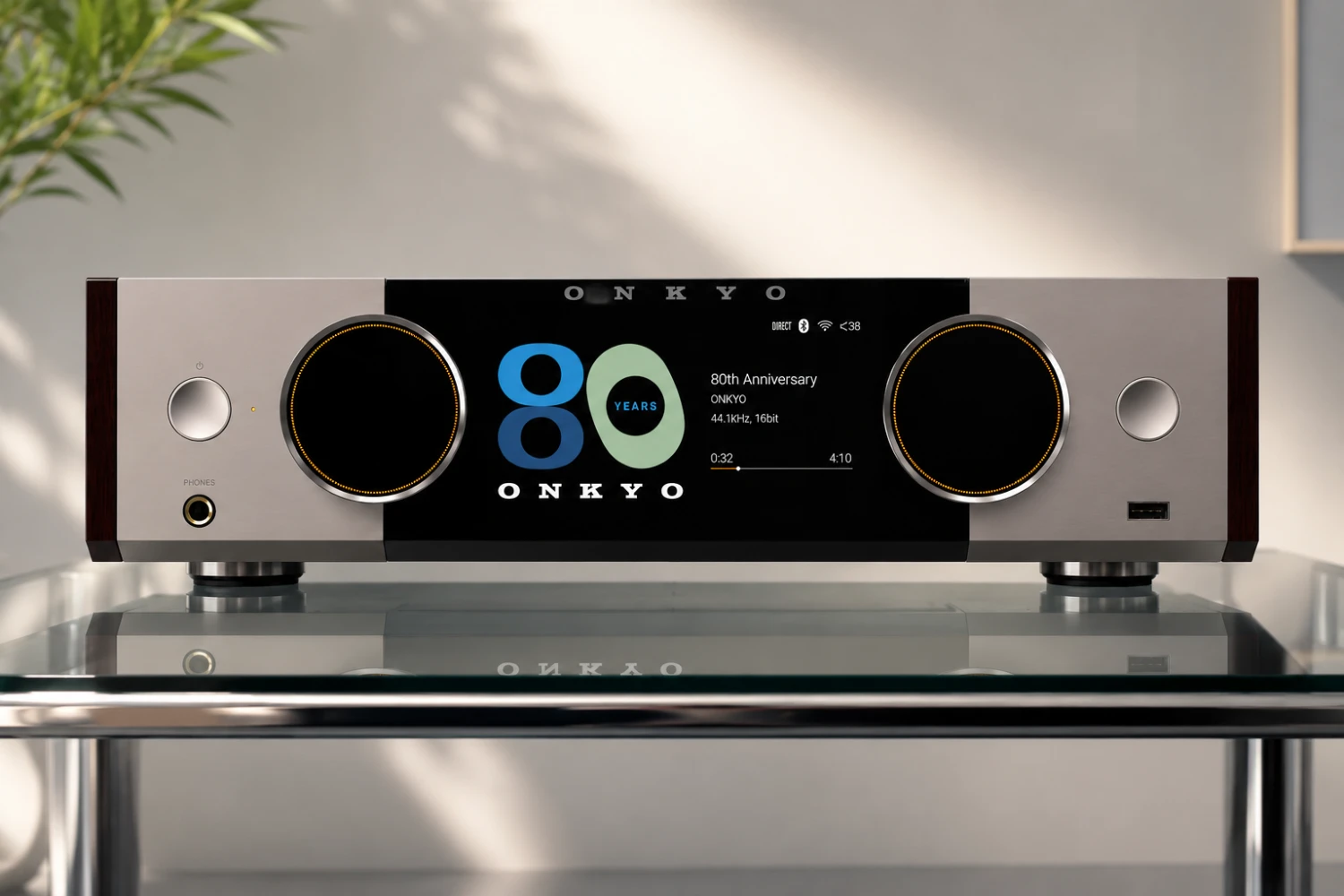
1. Onkyo Muse Y-50 Anniversary Amplifier Pairs Retro Design With Streaming
The Onkyo Muse Y-50 pairs walnut side panels and a champagne-colored front panel with a large color display and analog-style VU meters.
The Onkyo Muse Y-50 combines the visual language of earlier Integra components with current network-amplifier functionality.
Its champagne-colored aluminum front, burgundy walnut side panels, patterned ventilation and analog-style VU meters make the design a central part of its appeal.
Underneath that traditional presentation is an Axign Class D stage specified at 250 watts into 4 ohms, plus streaming, room calibration, HDMI ARC and MM/MC phono connectivity.
Best for: Feature-rich systems with a taste for retro Onkyo design
- 250 watts into 4 ohms
- Network streaming and room calibration
- HDMI ARC and MM/MC phono inputs
- Color display with VU-meter graphics
Verdict: A visually distinctive network amplifier that brings streaming, television and turntable connectivity into one integrated component.

2. Cayin Soul 170C: High-End Tube Preamplifier with 8-Tube Circuit and Dual Feedback Control
The Cayin Soul 170C is an eight-tube stereo preamplifier designed as a visual and functional partner for the Soul 170P power amplifier.
The Cayin Soul 170C is a two-channel valve preamplifier rather than a complete integrated amplifier, so it requires a separate power amplifier.
Its eight-tube circuit assigns four valves to each channel, with 17AX4GT and 6CA7 tubes used in the power-supply and voltage-regulation stages and ECC83 and 6SN7GTB tubes handling line amplification.
It is styled to match Cayin’s Soul 170P stereo power amplifier.
Best for: Valve-based separates built around a dedicated power amplifier
- Eight-tube, channel-separated circuit
- Tube rectification and voltage regulation
- ECC83 and 6SN7GTB line-amplification stages
- Designed to complement the Soul 170P
Verdict: A purpose-built tube preamplifier for listeners assembling a Soul-series separates system or another compatible power-amplifier setup.

3. PMC6, PMC6-2 and PMC8-2: Updated generation of PMC studio monitors
The PMC6, PMC6-2 and PMC8-2 active monitors combine integrated Class D amplification, DSP and updated transmission-line technology.
The PMC6, PMC6-2 and PMC8-2 are active studio monitors, not amplifiers for passive loudspeakers, but their built-in Class D amplification and DSP make them relevant to buyers considering an amplifier-free monitoring system.
The range uses updated drivers, improved Advanced Transmission Line and Laminair technologies, and SoundAlign browser-based control.
Compatible PMC subwoofers can form DSP-matched XBD systems with selected models.
Best for: Nearfield or midfield monitoring without a separate amplifier
- Built-in Class D amplification and DSP
- SoundAlign browser-based control
- Expandable with compatible PMC subwoofers
- Expansion-card slot for future technologies
Verdict: A scalable active-monitor range for studios and other systems where amplification, DSP and speaker engineering need to work as one package.
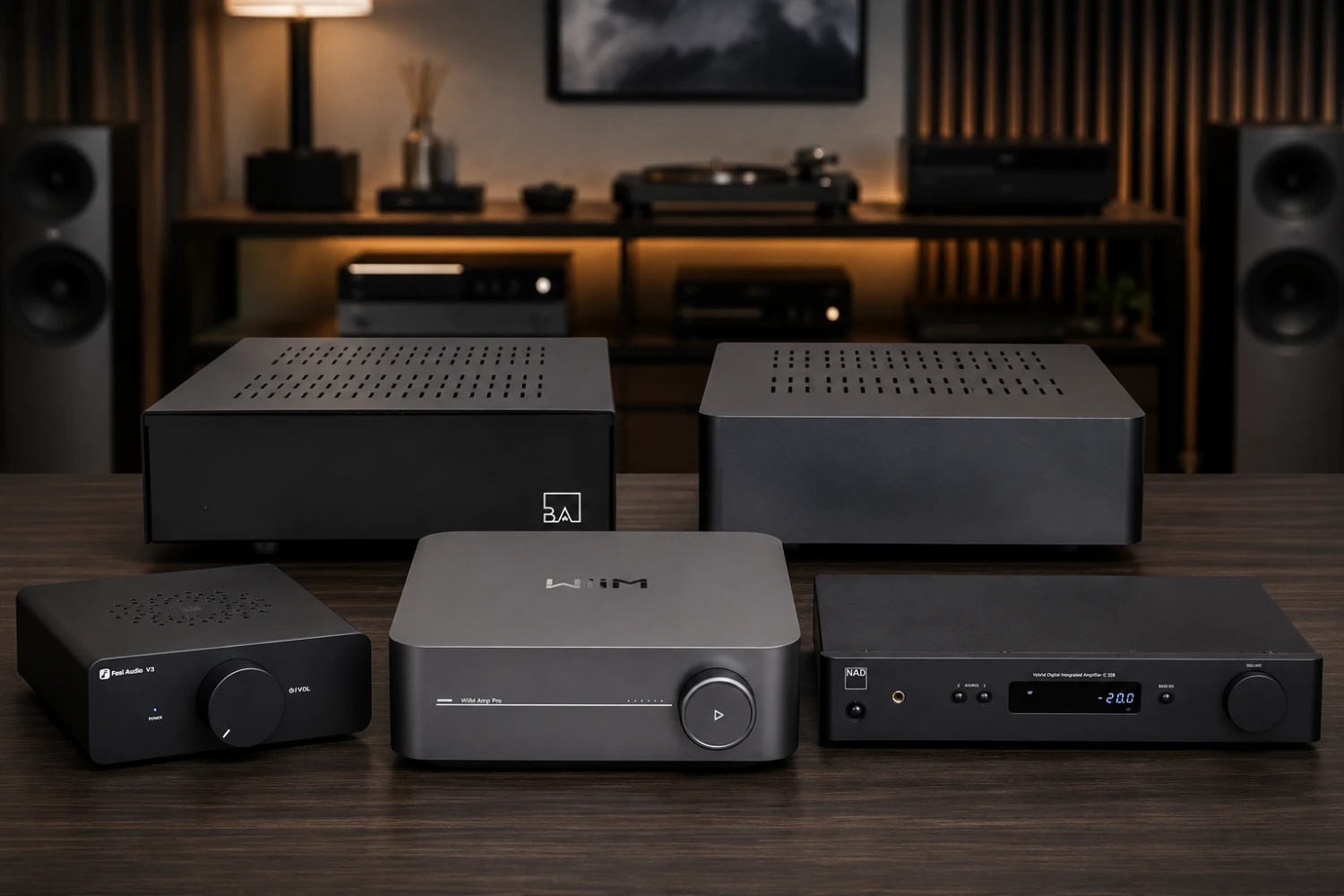
4. Best Class D Amplifiers of: From Budget Hi-Fi to High-End Excellence
The Class D amplifier overview examines modern switching designs across desktop, conventional hi-fi and high-end applications.
This overview is a technology guide rather than a recommendation for one amplifier.
It explains how modern switching designs from companies using platforms and engineering associated with Purifi, Hypex, Orchard Audio and AGD Productions have broadened the role of Class D amplification.
It also contrasts Class D with Class A and Class AB in areas such as operating method, efficiency, chassis demands and power consumption.
Best for: Buyers comparing Class D with Class A or Class AB
- Covers affordable and high-end Class D designs
- Explains differences between amplifier topologies
- Addresses efficiency and power considerations
- Provides context for modern switching amplifiers
Verdict: A useful starting point for understanding Class D before comparing individual products and system requirements.
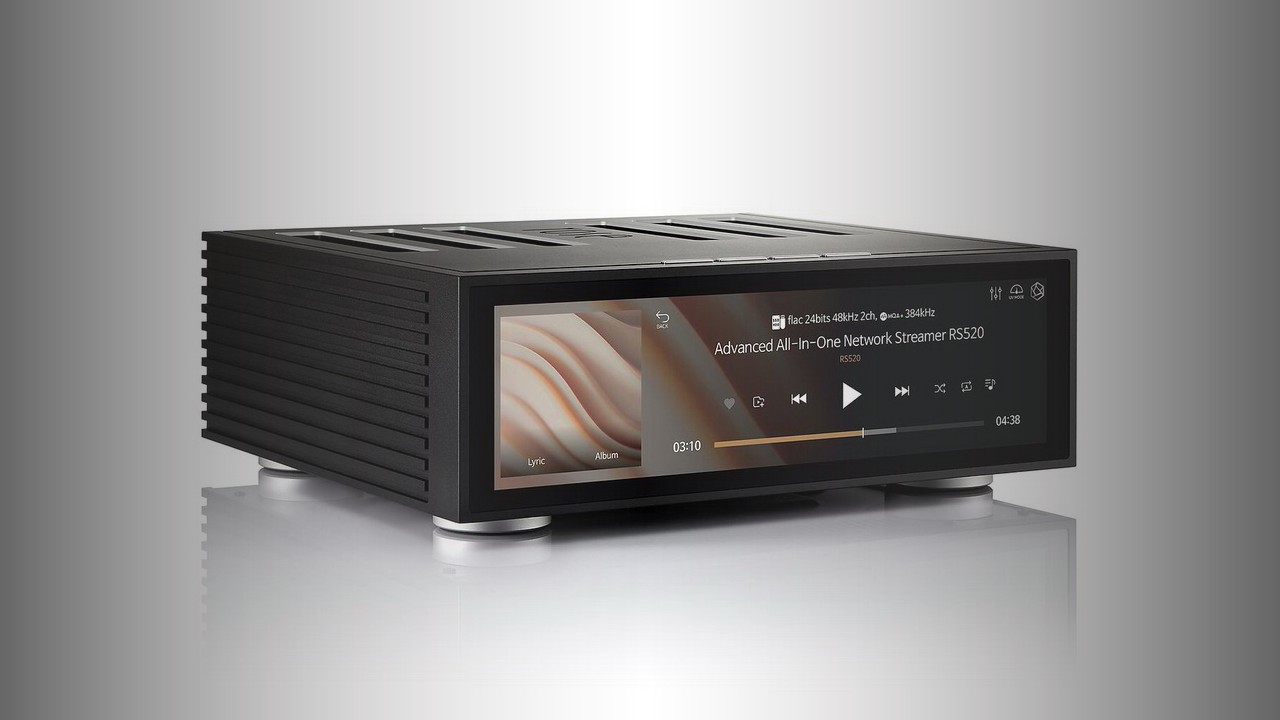
5. HiFi Rose RS520: A versatile network player, DAC and amplifier
The HiFi Rose RS520 houses network playback, an ES9038Pro DAC and GaN FET-based amplification in an aluminum enclosure.
The HiFi Rose RS520 combines a network player, ES9038Pro digital-to-analog converter and GaN FET-based Class AD amplifier in one chassis.
Rated at 250 watts per channel, it is intended to drive passive speakers without a separate source component or DAC.
Bluetooth, Wi-Fi, extensive physical connectivity, app control and a parametric equalizer widen its role in a streamlined system.
Best for: A powerful, source-inclusive system with minimal box count
- Network player, DAC and amplifier in one
- 250 watts per channel
- Bluetooth, Wi-Fi and app control
- Parametric equalizer with preset profiles
Verdict: A highly integrated option for listeners who want streaming, conversion, equalization and speaker amplification from one component.

6. Marantz PM-KI Ruby: Integrated amplifier 65 years in the making
The Marantz PM-KI Ruby features a reinforced chassis, copper speaker posts and an engraved Ken Ishiwata signature.
The Marantz PM-KI Ruby is an integrated amplifier developed under Ken Ishiwata’s guidance, with a fully discrete two-stage architecture and separate supplies for its preamplifier and power-amplifier sections.
It delivers a specified 100 watts per channel into 8 ohms and 200 watts per channel into 4 ohms.
An MM/MC phono stage, HDAM modules, toroidal transformer and vibration-resistant dual-layer chassis underline its focus on analog system building.
Best for: Analog-focused systems needing an integrated amplifier with phono support
- 100 watts per channel into 8 ohms
- MM/MC phono stage
- Separate preamplifier and power-amplifier supplies
- Dual-layer chassis with aluminum panels
Verdict: A carefully structured Marantz integrated amplifier with useful power, moving-magnet and moving-coil phono support, and substantial construction.
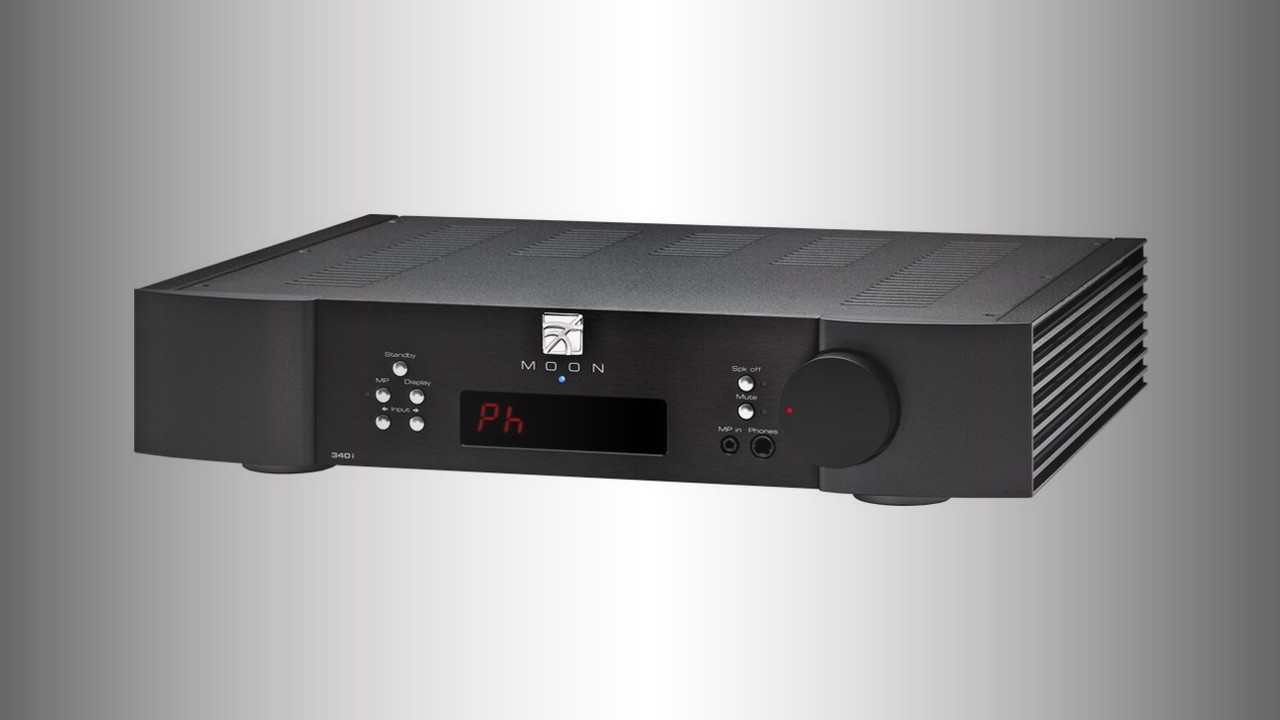
7. SimAudio Moon Neo 340i X: Advanced feature-packed amplifier
The SimAudio Moon Neo 340i X is positioned as an advanced integrated model within the company’s amplifier range.
The Moon Neo 340i X sits within Simaudio’s range of integrated amplifiers, a category for which the company is well known.
The supplied material positions it as an advanced, feature-rich model and places it above the entry-level 240i and 250i, but it does not provide enough specific information about its power, inputs or optional modules for a detailed feature comparison.
Prospective buyers should therefore verify the exact configuration before treating it as a match for a particular source or speaker system.
Best for: Buyers exploring Simaudio’s integrated-amplifier range
- Integrated-amplifier format
- Positioned as an advanced, feature-rich model
Verdict: A notable Moon integrated amplifier, although the available source material is too limited to support a more specific recommendation.

8. Accuphase E-380: Takes the sound quality of an integrated amplifier to a new level
The Accuphase E-380 reflects the Japanese manufacturer’s focus on premium integrated amplification and limited-volume production.
The Accuphase E-380 is presented as a premium integrated amplifier shaped by the company’s emphasis on accuracy, precision and controlled production.
Accuphase avoids assembly-line manufacturing, keeps production volumes limited and distributes its products through selected specialist retailers.
The supplied excerpt does not include the E-380’s power rating, input complement or optional facilities, so system matching requires further product-specific confirmation.
Best for: Premium systems supported by a specialist Accuphase retailer
- Integrated-amplifier format
- Built within a limited-production approach
- Distributed through specialist retailers
Verdict: An integrated amplifier for buyers drawn to Accuphase’s production philosophy, with detailed compatibility checks still essential.
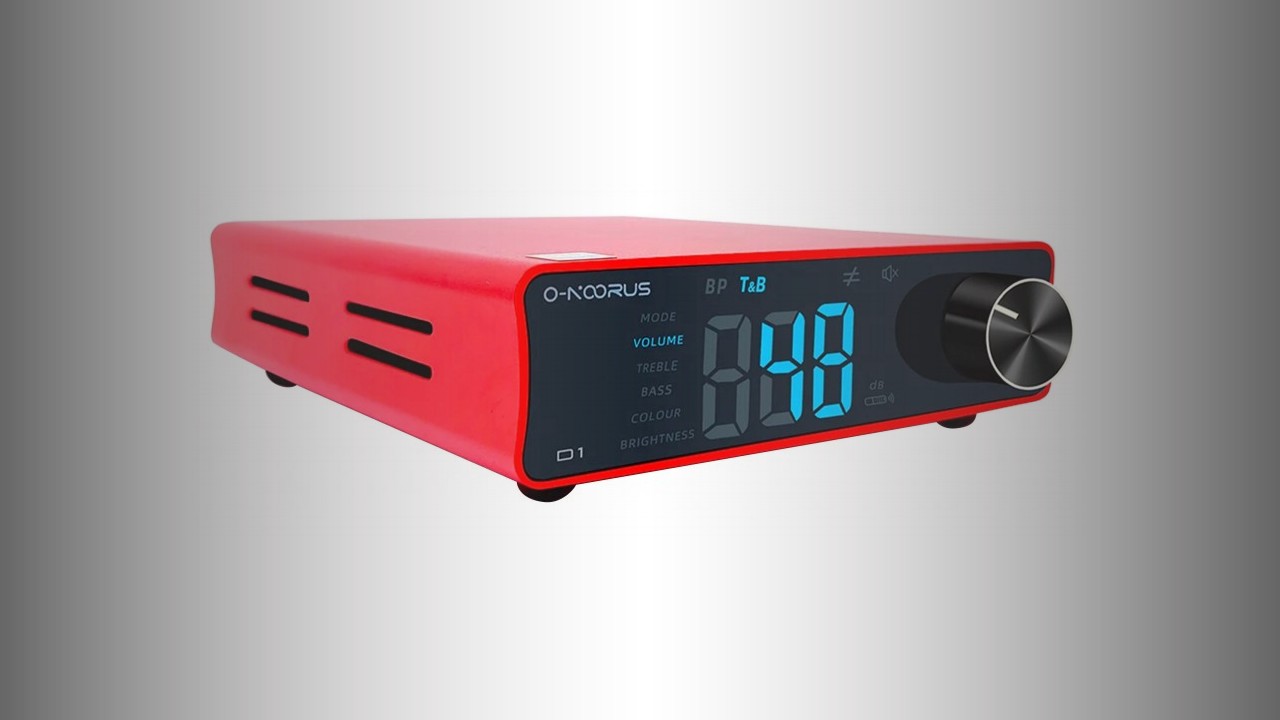
9. O-Noorus D1: Class D amplifier equipped with everything you need
The O-Noorus D1 combines TPA3255 Class D amplification with RCA input, speaker terminals, subwoofer output and tone controls.
The compact O-Noorus D1 uses a TPA3255 Class D amplifier chip, post-filter feedback and two NE5532 operational amplifiers.
Its specified output reaches 250 watts per channel into 4 ohms at 1 percent THD+N when powered by a 50-volt supply.
A stereo RCA input is joined by speaker outputs, an 80Hz subwoofer output and a 3.5mm pre-out, while the selectable tone-control mode adds volume, treble and bass adjustment. Buyers should note that bypass mode disables volume control and runs the amplifier at full output.
Best for: Compact 2.1-channel systems using a single analog source
- Specified up to 250 watts per channel into 4 ohms
- Subwoofer output and 3.5mm pre-out
- Adjustable treble and bass controls
- Infrared remote control
Verdict: A practical Class D amplifier for a straightforward RCA-based stereo or 2.1 system, provided its bypass behavior and power-supply conditions are understood.

10. Sophia Electric Classic II 300B: An improved version of the legendary lamps
Sophia Electric offers the Classic II 300B direct-filament triode in clear and blue glass versions with different base finishes.
The Sophia Electric Classic II 300B is a direct-filament vacuum triode, not a complete amplifier.
It is intended for compatible 300B valve amplifiers and is supplied in matched pairs, with clear or blue glass and a choice of ceramic base finishes.
The source describes multiple grading and warranty options, making exact selection an amplifier-maintenance and compatibility decision rather than a conventional amplifier purchase.
Best for: Owners of compatible amplifiers requiring matched 300B tubes
- Matched-pair availability
- Multiple glass and base finishes
- Choice of grading and warranty options
Verdict: A specialist replacement or upgrade tube that should be considered only after confirming the amplifier’s 300B requirements.
Frequently asked questions
Should I choose an integrated amplifier, network amplifier or separate preamplifier?
Choose an integrated amplifier when you want source control and speaker amplification in one chassis.
A network amplifier adds streaming and may include a DAC, app control or HDMI.
A preamplifier such as the Cayin Soul 170C needs a separate power amplifier and is better suited to a modular separates system.
How should amplifier power ratings be compared?
Compare ratings only when the load impedance and distortion conditions are stated.
For example, the O-Noorus D1’s maximum figure is tied to a 4-ohm load, 1 percent THD+N and a 50-volt supply.
Speaker impedance, sensitivity, room size and listening distance also affect how much usable power is required.
Can active studio monitors replace an amplifier and passive speakers?
Yes.
Active monitors such as the PMC6 family contain their own amplification and DSP, so they do not need an external speaker amplifier.
They still require suitable source or preamplifier connections, and their studio-oriented controls and placement requirements should suit the intended room.
What connections should I check before buying an amplifier?
List every source and output requirement first.
Turntable users may need MM or MC phono support, television systems may benefit from HDMI ARC, and 2.1 systems require an appropriate subwoofer output.
Also check whether digital conversion, streaming, wireless playback, pre-outs or app control are built in or require separate equipment.
How to Choose the Right Amplification Route
Begin by deciding how many components the system should contain.
The Onkyo Muse Y-50 and HiFi Rose RS520 combine amplification with network playback and other source functions, making them natural candidates for a reduced-box system.
The Marantz PM-KI Ruby follows a more conventional integrated approach with MM/MC phono facilities, while the Cayin Soul 170C belongs in a separates system with a compatible power amplifier. Next, match functions rather than simply comparing headline power. Confirm the number and type of analog and digital inputs, whether a DAC or streamer is included, and whether television, turntable, subwoofer or external power-amplifier connections are required. Pay close attention to the conditions attached to output figures, particularly impedance, distortion and power-supply requirements. Alternative system architectures may be more appropriate in some rooms. PMC’s active monitors integrate amplification and DSP into the speakers, removing the need for a conventional amplifier. The Sophia Electric Classic II 300B is further removed from a normal amplifier purchase because it is a replacement valve for compatible equipment. Understanding these category differences prevents an appealing product from becoming an unusable system mismatch. Finally, consider setup and control. Room calibration, parametric equalization, tone controls and DSP can be useful, but they work in different ways and should not be assumed to be interchangeable. Where the supplied information is incomplete, as it is for the Moon Neo 340i X and Accuphase E-380, confirm current specifications and compatibility through authoritative product documentation or a specialist retailer before making a decision.


Sound Off
0Join the discussion if you have something to add.