
The strongest AV receivers distinguish themselves through more than channel count.
Amplifier configuration, room correction, HDMI support, expansion capacity, streaming integration and installation flexibility all affect how well a model will serve a particular home cinema.
This ranking prioritizes products that can form the complete control and amplification center of a surround system, with extra weight given to flexible speaker layouts and credible upgrade paths. Arcam’s AVA35 leads on processing scope, Class G amplification and Dirac Live, while Denon’s AVC-X3900H offers an especially versatile combination of onboard channels, subwoofer integration and external-amplifier expansion. The more accessible Denon and Yamaha models concentrate on practical 5.2, 7.1 or 7.2 systems, whereas MartinLogan’s USR51 is differentiated by a compact format intended for concealed installation. The supplied selection is not composed entirely of AV receivers. Positions eight through ten cover an AV processor, a desktop audio system and a turntable respectively. They are included once each for completeness, but their lower positions reflect their limited comparability: the Marantz requires external power amplifiers, while the Yamaha TSX-N237D and TEAC TN-3B cannot replace an AV receiver in a multichannel home cinema.
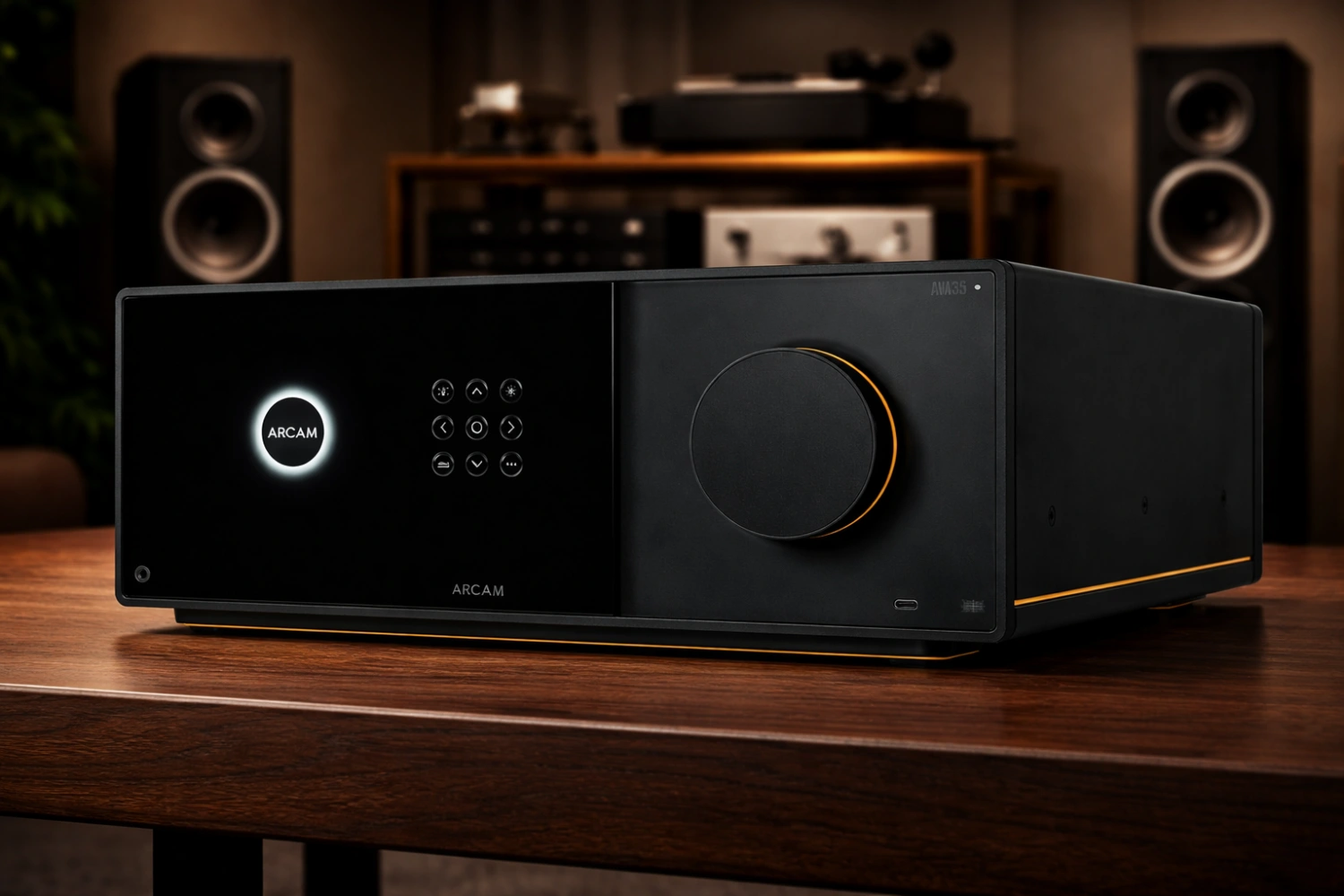
1. Arcam AVA35
Arcam AVA35 flagship AV receiver with Class G amplification and 16-channel processing.
The Arcam AVA35 is the most ambitious complete receiver in the supplied group.
It combines nine channels of Class G amplification, rated by Arcam at 100 watts per channel into 8 ohms, with 16-channel processing and 8K-capable HDMI connectivity.
That gives it the processing headroom to sit at the center of a sophisticated theater while retaining onboard amplification for a substantial speaker system. Dirac Live room correction is a significant differentiator for installations where acoustic integration matters as much as raw channel capacity. Matrix channel assignment and the ESS Hyperstream IV DAC Pro platform further reinforce the AVA35’s flagship positioning. The source presents it as an uncompromising model, although it does not supply comparative measurements or pricing with which to judge value against the Denon alternatives.
Best for: High-end theaters requiring extensive processing and advanced room correction
- Nine channels of Class G amplification
- 16-channel audio processing
- Dirac Live room correction
- 8K-capable HDMI connectivity
Verdict: The AVA35 is the strongest overall choice here for enthusiasts prioritizing processing flexibility, Class G amplification and Dirac Live in one chassis.
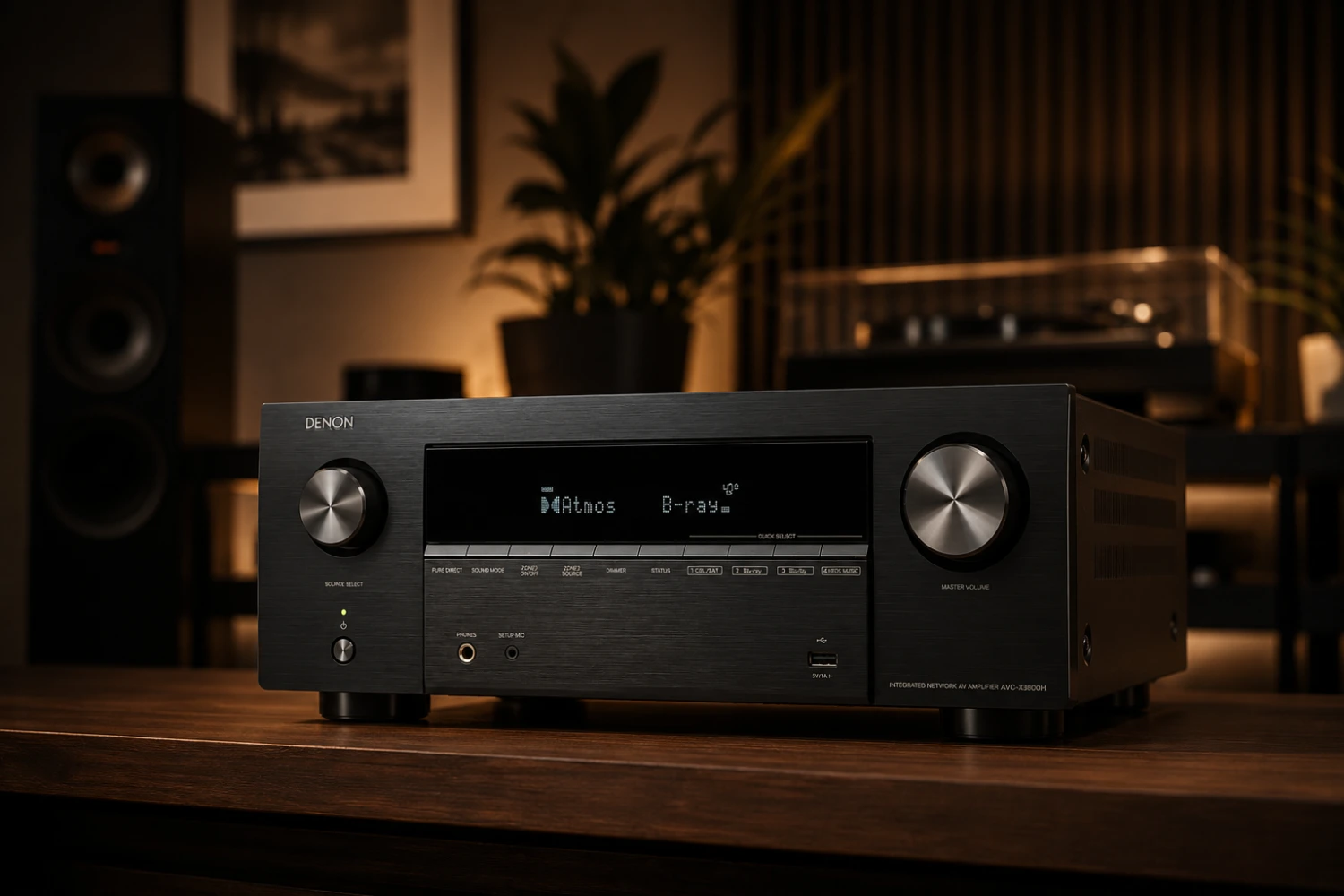
2. Denon AVC-X3900H
Denon AVC-X3900H 9.4-channel receiver with four subwoofer outputs and 11.4-channel pre-outs.
The Denon AVC-X3900H is the most adaptable mainstream-style receiver in the ranking.
Its nine onboard amplifier channels can support layouts including 7.4.2 or 5.4.4, while 11.4-channel pre-outs allow larger 7.4.4 or 5.4.6 systems when an external stereo amplifier or active speakers are added.
Denon specifies 105 watts into 8 ohms with two channels driven, a more useful reference than the higher one-channel figure also cited in the source. Four subwoofer outputs, 8K-capable HDMI 2.1 connectivity and HEOS streaming make this an unusually comprehensive system hub. It falls just behind the Arcam because the supplied material gives the AVA35 a more advanced 16-channel processing platform and Dirac Live, but the Denon’s combination of onboard capability and practical expansion may be the more straightforward fit for many multichannel rooms.
Best for: Expandable 3D-audio systems with multiple subwoofers
- Nine onboard amplifier channels
- 11.4-channel pre-out expansion
- Four subwoofer outputs
- Built-in HEOS streaming
Verdict: The AVC-X3900H is a highly flexible receiver for serious theaters that may expand beyond its nine onboard amplifier channels.
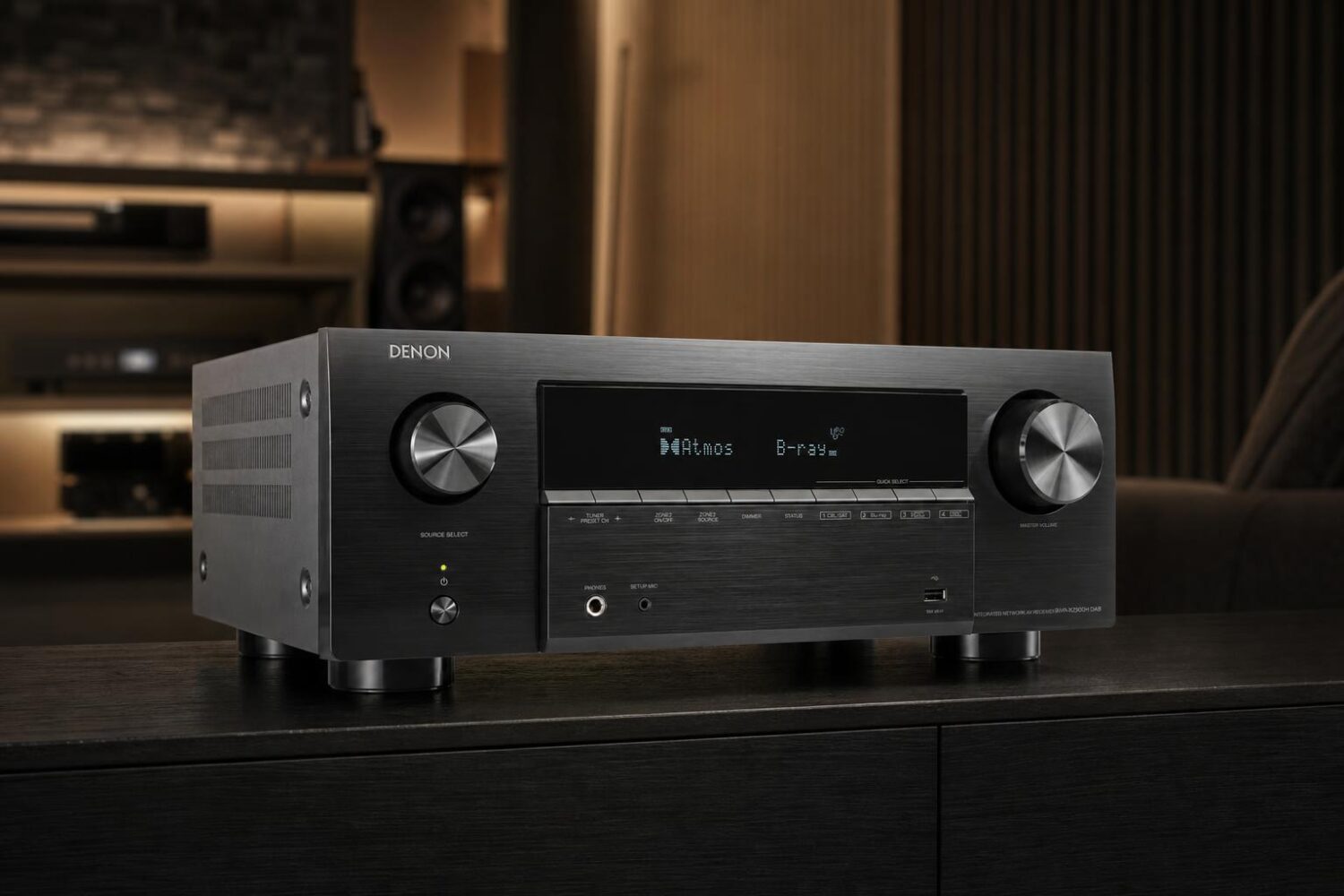
3. Denon AVR-X2900H DAB
Denon AVR-X2900H DAB seven-channel receiver with HEOS and digital radio.
The Denon AVR-X2900H DAB balances seven-channel home cinema with unusually broad source support.
It provides seven matching amplifier channels, connections for two subwoofers and support for Dolby Atmos and DTS:X.
Dolby Atmos Height Virtualization and DTS Virtual:X are also available where installing physical height speakers is impractical. Its six HDMI inputs and HDMI 2.1 video handling make it a credible switching center for contemporary sources, while HEOS wireless music features and built-in DAB+/FM reception broaden its everyday usefulness. It cannot match the AVC-X3900H’s nine-channel amplification, four-subwoofer architecture or 11.4-channel expansion, but it is a more focused choice for a conventional 7.1-class installation.
Best for: Seven-channel cinema systems that also need digital radio
- Seven matching amplifier channels
- Six HDMI inputs with HDMI 2.1 video support
- Dolby Atmos and DTS:X compatibility
- Integrated HEOS and DAB+/FM radio
Verdict: The AVR-X2900H DAB is a well-rounded seven-channel hub with strong video connectivity, streaming and built-in radio.

4. Denon AVC-X2850H
Denon AVC-X2850H 7.2-channel receiver with 8K HDMI inputs and HEOS.
The Denon AVC-X2850H covers the core requirements of a current 7.2-channel receiver without the larger expansion platform offered by the AVC-X3900H.
Denon specifies 95 watts per channel into 8 ohms with two channels operating, alongside Dolby Atmos and DTS:X decoding.
Audyssey MultEQ XT provides automatic speaker and room calibration. Connectivity is a particular strength at this level. The source lists six HDMI inputs, including three intended for 8K signals, plus two HDMI outputs with eARC available on one. VRR, ALLM and QFT support give it clear relevance to gaming systems, while integrated HEOS extends the receiver into wireless and multiroom music playback. The similarly specified AVR-X2900H DAB ranks just above it because the supplied article also establishes built-in DAB+/FM reception.
Best for: Seven-channel systems combining movies, gaming and HEOS streaming
- 7.2-channel amplification with Dolby Atmos and DTS:X
- Three 8K-capable inputs among six HDMI inputs
- VRR, ALLM and QFT gaming support
- Audyssey MultEQ XT and HEOS integration
Verdict: The AVC-X2850H is a practical 7.2-channel choice with useful 8K, gaming, calibration and multiroom features.
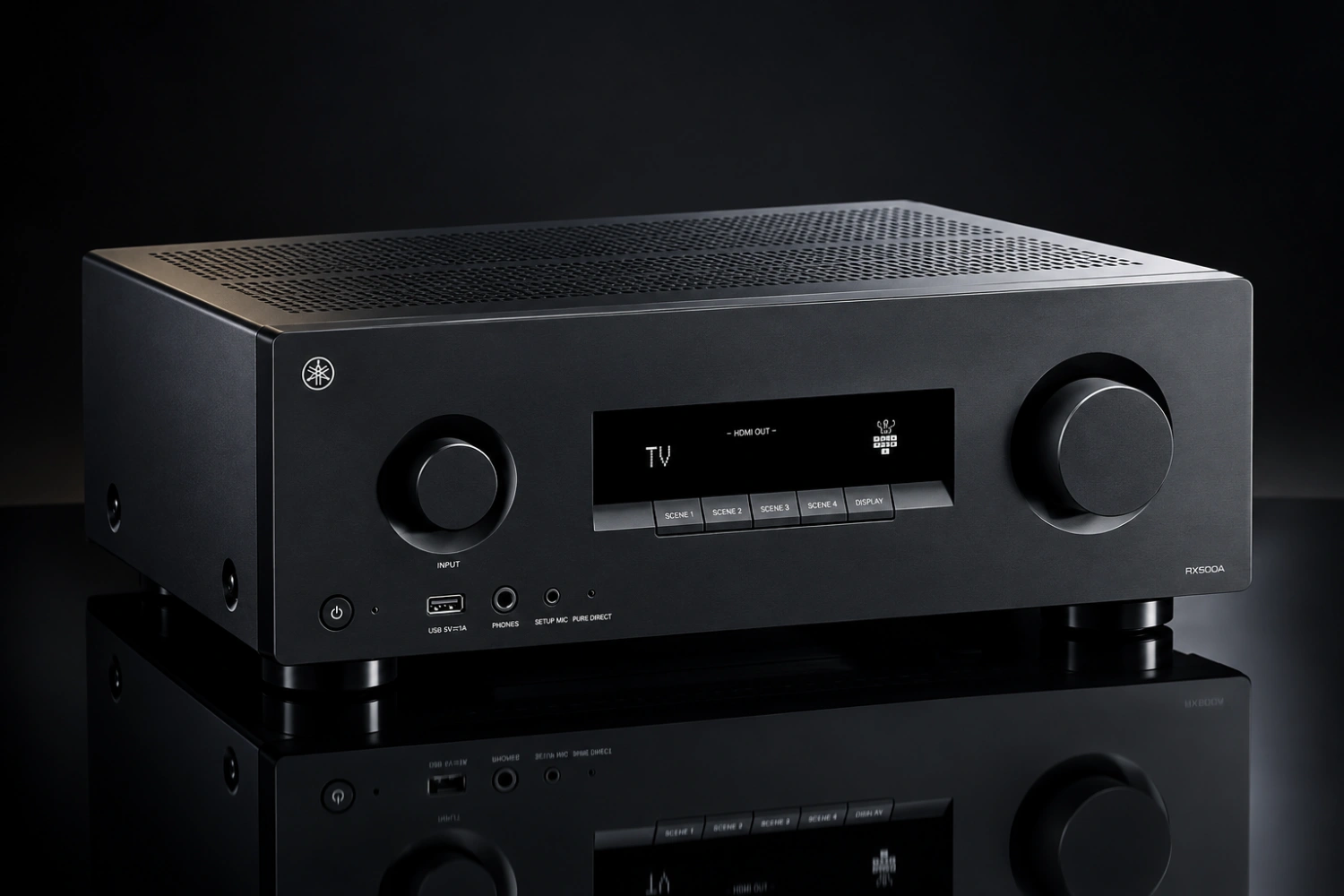
5. Yamaha RX500A
Yamaha RX500A AV receiver for 7.2 or 5.2.2 speaker configurations.
The supplied Yamaha source covers both the RX300A and RX500A; this position ranks the more capable RX500A rather than treating the two receivers as one product.
The RX500A adds two amplifier channels over the RX300A and can operate either a conventional 7.2 layout or a 5.2.2 system with two ceiling-mounted or upward-firing height speakers.
It supports Dolby Atmos, DTS:X and DTS Virtual:X. The RX500A also includes automated room correction, 8K video support and integrated network streaming. By comparison, the RX300A is limited to 5.2 or 3.2.2 arrangements and is better understood as the compact entry point within the same range. The lack of more detailed RX500A-specific amplification and connectivity information in the source prevents it from ranking above the more fully documented Denon models.
Best for: Yamaha-based 7.2 or 5.2.2 home theaters
- Supports 7.2 or 5.2.2 speaker layouts
- Dolby Atmos, DTS:X and DTS Virtual:X processing
- Automated room correction
- Integrated network streaming
Verdict: The RX500A is the stronger model in Yamaha’s two-receiver range and offers the channel flexibility needed for a practical height-speaker system.
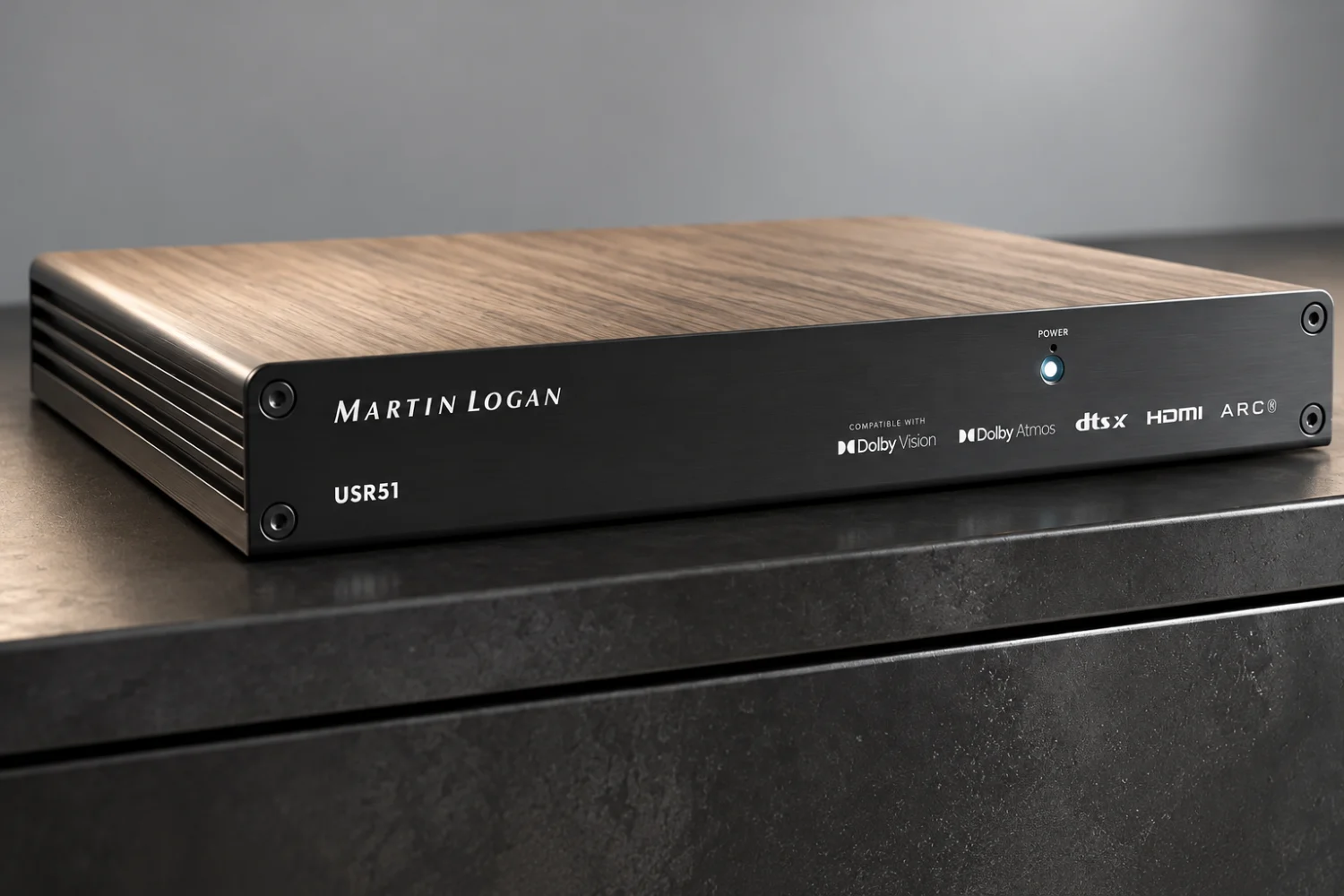
6. MartinLogan USR51
MartinLogan USR51 compact 5.1-channel receiver designed for concealed installation.
The MartinLogan USR51 takes an installation-led approach that none of the conventional receivers above attempts.
Its compact enclosure is designed to fit behind a television, inside a wall recess or within shallow furniture, allowing the electronics to remain visually unobtrusive.
Five channels of Class D amplification make it a complete receiver rather than a passive installation accessory. Format and video support includes Dolby Atmos, DTS:X and Dolby Vision, while Anthem ARC Genesis provides room correction. Its five-channel architecture limits speaker-layout flexibility compared with the seven- and nine-channel receivers ranked higher, but that is secondary in rooms where concealment and minimal physical depth are the defining requirements.
Best for: Discreet 5.1 installations with hidden electronics
- Compact chassis designed for concealed installation
- Five channels of Class D amplification
- Anthem ARC Genesis room correction
- Dolby Atmos, DTS:X and Dolby Vision support
Verdict: The USR51 is the specialist choice for a concealed surround installation, trading channel expansion for compactness and architectural integration.

7. Sony STR-DN1080
Sony STR-DN1080 AV receiver with 5.1.2-channel playback and Chromecast.
The Sony STR-DN1080 remains the most conventional all-round receiver in the lower half of the ranking.
It can be configured as either a 5.1.2 Dolby Atmos system or a traditional 7.1 arrangement, with DTS:X also supported.
Six HDMI inputs and two HDMI outputs provide more source and display flexibility than a basic receiver, including the ability described by the source to distribute 4K video and surround sound to two areas. Streaming support is a notable strength, with Chromecast, UPnP and Spotify Connect joined by Wi-Fi, Ethernet and Bluetooth connectivity. It ranks below the newer-format models because the supplied material establishes 4K rather than 8K video handling and describes a comparatively modest set of non-HDMI connections. It is nevertheless a genuine AV receiver with a useful mixture of immersive sound and network playback.
Best for: 4K home theaters needing flexible network streaming
- Supports 5.1.2 or 7.1 speaker configurations
- Dolby Atmos and DTS:X decoding
- Six HDMI inputs and two HDMI outputs
- Chromecast, UPnP and Spotify Connect
Verdict: The STR-DN1080 is a capable 5.1.2 or 7.1 receiver whose strongest advantages are HDMI capacity and broad streaming support.

8. Marantz AV7706
Marantz AV7706 AV processor for use with external multichannel power amplification.
The Marantz AV7706 is an AV processor rather than an AV receiver because it has no built-in power amplifiers.
It therefore requires separate amplification for every passive speaker, adding cost and system complexity but allowing owners to choose amplifiers appropriate to their speakers and channel requirements.
Balanced and unbalanced line outputs are provided, with the outputs controlled through a dedicated HDAM circuit. Its home-cinema credentials are otherwise substantial. HDMI 2.1 support includes 8K at 60 Hz and 4K at 120 Hz, alongside eARC, ALLM, VRR, QMS and QFT. The source also identifies 32-bit AKM AK4458 conversion on each channel and network or USB playback of high-resolution formats including DSD. It is potentially attractive for a separates-based theater, but it cannot be recommended as a direct receiver substitute.
Best for: Separates-based theaters that already use external power amplifiers
- Balanced and unbalanced line-level outputs
- 8K 60 Hz and 4K 120 Hz HDMI support
- eARC, VRR, ALLM, QMS and QFT compatibility
- 32-bit DACs with high-resolution and DSD playback
Verdict: The AV7706 is a capable surround processor, but its lack of built-in amplification places it outside the true AV receiver category.

9. Yamaha TSX-N237D MusicCast 200
Yamaha TSX-N237D MusicCast 200 desktop audio system with CD and wireless playback.
The Yamaha TSX-N237D MusicCast 200 is a self-contained desktop audio system, not an AV receiver.
Its appeal lies in combining Wi-Fi, MusicCast, AirPlay, Bluetooth, USB, CD playback and digital radio within a compact product.
Wireless smartphone charging adds further convenience for a bedside, office or secondary-room installation. MusicCast allows the system to participate in a wider Yamaha multiroom network that can also contain compatible receivers, soundbars and wireless speakers. That makes the TSX-N237D a possible companion to a Yamaha home-cinema system, but the source does not establish multichannel amplification, surround decoding or home-theater video switching. It consequently belongs near the bottom of an AV receiver ranking.
Best for: A compact MusicCast music system in a secondary room
- Wi-Fi, AirPlay and Bluetooth connectivity
- MusicCast multiroom integration
- Built-in CD and digital radio playback
- Wireless smartphone charging
Verdict: The TSX-N237D is a versatile desktop music system and MusicCast companion, but it is not a substitute for an AV receiver.

10. TEAC TN-3B
TEAC TN-3B belt-drive turntable with built-in phono stage and S-shaped tonearm.
The TEAC TN-3B is a belt-drive turntable rather than an AV receiver or complete audio system.
It uses an aluminum platter, a statically balanced S-shaped tonearm developed with SAEC and a preinstalled Sumiko Oyster moving-magnet cartridge.
Electronic selection between 33 and 45 rpm adds operational convenience. A built-in phono stage allows the TN-3B to connect to a receiver’s ordinary line-level input, making it relevant as an analog source for an AV system whose receiver lacks a dedicated phono input. Its standard removable headshell also permits future cartridge replacement. Those are useful source-component qualities, but the turntable provides none of the amplification, surround processing or video control expected from the category, so it ranks last.
Best for: Adding vinyl playback to a receiver through a line-level input
- Built-in phono stage for line-level connection
- SAEC-developed S-shaped tonearm
- Preinstalled Sumiko Oyster MM cartridge
- Electronic 33 and 45 rpm speed selection
Verdict: The TN-3B is a well-equipped vinyl source for an AV system, but it performs none of an AV receiver’s central functions.


Sound Off
0Join the discussion if you have something to add.