
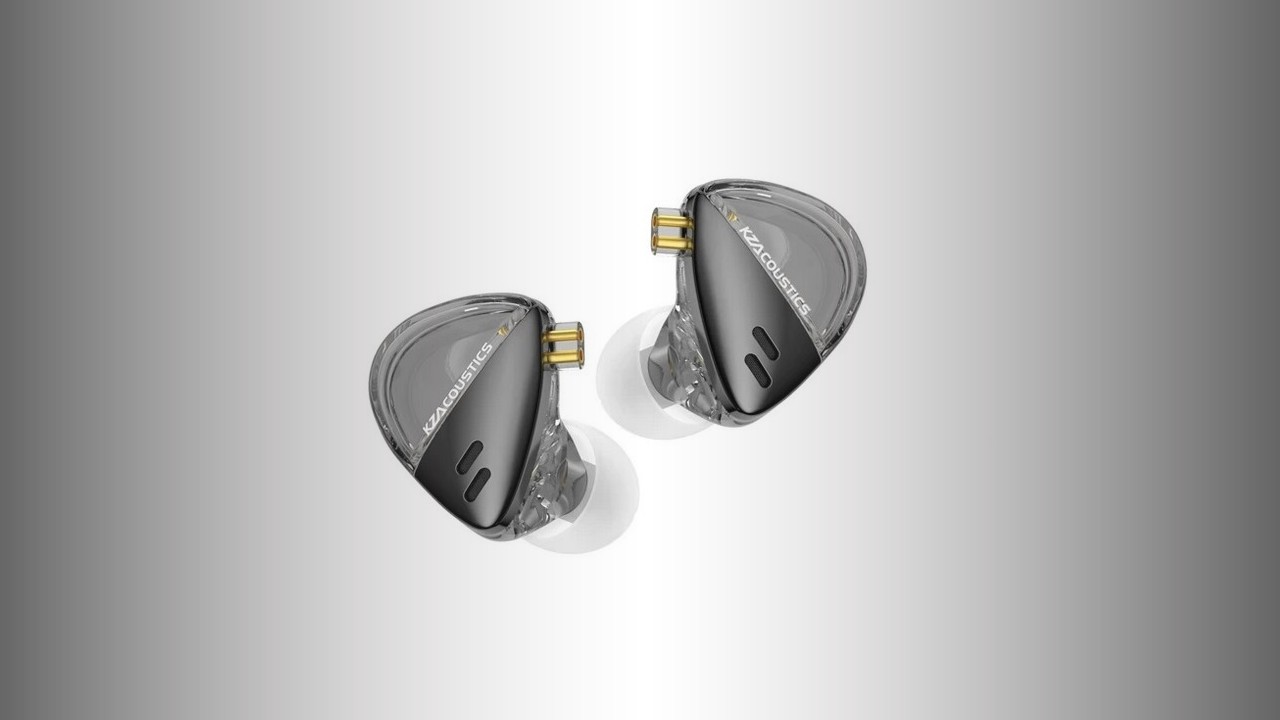
The KZ X Angelears Libra takes a deliberately uncomplicated approach to affordable personal audio. Created as a collaboration between KZ and Angelears, it uses a single dynamic-driver configuration rather than a more elaborate multi-driver arrangement. Its stated 25-ohm impedance and 108 dB sensitivity are intended to make it practical with a broad selection of everyday audio sources, while interchangeable ear pads provide a degree of fit customization. At approximately $15, the Libra is positioned as an accessible wired model with an emphasis on linearity, clear presentation, useful accessories, and visual personality.
A focused single-driver design
The Libra’s defining technical choice is its single dynamic driver. In a market where the number of drivers is often treated as a headline specification, KZ and Angelears have instead adopted a simpler architecture. One driver is responsible for reproducing the full stated frequency range, avoiding the need to divide the signal among multiple transducers.
That simplicity can be attractive to buyers who are less interested in technical complexity than in a coherent, straightforward design. Multi-driver systems can offer their own advantages, but they also require careful integration between drivers. A single-driver configuration removes crossover behavior between separate transducers from the equation and gives the Libra a clear product identity.
Linearity is central to the model’s stated tuning concept. The Libra is presented as delivering a clear and balanced sound rather than pursuing an overtly specialized signature. That positioning makes sense for an affordable earphone likely to be used across mixed playlists, video, podcasts, and other everyday material. It does not establish how the product will suit every listener, but it communicates an intention to prioritize broad usability over an exaggerated or narrowly targeted presentation.
Specifications suited to everyday sources
With an impedance of 25 ohms and a stated sensitivity of 108 dB, the Libra is designed to work with a wide range of audio sources. Those figures are relevant because affordable wired headphones are often paired with ordinary portable devices, USB audio adapters, laptops, or compact players rather than dedicated high-power headphone amplifiers.
The electrical specifications suggest that unusual amplification should not be a basic requirement. This lowers the practical barrier to using the Libra in a simple system: owners can concentrate on having a compatible headphone connection rather than building a specialized desktop chain around it. Actual volume capability will still depend on the source, recording level, and listening habits, but the documented impedance and sensitivity support the Libra’s role as an accessible everyday model.
Its quoted frequency response extends from 20 Hz to 40 kHz. As with any manufacturer-provided frequency specification, this range should not be interpreted by itself as a complete description of tonal balance or audible performance. It does, however, show that the driver is specified to cover the conventional audible band and extend beyond it at the upper end. The more meaningful product idea remains the use of one dynamic driver across that range.

A practical cable with a portable length
The included cable measures 120 cm, a length that is well suited to typical personal listening arrangements. It should provide enough reach for a source carried in a pocket or bag without introducing the amount of excess cable associated with some home-focused headphones. It can also accommodate common desk use when the connected device is positioned nearby.
KZ and Angelears specify a silver-coated cable, with the coating intended to minimize signal loss. The presence of an upgraded conductor treatment is notable at the Libra’s approximately $15 price, although cable construction alone should not be taken as proof of a particular audible result. Its more concrete value is that the cable has been treated as part of the overall design rather than as an entirely incidental accessory.
The wired format also keeps operation direct. There is no charging routine to manage when using the Libra with a compatible source, and its core functionality does not depend on an app or software platform. For listeners who value a simple physical connection, that straightforwardness is part of the appeal.
Constellation-inspired visual identity
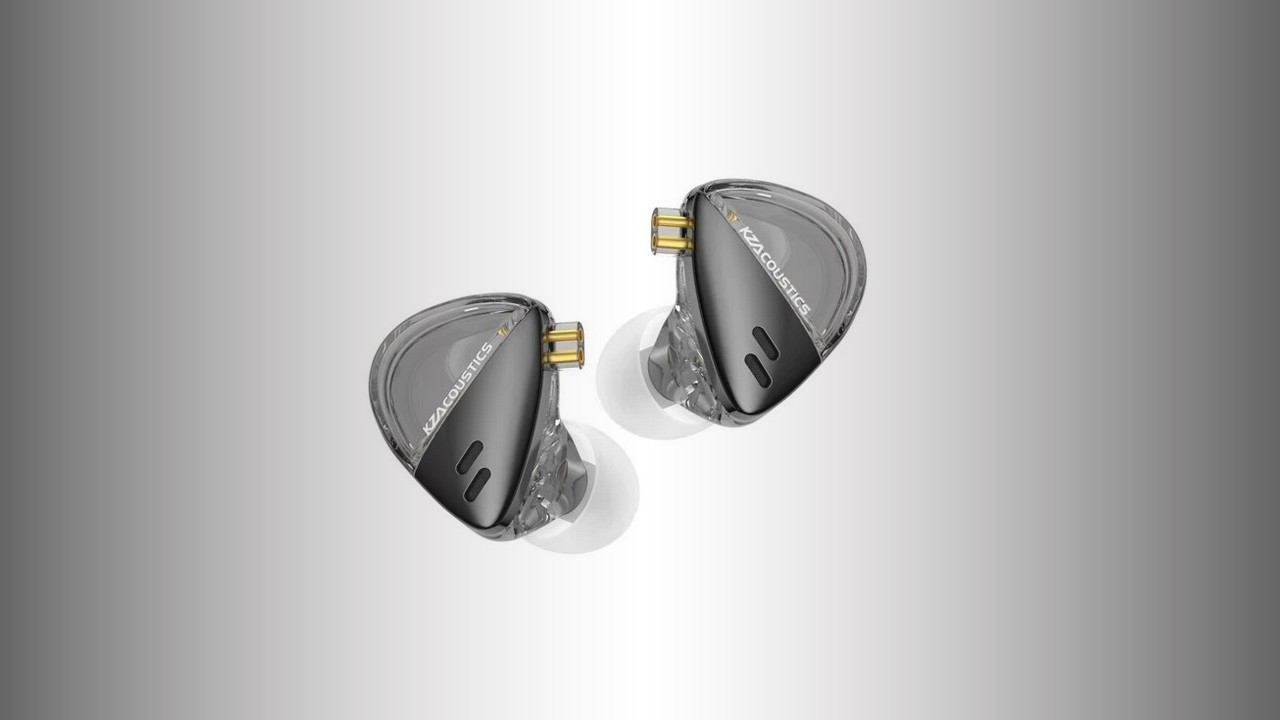
Affordability does not require anonymous styling, and the Libra distinguishes itself with an eye-catching constellation-inspired design. That visual theme gives the collaboration a recognizable character without changing the underlying simplicity of the single-driver concept.
This matters in a category filled with products that can appear technically similar on paper. A distinctive exterior allows the Libra to function as a more personal object, particularly for buyers who consider appearance alongside specifications. The design also fits the collaboration’s presentation, which includes specially styled promotional packaging developed with Angelears.
Packaging does not affect audio performance, but thoughtful presentation can make an inexpensive product feel more considered. It may be especially relevant when the Libra is purchased as a small gift or as an introductory wired headphone for someone beginning to explore personal audio.
Fit customization included in the package
The accessory package includes interchangeable ear pads, giving owners options for adjusting the fit to their preferences. This is a useful inclusion because the interface between a headphone and the ear can affect both wearing comfort and sound isolation. Providing alternatives in the box reduces the need to search immediately for third-party accessories.
Fit remains individual, and no included selection can guarantee equal comfort or isolation for every person. Nevertheless, the ability to try different supplied options is more useful than a fixed, one-size arrangement. A secure and comfortable fit is particularly important for portable use, where movement and external noise can make poor positioning more noticeable.
The accessories reinforce the Libra’s emphasis on usability. Instead of relying solely on its low price or decorative theme, the package addresses a practical part of ownership that can influence how often the headphones are used.

Who the KZ X Angelears Libra is for
The Libra is most suitable for listeners seeking a low-cost, wired headphone with uncomplicated source requirements. Its 25-ohm impedance, 108 dB sensitivity, portable cable length, and single-driver construction make it a logical candidate for everyday systems built around readily available audio devices.
It may also appeal to buyers who prefer a straightforward dynamic-driver design over a more complex multi-driver specification. The balanced, linearity-oriented positioning makes the Libra relevant to general-purpose listening rather than a single narrowly defined use. Its constellation styling and coordinated packaging add interest for those who want an affordable product to have a distinct visual identity.
The model is less directly aimed at listeners whose priorities center on wireless operation, advanced electronics, or a highly elaborate driver architecture. Likewise, anyone with demanding fit requirements should regard the included interchangeable pads as useful options rather than a guarantee. Within its intended role, the Libra’s attraction lies in combining accessible specifications, customization, and recognizable styling at approximately $15.
Conclusion
The KZ X Angelears Libra is built around a coherent set of documented choices: one dynamic driver, a stated emphasis on linearity, 25-ohm impedance, 108 dB sensitivity, a 20 Hz to 40 kHz quoted response, and a 120 cm silver-coated cable. Interchangeable ear pads add practical fit flexibility, while the constellation-inspired exterior and collaborative packaging give the model more visual character than its modest price might suggest. It is best suited to prospective owners who want an affordable, easy-to-integrate wired headphone for everyday sources and who value simple engineering over unnecessary complexity.


Sound Off
0Join the discussion if you have something to add.