
The speaker category extends well beyond conventional stereo pairs.
This Stereoindex Picks selection includes complete passive-speaker families, floorstanders, a subwoofer, soundbars and portable wireless models.
Because these products solve different problems, the order should not be interpreted as a direct sound-quality league table. Value also needs careful treatment. Several sources are launch announcements built around manufacturer claims, while the Yamaha YST-SW315 article includes a more explicit performance assessment. Prices, measurements and listening impressions are not consistently available, so recommendations are based on documented features, system flexibility and clearly stated use cases rather than unsupported comparisons. Start by deciding what the speaker must do. A dedicated stereo system, television setup, outdoor gathering and design-focused listening room require very different products. Room size, placement, available inputs, weather resistance and physical controls are likely to matter more than the longest specification list.
1. Radiotehnika Vita speaker systems
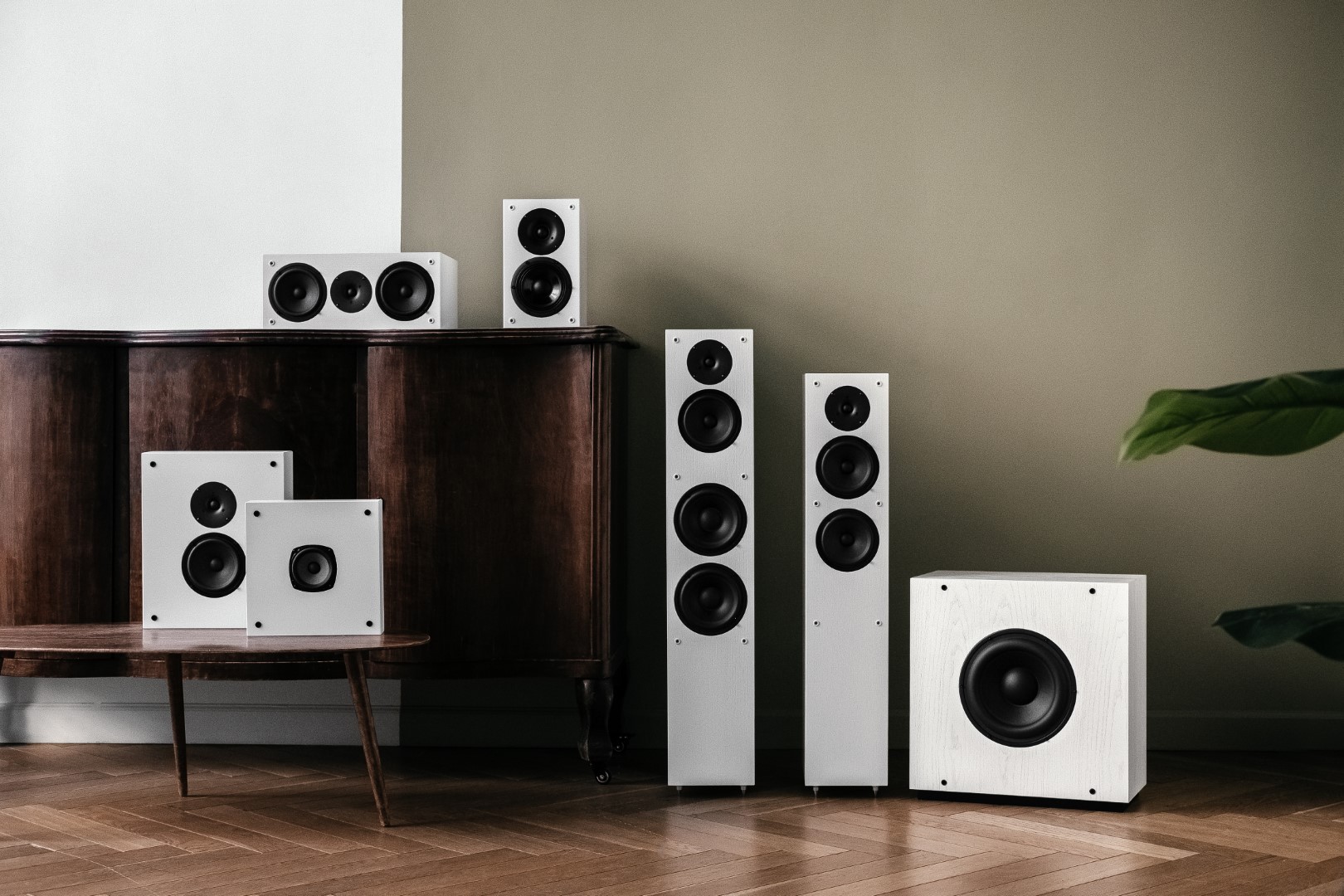
The Radiotehnika Vita family includes floorstanding, bookshelf, wall-mounted, center-channel and subwoofer options.
Radiotehnika’s Vita range is a broad system-building option rather than a single loudspeaker.
It includes two floorstanders, a bookshelf model, two wall-mounted speakers, a center channel and an active subwoofer, allowing a visually consistent stereo or home-theater installation.
Natural-veneer finishes support domestic integration, while most models use a 22 mm coated silk-dome tweeter and 146 mm midrange/bass drivers with Balanced Magnetic Field technology. Radiotehnika recommends the Vita 2.06 for rooms up to 40 square metres, the 2.05 for rooms up to 30 square metres and the 2.04 for smaller spaces.
Best for: Building a coordinated stereo or home-theater speaker system
- Complete stereo and home-theater range
- Natural-veneer cabinet finishes
- Room-size guidance for the main models
- Balanced Magnetic Field midrange/bass drivers
Verdict: The Vita range is the practical choice for listeners who want several speaker formats with consistent styling and shared engineering.

2. Yamaha YST-SW315
The Yamaha YST-SW315 places its controls on the front and uses a downward-facing 25 cm driver with four-way dispersion.
The Yamaha YST-SW315 is one of the more thoroughly assessed products in the source material.
Its 25 cm driver fires toward an acoustic reflector that distributes pressure in four directions, while Advanced Yamaha Servo Technology uses feedback to control driver movement.
Front-mounted controls improve everyday access, and the BASS function provides separate response settings for music and deep cinematic effects. The source praises its dynamics at both ends of the bass range and reports minimal vibration and well-suppressed cabinet coloration. A slight port-like exhalation was occasionally noticed on pure low-frequency tones, providing a useful qualification.
Best for: Adding controlled bass to both music and movie systems
- Accessible front-mounted controls
- Separate music and cinema bass modes
- Strong dynamics across the bass range
- Low reported cabinet resonance
Verdict: The YST-SW315 combines convenient adjustment with convincing bass performance, although the reported port noise on isolated low tones is worth noting.
3. Sony Bravia Theater Bar 8 and Bar 9
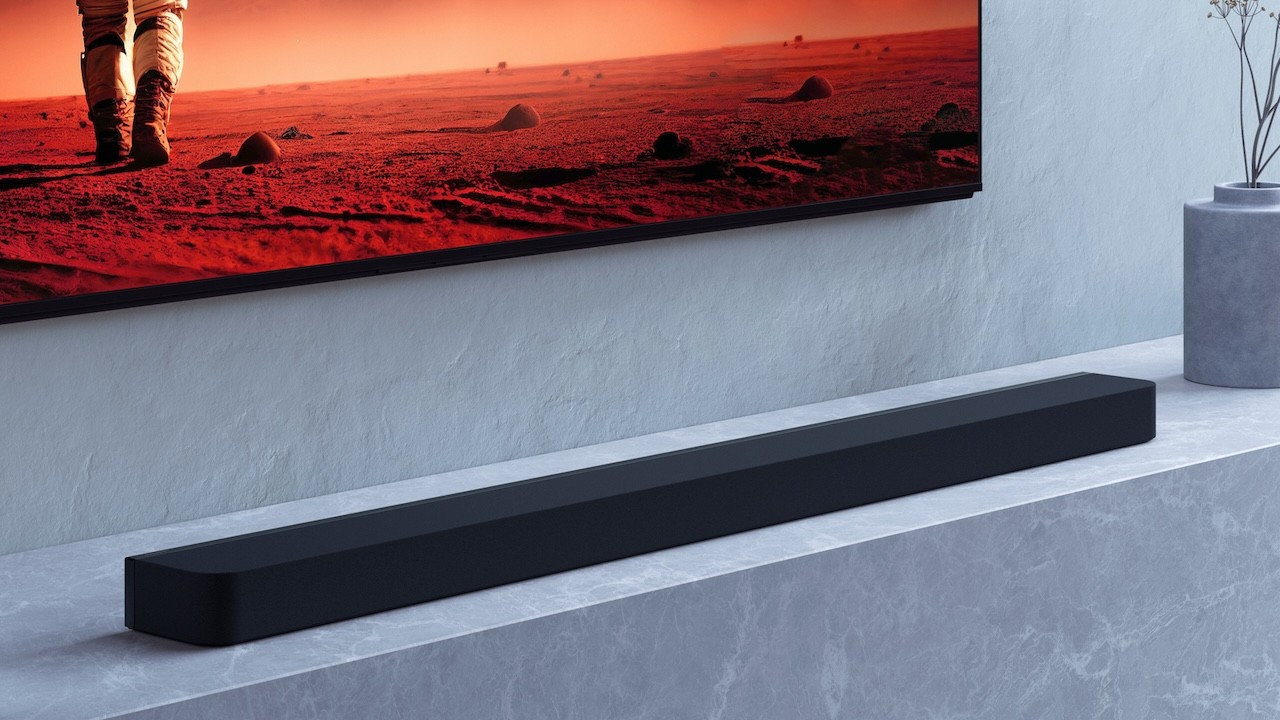
Sony’s Bravia Theater Bar 8 and Bar 9 use multi-driver layouts and 360 Spatial Sound Mapping for television sound.
Sony’s Bravia Theater launch is an ecosystem recommendation for television-centered systems.
The Bar 8 and Bar 9 support Dolby Atmos and are designed to work alongside compatible Bravia televisions, matching surround speakers and other Bravia audio products.
Sony says its 360 Spatial Sound Mapping creates phantom speaker positions above and beside the soundbar, adapting the presentation to the listening environment without requiring rear speakers. The Bar 9 contains thirteen drivers, while the Bar 8 uses eleven. These details make the two models easy to separate by hardware, although the supplied material does not provide comparative listening results.
Best for: A Bravia-centered home-cinema system with minimal speaker clutter
- Dolby Atmos support
- Room-adapted 360 Spatial Sound Mapping
- Eleven-driver and thirteen-driver options
- Matching surround products available
Verdict: The Bar 8 and Bar 9 are logical candidates for integrated Sony television systems, but their spatial performance is described through manufacturer claims rather than independent testing.

4. Bausound Model 101
The Bausound Model 101 arranges four aluminum-cone midwoofers around a central tweeter on angled front panels.
The Bausound Model 101 treats industrial design and sound dispersion as parts of the same brief.
This two-way bass-reflex speaker places a 26 mm aluminum tweeter between four aligned 15 cm aluminum-cone midwoofers.
Its angled front panels direct sound in several directions, which the designers say helps maintain a more consistent presentation across a wider listening area. A first-order crossover is intended to support phase alignment and localization, while the high-density composite cabinet, non-parallel surfaces and internal construction address unwanted resonance. The source does not include independent listening evidence, so its broad-dispersion and timing benefits remain design-led claims.
Best for: Design-led rooms with more than one listening position
- Distinctive Bauhaus-influenced appearance
- Angled panels designed for broad dispersion
- Four-midwoofer symmetrical layout
- High-density composite cabinet
Verdict: The Model 101 offers an unusually integrated approach to aesthetics, dispersion and cabinet construction, although its sonic advantages are not independently verified here.

5. Portable Bluetooth Speakers That Still Sound Great
The Urban Box 2 example combines Bluetooth with wired input, removable-media playback, FM radio and stereo pairing.
This roundup is most useful as a feature checklist for portable Bluetooth shopping, but the available excerpt provides substantial information about only one entry: the Energy Sistem Urban Box 2.
That model accepts audio over Bluetooth or a mini-jack connection and can play files from FAT32 USB storage and microSD cards with capacities up to 64 GB.
An FM tuner supports listening without a paired source, while two Urban Box 2 speakers can be linked through True Wireless Stereo. The connectivity is well documented, but the excerpt does not provide enough information to judge the sound or usability of the entire roundup consistently.
Best for: Portable-speaker shoppers who prioritize source flexibility
- Bluetooth and wired mini-jack playback
- USB and microSD file support
- Built-in FM tuner
- True Wireless Stereo pairing
Verdict: The roundup supplies a useful connectivity example through the Urban Box 2, but the excerpt is too limited to support firm conclusions about every listed speaker.

6. Tronsmart BANG 60W
The Tronsmart BANG combines a four-driver layout with beat-synchronized lighting, app control and a built-in power bank.
The Tronsmart BANG 60W is configured for social listening, with two tweeters and two woofers providing its stereo output.
Its beat-driven LEDs respond to music, and TuneConn technology can synchronize it with up to 100 other BANG speakers.
The manufacturer specifies a battery life of up to 15 hours and includes a power-bank function for charging another device. Bluetooth 5.0, NFC connection, voice-assistant support and an app-based equalizer strengthen usability. The app includes several presets as well as custom adjustment, making the BANG more configurable than a portable speaker limited to fixed onboard modes.
Best for: Parties requiring lighting, long playback and multi-speaker expansion
- Two-tweeter and two-woofer configuration
- Claimed battery life of up to 15 hours
- App presets and custom equalization
- TuneConn multi-speaker synchronization
Verdict: The BANG is a feature-heavy portable option for social listening, particularly when synchronized playback and adjustable sound are priorities.

7. Wilson Audio Chronosonic XVX 4 Seasons
The Chronosonic XVX 4 Seasons collection applies four nature-inspired color and material treatments to Wilson Audio’s speaker.
The Chronosonic XVX 4 Seasons series is defined by presentation rather than a newly described acoustic design.
Its four treatments are Glacier Frost, Blue Orchid, Ember and Deep Forest Green, with coordinated metal finishes, cables, wood details and crossover housings.
The exclusive package includes a small 3D-printed Chronosonic XVX model, special-edition instructions, three stands, WilsonGloss accessories and a Wilson Way history book. No changed driver technology, measurements or listening results are cited for these editions, so the source-backed reasons to choose one are the finish, coordinated details and collector-oriented packaging.
Best for: Chronosonic XVX buyers prioritizing finish and presentation
- Four highly differentiated finish schemes
- Coordinated cable and hardware colors
- Collector-focused accessory package
Verdict: The 4 Seasons series is a design-led special edition whose documented appeal is exclusivity rather than a demonstrated change in sound.

8. Marshall Heston 120
The Marshall Heston 120 pairs an eleven-driver Dolby Atmos layout with amplifier-style copper-colored controls.
Marshall’s Heston 120 brings the brand’s amplifier-inspired styling to a 5.1.2-channel Dolby Atmos soundbar.
It contains eleven drivers, each powered by a separate Class D amplifier, and is intended to produce a wide presentation beneath a television.
Marshall also emphasizes music reproduction rather than tuning solely for bass-heavy film effects. Physical copper-colored controls provide direct adjustment of volume, bass and treble, while another control switches listening modes. That tactile interface is a meaningful usability advantage for listeners who do not want every adjustment hidden in software, although the source offers no listening results to confirm the stated tuning goals.
Best for: A single television soundbar shared between films and music
- 5.1.2-channel Dolby Atmos configuration
- Eleven separately amplified drivers
- Physical volume, bass and treble controls
- Tuning brief includes music reproduction
Verdict: The Heston 120 stands out for its tactile controls and music-conscious design brief, though the excerpt does not independently verify its performance.

9. Audio Physic Avantera
The Audio Physic Avantera combines isolated drivers with a layered cabinet and ceramic-foam reinforcement.
The revised Audio Physic Avantera adopts several construction ideas from the company’s Cardeas model.
Its PowerTrain uses what Audio Physic calls centerless drivers, while the HHCT III+ tweeter is mechanically isolated on a separate mounting plate.
Double Surround woofers remove the conventional supporting spider, and the cabinet uses a multi-sandwich structure with a honeycomb core, elastomer layers and ceramic-foam bracing to reduce unwanted vibration. WBT Plasma Protect connectors are fitted to the high- and mid-frequency drivers. The engineering description is detailed, but no price, amplifier guidance, measurements or independent listening assessment is supplied.
Best for: Technically focused floorstanding systems emphasizing vibration control
- Mechanically isolated HHCT III+ tweeter
- Spiderless Double Surround woofers
- Multi-sandwich cabinet construction
- Ceramic-foam internal bracing
Verdict: The Avantera presents an ambitious package of driver isolation and cabinet engineering, but the available information is insufficient for a complete system-matching judgment.

10. Sven P-295
The Sven P-295 supports Bluetooth, stereo pairing, FM radio and removable-media playback in an IPX6-rated enclosure.
The Sven P-295 balances portable playback features with documented rain resistance.
It uses a 60 mm driver, a 20 W amplifier and passive radiators, with a stated frequency range of 60 Hz to 20 kHz.
Bluetooth handles phone and tablet connections, while two P-295 units can be paired for stereo playback. An IPX6 rating covers splashes and heavy rain, making the speaker more suitable for exposed use than an unprotected portable model. USB storage, microSD cards and FM radio provide offline alternatives, although the stated 3,000 mAh battery capacity is not accompanied by a playback-duration figure and pricing was not available in the source.
Best for: Portable listening in rain-prone settings with offline media support
- IPX6 water-resistance rating
- Two-speaker stereo pairing
- USB and microSD playback
- Built-in FM receiver
Verdict: The P-295 is a versatile, rain-resistant portable speaker, but its overall value cannot be judged without pricing and a stated battery runtime.


Sound Off
0Join the discussion if you have something to add.