
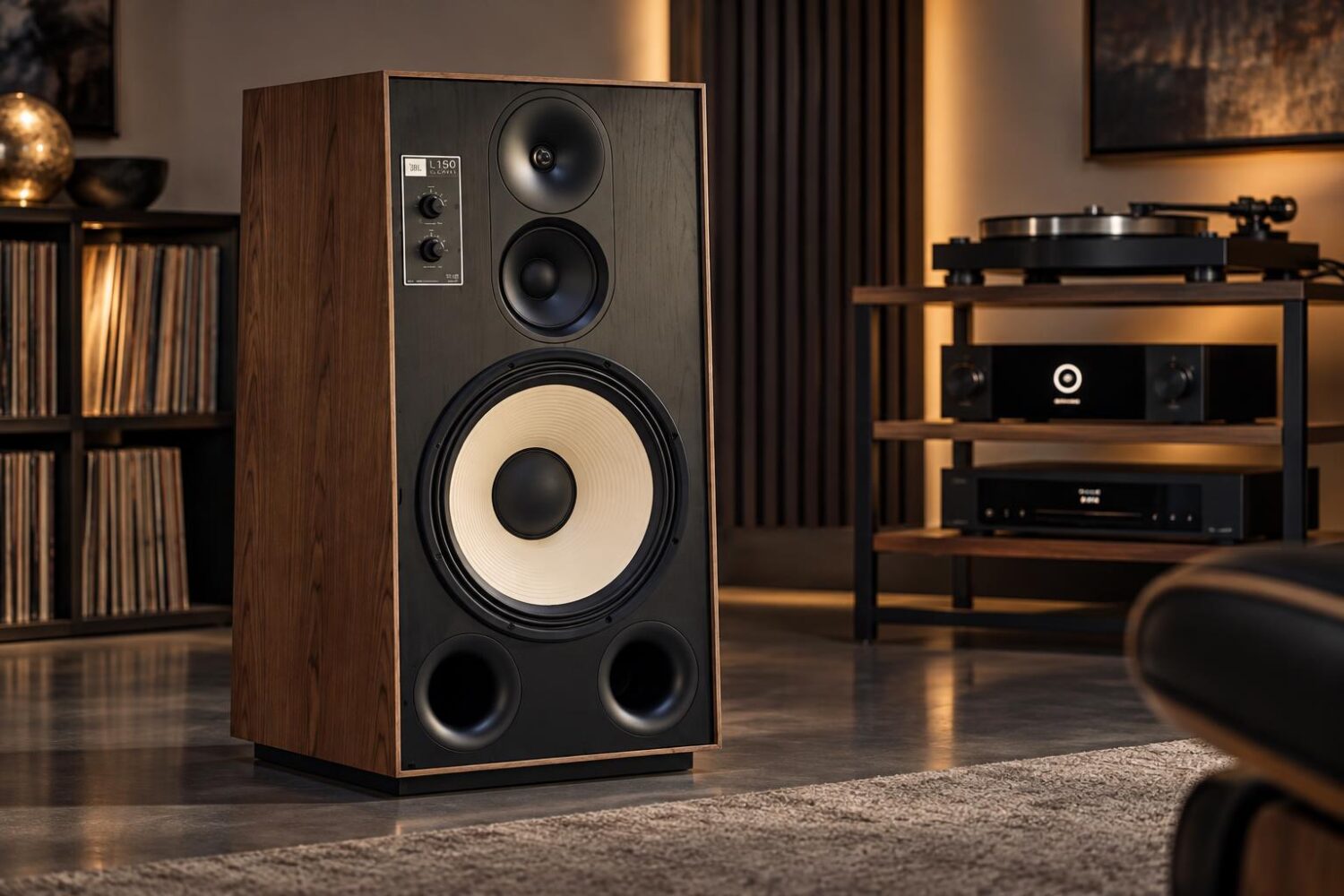
A 15-inch woofer is the defining component of JBL’s latest Classic Series floorstander, but the L150 Classic is more than an exercise in driver scale. As the range’s new flagship, it uses a modern three-way system, two front-facing bass-reflex ports and user-adjustable acoustic controls inside a cabinet shaped to direct its output toward the listener. The result is a notably large passive speaker that draws on JBL’s 1970s visual language without adopting a period-correct engineering package. Following its public debut at the 2026 Audio Video Show in Warsaw, the L150 Classic is expected to reach buyers around the end of 2026 or early 2027.
A 15-inch foundation for the three-way system
Low frequencies are assigned to a 15-inch Pure Pulp Differential Drive woofer built on a cast frame. That driver establishes both the physical scale and the engineering priorities of the L150 Classic: substantial cone area, dedicated bandwidth and a cabinet large enough to support extended bass reproduction. JBL specifies a lower frequency limit of 33 Hz with the front-panel low-frequency control in its neutral position.
Rather than asking the large woofer to cover a broad portion of the vocal and instrumental range, JBL crosses it over at 310 Hz to a dedicated 6.5-inch midrange driver. The midrange also uses a Pure Pulp cone and cast frame, with a polymer coating added to the diaphragm. Separating these duties allows the woofer to concentrate on bass while the smaller driver handles the frequencies for which its dimensions are more appropriate.
A 28 mm titanium-dome tweeter takes over at 1.8 kHz. It is coupled to both a waveguide and an acoustic lens, components intended to control how high-frequency energy is distributed into the room. The documented architecture therefore combines a large-format bass system with more tightly divided midrange and treble sections, rather than relying on the woofer size alone to define the speaker. The full stated frequency range extends to 22.5 kHz.
Cabinet geometry directs the drivers toward the seat
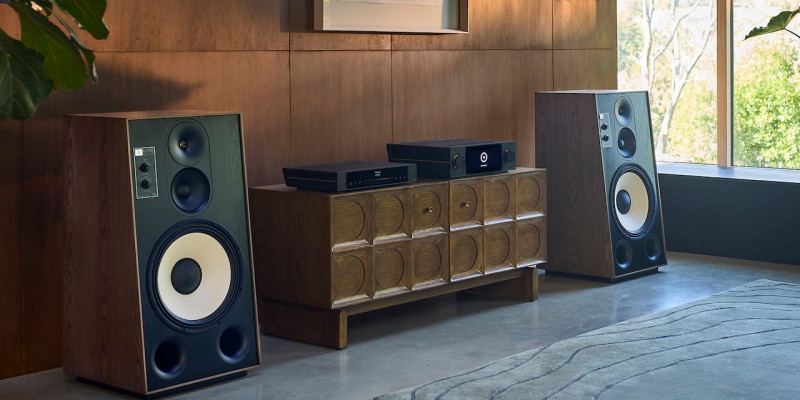
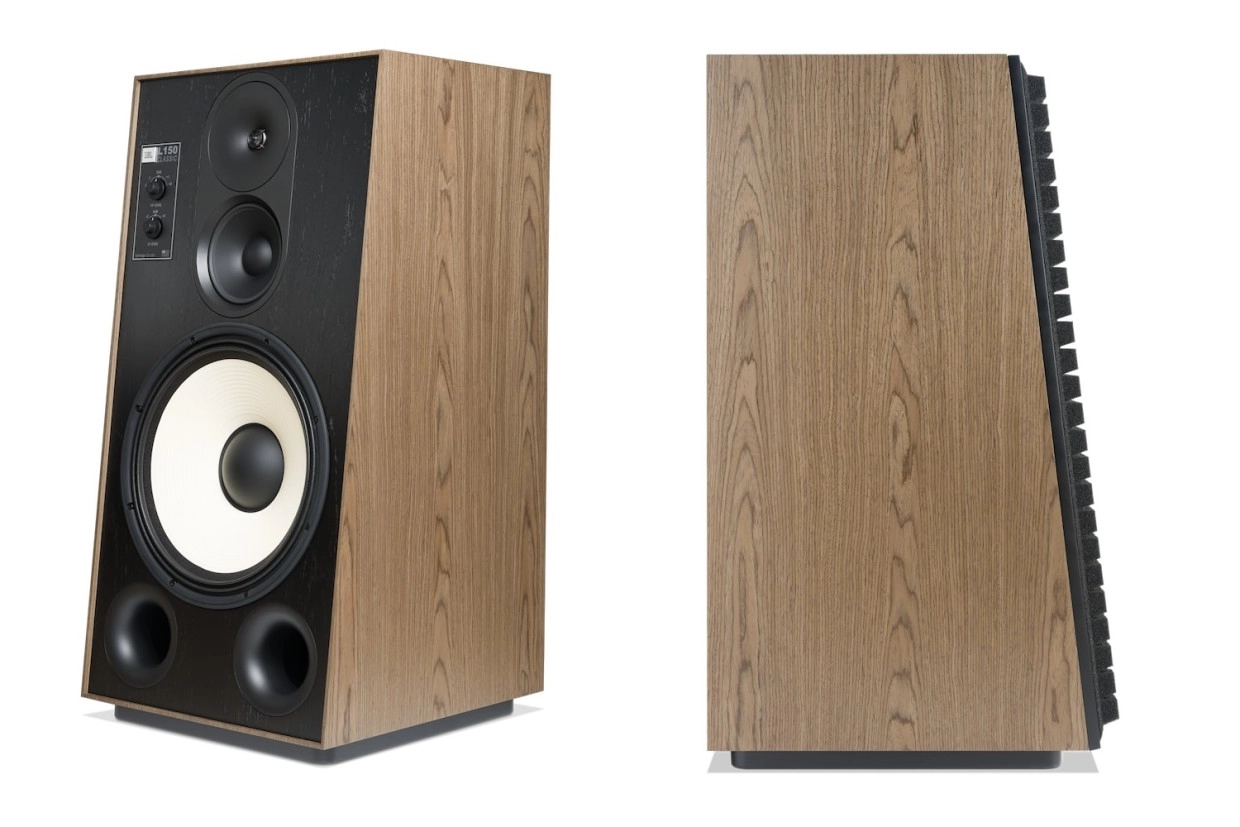
The enclosure has a sloped profile and an inclined front baffle that aims the drivers toward the listening position. This is a functional departure from treating the cabinet simply as a rectangular platform for retro styling. Driver orientation, crossover behavior and listening distance remain related parts of the design, and the angled baffle is JBL’s physical means of addressing that relationship.
Bass loading comes from two ports located on the front of the cabinet. Front venting can offer more placement flexibility than a rear-ported arrangement because the ports do not fire directly toward the wall behind the speaker, although room boundaries will still affect bass performance. The L150 Classic is not a compact design: each enclosure measures 935 mm high, 470 mm wide and 540 mm deep, and weighs 52 kg.
Those figures make installation a meaningful part of ownership. Four spikes are supplied for each speaker, while the combination of cabinet width, depth and weight suggests that positioning will require planning rather than casual experimentation. The removable grille attaches magnetically, avoiding visible mounting hardware when it is taken off.
Front-panel controls address room and taste
High- and low-frequency attenuators are mounted on the front panel, giving listeners a way to adjust the speaker’s balance without changing components elsewhere in the system. Such controls are consistent with the visual vocabulary of JBL’s Classic models, but they also serve a current practical purpose: large speakers are often placed in rooms where dimensions, furnishings and nearby surfaces influence tonal balance.
With the low-frequency adjustment set to +2 dB, JBL specifies bass extension down to 30.5 Hz rather than the 33 Hz quoted at the neutral setting. That figure should not be interpreted independently of room behavior, but it documents the available adjustment and its relationship to the stated bandwidth. The treble control provides a corresponding means of modifying high-frequency output.
The ability to tune both ends of the spectrum is particularly relevant for a speaker whose front-ported bass system and broad baffle will interact with its surroundings. The controls cannot replace careful positioning, yet they add a final adjustment stage once the cabinets have been installed. JBL has not supplied independent room-correction electronics; the L150 Classic remains a passive, manually adjusted loudspeaker.
Amplifier matching and alternate wiring options
Sensitivity is specified at 88 dB with a 2.83-volt input measured at one meter, while nominal impedance is 4 ohms. JBL recommends amplifiers rated from 25 to 250 watts RMS. These figures provide the basic framework for system matching, with the 4-ohm rating being an especially relevant consideration when choosing amplification for the large three-way design.
Two pairs of gold-plated speaker terminals support bi-wiring and bi-amping. Owners can therefore retain a conventional single-amplifier connection or separate the relevant sections of the crossover where the rest of the system permits. No active amplification or onboard digital processing is included, so source selection, volume control and power delivery remain the responsibility of external electronics.
The wide recommended power range leaves room for different amplifier configurations, but it does not remove the need to check compatibility. Prospective owners will want to consider an amplifier’s stated 4-ohm capability as well as its headline wattage, particularly if the speakers are intended for high playback levels or a large listening space.
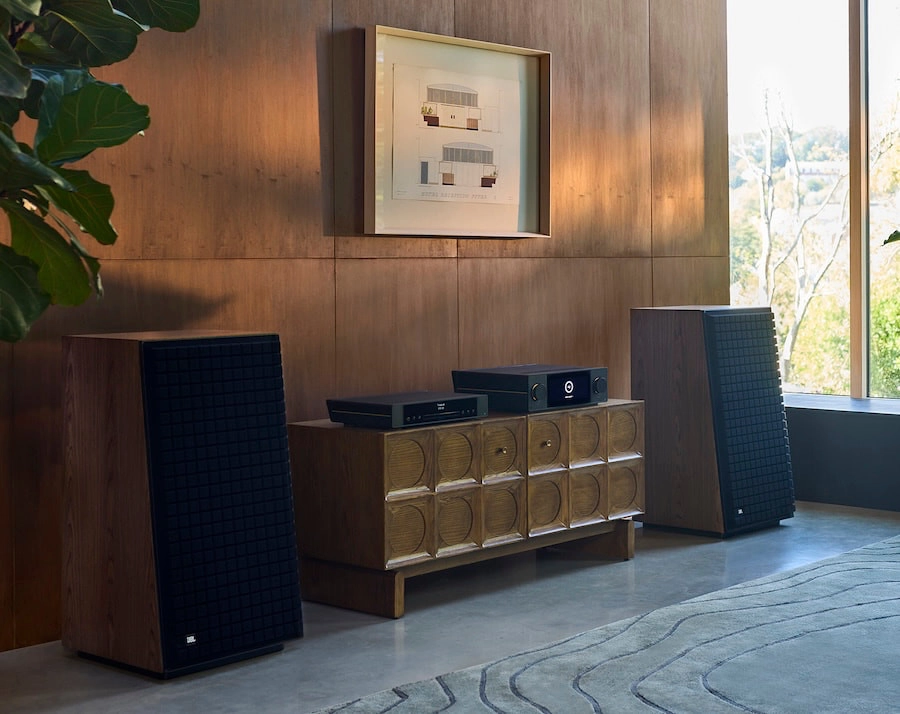
Classic-series identity at flagship scale
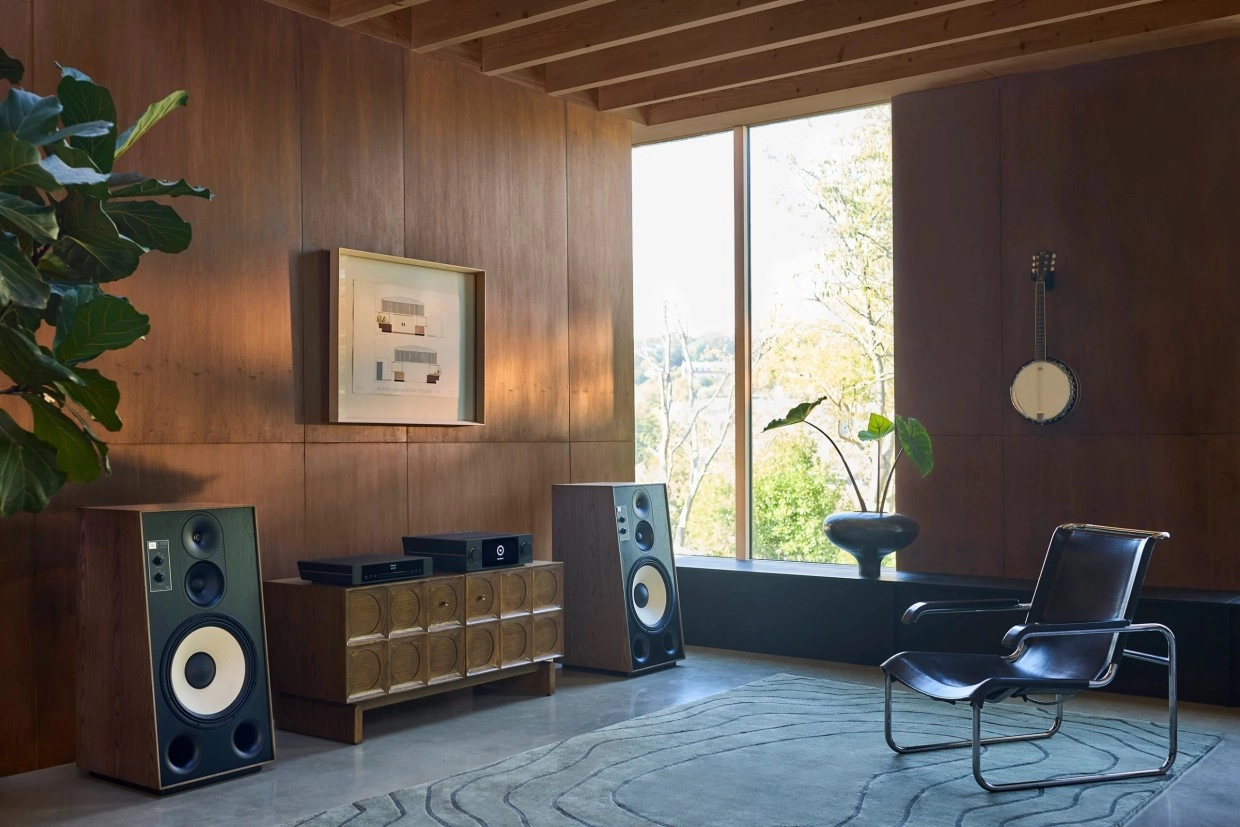
Natural walnut veneer, a black Quadrex foam grille and familiar JBL detailing establish the visual connection to the company’s 1970s loudspeakers. The styling is deliberately historical, yet the driver materials, crossover arrangement, waveguide and acoustic lens belong to the L150 Classic’s contemporary engineering brief.
That balance also clarifies the speaker’s place in the range. It is not presented as a replica of one specific vintage model; instead, it carries the broader Classic Series identity into a larger flagship floorstander. The 15-inch bass driver, substantial enclosure and three-way division distinguish its role more clearly than cosmetic changes alone would have done.
JBL showed the L150 Classic publicly at the Audio Video Show 2026 in Warsaw, held from October 23 through October 25. Retail deliveries are expected to begin near the end of 2026 or, if that timing moves, in early 2027. Pricing has not been announced.
The L150 Classic appears aimed at listeners who want the physical presence and visual character of JBL’s heritage designs but prefer a newly engineered speaker rather than restored vintage hardware. Its central choices are unusually explicit: a 15-inch woofer, a dedicated midrange, controlled high-frequency dispersion, front venting and manual tonal adjustment. What remains to be established is how the production model behaves in different rooms, how demanding its 4-ohm load proves with real amplifiers and where it will be positioned once pricing is confirmed. Installation will also matter because each cabinet is deep, wide and heavy. Until deliveries begin, the most important details to watch are final regional timing, dealer demonstration opportunities and the amplification used to present this flagship-scale three-way design.


Sound Off
0Join the discussion if you have something to add.