
Best Portable Music Players: Five Models Compared
These five portable audio products take very different approaches, from Shanling’s affordable Bluetooth DAC to iBasso’s Android player and Astell&Kern’s dedicated amplifier. Here is which one offers the best balance of sound, usability and value—and who should choose the alternatives.

The best portable music player is not necessarily the one with the most powerful specification sheet. These five products target different priorities: Shanling’s H2 is a compact DAC/amplifier with local playback, the Onix Tocata XM2 is a feature-rich DAP, the Astell&Kern PA10 is an amplifier rather than a complete player, while the Shanling M5 Ultra and iBasso DX260 are dedicated hi-fi players.
That distinction matters when choosing. A listener who wants streaming and smartphone-style flexibility may value the Onix or iBasso, while someone who wants to avoid apps and distractions may prefer the M5 Ultra. The H2 offers an unusually accessible route into balanced amplification, and the PA10 makes sense when the source and headphones already justify a separate amplifier.
Quick verdict
Best Overall: Shanling M5 Ultra. It combines a focused, stable interface with strong battery life, extensive sound customization, balanced and single-ended outputs, USB DAC functionality and a clearly described, engaging sound character. It is the most convincing all-round choice for listeners who want a dedicated player rather than a phone substitute.
- Best Value: Shanling H2 — the lowest stated price, at $169, with MicroSD playback, Bluetooth and USB DAC modes, plus balanced output.
- Best Features: Onix Tocata XM2 — the broadest connectivity package, including Wi-Fi, Tidal, DLNA, AirPlay, two-way Bluetooth 5.2 and a 3-inch touchscreen.
- Best for Android and endurance: iBasso DX260 — Android 11, a 14-hour quoted battery life and 1,015mW per channel of balanced output.
- Best add-on amplifier: Astell&Kern PA10 — for owners who already have a suitable player and need a dedicated portable amplification stage.
| Product | Product type | Best suited to | Key usability strengths | Sound or power evidence | Battery / price information |
|---|---|---|---|---|---|
| Shanling H2 | Portable DAC/amplifier and player | Value-focused listeners and smartphone users | MicroSD playback, Eddict Player library access, USB DAC, Bluetooth DAC, 1-inch display | CS43198 DAC; 680mW at 32 ohms through balanced output; low output impedance | Up to 12 hours; $169 |
| Onix Tocata XM2 | Compact digital audio player | Listeners wanting streaming and wireless flexibility | 3-inch 720p OLED touchscreen, physical controls, Wi-Fi, Tidal, DLNA, AirPlay, Bluetooth 5.2 | 800mW into 32 ohms from balanced output in high gain; PCM 768kHz/32-bit and DSD512 support | Up to 8.5 hours; release was scheduled soon in the source |
| Astell&Kern PA10 | Portable amplifier | Owners of a player who need more amplification | Power-bank form factor, mounting clamps, supplied 3.5mm interconnect | Designed to add a dedicated amplification stage to a source; the source article positions it for demanding headphones and IEMs | 7.5–12 hours claimed; 4,200mAh battery |
| Shanling M5 Ultra | Dedicated hi-fi player | Listeners who prioritise music, control and sound character | Linux-based MTouch system, physical controls, MicroSD, USB DAC, Bluetooth transmission, Wi-Fi, DLNA and AirPlay | AK4191EQ + AK4499EX DAC combination; up to 1,100mW balanced; rich, smooth and dynamic presentation | About 11 hours single-ended, 9 hours balanced; up to 32 hours as Bluetooth transmitter |
| iBasso DX260 | Android hi-res player | Listeners wanting Android and strong battery life | Android 11, physical volume wheel, MicroSD, USB-C, coaxial output and line-output capability | Eight CS43198 chips; 1,015mW per channel balanced into 32 ohms | Up to 14 hours; $949 |
Shanling H2
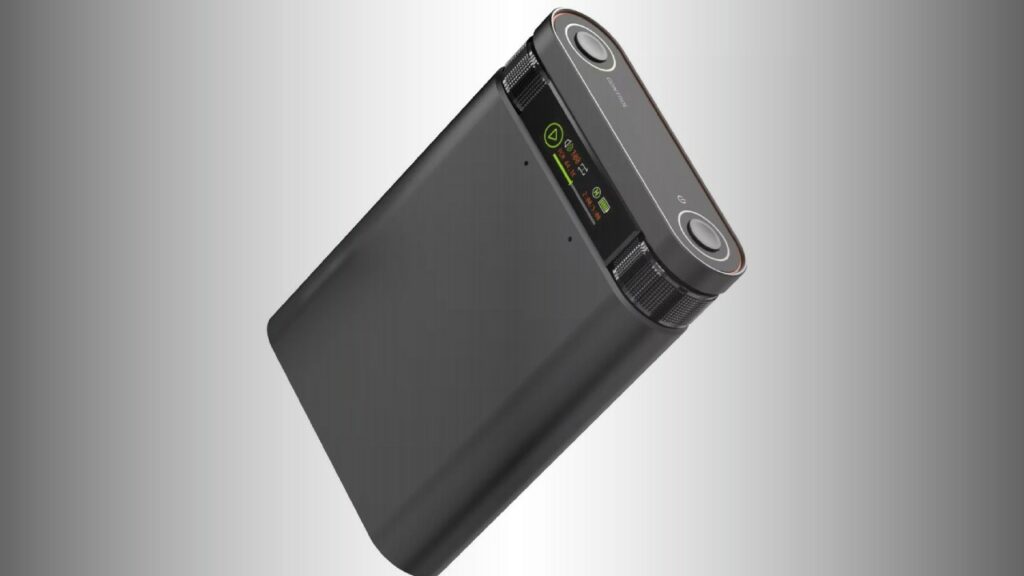
The Shanling H2 is the most straightforward value proposition here. At a stated $169, it costs substantially less than the iBasso DX260, while still offering several ways to listen: local playback from a MicroSD card, Bluetooth signal input and USB DAC operation. It can also be controlled and browsed through the Eddict Player app on a smartphone.
Its compact 185g design is clearly intended for everyday portability. The integrated volume wheel is built into the body, and the 1-inch colour display shows playback information, volume and battery status without trying to turn the device into a miniature smartphone. That limited interface may be an advantage for anyone who wants essential controls rather than a large screen.
The H2 uses a Cirrus Logic CS43198 DAC and a dedicated SG-Micro amplifier section. It has both 3.5mm single-ended and 4.4mm balanced outputs, with the balanced connection reaching up to 680mW at 32 ohms. The source also describes both outputs as having low output impedance and says the device is suitable for sensitive IEMs. Its quoted battery life is up to 12 hours.
The trade-off is scope. The H2 does not offer the large touchscreen, Android environment or built-in streaming emphasis of the Onix and iBasso. It is best understood as a compact bridge between a smartphone, a memory card and a pair of headphones. For buyers who want balanced output, Bluetooth and USB DAC use without spending flagship-player money, it is the strongest value choice.
Onix Tocata XM2
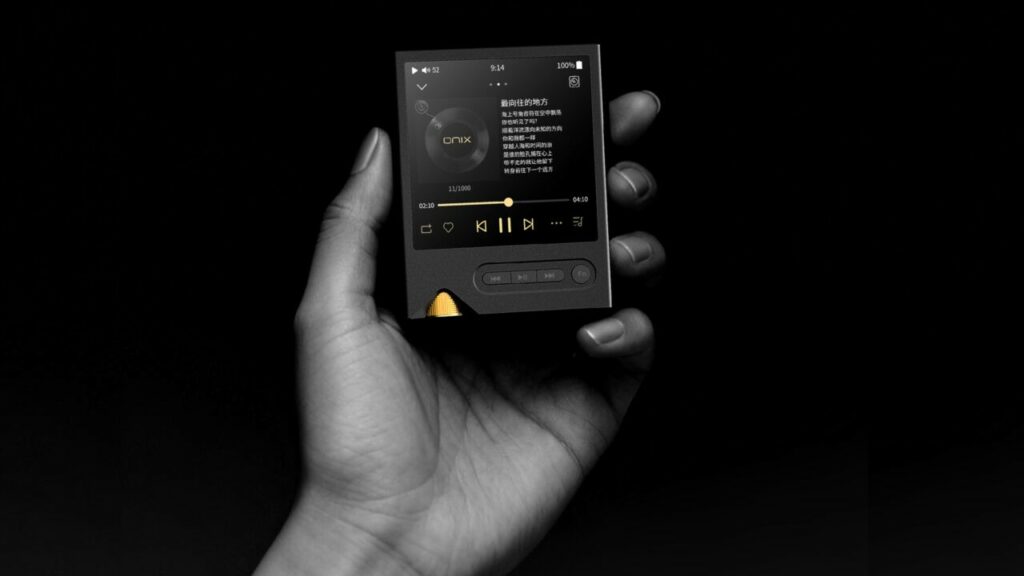
The Onix Tocata XM2 is the most feature-led product in the comparison. Its 3-inch 720p OLED touchscreen is larger and more practical for library browsing than the H2’s 1-inch display, while physical buttons and a volume knob preserve tactile control. At 140g and 82 x 65 x 18mm, it is also the lightest of the complete players listed in the source material.
Connectivity is its main reason to choose it. The XM2 includes Wi-Fi on both 2.4GHz and 5GHz bands, Tidal streaming, DLNA and AirPlay. Its two-way Bluetooth 5.2 implementation supports LDAC, aptX HD, aptX, SBC and AAC, so it can receive or transmit Bluetooth audio. It can also operate as a USB DAC and provide digital audio output over USB. Remote control is available through the Eddict Player smartphone app.
There is considerable headline specification support too: PCM up to 768kHz/32-bit and DSD512, a MicroSD slot supporting cards up to 2TB, and a balanced output rated at up to 800mW into 32 ohms in high gain. The 3.5mm output is rated at up to 204mW into 32 ohms in high gain. The source quotes up to 8.5 hours of playtime from both outputs.
Compared with the M5 Ultra, the XM2 is the better fit for someone who sees a portable player as a connected hub. Compared with the H2, it offers a much fuller interface and broader networking. But its source article describes it as scheduled for release soon, so buyers should distinguish the announced feature set from a product already established in the market. Its shorter quoted battery life also makes it less compelling for long sessions than the M5 Ultra or DX260.
Astell&Kern PA10
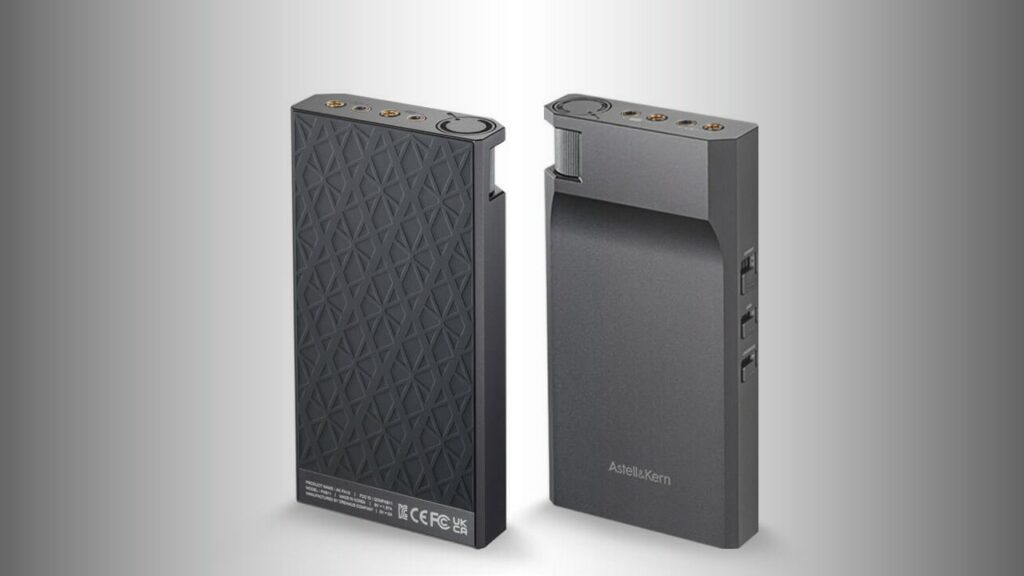
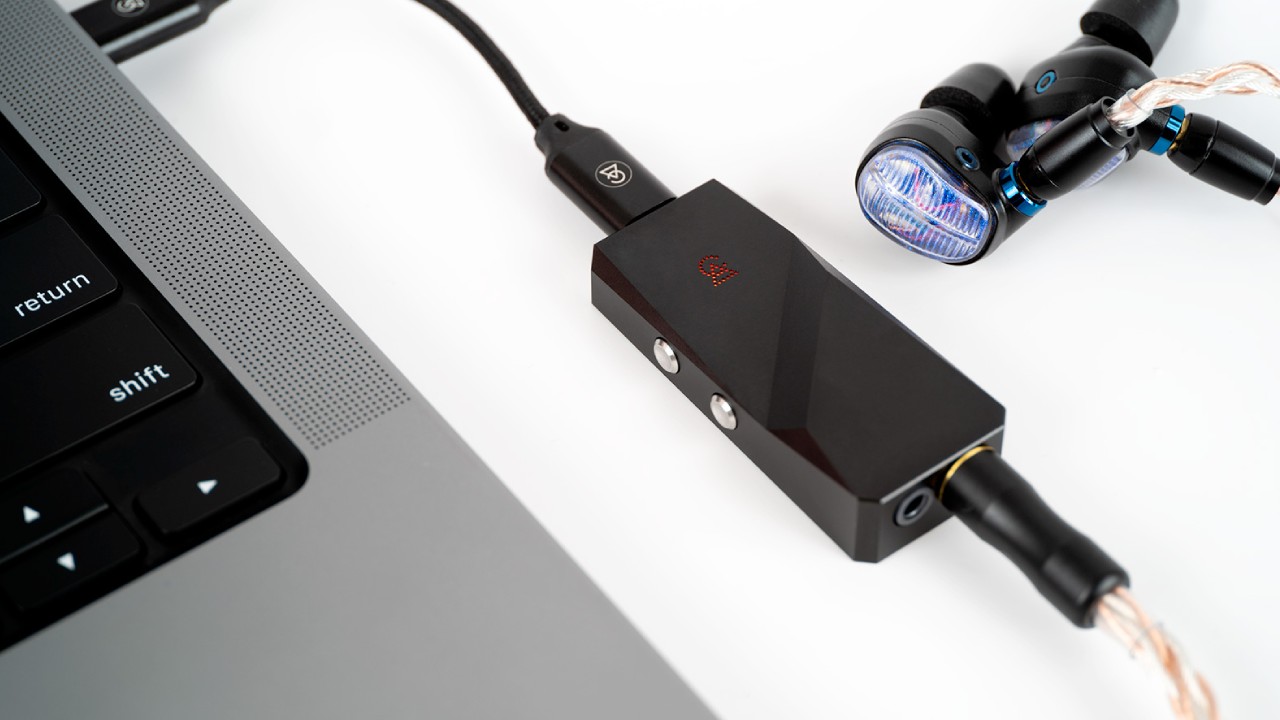
The Astell&Kern PA10 needs to be judged differently because it is not a self-contained music player. It is a portable amplifier intended to sit between an existing source and headphones. That makes it a specialist purchase, but also potentially the right one for listeners whose player already does everything they need except provide enough amplification.
The source article places the PA10 in the context of demanding in-ear and full-sized headphones. A separate amplifier can be useful when a player’s built-in output does not fully satisfy the listener’s amplification requirements, particularly with full-sized headphones or difficult IEM designs. The PA10 is therefore not a rival to the M5 Ultra or DX260 in terms of library management, streaming or standalone operation. It is an upgrade path.
Its power-bank form factor is practical for stacking with a source. The package includes two clamps for fixing it to that source, a short 3.5mm-to-3.5mm unbalanced interconnect and a USB Type-C charging cable. The aluminium chassis measures 140 x 73 x 23mm and weighs 325g. Its 4,200mAh battery takes three hours to charge with a 15-watt unit, while the manufacturer’s claimed working time is 7.5 to 12 hours.
Choose the PA10 only when the separate-amplifier format solves a real problem. If the priority is a single portable device with local playback and a screen, the H2 or M5 Ultra is more suitable. If the priority is adding amplification to a respected existing source and using demanding headphones, the PA10 is the more targeted answer.
Shanling M5 Ultra
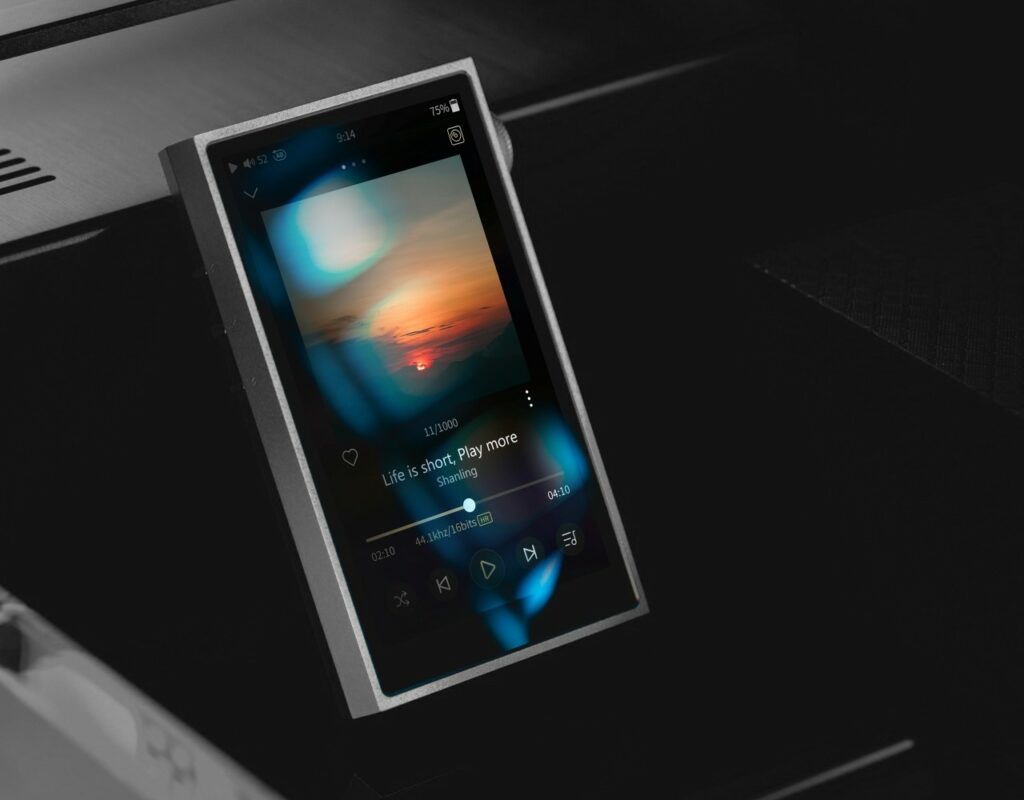
The Shanling M5 Ultra is the most coherent product for the brief because its design, software and sound all point in the same direction. It is not an Android-based general-purpose media device. Instead, it uses Shanling’s proprietary Linux-based MTouch system, with no app store, notifications or background clutter. The result is a player built around local music and direct control.
That focus does not mean it is bare-bones. The M5 Ultra supports MicroSD playback, USB DAC and amplifier operation, Bluetooth transmission with LDAC and aptX HD, Wi-Fi, DLNA, AirPlay and SyncLink smartphone control. Its physical controls are particularly useful: an illuminated volume wheel doubles as the power button, and dedicated side buttons handle track navigation and play/pause without waking the screen.
The 4.7-inch HD display is used for browsing albums, settings and playback rather than replacing a smartphone. The player also offers unusually deep tuning options, including digital filters, gain levels, DSD modes, channel balance, volume limits and a 10-band EQ. That gives it more scope for personal adjustment than the simpler H2.
Sound is the M5 Ultra’s defining advantage in the supplied evidence. Its AKM AK4191EQ and AK4499EX combination is described as dynamic, emotional and engaging, with rich timbre, smooth highs, weighty mids and authoritative bass. The source specifically reports strong results with rock, electronic, pop, jazz and blues, while also describing depth and realism with classical and ambient recordings. It also reports successful pairing with the Sennheiser HD 800S and FiiO FD5.
Battery life is competitive rather than merely adequate: around 11 hours through 3.5mm, around nine hours through 4.4mm balanced and up to 32 hours in Bluetooth transmitter mode. USB DAC use can continue while charging, which makes it practical as a desktop source too. Its main compromises are the 247g weight, noticeable but not uncomfortable warmth during long sessions, and the absence of an included case.
iBasso DX260
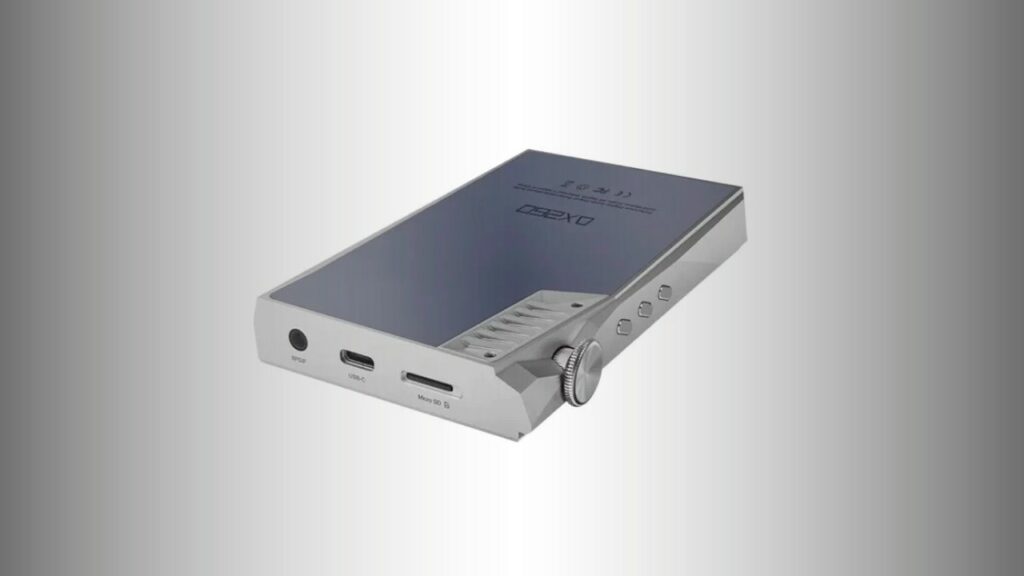
The iBasso DX260 is the most conventional high-end digital player in this group. It runs Android 11, so it is the natural choice for buyers who want a more open software platform rather than the M5 Ultra’s deliberately closed, music-only approach. It also includes a physical rotary volume wheel, MicroSD storage, USB-C and a 3.5mm coaxial digital output.
Its DAC section uses eight Cirrus Logic CS43198 chips, with iBasso’s FPGA-MASTER2.0 algorithm coordinating the clock generator and FIR filter. The balanced output is rated at 1,015mW per channel into 32 ohms, placing it among the most powerful complete players in this comparison. Both the 3.5mm and 4.4mm connections can also be used for line output.
The DX260’s quoted battery life is up to 14 hours from its 4,400mAh battery, ahead of the H2, M5 Ultra and Onix figures in the supplied material. At 229g and 17.5mm thick, it is also lighter than the M5 Ultra, though the source does not provide a detailed listening character comparable with the M5 Ultra review.
Its main drawback is value. The stated price is $949, making it a serious investment rather than an affordable entry point. It is best for the listener who specifically wants Android, high balanced output, long quoted battery life and the connection options of a higher-end player. It is less persuasive for someone who simply wants the most enjoyable and focused listening experience per dollar.
How they differ
Form factor and role: The H2 and PA10 are the most specialised. The H2 is a small DAC/amplifier with player functions, while the PA10 is an amplifier that needs a separate source. The XM2, M5 Ultra and DX260 are complete players.
Usability: The M5 Ultra is the most intentionally distraction-free. Its MTouch system removes Android’s app ecosystem but retains library browsing, wireless functions and detailed sound controls. The DX260 takes the opposite approach with Android 11. The XM2 sits between these philosophies, offering a touchscreen, Tidal and network features. The H2 keeps interaction minimal, using a small display and smartphone-assisted library access.
Connectivity: The XM2 has the broadest stated wireless feature set, with Wi-Fi, Tidal, DLNA, AirPlay and two-way Bluetooth 5.2. The M5 Ultra also supports Wi-Fi, DLNA, AirPlay and Bluetooth transmission, while the H2 focuses on Bluetooth input, USB DAC use and MicroSD playback. The DX260 adds coaxial digital output, and the PA10 is built around analogue connection to a source.
Power: The M5 Ultra is quoted at up to 1,100mW balanced, the DX260 at 1,015mW per channel, the XM2 at 800mW into 32 ohms in high gain and the H2 at 680mW at 32 ohms. These figures describe output capability, not a guarantee that one will sound better with every headphone. The PA10 should be considered when the issue is specifically the amplification available from an existing player.
Sound character: The M5 Ultra is the only product here with extensive supplied listening impressions, and those impressions describe a rich, smooth, weighty and dynamic presentation. The H2 source describes clean, rich output with no audible noise when used with sensitive IEMs. The other sources provide technical or functional information but do not supply an equivalent comparative sound description. That is why the M5 Ultra earns Best Overall and not a blanket claim that every other model sounds inferior.
Which one should you buy?
- Choose the Shanling M5 Ultra if you want one dedicated player for local music, USB DAC use and wireless playback, and you value a focused interface and an engaging, full-bodied sound. It is the best overall balance of usability, sound character and capability.
- Choose the Shanling H2 if your budget is the decisive factor, you already use a smartphone, or you want a compact way to add balanced amplification and MicroSD playback. At $169, it is the clearest value choice.
- Choose the Onix Tocata XM2 if streaming, Wi-Fi and wireless versatility matter more than maximum battery life. Its Tidal, DLNA, AirPlay and two-way Bluetooth support make it the most flexible connected option, subject to the release timing noted in its source.
- Choose the Astell&Kern PA10 if you already own a player you like and need a separate portable amplifier for demanding headphones or IEMs. It is not a replacement for a complete DAP.
- Choose the iBasso DX260 if Android, long quoted battery life, strong balanced output and digital connectivity justify its $949 price. It is the premium feature-and-power option, but not the value winner.
Final verdict
The Shanling M5 Ultra is the Best Overall because it does not chase every possible feature at the expense of purpose. It offers a stable and uncomplicated user experience, serious output, useful connectivity, long enough battery life and the clearest sound identity in the supplied material. The H2 is the smarter low-cost buy, the XM2 is the feature-rich connected alternative, the DX260 is the Android and endurance specialist, and the PA10 is the right answer only when a separate amplifier is what your system actually needs.






 VS
VS VS
VS VS
VS VS
VS VS
VS VS
VS VS
VS VS
VS
Comments 0
Share your experience, questions and perspective with other hi-fi enthusiasts.