

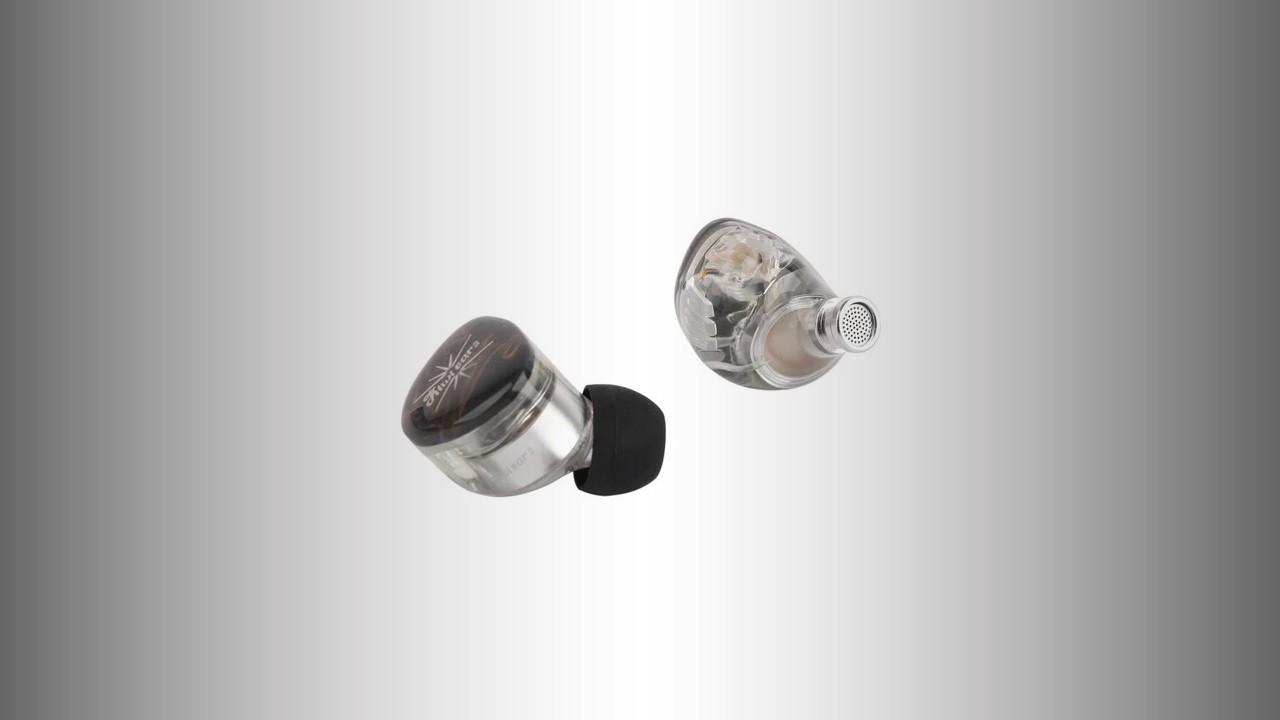
The Kiwi Ears x Crinacle Singolo is an in-ear monitor that puts one specific engineering idea at the center of its identity: controlling a single 11mm dynamic driver acoustically rather than relying on a multi-driver crossover network. Developed in collaboration with Crinacle, a widely known figure in headphone measurement and tuning discussion, the Singolo combines a straightforward driver configuration with a more complex internal airflow system called KARS, or Kiwi Acoustic Resonance System. At $79, it sits in an accessible part of the IEM market, but its appeal is not simply that it is affordable. The more interesting story is how Kiwi Ears has chosen to shape the behavior of the driver through a 3D-printed labyrinth structure designed to regulate resonance, rear pressure, and low-frequency response.
A collaboration focused on tuning discipline
The Singolo carries the names of both Kiwi Ears and Crinacle, and that partnership is central to how the product is positioned. Crinacle is known for bringing frequency-response measurement into mainstream headphone discussion through a large public database of headphone and earphone measurements. Whether a listener uses such data casually or deeply, the broader value of that approach is that it encourages more transparent conversations about tuning choices.
In the context of the Singolo, that background matters because the product is not presented as a generic single-driver earphone. It is built around a defined acoustic objective, particularly in the low frequencies. For prospective owners, the collaboration suggests a product shaped by an awareness of measurable tonal behavior rather than only by driver count, decorative materials, or broad lifestyle messaging. That does not make it a review verdict, but it does help explain why the Singolo may attract listeners who pay attention to how an IEM is tuned, not just what components it lists.
KARS is the central design feature
The most distinctive part of the Singolo is KARS, Kiwi’s Acoustic Resonance System. Rather than using a traditional electrical crossover approach, KARS is described as a discrete bandpass filter that manages airflow to the dynamic driver. Its purpose is to influence low-frequency behavior by controlling resonance and back pressure behind the diaphragm.
Kiwi Ears describes the system as a labyrinth of tubes designed around Helmholtz resonance. In practical terms, that means the internal acoustic path is intended to shape the way air moves in and out of the driver chamber. The dimensions, angles, and pathway lengths are not merely cosmetic; they are part of the tuning method. According to the product description, the structure is 3D printed with very fine precision, allowing the acoustic pathway to be implemented consistently within the small space of an in-ear monitor shell.
This approach is noteworthy because many IEMs achieve their tuning through combinations of multiple drivers and passive electrical components. Those designs can be highly effective, but they also require crossover integration. The Singolo takes a different route: it uses one dynamic driver and places much of the tuning work in the acoustic domain. For listeners interested in simpler driver layouts, this may be appealing because the earphone’s concept is easy to understand while the internal execution remains technically involved.

Why acoustic bass control may matter
The KARS system is specifically aimed at the sub-bass and low-frequency region. Kiwi Ears states that the labyrinth regulates airflow at the rear of the dynamic chamber, controlling back pressure on the diaphragm. This is intended to help define the low-frequency shelf while also managing pressure ventilation in the ear.
That second point is easy to overlook but important for everyday use. In-ear monitors create a small sealed environment, and pressure management can affect comfort during longer listening sessions. The Singolo’s airflow system is described as serving two functions at once: shaping bass response and helping relieve pressure. While comfort always depends on ear shape, eartip choice, and fit, the fact that pressure ventilation is part of the acoustic design gives the Singolo a practical usability angle beyond tonal tuning alone.
The design also eliminates the need for the driver vents traditionally used to manage airflow. Kiwi Ears argues that conventional vent meshes can introduce tolerance issues between units. By moving airflow regulation into the precisely made KARS structure, the Singolo is intended to improve consistency from one unit to another. For an IEM at this price, that kind of manufacturing-focused thinking is a meaningful part of the product story.
A single 11mm dynamic driver with a straightforward signal path
The Singolo uses an 11mm dynamic driver. Dynamic drivers remain popular in in-ear monitors because they provide a familiar full-range architecture and avoid the need to divide the audible spectrum among several different transducers. In the Singolo, the single-driver layout is paired with acoustic tuning rather than a passive crossover network.
The supplied specifications list 108 dB sensitivity, 32-ohm resistance, and a 20 Hz to 20,000 Hz frequency range. Those figures describe an IEM intended for ordinary portable audio use rather than a design that requires unusual amplification. The 3.5mm cable connector further reinforces that practical orientation, making it compatible with many headphone outputs and portable dongle DACs that still provide a standard single-ended output.
Because the Singolo is built around one driver, system matching is likely to be less about managing complex crossover behavior and more about choosing a clean source, an appropriate output connection, and eartips that achieve a stable seal. The documented 32-ohm resistance gives it a conventional electrical profile for an IEM, while the detachable cable adds a useful layer of flexibility.

Detachable cable and everyday flexibility
The Singolo uses a 2-pin 0.78mm headphone connector and a 3.5mm cable connector. The 0.78mm 2-pin format is widely used across many in-ear monitors, and its inclusion is useful for owners who prefer replaceable cables. A detachable cable does not merely support customization; it can also extend practical product life if the cable is damaged or if the user wants a different length or termination later, provided compatible options are chosen.
The 3.5mm plug keeps the default setup simple. It suits users who want to plug into laptops, portable players, USB-C or Lightning adapters with headphone outputs, desktop DAC/amps, or compact audio interfaces equipped with standard headphone jacks. The product information does not list balanced terminations or wireless features, so the Singolo should be understood as a wired IEM focused on conventional, direct connectivity rather than app-based control or DSP features.
Design choices beyond the driver
The Singolo is available in two colors, giving buyers some visual choice without making styling the main point of the product. Its more important design choice is internal: the use of a precisely manufactured resonance system inside a compact shell. That is where the model differentiates itself from many similarly priced wired IEMs that may emphasize multiple drivers, exotic naming, or aggressive specification sheets.
Kiwi Ears also describes the KARS design as addressing rear-wave reflections from the speaker. The stated goal is to reduce unwanted effects caused by those reflections and improve the quality of the output from the driver itself. As with the bass-tuning claims, this should be understood as a documented design intention rather than an independent listening conclusion. Still, it helps explain why the company presents the Singolo as an acoustically engineered product rather than just a conventional dynamic-driver earphone with a collaborator’s name attached.

Who the Singolo is most suitable for
The Kiwi Ears x Crinacle Singolo is best suited to listeners who want a wired in-ear monitor with a clear engineering concept, a single dynamic driver, and a tuning system designed around acoustic resonance. It will likely be most interesting to buyers who follow IEM tuning discussions, appreciate measurement-informed product development, or prefer a design that avoids multi-driver crossover complexity.
It may also suit owners looking for an accessible wired IEM with replaceable-cable practicality. At $79, the Singolo is positioned within reach of many enthusiasts who want to explore a distinctive acoustic design without moving into a higher price tier. The standard 3.5mm connection and 0.78mm 2-pin cable interface make it easy to integrate into common portable and desktop setups.
It is less suitable for someone specifically seeking wireless convenience, active noise cancellation, app-controlled EQ, or a multi-driver hybrid configuration. The Singolo’s appeal lies in its focused wired design and its acoustic treatment of a single dynamic driver, not in feature stacking. Buyers should also remember that fit and eartip choice remain important with any IEM, especially one whose bass performance depends on a proper seal.
Conclusion
The Kiwi Ears x Crinacle Singolo stands out because it gives a $79 single-dynamic in-ear monitor a clearly defined technical identity. Its 11mm driver, detachable 0.78mm 2-pin cable, standard 3.5mm connection, and two-color availability make it practical, but the KARS acoustic resonance system is the feature that most clearly separates it from a conventional wired IEM. By using a precisely formed labyrinth structure to manage airflow, back pressure, low-frequency tuning, and pressure ventilation, the Singolo is aimed at listeners who care about how an earphone is engineered as much as how it is specified. It is an especially relevant option for wired-IEM enthusiasts who value acoustic design, tuning transparency, and everyday usability in an accessible package.


Join the discussion
Share your thoughts, listening impressions or product experience.