
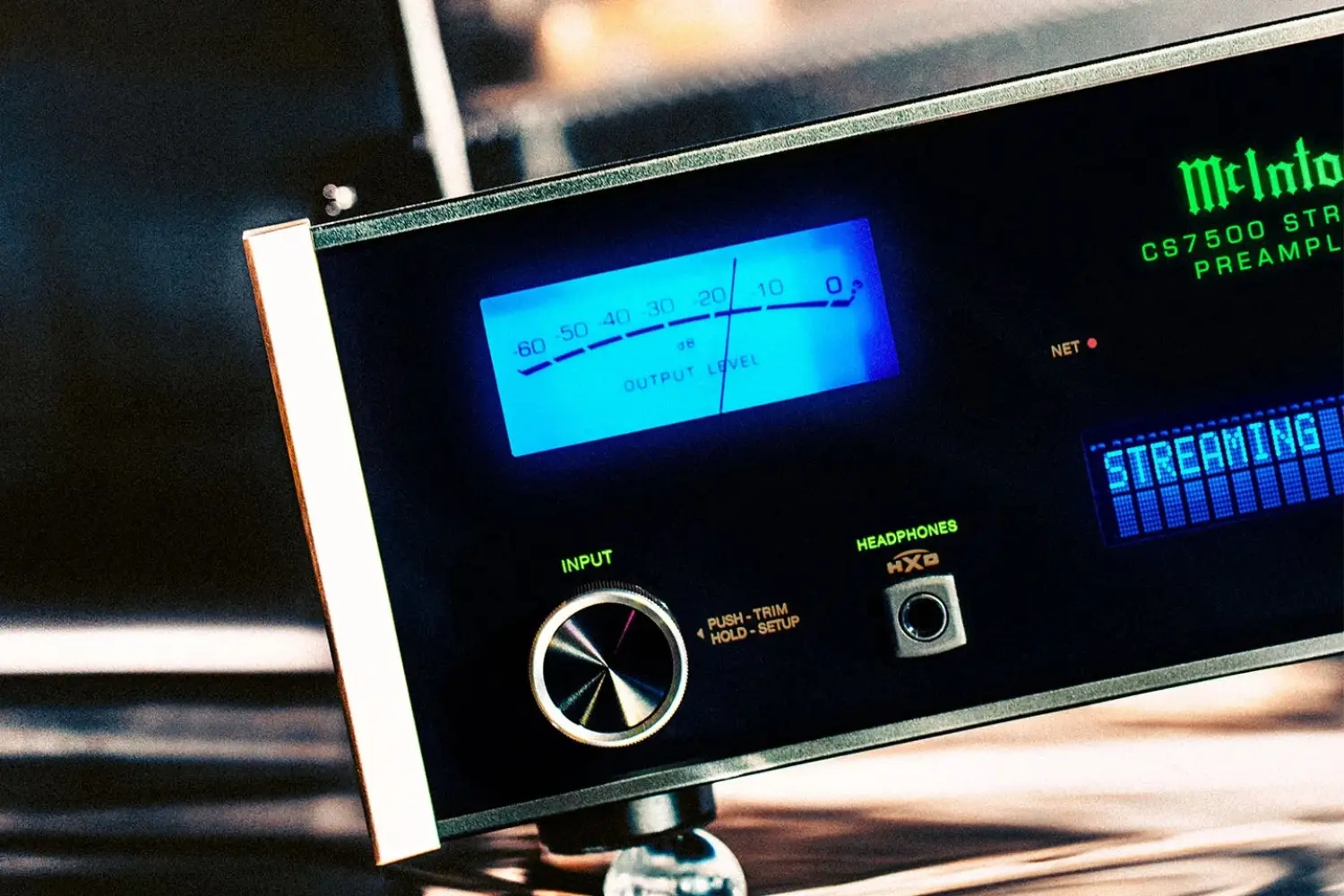
McIntosh has introduced the CS7500, a two-channel preamplifier designed to bring network streaming, digital conversion, analog source support and classic McIntosh styling into a single component.
A two-channel hub for streaming and source control
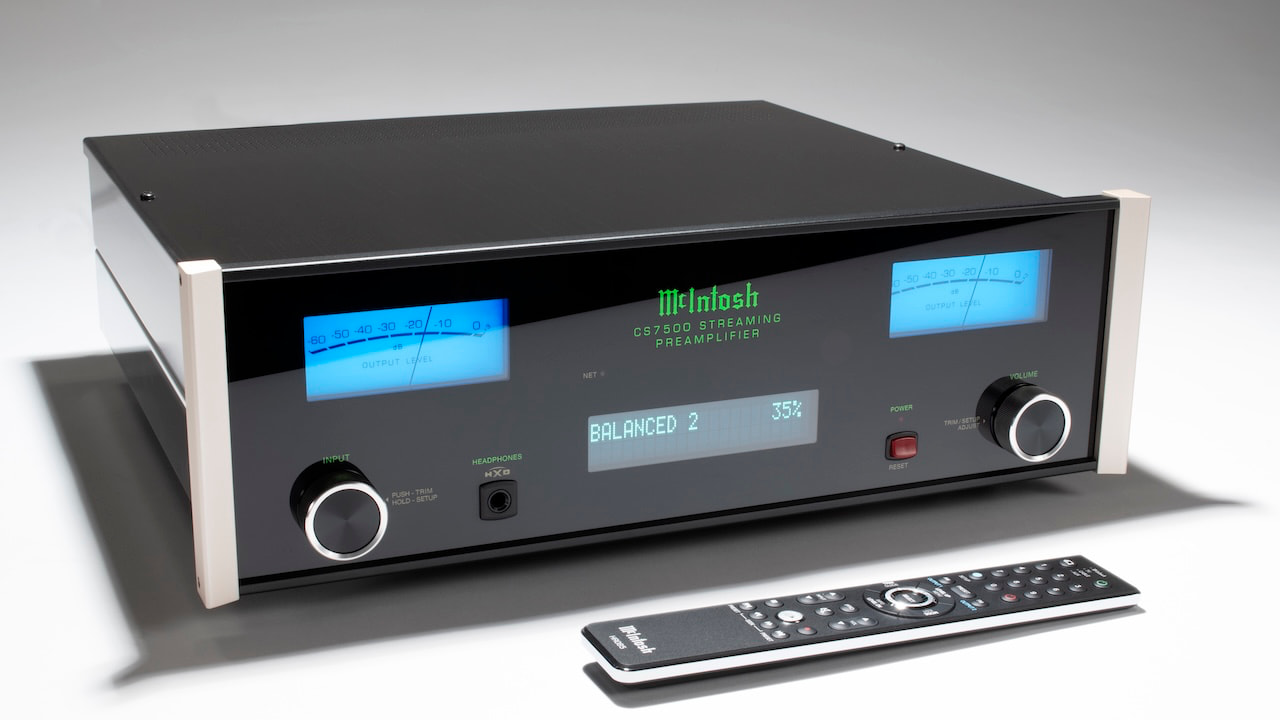
The CS7500 is positioned as a modern stereo control center rather than a minimalist line-stage. McIntosh has equipped it with streaming features, analog inputs, digital connectivity, a phono stage, a headphone amplifier and the company’s familiar front-panel VU meters.
Streaming support through familiar platforms
Rather than relying on a proprietary music platform, the CS7500 works with established streaming ecosystems. Built-in support includes Qobuz Connect, Spotify Connect with Spotify Lossless, and Tidal Connect with Tidal Max, allowing users to control playback through the apps they already use.
For music stored on phones, tablets or computers, the preamplifier also supports Apple AirPlay, Bluetooth and Google Cast. Bluetooth compatibility includes AAC, Qualcomm aptX HD and Qualcomm aptX Adaptive codecs.
The CS7500 is both Roon Ready and Roon Tested, enabling integration with the Roon music-management and playback platform. That combination makes the unit suitable for systems where streaming libraries, local files and multi-device control are central to daily listening.
Analog inputs include balanced connections and phono
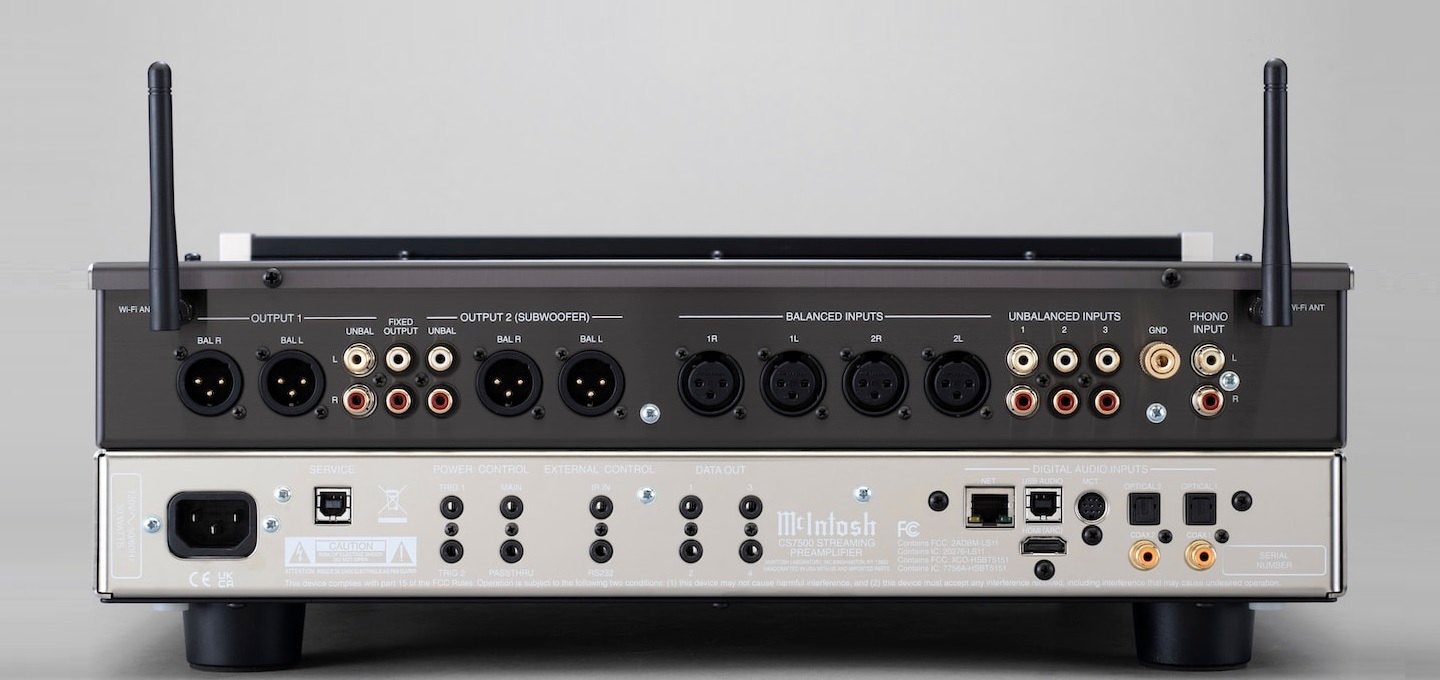
McIntosh has included six analog inputs on the CS7500. These comprise two balanced XLR inputs, three unbalanced RCA inputs and a dedicated phono input that can be switched for moving-magnet or moving-coil cartridges.
That phono provision is significant for a preamplifier that is otherwise heavily focused on streaming and digital playback. It allows a turntable to remain part of the same two-channel system without requiring an external phono preamplifier.
Digital inputs, DAC section and HDMI ARC
The CS7500 also provides seven physical digital inputs. Its USB input supports native DSD512 and DXD up to 384 kHz, while the coaxial and optical inputs support PCM playback up to 24-bit/192 kHz.
Digital-to-analog conversion is handled by a Quad Balanced, 8-channel, 32-bit DAC. McIntosh says this section is intended to preserve clarity and detail from digital sources while maintaining wide dynamic range and low distortion.
An HDMI ARC input is also included, allowing the CS7500 to connect directly to a television. This gives movies, concerts, television programs and other screen-based entertainment a path into a two-channel hi-fi system without needing a separate AV receiver.
Outputs for power amplifiers and subwoofers
On the output side, the preamplifier includes two pairs of balanced and unbalanced variable outputs, plus a fixed unbalanced output for connection to associated equipment. The arrangement is intended to support a range of power-amplifier setups.
A second set of balanced and unbalanced outputs can also be assigned for subwoofer use, either as a single mono subwoofer output or as a stereo pair. That gives the CS7500 flexibility for listeners who want to extend low-frequency performance in a stereo system.
Classic McIntosh design cues
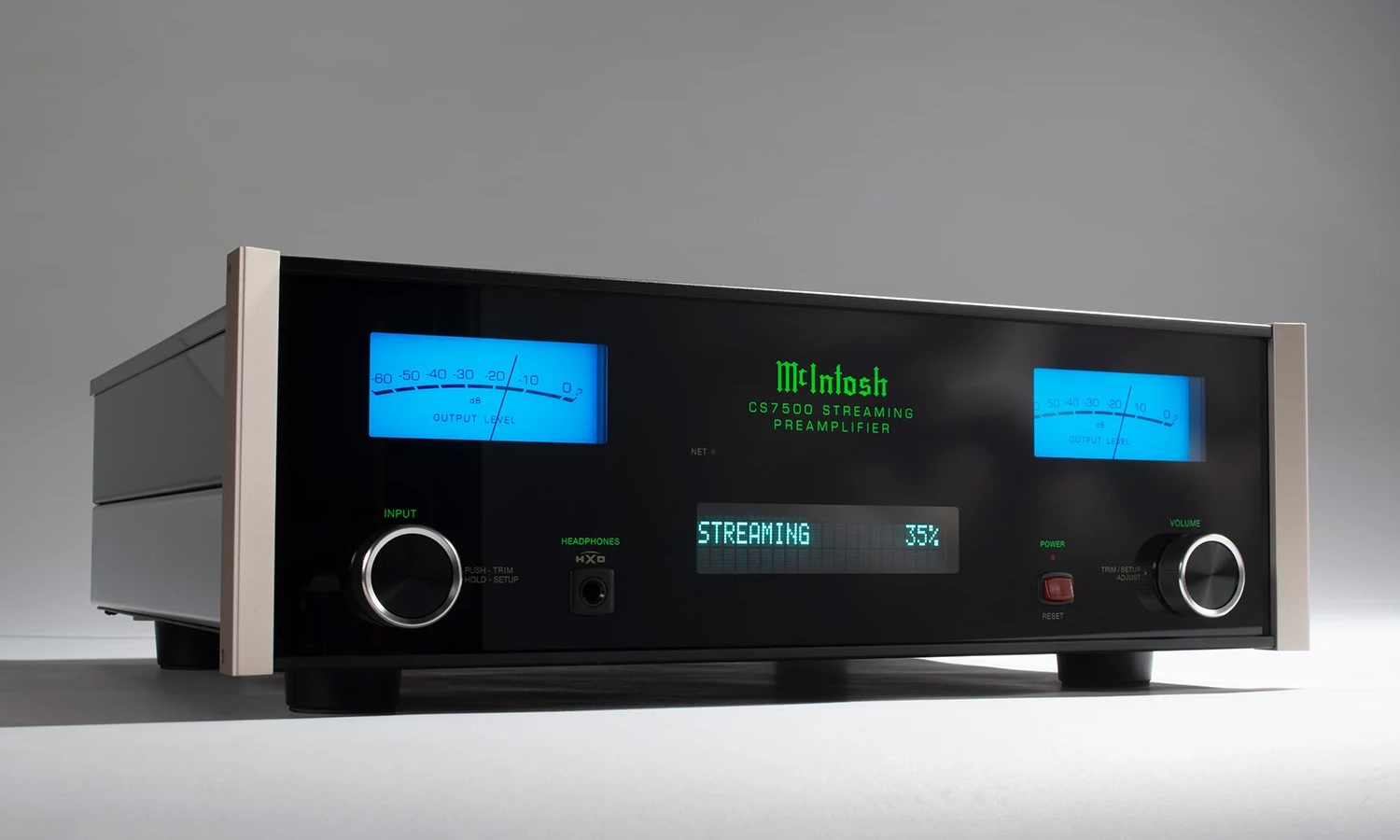
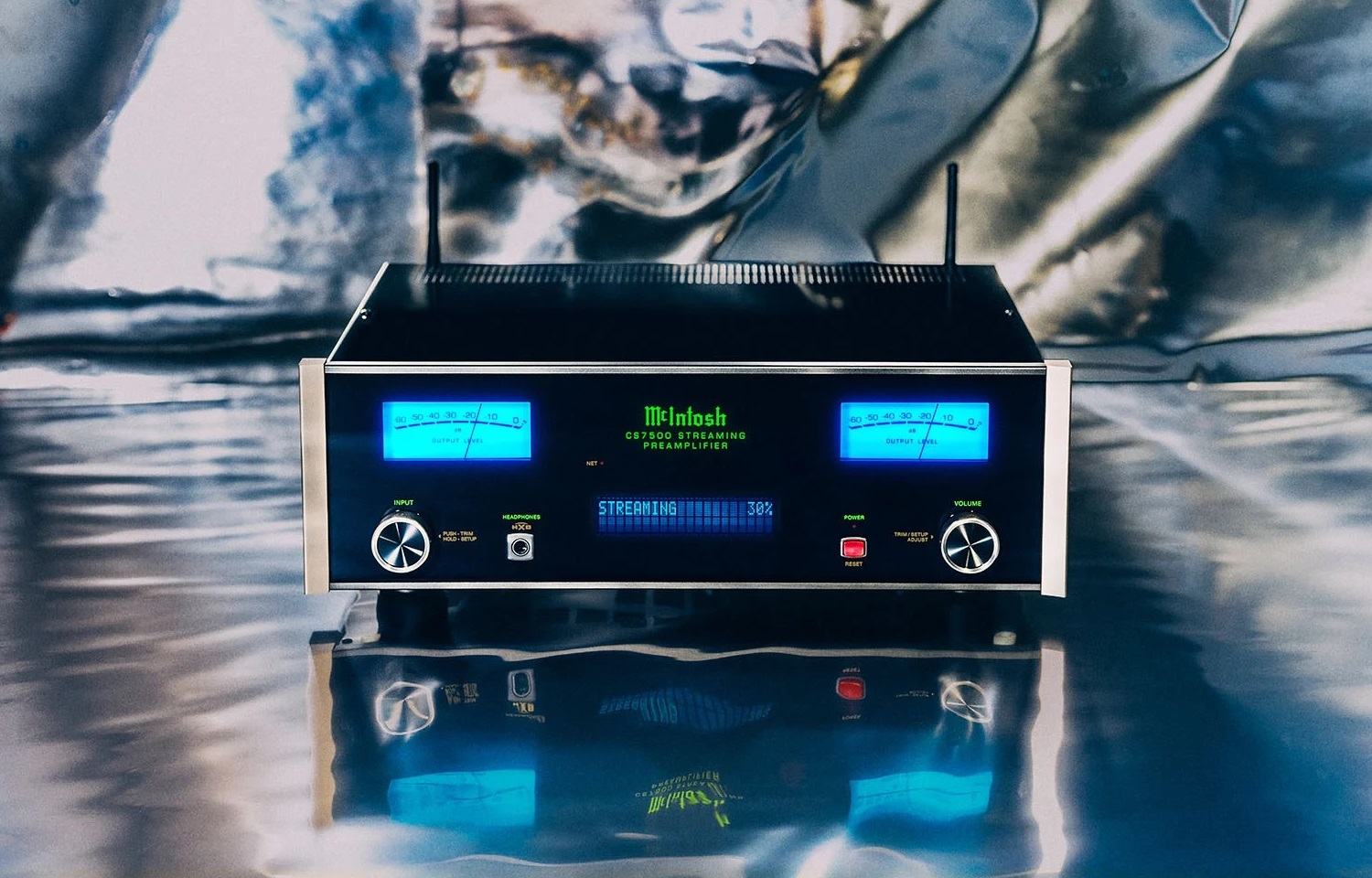
Visually, the CS7500 follows established McIntosh design language. The front panel uses black glass, a centrally placed illuminated green logo, aluminum rotary controls and the brand’s recognizable blue VU meters.
The chassis combines a mirror-polished stainless-steel lower section with a brushed black titanium stainless-steel upper section, adding contrast while keeping the component firmly within the traditional McIntosh aesthetic.
Pricing and availability details have not yet been announced. With its mix of streaming services, HDMI ARC, phono support, extensive inputs and classic McIntosh presentation, the CS7500 is aimed at stereo systems that need both modern connectivity and traditional source flexibility.


Sound Off
0Join the discussion if you have something to add.