
Amplifiers may share the same basic task, but the products gathered here approach it in strikingly different ways.
Some combine amplification, digital conversion and network playback in one chassis; others concentrate on power delivery, circuit symmetry or the particular character of tube-based designs.
That diversity makes the intended system context more important than any single specification. The Cambridge Audio AXA25 keeps operation straightforward, while the Octavio AMP and Denon PMA-900HNE bring streaming into compact or conventional integrated formats. Hegel and Atoll pursue more ambitious all-in-one designs, whereas Onkyo, TAD and Vincent are intended for separates-based systems. Speaker demands, source connections and preferred system architecture should therefore guide the choice. The recommendations below preserve those distinctions rather than treating every amplifier as interchangeable.

1. Cambridge Audio AXA25: The perfect amplifier for beginners
The Cambridge Audio AXA25 pairs a brushed-aluminum front panel with clearly arranged tone, balance, input and volume controls.
The Cambridge Audio AXA25 is a deliberately straightforward integrated amplifier built around short signal paths and essential controls.
Its brushed-aluminum front panel provides bass, treble and balance adjustment alongside input selection and volume, while a front 3.5 mm input makes it easy to connect a portable player or smartphone.
Four rear line-level inputs, a recording output and a 5V USB power port cover the fundamentals without turning the amplifier into a complex digital hub.
Best for: First stereo systems and uncomplicated analog setups
- Simple integrated design
- Front 3.5 mm input
- Four rear line inputs
- Bass, treble and balance controls
Verdict: A practical entry point for listeners who value accessible controls and useful analog connectivity over network features.

2. Atoll SDA200: A well-engineered Class A/B integrated amplifier
The Atoll SDA200 Signature uses a thick aluminum front panel, a data-rich LCD screen and dedicated navigation controls.
The Atoll SDA200 Signature combines Class A/B amplification, digital conversion and source control in a substantial integrated design.
Its PCM1792 DAC handles resolutions up to 24-bit/192 kHz and DSD128, while two analog inputs accommodate conventional sources.
Two toroidal transformers separate the digital and amplification power requirements, and two pairs of MOSFETs per channel deliver a stated 120 W per channel into 8 ohms. A detailed LCD interface and resistor-switched analog volume control reinforce its role as a comprehensive system center.
Best for: Systems needing strong amplification and integrated digital handling
- PCM1792 DAC with DSD128 support
- Two analog inputs
- 120 W per channel into 8 ohms
- Separate digital power supply
Verdict: A comprehensively engineered integrated amplifier for listeners balancing digital playback with demanding speaker loads.

3. Octavio AMP: Compact, high-performance amp with network functions
The compact Octavio AMP integrates network playback and efficient TPA3250-based amplification in a space-saving enclosure.
The compact Octavio AMP combines efficient amplification with extensive network playback.
Its TPA3250-based output stage is rated at 65 W per channel into 4 ohms or 35 W per channel into 8 ohms, while music can be accessed from a smartphone, NAS, local storage, supported streaming services and web radio.
AirPlay 2, Spotify Connect and Tidal Connect broaden its wireless options, and compatible Octavio products can be arranged as a multi-room system.
Best for: Compact streaming systems and multi-room installations
- Compact network-enabled design
- AirPlay 2 support
- Spotify Connect and Tidal Connect
- Multi-room capability
Verdict: A space-conscious amplifier that places app-based playback, network sources and multi-room use at the center of the experience.

4. Hegel H120: Beautiful integrated amplifier with network functions
The Hegel H120 features a curved aluminum front panel, crisp OLED display and minimalist twin-control layout.
The Hegel H120 is designed to serve as the visually restrained center of a modern stereo system.
Its minimalist front panel carries an OLED display, a 6.35 mm headphone socket and two controls for volume and source selection.
Connections include balanced XLR and RCA analog inputs, optical, USB and coaxial digital connectivity, plus Ethernet for UPnP/DLNA and AirPlay streaming. One RCA input can also be configured for fixed-gain home-theater integration, and the amplifier can be incorporated into compatible smart-home control systems.
Best for: Minimalist stereo systems with network and smart-home integration
- UPnP/DLNA and AirPlay streaming
- Balanced XLR input
- 6.35 mm headphone output
- Fixed-gain home-theater option
Verdict: A cleanly presented integrated amplifier that brings analog, digital and network sources into one focused component.

5. Onkyo M-5000R: Powerful Stereo amplifier made for audiophiles
The Onkyo M-5000R is distinguished by large analog meters, substantial casework and a dual-transformer power supply.
The Onkyo M-5000R is a dedicated stereo power amplifier rather than an all-in-one source hub.
Its AWRAT wideband amplification architecture is supported by a three-stage power circuit using inverted Darlington transistors.
Two toroidal transformers and four 27,000 μF storage capacitors underpin the power supply, while matched power semiconductors promote symmetry between the left and right channels. Large front-panel meters give the design a strong visual identity.
Best for: Separates systems built around a dedicated preamplifier
- Dedicated stereo power-amplifier design
- Dual toroidal transformers
- Four 27,000 μF storage capacitors
- Matched left and right power semiconductors
Verdict: A purpose-built stereo power amplifier that emphasizes a substantial power supply, channel symmetry and classic meter-led styling.

6. Denon PMA-900HNE: Amplifier that combines both analog and digital technologies
The Denon PMA-900HNE combines a thick aluminum fascia, front USB connection and a full set of conventional amplifier controls.
The Denon PMA-900HNE combines traditional integrated-amplifier controls with network and high-resolution file playback.
It can access libraries on computers and NAS devices over wired or wireless networks, play files from a front USB port, and connect to supported streaming services.
FLAC, WAV and ALAC are supported up to 24-bit/192 kHz, with DSD at 2.8 and 5.6 MHz. Its high-current push-pull output stage is rated at 85 W per channel, while bass, treble and balance controls can be bypassed when additional processing is not wanted.
Best for: Mixed analog, USB, network and streaming systems
- Wired and wireless network playback
- 24-bit/192 kHz and DSD support
- 85 W per channel
- Defeatable tone and balance circuitry
Verdict: A versatile integrated amplifier for users who want broad digital access without giving up conventional front-panel sound adjustment.

7. Cayin Jazz 100: A worthy successor to the Jazz 80 tube amplifier
The Cayin Jazz 100 combines its prominent tube complement with built-in Bluetooth 5.0 wireless connectivity.
The Cayin Jazz 100 is a pure Class A tube integrated amplifier rated at 46 W per channel.
Its output stage uses 805A generator triodes, replacing the KT88 pentodes of the preceding Jazz 80, while 6JC6, 6SN7 and 6L6 tubes serve the earlier stages.
Contemporary convenience comes from a Bluetooth 5.0 adapter supporting aptX HD and aptX Low Latency, allowing wireless playback without abandoning the amplifier's tube-based architecture.
Best for: Tube enthusiasts who also want convenient wireless playback
- Pure Class A operation
- 46 W per channel
- 805A triode output stage
- Bluetooth 5.0 with aptX HD
Verdict: A high-output Class A tube design that pairs traditional valve circuitry with practical Bluetooth connectivity.

8. Accuphase E-800S: Class-A precision integrated stereo amplifier
The Accuphase E-800S houses its Class A MOSFET output stage between substantial side-mounted heatsinks.
The Accuphase E-800S is a fully balanced Class A integrated amplifier developed around low-noise volume control and robust output circuitry.
Its Balanced AAVA system adjusts level by combining signals of different amplitudes rather than relying on a conventional variable resistor.
An ANCC-assisted current-to-voltage conversion stage addresses noise and distortion, while six parallel pairs of MOSFETs per channel operate in push-pull Class A. Rated output rises from 50 W into 8 ohms to 100 W into 4 ohms and 200 W into 2 ohms.
Best for: Reference-oriented systems prioritizing balanced Class A engineering
- Balanced architecture from input to output
- Balanced AAVA volume control
- Class A MOSFET output stage
- Rated for 2-ohm operation
Verdict: A technically elaborate integrated amplifier centered on low-noise level control, balanced circuitry and load-dependent Class A power delivery.
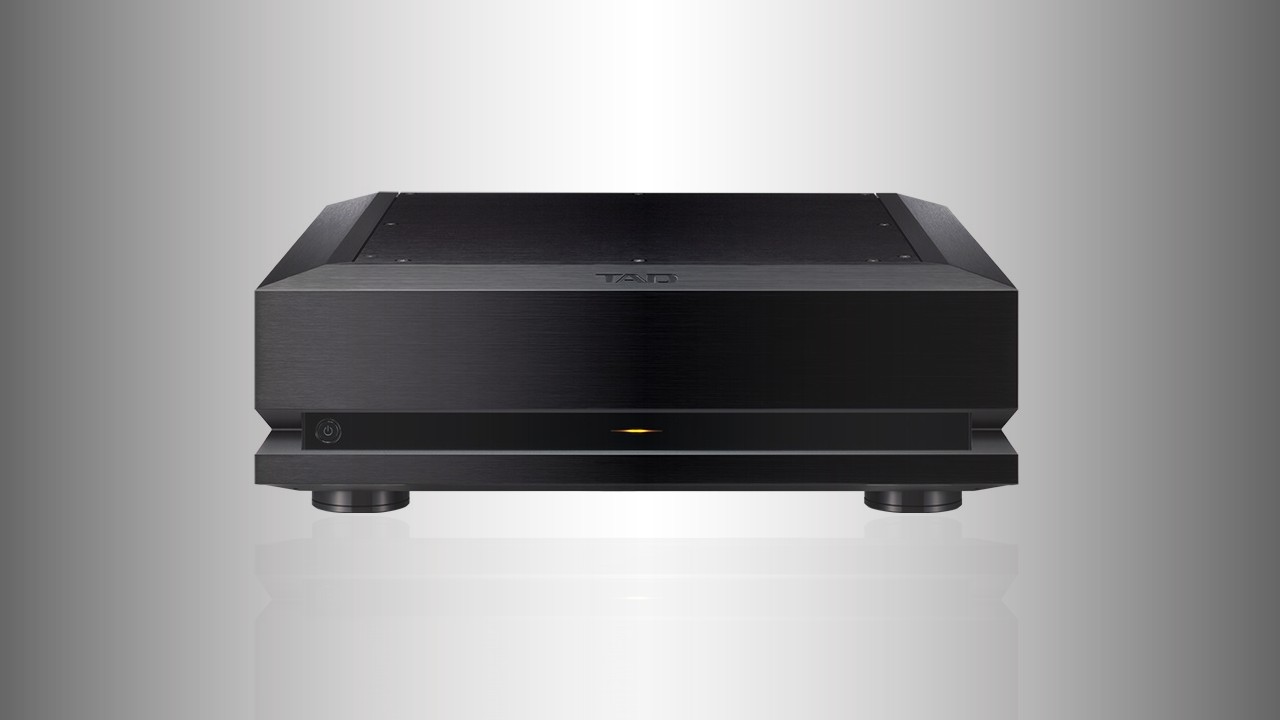
9. TAD M1000TX: Powerful and versatile power amplifier
The 29-kilogram TAD M1000TX is offered in black or silver to match other components in TAD's Evolution Series.
The TAD M1000TX is a two-channel power amplifier built around symmetry at both circuit and power-supply levels.
Its bridge-tied-load architecture uses separate amplifiers in balanced configurations for the left and right channels, extending from input to output.
Positive and negative supplies are arranged symmetrically, each channel receives separate power-supply circuitry, and the grounding reference was redesigned as part of the same effort. At 29 kilograms, it is a substantial separates component available in black or silver.
Best for: High-end separates systems focused on circuit symmetry
- Balanced bridge-tied-load architecture
- Separate power-supply circuits for each channel
- Symmetrical positive and negative supplies
- Black or silver finish options
Verdict: A substantial two-channel power amplifier whose defining feature is rigorous electrical and physical symmetry.

10. Vincent SP-T700: A serious and worthy instrument for exploring music
The Vincent SP-T700 monoblock features an adjustable orange-lit front window and a top-suspended toroidal transformer.
The Vincent SP-T700 is a monoblock power amplifier using tubes in its input and driver circuitry and complementary Toshiba bipolar transistors at the output.
It operates in Class A for its first few watts before transitioning into Class AB.
The toroidal transformer is suspended from the top panel, while the illuminated front window provides adjustable orange lighting that can also be switched off. The source describes its presentation as even, slightly softened and marked by a controlled tube accent.
Best for: Hybrid separates systems using dedicated monoblock amplification
- Hybrid tube and transistor circuit
- Initial Class A operation
- Top-suspended toroidal transformer
- Adjustable front-panel illumination
Verdict: A visually distinctive hybrid monoblock that combines tube-based stages with a bipolar-transistor output section.
Quick comparison
These amplifiers divide into three broad groups: straightforward integrated models, network-capable system hubs and dedicated power amplifiers for use with separate control components.
The table highlights those architectural differences rather than attempting to rank unlike products by a single criterion.
| Product | Best for | Verdict |
|---|---|---|
| Cambridge Audio AXA25 | Simple analog stereo systems | An accessible integrated amplifier with useful line inputs and hands-on tone controls. |
| Atoll SDA200 Signature | Powerful integrated digital systems | Combines a PCM1792 DAC, Class A/B amplification and substantial power-supply engineering. |
| Octavio AMP | Compact streaming and multi-room setups | Prioritizes network sources, wireless protocols and efficient amplification. |
| Hegel H120 | Minimalist networked stereo systems | Unites balanced analog input, digital connectivity, streaming and home-theater integration. |
| Onkyo M-5000R | Metered separates systems | A dedicated stereo power amplifier with dual transformers and a high-capacitance supply. |
| Denon PMA-900HNE | Broad source and file-format support | Balances conventional integrated-amplifier controls with USB, network and streaming playback. |
| Cayin Jazz 100 | Class A tube systems with Bluetooth | Uses 805A output triodes while adding aptX-capable wireless playback. |
| Accuphase E-800S | Balanced Class A systems | Focuses on low-noise volume control, balanced architecture and MOSFET power delivery. |
| TAD M1000TX | Symmetry-focused separates systems | A two-channel power amplifier with balanced BTL circuitry and channel-specific supplies. |
| Vincent SP-T700 | Hybrid monoblock systems | Blends tube input and driver stages with a bipolar-transistor output section. |
Frequently asked questions
Should I choose an integrated amplifier or a power amplifier?
Choose an integrated amplifier when you want source selection and volume control in the same chassis.
A power amplifier such as the Onkyo M-5000R, TAD M1000TX or Vincent SP-T700 belongs in a separates system with an appropriate preamplifier or other compatible volume-controlled source.
Which features matter for a streaming-based system?
Check the services, network methods and wireless protocols you actually use.
The Octavio AMP supports AirPlay 2, Spotify Connect and Tidal Connect, the Hegel H120 supports UPnP/DLNA and AirPlay, and the Denon PMA-900HNE can access network libraries, supported services and USB storage.
Does a higher power rating automatically make an amplifier the better choice?
No.
Power should be considered alongside speaker impedance, room requirements, listening level and amplifier type.
A network feature set, suitable inputs or the architecture of a tube, Class A or separates system may be more important than the largest stated wattage.
What should I check before buying an amplifier for existing sources and speakers?
List every required analog, digital, USB, network and wireless connection, then confirm that the amplifier supports them.
Also check the speakers' impedance and sensitivity, whether a separate preamplifier is needed, and whether features such as headphone output, tone controls or fixed-gain integration matter to the system.
How to choose the right amplifier architecture
Begin with the shape of the complete system rather than the amplifier in isolation.
For a straightforward analog setup, the Cambridge Audio AXA25 supplies conventional inputs and physical controls without network complexity.
The Octavio AMP is the more compact streaming-oriented option, while the Denon PMA-900HNE, Hegel H120 and Atoll SDA200 Signature combine amplification with broader digital or network duties in different ways. Amplifier topology also affects system planning. The Cayin Jazz 100 offers pure Class A tube operation with Bluetooth convenience, the Accuphase E-800S applies Class A operation within a fully balanced integrated design, and the Vincent SP-T700 uses a hybrid monoblock arrangement. These are materially different approaches, so topology should be treated as part of the ownership and system-matching decision rather than as a label that guarantees a particular result. Dedicated power amplifiers such as the Onkyo M-5000R and TAD M1000TX require more supporting hardware but allow the control and power stages to be selected separately. Before deciding, confirm input compatibility, speaker requirements, available space, ventilation needs and whether volume control is included. The strongest choice is the amplifier whose connections, architecture and role fit the rest of the system without unnecessary duplication.



Sound Off
0Join the discussion if you have something to add.