Cayin T30 MK2 Bookshelf Speakers: Compact Form, Broad Ambition
The Cayin T30 MK2 is a bookshelf loudspeaker designed around a 5.25-inch fiberglass composite cone, a one-inch silk dome tweeter, an aluminum front panel, and an 8-ohm load intended to suit a wide range of stereo and theater systems.
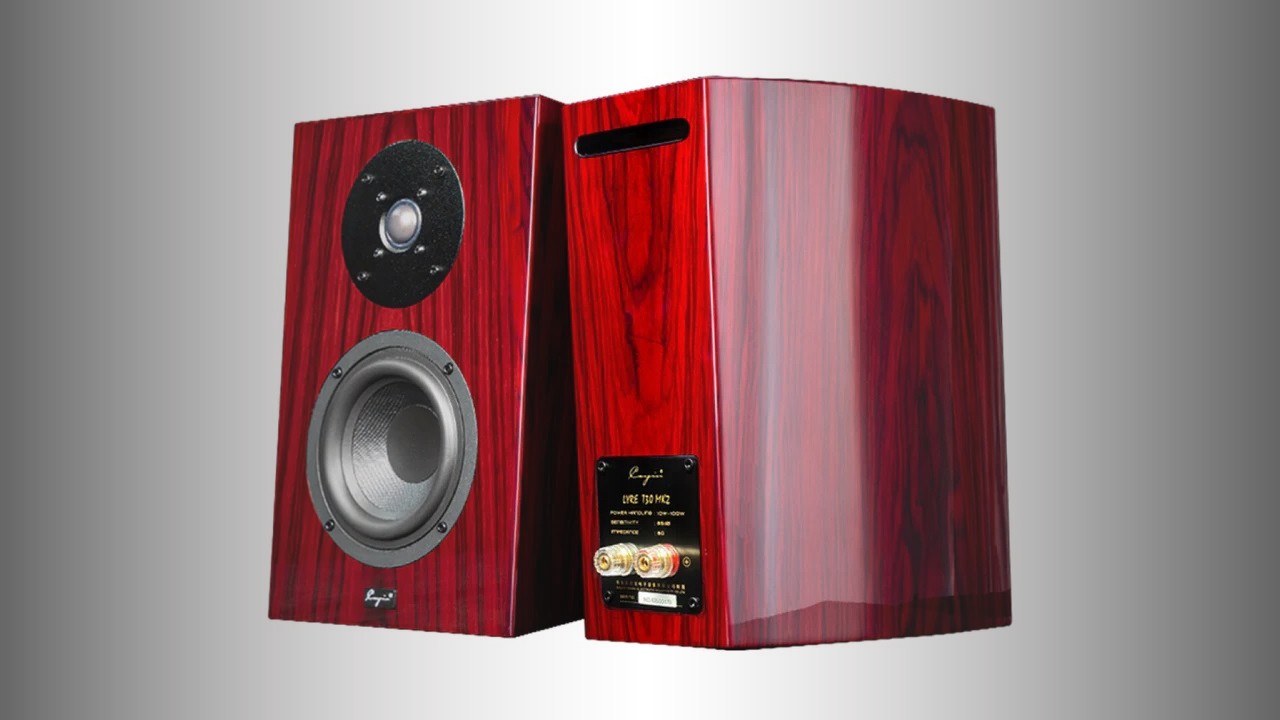
The Cayin T30 MK2 is a compact bookshelf speaker with a specification set that points to a broad role: serious two-channel listening, multi-channel home theater use, and compatibility with a variety of amplifiers, including tube designs. Rather than relying on size alone to make its case, the T30 MK2 brings together a fiberglass composite mid-bass cone, low-damping natural rubber surrounds, a one-inch silk dome tweeter, an aluminum front panel, and a crossover intended to preserve phase behavior and reduce signal loss. For prospective owners, the appeal lies in how these choices serve practical system building: manageable dimensions implied by the bookshelf format, an 8-ohm impedance, a 10W–100W power range, and a stated frequency response of 42Hz–25kHz.
A bookshelf speaker aimed at both music and cinema
The T30 MK2 is positioned as a speaker for more than one type of listening room. Its bookshelf format makes it relevant for traditional stereo systems, desktop-adjacent hi-fi spaces, compact living rooms, and surround-channel duties in a multi-channel home theater. Cayin also presents the model as capable of immersive surround use, which suggests that the design is not limited to nearfield or casual listening applications.
That flexibility matters because many owners now expect loudspeakers to do double duty. A pair may begin in a stereo system and later become part of a larger theater layout, or a compact speaker may need to serve music during the day and film soundtracks at night. The T30 MK2’s published 42Hz–25kHz frequency response gives it a relatively wide claimed operating range for a compact loudspeaker, while the 8-ohm impedance is a familiar target for many integrated amplifiers, AV receivers, and tube amplifiers. The result is a product concept that appears designed for system adaptability rather than one narrowly defined use case.
Fiberglass composite cone and controlled driver behavior
At the center of the T30 MK2’s mid-bass section is a 5.25-inch fiberglass composite cone. Fiberglass is commonly chosen in loudspeaker design because it can offer a useful balance of stiffness, damping, and relatively low mass when compared with some traditional cone materials. In practical terms, a cone material with controlled behavior is important because the driver must cover bass, mid-bass, and part of the midrange without excessive breakup or unwanted coloration.
The source information also notes that the cone is coated to enhance performance through the mid- and high-frequency range. Coatings are often used to tune the mechanical behavior of a diaphragm, helping manage resonances and smooth the driver’s contribution near the crossover region. For a bookshelf speaker, this is particularly relevant because the mid-bass driver is asked to do significant work: it must provide body and weight, maintain intelligibility through the vocal range, and blend cleanly with the tweeter. The use of a 5.25-inch cone reflects a common compromise in compact speakers, offering more low-frequency potential than smaller drivers while remaining suitable for a modest cabinet size.
Natural rubber surrounds and resonance management
Cayin highlights the use of low-damping natural rubber surrounds together with sturdy shock absorbers to reduce energy loss. The surround is not a decorative part of the driver; it helps control cone movement, influences compliance, and affects how efficiently the diaphragm returns after excursion. A surround that is selected for controlled damping can contribute to more predictable driver motion, especially at higher playback levels or during bass-heavy material.
The T30 MK2 also uses a durable aluminum frame intended to suppress resonance caused by vibration. This is a sensible design area to emphasize because the driver frame forms the mechanical foundation for the moving assembly. If the frame itself stores or releases unwanted energy, it can interfere with the intended output of the cone. By specifying an aluminum frame, Cayin is drawing attention to structural rigidity and vibration control, both of which are meaningful in a compact loudspeaker where cabinet and driver interactions can strongly shape performance.
Silk dome tweeter with an aluminum front panel
For high frequencies, the T30 MK2 uses a one-inch silk dome tweeter sourced from Denmark. Silk domes remain popular because they can be engineered for smooth dispersion and controlled behavior in the upper frequencies. The use of a one-inch format is also significant, as it is a widely adopted size that can provide useful high-frequency extension while allowing the crossover to integrate with a mid-bass driver of this scale.
The tweeter is paired with a 110mm sandblasted pure aluminum panel. This front panel is described as supporting seamless high-frequency extension and a natural transition between the high and mid-low frequencies. From an ownership perspective, the important point is integration. A bookshelf speaker is only as convincing as the handoff between its drivers. If the tweeter and mid-bass driver do not blend well, the speaker may call attention to itself rather than presenting music or film sound coherently. Cayin’s emphasis on the front panel and transition region shows that the T30 MK2’s design is concerned not only with individual driver quality, but with how those drivers work together.
Crossover design and signal integrity
The crossover is described as high-performance, with an emphasis on minimizing signal loss and distortion while supporting seamless phase alignment and smooth frequency response transitions. In a two-way bookshelf loudspeaker, the crossover is a critical component because it determines how the mid-bass driver and tweeter share the frequency spectrum. Even strong individual drivers can underperform if the crossover does not manage output level, phase, and overlap carefully.
For the listener, the value of a well-considered crossover is not simply technical neatness. It can affect vocal clarity, imaging stability, perceived tonal continuity, and how naturally instruments occupy their ranges. The T30 MK2’s published design priorities suggest a speaker intended to avoid abrupt changes between drivers and to maintain a coherent presentation across its operating band. Without independent testing, those claims should be understood as design goals rather than verified results, but they are the right areas for a manufacturer to address in a speaker meant for both music and theater.
Amplifier matching and tube amplifier appeal
One of the more practical details in the T30 MK2 specification is its 8-ohm impedance. Many amplifiers are comfortable with 8-ohm loudspeakers, and this can make system matching less complicated than with speakers that present more demanding loads. The stated power range of 10W–100W also gives prospective owners a broad window when selecting amplification, from modest integrated amplifiers to more powerful receivers or separates.
Cayin specifically notes that the speaker’s large magnetic driver boosts sensitivity and heat output, and that the model is suitable for use with tube amplifiers. The published sensitivity is 85dB, which is not unusually high, so owners should still consider room size, listening distance, and desired playback levels when choosing an amplifier. However, the 8-ohm impedance and stated tube-amplifier suitability make the T30 MK2 an interesting candidate for systems where tonal character, amplifier topology, and speaker load all need to be considered together. For existing Cayin amplifier owners, the speaker may also be viewed as a natural extension of a same-brand system concept.

Why the frequency range matters
Cayin lists the T30 MK2’s frequency response as 42Hz–25kHz. On paper, that range suggests an attempt to deliver meaningful bass extension from a bookshelf enclosure while also reaching beyond the upper limit of conventional human hearing. The low-frequency figure is especially relevant for users who want compact speakers that can operate on their own in a stereo system, or who want surround speakers with enough bandwidth to avoid sounding thin.
In a home theater environment, deep bass demands are usually best handled by a dedicated subwoofer, particularly for film effects and large rooms. Even so, a bookshelf speaker with a wider claimed response can be useful because it may integrate more naturally with a subwoofer and provide fuller output through the upper bass and lower midrange. For music listeners, the specified range suggests that the T30 MK2 is not merely a small satellite speaker, but a compact loudspeaker designed to cover a substantial portion of the audible spectrum.
Conclusion
The Cayin T30 MK2 is most suitable for listeners building a compact but serious stereo system, owners looking for bookshelf speakers that can also serve in a multi-channel home theater, and users who value amplifier flexibility, including possible tube amplifier pairing. Its strongest documented qualities are its 5.25-inch fiberglass composite cone, one-inch silk dome tweeter, aluminum structural elements, resonance-control measures, high-performance crossover approach, 8-ohm impedance, and broad stated frequency response of 42Hz–25kHz. It is not presented here as a reviewed or tested product, but as a thoughtfully specified bookshelf speaker whose design choices are aimed at clarity, driver integration, manageable system matching, and flexible use across music and cinema applications.