

The HZSOUND Luna is a wired in-ear headphone built around a 13.3 mm broadband planar driver. At $109, it occupies an accessible part of the specialist IEM market while offering several features more often highlighted in enthusiast-focused designs: a flat diaphragm, dual voice coil, CNC-machined metal housings and a high-purity silver-plated OFC cable.
Rather than relying on an elaborate accessory package, Luna concentrates its appeal on the fundamentals of driver architecture, durable shell construction and source compatibility. It also gives buyers a choice between conventional 3.5 mm unbalanced connectivity and 4.4 mm balanced termination. Together, these decisions make it an interesting proposition for listeners assembling a compact wired system around a phone dongle, portable player, headphone amplifier or desktop audio setup.
A 13.3 mm planar driver at the center
Luna’s defining component is its broadband planar driver. This uses a flat diaphragm measuring 13.3 mm in diameter together with a dual voice coil. That differs from the conventional dynamic-driver architecture found in many in-ear headphones, where a cone- or dome-shaped diaphragm is moved by a voice coil positioned within a magnetic assembly.
In a planar design, the driving force can be distributed across a broader area of the diaphragm. HZSOUND presents this architecture as the basis for a robust and dynamic low end, precise midrange and detailed high frequencies. Those descriptions remain the manufacturer’s stated objectives rather than independent listening findings, but the underlying specification gives prospective owners a clear reason to consider Luna: it offers a single planar transducer intended to cover the full audible range.
Using one broadband driver may also appeal to listeners who prefer the conceptual simplicity of a single-transducer IEM. There is no documented multi-driver crossover network or mixture of different driver types. The emphasis is instead placed on extracting full-range performance from one relatively large, flat diaphragm. That makes the driver itself—not an extensive list of internal components—the central feature of the product.
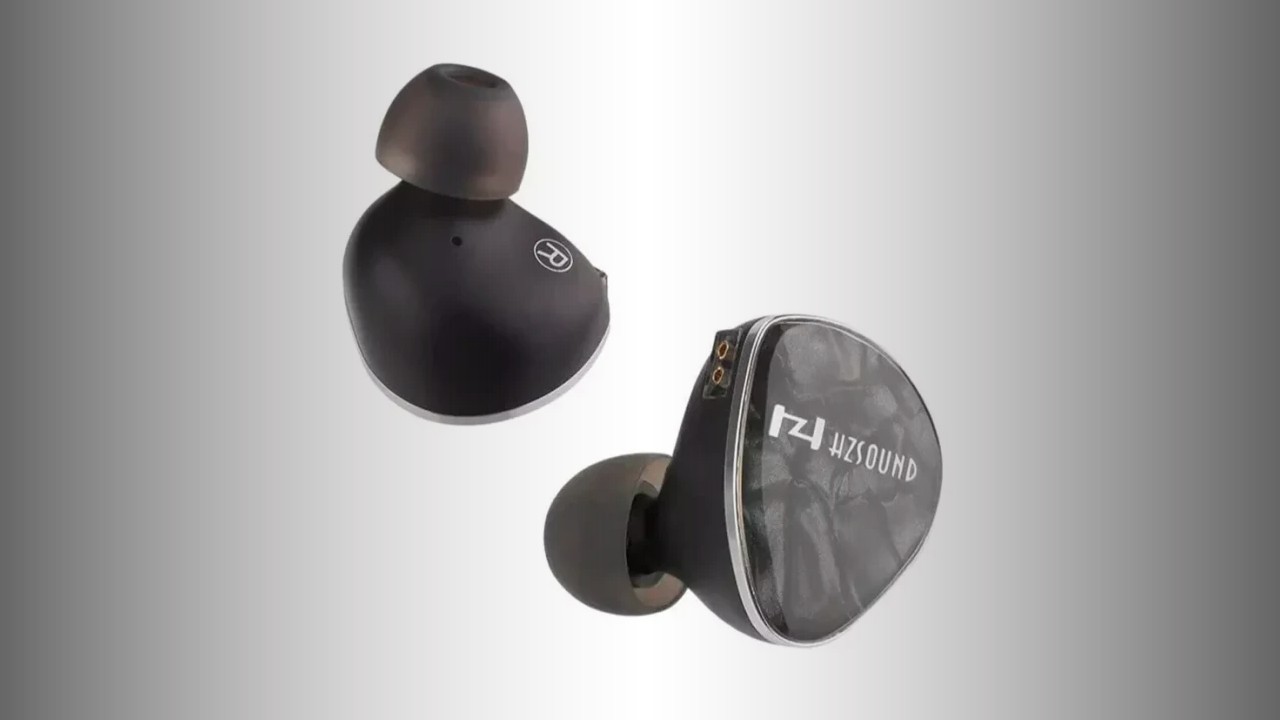
CNC-machined aluminum-magnesium housings
The earpiece casing is made from an aluminum-magnesium alloy and formed through CNC machining. Material choice matters in an IEM because the shells need to accommodate the driver in a small enclosure while also withstanding repeated insertion, removal and transport. Metal construction gives Luna a more substantial engineering identity than a basic molded enclosure, while CNC machining allows the housing geometry to be produced with controlled dimensions.
HZSOUND complements the alloy body with resin faceplates. These panels introduce visual contrast to the machined shells and are described as combining acoustic considerations with a decorative finish. The result is a hybrid material approach: metal is used for the principal casing, while resin gives the visible outer surface a more individual appearance.
No shell weight or dimensions are provided, so it would be inappropriate to draw conclusions about long-session comfort from the construction alone. Even so, the use of machined alloy is a meaningful feature for buyers who value robust materials and a clean, purpose-built finish in portable audio equipment.

Fit provisions are simple and focused
Luna is supplied with two pairs of silicone ear tips in different sizes. Ear-tip selection is important with any in-ear headphone because the tip provides the physical interface between the earpiece and the ear canal. A suitable fit can help keep an IEM secure and establish the seal for which its acoustic design was intended.
The included selection is relatively concise rather than expansive. Two pairs give owners some scope to adjust the fit, but people who require a broader range of sizes, foam tips or a particular aftermarket profile may need to make their own arrangements. That is worth considering for buyers who already know they have demanding fit requirements.
This limited bundle also reflects Luna’s broader priorities. Most of the documented product specification concerns the driver, enclosure and cable rather than a large collection of accessories. For listeners who already have preferred ear tips, that may be entirely reasonable; newcomers may want to pay closer attention to the supplied size options.

Silver-plated OFC cable and two connection paths
The supplied cable uses high-purity oxygen-free copper conductors with silver plating. More important from a system-building perspective is its swappable plug design. Luna can be ordered with either a 3.5 mm unbalanced plug or a 4.4 mm balanced plug, although only one of these plugs is included at the time of purchase.
The 3.5 mm option is the broadly practical choice for equipment fitted with a standard headphone output. It is likely to suit conventional portable devices, dongle DACs, laptop-oriented interfaces and many integrated headphone amplifiers. The 4.4 mm option is aimed at owners whose portable player, DAC or headphone amplifier provides a compatible balanced output.
A balanced connector should not be treated as automatically superior in every system; its usefulness depends on the source equipment and how that equipment’s output stage is designed. Luna’s advantage is therefore one of compatibility and planning. Buyers can choose the termination that matches their existing hardware instead of relying on an adapter. Because the package includes only the selected plug, purchasers should confirm their preferred connection before ordering.

A compact route into planar IEMs
At its recommended retail price of $109, Luna is positioned as a relatively approachable way to obtain a wired planar IEM with machined metal construction. Its proposition is not based on wireless features, active noise cancellation, app control or digital processing. It is a traditional passive earphone intended to be driven by an external source.
That focus can be useful for owners who want their earphones to remain independent of batteries, wireless codecs and software ecosystems. A passive wired IEM can move between compatible sources without pairing, charging or app setup. The final experience will still depend on the source, chosen output and physical fit, but Luna’s role in the system is straightforward.
The choice of 3.5 mm or 4.4 mm termination also allows Luna to sit in systems of different complexity. A buyer can specify the familiar unbalanced connection for general use or select 4.4 mm when building around balanced portable or desktop hardware. This flexibility is especially relevant at a price where Luna may serve as either a first planar earphone or an additional driver type within an existing IEM collection.

Who the HZSOUND Luna is most suitable for
Luna is best suited to listeners who specifically want a wired in-ear headphone and are interested in planar driver technology without moving into a substantially more elaborate product. Its 13.3 mm single-driver layout should appeal to buyers who value a straightforward full-range architecture, while the alloy shells and resin faceplates offer a considered alternative to purely plastic construction.
It is also a logical match for users who already know which output they intend to use. Owners of standard headphone sources can choose 3.5 mm, while those with suitable balanced equipment can select 4.4 mm. Portable-audio enthusiasts with a dedicated player, dongle DAC or compact amplifier are therefore the clearest audience.
Luna will be less suitable for anyone seeking Bluetooth operation, microphones, active noise cancellation or an extensive ear-tip assortment, as none of those features is documented. Buyers who regularly alternate between 3.5 mm and 4.4 mm sources should also remember that only one plug is included, despite the swappable plug architecture. Its strengths are concentrated in passive wired listening, material construction and planar-driver design rather than convenience features associated with true-wireless models.
Conclusion
The HZSOUND Luna presents a focused combination of a 13.3 mm broadband planar driver, dual voice coil, CNC-machined aluminum-magnesium housings and resin faceplates. Its silver-plated OFC cable and choice of 3.5 mm unbalanced or 4.4 mm balanced termination provide useful scope for matching it to portable or desktop equipment, although buyers receive only the connector selected at purchase. At $109, Luna is most compelling for listeners who want a straightforward passive IEM, are curious about single-driver planar technology and prefer durable materials over wireless features or a large accessory bundle.


Sound Off
0Join the discussion if you have something to add.