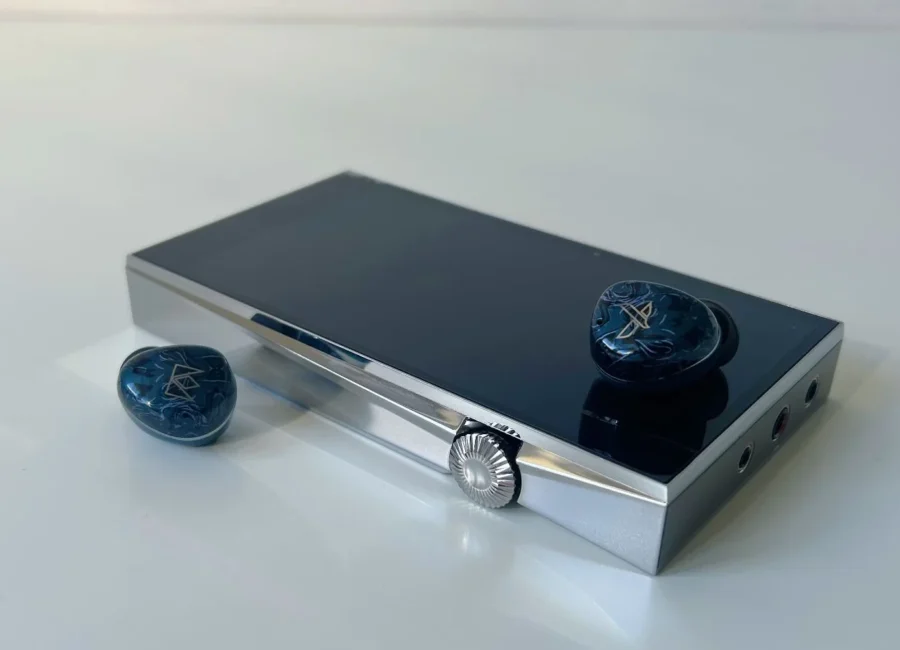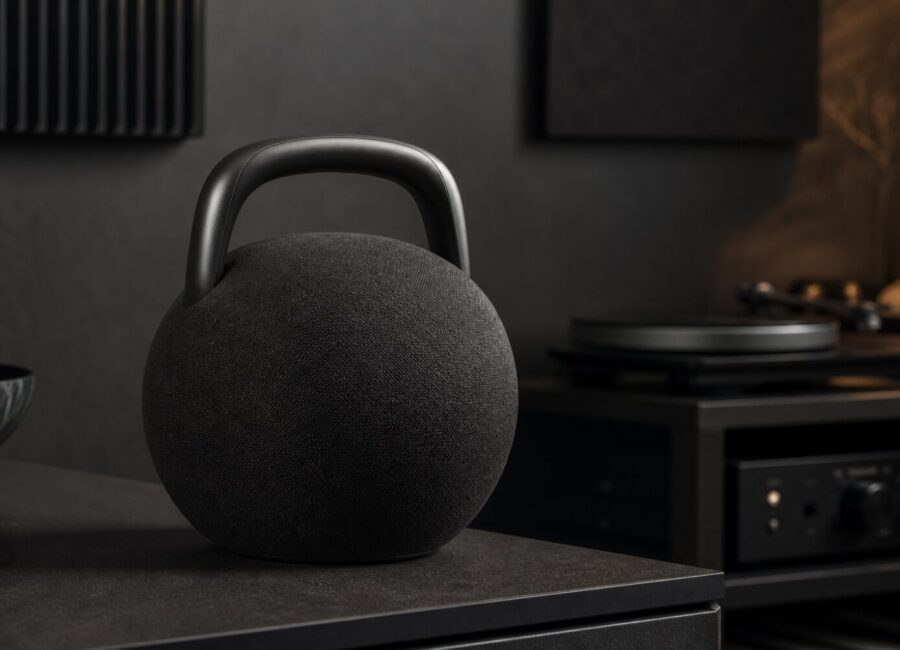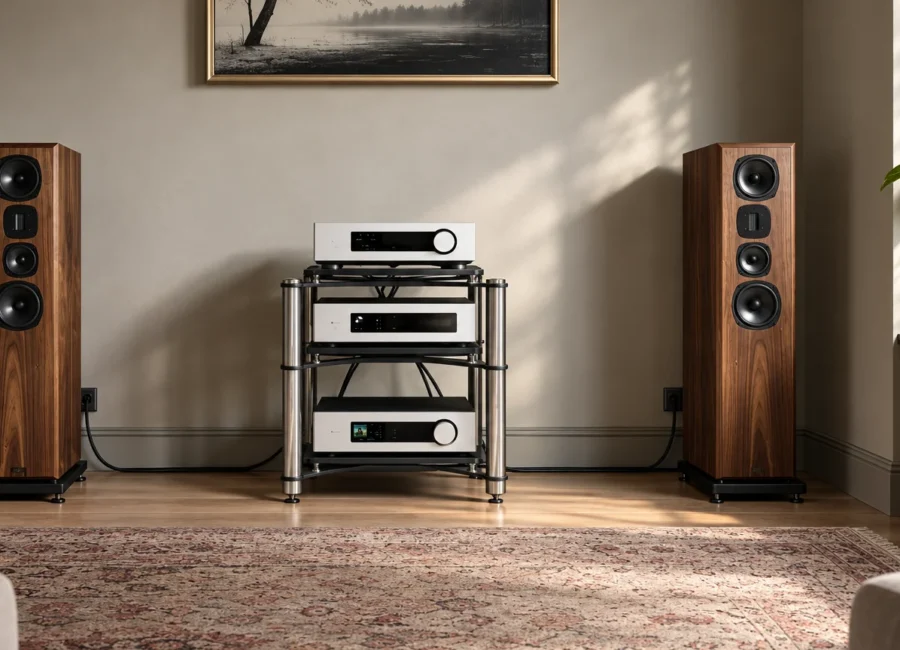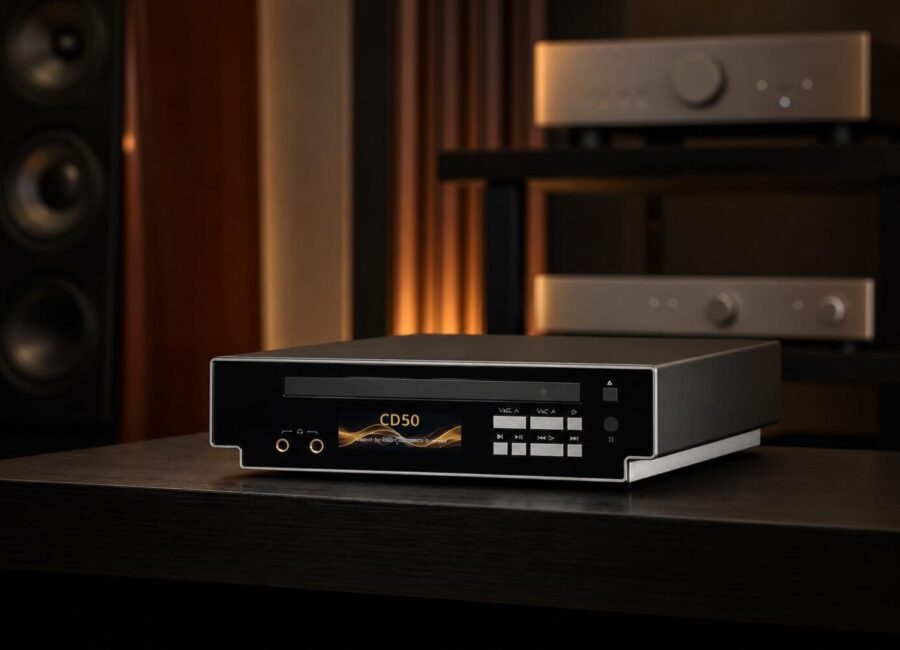
A good DAC is not defined by one specification alone.
Some models earn attention by solving everyday problems, such as restoring wired-headphone quality to a phone with no headphone jack.
Others are built to become the digital center of a full hi-fi system, with extensive inputs, preamplifier functions, balanced outputs, or network playback. The source material here spans pocket Bluetooth DAC/amps, tiny USB dongles, desktop R2R designs, high-resolution digital hubs, and ambitious high-end converters. That range is useful because DAC shopping is often less about chasing the most elaborate device and more about matching the converter to the way music is actually played. This guide keeps the focus on what is directly supported by the supplied articles: form factor, input options, conversion architecture, headphone or preamp functionality, and file-format support where stated. The result is an evergreen overview of DACs that stand out for different, clearly identifiable reasons.
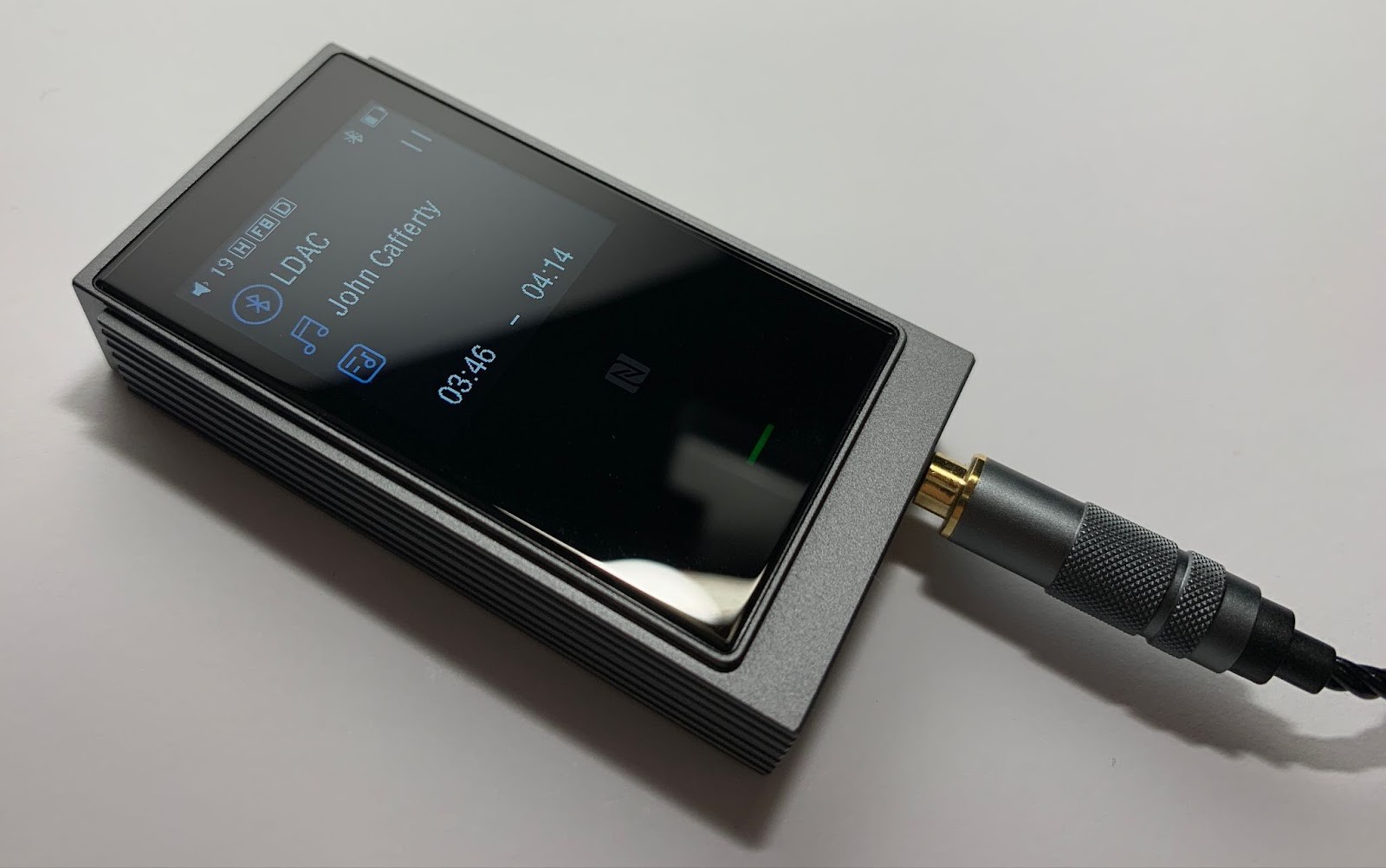
1. Shanling UP6
Shanling UP6 portable Bluetooth DAC/amp with battery-powered operation, display, and wired or wireless playback support.
The Shanling UP6 is presented as an ultra-portable DAC and headphone amplifier for listeners who want wired-headphone quality without relying on a simple phone dongle.
Its key distinction is flexibility: it works in both wired and wireless modes, has its own battery, includes a bright display, and is described as having enough output power for IEMs and mid-tier full-size headphones.
The supplied accessories are generous, though the source notes that a protective case is not included, which matters for daily portable use.
Best for: Portable listeners who want Bluetooth convenience without giving up wired headphones
- Wired and wireless operation
- Built-in battery
- Bright display
- Suited to IEMs and mid-tier full-size headphones
Verdict: The UP6 is the most travel-minded pick here, combining pocketable DAC/amp functionality with the independence of battery-powered wireless use.

2. Shanling EH2
Shanling EH2 desktop DAC/amp, positioned between Shanling’s entry-level and flagship stationary models with an R2R ladder DAC architecture.
The Shanling EH2 is positioned as the middle ground between Shanling’s more basic EH1 and the more feature-heavy EH3.
Its defining feature is a proprietary 24-bit R2R ladder DAC, a conversion approach the source describes as increasingly rare in desktop audio.
The article frames the EH2 as a high-value stationary DAC/amp intended to raise performance and capability without jumping to the brand’s flagship tier.
Best for: Desktop listeners curious about R2R conversion without moving to a flagship component
- Proprietary 24-bit R2R ladder DAC
- Stationary DAC/amp format
- Positioned between entry-level and flagship Shanling models
- Hi-Res and Hi-Res Wireless certification noted on packaging
Verdict: The EH2 stands out as a practical bridge product: more ambitious than an entry-level DAC/amp, but not presented as an all-out flagship.

3. Shanling UA1 II
Shanling UA1 II tiny USB DAC with aluminum body, color display, physical controls, and pocket-friendly dimensions.
The Shanling UA1 II shows how far compact USB DACs have moved beyond basic dongles.
The source highlights its extremely small footprint, weight of just under 18 grams, updated aluminum body, dual glass-window design, small color display, and onboard physical controls.
Because volume, playback, and menu navigation can be handled directly on the device, it is less dependent on a phone app or screen than many minimal USB DACs.
Best for: Phone, tablet, and laptop users who want a tiny USB DAC with onboard control
- Just under 18 grams
- Small color display
- Physical controls for standalone operation
- Compact aluminum body
Verdict: The UA1 II is the compact choice for users who want dongle portability but dislike sacrificing display feedback and direct controls.

4. FiiO K5 Pro ESS
FiiO K5 Pro ESS compact desktop DAC/amplifier supplied with external power supply, power cable, and USB cable.
The FiiO K5 Pro ESS is presented as a budget-friendly DAC from a brand with a broad audio lineup covering headphones, digital audio players, and DACs.
The source focuses heavily on the packaging and delivery set, noting the compact device, included power cable, external power supply, and USB cable.
Within this selection, the K5 Pro ESS is the straightforward desktop option for buyers who want a compact DAC/amplifier package without the complexity of a high-end digital hub.
Best for: Desktop users seeking a simple, value-oriented DAC/amplifier package
- Budget-friendly positioning
- Compact device size
- External power supply included
- USB cable included
Verdict: The K5 Pro ESS is the no-nonsense budget desktop entry in this group, with the source emphasizing compactness and a complete basic accessory set.

5. Musical Fidelity M6S DAC
Musical Fidelity M6S DAC external converter with multiple coaxial and optical inputs, USB connectivity, balanced topology, and headphone amplification.
The Musical Fidelity M6S DAC is a full-size external converter with a strong emphasis on digital processing, input flexibility, and system integration.
The source states support for PCM up to 32-bit/768 kHz and DSD64/128, plus data resynchronization to reduce jitter and upsampling of PCM streams to the chip’s maximum resolution.
Its three coaxial inputs, three optical inputs, USB computer interface, built-in headphone amplifier, balanced and unbalanced outputs, and variable-output option make it suitable for both traditional hi-fi systems and more direct setups with active speakers or power amplifiers.
Best for: Hi-fi systems needing a versatile external DAC with headphone and variable-output options
- PCM support up to 32-bit/768 kHz
- DSD64/128 support
- Three coaxial and three optical inputs
- Built-in headphone amplifier
Verdict: The M6S DAC is a connectivity-rich converter for users who want a serious digital front end that can also handle headphone listening and direct system control.

6. Audiolab D7
Audiolab D7 high-resolution DAC with S/PDIF, USB, Bluetooth, RCA, and balanced XLR connectivity.
The Audiolab D7 is described as a versatile digital audio hub built around the ES9038Q2M Sabre DAC chip.
Its appeal lies in the breadth of connections: coaxial and optical S/PDIF inputs, USB HDD playback from external flash drives, USB Type-B for computers and mobile devices, Bluetooth reception, coaxial and optical outputs, RCA analog outputs, and fully balanced XLR outputs.
The source also specifies support for DSD512 and 32-bit/768 kHz PCM over USB, 24-bit/192 kHz PCM over S/PDIF, full MQA decoding, and user-selectable upsampling.
Best for: Systems that need one DAC to handle many wired, wireless, and storage-based sources
- ES9038Q2M Sabre DAC chip
- Balanced XLR outputs
- Bluetooth reception
- Full MQA decoding
Verdict: The D7 is the connectivity specialist, designed less as a minimalist converter and more as a flexible digital hub.
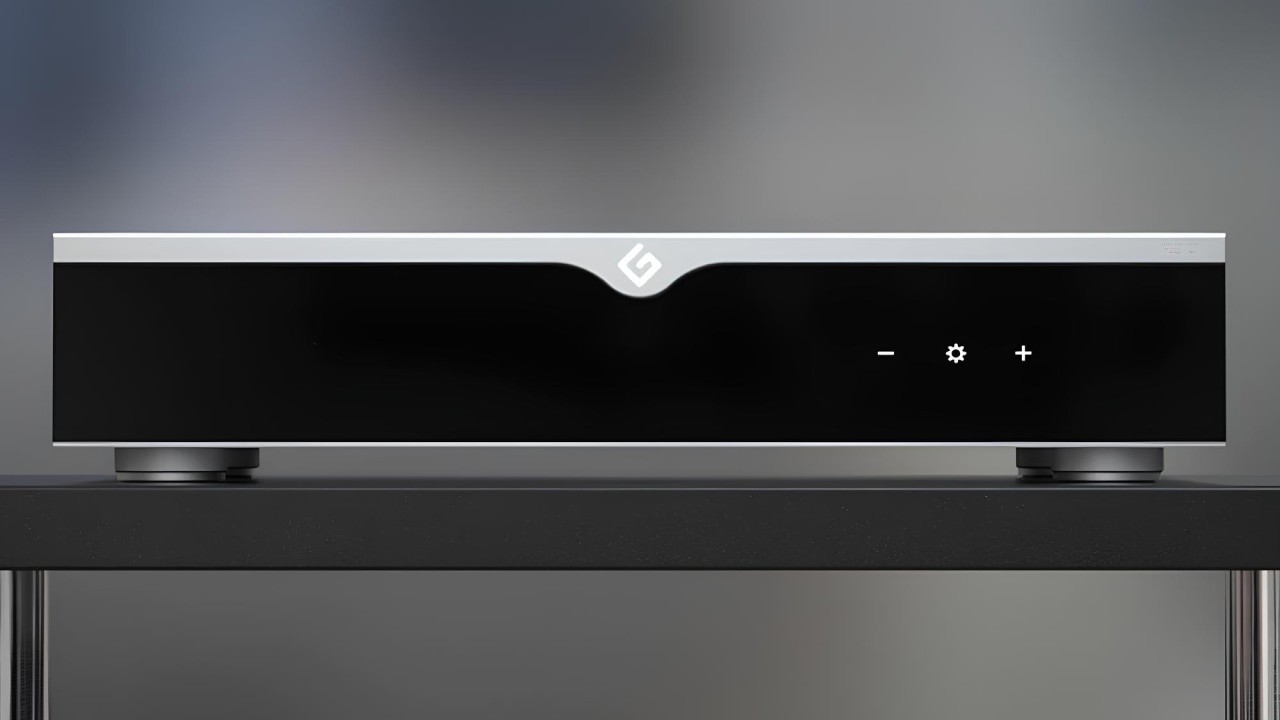
7. Gustard R30
Gustard R30 high-end DAC with discrete R-2R conversion, True 1-Bit DSD processing, advanced clocking, and dual-transformer power supply design.
The Gustard R30 is a high-end DAC built around a discrete R-2R architecture for PCM conversion and a dedicated True 1-Bit converter for DSD playback.
The source highlights DSD support up to DSD1024, multi-level upsampling algorithms, a highly stable SC-Cut OCXO generator with GCLK-02 module, the option to connect an external clock, and separate toroidal transformers for digital and analog circuits.
It is the most technically architecture-focused entry here, aimed at enthusiasts who care about conversion topology, clocking, and power-supply separation.
Best for: Digital-audio enthusiasts interested in discrete conversion, advanced clocking, and separate analog/digital power supplies
- Discrete R-2R architecture
- True 1-Bit DSD conversion
- DSD support up to DSD1024
- External clock connection supported
Verdict: The R30 is for the listener who wants a DAC defined by conversion architecture and clocking infrastructure rather than convenience features alone.

8. Métronome Le DAC 3
Métronome Le DAC 3 reference-grade DAC with high-resolution PCM and native DSD support plus USB, AES/EBU, coaxial, and optical inputs.
Métronome Le DAC 3 is framed as a reference-grade high-end DAC with optional streaming and broad format support.
The source specifies PCM up to 32-bit/768 kHz and native DSD up to DSD1024, along with USB, AES/EBU, coaxial S/PDIF, and optical Toslink inputs.
The article places particular emphasis on musical qualities such as flow, tonal density, micro-detail, and composed handling of complex passages, while also presenting the DAC as a component built for serious audiophile systems rather than casual desktop use.
Best for: High-end systems that need a reference-grade DAC with broad input and format support
- PCM support up to 32-bit/768 kHz
- Native DSD support up to DSD1024
- USB, AES/EBU, coaxial, and optical inputs
- Optional streaming noted
Verdict: Le DAC 3 is the high-end refinement pick, centered on format headroom, traditional audiophile connectivity, and the source article’s emphasis on musical composure.

9. Gold Note DS-1000 MKII
Gold Note DS-1000 MKII DAC and network player with LAN, Wi-Fi, USB storage playback, TFT display, and Single Knob Control.
The Gold Note DS-1000 MKII combines DAC duties with network-player functions.
The source describes high-resolution digital inputs for PCM up to 24-bit/192 kHz through coaxial S/PDIF and optical inputs, plus USB host playback for PCM and DSD64/128/256 files.
It can read data from HDD and USB flash drives, supports streaming functions for Tidal and Qobuz, works over LAN and Wi-Fi, and includes digital radio. A 3.5-inch TFT screen and Single Knob Control system are highlighted as usability features.
Best for: Listeners who want a DAC that also handles network streaming and local USB storage playback
- Network-player functionality
- LAN and Wi-Fi support
- USB host playback from drives
- 3.5-inch TFT display
Verdict: The DS-1000 MKII is the source-component option for users who want digital conversion, streaming, USB drive playback, and front-panel control in one unit.

10. Topping D900
Topping D900 DAC and preamplifier with discrete PSRM architecture, Aurora UI display, multiple digital inputs, Bluetooth, PEQ, and trigger connectivity.
The Topping D900 is presented as a flagship DAC and preamplifier built around Topping’s fully discrete PSRM architecture.
The source specifies distortion below -140 dB, a signal-to-noise ratio of 131 dB, a separate preamplifier stage for direct connection to active speakers, 0.5 dB volume steps, and level setting for each input.
Its input list is extensive, including USB-B, USB-C, I²S-LVDS over HDMI, AES/EBU, coaxial, optical, and Bluetooth 5.1 with LDAC support. The 10-band PEQ with user profiles, Aurora UI color display, and trigger input/output make it unusually configurable for a system DAC/preamp.
Best for: High-end systems needing a DAC/preamp with extensive inputs, precise volume control, and EQ profiles
- Fully discrete PSRM architecture
- Separate preamplifier stage
- 10-band PEQ with user profiles
- Bluetooth 5.1 with LDAC support
Verdict: The D900 is the most control-oriented component here, combining discrete conversion, preamp functionality, broad input support, and detailed configuration options.
How to Narrow the DAC Field
Start with the source devices already in the system.
A phone-first listener will get more value from something like the Shanling UP6 or UA1 II than from a full-width converter with inputs they may never use.
A desktop headphone setup points toward an integrated DAC/amp such as the Shanling EH2, FiiO K5 Pro ESS, or Musical Fidelity M6S DAC, depending on how much format support, connectivity, and system flexibility are required. For a living-room system, input planning matters more than headline resolution. The Audiolab D7 suits mixed digital systems with Bluetooth, USB, S/PDIF, balanced outputs, and MQA decoding. The Gold Note DS-1000 MKII makes sense when the DAC also needs to behave as a network player with LAN, Wi-Fi, streaming-service support, digital radio, and USB storage playback. The Topping D900 is the more configurable DAC/preamp route, particularly where active speakers, input-level matching, PEQ profiles, and trigger integration are priorities. Conversion architecture is worth considering, but only after the practical fit is clear. The Shanling EH2 brings R2R ladder conversion into a desktop DAC/amp context, while the Gustard R30 goes deeper into discrete R-2R, True 1-Bit DSD processing, advanced clocking, and separated power supplies. Métronome Le DAC 3 belongs in a different kind of system again: a high-end digital front end where broad high-resolution support, traditional audiophile inputs, optional streaming, and the source article’s emphasis on composed musical presentation are central to the appeal. The safest buying logic is simple: match the DAC to the system role first, then weigh architecture, file support, and control features. A remarkable DAC is not necessarily the most complex one; it is the one whose strengths are actually useful in the system where it will live.