
Amplifiers are not interchangeable boxes of power.
The most suitable choice depends on the role the component must play: a purist tube power amplifier, a line-stage preamplifier, a compact desktop Class D unit, a multichannel cinema workhorse, or a full integrated amplifier with phono and headphone facilities.
This guide brings together a varied group of amplifier designs, each included for a clearly identifiable strength drawn from the supplied source material. Some emphasize traditional tube circuits and carefully chosen transformers; others focus on high channel counts, compact efficiency, balanced connectivity, or flexible surround configurations. The selections below are not ranked by price or assumed sound quality. Instead, the order follows the supplied source list, with each recommendation framed around what the product is, what it is designed to do, and which kind of system it most naturally suits.
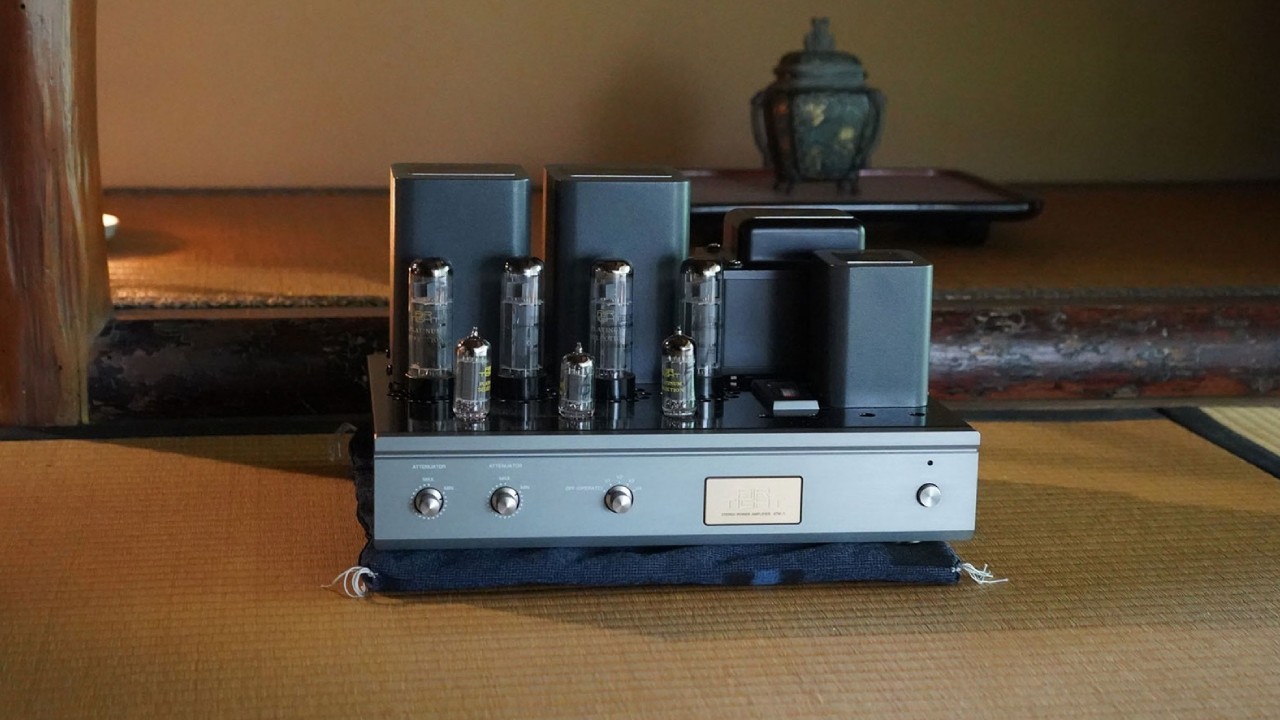
1. Air Tight ATM-1E Edition: Tube power amplifier with EL34 tubes
Air Tight ATM-1E Edition stereo tube power amplifier with visible output transformers and chassis-mounted bias adjustment.
The Air Tight ATM-1E Edition continues the ATM-1 concept as a stereo tube power amplifier built around EL34 tubes in a push-pull configuration.
The supplied material highlights Air Tight’s tube-first design philosophy: the company selects a tube for its desired musical character, then develops the circuit around it.
This edition adds Tamura output transformers and choke, a newly constructed internal layout, and an accurate bias meter with independent bias control on the top of the chassis.
Best for: EL34 tube amplifier enthusiasts
- EL34 push-pull tube design
- Tamura output transformers and choke
- Independent bias control with top-mounted bias meter
- Design rooted in Air Tight’s long-running ATM-1 concept
Verdict: A heritage-minded stereo tube power amplifier for listeners who value a carefully developed EL34-based circuit and hands-on bias control.

2. Audio Research LS-2: Pure Class A Tube Preamplifier with Modern Touchscreen Control
Audio Research LS-2 tube preamplifier, designed as a purist Class A line stage with modern touchscreen operation.
The Audio Research LS-2 is a tube preamplifier, so its purpose is system control and signal handling rather than driving loudspeakers directly.
Its design is described as a pure tube line stage operating in full Class A, with no semiconductors in the signal path and no global negative feedback.
The circuit uses a pair of 6H30 double triodes in a cathode follower configuration, chosen to keep output impedance low for compatibility with a wide range of power amplifiers and cable lengths. The supplied title also notes modern touchscreen control, giving the purist circuit a contemporary interface.
Best for: Purist two-channel systems needing a tube line stage
- Full Class A tube preamplifier design
- No semiconductors in the signal path
- No global negative feedback
- 6H30 tubes in cathode follower configuration
Verdict: A focused tube preamplifier for systems where signal-path simplicity, low output impedance, and modern control are more important than feature overload.

3. SMSL DA-8S: Compact and affordable Class D amplifier
SMSL DA-8S compact Class D amplifier with XLR, RCA, Bluetooth input, and speaker outputs.
The SMSL DA-8S is a small Class D integrated amplifier built around the Infineon MA12070 amplifier module.
The source specifies 2 x 80 W into 4Ω and 2 x 40 W into 8Ω, with efficiency above 92 percent.
Connectivity is straightforward but useful, with balanced XLR, unbalanced RCA, speaker terminals, and Bluetooth 5.0 with aptX support. The SDB mode also allows low and high frequency adjustment from -10 dB to +10 dB.
Best for: Compact stereo systems and desktop setups
- Compact Class D amplifier design
- Balanced XLR and RCA inputs
- Bluetooth 5.0 with aptX support
- Adjustable bass and treble via SDB mode
Verdict: A space-saving Class D amplifier with unusually useful connectivity for its size, including balanced input and Bluetooth playback.

4. Hegel H20: Limited edition amplifier from Norway
Hegel H20 stereo power amplifier with aluminum front panel, RCA and XLR inputs, and gold-plated speaker terminals.
The Hegel H20 is a stereo power amplifier that builds on ideas from the earlier H10 while borrowing elements from the larger H30.
The supplied material points to the addition of Hegel SoundEngine modules with special computer configuration, new field-effect transistors, and both RCA and balanced XLR inputs.
Its construction also receives attention, with anodized aluminum top and side panels, a substantial aluminum front panel, and high-quality gold-plated speaker terminals.
Best for: Two-channel systems needing a dedicated power amplifier
- RCA and balanced XLR inputs
- Hegel SoundEngine modules
- New field-effect transistors
- Anodized metal chassis panels
Verdict: A Norwegian stereo power amplifier that combines Hegel’s SoundEngine approach with robust metal construction and flexible line-level input options.
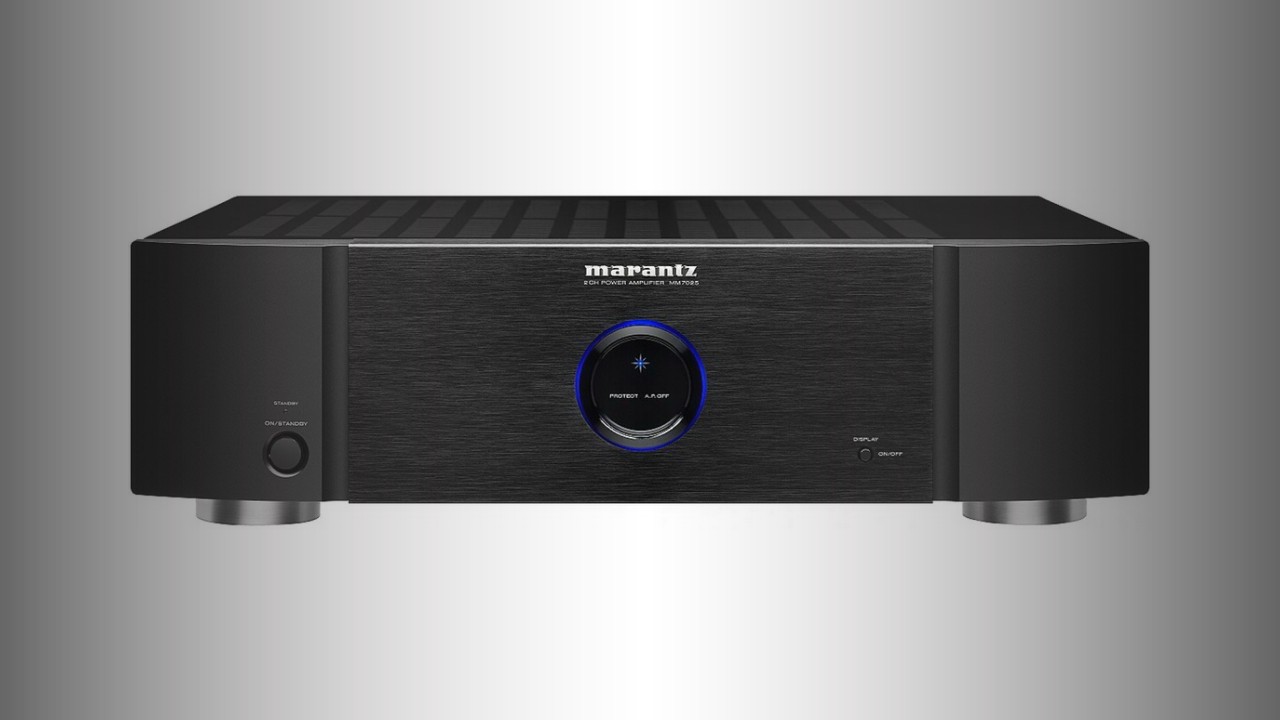
5. Marantz MM7025: Two-channel power amplifier that will add muscle to any system
Marantz MM7025 two-channel power amplifier with central display, current feedback topology, and substantial internal power supply.
The Marantz MM7025 is a two-channel power amplifier intended for both home theater and serious hi-fi use.
Its specified output is 140 W per channel into 8Ω and 170 W per channel into 6Ω, supported by a large W-shaped transformer, two 15,000 uF electrolytic capacitors, and Marantz’s LDPS linear power supply.
The design also includes current feedback circuitry, a metal anti-vibration chassis, and a temperature-controlled cooling system for the output transistors.
Best for: Adding two-channel power to hi-fi or home theater systems
- 140 W per channel into 8Ω
- Current feedback circuit topology
- Large W-shaped transformer and LDPS linear power supply
- Anti-vibration metal chassis
Verdict: A practical Marantz power amplifier for users who need a substantial two-channel upgrade with conventional speaker-driving muscle.
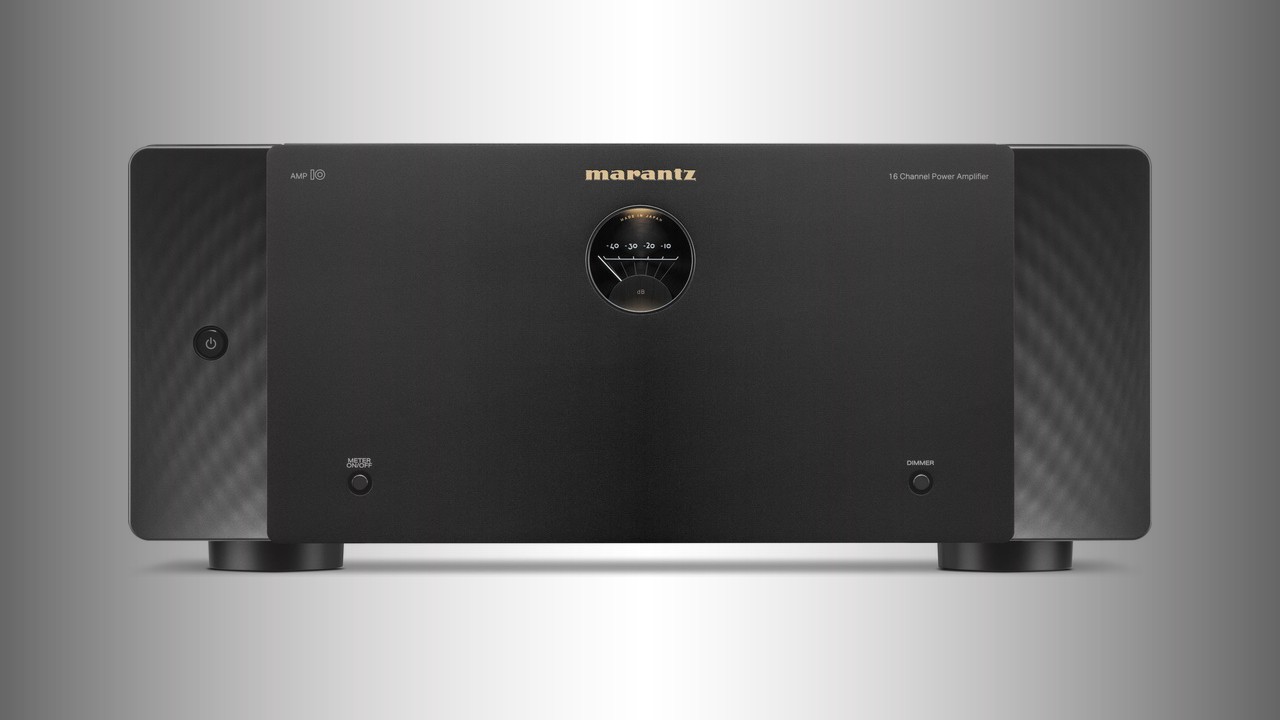
6. Marantz AMP 10: Top-of-the-line 16-channel amplifier
Marantz AMP 10 multichannel power amplifier with 16 channels, balanced inputs, and Marantz styling cues.
The Marantz AMP 10 is a 16-channel Class D power amplifier specified at 200 W per channel.
It is designed to partner with the Marantz AV 10 home theater processor and includes current feedback amplification, Marantz HDAM technology, and balanced line inputs.
The source emphasizes its broad connector set, selectable amplifier modes, flexible speaker placement options, and customization using Audyssey MultEQ XT.
Best for: Large Marantz-based home theater systems
- 16-channel Class D power amplifier
- 200 W per channel specification
- Balanced line inputs
- Selectable amplifier modes for system flexibility
Verdict: A high-channel-count Marantz amplifier built for ambitious surround systems that need extensive amplification and flexible configuration.
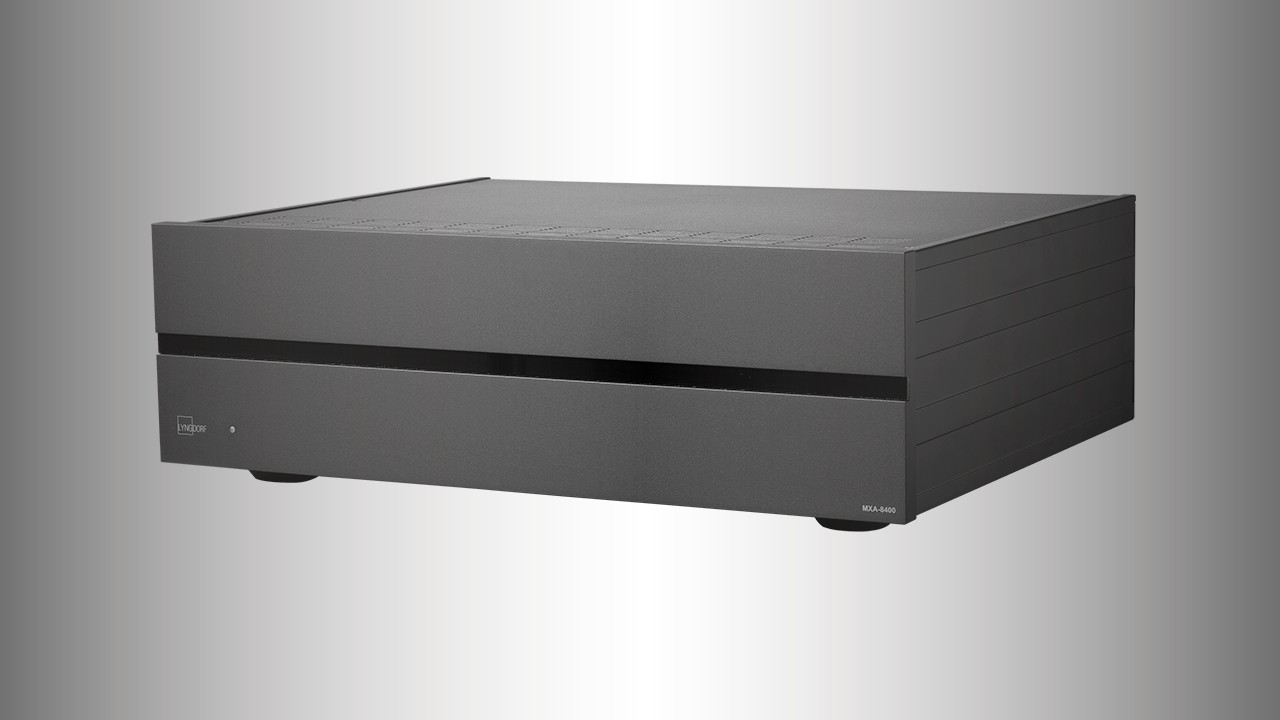
7. Lyngdorf MXA-8400: A new benchmark in multichannel amplifiers
Lyngdorf MXA-8400 eight-channel amplifier using Purifi EIGENTAKT modules and Lyngdorf PowerPerfect power supply design.
The Lyngdorf MXA-8400 is an eight-channel power amplifier specified at 8 x 400 W.
It uses Purifi EIGENTAKT technology with EIGENTAKT ErrorCorrection, Lyngdorf’s PowerPerfect power supply, ultra-low-noise analog input stages, and a four-layer main PCB optimized for signal purity and grounding.
The supplied material frames it as Lyngdorf Audio’s most powerful product, intended to deliver stable, high-output multichannel performance.
Best for: High-output multichannel systems
- 8 x 400 W output specification
- Purifi EIGENTAKT technology
- EIGENTAKT ErrorCorrection circuit
- PowerPerfect power supply
Verdict: A powerful eight-channel Lyngdorf amplifier for systems that require substantial multichannel output and advanced Class D technology.
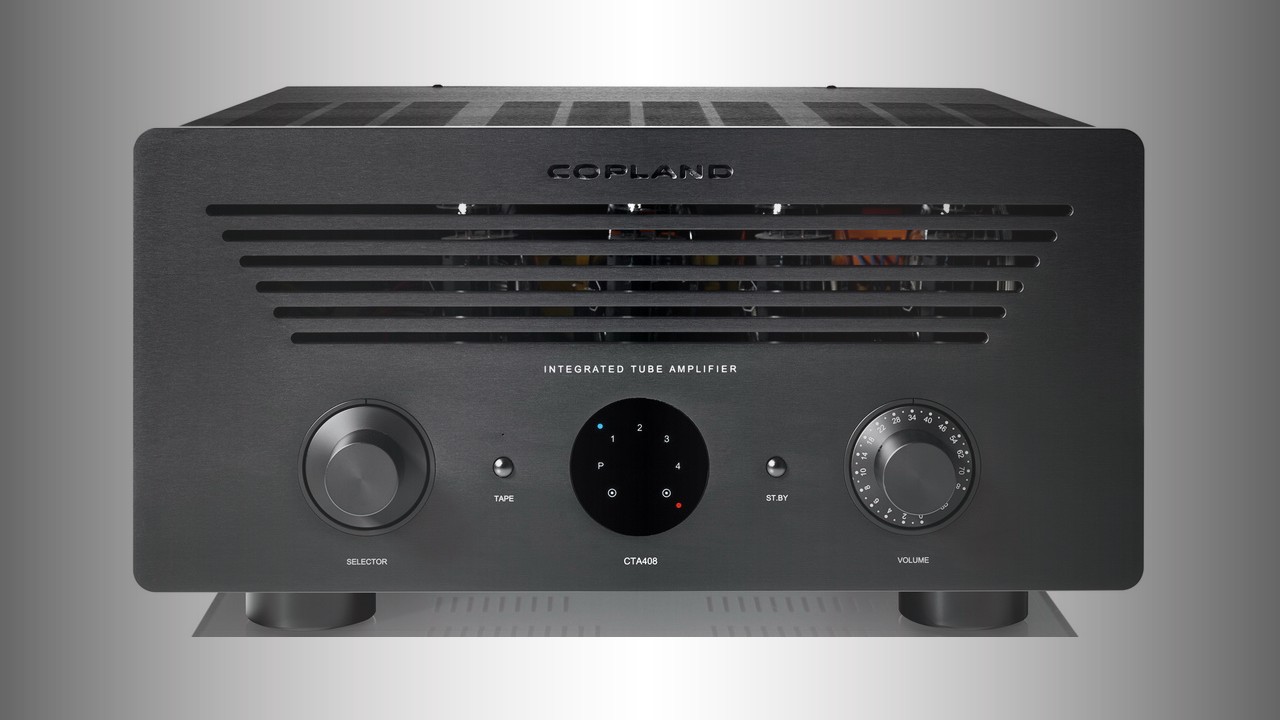
8. Copland CTA-408: Powerful feature-packed amplifier
Copland CTA-408 integrated amplifier with visible tube section, phono inputs, headphone capability, and KT150 output tubes.
The Copland CTA-408 is an integrated amplifier aimed at listeners who want amplification, phono support, and headphone listening in one chassis.
It includes separate MC and MM phono inputs, monitoring inputs and outputs, a headphone amplifier, and a soft-start procedure intended to extend tube life.
The amplifier stage combines tubes with MOSFET assistance, uses multiple individual constant-current power supplies, and is specified at 75 W per channel into 8Ω with KT150 output tubes.
Best for: Integrated systems with vinyl and headphones
- Separate MC and MM phono inputs
- Built-in headphone amplifier
- Soft-start procedure for tube life
- 75 W per channel into 8Ω
Verdict: A versatile tube-based integrated amplifier that brings phono inputs, headphone output, and substantial KT150-based power into one component.
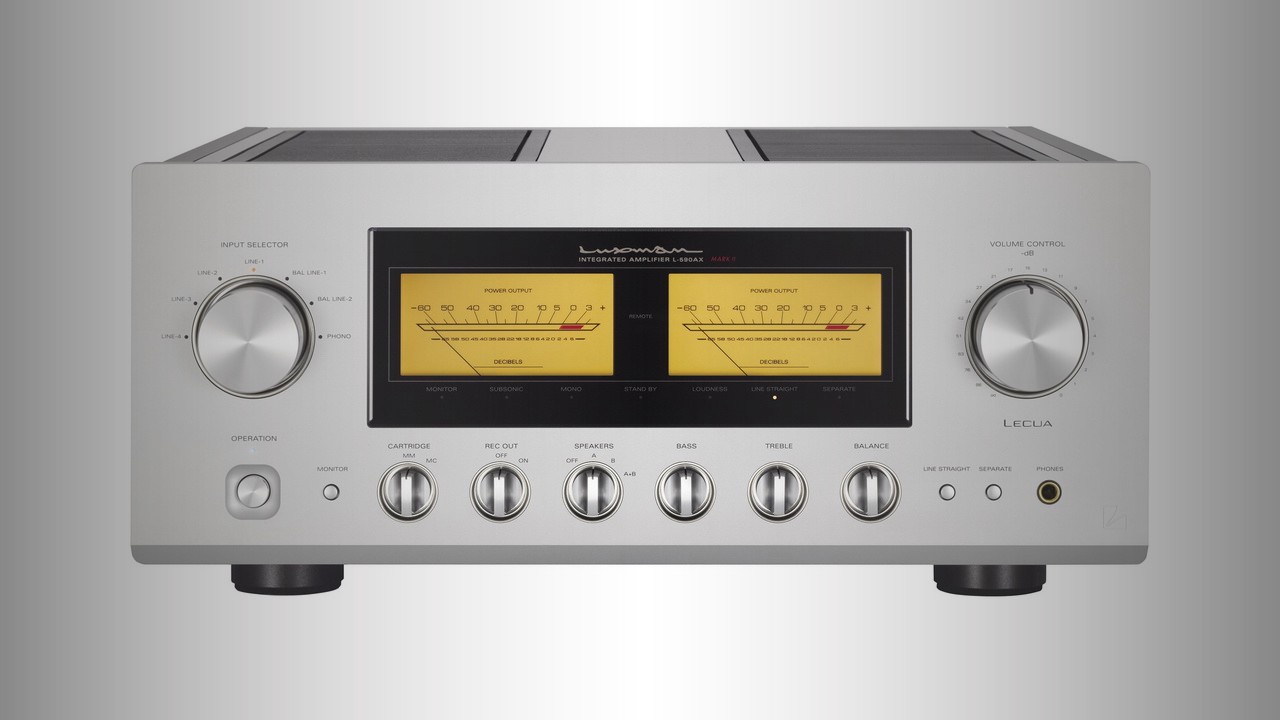
9. Luxman L-590AX Mark II: Pure power made in Japan
Luxman L-590AX Mark II integrated amplifier with pure Class A operation and substantial transformer-based power supply.
The Luxman L-590AX Mark II is a Japanese-made integrated amplifier operating in pure Class A.
The source specifies 30 W per channel into 8Ω and 60 W per channel into 4Ω.
Its power supply is built around a 615 VA EI-type transformer and a high-capacity capacitor bank, while the signal path uses a low-impedance discrete preamp, carefully selected custom components, and short optimized routing. Luxman’s ODNF technology is included to address distortion in problem areas of the circuit.
Best for: Class A integrated amplifier systems
- Pure Class A integrated amplifier
- 30 W per channel into 8Ω
- 615 VA EI-type power transformer
- Luxman ODNF distortion-suppression technology
Verdict: A carefully specified Luxman integrated amplifier for listeners who want pure Class A operation and a substantial internal power supply in one unit.
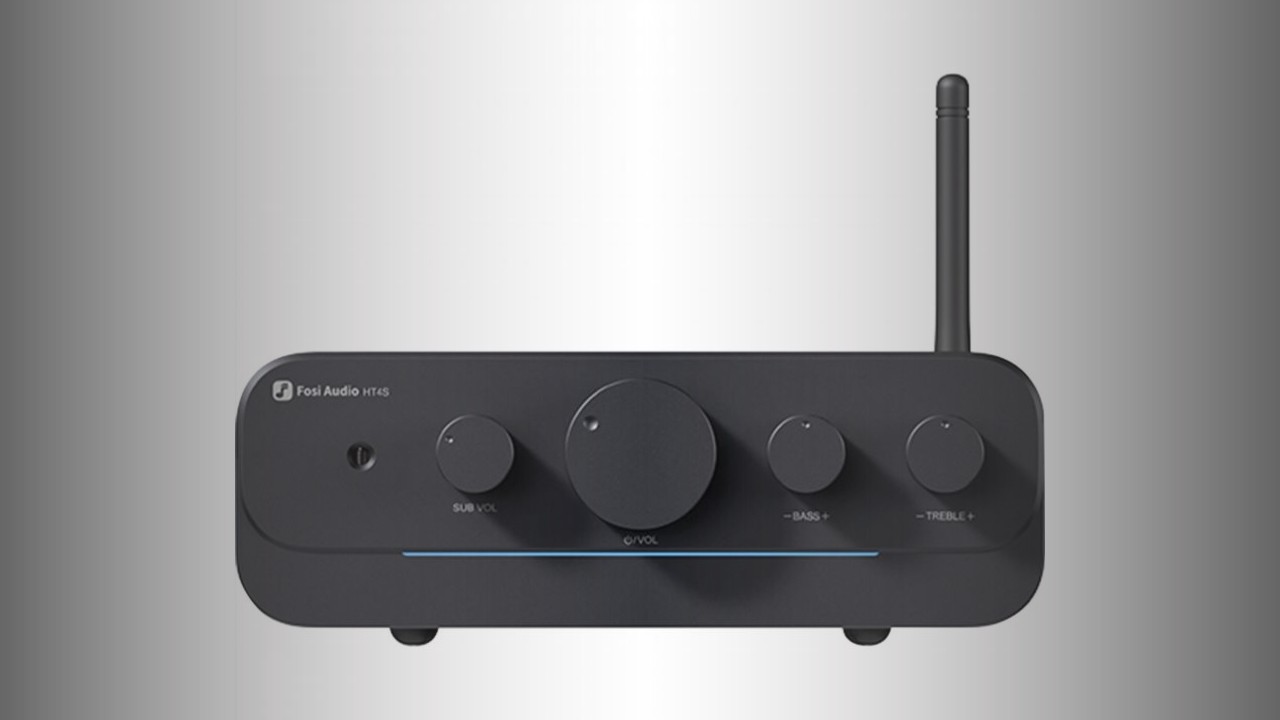
10. Fosi Audio HT4S: Compact 5-Channel Bluetooth Amplifier
Fosi Audio HT4S compact five-channel amplifier with Bluetooth, optical input, auxiliary input, and subwoofer connection options.
The Fosi Audio HT4S is a compact five-channel integrated power amplifier using two TPA3116 amplifier chips.
It can operate in 5.0 mode at 5 x 30 W into 4Ω or in 4.1 mode at 4 x 30 W plus 1 x 60 W into 4Ω, allowing one channel to be reserved for a passive subwoofer.
A pre-out is also provided for an active subwoofer, enabling a 5.1-style setup. Inputs include Bluetooth, Toslink optical, and 3.5 mm auxiliary, while the front light strip changes color according to the selected input.
Best for: Compact surround and casual multichannel setups
- Compact five-channel design
- Switchable 5.0 and 4.1 modes
- Pre-out for active subwoofer connection
- Bluetooth, optical, and 3.5 mm inputs
Verdict: A small, flexible multichannel amplifier for simple surround layouts where Bluetooth, optical input, and subwoofer options matter.
Quick comparison
The amplifiers here differ most clearly by system role, channel count, circuit type, and connectivity.
A tube power amplifier such as the Air Tight is a very different proposition from a line-stage preamplifier like the Audio Research, while the Marantz, Lyngdorf, and Fosi models address multichannel needs at very different scales.
| Product | Best for | Verdict |
|---|---|---|
| Air Tight ATM-1E Edition | EL34 tube stereo power amplification | Choose it for a traditional push-pull EL34 power amp with Tamura transformers and manual bias facilities. |
| Audio Research LS-2 | Tube preamplifier duties | Choose it when the system needs a purist Class A tube line stage rather than a power amplifier. |
| SMSL DA-8S | Compact stereo amplification | Choose it for a small Class D stereo amplifier with balanced input, Bluetooth, and tone adjustment. |
| Hegel H20 | Dedicated two-channel power amplification | Choose it for a Hegel stereo power amplifier with SoundEngine modules and both RCA and XLR inputs. |
| Marantz MM7025 | Two-channel hi-fi or theater power | Choose it to add a specified 140 W per channel into 8Ω to a stereo or home theater system. |
| Marantz AMP 10 | Large home theater systems | Choose it for 16 channels of Marantz amplification with balanced inputs and selectable amplifier modes. |
| Lyngdorf MXA-8400 | High-output eight-channel systems | Choose it for 8 x 400 W multichannel amplification using Purifi EIGENTAKT technology. |
| Copland CTA-408 | One-box integrated amplification with vinyl support | Choose it for an integrated amplifier with KT150 tubes, MC and MM phono inputs, and headphone output. |
| Luxman L-590AX Mark II | Pure Class A integrated systems | Choose it for a Japanese-made Class A integrated amplifier with a large transformer-based supply. |
| Fosi Audio HT4S | Small multichannel and 5.1-style setups | Choose it for a compact five-channel amplifier with Bluetooth, optical input, and flexible subwoofer options. |
Frequently asked questions
Should I choose an integrated amplifier, power amplifier, or preamplifier?
Choose an integrated amplifier if you want source control and speaker amplification in one chassis, as with the Copland, Luxman, SMSL, or Fosi models.
Choose a power amplifier if you already have a preamplifier or processor, as with the Air Tight, Hegel, Marantz MM7025, Marantz AMP 10, or Lyngdorf.
Choose a preamplifier like the Audio Research LS-2 when you need line-level control before a separate power amplifier.
How much do channel count and system layout matter?
They matter as much as power.
A two-channel amplifier is suited to stereo listening or adding a pair of channels, while the Marantz AMP 10, Lyngdorf MXA-8400, and Fosi HT4S address multichannel systems.
Match the amplifier’s channel count to the speakers you need to drive, including any surround or subwoofer plans.
Are tube amplifiers or Class D amplifiers the better choice?
The supplied products show that both approaches serve different priorities.
Tube-focused designs such as the Air Tight, Audio Research, and Copland emphasize specific valve circuits and signal-path choices.
Class D models such as the SMSL, Marantz AMP 10, Lyngdorf, and Fosi focus on efficiency, compactness, or high channel counts. The better choice depends on the system role and practical requirements.
When are balanced XLR inputs useful?
Balanced inputs are useful when the partnering preamplifier or processor also provides balanced outputs, especially in systems with longer cable runs.
In this group, the SMSL DA-8S, Hegel H20, and Marantz AMP 10 specifically include balanced input options, while the Audio Research LS-2 is described as having a fully balanced architecture.
How to Choose from This Amplifier Shortlist
Start by defining the amplifier’s job.
If the system needs a line-stage controller, the Audio Research LS-2 is the relevant choice here because it is a preamplifier, not a speaker-driving power amp.
If you already have a preamp or AV processor, look toward a dedicated power amplifier such as the Air Tight ATM-1E Edition, Hegel H20, Marantz MM7025, Marantz AMP 10, or Lyngdorf MXA-8400. Next, decide on channel count. Stereo systems naturally point toward two-channel options such as the Air Tight, Hegel, Marantz MM7025, Luxman, Copland, or SMSL. Larger home theater installations are better served by the Marantz AMP 10’s 16 channels or the Lyngdorf MXA-8400’s eight high-power channels, while the Fosi HT4S suits compact multichannel arrangements with Bluetooth, optical input, and subwoofer flexibility. Circuit type and features should follow the system brief rather than fashion. The Air Tight is the most traditional tube power amplifier in this list, the Audio Research is a purist tube preamplifier, and the Copland combines tubes with practical integrated-amplifier features such as MC and MM phono inputs. The Luxman focuses on pure Class A integrated amplification, while the SMSL and Fosi show how compact Class D designs can deliver useful connectivity in small enclosures. For high-channel-count systems, the Marantz AMP 10 and Lyngdorf MXA-8400 bring multichannel scale rather than minimalist two-channel simplicity. Finally, check compatibility before deciding: input type, speaker load, channel requirements, preamp or processor matching, space, ventilation, and whether you need phono, headphone, Bluetooth, optical, RCA, or XLR connectivity. The strongest amplifier choice is the one whose role, connections, and channel count fit the rest of the system without forcing unnecessary compromises.



Sound Off
0Join the discussion if you have something to add.