
The Best Headphones for Sound, Value and Everyday Use
These five products cover very different priorities, from television listening and wireless ANC to affordable hi-fi earbuds and vocal-focused IEMs. Here is how they compare on sound, usability, features and value—and which one makes the most sense for you.

These five headphone products are aimed at very different listeners. The Sennheiser RS 275 is a dedicated TV system, the FiiO SNOWSKY FH3 LUMI is a tuning-led hybrid earphone concept, the Kiwi Ears Cadenza II is a wired single-driver IEM, the Final Audio ZE300 is an affordable pair of true wireless earbuds, and the Nothing Headphone (a) is a feature-rich wireless over-ear model.
That makes a simple ranking misleading. The most useful comparison is about priorities: which product gives you the best sound for the money, which is easiest to live with, which offers the strongest feature set, and which is purpose-built for a particular job? On that basis, the Final Audio ZE300 is the Best Overall because it combines unusually refined sound, comfort, compactness and solid battery life at around $50. The others become better choices when your needs are more specific.
Quick verdict
- Best Overall: Final Audio ZE300 — the strongest balance of sound quality, comfort, portability and price.
- Best for TV: Sennheiser RS 275 — the clear choice for television dialogue, low-latency wireless listening and long viewing sessions.
- Best Wired Sound: Kiwi Ears Cadenza II — a smooth, mature and musical IEM for listeners who do not need wireless features.
- Best Features: Nothing Headphone (a) — the strongest option for battery life, LDAC, hybrid ANC and over-ear convenience.
- Most Interesting Concept: FiiO SNOWSKY FH3 LUMI — worth watching if vocal-focused, retro-inspired tuning appeals to you, but too many buying details remain undisclosed.
Comparison at a glance
| Product | Type | Sound character | Usability strengths | Main limitation | Best suited to |
|---|---|---|---|---|---|
| Final Audio ZE300 | True wireless earbuds | Clean, spacious and clarity-focused, with controlled bass and slightly elevated treble | Very compact, comfortable, reliable Bluetooth 5.4, up to about 21 hours with the case | No app or EQ; ANC and transparency are average | Affordable everyday listening and strong sound quality |
| Sennheiser RS 275 | Wireless TV headphone system | Tuned for speech intelligibility and immersive bass, with adjustable character | TV transmitter, Auracast, HDMI ARC, optical/3.5mm input, up to 50 hours | Designed primarily around television use; no price supplied | TV, films, sport and dialogue-heavy viewing |
| Kiwi Ears Cadenza II | Wired in-ear monitor | Smooth, balanced and warm-leaning, with focused sub-bass and restrained treble | Lightweight, secure, replaceable 0.78 mm 2-pin cable, easy to drive | Wired only | Long listening sessions and music-first users |
| Nothing Headphone (a) | Wireless over-ear headphones | Bass-focused, with LDAC support and spatial processing | Up to 135 hours without ANC, hybrid ANC, transparency, physical controls | Heavier than the in-ear alternatives; source does not detail sound performance beyond its positioning | Frequent travellers and feature-focused wireless listeners |
| FiiO SNOWSKY FH3 LUMI | Hybrid earphone concept | Retro-style vocal tuning | Clear tuning concept | No price, release timing, specifications or package details supplied | Listeners interested in vocal-led tuning and future product updates |
Final Audio ZE300
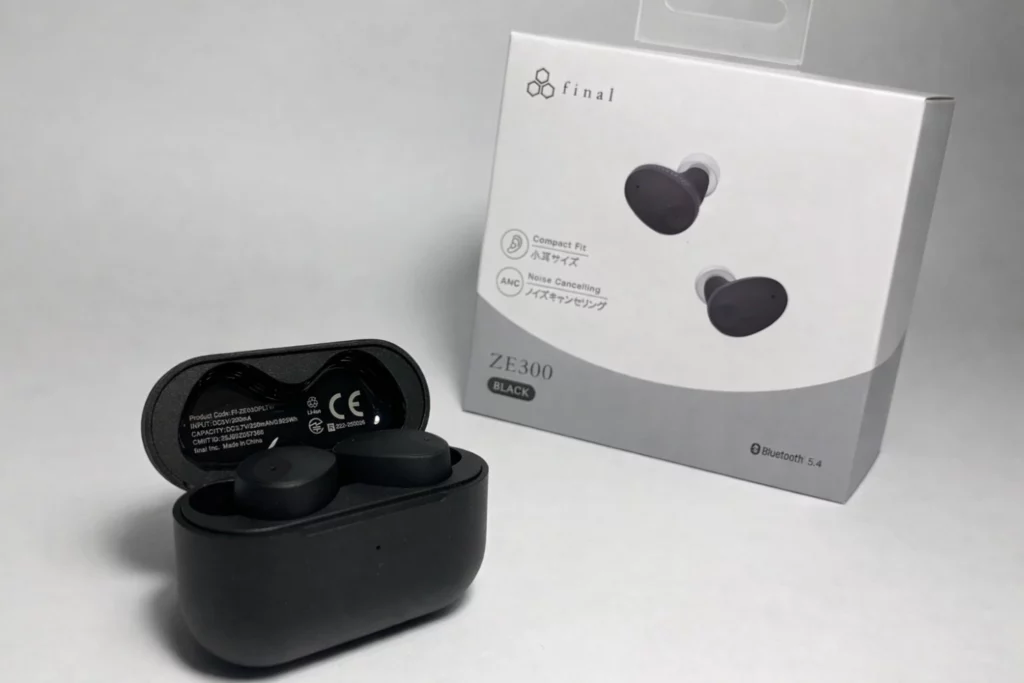
The Final Audio ZE300 is the easiest product here to recommend to the widest range of buyers. It is not the most technically ambitious model in the group, and it does not offer the best noise cancellation or the most extensive controls. Its advantage is balance: it delivers a convincing listening experience while remaining small, comfortable, simple and affordable.
At around $50, the ZE300 is unusually focused on sound rather than on a long list of features. Its presentation is clean, spacious and mature, with a mild V-shaped balance that avoids the usual budget-earbud problems of bloated bass and harsh treble. Bass is moderately deep and controlled rather than overwhelming. The midrange is the highlight, with clear, slightly forward vocals and articulate instruments. Treble adds air and definition, although particularly treble-sensitive listeners may find it occasionally bright.
That sound profile gives the ZE300 a useful advantage over the Nothing Headphone (a) if your priority is clarity rather than a bass-focused presentation. It is also a more practical everyday option than the wired Cadenza II if you want a pocketable wireless product. The Cadenza II remains the more compelling choice for a dedicated music listener who is happy to use a cable, but the ZE300 removes that compromise.
The physical design is another important part of the value proposition. The earbuds and charging case are among the smallest in the source comparison, and the case weighs under 40 grams with the earbuds inside. The matte finish resists fingerprints, while the low-profile earbuds sit securely without creating pressure during extended use. Battery life is approximately five hours per charge with ANC off, around 4.5 hours with ANC on, and up to about 21 hours in total with the case.
The compromises are straightforward. There is no companion app or EQ customisation, and the touch controls rely heavily on multi-tap gestures. ANC reduces low-frequency noise effectively but does not do much with higher frequencies. Transparency mode works, but its clarity and volume are limited. Call quality is usable rather than exceptional. These are meaningful limitations if features are your priority, but they do not undermine the ZE300's central strength: very good sound at a low price.
Sennheiser RS 275
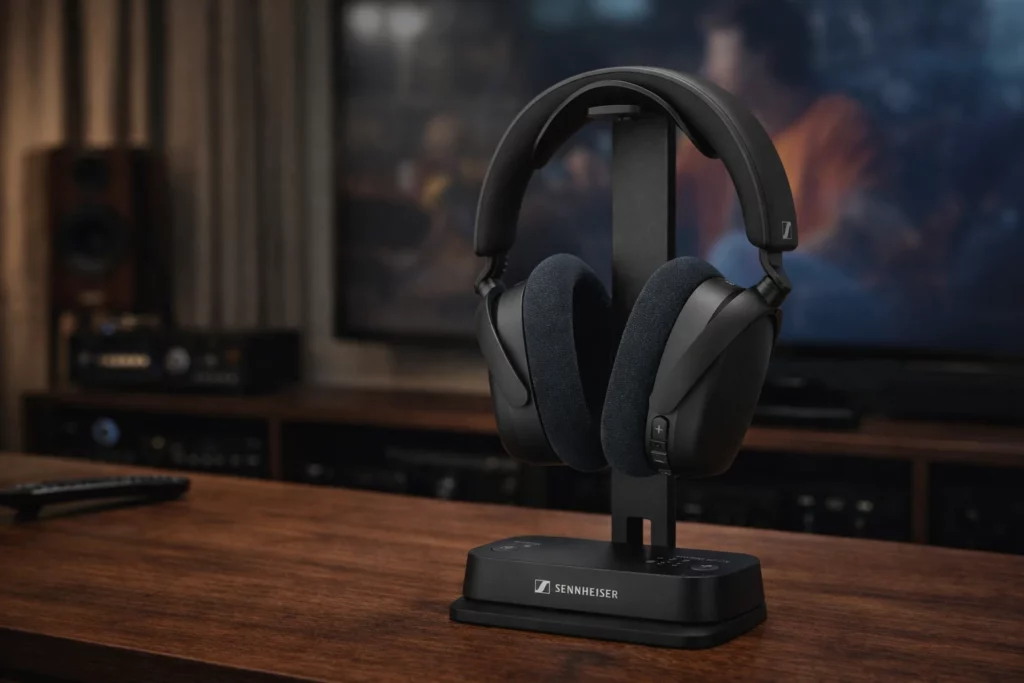
The Sennheiser RS 275 should not be judged as a general-purpose alternative to the ZE300 or Cadenza II. It is a complete television listening system, pairing the HDR 275 headphones with the BTA1 transmitter. If you regularly watch television and want better control over volume, dialogue and wireless range, this is the most purpose-built product in the comparison.
The bundled transmitter gives the RS 275 a much broader connection strategy than a conventional pair of Bluetooth headphones. It offers a combined optical and 3.5mm input, HDMI ARC, Bluetooth pairing for a smartphone, and Auracast transmission using the LC3 codec. The claimed range is up to 50 metres, and the system is designed for low-latency audio and picture synchronisation. The BTA1 can also connect with compatible earbuds, hearing aids and speakers using Auracast.
For television, the important detail is not simply connectivity but control. The transmitter includes virtual surround sound and enhanced speech clarity modes for TV or HDMI ARC sources. The Smart Control Plus app adds hearing profiles, left-right balance, audio modes, equaliser settings, bass boost and other hearing enhancements. The headphones can also use a selectable noise-cancellation mode to reduce static and interference while switching the signal to mono, a feature intended for classic films and television.
The RS 275 is also the most convincing option for marathon viewing. The HDR 275 headphones are described as lightweight, with breathable cushions, large tactile buttons and up to 50 hours of listening per charge. Charging is available through the transmitter's USB-C port or a wall charger. The earcups and battery are user-replaceable, which is a practical advantage for long-term ownership.
Compared with the Nothing Headphone (a), the RS 275 offers a more specialised TV setup and more connection options for a home entertainment system. The Nothing model is the more flexible everyday over-ear headphone, with ANC, LDAC and a much longer stated battery life. Compared with the ZE300, the Sennheiser is far less pocketable but much better equipped for television dialogue, transmitter-based listening and shared Auracast possibilities. Choose it when the TV is the centre of your listening life.
Kiwi Ears Cadenza II
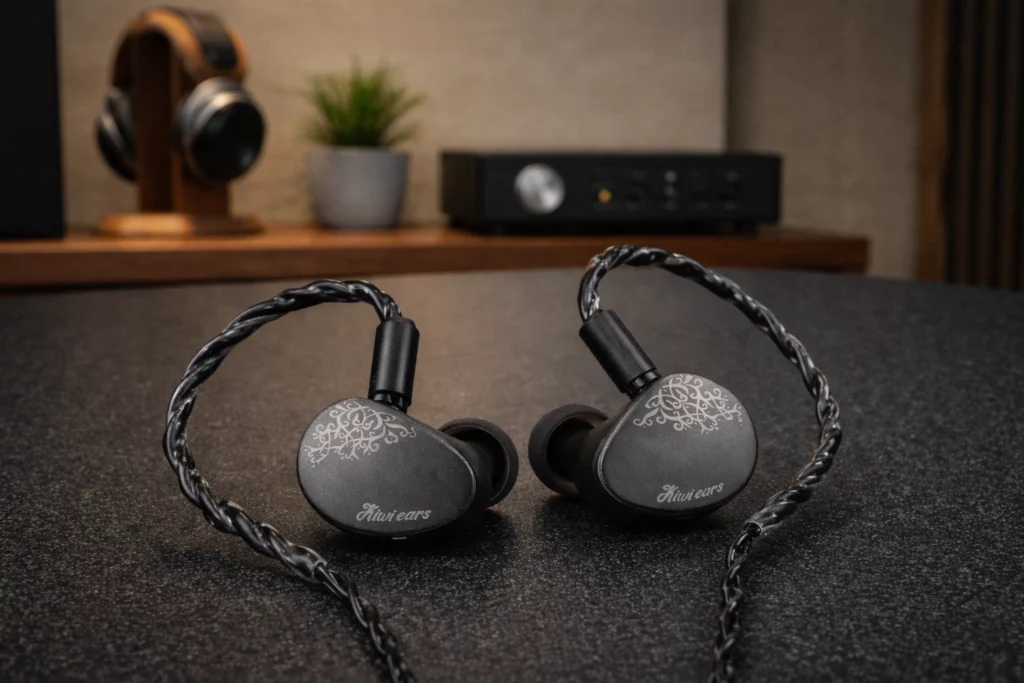
The Kiwi Ears Cadenza II is the strongest choice for a listener who values musical performance above wireless convenience. Its simple formula—a single 10 mm titanium-coated dynamic driver and the KARS 2.0 acoustic system—avoids the complexity of the FiiO concept and the feature race represented by the wireless models.
Its sound is smooth, balanced and easy to enjoy for long periods. Sub-bass has real depth and physical weight, but it is controlled before it spreads into the midrange. A gentle upper-bass roll-off keeps the presentation from becoming thick or boomy. The lower midrange has some added density and warmth around the 300–400 Hz region, while vocals remain natural rather than pushed aggressively forward or hidden in the mix.
Treble is restrained but not dull. There is enough sparkle and air for detail, without the forced brightness that can make some budget IEMs tiring. The result is less immediately flashy than a heavily boosted tuning, but more dependable over a full listening session. This is the main reason to choose the Cadenza II over the ZE300: its tuning is presented as a mature, source-flexible music solution rather than a compact wireless convenience product.
Practical details are equally strong. The lightweight composite polycarbonate shells have a smooth matte finish, aluminium faceplates and a secure shape intended for commuting, desk use and extended listening. The 0.78 mm 2-pin cable is detachable and replaceable, and the included 1.2-metre monocrystalline copper cable is described as solid and flexible. With an impedance of 18 ohms and sensitivity of 106 dB, it is designed to work from a phone with a dongle, a portable DAP or a desktop DAC.
The trade-off is obvious: this is a wired earphone. There is no ANC, no transparency mode and no wireless freedom. It also lacks the ultra-small convenience of the ZE300. But if you already have a suitable source and want a smooth, coherent and non-fatiguing music presentation, the Cadenza II is the most convincing sound-first option among the products with established performance information.
Nothing Headphone (a)
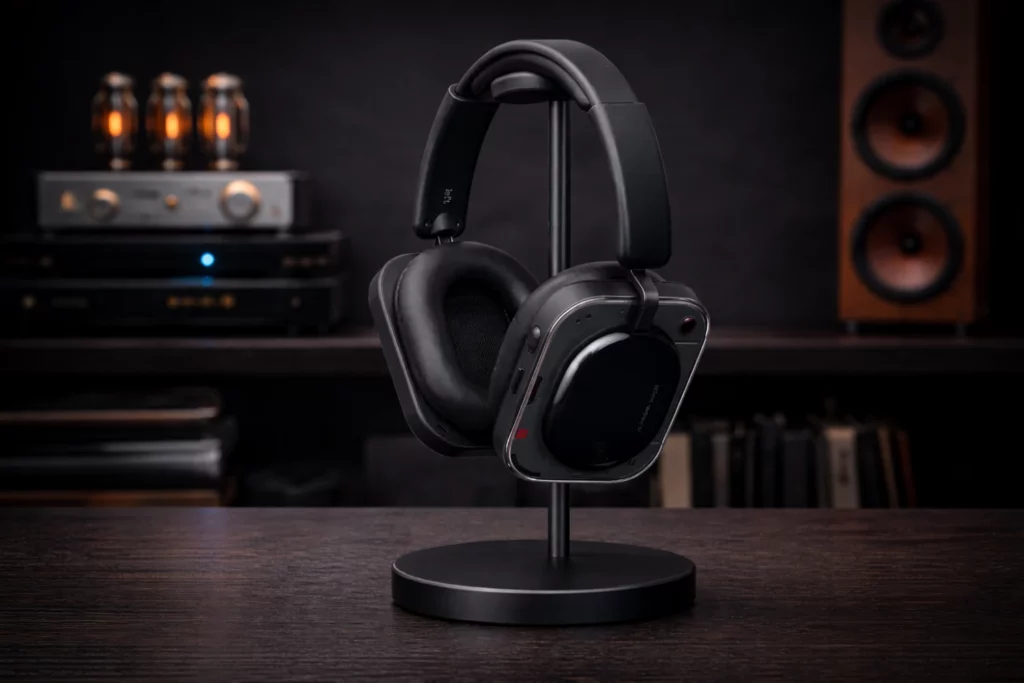
The Nothing Headphone (a) is the feature-led alternative. It is the product to consider when long battery life, wireless codecs, ANC and over-ear comfort matter more than absolute compactness. Its positioning is different from both the ZE300 and the Cadenza II: it offers a larger headphone format, a bass-focused sound signature and a substantial collection of modern wireless features.
The standout specification is battery life. The source gives a figure of approximately 130 hours with ANC off and later states up to 135 hours, so the safest conclusion is that the headphones are rated for up to 135 hours without ANC. A five-minute charge is said to provide about five hours of listening. That is dramatically longer than the ZE300's roughly 21-hour total with its case and more than the Cadenza II can offer in wireless convenience, since the IEM is wired.
Nothing also includes Bluetooth 5.4, LDAC support for streaming up to 32-bit/96 kHz, standard and transparency ANC modes, and a hybrid ANC setting that adapts to the environment and fit. The hybrid mode is reported to offer up to 40 dB of reduction and uses four microphones. Three physical controls—a roller, switch and customisable button—should also be easier to operate than multi-tap touch controls once configured.
Sound is described as bass-focused, with 40 mm titanium-coated drivers and Audiosphere processing developed with Audiodo. The processing is intended to expand the perceived soundstage while maintaining a balanced and realistic tuning philosophy. This makes the Nothing model a more ambitious wireless package than the ZE300, especially for listeners who want an over-ear design and modern codec support.
Its drawbacks are mainly about priorities. At 310 grams, it is substantially larger and heavier than either pair of in-ear alternatives. The source material provides extensive feature information but does not offer the same detailed listening assessment supplied for the ZE300 or Cadenza II. At €159, it is also positioned well above the ZE300's approximately $50 price. Buy it for its battery life, ANC, LDAC and over-ear format—not simply because it has the longest specification sheet.
FiiO SNOWSKY FH3 LUMI
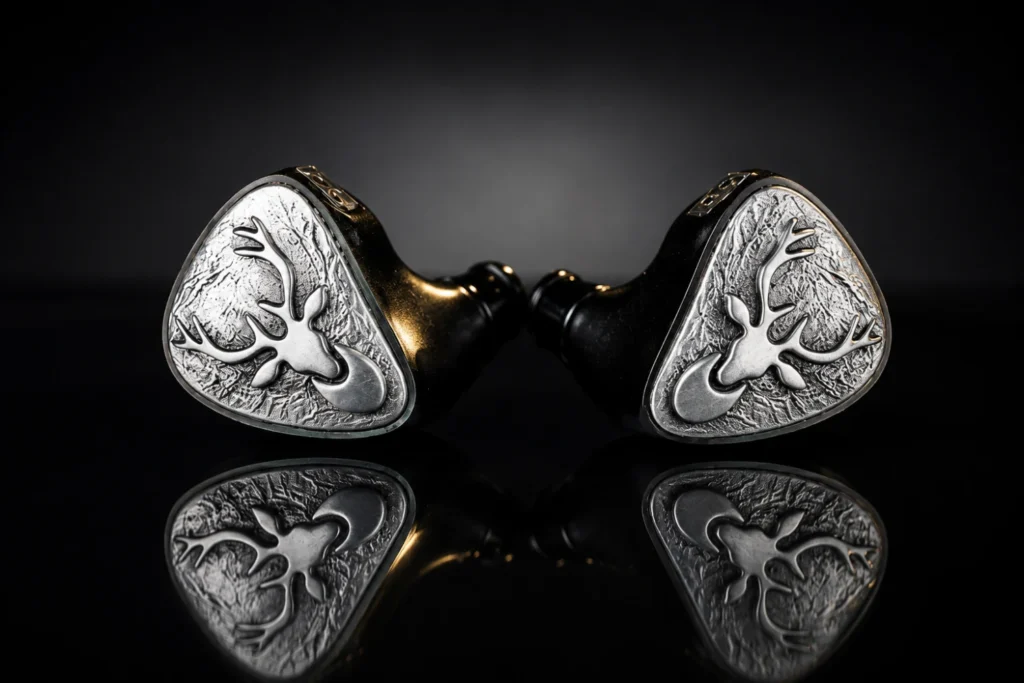
The FiiO SNOWSKY FH3 LUMI is the least complete buying proposition here, but it has the clearest stated artistic direction. It is a concept hybrid earphone built around a retro approach to vocal tuning. That makes it potentially interesting for listeners who care strongly about how voices are presented, but the available information is not sufficient for a conventional value recommendation.
The hybrid designation confirms that the acoustic design combines different driver technologies, but FiiO has not supplied the number or type of drivers, the crossover arrangement or the frequency allocation. There are also no published figures for frequency response, impedance or sensitivity. Unlike the Cadenza II, therefore, the FH3 LUMI cannot be assessed on paper against a source, amplifier or technical target.
The same uncertainty applies to ownership. No USD price, release schedule or market availability information has been provided. The cable configuration, connector type, package contents, accessories and finish options are also unspecified. Those omissions matter when comparing it with the Cadenza II, which has a defined detachable cable and published electrical information, or the ZE300, which arrives as a complete wireless system with a case and ear tips.
What is clear is the tuning goal. FiiO is presenting the FH3 LUMI through its retro-inspired vocal character rather than through neutrality, bass output or monitoring performance. That may appeal to listeners who want a deliberately voiced earphone centred on the human voice. For now, however, it is best treated as a product to watch rather than the safest purchase recommendation in this group.
How they differ
Sound character: The Cadenza II is the smoothest and most explicitly music-focused option, with controlled sub-bass, warm density and restrained treble. The ZE300 is clearer and more spacious, with a mild V-shaped balance and particularly strong midrange definition. The Nothing Headphone (a) is bass-focused and adds spatial processing. The RS 275 is tuned for speech intelligibility and immersive bass, while the FH3 LUMI is defined by its retro vocal concept rather than a complete tonal description.
Wireless convenience: The ZE300 and Nothing Headphone (a) are the natural everyday wireless choices. The ZE300 is smaller and simpler; the Nothing model offers far longer battery life, LDAC and more advanced ANC. The RS 275 is wireless too, but its transmitter and TV connectivity make it a home entertainment system rather than a pocket-first product. The Cadenza II and FH3 LUMI are wired earphone designs, although the FH3 LUMI's connector details remain unspecified.
Features: Nothing offers the broadest modern wireless feature set in a conventional headphone, while Sennheiser provides the most specialised connectivity through HDMI ARC, optical/3.5mm input, Bluetooth and Auracast. Final Audio deliberately keeps the ZE300 basic, and the lack of an app or EQ is part of its limitation. Kiwi Ears focuses on replaceability and source compatibility rather than software.
Value: The ZE300 has the clearest value case because its source explicitly places it at around $50 while describing sound quality that exceeds typical expectations for the segment. The Cadenza II may be the better musical fit for a wired listener, but no price is supplied in the source. Nothing's €159 price buys a much richer feature set, not simply a cheaper route to the same experience. No price is supplied for the Sennheiser or FiiO models, so direct price-value claims for them would be premature.
Which one should you buy?
- Choose the Final Audio ZE300 if you want the best all-round combination of low price, good sound, comfort, portability and dependable everyday wireless use. It is the Best Overall and Best Value pick, provided you can live without an app or advanced ANC.
- Choose the Sennheiser RS 275 if your main activity is watching television. Its transmitter, dialogue-focused tools, low-latency Auracast connection, long battery life and replaceable parts make it a much more suitable TV solution than any of the other products.
- Choose the Kiwi Ears Cadenza II if you listen mainly to music and do not mind a cable. Its mature, smooth tuning, comfortable fit and replaceable cable make it the Best Sound pick for a focused wired listening setup.
- Choose the Nothing Headphone (a) if battery life and features come first. It is the right alternative for frequent travellers or anyone who wants over-ear headphones with hybrid ANC, transparency, LDAC and physical controls.
- Wait for more information on the FiiO SNOWSKY FH3 LUMI if the retro vocal concept attracts you. It could suit listeners who specifically want that character, but price, availability and core specifications are still missing.
Final verdict
The Final Audio ZE300 is the Best Overall because it gets the fundamentals right without asking buyers to pay for features they may not need. Its sound is clean and mature, its design is exceptionally compact, its comfort is strong and its battery performance is competitive for the size. The Sennheiser RS 275, Kiwi Ears Cadenza II and Nothing Headphone (a) are better choices for clearly defined needs—TV listening, wired music or maximum wireless features—while the FiiO SNOWSKY FH3 LUMI remains an intriguing but incomplete concept. The right purchase depends on your listening situation, but the ZE300 is the safest recommendation when value and everyday usability matter most.

Comments 0
Share your experience, questions and perspective with other hi-fi enthusiasts.