
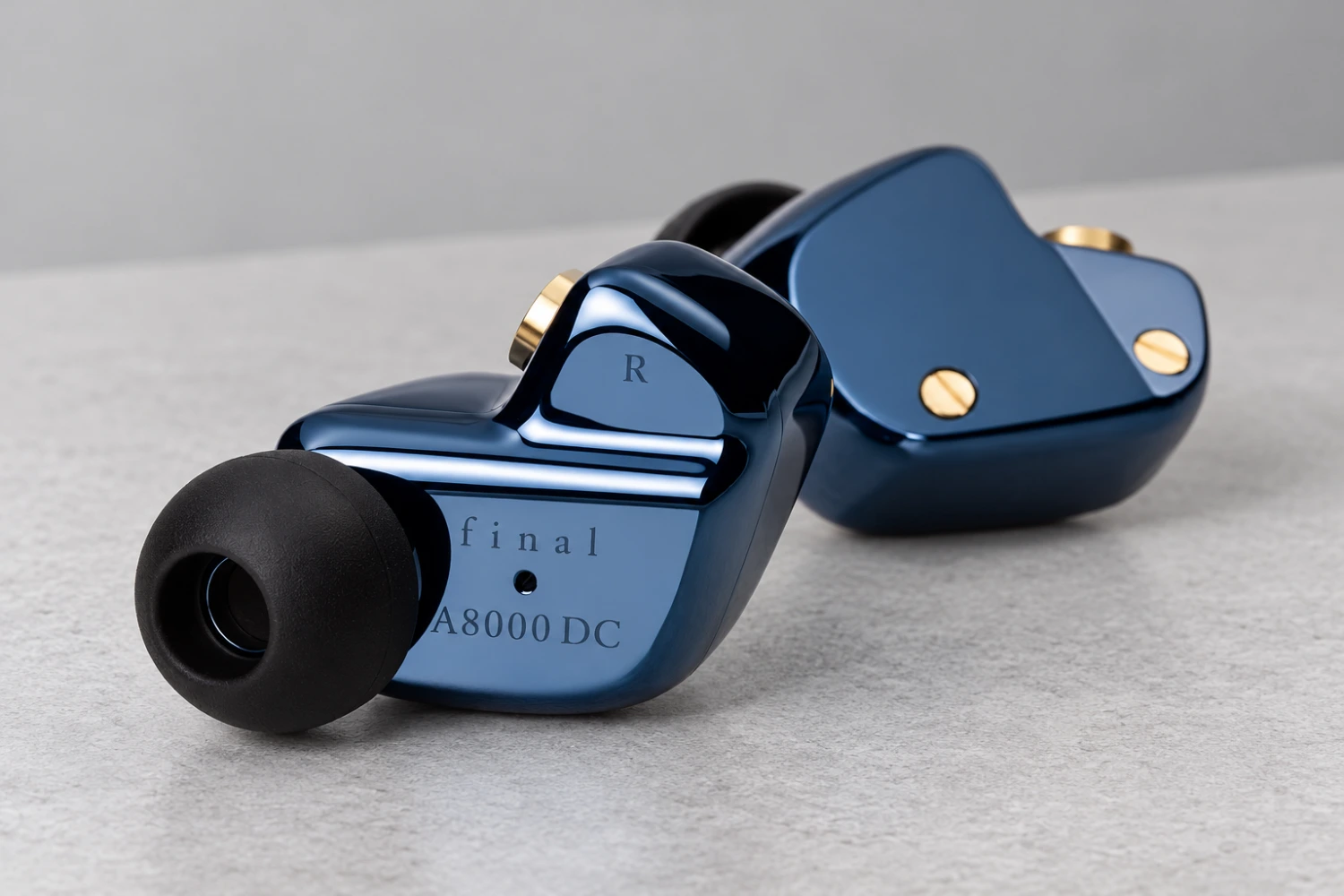
Final has returned to the concept behind its discontinued A8000 with the A8000 DC, a wired in-ear headphone built around a newly developed magnesium-diaphragm dynamic driver. The change was prompted by the increasing difficulty of sourcing the original model’s beryllium diaphragm material, but the result is presented as a wider engineering revision rather than a direct material substitution. Drawing on techniques developed for the diamond-diaphragm A10000, Final has also reconsidered the suspension, voice coil, enclosure construction, fit and detachable cable. For listeners interested in a high-end single-driver IEM, the central question will be whether that coordinated redesign delivers greater consistency and lower distortion without losing the simplicity of the original format.
A successor shaped by material supply, not styling
Beryllium played a defining role in the original A8000 because its high stiffness-to-weight ratio helps a diaphragm resist unwanted deformation while moving rapidly. Final eventually ended production as obtaining the required material became increasingly difficult. Rather than locate another supplier and preserve the existing design, the Japanese manufacturer chose to revisit the complete driver system.
That decision establishes the A8000 DC as a continuation of the A8000 idea, but not as a routine second-generation update. Its suffix stands for “Da Capo,” the musical direction to return to the beginning. Here, the name reflects an effort to reconsider the starting point of the design while retaining a single dynamic driver instead of moving to a multi-driver arrangement.
For prospective buyers, that lineage matters because the changes are concentrated on the parts responsible for producing and controlling movement. Cosmetic revisions are present, including a deep-blue finish, but Final’s emphasis is on the diaphragm, suspension, coil and assembly method. The A8000 DC therefore appears aimed at listeners who value the conceptual simplicity of one full-range driver but still expect substantial material and manufacturing work behind it.
Why Final chose a thicker magnesium diaphragm
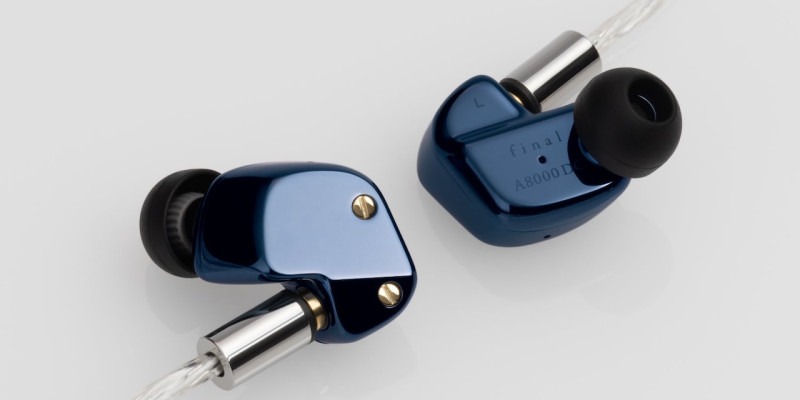
Magnesium is naturally less stiff than beryllium, so replacing one with the other is not automatically an upgrade. Final’s approach exploits magnesium’s low density: its specific gravity is roughly two-thirds lower than that of aluminum, allowing the diaphragm to be made thicker without adding excessive moving mass. Because bending stiffness rises strongly with thickness, the designers could use geometry and material depth to address magnesium’s lower inherent rigidity.
The resulting “True Magnesium” diaphragm combines a specially developed magnesium alloy with an optimized dome profile. Final claims that this driver produces less distortion than the beryllium unit in the original A8000, including at frequencies around 10 Hz. That extremely low-frequency figure describes driver behavior outside the core musical range rather than guaranteeing an audible advantage, and independent testing will be needed to assess the claim across more relevant frequencies and listening levels.
What is notable from a system-design perspective is that the material was not considered in isolation. Diaphragm thickness, dome shape and mass have been treated as related variables. That should make the A8000 DC of particular interest to buyers who judge an IEM by the integration of its transducer rather than by the prestige of a diaphragm material alone. No listening conclusions can be drawn until the finished design is evaluated.
A10000 techniques move into the suspension and coil
Work completed during development of Final’s more expensive diamond-diaphragm A10000 informed another part of the A8000 DC. A specially developed polyurethane treatment is applied to manage unwanted resonance while preserving the driver’s freedom of movement. The stated goal is control without excessively restricting the diaphragm, a balance that depends on both the coating and the surrounding suspension.
Final also joins the diaphragm and suspension through a combination of pressure forming and thermal forming instead of conventional adhesive. Removing glue from this junction is intended to reduce variation caused by inconsistent adhesive application. That is less visible than a new housing finish, but it could be important for production consistency: small differences around a lightweight moving assembly may prevent nominally identical earpieces from behaving in exactly the same way.
A redesigned voice coil completes the transducer package. It uses proprietary aluminum-alloy wire, while its lead wires are routed so that they do not obstruct diaphragm movement. Taken together, the revised forming process, polyurethane treatment and coil layout show why the A8000 DC cannot be described accurately as the old driver fitted with a magnesium dome. Each element addresses how the diaphragm moves or how consistently that movement can be reproduced during manufacturing.
A smaller steel shell addresses fit and servicing
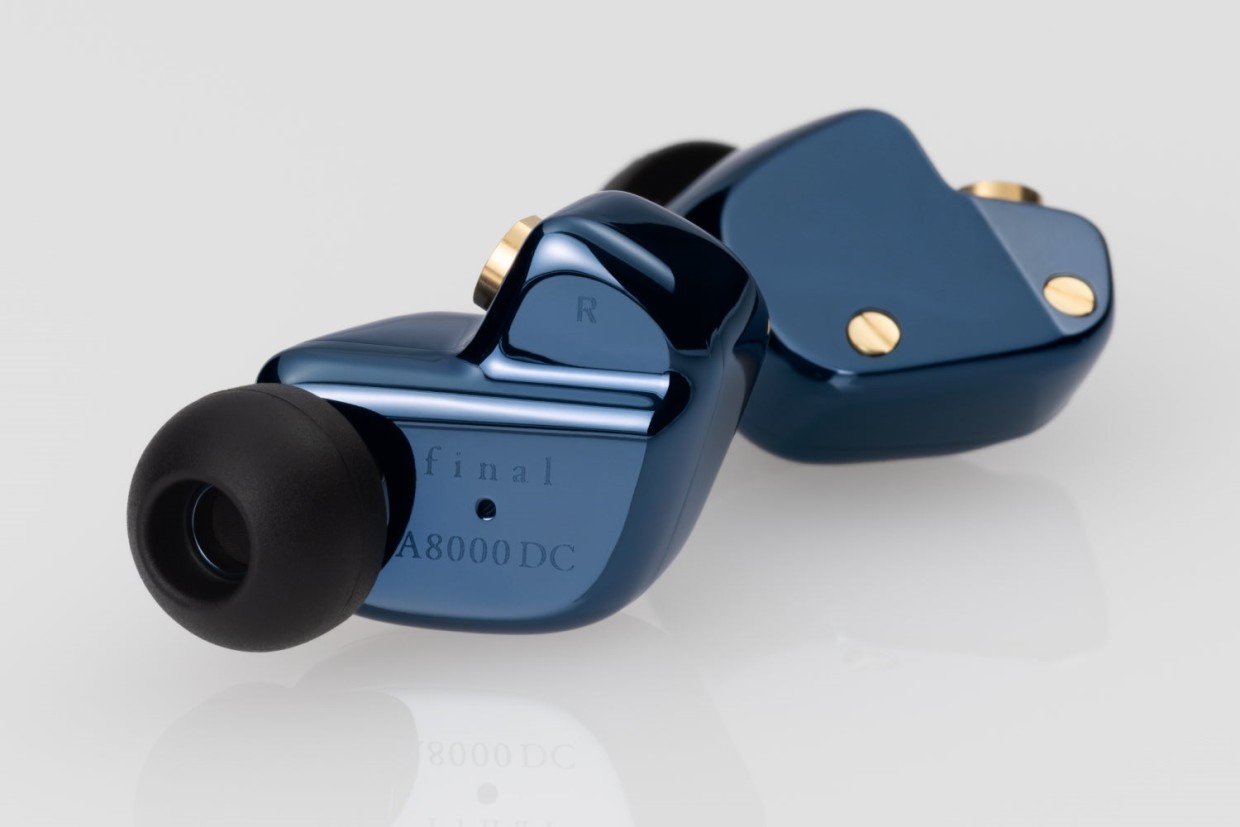
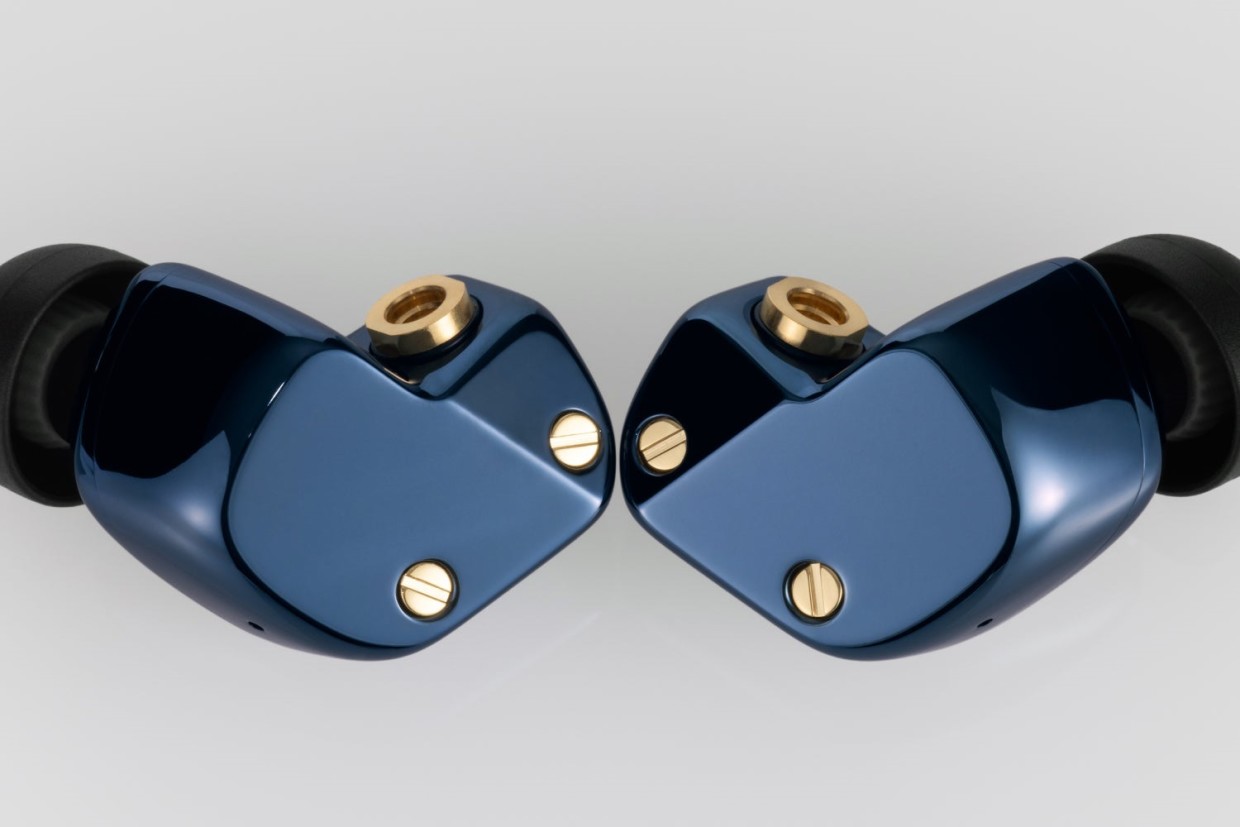
Each earpiece is housed in precision-machined stainless steel and finished in deep blue. More consequentially, the shells are smaller than those of the original A8000, and their contact surfaces have been revised to improve fit. Final has not supplied dimensions or weight in the announcement, so the scale of the reduction remains unclear, but less shell volume may make the design accessible to listeners who found the previous enclosure physically demanding.
A screw-fastened structure replaces the more usual glued enclosure assembly. Final links that decision to improved serviceability, since a mechanically secured shell can potentially be opened without breaking a permanent adhesive bond. The announcement does not define specific repair procedures or service terms, but the construction method signals that maintenance was considered during the redesign.
Fit remains personal with any in-ear headphone, and a smaller housing does not guarantee comfort for every ear. Even so, changing both size and contact geometry suggests that Final treated ergonomics as part of the revision rather than leaving the original shell untouched. Buyers comparing premium wired IEMs will still need to verify insertion depth, stability and long-session comfort for themselves.
The supplied cable assumes a balanced portable system
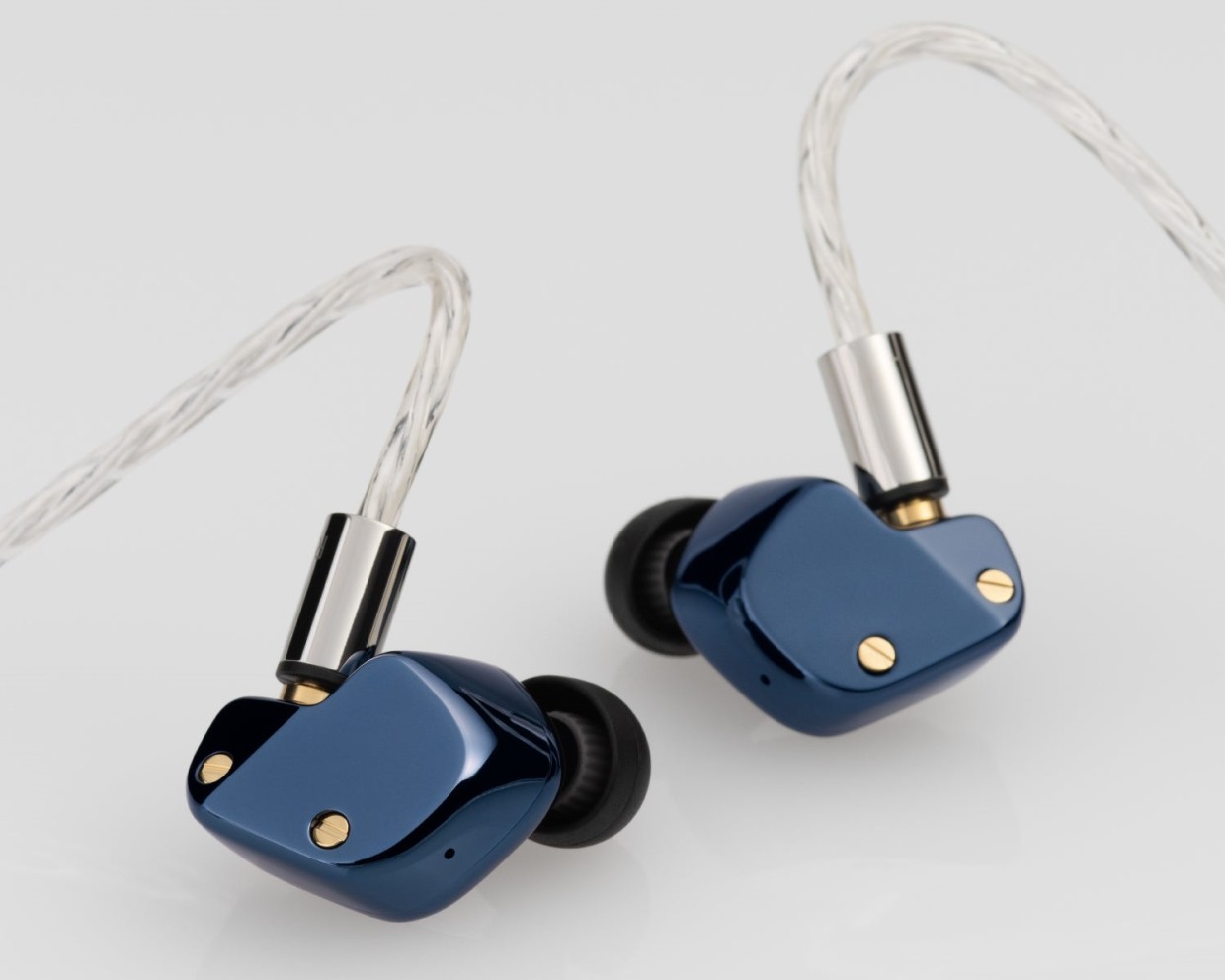
Final developed the detachable cable with Japanese materials specialist Junkosha. It combines silver-plated oxygen-free copper conductors with expanded PTFE insulation and revised MMCX connectors. The source end terminates in a balanced 4.4 mm plug, placing the A8000 DC most naturally in a system built around a compatible digital audio player, portable amplifier or desktop headphone output.
That plug choice is an important purchasing detail rather than a minor accessory specification. Final has not identified an alternative cable termination in the supplied information, so owners of sources without a 4.4 mm output would need to consider cable compatibility separately. The detachable MMCX arrangement provides a route for replacement or system matching, although no additional cable options have been announced.
Combined with the machined housings and service-oriented assembly, the detachable cable points toward long-term ownership rather than disposable portable use. Pricing and regional availability have not yet been announced, leaving the A8000 DC’s precise market position and release schedule unresolved.
The A8000 DC is designed for the listener who wants a technically ambitious wired IEM without abandoning a single dynamic driver. Its appeal rests less on magnesium as a headline material than on how Final has built an entire moving system around it: a thicker alloy diaphragm, revised dome geometry, resonance treatment, adhesive-free driver joining and a rerouted aluminum-alloy voice coil. The smaller steel shells and screw-fastened construction also address ownership concerns beyond the transducer itself. What remains unknown is equally important. Final has not provided regional release timing, pricing, dimensions or weight, and its lower-distortion claim has yet to be independently examined. The key things to watch are production-unit consistency, real-world fit and whether the 4.4 mm-only supplied cable aligns with buyers’ existing portable or desktop equipment.


Sound Off
0Join the discussion if you have something to add.