
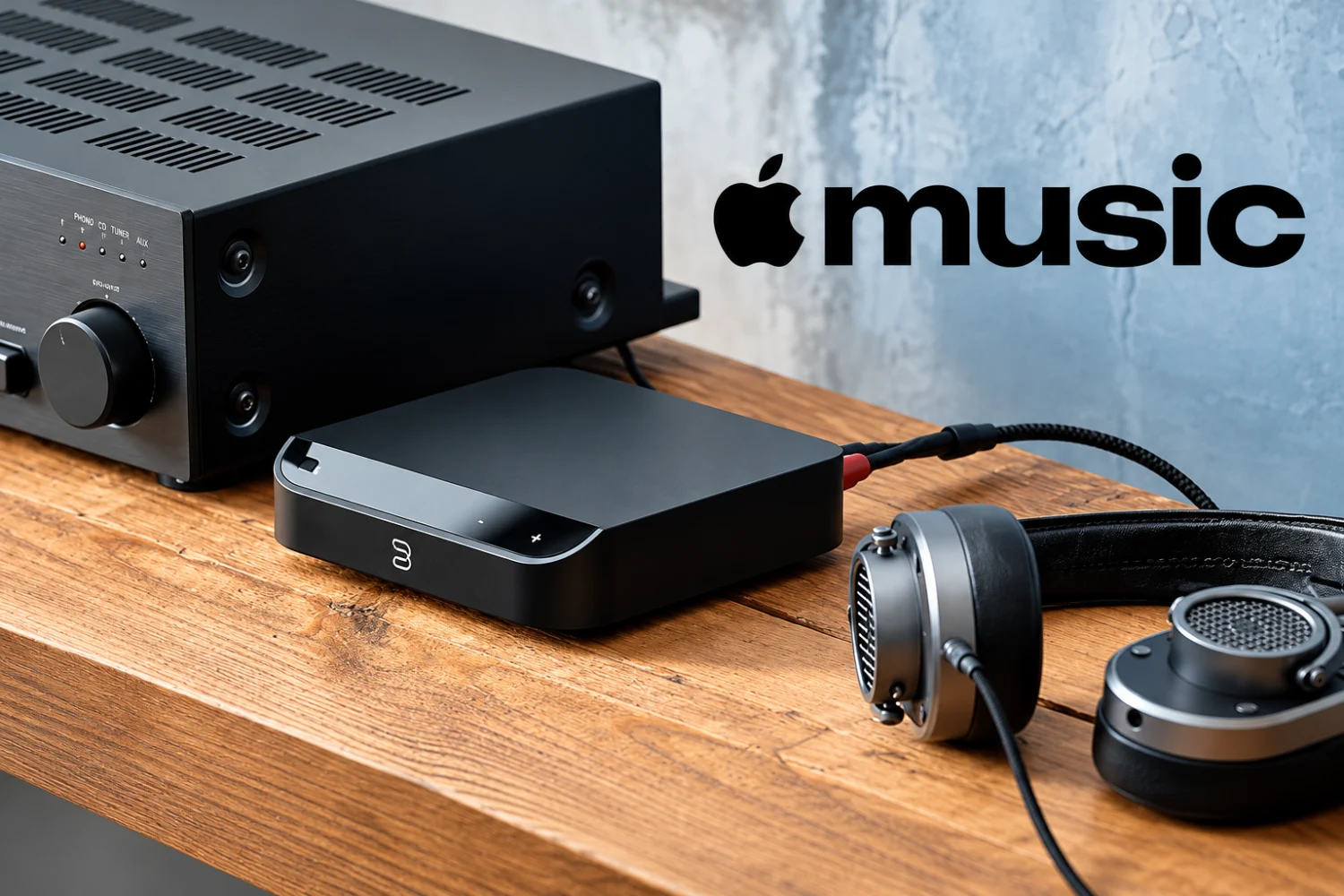
A free software update has added native Apple Music access to compatible Bluesound products running BluOS. Owners can sign in to their Apple Music account within the BluOS Controller app, select a playback device and start listening without introducing another source component or moving to a third-party application. The integration spans several parts of Bluesound’s range, including wireless speakers, network players, integrated amplifiers and soundbars. Its importance is therefore less about a single new product than a change to the everyday control path across an existing ecosystem, particularly for listeners who already use Apple Music as their main library and discovery service.
One app now handles the sign-in and playback path
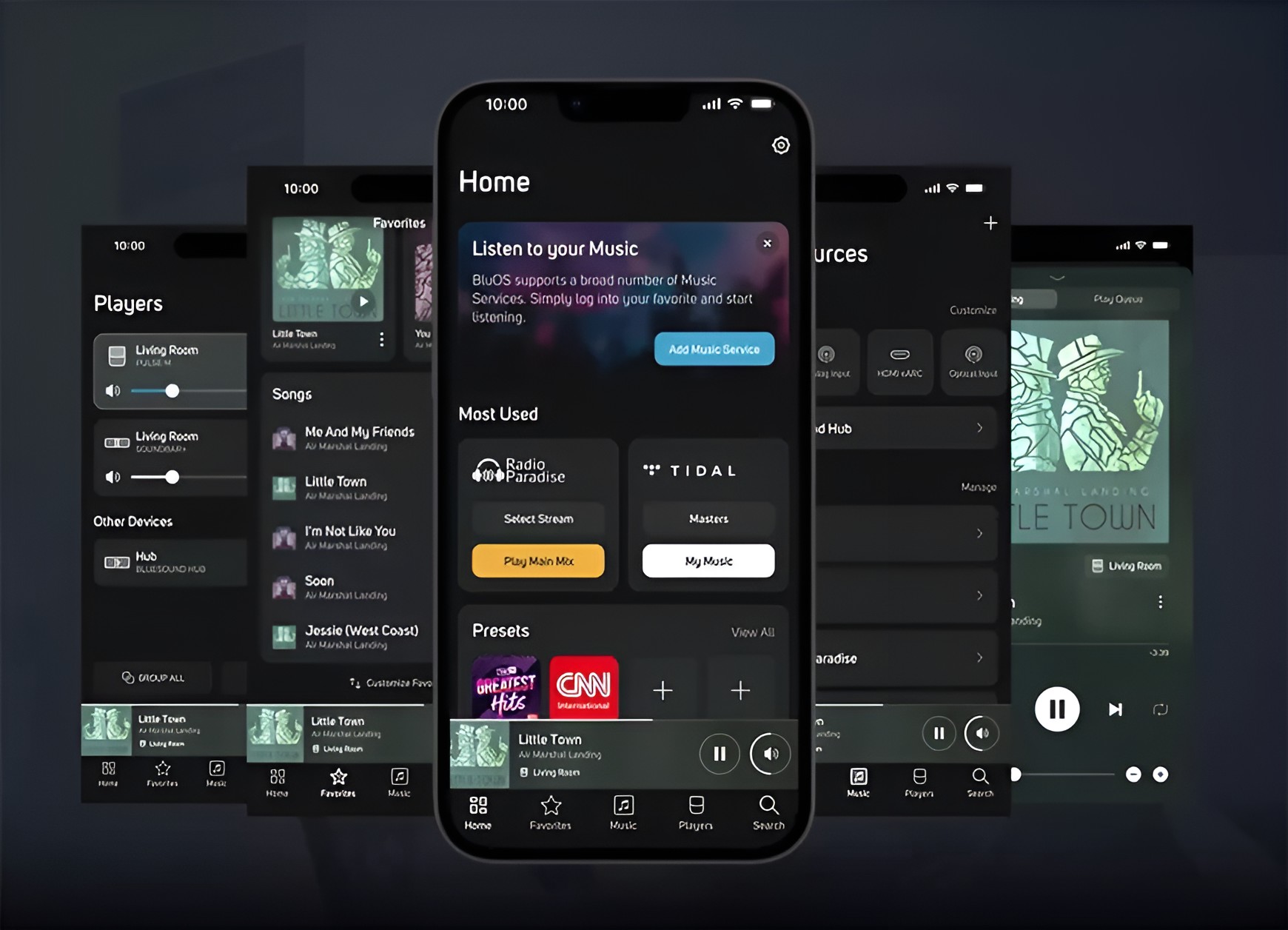
Setup is deliberately contained within BluOS Controller. The user signs in to an Apple Music account from the app, chooses the appropriate Bluesound device and begins playback. That keeps browsing and device selection in the same interface used to manage compatible BluOS hardware, rather than requiring a separate application to initiate the stream.
For existing systems, the main practical benefit is simplification. Apple Music can be reached without adding an external playback device, and there is no need to use a third-party application as an intermediary. Fewer handoffs should make the service easier to incorporate into daily use, especially in installations where a network player or amplifier is expected to function as the central music source.
The update is software-based and free, so it does not ask owners to replace otherwise compatible hardware merely to gain access to the service. Bluesound has not supplied a software version number or a complete model-by-model compatibility list in the announcement, making the supported-device status the first detail owners of older equipment should verify in BluOS Controller.
Support reaches from compact speakers to complete systems
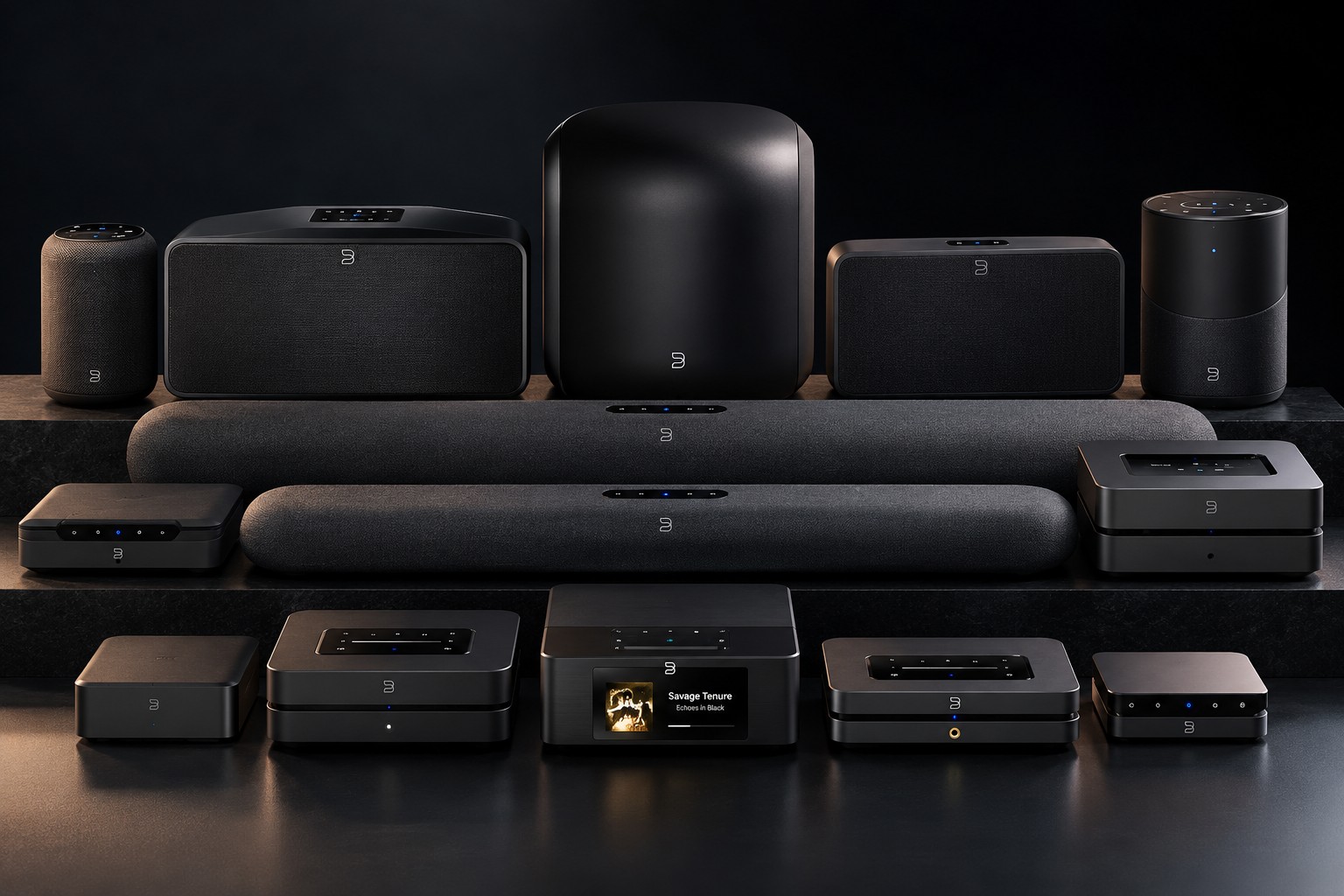
Bluesound’s examples show that the integration is not confined to one hardware format. PULSE FLEX compact wireless speakers, POWERNODE integrated amplifiers and PULSE CINEMA soundbars are among the supported product families, while the broader announcement also covers compatible network players. That range matters because each category places streaming in a different role.
With a wireless speaker, the update provides a direct route from the service to a self-contained playback product. A POWERNODE installation places the same access within a conventional speaker-based hi-fi system, where the amplifier also serves as the network music source. Compatible network players extend the option to systems built around separate amplification, while a PULSE CINEMA soundbar can use Apple Music beyond its primary television-related duties.
The common element is BluOS Controller rather than a particular chassis or system layout. A listener moving between different compatible Bluesound devices does not have to adopt a different Apple Music access method for each product category. The announcement confirms device selection in the app, although it does not provide further detail about grouping behavior or other multi-device playback functions specifically associated with Apple Music.

The service library arrives with its discovery tools intact
Direct access covers Apple Music’s library of more than 100 million ad-free tracks. The integration also includes personal recommendations, themed playlists, curated music programs and international radio stations. As a result, it is not described merely as a basic search-and-play connection to the song catalog; the browsing and discovery elements of the service are part of the BluOS experience as well.
That breadth has day-to-day consequences. Listeners who rely on recommendations can continue using them without leaving the controller, while playlists provide a faster route to familiar material. Curated programs and radio stations broaden the available choices when selecting individual albums or tracks is not the priority. These features make the integration relevant both to focused listening and to less hands-on use around the home.
No additional format specifications are stated in the announcement. Bluesound has not detailed resolution, codec handling or whether every Apple Music feature is presented identically across all compatible products. Buyers and current owners should therefore separate what is confirmed—native catalog, recommendation, playlist, program and radio access—from technical playback details that have not yet been provided.
A useful update for systems already centered on BluOS
The clearest audience is an Apple Music user who already owns compatible Bluesound equipment or is planning a system around BluOS. Until now, choosing a streaming platform and choosing network-audio hardware could create an extra control step when the two ecosystems were not directly integrated. Placing account access inside BluOS Controller reduces that friction without changing the physical system.
It may be particularly useful in mixed Bluesound installations. A compact PULSE FLEX, a POWERNODE-based stereo setup and a PULSE CINEMA soundbar serve different rooms and purposes, yet Apple Music can be approached through the same controller. The update therefore strengthens continuity at the software level even though the connected products themselves vary considerably in form and function.
System matching still depends on the role of the Bluesound component. The software update does not turn a wireless speaker, network player, amplifier and soundbar into interchangeable products; it gives them a shared route to the same service. Owners should select hardware according to the speakers, room and existing components involved, then treat Apple Music support as part of the control and source arrangement.
For current owners, the immediate task is straightforward: update compatible Bluesound hardware, open BluOS Controller and check for Apple Music among the available services. The integration is most significant for people who want their network-audio system to operate without an extra source device or a second playback app. It also gives Apple Music users a clearer path into several kinds of Bluesound system, from a single compact speaker to a stereo setup built around POWERNODE or a separate network player. Questions remain around the full legacy-model list and the precise technical playback formats supported by the integration. Those details will determine how broadly the update reaches older installations, but the documented control process is clear: account login, device selection and Apple Music browsing now take place directly inside BluOS Controller.


Sound Off
0Join the discussion if you have something to add.