


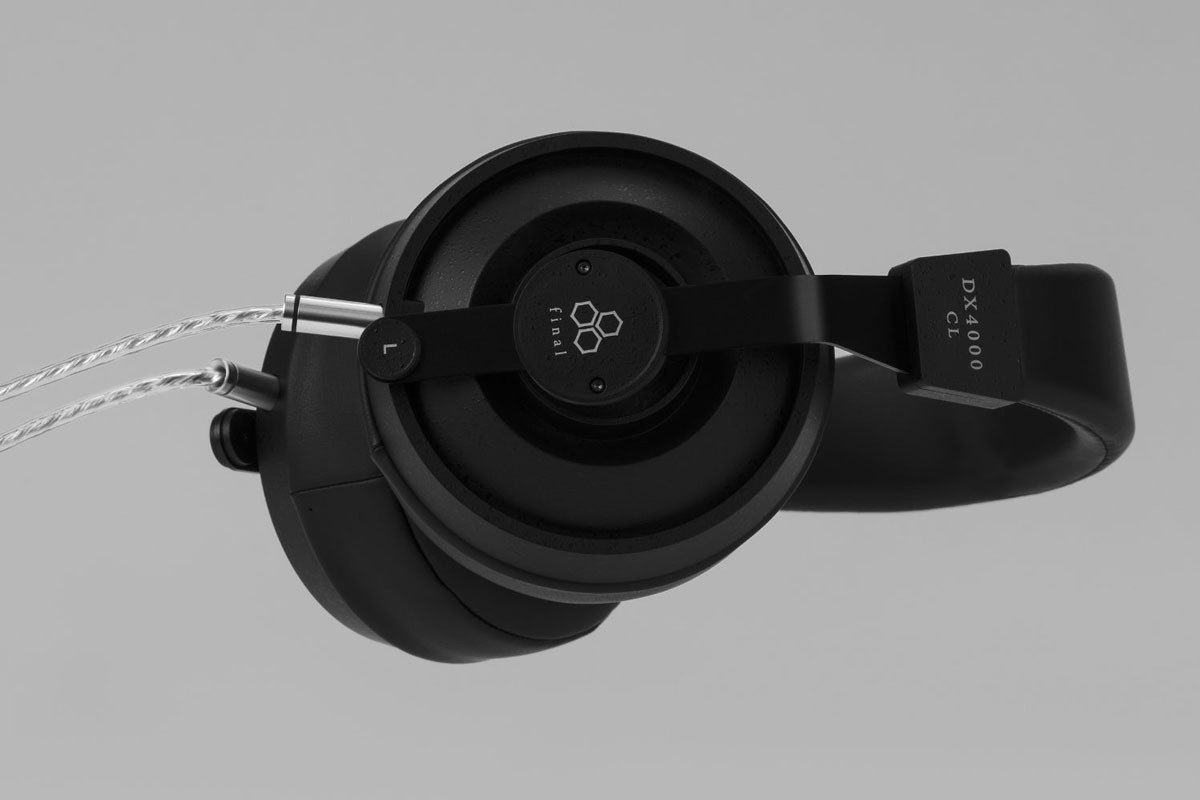
Closed-back headphones occupy a useful place in serious hi-fi listening. They keep music from leaking into the room, reduce intrusion from the outside world, and allow headphone systems to work in spaces where open-back designs are less practical. The challenge is that many closed designs can sound more confined than their open-back counterparts, partly because the sealed ear cup has to manage internal reflections and pressure in a very small acoustic space. The Final DX4000CL is built around that exact problem. It is a closed-back model in Final’s DX Series that combines a newly developed 40mm dynamic driver, a paper-carbon diaphragm, a diffuser-based rear-chamber structure, thick replaceable ear pads, and balanced 4.4mm connectivity. Rather than treating the closed form as merely a convenience, the DX4000CL uses its internal architecture as a central part of the design. For listeners who want a private, domestically practical headphone without abandoning the priorities of high-end headphone listening, that makes it an especially interesting addition to Final’s range.
A closed-back design aimed at spacious listening
The central appeal of the Final DX4000CL is its attempt to combine two qualities that are not always easy to reconcile: the isolation and bass control associated with closed-back headphones, and a more open, spacious presentation commonly associated with open-back models. That goal shapes the product from driver to housing, rather than being limited to cosmetic or comfort decisions.
For a prospective owner, the benefit is straightforward. A closed headphone can be used in more environments: late at night, in a shared room, near a computer, or in a listening space where open-back leakage would be distracting. The DX4000CL is intended for listeners who want that practicality while still prioritizing soundstage, tonal balance, and controlled reproduction in a dedicated hi-fi headphone setup.
The model also sits within Final’s DX Series as a middle-positioned closed-back option. That placement matters because it suggests a product conceived for serious listening rather than casual portability alone. It is not described as a noise-cancelling travel headphone, a wireless convenience product, or a studio utility tool. Its feature set instead points toward use with headphone amplifiers, desktop systems, and high-quality portable players.
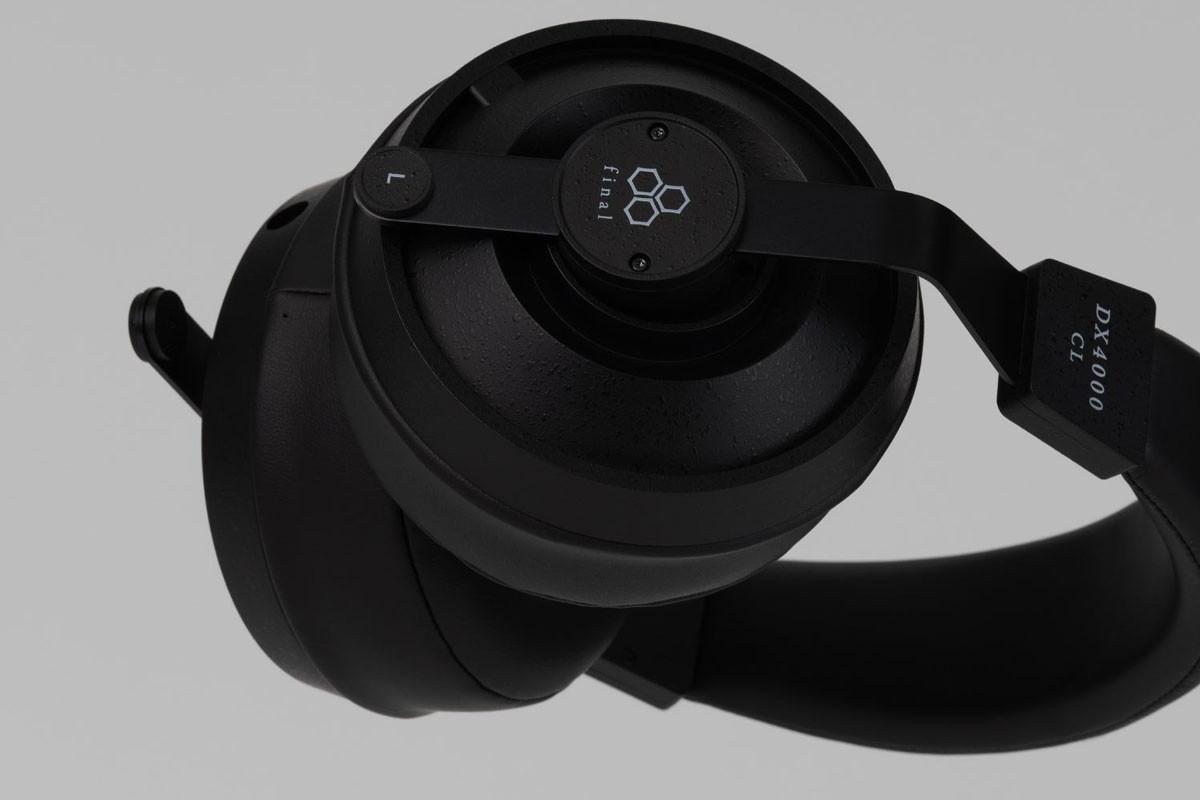
The new 40mm paper-carbon dynamic driver
At the core of the DX4000CL is a newly engineered 40mm dynamic driver. Final uses a composite diaphragm made from paper and carbon fiber, a pairing chosen for complementary physical properties. Paper has a long history in loudspeaker and headphone diaphragms because it can offer useful internal damping, helping to suppress unwanted resonance. Carbon fiber contributes stiffness, helping the diaphragm maintain shape under movement.
This combination is significant because driver behavior directly affects clarity, transient response, and tonal stability. A diaphragm that is too flexible can deform as it moves; one that is too uncontrolled can store and release energy in ways that color the sound. The paper-carbon approach is designed to balance responsiveness with damping, giving the driver a material foundation suited to complex music rather than simple low-frequency emphasis.
Final also uses a free-edge diaphragm structure. In this design, the diaphragm avoids traditional reinforcement ridges around its perimeter. The purpose is to allow more uniform movement across the diaphragm surface. In principle, that can help reduce distortion and improve transient behavior because the driver is less likely to move in fragmented or uneven ways during demanding passages. For listeners building a system around high-quality amplification, this kind of mechanical detail is relevant: the headphone’s driver needs to respond cleanly to what the amplifier delivers.
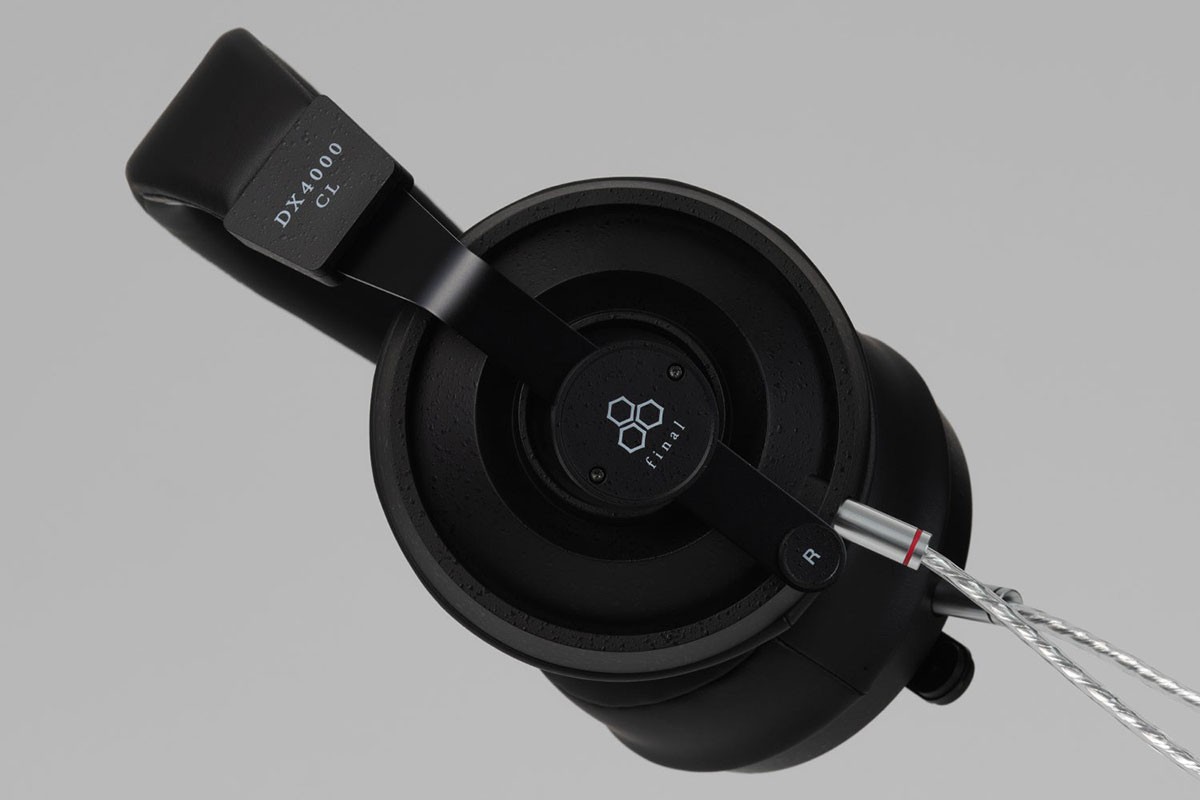
Internal acoustics treated as part of the instrument
Closed headphones face a specific acoustic problem: the back wave from the driver has nowhere to dissipate as freely as it would in an open design. If the internal chamber is poorly controlled, reflections inside the cup can return to the driver or ear in ways that blur imaging, alter timbre, or create a boxy character. The DX4000CL addresses this with an internal diffuser array in the rear chamber behind the driver.
Instead of relying on smooth internal cup surfaces, Final incorporates differently shaped rib structures designed to scatter reflections in multiple directions. The idea resembles acoustic diffusion used in listening rooms and recording spaces, but miniaturized for the geometry of a headphone. In a full-size room, diffusion helps prevent obvious slap echoes and concentrated reflections. Inside a headphone cup, the same principle is applied on a much smaller scale to reduce the effect of standing waves and concentrated energy.
This is one of the more distinctive aspects of the DX4000CL. Many closed-back headphones emphasize damping material, cup rigidity, or driver tuning, but Final’s description highlights a deliberately shaped acoustic chamber. For the owner, the practical value is that the headphone is not depending solely on electronic matching or voicing to solve the closed-cup problem. The physical housing is designed to influence how sound energy behaves before it reaches the listener.
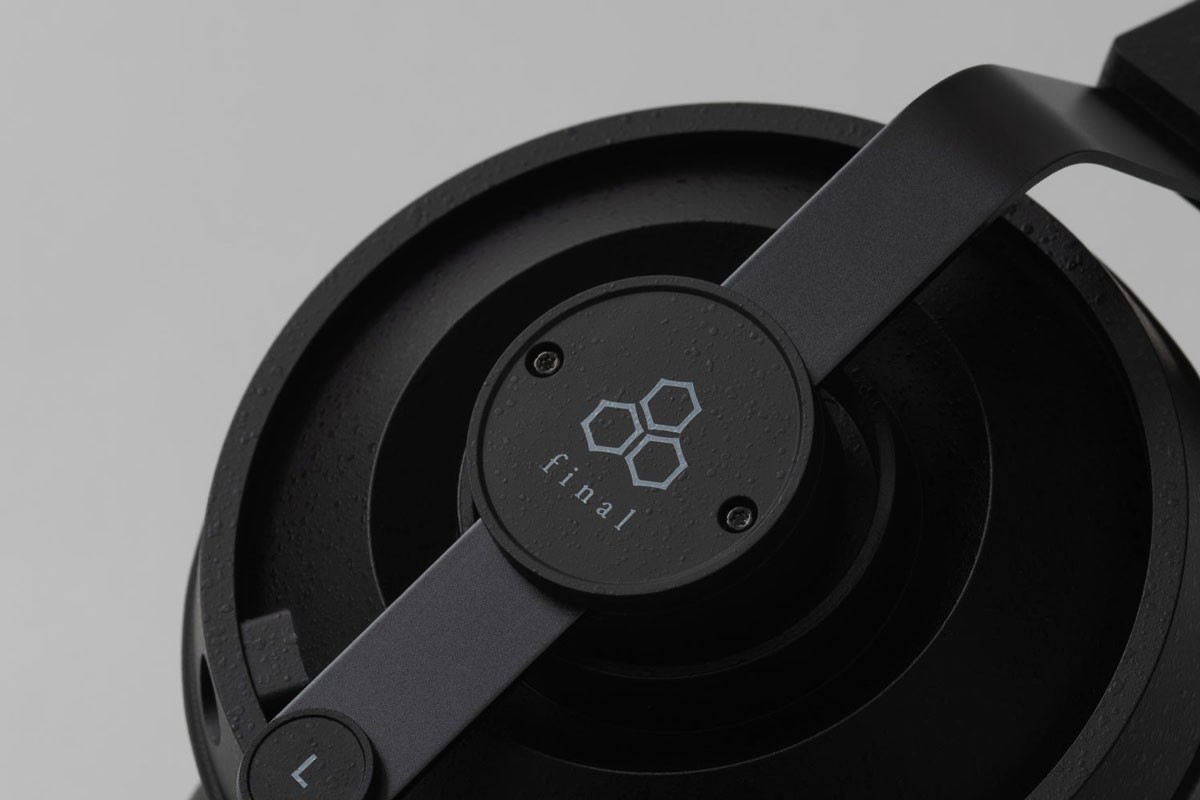
Comfort and serviceability as design priorities
Long listening sessions depend on more than driver technology. The DX4000CL uses thick ear pads, approximately 30mm, made from memory foam and synthetic leather. The depth of the pads is not only a comfort decision; it also establishes the distance between the driver and the ear. That spacing can influence perceived stage, tonal balance, and the way the ear interacts with the driver output.
Memory foam can help distribute pressure more evenly around the ear, while synthetic leather contributes to the seal required by a closed-back headphone. A stable seal is important because leaks around the pads can affect bass response and consistency between listening sessions. The DX4000CL’s pad design therefore supports both comfort and acoustic repeatability.
Final also makes the ear pads user-replaceable without tools. That is a valuable feature in a headphone intended for long-term ownership. Ear pads are wear items: they compress, age, and absorb oils over time. If replacement is straightforward, the headphone can be maintained more easily and its fit can remain closer to the intended design. The construction also avoids excessive glue, using O-rings and precision screws. That approach suggests a product designed with servicing in mind, not just initial assembly.
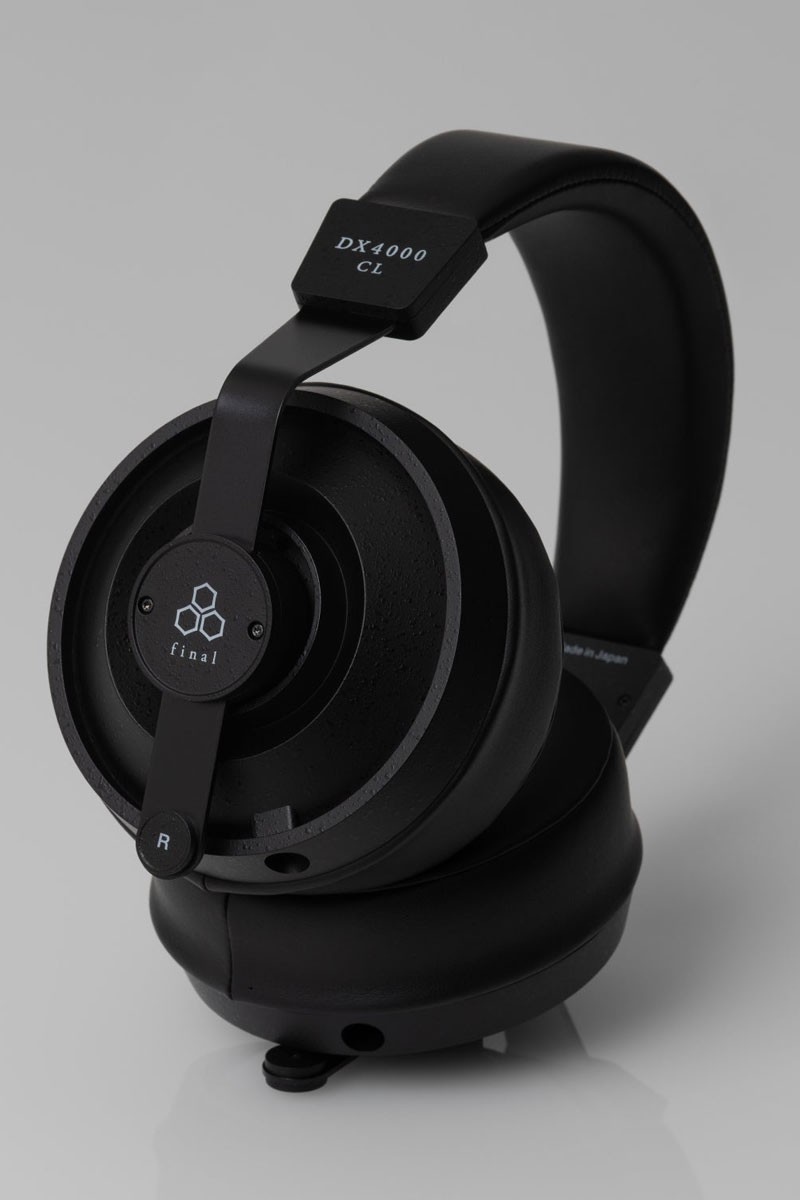
Balanced connectivity for modern headphone systems
The DX4000CL is supplied with a detachable silver-coated cable terminated in a 4.4mm Pentaconn balanced connector. The 4.4mm standard has become common on higher-end portable players, desktop headphone amplifiers, and compact DAC/amp units because it offers a mechanically robust balanced connection in a relatively compact format.
Balanced headphone outputs can be useful when paired with compatible equipment, particularly in systems designed around that topology. The key point is not that balanced connection alone guarantees better sound, but that the DX4000CL is clearly intended to integrate with modern audiophile hardware. Owners using a dedicated player or amplifier with 4.4mm output can connect directly without immediately replacing the cable.
A 6.3mm adapter is also included for more traditional hi-fi setups. That gives the headphone practical flexibility for desktop headphone amplifiers, integrated amplifiers with full-size headphone outputs, and home listening systems where 6.3mm remains the standard. The detachable cable arrangement further supports long-term usability because cables are among the easiest components to damage or change as systems evolve.
System matching and intended use
The DX4000CL weighs around 375 grams without its cable, placing it in the substantial but still manageable range for a full-size audiophile headphone. Its design priorities point toward seated listening rather than commuting or gym use. It is better understood as a private high-fidelity listening tool: something for a desk, listening chair, studio-adjacent workspace, or quiet domestic environment where open-back leakage would be inconvenient.
The product will likely be most suitable for listeners who already use, or plan to use, a dedicated headphone amplifier or high-end portable audio player. The 4.4mm balanced termination reinforces that direction. It is also relevant for music lovers who enjoy the isolation and focus of closed headphones but have been hesitant because of the spatial limitations sometimes associated with the category.
It may be less suitable for someone seeking wireless convenience, active noise cancellation, ultra-lightweight travel use, or a casual all-in-one headphone for phone listening. The DX4000CL is a wired, full-size, audiophile-oriented product. Its strengths are tied to physical acoustics, replaceable parts, and system integration rather than app-based features or lifestyle portability.
A considered place in the closed-back market
What distinguishes the Final DX4000CL is not a single headline feature, but the way its design choices support a consistent purpose. The closed-back shell provides isolation and privacy. The diffuser array addresses internal reflections. The new paper-carbon driver is designed for stability and responsiveness. The thick pads support comfort while helping define the ear-to-driver relationship. The 4.4mm balanced cable and 6.3mm adapter make it compatible with the kinds of systems serious headphone listeners often own.
This kind of product is especially relevant as more listeners build high-quality headphone rigs at home. Not everyone can use open-back headphones freely, and not every closed-back headphone is engineered with spatial presentation as a central objective. The DX4000CL’s appeal lies in bringing practical closed-back usability into a framework shaped by acoustic design rather than simple isolation alone.
Conclusion
The Final DX4000CL is a closed-back audiophile headphone defined by practical isolation, a newly developed 40mm paper-carbon dynamic driver, diffuser-based internal acoustics, replaceable thick memory-foam ear pads, and modern balanced 4.4mm connectivity with 6.3mm compatibility. Its strongest documented qualities are its attention to the acoustic challenges of sealed headphone design, its service-conscious construction, and its focus on serious wired listening. It is best suited to listeners who want a private, full-size headphone for dedicated hi-fi systems, especially those using headphone amplifiers or high-end portable players, and who value long-term usability as much as technical ambition.


Join the discussion
Share your thoughts, listening impressions or product experience.