


The Velodyne SPL-800 Ultra sits in a product family with a long-running design idea: keep the enclosure compact and sealed, then use driver engineering, amplifier power, and room-specific adjustment to make the subwoofer more adaptable in real homes. Rather than relying only on cabinet volume, the SPL-800 Ultra brings together a curved, resonance-conscious cabinet, an 8-inch-class driver, a powerful Class D amplifier, cone-motion protection, automatic standby, and microphone-assisted equalization. The result is a subwoofer concept aimed at practical integration: small enough for rooms where a large bass enclosure would be difficult to place, but equipped with controls intended to help it work across music, movie, and gaming systems.
A compact sealed design with attention to cabinet behavior
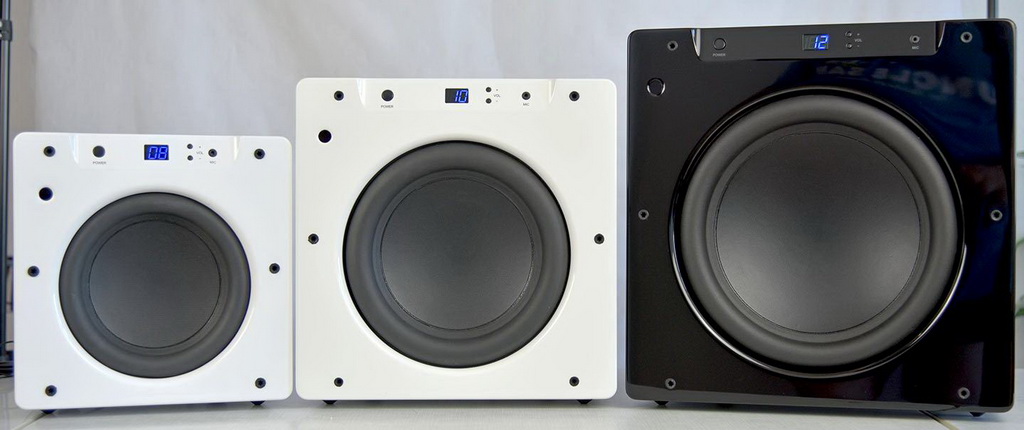
One of the defining choices in the Velodyne SPL-800 Ultra is its closed acoustic design. A sealed enclosure is often valued for predictable behavior and easier placement than some larger or more complex bass systems, and here it is paired with a cabinet that is deliberately not a simple rectangular box. The side walls are slightly curved, a design choice intended to improve appearance while also reducing cabinet resonances.
The finish also points to a product meant to be seen as well as heard. The cabinet walls are covered in piano varnish and sanded by hand, giving the SPL-800 Ultra a more furniture-like presentation than a purely utilitarian black cube. With dimensions of 284 x 272 x 350 mm and a weight of 15 kg, it is physically compact but not insubstantial. That combination matters for prospective owners who want a subwoofer that can sit in a living room, media room, or smaller listening space without visually dominating the system.
The sealed cabinet and modest enclosure volume also set realistic expectations. The documented frequency range is 26–120 Hz, and the product is described as offering bass depth appropriate for a small room rather than being positioned as a very large-room, extreme-output solution. That context is important: the SPL-800 Ultra’s appeal is not just how low it is specified to go, but how much adjustability and control Velodyne builds around a compact format.
Driver and amplifier engineering aimed at controlled movement
The SPL-800 Ultra uses a 203.2 mm low-frequency driver. Around that driver, Velodyne specifies an enlarged centering washer and a wide rubber suspension, both intended to support linear cone travel at high amplitudes. This is particularly relevant in a compact subwoofer, where the driver may be asked to work hard to generate useful bass output from a relatively small cabinet.
The voice coil is also notable: a 76 mm high-temperature unit wound in two layers on both sides of the base. In practical terms, that specification reflects an emphasis on thermal durability and motor structure in a driver designed for demanding low-frequency work. The subwoofer is partnered with a 1200 W Class D amplifier, while the maximum power specification is listed at 2400 W. Class D amplification is a logical match for a compact powered subwoofer because it can deliver substantial power without requiring the size and heat dissipation of some traditional amplifier layouts.
Velodyne also includes a cone control circuit designed to prevent excessive deflection that could lead to distortion. For a prospective owner, this is one of the more meaningful pieces of engineering in the SPL-800 Ultra. Bass drivers operate over large excursions, and uncontrolled movement can be a limiting factor. A circuit that monitors or limits cone behavior supports the broader design goal: strong low-frequency performance from a small cabinet while maintaining control within the operating range of the driver.
Room equalization built into the setup process
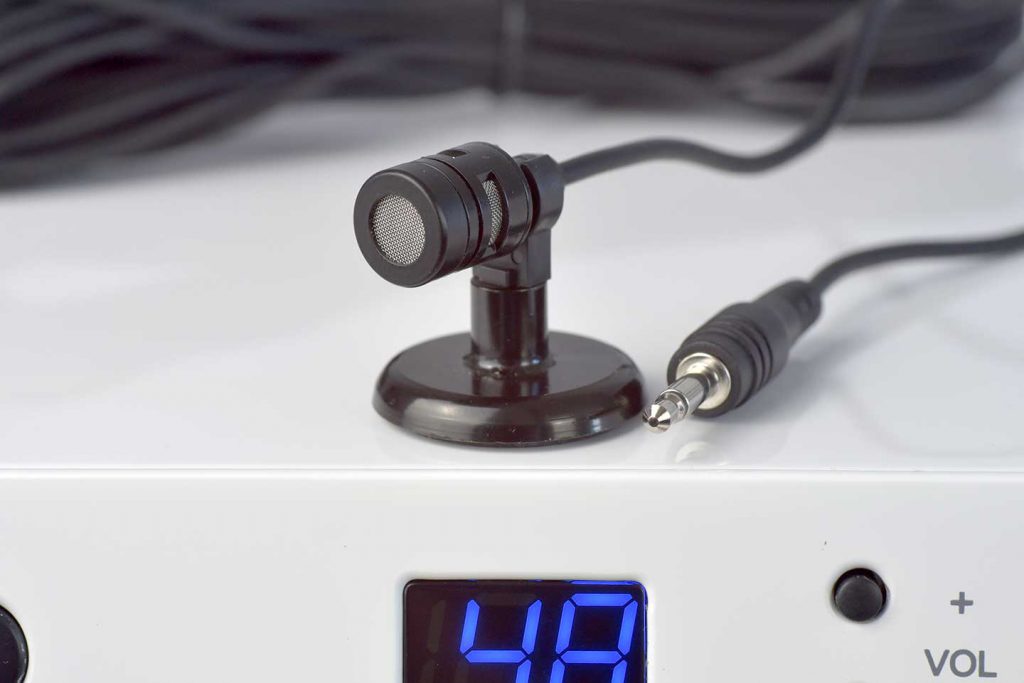
A major attraction of the SPL-800 Ultra is its microphone-assisted room adjustment. Subwoofers interact strongly with room dimensions, placement, and the listening position; bass response can change dramatically depending on where the subwoofer and listener are located. Velodyne addresses this by including a microphone connection and an equalization process designed to tailor the subwoofer’s response to a specific room.
The procedure is intentionally simple. The user connects the microphone, places it at the listening position, and holds the EQ button on the remote control for several seconds. The subwoofer then generates several variable tone sweep sequences, stores correction factors in memory, and is ready to operate with an optimized frequency response. That is a useful feature for owners who want better integration but do not necessarily want to perform detailed manual measurements or external calibration.
This kind of room-aware setup is especially valuable in the SPL-800 Ultra’s likely environments: smaller rooms, living spaces, and mixed-use systems where ideal placement may not be possible. A subwoofer might have to sit beside furniture, near a wall, or in a visually acceptable position rather than the acoustically ideal one. Built-in equalization does not remove all placement considerations, but it gives the product a practical tool for adapting to the room rather than expecting the room to be ideal.
Remote operation and presets for different uses
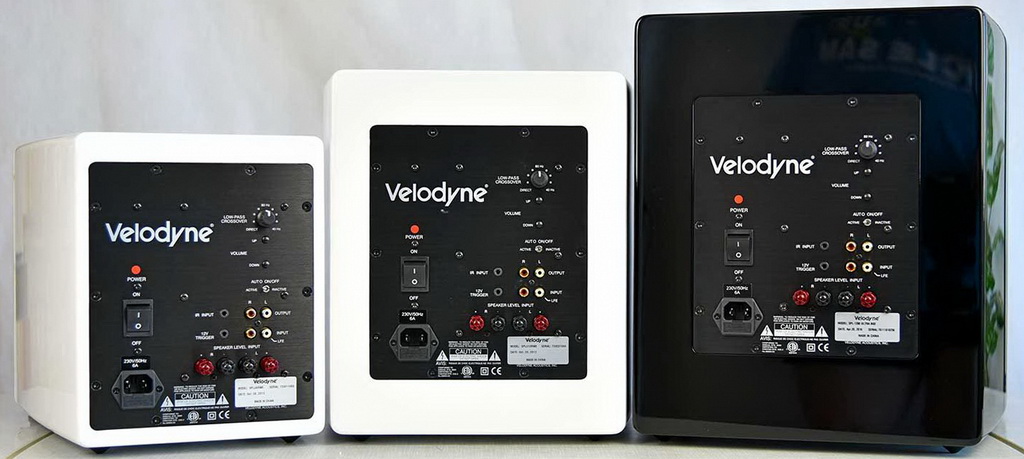
The SPL-800 Ultra’s control layout combines traditional subwoofer adjustments with remote-controlled operating modes. The rear-panel control set includes crossover filter cutoff frequency adjustment, volume control, an automatic mode switch, line/LFE input and output, high-level input terminals, an input for a remote infrared sensor, and a trigger input of arbitrary polarity. The low-pass-filtered output adds flexibility for certain system layouts, while high-level inputs help the subwoofer integrate with amplifiers that do not provide a dedicated subwoofer output.
On the front panel, Velodyne provides a standby power switch, push-button volume control, a multifunction symbol indicator, and a microphone jack. The indicator displays the result of current actions such as volume level, phase, preset selection, mute, and night modes. Most settings, with the exception of crossover frequency, are made from the remote control. This makes sense for a subwoofer that may be placed away from the main seating position; users can change practical settings without reaching behind the cabinet.
The four available presets broaden the product’s day-to-day usability. There are modes for movies, rock music or active music, jazz, and games. These are not merely decorative labels: each mode is intended to prioritize a different bass behavior. The movie mode allows maximum membrane travel for effects, the rock mode emphasizes dynamic and accurate low-frequency behavior with less depth emphasis, the jazz mode is described as adding roundness, and the game mode gives priority to individual percussive sounds while slightly reducing impact and depth. For owners who use one system for several kinds of content, these presets may be more convenient than constantly changing manual settings.
Connectivity and automation for real-world systems
The SPL-800 Ultra is designed to connect to a range of audio systems. The line/LFE input is the expected route for modern AV receivers, processors, and subwoofer-equipped stereo components. The high-level terminals are useful where a system relies on speaker-level outputs rather than a dedicated low-frequency channel. The inclusion of both options makes the subwoofer more adaptable to different system generations and configurations.
Automation is also part of the design. The subwoofer includes a circuit that switches it to standby after eight minutes with no input signal, then wakes it again when a signal is detected. That is a practical feature in daily use, particularly when the subwoofer is integrated into a living-room system and the owner does not want to switch it on and off manually each time. A trigger input of arbitrary polarity further supports custom installations or systems where power sequencing is handled by another component.
The input for a remote infrared sensor is another integration-oriented feature, although the sensor itself is not included. This can matter if the cabinet is placed where the front-panel receiver is not in clear line of sight. Together, these details show that the SPL-800 Ultra was not designed only as a standalone bass box, but as a product expected to live inside varied hi-fi, home cinema, and multi-purpose entertainment systems.
Who the Velodyne SPL-800 Ultra is most suitable for
The SPL-800 Ultra is most suitable for listeners who need a compact powered subwoofer with serious attention to setup flexibility. Its dimensions, sealed cabinet, automatic EQ, and preset system make it particularly relevant for small rooms or spaces where a larger subwoofer would be visually or physically difficult to accommodate. It should also appeal to users who split their time between movies, music, and games and want quick access to different low-frequency behaviors from the remote control.
It is also a sensible match for systems that need flexible connection options. Owners with an AV receiver can use the LFE input, while stereo systems without a subwoofer output may benefit from the high-level terminals. The automatic standby and trigger input make it easier to integrate into everyday use or a more organized installation.
The balance is that the SPL-800 Ultra is not documented as a solution for users seeking the deepest possible bass output from a very large cabinet or for those filling a large room at high levels. Its own positioning points toward versatility, control, and room adaptation in a compact enclosure. Prospective buyers should view it as a refined small-room subwoofer with useful technology rather than as a substitute for a physically much larger low-frequency system.
Conclusion
The Velodyne SPL-800 Ultra’s strongest documented qualities are its compact sealed cabinet, curved resonance-conscious construction, microphone-assisted room equalization, remote-controlled presets, flexible input options, automatic standby, and powerful Class D amplification with cone-control protection. It is best suited to listeners who want adaptable low-frequency support for a smaller room or mixed-use system, especially where placement, convenience, and integration matter as much as raw enclosure size.

Join the discussion
Share your thoughts, listening impressions or product experience.