
Amplifiers differ too much in purpose for a single specification to identify the right choice.
This selection ranges from compact stereo models and feature-rich integrated amplifiers to dedicated power amplifiers, a digital preamplifier and a 16-channel home-cinema design.
The most useful starting point is therefore the system you are building, not the largest power figure on the page. Consider which functions must be inside the amplifier. The Onkyo, Musical Fidelity and Arcam models combine amplification with broader source connectivity, while the NAD C 268 and M23 V2 require a separate preamplifier or suitable source with volume control. The Soulnote takes a purist analog approach, the Aiyima provides a practical route to a 2.1-channel system, and the Marantz is intended for an extensive home theater. Power still matters, but it should be assessed alongside speaker load, room size, listening distance and available ventilation. Connection type, phono support, subwoofer integration and channel count may ultimately distinguish these products more clearly than amplifier class alone.
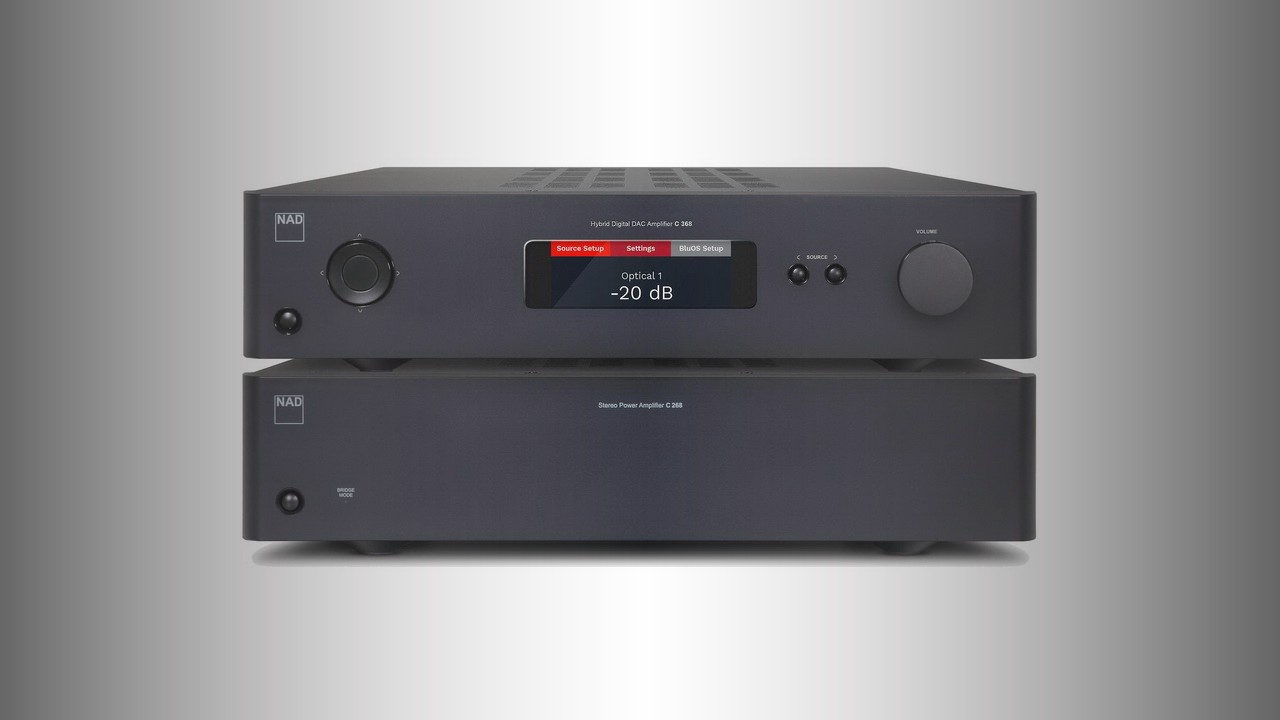
1. NAD C 268: Amplifier packed with rich features
The NAD C 268 is a two-channel power amplifier with balanced and RCA input options.
The NAD C 268 is a two-channel Class D power amplifier built around Hypex UcD modules.
Balanced and RCA inputs accommodate different preamplifiers, while separate rectification for each channel and passive internal airflow reflect a considered stereo design.
As a power amplifier, it is aimed at systems in which source selection and volume control are handled elsewhere.
Best for: Flexible two-channel separates systems
- Balanced and RCA inputs
- Hypex UcD Class D modules
- Separate rectifier for each channel
- No forced cooling
Verdict: A practical stereo power amplifier for listeners who want balanced connectivity and Hypex-based Class D amplification.

2. Soulnote A-3: Reference integrated amplifier
The Soulnote A-3 integrates a dual-channel analog design with three balanced and three RCA inputs.
Soulnote combines technology derived from its P-3 preamplifier and M-3 monoblock in a single integrated amplifier.
The A-3 is deliberately analog-only, providing three XLR and three RCA inputs but no digital or phono stage.
Its left and right channels are kept separate through the design, including dedicated 700 VA toroidal transformers, while a switchable signal-ground connection may help address ground-loop issues in some systems.
Best for: High-end all-analog stereo systems
- Three XLR and three RCA inputs
- Separate left- and right-channel architecture
- Dedicated 700 VA transformer for each channel
- Switchable signal-ground connection
Verdict: A focused integrated amplifier for listeners who value channel separation and extensive analog connectivity over built-in digital or phono facilities.

3. Aiyima A70: 2.1 channel Class D amplifier with quality components
The upright Aiyima A70 provides stereo speaker outputs, an active-subwoofer connection and rear-panel system controls.
The vertically oriented Aiyima A70 is built for compact stereo or 2.1-channel systems.
Its TI TPA3255 Class D amplifier is rated at up to 185 watts per channel into 4 ohms, and the rear panel includes balanced XLR/TRS, RCA, speaker and active-subwoofer connections.
A subwoofer cutoff control and 12 V trigger add useful system-integration options, while the two socketed NE5532 op-amps can be replaced.
Best for: Compact 2.1-channel systems
- Balanced XLR/TRS and RCA inputs
- Active-subwoofer output with cutoff control
- Up to 185 watts per channel into 4 ohms
- 12 V trigger input
Verdict: A space-conscious Class D amplifier with unusually useful subwoofer and balanced-input facilities.

4. Onkyo A-50 Streaming Amplifier: Class AB Power Meets Dirac Live
The Onkyo A-50 pairs a fanless Class AB amplifier stage with streaming functions and Dirac Live.
The Onkyo A-50 combines symmetrical Class AB amplification with streaming-oriented connectivity and Dirac Live.
Its three-stage inverted Darlington circuit is rated at 180 watts into 4 ohms and 140 watts into 8 ohms.
Physical construction includes a 5 mm aluminum front panel, an extruded aluminum heatsink and fanless cooling, making this an integrated option for buyers who want modern system features without abandoning a conventional high-current amplifier stage.
Best for: Connected stereo systems needing room correction
- Dirac Live room correction
- 180 watts into 4 ohms
- Fanless cooling
- 5 mm aluminum front panel
Verdict: A strong fit for listeners seeking Class AB amplification, streaming functionality and Dirac Live in one component.

5. NAD M23 V2: Next-Gen Eigentakt™ Power Amplifier Redefines Class D Performance
The NAD M23 V2 is a stereo Eigentakt power amplifier rated at 200 watts per channel into 8 ohms.
NAD’s M23 V2 is a dedicated stereo power amplifier using second-generation Purifi Eigentakt Class D modules.
It is rated at 200 watts per channel into 8 ohms and 380 watts per channel into 4 ohms, with higher stated dynamic-power figures.
The design emphasizes low output impedance, low noise and consistent linearity across speaker loads, making it the high-output separates choice in this selection.
Best for: High-power stereo separates systems
- Second-generation Purifi Eigentakt modules
- 200 watts per channel into 8 ohms
- 380 watts per channel into 4 ohms
- Low output impedance
Verdict: A powerful Eigentakt-based option for systems that require a dedicated amplifier with substantial output into 4- and 8-ohm loads.

6. xDuoo MT-605: Small and affordable amplifier
The compact xDuoo MT-605 combines a visible 12AU7 tube with Class D speaker amplification.
The xDuoo MT-605 combines a TI TPA3116 Class D amplifier chip with a 12AU7 tube in a notably compact enclosure.
Output is specified as 30 watts per channel into 4 ohms, and connectivity is intentionally limited to one stereo RCA input and speaker terminals.
At 120 mm wide and 390 g, it suits a simple desktop or small-room system better than an installation requiring multiple sources or extensive control features.
Best for: Simple desktop and small-room systems
- Compact 120 mm-wide enclosure
- 12AU7 tube stage
- 30 watts per channel into 4 ohms
- Simple RCA and speaker connectivity
Verdict: A compact hybrid design for buyers who need only one analog source and modest stereo power.
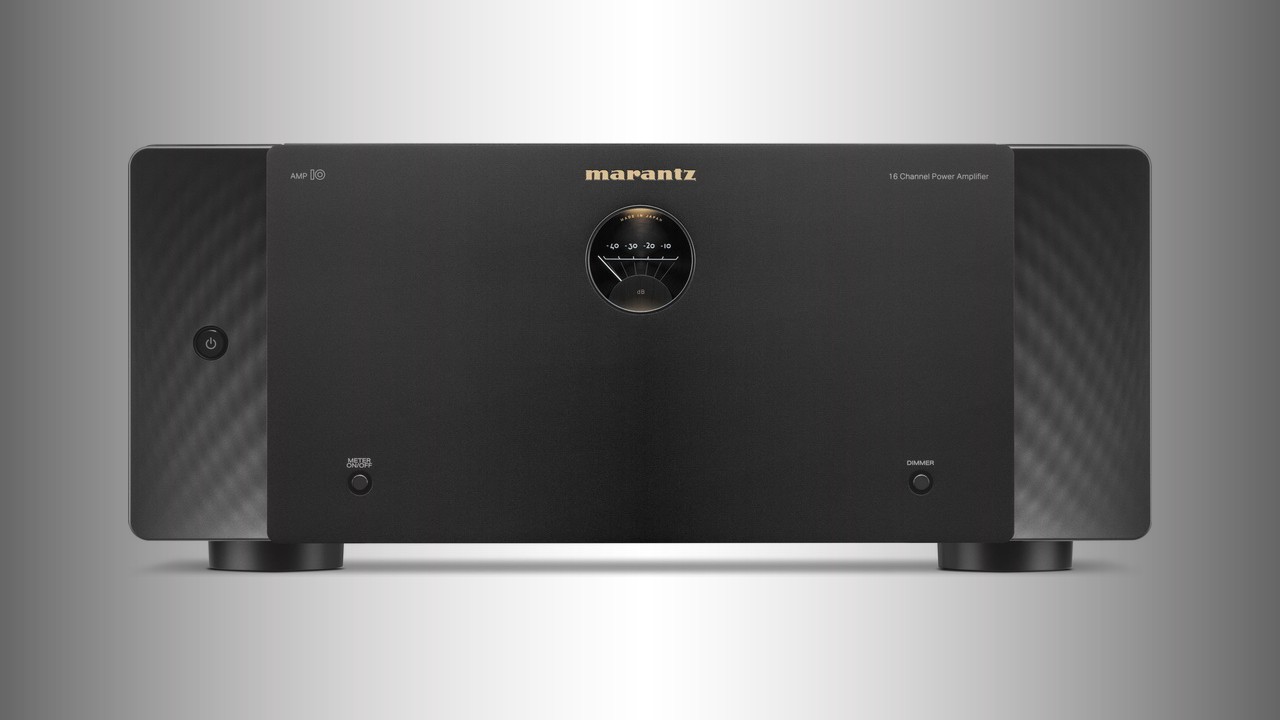
7. Marantz AMP 10: Top-of-the-line 16-channel amplifier
The Marantz AMP 10 houses sixteen channels of Class D amplification for extensive home-theater installations.
The Marantz AMP 10 addresses a completely different requirement from the stereo amplifiers here: powering a large multichannel home theater.
It provides 16 channels of Class D amplification rated at 200 watts per channel, along with balanced line inputs and selectable amplifier modes.
It is designed to partner the Marantz AV 10 processor, although its broad input and output provision also supports evolving theater configurations.
Best for: Large multichannel home theaters
- Sixteen amplifier channels
- 200 watts per channel rating
- Balanced line inputs
- Selectable amplifier modes
Verdict: A purpose-built power amplifier for ambitious cinema systems that need sixteen channels and flexible configuration.
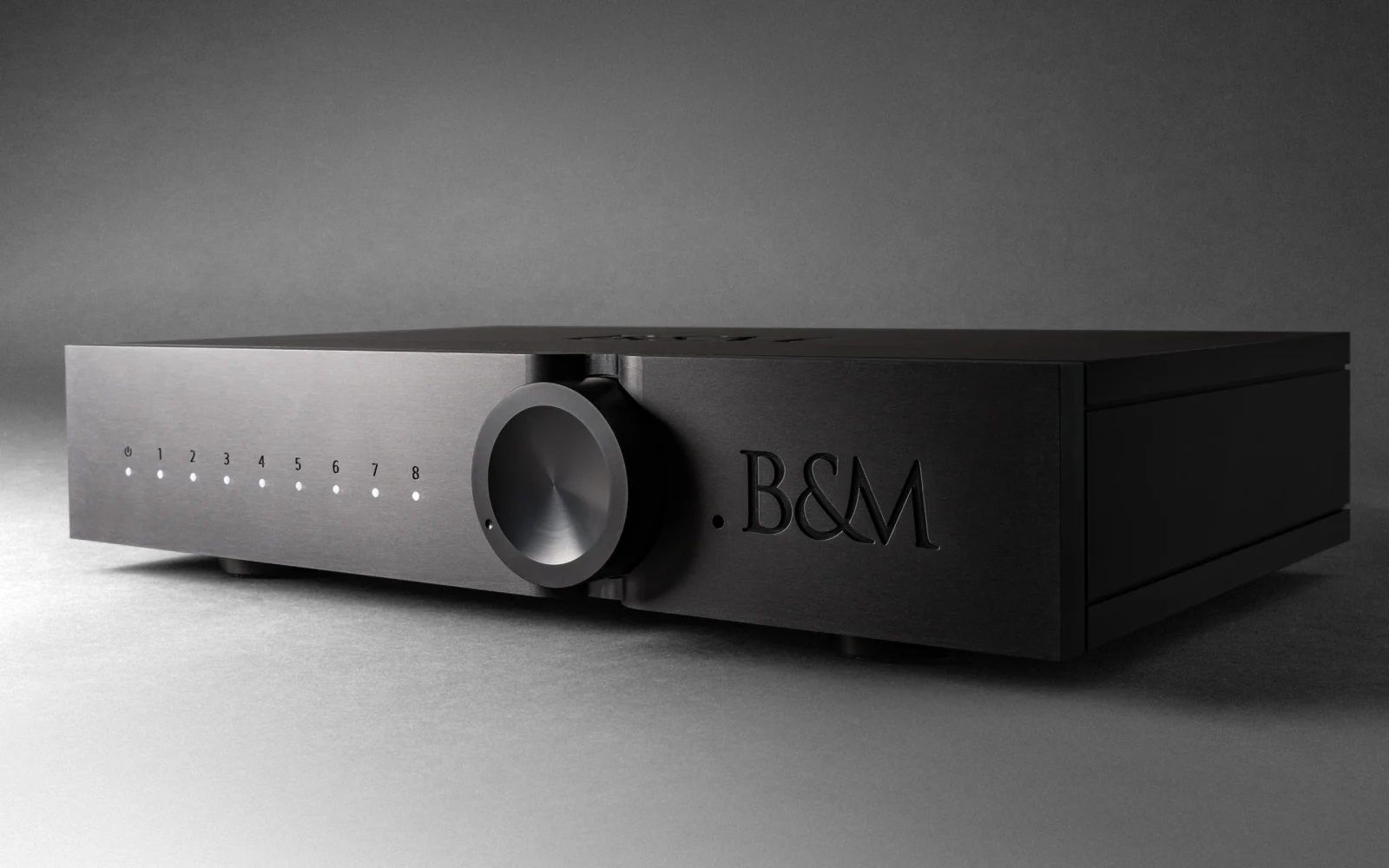
8. This $8,900 Preamp Could Make Your Phono Stage Obsolete
The Backes&Müller ICE 525 digital preamplifier includes a phono input with digital RIAA equalization.
The Backes&Müller ICE 525 is a digital preamplifier rather than a speaker-driving power amplifier.
It acts as a control center with eight inputs, including RCA, XLR, Toslink, S/PDIF, AES/EBU and USB, and adds an unusual phono input that digitizes cartridge signals before applying RIAA equalization.
Backes&Müller specifies a 103 dB signal-to-noise ratio for MC cartridges, positioning the ICE 525 for listeners open to digital processing within a vinyl system.
Best for: Vinyl systems open to digital signal processing
- Digitally implemented phono stage
- MM and MC cartridge support
- RCA, XLR and multiple digital inputs
- USB connection
Verdict: An unconventional control center whose digitally processed phono input is its clearest reason for consideration.
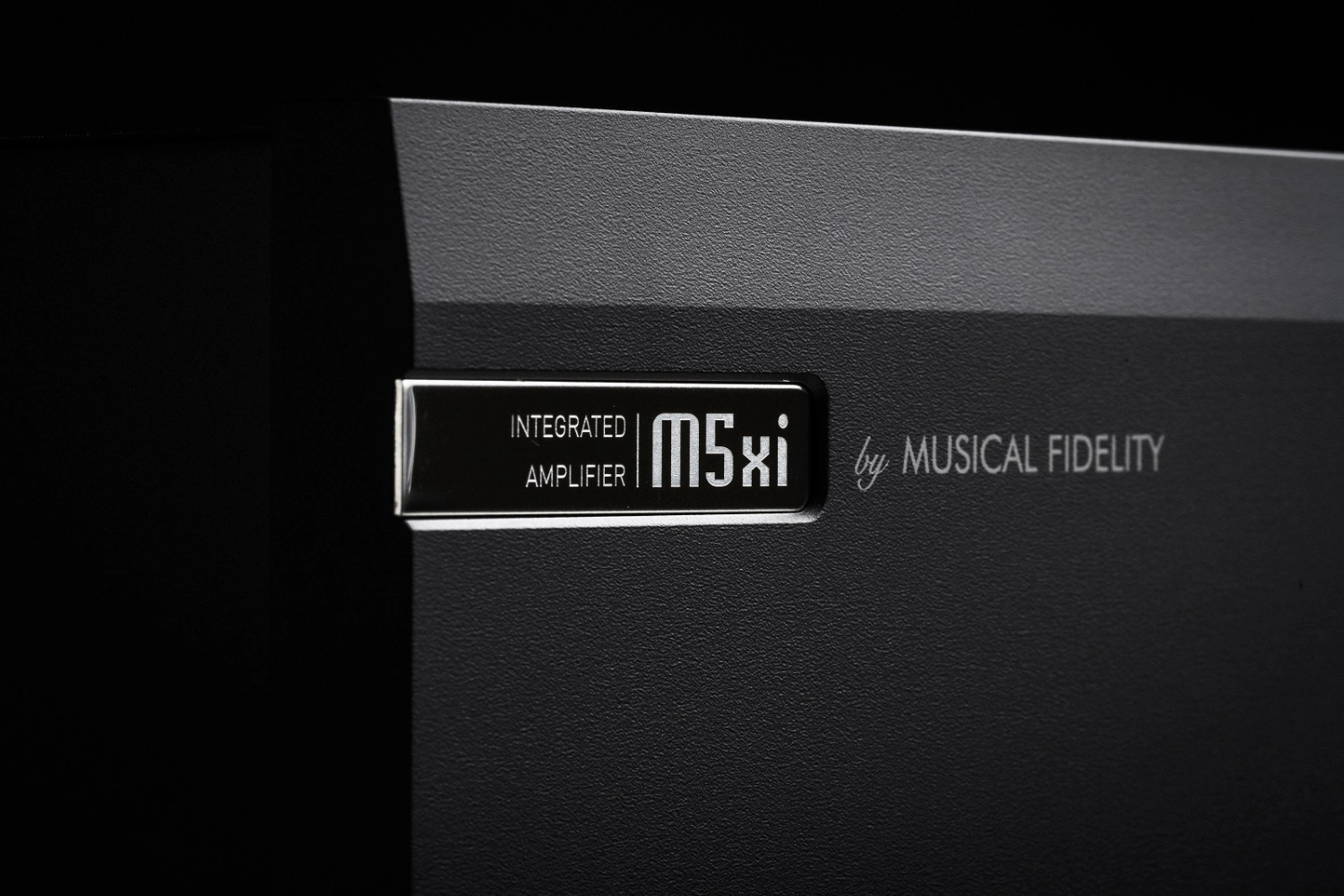
9. Musical Fidelity M5xi: Titan-Inspired 160W Integrated Amplifier
The Musical Fidelity M5xi combines 160-watt Class AB amplification with HDMI eARC and an MM/MC phono stage.
The Musical Fidelity M5xi brings source flexibility to a 160-watt-per-channel Class AB integrated amplifier.
Its revised design draws on the company’s Titan amplifier architecture and incorporates analog and digital inputs, HDMI eARC, and an updated phono stage supporting both moving-magnet and moving-coil cartridges.
This combination makes it particularly relevant to systems shared by music, television and vinyl sources.
Best for: Mixed television, digital and vinyl systems
- 160 watts per channel
- HDMI eARC input
- MM and MC phono support
- Analog and digital inputs
Verdict: A versatile Class AB integrated amplifier for users who want HDMI eARC and broad phono compatibility without separate source electronics.

10. Arcam Radia A25+: Audiophile Class G Amplifier with ESS ES9018 DAC, HDMI eARC & Phono Stage
The Arcam Radia A25+ is a 100-watt Class G integrated amplifier with illuminated controls, HDMI eARC and a built-in DAC.
The Arcam Radia A25+ is a 100-watt-per-channel Class G integrated amplifier with an ESS ES9018 DAC, HDMI eARC and a phono stage.
Its amplification operates in Class A up to 20 watts per channel before transitioning to Class AB operation at higher output.
A front-panel headphone mini-jack, remote control and backlit controls round out an integrated design intended to accommodate both traditional hi-fi and television use.
Best for: Feature-rich music and television systems
- 100 watts per channel
- Class A operation up to 20 watts per channel
- ESS ES9018 DAC and HDMI eARC
- Built-in phono stage
Verdict: A well-equipped integrated option for buyers who want Class G amplification, digital conversion, HDMI and phono support together.
Frequently asked questions
Should I choose an integrated amplifier or a power amplifier?
Choose an integrated amplifier when you need source selection and volume control in the same component.
A power amplifier such as the NAD C 268, NAD M23 V2 or Marantz AMP 10 requires a compatible preamplifier, processor or variable-output source.
How much amplifier power do I need?
Base the decision on speaker sensitivity and impedance, room size, listening distance and desired volume rather than wattage alone.
Confirm that the amplifier is suitable for the speaker’s nominal and minimum impedance, and leave enough headroom for musical peaks.
Do I need HDMI eARC, a phono stage or a subwoofer output?
Match facilities to your sources and system plan.
HDMI eARC is useful for television sound, a phono stage is required for a turntable unless one is built into another component, and a dedicated subwoofer output simplifies a 2.1-channel setup.
Does amplifier class determine sound quality?
No.
Class AB, Class D and Class G describe circuit approaches, but implementation, power supply, speaker matching and system configuration also matter.
Compare the complete design and required features rather than selecting by amplifier class alone.
How to choose the right amplifier
Start by separating stereo integrated amplifiers, stereo power amplifiers, preamplifiers and multichannel power amplifiers.
They are not interchangeable.
An integrated model such as the Musical Fidelity M5xi or Arcam Radia A25+ can reduce box count by handling sources and volume control, whereas the NAD power amplifiers are intended to sit downstream of a separate control component. The Marantz AMP 10 is specifically aimed at a large home theater, and the Backes&Müller ICE 525 is a preamplifier that still needs downstream amplification. Next, list every connection the system requires. Balanced analog inputs may matter in a separates installation, HDMI eARC can simplify television integration, and built-in MM or MC phono support may eliminate another component. For a 2.1-channel system, check not only for a subwoofer output but also for the available crossover or cutoff controls; the Aiyima A70 provides both an active-subwoofer output and an adjustable cutoff. Finally, verify speaker compatibility and installation conditions. Compare power ratings at the impedance relevant to your speakers, allow ventilation even with efficient or fanless designs, and consider physical size before purchase. Features that remain unused add little value, so the strongest choice is the amplifier whose role, connections, channel count and output align most closely with the rest of the system.



Sound Off
0Join the discussion if you have something to add.