


HiBy is widely associated with portable digital audio players, but the FD5 moves that experience into a compact desktop component. It is positioned as the company’s first DAC/headphone amplifier of this type: a wall-powered unit with Bluetooth functionality, multiple operating modes, high-resolution file support and a headphone-focused analog stage. Rather than simply scaling up a pocket device, the FD5 is built around a desktop-friendly feature set, including separate power supplies, a full-color OLED display and both 3.5 mm and 4.4 mm balanced analog outputs. For listeners who want a single box to sit beside a computer, on a desk, or in a compact headphone system, the attraction is not just one headline specification, but the way several practical design choices converge in a small chassis.
A desktop DAC/amp shaped by HiBy’s portable background
The FD5 is notable because it represents HiBy’s move from portable music players into a more stationary format. That matters because many headphone listeners now use mixed setups: a digital audio player on the move, a computer at the desk, and perhaps a phone or tablet as a wireless source. A desktop DAC/amp with Bluetooth can serve as a bridge between those habits without requiring a large hi-fi stack.
Unlike a battery-powered portable player, the FD5 is powered by a wall supply. That shift gives the design more freedom in areas such as power filtering, output stage current delivery and desktop connectivity. The source information points to a power supply using several thousand microfarads of filtering capacitors, along with separate power supplies and a clean power supply arrangement. Those details suggest that HiBy has approached the FD5 as more than a portable circuit in a box; it is intended as a compact but properly powered desktop component.
The compact package is part of the appeal. Many headphone systems are used in nearfield environments where space is limited: beside a monitor, on a nightstand, or on a small equipment shelf. A desktop DAC/amp that includes decoding, amplification, Bluetooth and display feedback in one enclosure can simplify that kind of system without removing the flexibility expected from modern digital audio hardware.

Four AKM DAC chips and an FPGA at the digital core
The FD5’s digital section is built around four AKM AK4493SEQ DAC chips and an FPGA. The use of four DAC chips is one of the defining technical details of the product, giving the FD5 a more ambitious internal architecture than a minimal USB dongle or simple entry-level desktop converter. The FPGA is also significant because it points to HiBy using programmable logic as part of the digital processing and control architecture, rather than relying only on off-the-shelf conversion hardware.
Format support is broad. HiBy lists PCM support up to 768 kHz/32 bit and DSD support up to DSD512, along with MQA 8X support. Prospective owners should not read those numbers as a guarantee that every music library requires such extreme formats, but they do indicate that the FD5 is designed to handle a wide range of high-resolution material. For users with mixed collections of standard-resolution files, high-resolution downloads and DSD albums, that breadth reduces the chance that the DAC becomes the limiting part of the chain.
The inclusion of Bluetooth also gives the FD5 a more flexible digital role. While wired digital playback is still the natural choice for many desktop headphone listeners, Bluetooth is useful for casual listening, shared use, quick switching from a mobile device, or situations where a computer is not the preferred source. In a compact DAC/amp, having both serious file support and wireless convenience broadens the number of ways the product can be integrated into daily listening.

Discrete amplification with Class A and AB support
On the analog side, the FD5 borrows from HiBy’s R8II statement digital audio player, specifically in relation to its analog stage. That is an important piece of product identity: HiBy is not presenting the FD5 merely as a converter with a headphone jack, but as a DAC/amp informed by its higher-end portable engineering.
The FD5 uses a discrete output stage rather than a conventional op-amp-based output. A discrete stage uses individual transistors and associated components, giving the designer control over the output behavior and current capability. In headphone amplification, current delivery can be important, especially with demanding headphones or in-ear monitors that reveal amplifier noise and control limitations. The source material specifically frames the FD5 as being designed to provide the power needed for high-end headphones, naming models and brands such as HIFIMAN, Rosson Audio Designs, Subtonic Audio’s Storm and Symphonium Audio’s Crimson as examples of the intended level of partnering equipment.
The FD5 also supports Class A and Class AB amplification. That gives the amplifier section a broader design profile than a single fixed operating approach. Without making assumptions about exactly how users select or experience those modes, the presence of both indicates that HiBy has built the FD5 with amplification topology as a meaningful part of the product rather than an afterthought. For a desktop headphone listener, this matters because the amplifier is not just there to make sound louder; it must interface electrically with different headphones, cable terminations and listening levels.
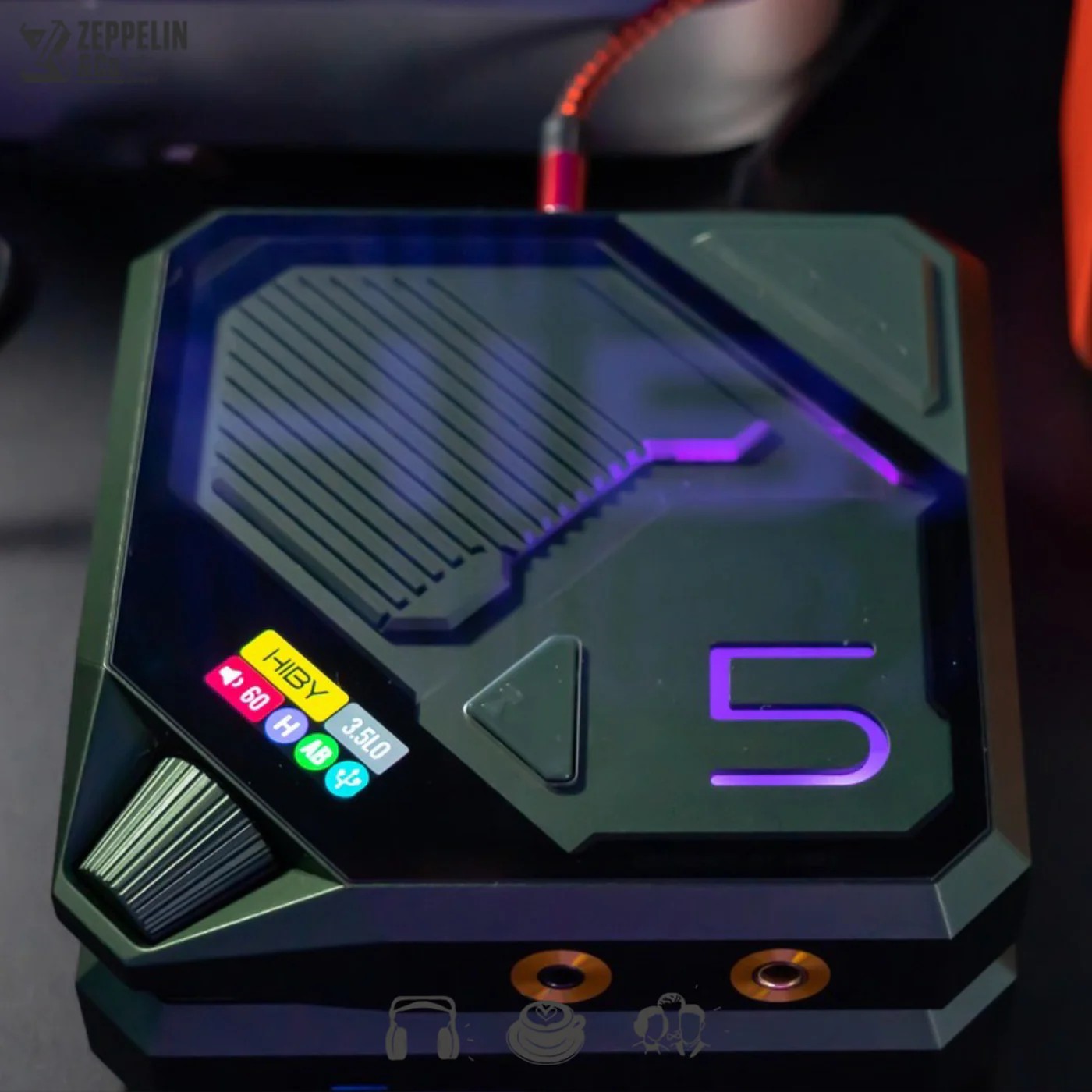
Power supply design is central to the desktop concept
One reason to choose a desktop DAC/amp over a pocketable device is the potential for more robust power delivery. The FD5’s wall-powered design, separate power supplies and substantial filtering capacitance are therefore not incidental features. They are part of the argument for taking the product out of the portable category and placing it on a desk.
Filtering capacitors are used to smooth and stabilize the power available to the audio circuits. While capacitor quantity alone does not determine performance, the mention of several thousand microfarads of filtering capacity shows that HiBy has given attention to the electrical foundation feeding the DAC and amplification stages. For owners, the practical benefit is system confidence: the FD5 is intended to operate as a stationary component with a power architecture suited to headphone amplification rather than depending on a small internal battery or limited bus power.
Separate power supplies can also help isolate different circuit sections. Digital processing, DAC conversion and analog amplification have different electrical requirements, and good desktop design often involves keeping those demands from interfering with one another. The FD5’s stated separation of power supplies fits that broader design logic.
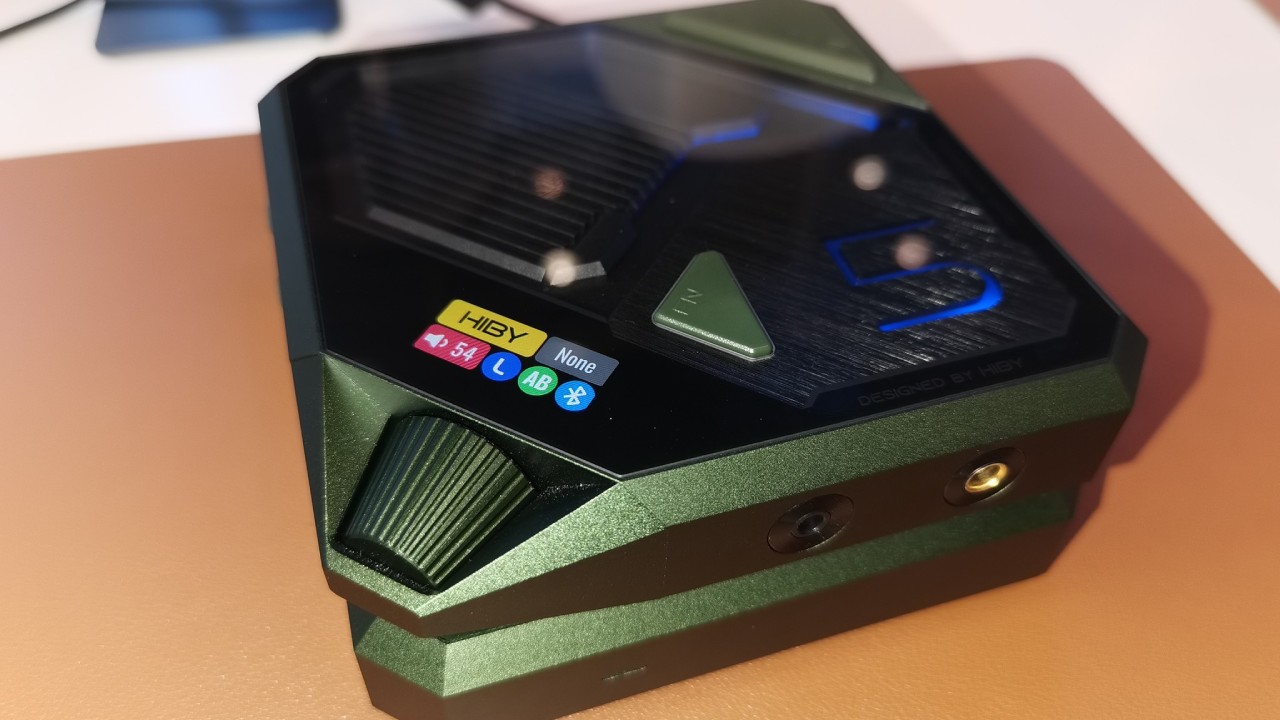
Outputs, display and operating modes support daily usability
The FD5 provides 3.5 mm and 4.4 mm balanced analog outputs. That output pairing is practical for modern headphone use. The 3.5 mm connection remains common across portable and desktop headphones, while 4.4 mm balanced has become a popular standard for higher-quality headphone cables and many contemporary in-ear monitors. Including both helps the FD5 serve users who already own multiple cables or who may move between portable and desktop listening setups.
A full-color OLED display is another useful desktop feature. In a DAC/amp with multiple formats, Bluetooth functionality and operating modes, visible status feedback can reduce friction. Users often want to know which input is active, what kind of signal is being received, or which mode is selected. A clear onboard display can make the device easier to live with than a minimalist box that depends entirely on lights or software feedback.
HiBy also lists multiple operating modes for the FD5. The source material does not detail every mode, so it is best not to overstate the implications. Even so, the presence of multiple modes aligns with the product’s role as a flexible desktop hub rather than a single-purpose amplifier. For listeners who alternate between wired computer playback, wireless use and different headphone outputs, that adaptability is a meaningful part of the product’s design.
Who the HiBy FD5 is most suitable for
The FD5 is likely to appeal most to headphone listeners who want a compact desktop DAC/amp with a stronger technical foundation than a basic adapter or small bus-powered interface. Its combination of Bluetooth, extensive high-resolution format support, balanced output, discrete amplification and OLED feedback makes sense for users who need one central device for serious listening and everyday convenience.
It is also a natural fit for people already familiar with HiBy’s portable audio ecosystem who want a stationary component with some of the same design thinking. The R8II-derived analog-stage connection may be especially interesting to those who follow HiBy’s higher-end digital audio players and want a desktop product informed by that lineage.
The FD5 may be less suitable for someone looking for a traditional full-size hi-fi DAC with numerous rear-panel analog outputs, or for a speaker-based system where headphone amplification is not a priority. It is also not aimed at listeners who need only the simplest USB-to-headphone solution. Its strengths are most relevant when the owner will actually use the headphone outputs, Bluetooth capability, format support and desktop interface.
A compact component with a clear role
The FD5’s appeal lies in the concentration of features that are directly relevant to modern headphone listening. It is compact, but it is not described as a purely portable product. It is wall-powered, but it does not appear to be designed as a large traditional component. That in-between position is useful: many listeners want desktop hardware that feels serious without requiring rack space.
The four AKM DAC chips, FPGA, discrete output stage, Class A and AB support, separate power supplies and filtering capacity give the FD5 a strong technical identity. At the same time, Bluetooth, 3.5 mm and 4.4 mm outputs, a full-color OLED display and multiple operating modes address day-to-day usability. The result is a product concept built around both capability and convenience, aimed at listeners who want their headphone station to be capable without becoming complicated.
Conclusion
The HiBy FD5 stands out as a compact desktop DAC and headphone amplifier that brings together several well-documented strengths: four AKM AK4493SEQ DAC chips, FPGA-based digital architecture, broad PCM and DSD support, MQA 8X support, Bluetooth functionality, discrete amplification, Class A and AB support, separate power supplies, substantial filtering capacitance, balanced 4.4 mm output, 3.5 mm output and a full-color OLED display. Its strongest appeal is to headphone-focused listeners who want a small wall-powered unit with modern connectivity and a more ambitious analog stage than a basic desktop adapter. For users building a compact desk-based listening system around headphones or in-ear monitors, the FD5 offers a thoughtful mix of flexibility, power-conscious design and HiBy’s portable-audio experience in a stationary format.


Join the discussion
Share your thoughts, listening impressions or product experience.