

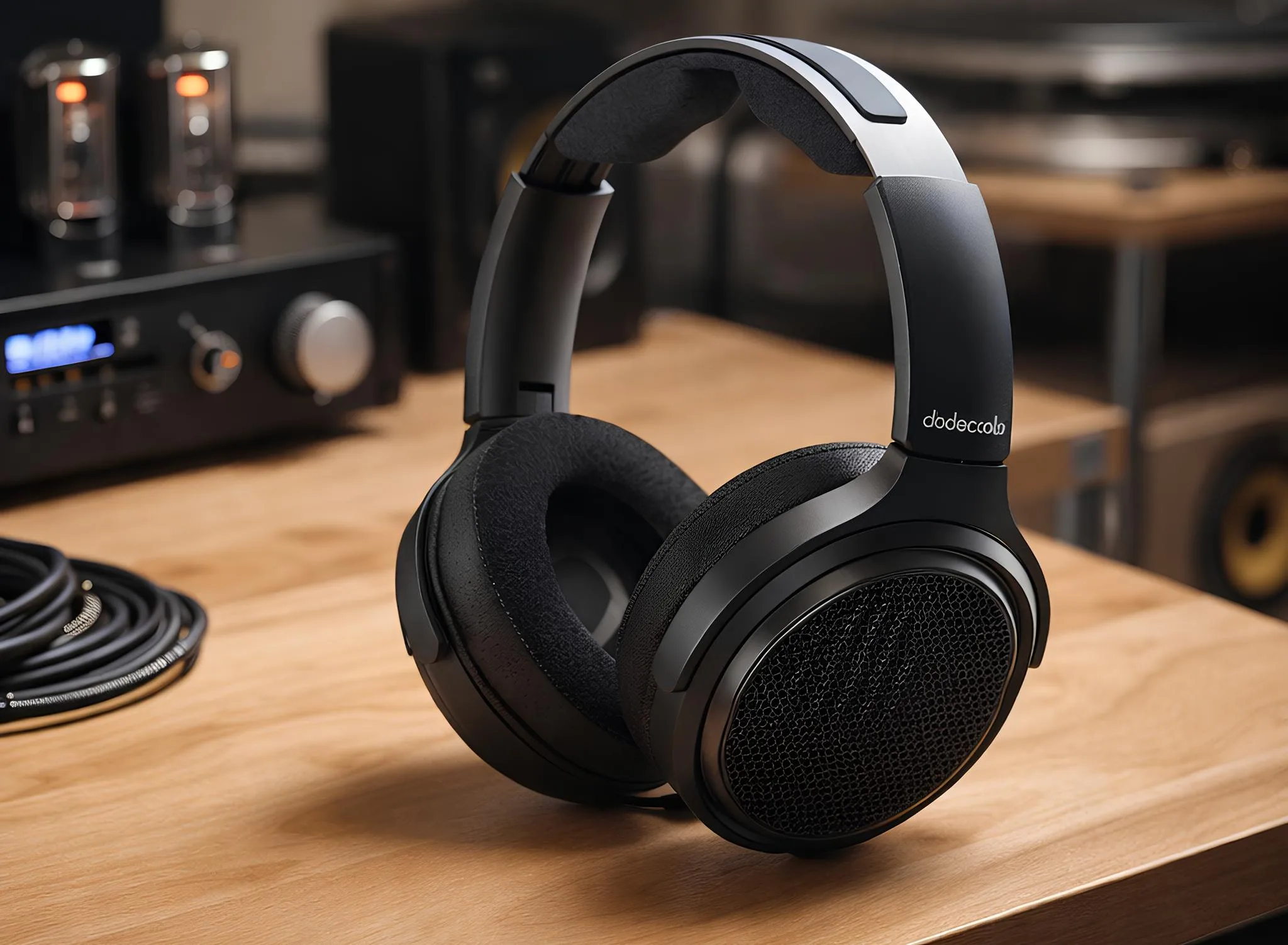
The FiiO JT7 is a full-size, open-back headphone designed around a notably large planar magnetic transducer. Its technical story begins with a 95 × 86 mm driver and a diaphragm only 3 microns thick, but FiiO has also paid attention to the less glamorous details that influence everyday ownership. Rotating earcups, a folding structure, removable cushions and detachable cables all help make the JT7 more than an exercise in driver engineering. It is intended primarily for attentive listening at home, where the spacious physical format and acoustically open construction can be used without the isolation requirements of travel or shared environments.
A Large Planar Driver at the Center
The defining element of the JT7 is its 95 × 86 mm planar magnetic driver. Unlike a conventional dynamic driver, which typically applies force through a voice coil attached to part of a diaphragm, a planar design distributes its conductive pattern across a broad, thin membrane. FiiO supports that membrane with magnets positioned on both sides, creating a symmetrical magnetic system intended to control diaphragm movement across its surface.
Driver dimensions do not determine performance by themselves, but the JT7’s large radiating area is an important part of its design identity. It gives FiiO substantial diaphragm area with which to move air, while the planar operating principle is intended to apply force evenly. For a prospective owner, the appeal lies in a headphone built from the outset as a dedicated large-format home design rather than a compact model enlarged to fit an over-ear chassis.
An Ultra-Thin Diaphragm with Detailed Construction
FiiO specifies a diaphragm thickness of 3 microns. Reducing diaphragm mass is intended to help the membrane respond rapidly to changes in the incoming electrical signal, although the final result also depends on magnet strength, conductor layout, damping and enclosure design. The membrane is paired with what FiiO calls a flexible FES support structure, an arrangement designed to manage the diaphragm within the driver assembly.
The conductive pattern is manufactured using a 28 nm process. This figure describes the precision involved in producing the conductor rather than the audible resolution of the headphone, but it remains a distinctive manufacturing detail. A finely controlled conductor pattern can contribute to consistency and durability while allowing FiiO to manage how force is distributed over the diaphragm.
Double-sided high-density neodymium magnets complete the principal motor system. Their position on both sides of the diaphragm is intended to maintain control over its movement. Together, the thin membrane, precision conductor and opposed magnet arrays show that the JT7’s engineering emphasis is not simply on driver size, but on how the entire planar assembly operates.

Open-Back Construction for Stationary Listening
The JT7 uses open earcups rather than sealed enclosures. An open-back structure allows air to move through the cups and reduces the need to manage pressure inside a closed chamber. It is a familiar choice for headphones intended for home listening, particularly where enclosure openness and a less confined presentation are design priorities.
That construction brings practical consequences. The JT7 will not isolate its wearer from surrounding noise, and people nearby are likely to hear some of the program material. It is therefore better suited to a quiet room than to commuting, offices or other shared spaces. This is not an incidental limitation: the open format is central to what the JT7 is designed to provide. Buyers should regard it as a dedicated listening-room or desktop headphone rather than an all-purpose portable model.
Fit Adjustments and Long-Session Practicality
Large planar headphones can place substantial demands on their headbands and hinges, so the JT7’s fit system is particularly relevant. Its earcups rotate across four axes, allowing their position to adapt to different head shapes instead of relying on a fixed cup angle. This should help the pads sit more evenly around the ears and distribute contact more consistently.
The structure is also foldable, a useful feature for storage even though the open-back design makes the JT7 less appropriate for listening on the move. FiiO lists the headphone at approximately 318 grams without its cable. That is still the weight of a substantial over-ear design, but the articulated cups and padded headband are intended to manage it during extended sessions.
Both the ear pads and headband cushion are removable. That matters for more than initial comfort: these are among the parts most exposed to wear, skin oils and compression over time. The ability to remove them can simplify cleaning, replacement and future fit adjustments, supporting longer-term ownership without requiring the entire headphone to be retired when a contact surface wears out.

Useful Connections Included from the Start
Each earcup accepts a 3.5 mm TRS connector, making the cable detachable at both sides. This arrangement allows a damaged cable to be replaced independently of the headphone and gives owners scope to use other suitably wired cables. Separate left and right connections also accommodate the balanced cable supplied with the JT7.
FiiO includes two approximately 1.5-meter oxygen-free copper cables: one terminated in a conventional 3.5 mm plug and another with a 4.4 mm balanced plug. A 6.35 mm-to-3.5 mm adapter is also provided. This covers three common use cases without demanding an immediate accessory purchase: portable or compact sources with a 3.5 mm socket, modern balanced headphone outputs using 4.4 mm, and desktop or full-size components fitted with a 6.35 mm output.
Balanced operation should not automatically be treated as inherently superior, but a 4.4 mm connection can be useful when it is the primary or more capable headphone output on a particular amplifier. Including both cable types lets the owner choose according to the source component rather than being locked into one termination.
Amplifier and Source Matching
The JT7 has a nominal impedance of 18 ohms at 1 kHz. That relatively low figure makes it compatible in principle with a broad range of contemporary headphone outputs, including portable players and desktop equipment. However, impedance alone does not establish how much power a headphone needs. FiiO also specifies sensitivity at 92 dB per milliwatt and 109 dB per volt RMS at 1 kHz, figures that should be considered when selecting a source or amplifier.
Prospective owners do not necessarily need a large full-size amplifier, but the source should be comfortable driving a low-impedance planar load and provide enough output for the required listening level. The included 3.5 mm and 4.4 mm cables make it straightforward to try the JT7 with different source categories. Its stated frequency response is 7 Hz to 40 kHz, although that specification should not be interpreted on its own as a description of tonal balance or audible performance.
Who the FiiO JT7 Is For
The JT7 is most suitable for listeners assembling a home, desktop or dedicated headphone system who specifically want an open-back planar model. Its folding frame is convenient, but its open cups and full-size dimensions point toward stationary use. The dual cable options make it especially relevant to owners who alternate between a portable digital audio player, a compact DAC-headphone amplifier and a conventional hi-fi component.
It may also appeal to buyers who value serviceable physical parts. Detachable cables and removable ear pads and headband cushioning address common wear points, while the multidirectional cup adjustment is useful for accommodating varied head shapes.
It is less appropriate for anyone who needs acoustic isolation, minimal sound leakage or a highly compact travel headphone. Buyers should also check that their chosen source can provide suitable output into an 18-ohm load. The JT7’s documented strengths are its large planar architecture, open format, adaptable fit and connection flexibility—not an attempt to cover every listening environment with one headphone.
Conclusion
The FiiO JT7 combines a 95 × 86 mm planar magnetic driver, 3-micron diaphragm, double-sided neodymium magnet system and precision conductor pattern in a purpose-built open-back headphone. Its practical design is equally significant: four-axis rotating earcups address fit, removable pads and headband cushioning support maintenance, and detachable dual-entry cables provide 3.5 mm, 4.4 mm balanced and 6.35 mm connection options out of the box. These qualities make the JT7 a considered choice for listeners seeking a substantial planar headphone for quiet home or desktop use, particularly those who value adaptable connectivity and replaceable wear components alongside ambitious driver engineering.



Sound Off
0Join the discussion if you have something to add.