
Choosing a digital source is no longer as simple as deciding whether you own CDs. A modern CD player may also include a DAC, digital inputs, USB playback, network features, a volume control or even the ability to connect directly to a power amplifier. The difficulty is working out which of those features you actually need.
The central question is often phrased as CD player or DAC? In practice, the answer depends on how your music is stored and how your system is connected. A CD player can be a complete digital front end, while a CD transport only reads the disc and sends digital data elsewhere. A DAC converts that digital data into the analogue signal your amplifier and speakers need.
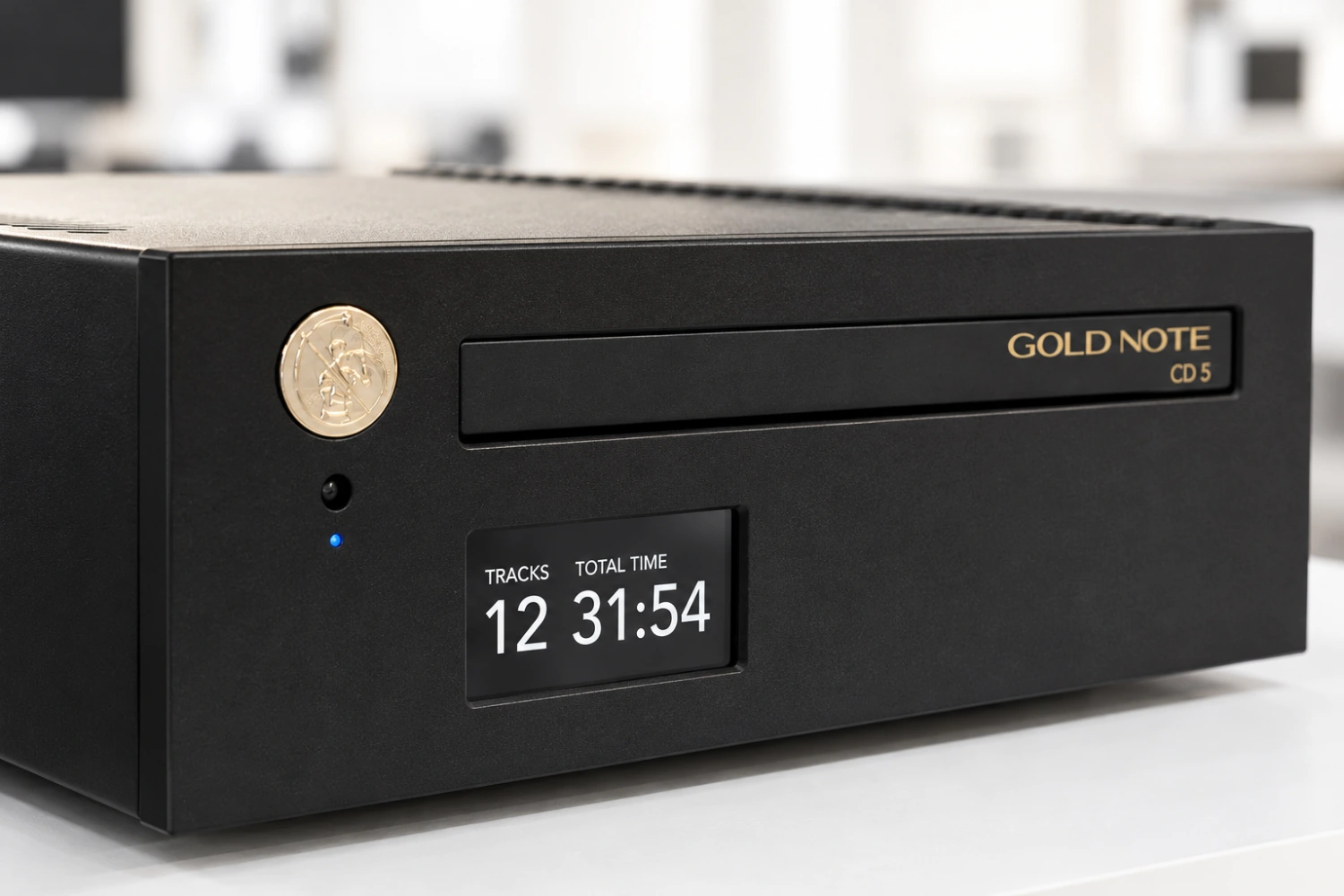
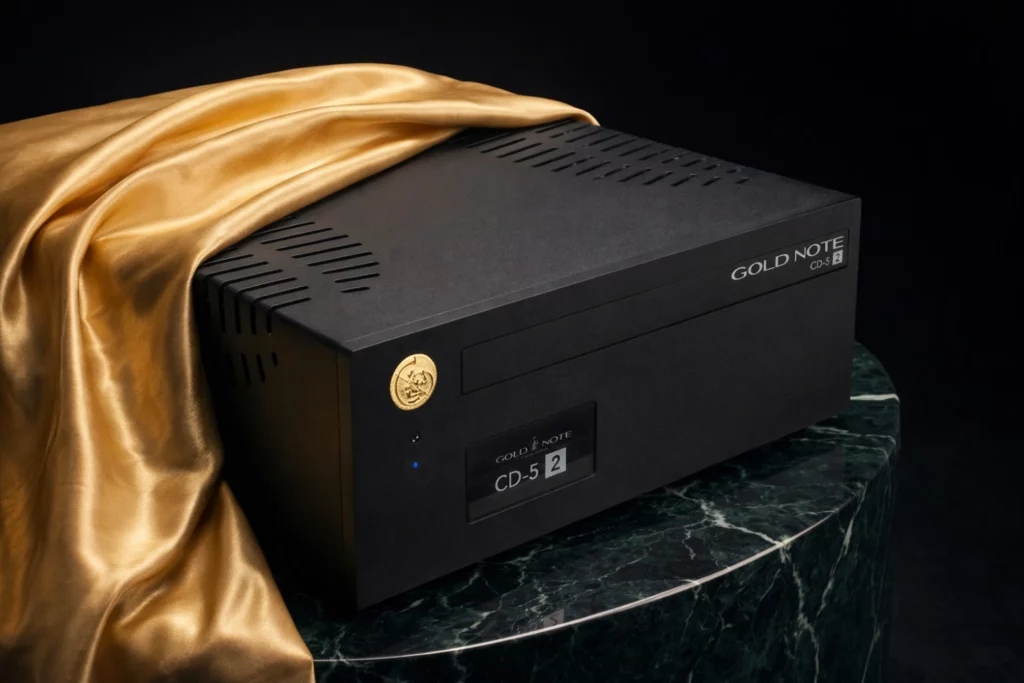
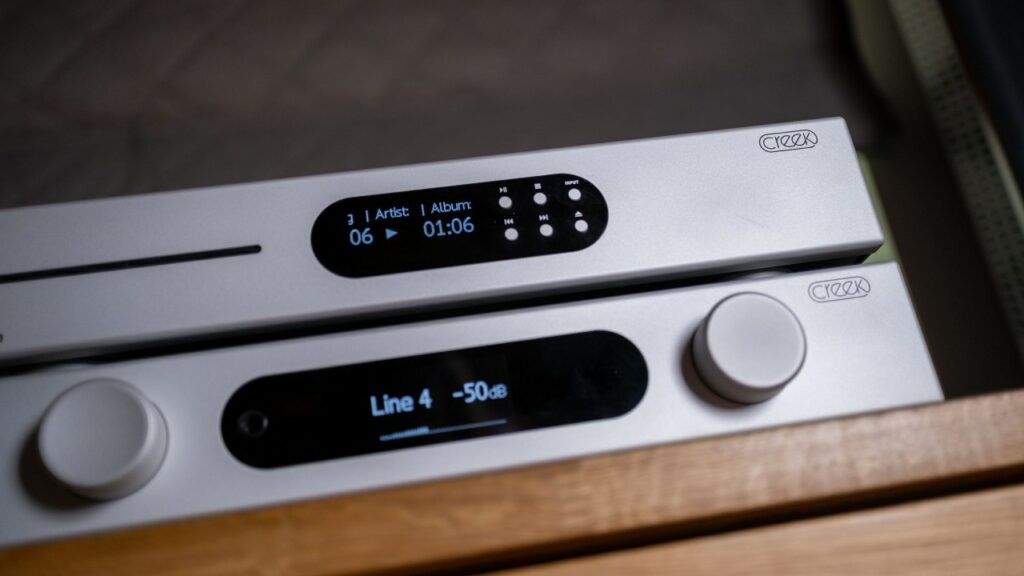
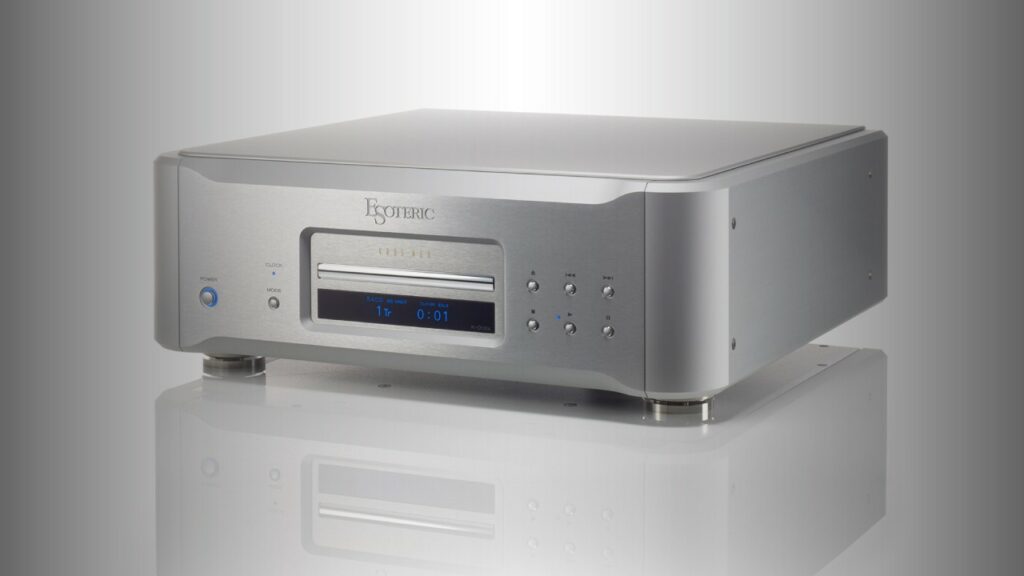
The products in this guide show how wide the category has become. The compact Gold Note CD-5.2 combines CD playback, digital outputs, analogue outputs and volume control. The Creek Voyage CD adds multiple digital inputs, USB audio and digital preamplifier functions. At the other end of the scale, the Esoteric K-01XS is an SACD/CD player built as an uncompromising high-end digital source.
Understanding the signal path will help you avoid paying for facilities that duplicate equipment you already own.
What it actually means
A disc player performs three main jobs. First, its optical mechanism reads the information stored on a CD or SACD. Second, its digital circuitry processes that information. Third, its DAC converts the digital signal into analogue audio, which is sent to an amplifier through RCA or XLR outputs.
A CD transport stops after the first stage. It reads the disc and sends a digital output, usually through coaxial or optical S/PDIF. The external DAC then handles conversion and analogue output. This can make sense if you already own a DAC you prefer, or if you want to separate the disc-reading and conversion stages.
An integrated CD player performs all three jobs in one chassis. It may also provide a digital output, allowing its internal transport to feed another DAC. That flexibility is useful, but it does not mean every output is interchangeable. Analogue outputs carry a converted music signal; digital outputs carry data for another device to convert.
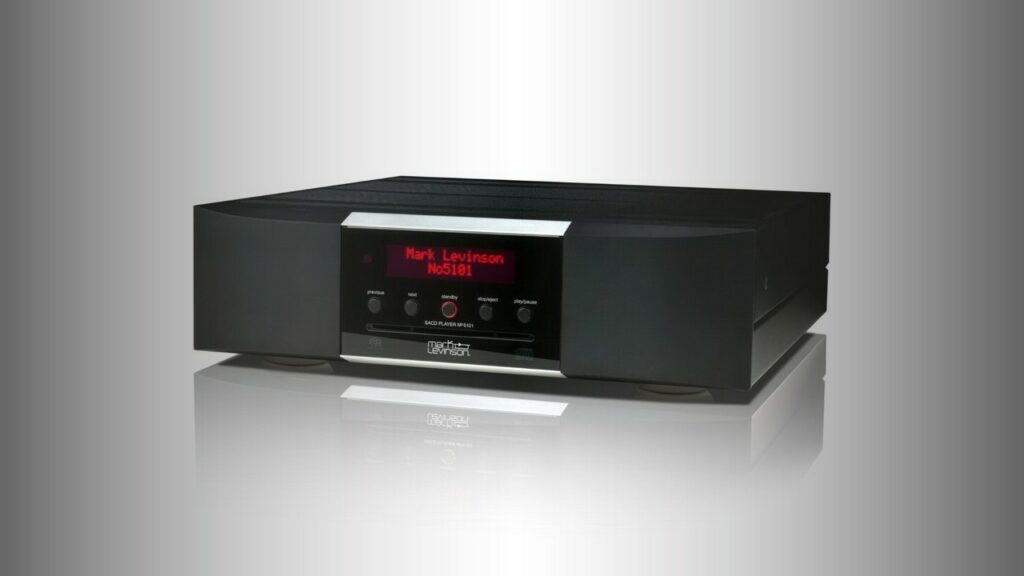
The DAC chip is only one part of the conversion stage. A complete DAC design also includes its clocking, power supply, analogue output stage, filtering and layout. For example, the Creek Voyage CD uses an AKM AK4493EQ DAC and provides fully balanced XLR and unbalanced RCA analogue outputs. The Mark Levinson No. 5101 uses a 32-bit ESS PRO-based PrecisionLink II design with a fully balanced discrete current-to-voltage converter. Those descriptions tell you something about the architecture, but they do not by themselves predict which player will sound best in every system.
Sample-rate figures need the same careful interpretation. They describe the digital formats a product can accept, not automatically the audible quality of CD playback. The Creek Voyage CD accepts PCM through USB up to 384kHz and native DSD up to 22.4MHz. The Esoteric K-01XS supports USB input up to 32-bit/768kHz and DSD up to 22.5MHz according to its listed specifications. Those capabilities matter if you have music in those formats; they are irrelevant to a library consisting only of standard CDs.
Why it matters
The most important question is not which player has the largest specification. It is where conversion will take place in your system.
When the CD player should be the DAC
If your main source is a collection of CDs and your amplifier has no suitable digital section, an integrated player is usually the straightforward option. Connect its analogue RCA or XLR outputs to the amplifier, select the correct input and let the player handle the entire digital-to-analogue path.
This approach also reduces box-count. The Gold Note CD-5.2 includes both RCA and XLR analogue outputs, as well as digital outputs for use with a separate DAC. Its volume control means it can also be connected directly to a power amplifier, although you should make sure the system provides a safe and convenient way to control level before removing the preamplifier.
A player with a built-in volume control can similarly work with active speakers or a power amplifier. The Creek Voyage CD has a rear-panel switch for activating its volume control and is described as suitable for direct connection to a power amplifier or active speakers. That makes it more than a disc player: it can form the control centre of a relatively simple digital system.
When a separate DAC makes sense
A separate DAC becomes more useful when your system has several digital sources or when you already own a converter whose inputs and sound you prefer. In that case, you can use the CD player as a transport and connect its digital output to the DAC.
Check the connections before buying. Coaxial and optical S/PDIF are common, but USB is normally intended for a computer or compatible digital source rather than a conventional CD transport. Some players also provide unusual or specialist connections. The Esoteric K-01XS, for example, includes USB-B, digital inputs and outputs, and a word-sync input. The Esoteric K-05X provides coaxial, optical and USB inputs, along with digital outputs and BNC word sync.
Do not assume that an external DAC will automatically transform a CD player. The result depends on the whole system, including analogue output stages, gain structure, amplification, speakers and room acoustics. The practical advantage may be greater flexibility rather than an obvious improvement in every setup.
When balanced outputs are useful
XLR outputs can be valuable when the amplifier or active speakers have balanced inputs, especially with long cable runs or equipment designed around a balanced signal path. They are not automatically superior simply because they use a different connector.
Output level can also differ. The Creek Voyage CD lists 2.0V RMS through RCA and 4.0V RMS through XLR. The Mark Levinson No. 5101 lists 3V RMS unbalanced and 6V RMS balanced. If two sources sound different, make sure their volume levels are matched before drawing conclusions. A louder signal can seem more impressive even when the underlying difference is small.
CD, SACD and computer audio are different jobs
Not every disc player handles the same formats. A conventional CD player reads standard audio CDs, and some models also accept CD-R or CD-RW. SACD players add support for Super Audio CD, but that does not necessarily mean they are better choices for someone who owns only ordinary CDs.
The Esoteric K-01XS supports Super Audio CD, CD and CD-R/CD-RW. The Esoteric K-05X offers the same broad disc compatibility. The Mark Levinson No. 5101 supports SACD, CD-Audio and CD-R/RW. These models therefore make sense for listeners with a mixed disc collection or an interest in SACD software.
SACD compatibility should not be confused with high-resolution file playback. A player may accept SACD but have limited computer-audio inputs, or support high-resolution USB audio without playing SACD. Check each input separately and consider the formats you actually use.
Computer audio introduces another set of decisions. USB inputs may support asynchronous transmission, in which the receiving device uses its own clocking arrangement rather than simply following the computer's timing. The Esoteric K-05X includes USB operation in synchronous and asynchronous modes, while the Creek Voyage CD has an asynchronous USB input. The important practical point is compatibility: a computer may require the correct driver, software or operating-system support, particularly at higher resolutions.
If your music comes mainly from a laptop, streamer or network, a dedicated DAC may offer more useful inputs than a CD player. If you still play discs regularly, a player with digital inputs can combine both roles.
Why volume control changes the system design
A volume control on a CD player or DAC can remove the need for a separate preamplifier. The source connects directly to a power amplifier or active loudspeakers, reducing the number of boxes and analogue connections.
That arrangement is attractive, but it needs careful setup. Confirm that the volume control is active, start at a low level and check whether the remote operates the function you need. It is also worth considering what happens when you add another source, such as a turntable or tuner. If the digital player is your only source, direct connection may be elegant. If you need several analogue sources, a conventional preamplifier may remain the more practical choice.
The Creek Voyage CD is particularly flexible in this respect: it can switch between six digital sources and adjust volume, while its rear-panel control determines whether the built-in volume function is active. The Gold Note CD-5.2 also offers volume control and digital outputs, giving the owner several possible system configurations.
Volume control does not make a power amplifier unnecessary. It simply moves the control function upstream. You still need suitable amplification and speakers, and you should not connect a line-level source directly to passive speakers.
When it matters less
Some specifications deserve attention only when they solve a real problem. A 768kHz input is not a reason to choose one CD player over another if you never play files at that rate. Multiple digital filters may be useful to an enthusiast who enjoys experimenting, but they should not outweigh build quality, usability and system compatibility.
The same applies to published distortion and signal-to-noise figures. The Gold Note CD-5.2 lists a 124dB signal-to-noise ratio and 0.001 percent THD, while the Esoteric K-01XS lists 117dB and 0.0006 percent THD. Such figures can indicate a technically ambitious design, but they are not a complete description of sound quality. They are also measured under particular conditions, so comparisons between brands should be made cautiously.
Mechanical construction can be important for reliability and engineering goals, but a heavier chassis is not automatically the right choice. The Esoteric K-01XS weighs 31kg, whereas the Gold Note CD-5.2 is a compact 3kg design. These products are aimed at very different systems and budgets. Choose according to installation space, handling, connectivity and the rest of your equipment rather than weight alone.

How to choose: a practical checklist
Start with your music. If you play ordinary CDs almost exclusively, a well-equipped CD player may be all you need. If you own SACDs, make sure SACD playback is explicitly listed. If your library is stored on a computer or network, prioritise USB, network or digital-input compatibility.
Map the signal path. Decide whether the player will feed an integrated amplifier through analogue outputs, a power amplifier through a volume-controlled output, or an external DAC through a digital output. This single decision prevents most redundant purchases.
Count your sources. A player with one digital input is enough for a simple system. Multiple inputs become valuable when you want to connect a television, computer, streamer or another digital component. The Creek Voyage CD is designed around this broader role, with two S/PDIF inputs, two optical inputs and USB alongside its CD transport.
Check the connections at both ends. Make sure the player and amplifier share RCA or XLR compatibility, and check whether a digital source uses coaxial, optical or USB. Also verify supported file formats and sample rates for the inputs you intend to use.
Do not ignore usability. A clear display, sensible remote control and accessible input selection matter every time you listen. The Gold Note CD-5.2 includes a front-panel touchscreen and remote control. The Mark Levinson No. 5101 adds network, USB and control-system facilities, including Ethernet, Wi-Fi, RS-232 and a 12V trigger input. Those features may be more valuable to an integrated installation than another impressive DAC specification.
Leave room for future changes. Digital systems evolve. A player with both analogue and digital outputs can continue to serve as a transport if you later add a DAC. Conversely, a DAC with no disc mechanism will not replace a CD player if physical media remains central to your listening.
The short answer
Choose a CD player with a built-in DAC when you want the simplest route from discs to an amplifier. Choose a transport when you already have a DAC or want to select conversion separately. Choose a DAC with digital inputs when your main sources are a computer, streamer or other digital devices.
A versatile integrated player can cover all three roles, but versatility only helps if you will use it. The best purchase is the one that matches your music collection, amplifier connections and future plans—not necessarily the one with the most elaborate processing or the highest numerical specification.
Think of the player as part of a signal chain rather than an isolated box. Once you know where the disc is read, where conversion takes place and where volume is controlled, the choice between a CD player, transport and DAC becomes considerably easier.


Sound Off
0Join the discussion if you have something to add.