
Best Portable Music Players for Every Listener and Budget
The best portable music player depends on more than decoding figures. We compare five very different models to find the right choice for streaming, headphones, portability, sound and budget.
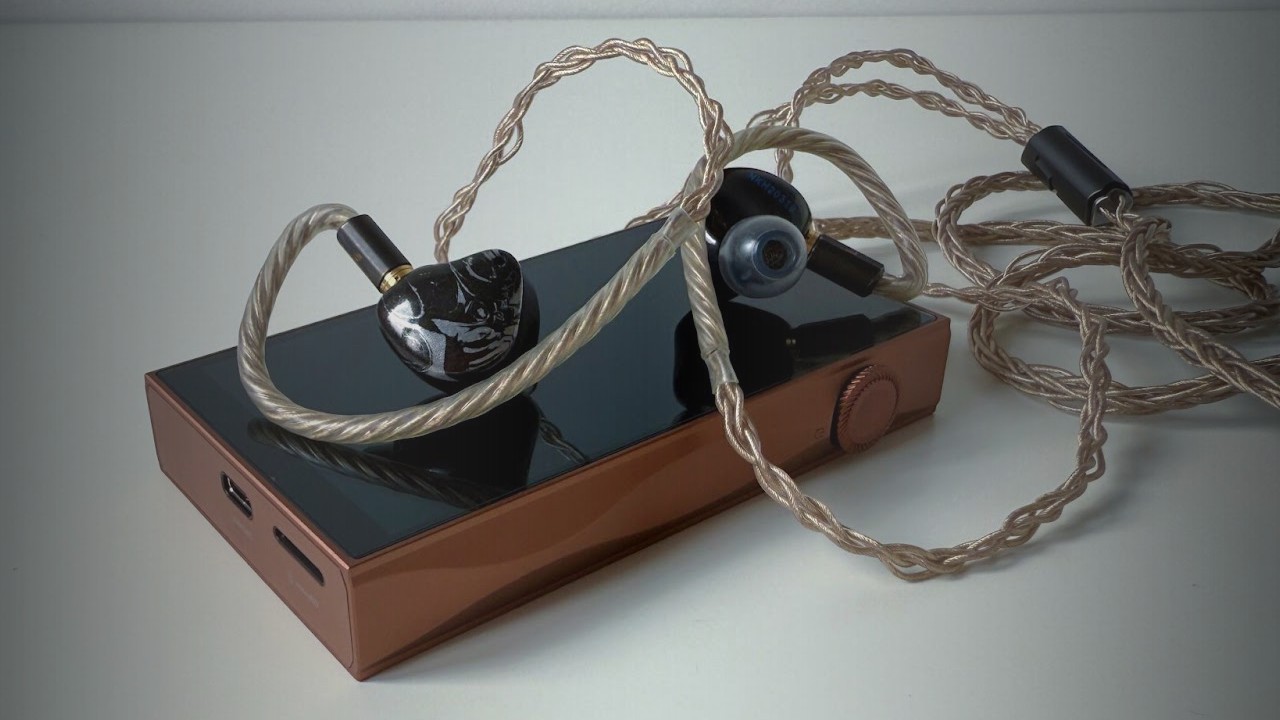
These five portable music players cover a wide range of priorities: the $209 Shanling M1 Plus and $249 HiBy R4 target accessible high-resolution listening, while the Shanling M1s focuses on extreme portability and the Shanling M3 Plus adds Android flexibility and stronger amplification. At the top of the feature list sits the Astell&Kern PS10, a compact player with substantial storage, networking and desktop-system connectivity.
That range matters because there is no single definition of the best portable music player. A listener using sensitive in-ear monitors may value a small, quiet player, while someone with full-size headphones needs more output power. Others may want Android apps, long battery life, a large music library or the simplest possible device. This guide matches each model to those priorities rather than treating headline specifications as the whole story.
Quick verdict
Best Overall: Shanling M3 Plus. It offers the broadest combination of sound quality, amplification, Android flexibility, storage, display quality and everyday usability. Its reviewed price of $470 places it above the budget models, but it is the most complete all-rounder here.
- Best Value: Shanling M1 Plus — the lowest listed price, compact dimensions, 660mW balanced output and a strong feature set.
- Best Budget Android Player: HiBy R4 — Android 12, four DAC chips, Class A amplification and a listed $249 price.
- Best for Portability and IEMs: Shanling M1s — only 106g, with a responsive compact design and a presentation the review particularly suited to on-the-go listening.
- Best Features: Astell&Kern PS10 — the most ambitious connectivity, storage, networking and decoding package, although its source article does not provide a price.
| Player | Best suited to | Key strengths | Price stated in source |
|---|---|---|---|
| Astell&Kern PS10 | High-end listeners wanting a feature-rich portable and home-audio source | 256GB internal storage, microSD up to 2TB, docking station, DLNA, dual audio circuits and up to 15 hours’ playback | Not stated |
| HiBy R4 | Budget-conscious Android users and headphone listeners | Android 12, Class A amplifier, 4.7-inch screen and 525mW balanced output at 32 ohms | $249 |
| Shanling M1 Plus | Low-cost buyers wanting power and compact size | 116g body, 660mW balanced output at 32 ohms, Wi-Fi, DLNA/AirPlay and 12.5-hour battery claim | $209 |
| Shanling M1s | Ultra-portable use and IEMs | 106g weight, compact body, MTouch 2.0, up to 14.5 hours wired and 26 hours via Bluetooth | $260 |
| Shanling M3 Plus | Listeners wanting the most balanced all-round package | Android 13, 64GB storage, microSD up to 2TB, 800mW balanced output and reviewed sound quality | $470, excluding taxes |
Astell&Kern PS10
SOURCE 1 uses
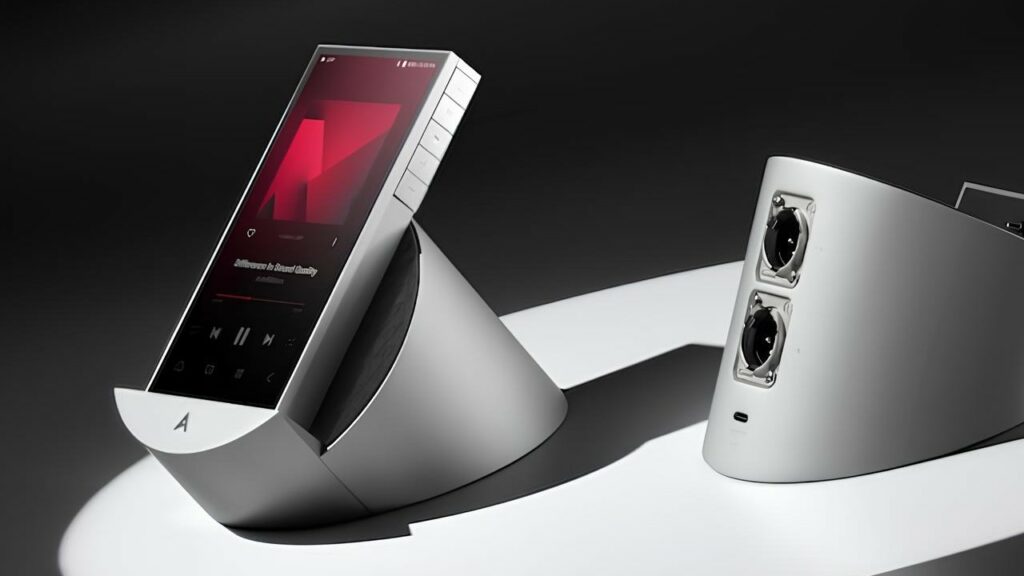
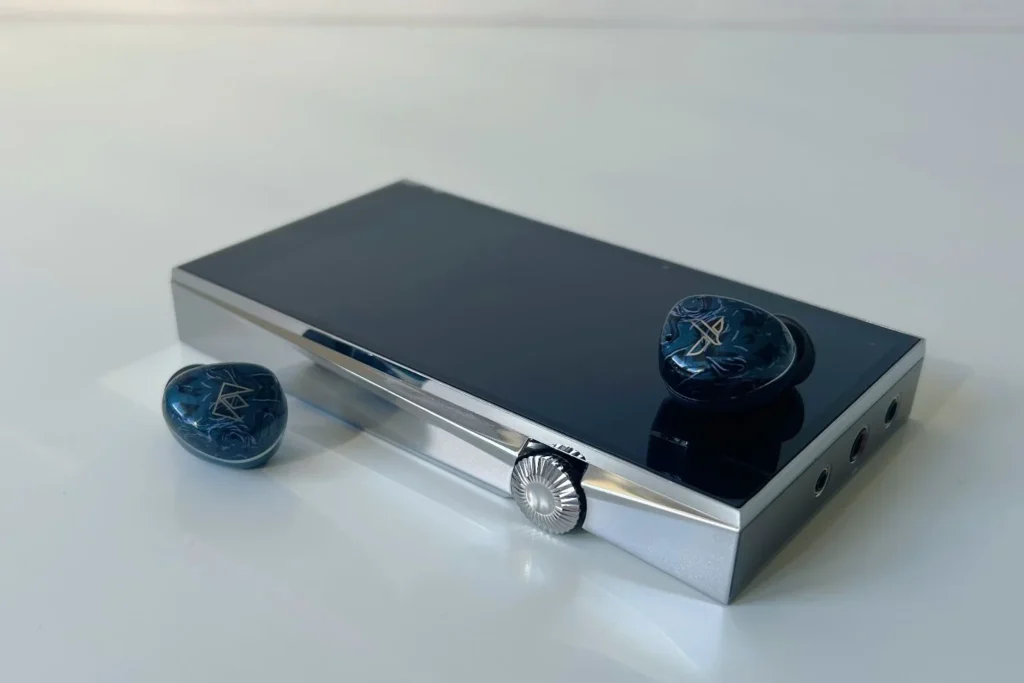
The PS10 is the most ambitious product in this comparison, and not simply because it uses four AKM AK4498EX DAC chips alongside two AK4191EQ chips. Its real distinction is how many roles it is designed to cover. It is a pocket-sized player, a network-capable source and a potential partner for an amplifier or active speakers, thanks to its included docking station.
For headphone users, the PS10 uses separate dual audio circuits for balanced and single-ended outputs. Its impedance-adaptive dual amplifiers are designed for both lower- and higher-impedance headphones, while Smart Gain automatically selects the appropriate amplifier. That makes it a particularly interesting choice for listeners who move between different headphones and do not want to manage gain settings manually.
It also has the strongest storage provision here. The 256GB internal memory can be expanded with a microSD card up to 2TB. Dual-band Wi-Fi, DLNA, USB-C, Bluetooth and external-DAC operation add flexibility, and the player supports PCM up to 32-bit/768kHz and DSD512. Its Bluetooth codec list includes aptX HD, LHDC and LDAC.
The PS10 is therefore the best alternative for a listener who wants one portable component to connect into a wider system as well as drive headphones. Its 5,770mAh battery is claimed to provide up to 15 hours of playback. However, the source does not state a price, so it cannot be presented as a value recommendation or compared on cost with the four models whose prices are supplied. The PS10 is also a product whose feature set is likely to matter more to a high-end system user than to someone seeking the least expensive route to local high-resolution playback.
HiBy R4
SOURCE 2 uses
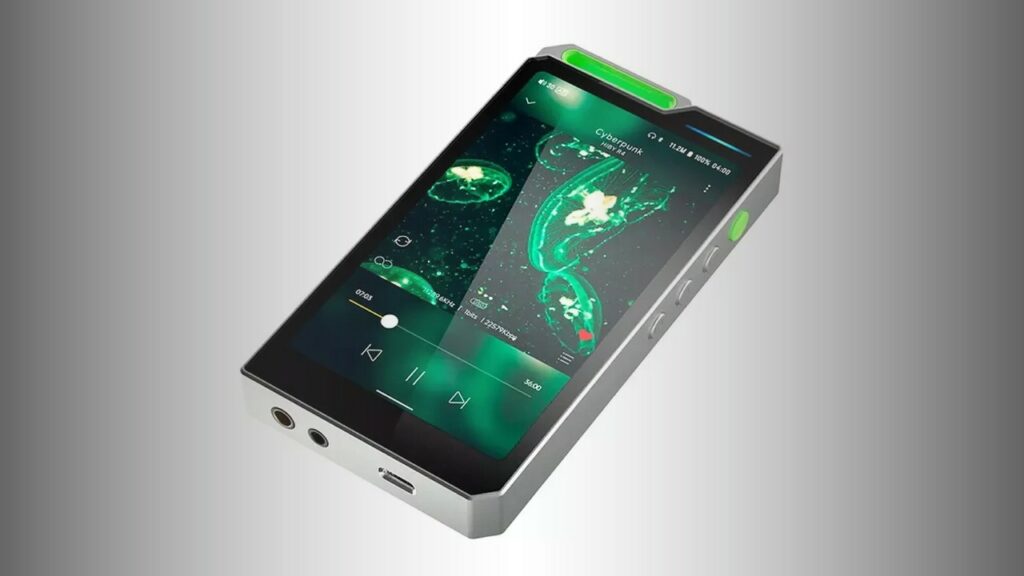
The HiBy R4 occupies a useful middle position between a very small non-Android player and a more substantial Android model. At $249, it is cheaper than the Shanling M1s and M3 Plus, while offering the app flexibility that separates it from the MTouch-based Shanling M1 Plus and M1s.
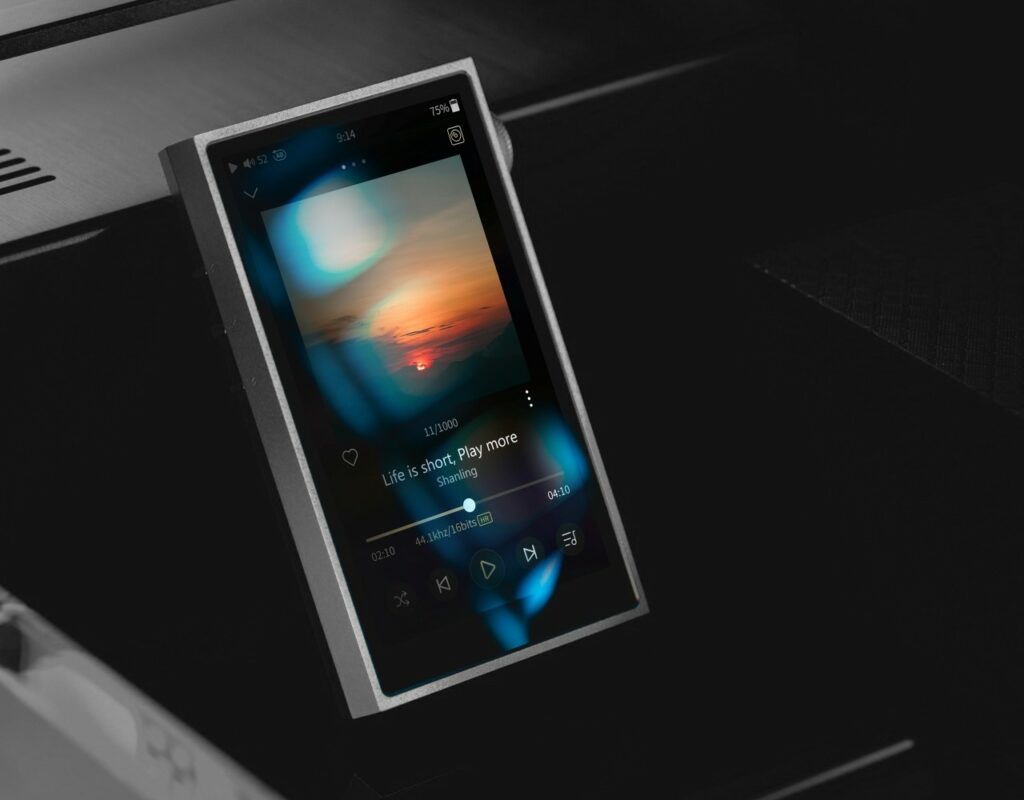
Android 12 runs on a Qualcomm Snapdragon 665 platform with 3GB of RAM and 32GB of storage. The 4.7-inch touchscreen is larger than the displays on the two smaller Shanling models, and system-wide Bit-Perfect Audio is intended to support high-resolution playback across different applications. That combination makes the R4 the clearest choice here for someone who wants a dedicated player but still expects a phone-like Android environment.
Its audio hardware is unusually serious for this price category. Four ESS Saber ES9018C2M DAC chips support PCM up to 32-bit/768kHz, DSD256 and MQA. The pure Class A amplifier uses four OPA1652 operational amplifiers, two OPA1612 operational amplifiers and 16 transistors. Balanced output is rated at up to 525mW into 32 ohms, with both 4.4mm balanced and 3.5mm unbalanced headphone connections.
The R4 is not the specification leader in every area: the M1 Plus and M3 Plus support DSD512, and the M3 Plus has more internal storage. But it is a persuasive budget Android option because it combines a large screen, open operating system, Class A amplification and a clearly stated price. Its claimed battery life is 11 hours, shorter than the wired figures quoted for the M1s and M1 Plus, but still part of a coherent package for listeners who value apps and amplifier design over maximum endurance.
Shanling M1 Plus
SOURCE 3 uses
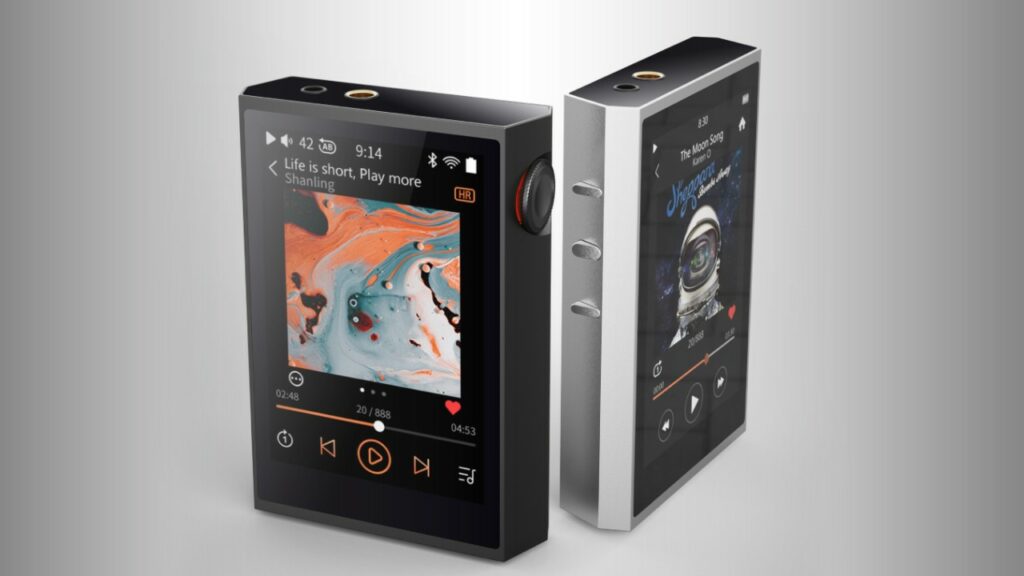
The M1 Plus is the strongest low-cost alternative to the overall winner. At $209, it is the least expensive player in this guide, yet its balanced output is rated at 660mW into 32 ohms. That is higher than the stated balanced figures for the HiBy R4 and Shanling M1s, and makes the M1 Plus the obvious budget pick for buyers who want substantial headphone-driving capability without moving to the M3 Plus.
Its compact aluminium-and-glass body measures 86 x 61 x 17mm and weighs 116g. The 3.2-inch touchscreen is smaller than the R4 and M3 Plus displays, but that is part of the M1 Plus’s more portable character. It runs Shanling’s MTouch system rather than Android, so it is better suited to listeners who want direct local playback, Bluetooth and network features without installing phone apps.
Those network features are extensive for the price. The M1 Plus supports Wi-Fi, DLNA, AirPlay and OTA updates, plus two-way Bluetooth 5.2 with LDAC, aptX HD, aptX and AAC. It also includes USB connectivity, a 3.5mm coaxial SPDIF output and a microSD card slot. Both 3.5mm single-ended and 4.4mm balanced headphone outputs are provided.
The ESS ES9069Q DAC and dual SGM8262 amplifiers support PCM up to 32-bit/768kHz and DSD512. Shanling quotes up to 12.5 hours of battery life. Compared with the M3 Plus, the M1 Plus gives up Android, internal storage and some of the larger model’s refinement and convenience. Compared with the M1s, it offers more output power and a larger screen, but its 116g body is slightly heavier. For a buyer with $209 to spend who wants a powerful, compact, non-Android player, it is arguably the most compelling specification-led choice.
Shanling M1s
SOURCE 4 uses
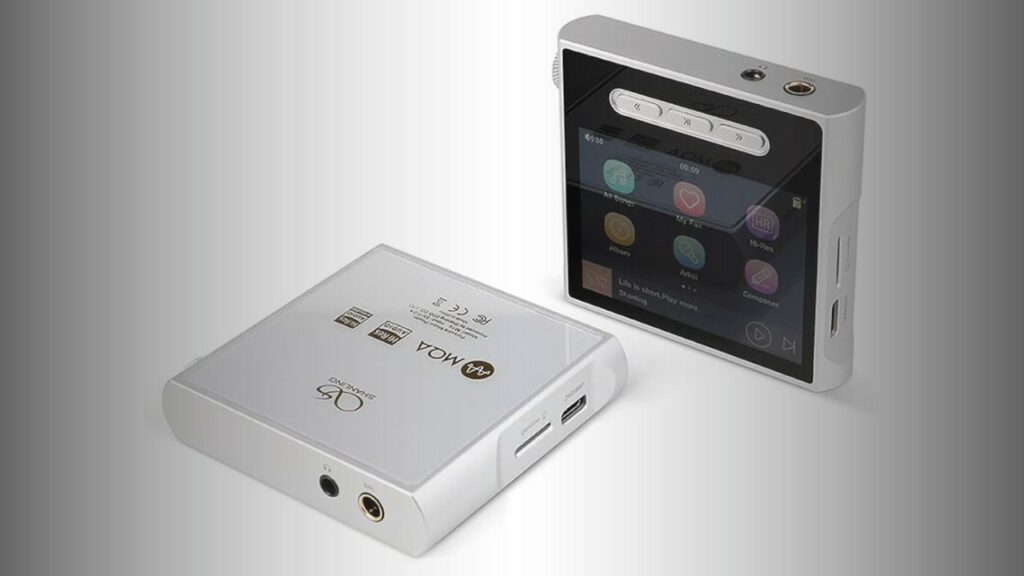
The M1s takes a different approach from the M1 Plus. It is not the cheapest model here, and its 245mW balanced output at 32 ohms is lower than the M1 Plus’s 660mW or the M3 Plus’s 800mW. The review specifically describes it as better suited to IEMs than demanding full-size headphones. That is not a weakness for the right owner; it is a clear indication of where this player fits.
At 106g, the M1s is the lightest model in the comparison with a stated weight. Its 2.8-inch touchscreen, physical front-panel buttons and wheel keep the player compact, while MTouch 2.0 provides a dedicated operating system rather than Android. The screen can be rotated, and smartphone control is available through Shanling’s SyncLink function and the Eddict Music app.
It remains flexible in other ways. The M1s supports a microSD card up to 2TB, bidirectional Bluetooth 5.0, MQA, DLNA, AirPlay, external-DAC use and digital-transport operation. There is no built-in memory, which is worth noting beside the R4’s 32GB and the M3 Plus’s 64GB, but the microSD support gives it a substantial library option if the buyer already uses removable storage.
The review’s listening assessment gives the M1s a more characterful identity than a purely neutral player. It describes a dynamic, lively and detailed sound, with particularly strong vocal presentation, agile bass and an energetic, coherent delivery. That makes it a sensible recommendation for listeners who prioritise an engaging portable experience with IEMs. Its claimed battery figures are also excellent: up to 14.5 hours with wired connections and up to 26 hours through Bluetooth. Choose it over the M1 Plus when minimum weight, endurance and a lively IEM-oriented presentation matter more than maximum output power.
Shanling M3 Plus
SOURCE 5 uses
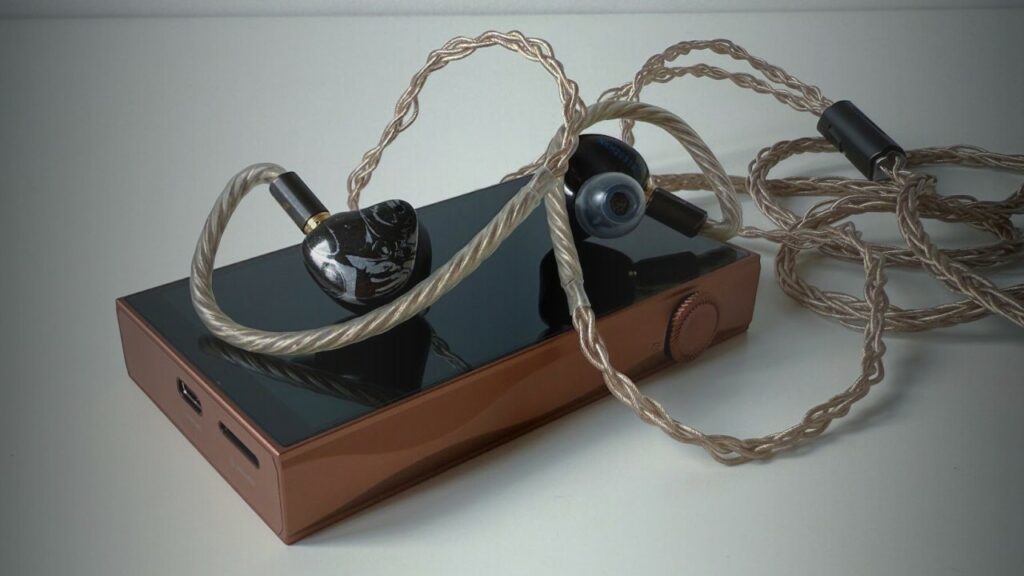
The M3 Plus is Best Overall because it makes the fewest meaningful compromises. It is not the least expensive, lightest or most powerful player in every narrow comparison, but it combines the qualities most buyers are likely to value over time: a capable Android platform, strong amplification, useful storage, a good screen, physical controls and a reviewed sound that works across a broad range of music.
Its four Cirrus Logic CS43198 DACs support PCM 32-bit/768kHz and DSD512. Dual SGM8262 op-amps provide 200mW at 32 ohms through the single-ended output and 800mW through the balanced output, with three gain settings. The source says this is enough for full-sized headphones short of the most demanding planars, while still being suitable for sensitive IEMs without hiss.
Android 13 and AGLO give the M3 Plus a more flexible software platform than the M1 Plus and M1s. Wi-Fi allows streaming apps, while DLNA and AirPlay support network use. Prime Mode offers a player-only environment for listeners who prefer a more focused interface. The Snapdragon 665 processor and 4GB of RAM are described as smooth for music playback rather than smartphone-fast.
It also has 64GB of internal storage and a microSD slot supporting up to 2TB. Bluetooth 5.0 is bidirectional and supports SBC, LDAC, aptX and aptX HD. USB DAC and digital-transport functions broaden its usefulness beyond direct headphone listening. The 3,500mAh battery is rated for up to 14 hours single-ended or 11 hours balanced, with 18W QC 3.0 charging.
Most importantly, the review describes the M3 Plus as open, clean and versatile, with a neutral and detailed tonal balance tempered by some warmth. Vocals are natural and expressive, bass is controlled and layered, and imaging is precise and holographic. Those are source-supported listening impressions, not a reason to dismiss the other players: the M1s is described as more charismatic and energetic, while the M3 Plus is the more balanced all-rounder. At $470 excluding taxes, it asks for a larger budget, but its combination of features and performance explains why it wins overall.
How they differ
Price and value: The Shanling M1 Plus is the cheapest model at $209, followed by the HiBy R4 at $249. The Shanling M1s is listed at $260, while the M3 Plus is $470 excluding taxes. No price is supplied for the PS10, so its position should be judged by features rather than assumed value.
Operating systems: The R4 and M3 Plus run Android, on versions 12 and 13 respectively. The M1 Plus and M1s use Shanling’s MTouch platform, while the PS10 is presented as a network-capable digital music player without an Android version stated in the source. Android is the more obvious route for listeners who want applications on the player; MTouch is more focused on dedicated playback.
Power: The M3 Plus has the highest stated balanced output at 800mW into 32 ohms, followed by the M1 Plus at 660mW and the R4 at 525mW. The M1s is rated at 245mW balanced and is specifically positioned as more suitable for IEMs than demanding full-size headphones. The PS10 takes a different approach with impedance-adaptive dual amplifiers and Smart Gain, but its output figure is not provided.
Portability: The M1s is the lightest at 106g, with the M1 Plus at 116g. The M3 Plus weighs 205g, while the PS10 is described as pocket-sized without a weight being supplied. The R4’s weight is not stated. The smaller Shanling players are the more natural choices for carrying every day, while the M3 Plus trades some lightness for a larger display and more substantial hardware.
Storage: The PS10 offers 256GB internal storage and microSD expansion up to 2TB. The M3 Plus provides 64GB internal storage and the same 2TB expansion ceiling, while the R4 has 32GB internal storage. The M1 Plus and M1s rely on microSD expansion, with up to 2TB stated for the M1s and a microSD slot stated for the M1 Plus.
Battery priorities: The M1s has the longest quoted Bluetooth figure at up to 26 hours, and up to 14.5 hours wired. The PS10 is rated for up to 15 hours, the M3 Plus for up to 14 hours single-ended, the M1 Plus for up to 12.5 hours and the R4 for up to 11 hours. These are source-provided claims in different articles, so they should be treated as useful guidance rather than a single controlled comparison.
Which one should you buy?
- Buy the Shanling M3 Plus if you want the most complete single recommendation and can spend $470 excluding taxes. It is the best fit for listeners who want Android streaming, local playback, strong balanced output, useful internal storage and a refined all-round sound.
- Buy the Shanling M1 Plus if your budget is around $209 and you want the greatest combination of compact size, connectivity and balanced output power. It is especially attractive for buyers who do not need Android apps.
- Buy the HiBy R4 if Android is essential but the M3 Plus is too expensive. Its Class A amplifier, 4.7-inch screen, Bit-Perfect Audio support and $249 price make it the strongest budget Android recommendation.
- Buy the Shanling M1s if you mainly use IEMs, want the lightest stated player and value long battery life. Its distinctive energetic sound and smartphone-control option add appeal for mobile listening.
- Buy the Astell&Kern PS10 if you need extensive storage, network playback, a docking station and a player that can also act as an external DAC or home-audio source. Its dual audio circuits and adaptive amplification also suit owners with varied headphones. Confirm its price and availability before making a purchase, since neither is stated in the supplied source.
Final verdict
The Shanling M3 Plus is the Best Overall portable music player in this group because it brings together the most convincing balance of sound, power, software flexibility, storage and usability. The Shanling M1 Plus is the smarter budget buy, the HiBy R4 is the best low-cost Android option, and the Shanling M1s is the most focused choice for lightweight IEM listening. For a feature-led high-end system, the Astell&Kern PS10 is the standout alternative.





 VS
VS VS
VS VS
VS VS
VS VS
VS VS
VS VS
VS VS
VS
Comments 0
Share your experience, questions and perspective with other hi-fi enthusiasts.