
Amplifiers are often discussed as if they all solve the same problem, but the source material here shows a much broader picture.
Some of these components are traditional power amplifiers built for loudspeaker control, while others are preamplifiers, integrated amplifiers, streaming amplifiers, DSP-based hubs, or tube designs aimed at listeners who value a different kind of system architecture.

1. Parasound JC 5: Affordable and compact stereo amplifier
Parasound JC 5 stereo power amplifier with balanced and RCA connectivity.
The Parasound JC 5 is presented as a more affordable and compact continuation of the Halo JC 1 monoblock concept, retaining a serious power-amplifier brief in a stereo chassis.
Its quoted output is substantial, with up to 400 watts per channel into 8 ohms, 600 watts into 4 ohms, and 1200 watts into 8 ohms in bridged mono mode.
The design also includes pure Class A operation up to 12 watts per channel, a 1.7 kVA toroidal transformer, 132,000 uF of Rubycon capacitance, and 24 matched bipolar output transistors. Balanced Neutrik XLR inputs, gold-plated Vampire RCA inputs, and CHK Infinium speaker terminals round out a specification that is focused squarely on high-current stereo amplification.
Best for: Listeners wanting a powerful dedicated stereo power amplifier
- 400 watts per channel into 8 ohms
- Bridged mono mode quoted at 1200 watts into 8 ohms
- Pure Class A operation up to 12 watts per channel
- Balanced XLR and RCA inputs
Verdict: The JC 5 is the most conventional high-output power amplifier here, but its JC 1-derived concept and serious power supply make it a strong fit for systems that need current and headroom.

2. Electrocompaniet EC 4.8 MKII: Preamplifier that occupies a flagship position
Electrocompaniet EC 4.8 MKII preamplifier with display, volume control, and input selection.
The Electrocompaniet EC 4.8 MKII is a preamplifier rather than a power amplifier, and the source describes it as the flagship model in Electrocompaniet’s preamplifier line.
It is positioned by the manufacturer as a High Performance Balanced Reference Preamplifier and is designed to sit between a source component and a power amplifier, including but not limited to Electrocompaniet’s own electronics.
The construction uses balanced circuit topology, a dual-mono principle, DC coupling from input to output, isolated channels, and separate printed circuit boards for each channel. Its low chassis, anti-vibration feet, black acrylic front panel, small display, and front-panel controls give it a distinctly system-control role.
Best for: Systems that need a dedicated balanced preamplifier
- Flagship position in Electrocompaniet’s preamplifier line
- Balanced dual-mono topology
- DC coupled from input to output
- Channels isolated on separate printed circuit boards
Verdict: The EC 4.8 MKII is for buyers building separates around a serious control component rather than looking for an all-in-one amplifier.
3. NAD C 388: Integrated amplifier and wireless multiroom center
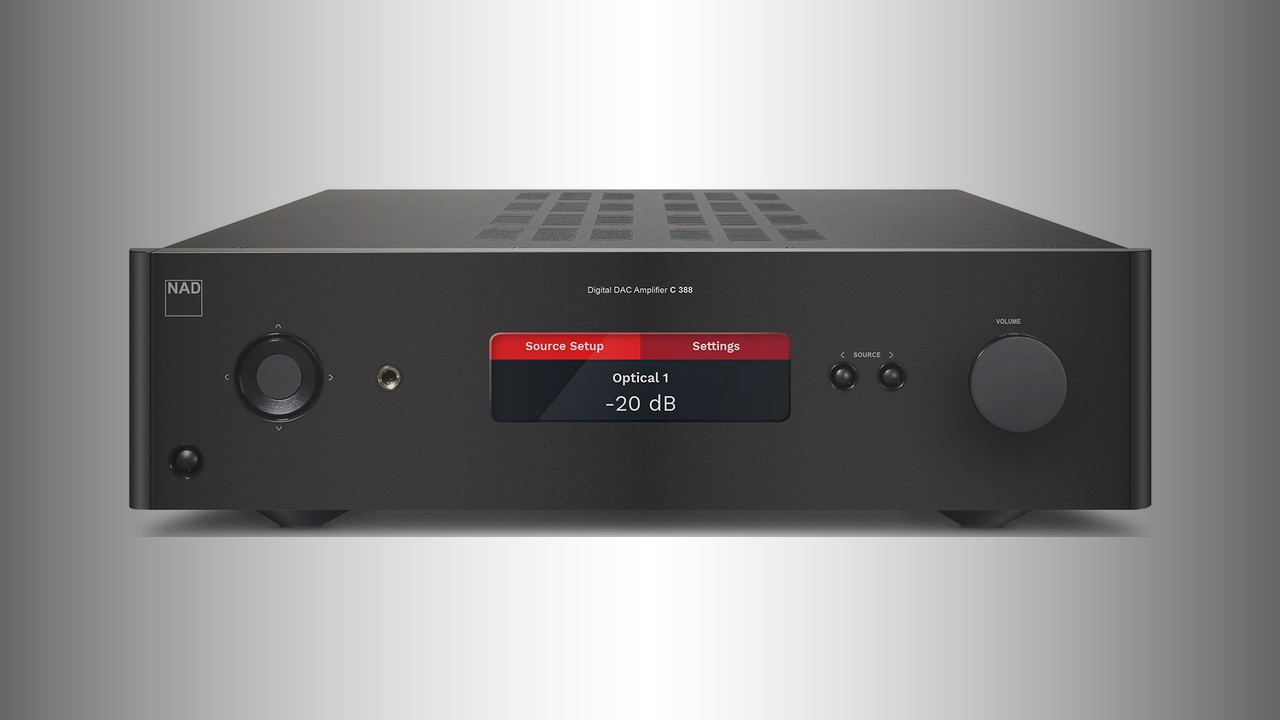
NAD C 388 integrated DAC amplifier with phono and headphone capability.
The NAD C 388 is an integrated DAC amplifier built around custom Hypex UcD Class D modules, with output quoted at more than 150 watts per channel into 8 ohms.
The source emphasizes low distortion across the frequency range, low output impedance, and good acoustic damping.
NAD also includes practical analog support, notably a low-noise MM phono stage with accurate RIAA response, high overload capability, and an improved subsonic filter. A separate low-impedance headphone amplifier is included as well, intended to drive headphones with a wide range of impedances.
Best for: Listeners wanting an integrated amplifier with DAC, vinyl, and headphone support
- More than 150 watts per channel into 8 ohms
- Custom Hypex UcD Class D modules
- Built-in low-noise MM phono stage
- Separate low-impedance headphone amplifier
Verdict: The C 388 stands out as a practical integrated amplifier for mixed digital, vinyl, loudspeaker, and headphone use.

4. miniDSP SHD POWER: All-in-one device that includes a network streamer
miniDSP SHD Power all-in-one streaming amplifier with DSP and subwoofer outputs.
The miniDSP SHD Power is the most system-consolidating component in this selection.
It combines a network streamer, DAC, DSP with volume control, stereo amplifier, and additional analog outputs for connecting up to two active subwoofers.
It can play high-definition digital audio from SPDIF, AES/EBU, USB audio, USB media, NAS, web radio, or online streaming platforms. Its SHARC processor supports Dirac Live room correction, though calibration requires a UMIK measurement microphone that is sold separately. The platform also offers 10-band parametric EQ per channel, 48 dB/octave crossover functions, compressor/limiter tools, and a 2×4 mixing matrix.
Best for: Compact systems needing streaming, amplification, DSP, and subwoofer integration
- Streamer, DAC, DSP, volume control, and stereo amplifier in one unit
- Analog outputs for up to two active subwoofers
- Dirac Live room correction support
- Supports multiple digital sources including USB, NAS, web radio, and streaming platforms
Verdict: The SHD Power is the most complete one-box solution here, especially for rooms that can benefit from DSP and subwoofer management.
5. Top 7 Tube Integrated Amplifiers for Audiophiles
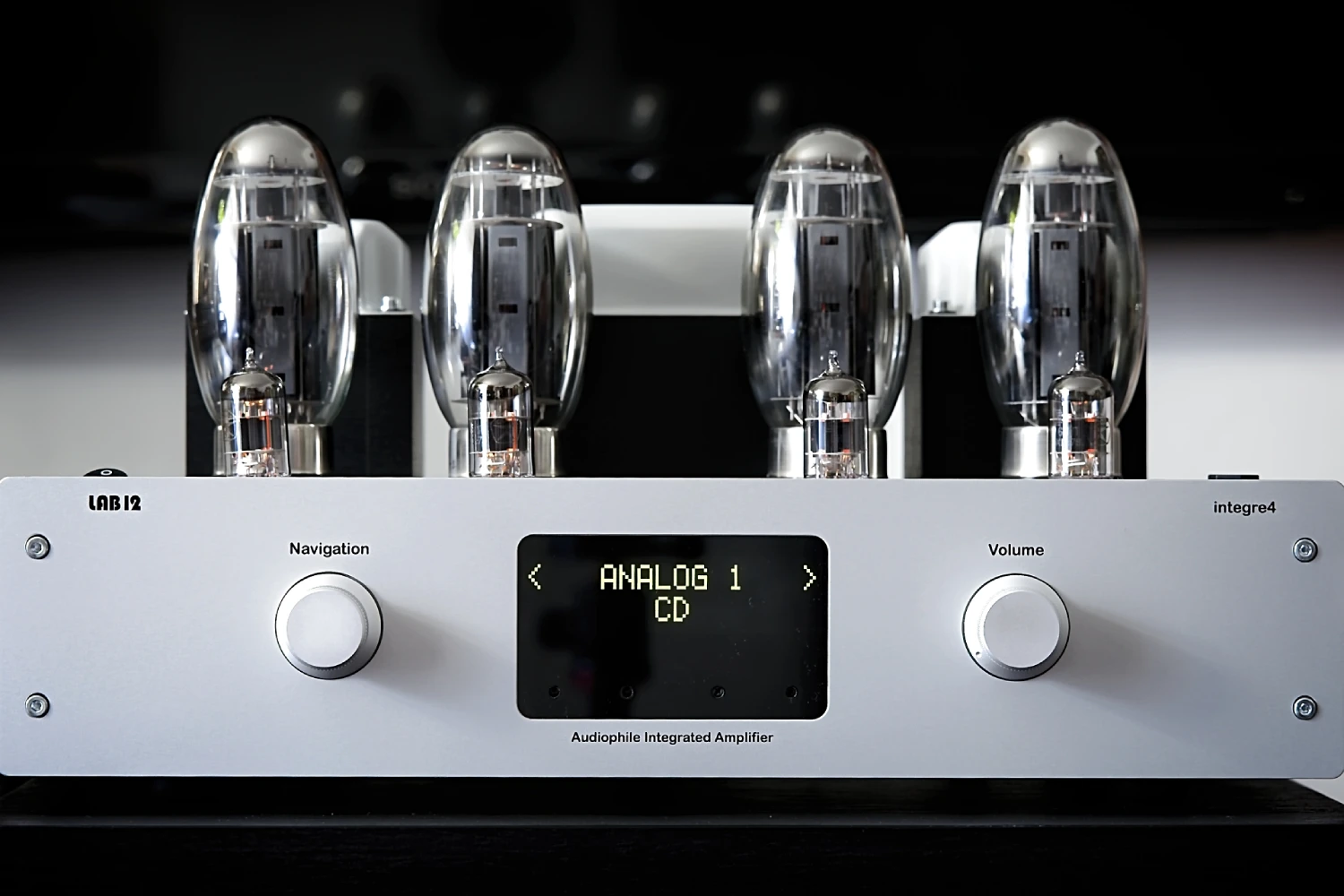
Tube integrated amplifiers are presented as a distinct path for systems with suitable loudspeakers.
This source article is a tube-amplifier buying guide rather than a single product profile, but it is useful because it explains why valve amplification remains relevant.
It contrasts tube amplifiers with solid-state designs, noting that tube amplifiers are typically larger, generate more heat, consume more power, and need periodic maintenance.
The article also describes the qualities many listeners seek from tubes, including rich midrange reproduction, organic harmonic structure, spacious imaging, smooth treble, and dynamic expression at modest power. It specifically frames tube integrated amplifiers as a match for efficient loudspeakers, where even modest wattage can be engaging.
Best for: Readers deciding whether a tube integrated amplifier suits their system
- Explains core tube-amplifier trade-offs
- Highlights the importance of efficient loudspeaker matching
- Covers integrated tube amplifiers below €20,000
- Useful for first-time valve-amplifier buyers
Verdict: This is the most useful entry for understanding tube-amplifier priorities before choosing a specific valve integrated model.
6. Denon PMA-1700NE: A Modern Classic Integrated Amplifier with Pure Audiophile DNA
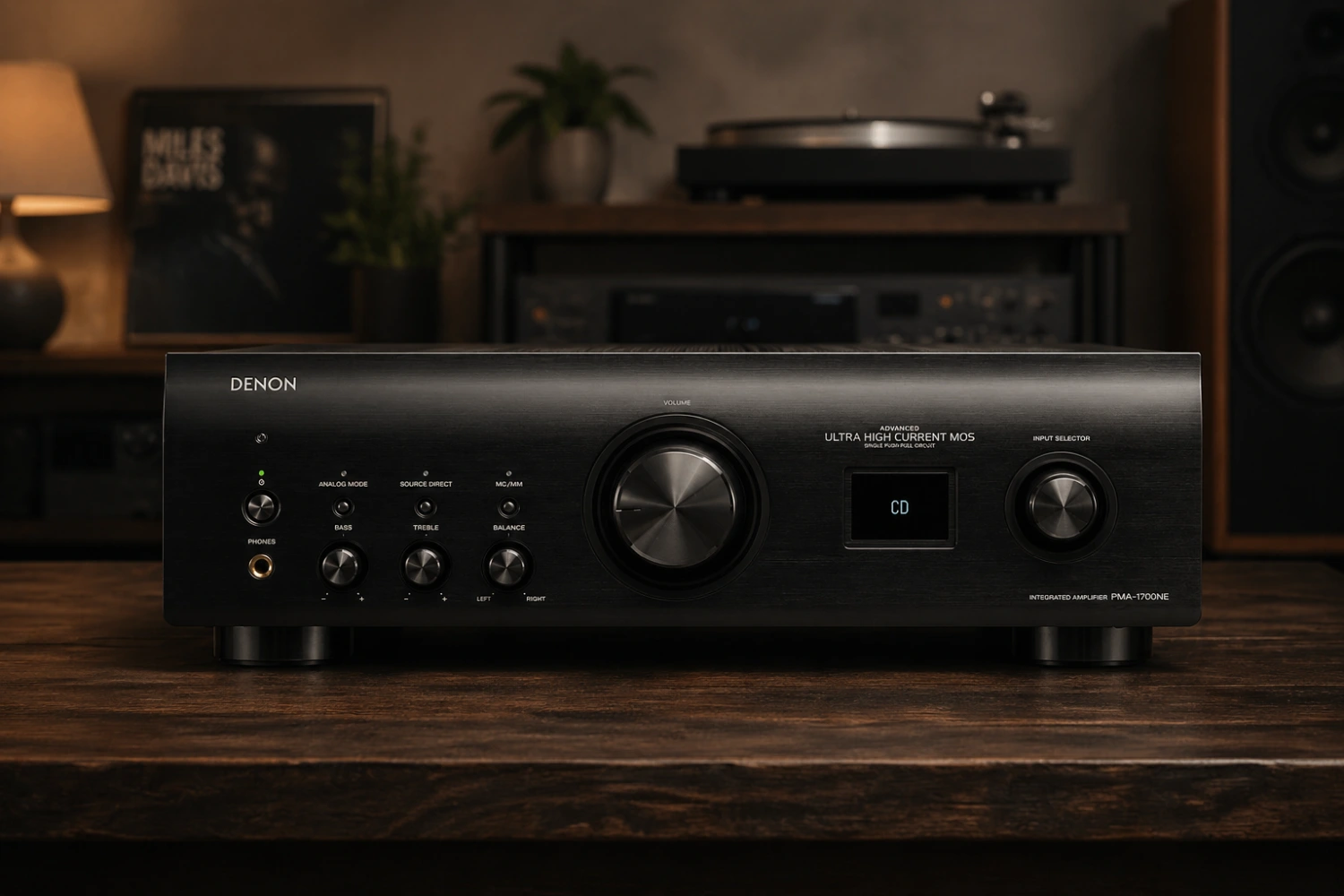
Denon PMA-1700NE integrated amplifier with central volume control and traditional tone controls.
The Denon PMA-1700NE is described as a refined integrated amplifier built around long-running Denon design principles rather than constant feature chasing.
The front panel keeps traditional physical controls, including tone and balance knobs, while the internal layout separates functional circuit blocks to reduce interference and distortion.
The reinforced chassis uses steel plates and damping measures, and the power stage uses Denon’s UHC MOSFET output devices in a single push-pull configuration. Output is quoted at up to 140 watts into 4 ohms, giving it a more traditional integrated-amplifier role than network- or DSP-led alternatives.
Best for: Listeners wanting a traditional integrated amplifier with modern refinement
- Integrated amplifier with traditional physical controls
- Separate internal circuit blocks to reduce interference and distortion
- UHC MOSFET output devices
- Up to 140 watts into 4 ohms
Verdict: The PMA-1700NE is a strong choice for buyers who value conventional hi-fi operation, physical controls, and a carefully arranged internal design.
7. Lorenzo Audio Labs 211PP power amplifiers and 2A3 preamplifier debut at HEM
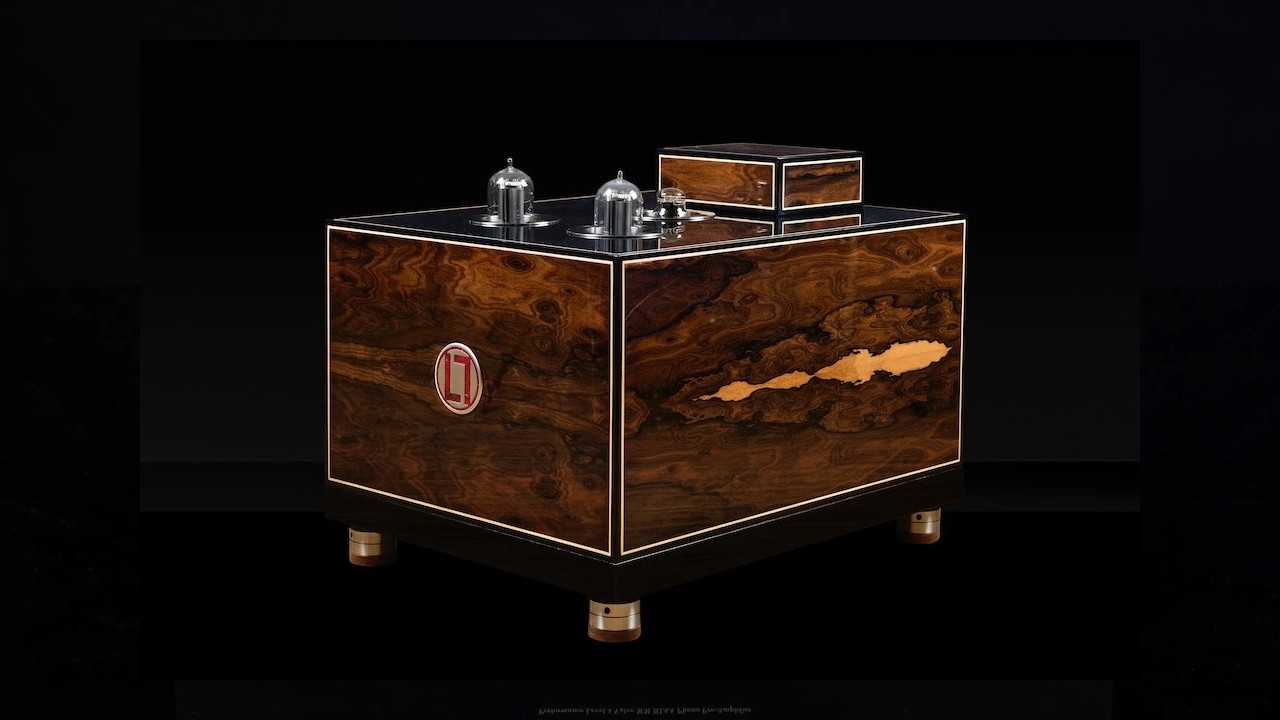
Lorenzo Audio Labs 211PP mono power amplifiers and 2A3 tube preamplifier in Panzerholz cabinets.
Lorenzo Audio Labs’ 211PP and 2A3 mark the Spanish manufacturer’s first active components after a portfolio focused on loudspeakers.
The 211PP is a mono power amplifier using tube circuitry, while the 2A3 is a two-cabinet tube preamplifier.
The cabinets are made from Panzerholz, a material the source describes as valued for non-resonant properties, linearity across the audio range, and high-end finish possibilities. The 211PP uses a push-pull configuration with directly heated 211 triodes, and the source notes a no-feedback design with 55-watt single-ended power characteristics and a dual Core C amorphous output transformer weighing 12 kilograms.
Best for: Specialist tube systems built around mono power amplifiers and a matching preamplifier
- First active components from Lorenzo Audio Labs
- Tube mono power amplifier and two-cabinet tube preamplifier
- Panzerholz cabinets
- 211PP uses directly heated 211 triodes in push-pull configuration
Verdict: This Lorenzo Audio Labs set is the most specialist entry here, aimed at buyers interested in high-end tube separates rather than mainstream integrated amplification.
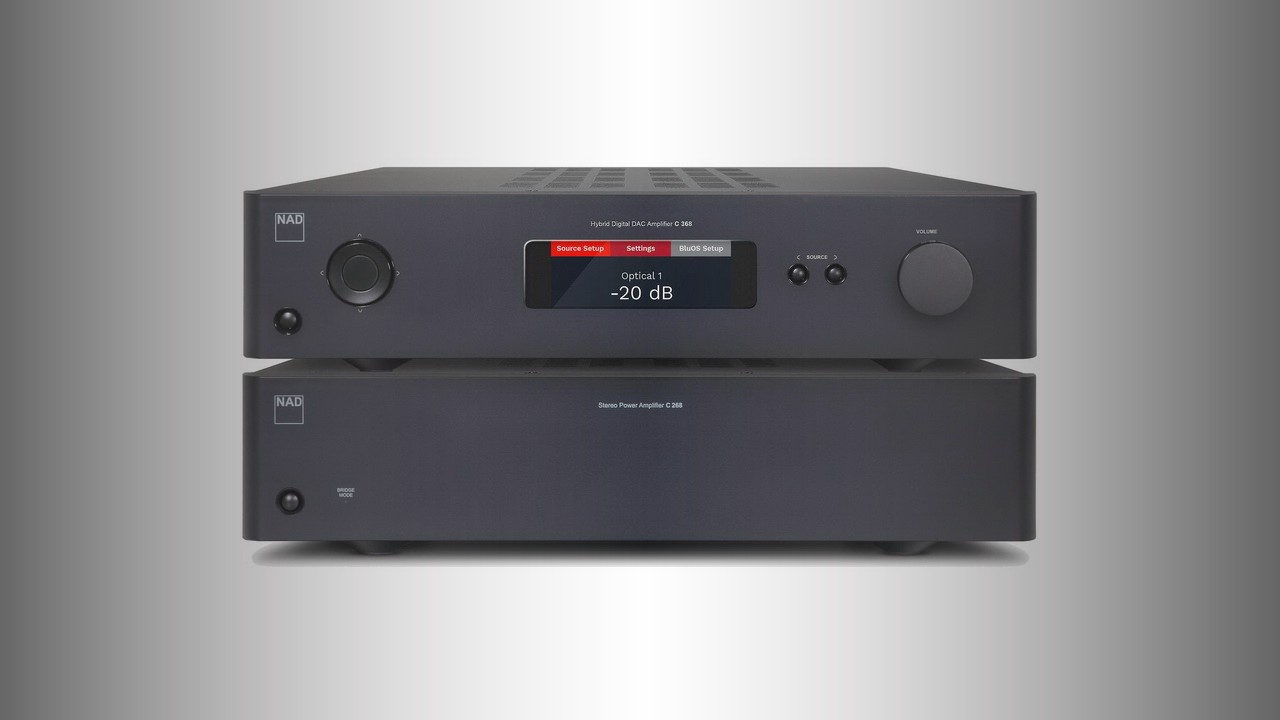
8. NAD C 268: Amplifier packed with rich features
NAD C 268 two-channel power amplifier with balanced and RCA inputs.
The NAD C 268 is a two-channel power amplifier, not an integrated amplifier, and the source frames it around value, reliability, sound quality, and practical engineering.
It is housed in a metal case with an internal layout intended to allow free air circulation without forced cooling.
Connectivity includes balanced inputs as well as RCA inputs. The output stages operate in Class D and use Hypex UcD modules, while each channel has its own rectifier and filter capacitors. The source also notes matched high-current bipolar transistors, mirrored channel board topology, and increased metallization thickness on the printed circuit boards.
Best for: Systems needing a compact two-channel power amplifier with balanced input support
- Two-channel power amplifier
- Balanced and RCA inputs
- Class D output stages using Hypex UcD modules
- Free air circulation without forced cooling
Verdict: The C 268 is a practical stereo power amplifier for buyers who already have a suitable preamplifier or source with volume control.

9. Sonos Amp Multi: The Most Ambitious Sonos Amplifier Yet
Sonos Amp Multi eight-channel streaming amplifier for rack-based multi-zone systems.
The Sonos Amp Multi is designed for multi-zone installations rather than a conventional single-room hi-fi rack.
It is an eight-channel streaming amplifier delivering 125 watts per channel at 8 ohms, with outputs assignable across up to four independent zones.
Channels can be grouped, split, or reassigned, and multiple units can be stacked as a system grows. Its GaN-based Class D amplification uses post-filter feedback, and the fanless, convection-cooled design is intended for quiet rack installations where thermal behavior and long-term reliability matter.
Best for: Whole-home or commercial multi-zone audio installations
- Eight-channel streaming amplifier
- 125 watts per channel at 8 ohms
- Assignable across up to four independent zones
- Fanless convection-cooled design
Verdict: The Amp Multi is the clear choice here for installation flexibility, multi-zone routing, and scalable Sonos-based streaming amplification.

10. Best portable budget Bluetooth Speakers
Portable Bluetooth speakers belong to a different category from dedicated hi-fi amplifiers.
This source article is not an amplifier recommendation; it covers portable wireless speakers intended for casual outdoor and picnic use.
It is included in the source set but does not fit the Amplifiers category in the same way as the dedicated power amplifiers, preamplifiers, integrated amplifiers, tube electronics, and installation amplifiers above.
Its examples emphasize compact size, battery operation, Bluetooth-style convenience, FM reception, and memory-card playback rather than hi-fi amplification architecture.
Best for: Readers who actually need a portable speaker rather than an amplifier
- Portable wireless-speaker focus
- Battery-powered use case
- Some models include FM or memory-card playback
Verdict: This is not a relevant amplifier pick, but it usefully clarifies the boundary between self-contained portable speakers and true hi-fi amplification components.
Quick comparison
These entries differ less by brand than by system role.
A power amplifier such as the Parasound JC 5 or NAD C 268 needs upstream control, a preamplifier such as the Electrocompaniet EC 4.8 MKII needs a separate power amplifier, and integrated or all-in-one designs combine more functions in a single chassis.
Tube and multi-zone products add still more specialized requirements.
| Product | Best for | Verdict |
|---|---|---|
| Parasound JC 5: Affordable and compact stereo amplifier | High-output stereo power amplification | A JC 1-inspired stereo power amplifier with substantial quoted output and serious power-supply hardware. |
| Electrocompaniet EC 4.8 MKII: Preamplifier that occupies a flagship position | Balanced preamplifier duties in a separates system | A flagship control component with balanced dual-mono topology and isolated channels. |
| NAD C 388: Integrated amplifier and wireless multiroom center | Integrated amplification with DAC, phono, and headphone support | A flexible integrated DAC amplifier with Hypex UcD modules and useful analog facilities. |
| miniDSP SHD POWER: All-in-one device that includes a network streamer | One-box streaming, DSP, amplification, and subwoofer integration | The most complete system hub here, especially where room correction and crossover tools are priorities. |
| Top 7 Tube Integrated Amplifiers for Audiophiles | Understanding tube integrated amplifier trade-offs | A buying-guide entry for readers considering valve amplification and efficient speakers. |
| Denon PMA-1700NE: A Modern Classic Integrated Amplifier with Pure Audiophile DNA | Traditional integrated hi-fi amplification | A refined Denon integrated with physical controls, UHC MOSFET output devices, and quoted 4-ohm power. |
| Lorenzo Audio Labs 211PP power amplifiers and 2A3 preamplifier debut at HEM | Specialist tube separates | A high-end tube amplifier and preamplifier pairing with Panzerholz cabinets and directly heated triode design. |
| NAD C 268: Amplifier packed with rich features | Two-channel power amplification with balanced inputs | A Class D Hypex UcD-based stereo power amplifier for systems with separate control. |
| Sonos Amp Multi: The Most Ambitious Sonos Amplifier Yet | Multi-zone streaming installations | An eight-channel Sonos amplifier designed for assignable zones, rack use, and scalable installations. |
| Best portable budget Bluetooth Speakers | Portable speaker shoppers, not amplifier buyers | Not a true amplifier-category recommendation, but a reminder that powered portable speakers serve a different purpose. |
Frequently asked questions
Should I choose an integrated amplifier, a power amplifier, or a preamplifier?
Choose an integrated amplifier if you want source control and speaker amplification in one chassis, as with the NAD C 388 or Denon PMA-1700NE.
Choose a power amplifier such as the Parasound JC 5 or NAD C 268 if you already have a preamplifier or source with volume control.
Choose a preamplifier such as the Electrocompaniet EC 4.8 MKII if you are building a separates system and need a dedicated control stage before the power amplifier.
When does an all-in-one amplifier make sense?
An all-in-one unit makes sense when you want fewer boxes and need several functions at once.
The miniDSP SHD Power combines streaming, DAC, DSP, volume control, stereo amplification, and subwoofer outputs, while the NAD C 388 combines integrated amplification with DAC, MM phono, and headphone facilities.
The trade-off is that you should be sure the built-in features match your system before committing.
Are tube amplifiers suitable for every speaker?
The supplied tube-amplifier guide stresses the importance of pairing tube designs with efficient loudspeakers.
Tube amplifiers can offer qualities many listeners value, such as rich midrange and spacious imaging, but they may be larger, run hotter, use more power, and require periodic maintenance.
Speaker matching matters more than chasing wattage alone.
What should I consider for multi-room or installed audio?
For multi-zone systems, channel assignment and installation behavior are more important than traditional two-channel simplicity.
The Sonos Amp Multi is described as an eight-channel streaming amplifier with outputs assignable across up to four zones, stackable expansion, GaN-based Class D amplification, and fanless convection cooling for rack installations.
How to choose from these amplifier paths
Start with the role the amplifier must play.
If you already own a preamplifier or a source with proper volume control, a dedicated power amplifier such as the Parasound JC 5 or NAD C 268 is the logical comparison.
The Parasound is the higher-output, more heavily specified stereo power amplifier in this source set, while the NAD C 268 is a compact two-channel Class D alternative with balanced inputs and practical system flexibility. If you need one box for a conventional stereo system, look at integrated amplifiers. The NAD C 388 is the more feature-led choice, with DAC functionality, MM phono, headphone support, and Hypex UcD modules. The Denon PMA-1700NE is the more traditional integrated amplifier, retaining physical controls and emphasizing internal layout, chassis reinforcement, and Denon’s UHC MOSFET output stage. If system control is the missing link, the Electrocompaniet EC 4.8 MKII belongs on the shortlist as a flagship balanced preamplifier for separates. If room behavior, digital sources, and subwoofer integration are the priorities, the miniDSP SHD Power is the most complete hub because it combines streaming, DAC, DSP, stereo amplification, and room-correction support, with the important note that a separate UMIK microphone is required for calibration. Specialist buyers have two more distinct routes. Tube-curious listeners should first understand speaker matching, heat, power use, and maintenance before choosing a valve integrated amplifier. Those building ambitious tube separates may be more interested in the Lorenzo Audio Labs 211PP and 2A3 combination. For whole-home or commercial installs, the Sonos Amp Multi is the only entry here designed around many channels, multiple zones, rack-friendly cooling, and scalable deployment. The portable Bluetooth speaker article in the source set is not an amplifier-category recommendation. It may suit casual battery-powered listening, but it should not be confused with choosing a hi-fi amplifier for passive loudspeakers, separates, room correction, or installed audio.



Sound Off
0Join the discussion if you have something to add.