
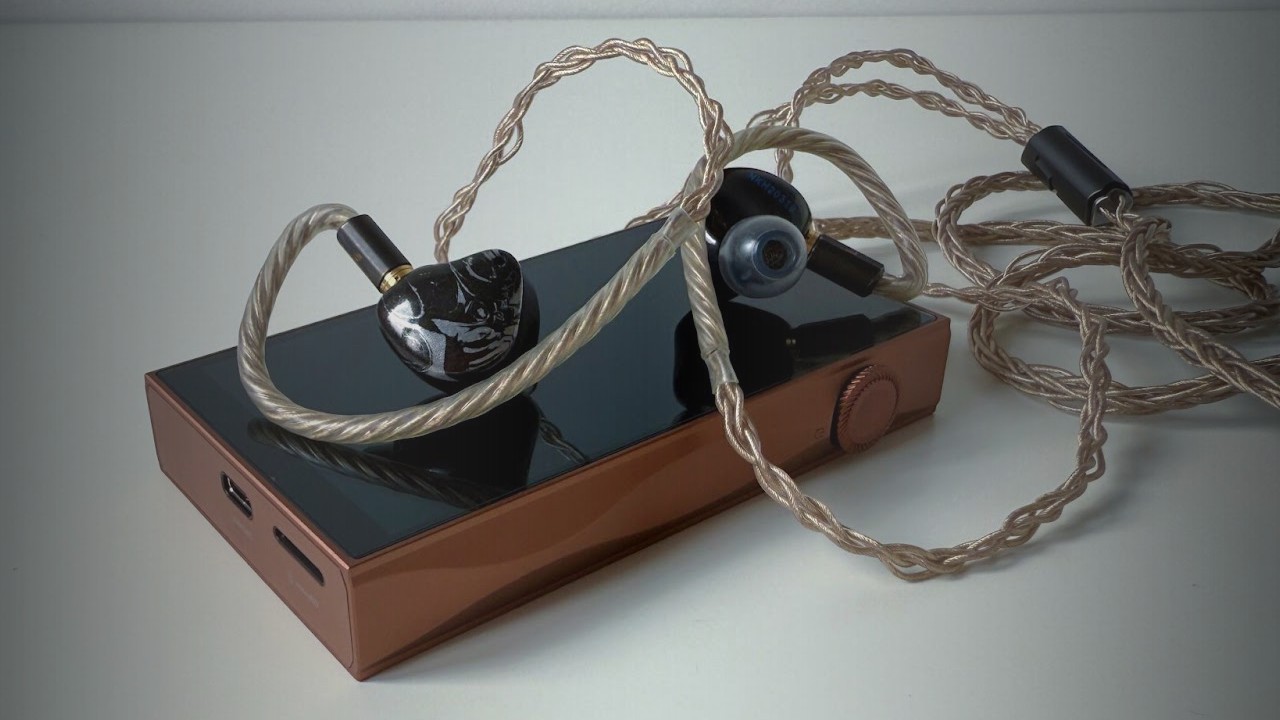
The best portable music player is not automatically the most expensive or most technically ambitious model. This comparison brings together five very different products: the compact HiBy R3 II, Shanling’s M3 Plus and M5 Ultra players, Astell&Kern’s flagship A&ultima SP4000, and the iBasso DC-Elite DAC/headphone amplifier.
That distinction matters before you buy. The iBasso is designed to work with another source, while the other four are standalone players with their own operating systems or playback platforms. Some prioritise pocketability, some power, some streaming flexibility and some advanced audio architecture. The right choice depends on what you listen with, how you carry your music and how much functionality you actually need.
Quick verdict
- Best Overall: Shanling M3 Plus — the most balanced combination of compact design, Android flexibility, battery life, amplification and described sound quality. Its supplied price is $470 excluding taxes.
- Best for maximum output and built-in features: Shanling M5 Ultra — a larger player with up to 1100mW at 32 ohms through its balanced output, Wi-Fi features, Bluetooth 5.2 and a 6000mAh battery.
- Best for flagship engineering: Astell&Kern A&ultima SP4000 — the most ambitious design here, with separate digital and analogue processing, advanced remastering and full Google Play Store support.
- Best compact DAC: iBasso DC-Elite — the choice for listeners who already use a phone, computer or another digital source and want a small dedicated DAC and headphone amplifier. Its supplied price is $499.
- Best simple pocket player: HiBy R3 II — the smallest and most straightforward standalone player in this comparison, with a 3.2-inch touchscreen, balanced output, USB DAC functionality and support for Tidal and Qobuz.
| Product | What it is | Main strengths | Output or battery information | Supplied price |
|---|---|---|---|---|
| Shanling M3 Plus | Standalone Android 13 hi-res player | Balanced sound, compact build, streaming flexibility, 64GB storage plus microSD | 200mW single-ended / 800mW balanced at 32 ohms; up to 14 hours single-ended or 11 hours balanced | $470 excluding taxes |
| Shanling M5 Ultra | Standalone MTouch hi-res player | Very high balanced output, large screen, wireless and network features | 315mW single-ended / 1100mW balanced at 32 ohms; up to 11 hours | Not supplied |
| Astell&Kern A&ultima SP4000 | Flagship Android digital audio player | Octa audio circuit architecture, separated signal processing, Advanced DAR and Google Play Store support | High Driving mode and parallel op-amps; output figures not supplied | Not supplied |
| iBasso DC-Elite | Portable DAC and headphone amplifier | ROHM DAC technology, low stated noise, titanium-alloy body, very small footprint | 280mW balanced / 162mW unbalanced; 60.5g | $499 |
| HiBy R3 II | Pocket-sized Hi-Res player | Small design, 4.4mm balanced output, HiByOS, USB DAC mode and streaming apps | 380mW at 32 ohms; battery information not supplied | Not supplied |
Shanling M3 Plus
SOURCE 4 uses
Best Overall
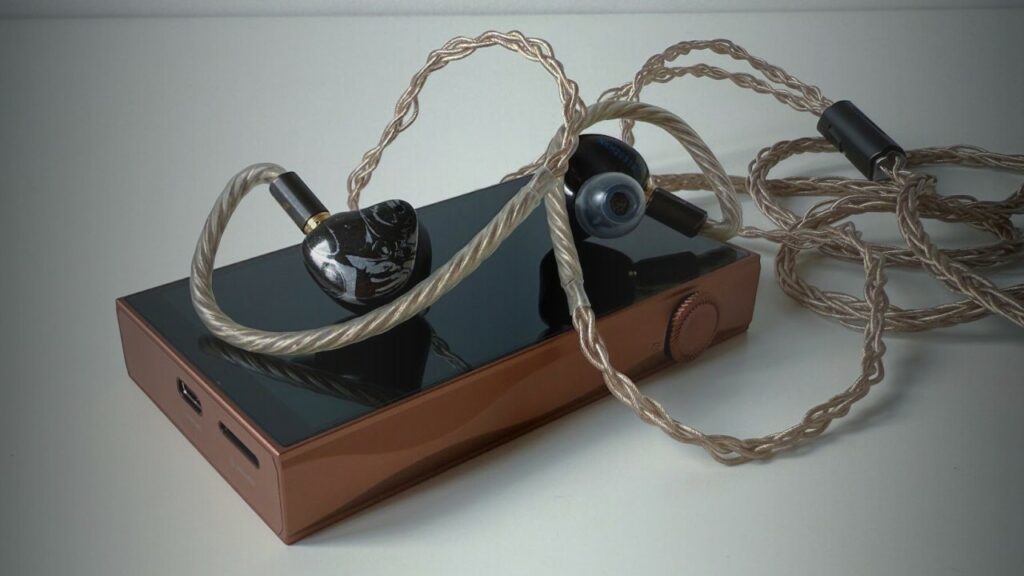
The M3 Plus is the strongest all-round recommendation because it avoids making the listener choose between portability, proper player functionality and useful headphone power. The source describes it as compact and genuinely pocket-sized at 115 x 70 x 18mm and 205g, yet it still includes a full Android 13 system, 64GB of internal storage, a microSD slot supporting up to 2TB, Wi-Fi streaming and USB DAC functionality.
Its balanced output delivers 800mW at 32 ohms, while the single-ended output provides 200mW at the same load. That is a more useful spread of capability than the compact HiBy can offer according to the supplied information, while the player remains considerably smaller and lighter than the M5 Ultra. The M3 Plus also offers three gain settings, and the source specifically says it can handle sensitive IEMs without hiss while retaining enough power for full-sized headphones short of the most demanding planars.
The software is another reason it earns the overall recommendation. Android 13 allows streaming apps to be installed over Wi-Fi, while DLNA, AirPlay, Bluetooth 5.0 and a dedicated Prime Mode cover both connected and player-only use. Battery life is stated as up to 14 hours single-ended or 11 hours balanced, with 18W QC 3.0 charging.
Most importantly, the review gives the M3 Plus a clearly described sonic identity: open, clean, balanced and versatile, with controlled punchy bass, natural vocals, airy treble and precise imaging. It is not presented as a specialist product for one genre or headphone type, but as a dependable daily player. At the supplied $470 price excluding taxes, it is also the only product here, alongside the $499 iBasso, with a stated price that supports a direct value judgement.
Shanling M5 Ultra
SOURCE 2 uses
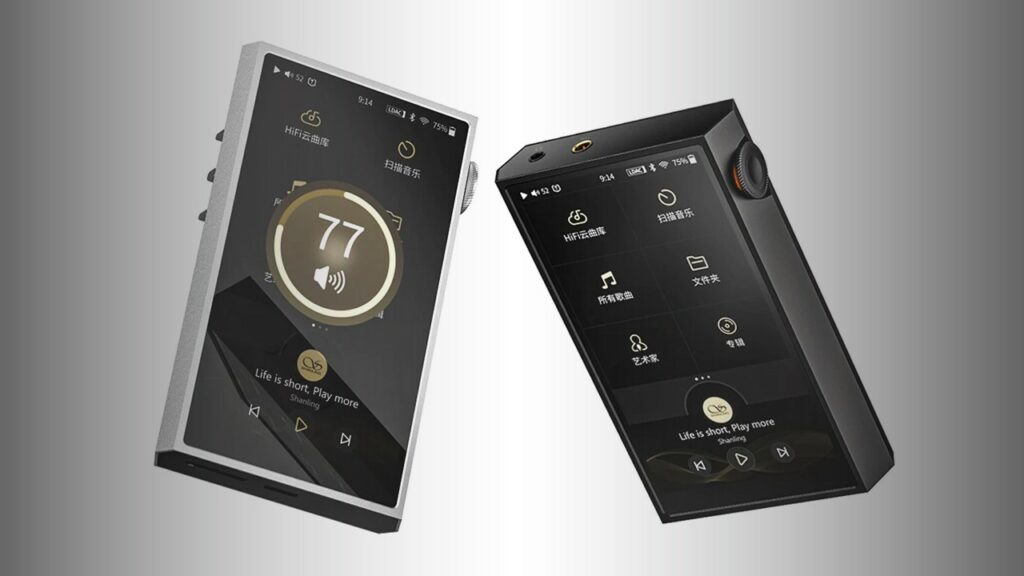
The M5 Ultra is the better choice when output power and connectivity matter more than keeping the player genuinely small. Its balanced amplifier is rated at 1100mW at 32 ohms, substantially above the M3 Plus’s 800mW figure and the HiBy R3 II’s stated 380mW. Its single-ended output is also rated at 315mW at 32 ohms. For listeners with demanding headphones, this is the clearest power-focused option among the players with supplied output figures.
The trade-off is physical size. At 120 x 75 x 19.5mm and 247g, it is larger and heavier than the M3 Plus. That may be a worthwhile exchange if the player will spend more time in a bag than a trouser pocket, especially since Shanling gives it a 4.7-inch, 1280 x 720 touchscreen, three hard buttons and an illuminated volume wheel.
The M5 Ultra also has an unusually broad feature set. Its proprietary MTouch system supports MicroSD playback, USB DAC, DLNA, AirPlay and Bluetooth receiver operation. Wi-Fi supports DLNA, AirPlay, NAS and OTA updates, while Bluetooth 5.2 is bidirectional and supports LDAC, aptX HD, aptX and AAC. Tidal integration is described as coming with a firmware update, so that should be treated as a promised feature rather than an already available one.
Its AKM AK4499EX and AK4191 combination, dual TPA6120 amplification and 6000mAh battery make it the more muscular alternative to the M3 Plus. The source describes its sound as smooth and slightly warmed, with deep sub-bass, a rich soundstage and plenty of detail. Choose it if that tonal balance, higher output and network functionality are more important to you than the M3 Plus’s lighter weight and longer stated single-ended battery life.
Astell&Kern A&ultima SP4000
SOURCE 3 uses
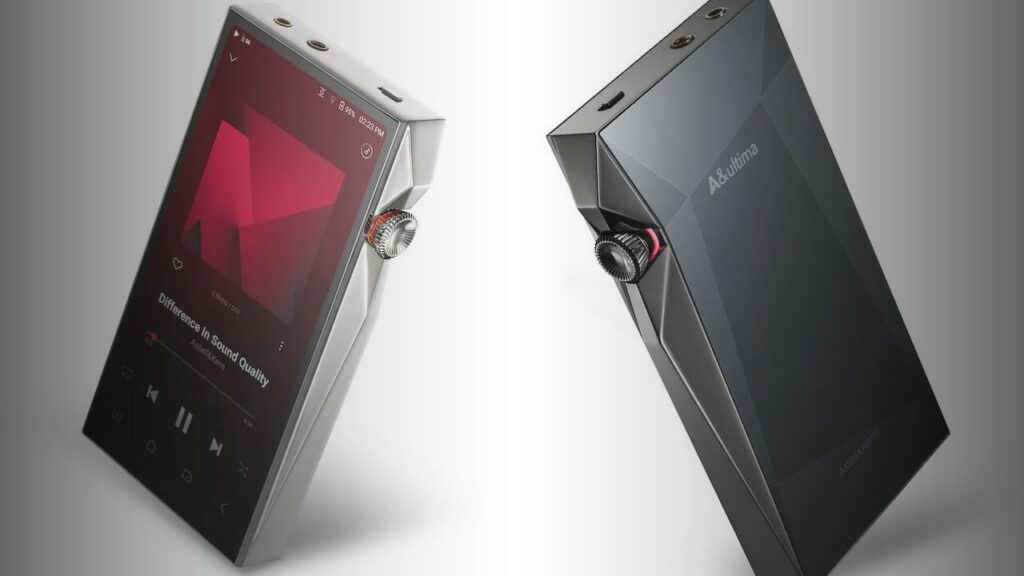
The SP4000 occupies a different level of ambition. It is the flagship choice for listeners who want the most elaborate digital and analogue architecture described in these sources, rather than the most obvious compact or value-oriented player. Its core design uses one AK4191 digital processor and one AK4499EX analogue DAC in a 1:1 configuration. Astell&Kern calls this a true Quad DAC architecture, with digital and analogue processing physically separated to reduce noise interference.
The player adds two parallel op-amps, a High Driving mode and ESA technology intended to align frequency signals more uniformly. Its power supply uses a new LDO regulator that the source says minimises noise by up to 97 percent compared with earlier models. A 99.9 percent pure copper Shield Can and Any Layer HDI PCB are also part of the design.
Unlike the Shanling M5 Ultra, which uses Shanling’s proprietary MTouch system, the SP4000 brings full Android support and, for the first time in Astell&Kern’s account, Google Play Store installation. Its ADP technology is intended to address Android’s sampling limitation and provide bit-perfect, lossless playback during streaming. Advanced DAR adds a two-stage process involving Virtual Sound Extender and a second upsampling stage.
This is therefore the product to shortlist when streaming-app access and flagship circuit design are the priorities. It is not the obvious choice for a buyer seeking the smallest player, a directly stated price or a simple cost-to-feature comparison: the supplied article does not provide a price, dimensions, weight or output figures. The case for the SP4000 rests on its architecture and software platform, not on assumptions about those missing details.
iBasso DC-Elite
SOURCE 1 uses
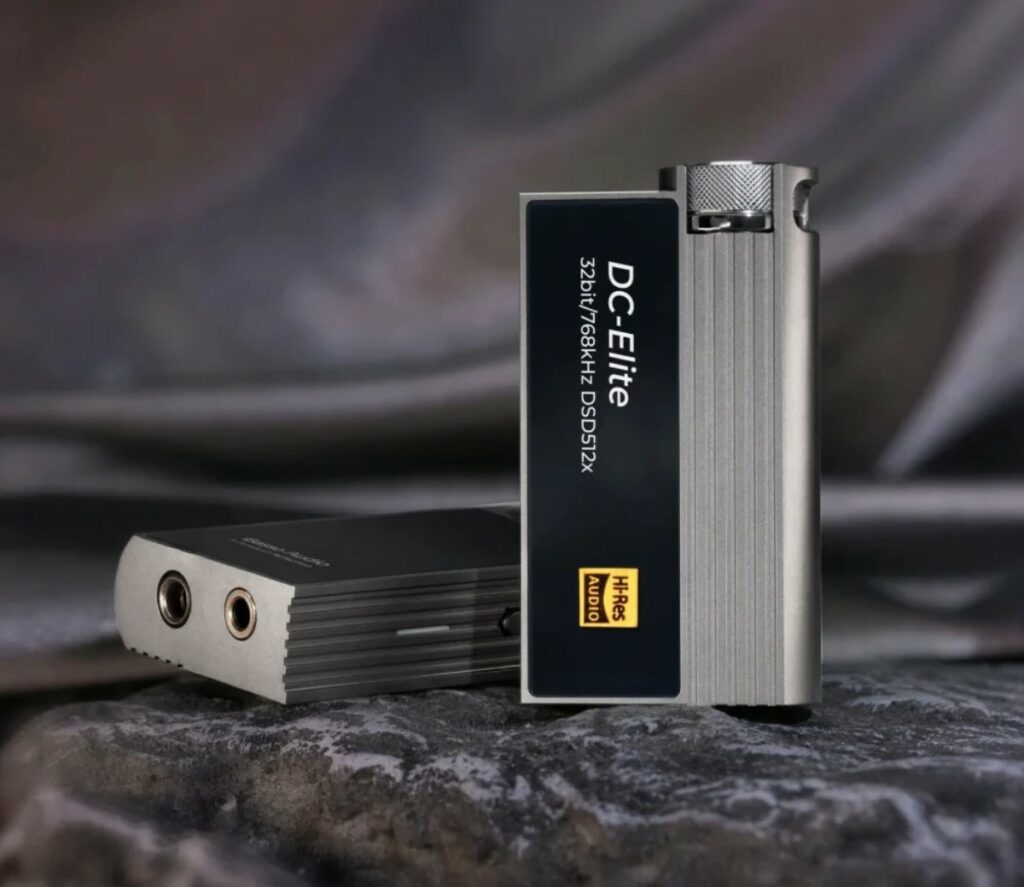
The DC-Elite should not be treated as a direct substitute for the four standalone players. It is a portable DAC and headphone amplifier, so it is intended to add dedicated conversion and amplification to another digital source rather than store and manage music by itself.
That narrower role is also its appeal. iBasso bases the design on solutions used in the company’s flagship DX320MAX player, including the ROHM BD34301EKV current-output DAC chip and a 24-position attenuator. Six operational amplifiers are used, and the source says this produces a low level of intrinsic noise. Output power is 280mW through the balanced connection and 162mW through the unbalanced connection.
The connection options are practical: 3.5mm and 4.4mm headphone outputs are provided, while the 3.5mm socket can also output a coaxial digital signal. At 64 x 35 x 14.5mm and 60.5g, it is by far the most compact and lightest product in this comparison. Its titanium-alloy body, partially covered with tempered glass, also gives it a more specialist physical design than the touchscreen players.
At the supplied $499 price, the DC-Elite costs slightly more than the M3 Plus, but the two products serve different systems. Pick the iBasso when you already like your phone or computer as a source and want a very small dedicated DAC and amplifier. Pick the M3 Plus when you need storage, an operating system, streaming apps and a self-contained player.
HiBy R3 II
SOURCE 5 uses
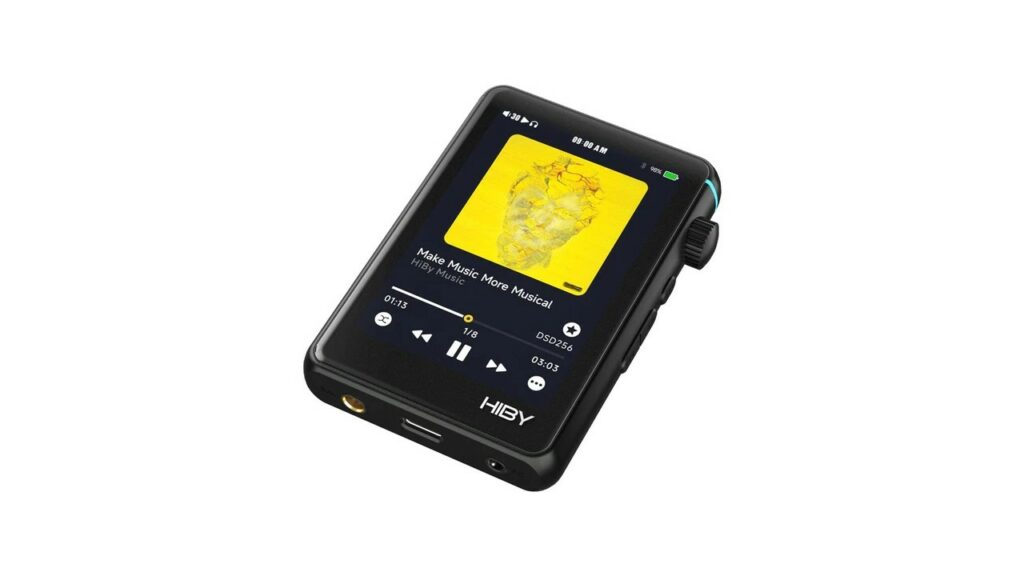
The HiBy R3 II is the most straightforward pocket-player recommendation. Its curved design, raised side volume wheel, physical media controls and 3.2-inch touchscreen are all aimed at everyday use rather than a large-screen, high-powered desktop-style experience. The source does not provide its weight or dimensions, but it explicitly describes the design as pocket-friendly.
It supports 32-bit/384kHz PCM, native DSD256 and up to 16x MQA, using two ES9219C DAC chips. The first 4.4mm balanced output in the R3 series joins the existing 3.5mm connection, while the stated output power is 380mW at a 32-ohm load. It can also work as a USB DAC with a phone, tablet, laptop or PC.
HiByOS is built specifically for audio playback, and HiBy Link allows playback control from a smartphone. Tidal, Qobuz and Custom Radio are supported over Wi-Fi, while the built-in MSEB tuner provides adjustment through simple sliders. This is a useful combination for listeners who want local playback, basic streaming and some tonal control without moving to a more elaborate Android player.
The R3 II is not the strongest choice for someone who wants the M3 Plus’s full Android app flexibility, the M5 Ultra’s extensive network features or the SP4000’s flagship processing architecture. It is better suited to the listener who values a small, focused device with balanced output and USB DAC capability. Since no price is supplied in the source, it cannot be declared the budget winner, but its feature set clearly targets the simpler end of the standalone-player market.
How they differ
Standalone player or add-on DAC: The DC-Elite is the outlier. It has no stated storage, screen operating system or streaming platform because the source presents it as a DAC and headphone amplifier. The HiBy, both Shanling models and the Astell&Kern are complete players.
Portability: The DC-Elite is the smallest and lightest with supplied dimensions and weight: 64 x 35 x 14.5mm and 60.5g. The M3 Plus is the most convincingly compact full-featured player at 115 x 70 x 18mm and 205g. The M5 Ultra is larger at 247g, while the HiBy is described as pocket-friendly without supplied measurements.
Power: The M5 Ultra leads on stated balanced output at 1100mW into 32 ohms, followed by the M3 Plus at 800mW and the HiBy R3 II at 380mW. The DC-Elite provides 280mW balanced, but it is an add-on rather than a complete player. No output figure is supplied for the SP4000, so it should not be ranked by power.
Operating systems and streaming: The M3 Plus uses full Android 13, the SP4000 supports Android and Google Play Store apps, the M5 Ultra uses Shanling’s MTouch system, and the HiBy uses HiByOS. The M3 Plus, SP4000 and M5 Ultra therefore appeal to different kinds of app and network user, while the HiBy remains focused on audio playback with named support for Tidal, Qobuz and Custom Radio.
Sound priorities: The M3 Plus has the most extensively described listening performance in the supplied sources: neutral, detailed, open and balanced, with punchy bass and precise imaging. The M5 Ultra is described as smooth and slightly warmed, with deep sub-bass and a rich soundstage. The DC-Elite is specified as having low intrinsic noise, while the SP4000’s case is based on its noise-reduction and signal-separation engineering. The HiBy source focuses on decoding and output capability rather than a detailed tonal description.
Price transparency: Only the M3 Plus and DC-Elite have supplied prices: $470 excluding taxes and $499 respectively. The absence of prices for the HiBy, M5 Ultra and SP4000 means they should not be labelled cheaper or more expensive based on their positioning alone.
Which one should you buy?
- Buy the Shanling M3 Plus for the best all-round balance. It is the most persuasive option if you want one player for travel, streaming, local files and a broad range of headphones. Its described sound quality, Android 13 platform, storage options, useful output power and stated $470 excluding-tax price make it the easiest recommendation for the widest audience.
- Buy the Shanling M5 Ultra if your headphones need serious drive. The 1100mW balanced output, 6000mAh battery, large screen and broad wireless/network functionality make it the better fit for listeners willing to carry a larger player in exchange for more power and features. Its supplied sound description also favours a smooth, slightly warm presentation.
- Buy the Astell&Kern SP4000 if flagship processing and app access come first. The separated digital and analogue signal paths, ESA technology, Advanced DAR and Google Play Store support make it the most technically elaborate product here. It is the specialist choice, but the supplied material does not include a price, dimensions or output measurements.
- Buy the iBasso DC-Elite if your existing source is staying. This is the right product for a phone, laptop or other digital source that needs a dedicated DAC and headphone amplifier. Its 60.5g body and balanced output make it particularly attractive when minimum size matters more than standalone playback.
- Buy the HiBy R3 II if you want a focused pocket player. Its small design, physical controls, 4.4mm balanced output, HiByOS, USB DAC mode and named Tidal and Qobuz support cover the essentials without the larger Android-player approach of the M3 Plus or SP4000.
Final verdict
The Shanling M3 Plus is the Best Overall because it combines the most complete set of broadly useful qualities: compact size, Android streaming, local storage, balanced amplification, strong battery claims and a review-backed sound that is clean, detailed and versatile. The M5 Ultra is the better power-and-features choice, the SP4000 is the flagship engineering choice, the iBasso DC-Elite is the specialist DAC choice and the HiBy R3 II is the focused pocket-player alternative. Match the product to your system first, then to your budget; on the evidence supplied here, the M3 Plus is the safest recommendation for the largest number of listeners.


Sound Off
0Join the discussion if you have something to add.