
Five Streaming Devices Compared: Which One Fits Your System?
These five source posts do not describe five directly competing streamers: they cover a network player, a premium multi-source player, a network isolator, a media player and one unrelated film list. Here is what each can realistically do in a real system.

The five source articles cover very different ways of using networked entertainment. The Denon DNP-800NE is a dedicated network player, the T+A MP 200 G3 is a premium multi-source component with a CD transport, the Matrix Audio SI-1 is a network isolator rather than a streamer, and the Zidoo Z30 PRO is a full media player built around video as well as audio. The fifth source is not a hardware product at all: it is a science-fiction film and television list.
That distinction matters more than any headline specification. A listener wanting a straightforward audio streamer needs something very different from a home-cinema user, a CD owner or someone trying to isolate a streamer from electrical noise. This guide therefore compares what each product actually contributes to a system, rather than pretending that all five are interchangeable.
Quick verdict
Best Overall: Denon DNP-800NE. It is the most complete conventional audio-streaming choice in the supplied material, combining wired and wireless networking, local and online playback, AirPlay 2, Spotify Connect, USB playback, a built-in headphone amplifier and both analogue and optical outputs.
Best premium multi-source option: T+A MP 200 G3. Choose it if you want CD playback, Tidal Connect, Spotify Connect, AirPlay 2, native DSD streaming and a more ambitious component built around T+A’s ASA G3 architecture. It is also the only product here with a stated price approaching $5,500.
Best for an audio-video system: Zidoo Z30 PRO. Its defining advantage is not pure two-channel streaming but broad media capability: 8K video, Dolby Vision, HDR10+, Dolby Atmos, DTS, internal storage and extensive connectivity.
Best network-isolation accessory: Matrix Audio SI-1. This is for an existing wired streamer whose owner wants galvanic isolation, surge protection and an internal optical barrier between the home network and the streamer.
Source 4 is not a hardware choice. The supplied article is a list of science-fiction films and series, so it cannot be assessed as a streaming component or recommended as one.
Comparison at a glance
| Product | What it is | Main strengths | Connectivity and outputs | Best suited to |
|---|---|---|---|---|
| Denon DNP-800NE | Dedicated network player | Audio streaming, local files, Internet radio, headphone listening | Ethernet, dual-band Wi-Fi, USB, linear RCA, optical, IR output | Most conventional hi-fi systems |
| T+A MP 200 G3 | Premium multi-source player | CD transport, high-resolution streaming, native DSD, Tidal Connect and AirPlay 2 | Digital cinch output; no analogue connections | Owners wanting one premium digital source component |
| Matrix Audio SI-1 | Optical network isolator | Galvanic isolation, data transmission optimisation and surge protection | One 1Gb RJ45 input and one isolated 1Gb RJ45 output | Improving the network connection to an existing streamer |
| Zidoo Z30 PRO | Audio-video media player | 8K video, HDR formats, Dolby Atmos, DTS, storage and broad media support | HDMI 2.1a, Ethernet, Wi-Fi, USB, SATA, optical, coaxial and RCA | Home cinema and mixed music-video libraries |
| Source 4 article | Film and television recommendation list | Science-fiction viewing suggestions | Not applicable | Choosing films and series, not hi-fi hardware |
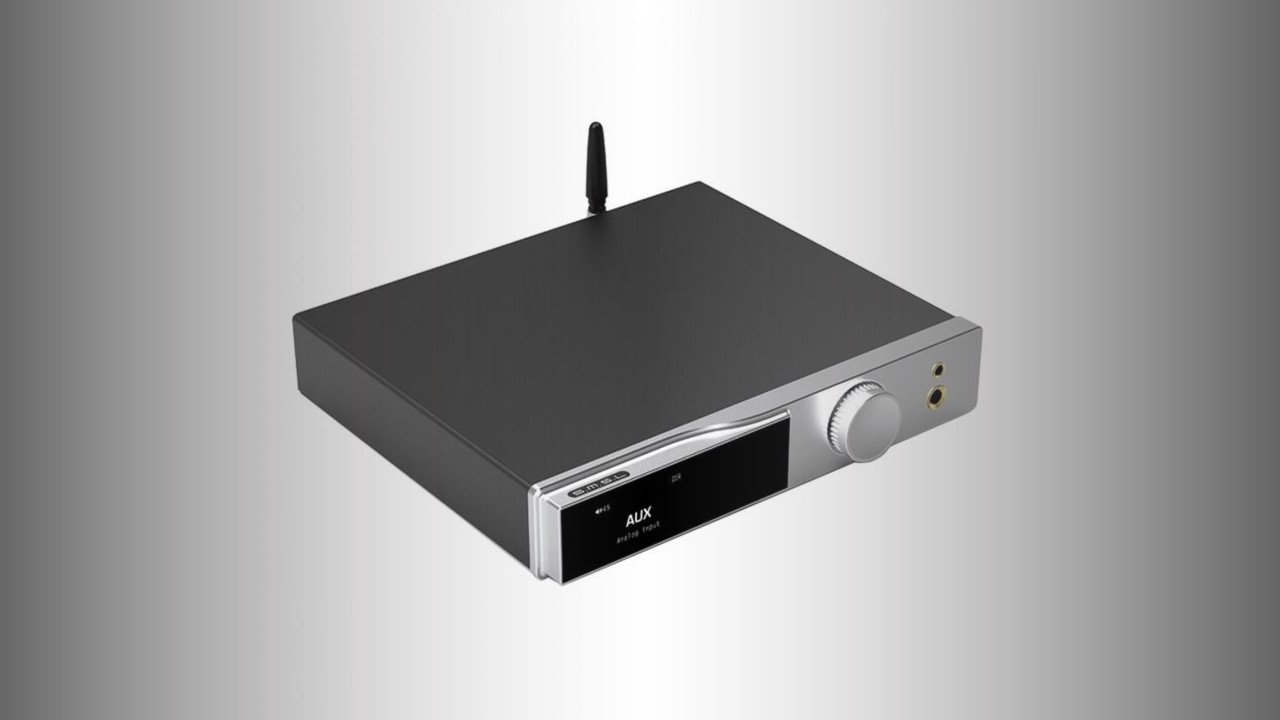
Denon DNP-800NE

The Denon is the safest recommendation for someone who means “streamer” in the traditional hi-fi sense. It is a dedicated network player with Ethernet and built-in dual-band Wi-Fi, so it can be installed where a wired network connection is unavailable. It supports DLNA 1.5, access to music servers and computers, Internet radio, Spotify Connect and AirPlay 2. That gives it a broader everyday role than a component designed only as a digital bridge.
Its local playback support is also substantial. The supplied material lists FLAC HD, WAV, AIFF, ALAC and DSD playback, including DSD files up to 5.6 MHz from a music server or USB memory, plus PCM up to 192 kHz/24-bit. A front USB port is compatible with iPod and iPhone devices. The HEOS app and supplied remote control provide two ways to operate it, while the front panel includes a three-line OLED display and physical navigation controls.
The most important system-level advantage is its output flexibility. The DNP-800NE provides both linear RCA and optical outputs. It can therefore feed an amplifier or active system through its analogue output, or act as a digital source for an external DAC. The built-in headphone amplifier has high, medium and low gain stages and is specified for high-impedance headphones such as 300-ohm and 600-ohm models. None of the other hardware products in the supplied sources combines those particular conveniences in one audio-focused unit.
The Denon also has the clearest technical audio description of the group, including a Burr-Brown PCM1795 DAC, jitter suppression, Advanced AL32 Processing Plus, a stated 2 Hz–50 kHz frequency response, 101 dB dynamic range, 108 dB signal-to-noise ratio and 0.0012% total harmonic distortion. Those figures do not automatically make it the best-sounding product in every system, but they do make its role and capabilities unusually clear.
Why buy it: You want a complete, flexible audio network player with analogue output, digital output and headphone support.
What to consider: The source does not give a price, and the Denon does not offer the CD transport, 8K video functions or network isolation provided elsewhere in this comparison.
T+A MP 200 G3
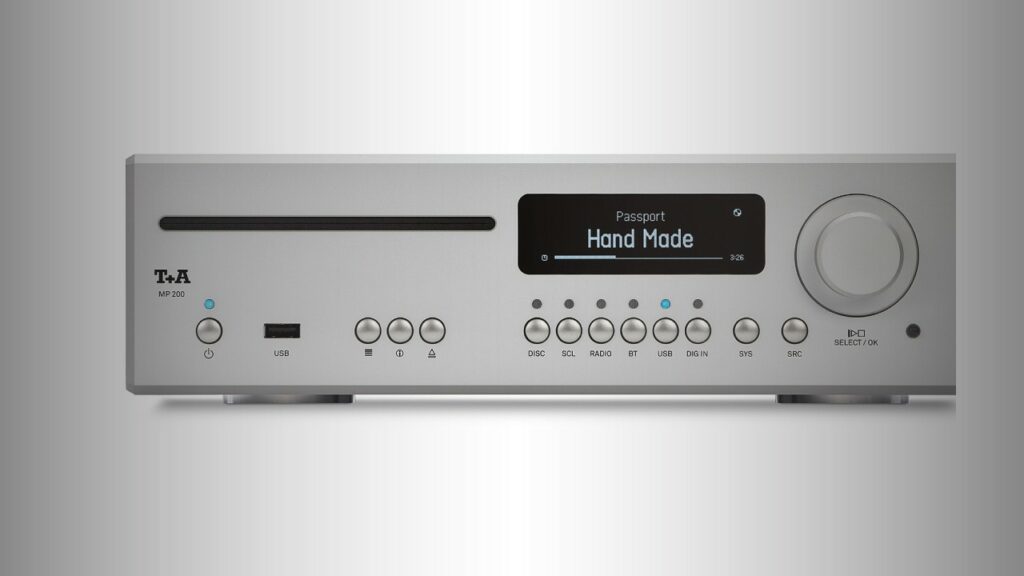
The T+A MP 200 G3 is a more ambitious proposition than the Denon, but it is also more specialised. It combines T+A’s ASA G3 Audiophile Streaming Architecture with a slot-in CD transport, making it a natural fit for listeners who want physical discs and network sources in the same component. It supports Tidal Connect, Spotify Connect and Apple AirPlay 2, and the article says it can stream high-resolution formats including native DSD without conversion.
The T+A’s software and metadata features are another part of its appeal. Integration of the Gracenote music service allows album art and background information to be displayed in the T+A MusicNavigator G3 app. It also includes an FM tuner, adding another source that the Denon and Matrix do not provide. Roon Ready certification was still being worked on at the time of the source article, so it should not be treated as an available feature based on this material.
There is a crucial limitation when matching it to a system: the MP 200 G3 is fully digital and has no analogue connections. Its digital music signal exits through a digital cinch connection. That makes it suitable for a system with a separate DAC or a digital-input amplifier, but less immediately convenient than the Denon for someone who wants to connect directly to an analogue amplifier or use the player’s own headphone stage.
The T+A also stands apart on upgradeability. T+A planned an ASA G3 upgrade for the previous MP 200 from spring 2025, with bookings through authorised dealers or directly with T+A. The source notes that demand could mean a wait for the upgrade. The stated suggested retail price for the MP 200 G3 is just under $5,500, making it a substantially more expensive proposition than a basic network player, although no directly comparable prices are supplied for the other current products.
Why buy it: You want a premium digital source that combines streaming, CD and FM, with native DSD support and an upgrade path.
What to consider: It has no analogue outputs, Roon Ready status was still pending in the source, and its price places it in a different class from the Denon.
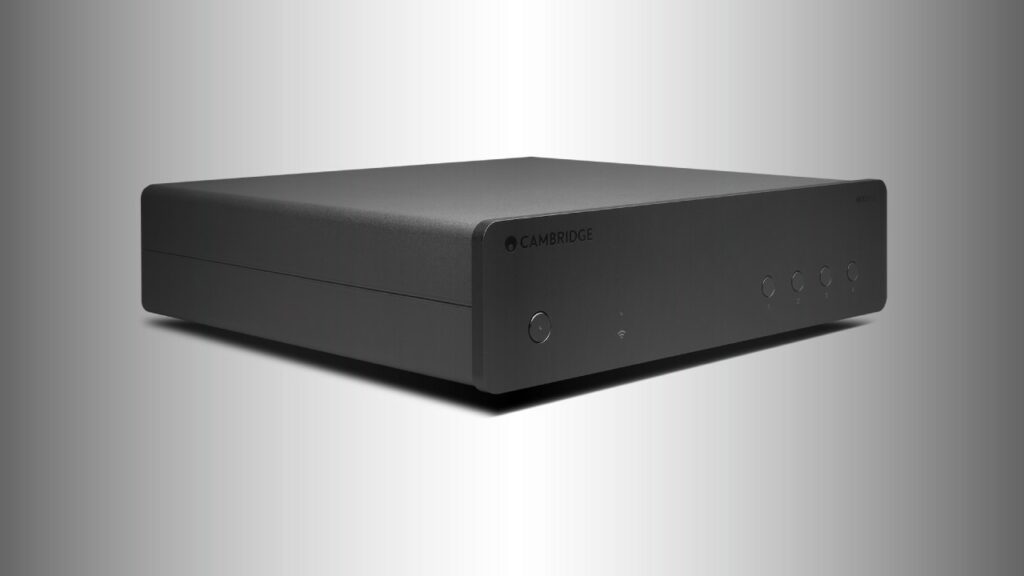
Matrix Audio SI-1
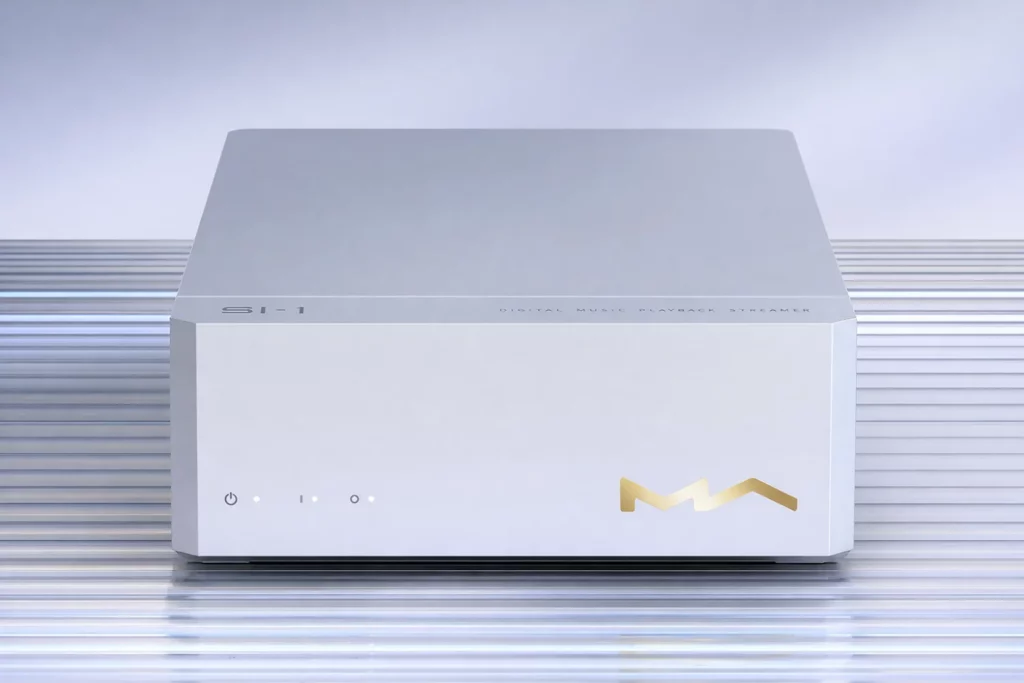
The Matrix Audio SI-1 should not be chosen as an alternative to the Denon or T+A because it is not a music streamer. It is an active optical network isolator installed between a wired home network and an existing streamer. Its job is to separate those devices electrically while allowing network data to pass through.
The SI-1 has one RJ45 1Gb input and one RJ45 output. Internally, the electrical signal is converted to an optical signal and then back again, with separate optical channels for upstream and downstream communication. According to the source, this removes the direct galvanic connection between the network and the streamer. The unit’s three stated functions are galvanic isolation against network noise, data transmission optimisation and surge protection.
Its design is unusually elaborate for an accessory of this type. The SI-1 uses an internal linear power supply, a toroidal transformer, multiple independent DC regulation circuits and two femtosecond clock circuits. It is housed in an all-aluminium enclosure measuring 12cm wide, more than 20cm deep and approximately 4.5cm high, with a weight of 1.5kg. The supplied article gives a suggested retail price of €899.
The source describes audible benefits in a balanced hi-fi system as greater definition and contrast, more natural-flowing sound, reduced sharpness and a more realistic spatial presentation. Those are claims from the source article, not a reason to add the SI-1 automatically to every system. It requires a wired network and an existing streamer, and it does not replace the streamer’s streaming services, DAC, control app or outputs.
Why buy it: You already have a wired streamer and specifically want a network-isolation accessory with optical galvanic separation and surge protection.
What to consider: It adds no streaming platform, display, DAC, analogue output or headphone amplifier. Its value depends on the rest of the system and the problem you are trying to solve.
Zidoo Z30 PRO
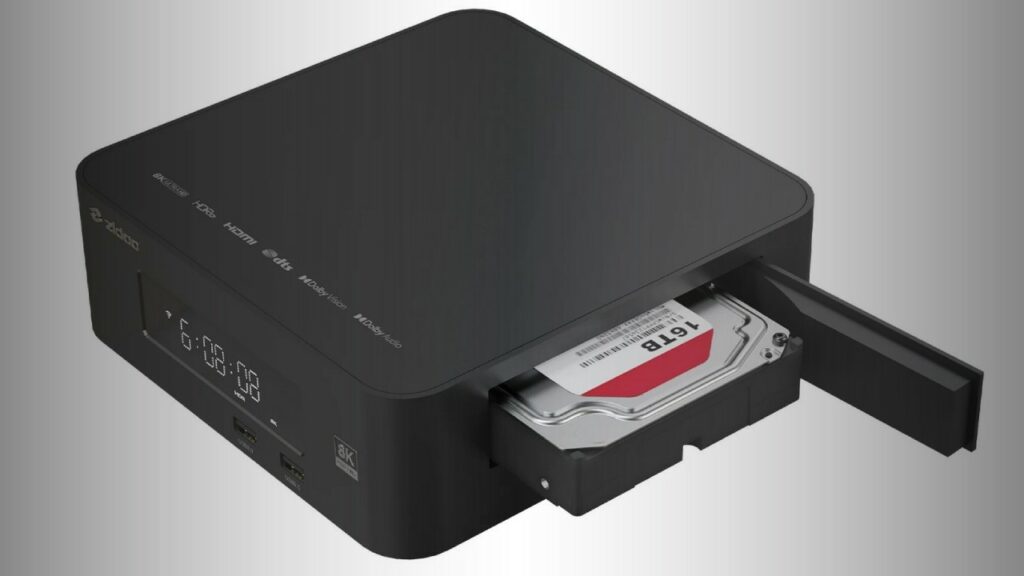
The Zidoo Z30 PRO is the broadest-featured product here, but not the most focused two-channel streamer. It is a flagship media player for movie and music use, built around video processing and home-cinema connectivity. It supports 8K at 60 frames per second, HDR10, HDR10+, HLG and Dolby Vision, as well as Dolby Atmos and DTS audio.
Its hardware is correspondingly different from the Denon and T+A. The Zidoo runs Android 11 with the Zidoo Home Theatre interface and uses an Amlogic S928X-K quad-core processor, ARM Mali-G57 MC2 graphics, 6GB of DDR4 RAM and 64GB of eMMC storage. It supports dual-band 2.4GHz and 5GHz Wi-Fi, Bluetooth 5.2 and gigabit Ethernet. For locally stored media, it offers SATA 3.0, three USB 3.0 ports and two USB 2.0 ports.
The output selection is generous: HDMI 2.1a, USB, optical, coaxial and RCA left/right outputs are listed. Control can be handled through applications for iPhone, iPad and Android devices, or through RS-232 and TCP/IP. The package includes a remote control, power adapter, SATA cable, HDMI cable and three antennas.
For a home cinema or a household with a large local media collection, those features make the Zidoo more useful than either dedicated audio player. For a listener building a conventional hi-fi system around streaming services, however, the source material does not present it as a direct substitute for the Denon’s audio-player functions or the T+A’s multi-source architecture. Its strongest case is the combination of music, video, storage and surround-sound support.
Why buy it: You want one media hub for 8K video, HDR, surround sound and locally stored music and film files.
What to consider: Its feature set is centred on audio-video entertainment rather than a narrowly defined two-channel streaming experience.
Source 4: not a hardware product

The fourth supplied source is titled 50 Best science fiction movies and series 2023-2024. It discusses films and television series, including Robots, Paradise, Ant-Man and the Wasp: Quantumania, No One Will Save You and Monarch: Legacy of Monsters.
It does not describe a streamer, media player, network accessory, DAC, amplifier or any other hardware. It therefore cannot be compared on outputs, supported formats, networking or system compatibility. Its inclusion in the same WordPress category does not make it a fifth product, and there is no responsible product recommendation to make from this source.
How they differ
They sit at different points in the signal chain. The Denon and T+A are source components. The Zidoo is a media hub that also handles audio. The Matrix is an accessory placed before an existing network streamer. Source 4 is editorial content rather than hardware.
They have different priorities. The Denon prioritises practical audio versatility: wired and wireless networking, multiple services, local files, analogue and optical outputs, and headphones. The T+A prioritises a premium multi-source experience, adding CD, FM, native DSD streaming and app-based metadata. The Zidoo prioritises video formats, storage and home-cinema connectivity. The Matrix prioritises electrical separation of a wired network connection.
Output compatibility is a major dividing line. The Denon can connect through analogue RCA or optical. The T+A is digital-only and needs a separate DAC or digital-input component. The Zidoo offers HDMI alongside optical, coaxial and RCA, while the Matrix only passes network data through its isolated RJ45 output.
Only one is clearly a conventional headphone-friendly source. The Denon has a built-in three-stage headphone amplifier. The supplied articles do not describe a headphone output for the T+A, Matrix or Zidoo.
Price information is incomplete. The Matrix is listed at €899 and the T+A at just under $5,500. The supplied Denon and Zidoo articles do not provide prices, so it would be misleading to label either one the best value on the evidence available.
Which one should you buy?
Choose the Denon DNP-800NE for a normal two-channel hi-fi system. It is the most straightforward recommendation when you need streaming, network-library playback, Internet radio, AirPlay 2, Spotify Connect and flexible outputs in one audio component. It is particularly well suited if you want to switch between an amplifier’s analogue input, an external DAC and headphones.
Choose the T+A MP 200 G3 if CD remains important. Its slot-in CD transport, FM tuner and streaming architecture make it the most complete source component for someone who wants several kinds of music playback in one premium chassis. Make sure the rest of the system accepts its digital-only output.
Choose the Zidoo Z30 PRO if movies matter as much as music. Its 8K, HDR, Dolby Vision, Dolby Atmos, DTS, HDMI and storage features give it a clear advantage in a mixed home-cinema system. It is the Best Features pick for users who want a broad media player rather than a narrowly focused audio streamer.
Choose the Matrix Audio SI-1 only as a system accessory. It makes sense when you already own a wired streamer and want the specific benefits claimed for galvanic network isolation, optical conversion and surge protection. It is the Best Network-Isolation Accessory, but it cannot function as a standalone streaming source.
Do not treat Source 4 as a buying option. It is a film and series guide, not a hardware article.
Final verdict
The Denon DNP-800NE is the Best Overall choice because it addresses the widest range of everyday audio-streaming needs without requiring a separate DAC or another media component. The T+A is the more ambitious premium source for CD and high-resolution users, the Zidoo is the better entertainment hub for audio-video systems, and the Matrix is the targeted upgrade for network isolation. The right choice depends less on a single specification than on where the component belongs in your system.






 VS
VS VS
VS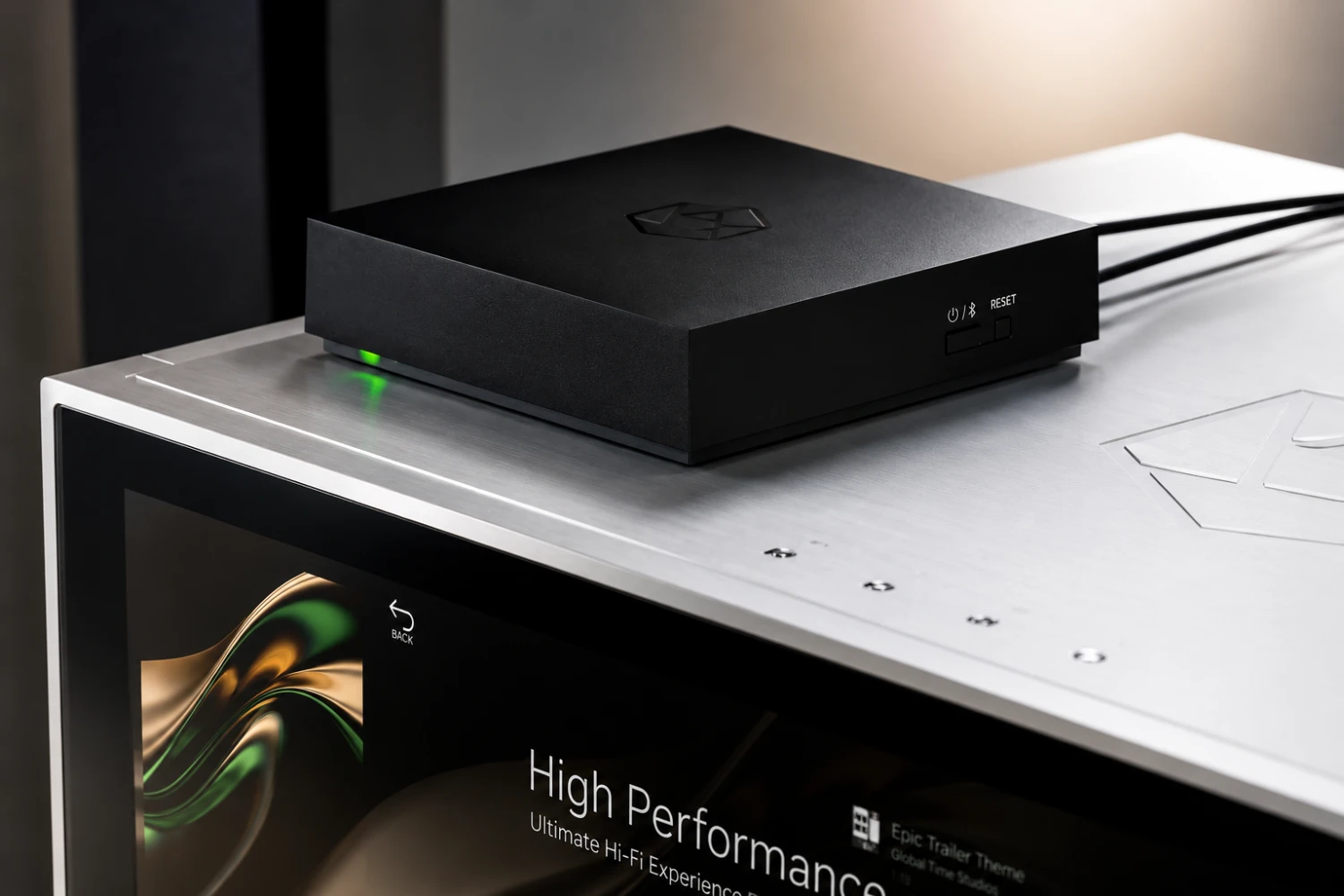 VS
VS VS
VS VS
VS VS
VS
Comments 0
Share your experience, questions and perspective with other hi-fi enthusiasts.