

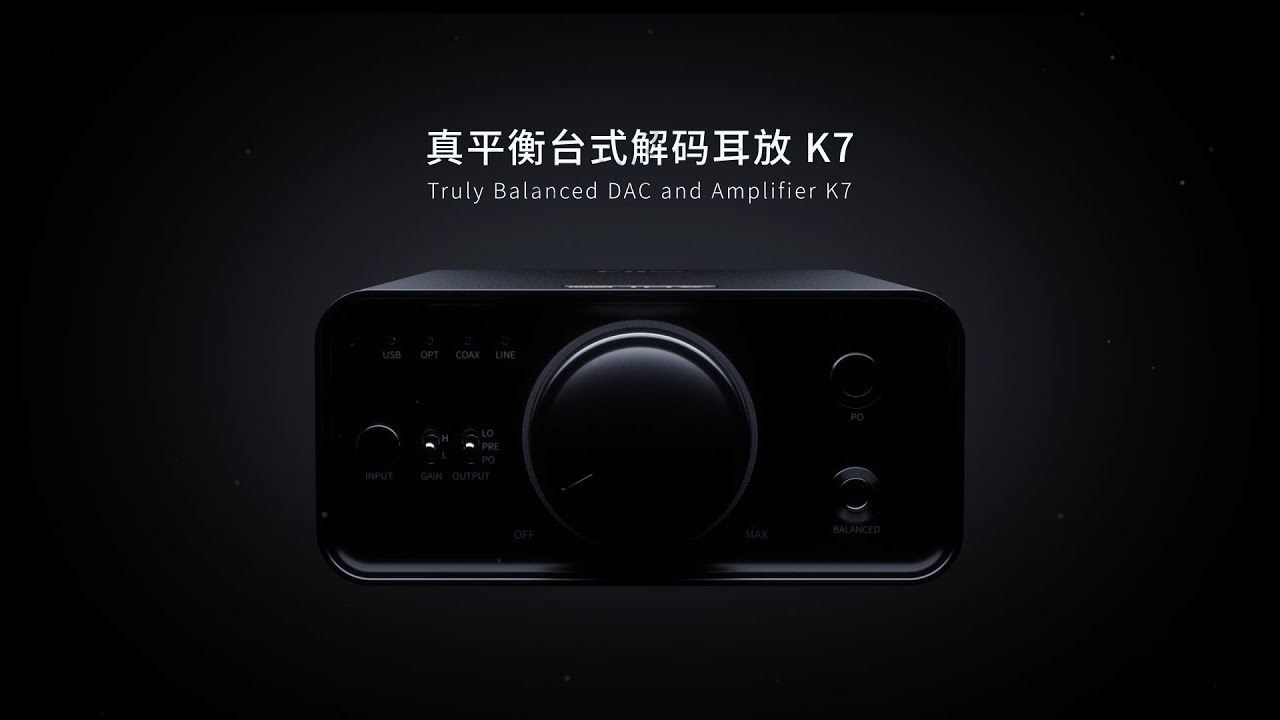
The FiiO K7 is an interesting addition to the desktop headphone space because it brings together several features that many modern headphone listeners now expect in one compact system hub: a DAC, a headphone amplifier, balanced output options, digital input flexibility and wireless convenience. Rather than being just a simple amplifier or a basic USB DAC, the K7 is presented as a more complete desktop component for listeners who move between computers, digital transports, wired headphones and potentially Bluetooth sources. Its most distinctive technical point is the use of THX AAA architecture, a design approach associated with clean signal delivery and high output power in several well-known headphone amplifiers. For prospective owners, the appeal is not merely the presence of one recognizable technology, but the way FiiO appears to have built the K7 around practical everyday use: several headphone sockets, both balanced and single-ended operation, wired digital inputs, analog connectivity, high-resolution format support and app-related control through Bluetooth LDAC functionality.
THX AAA architecture as the core attraction
The headline feature of the FiiO K7 is its use of THX AAA architecture. In the context of headphone amplification, THX AAA has become associated with amplifiers designed to provide an extremely clean signal while also offering substantial output power. For a desktop headphone amplifier, those two goals matter because many users want enough drive for a variety of headphones without introducing avoidable noise or distortion into the signal path.
For a potential owner, the practical value of this architecture is flexibility. A desktop amplifier may be asked to work with easier-to-drive headphones one day and more demanding models the next. While the supplied information does not specify exact output ratings or headphone matching limits, the documented emphasis on high output power suggests that the K7 is intended for users who want more authority than a basic portable dongle or entry-level computer output can typically provide.
The choice of THX AAA also places the K7 in a recognizable category of modern headphone amplifiers that prioritize signal cleanliness. That does not automatically define how the unit will sound in a given system, and it should not be treated as a listening verdict. But it does tell us something useful about the design direction: FiiO is aiming the K7 at listeners who care about low-noise, high-headroom amplification in a desktop setting.
Balanced and single-ended headphone outputs
The K7’s output arrangement is one of its most useful documented strengths. It includes a 4-pin XLR balanced headphone output, a 4.4mm balanced headphone output and a 1/4-inch single-ended headphone output. That combination makes the unit easier to integrate with a range of headphone cables without forcing the owner into a single connector standard.
The inclusion of both 4-pin XLR and 4.4mm balanced outputs is particularly practical. Full-size desktop headphones often use 4-pin XLR balanced cables, while many newer headphones and upgrade cables have moved toward 4.4mm balanced termination. By offering both, the K7 reduces the need for adapters and makes it more convenient for users who own multiple headphones or expect their cable choices to change over time.
The 1/4-inch single-ended output remains important as well. Many headphone owners still use standard single-ended cables, and a desktop amplifier without this connection would be unnecessarily restrictive. With balanced and single-ended outputs present, the K7 is better positioned as a shared desktop hub rather than a narrowly configured specialist component.
Input flexibility for desktop systems
A strong desktop DAC/amplifier needs to accommodate the way people actually listen. The K7 is documented with SPDIF, coaxial and USB-C inputs, giving it a useful range of digital source options. USB-C is especially relevant for computer-based systems, where a laptop or desktop machine is often the primary source. SPDIF and coaxial inputs widen the role of the unit by allowing connection to compatible digital transports and other source devices.
This spread of inputs means the K7 is not limited to one usage pattern. A listener could reasonably consider it for a computer desk, a compact digital audio setup or a headphone station built around multiple sources. The inclusion of XLR and RCA inputs also points toward broader system integration, allowing the K7 to interact with analog equipment as part of a larger setup.
The source information also notes dual outputs. While the exact implementation is not expanded in the supplied material, the presence of multiple outputs reinforces the impression that the K7 is intended to do more than serve as a one-input, one-headphone-box device. For users trying to keep a desk tidy while maintaining source and connection options, that kind of flexibility can be more important than exotic features.

High-resolution format support
The FiiO K7 is specified with support for 768k and DSD512 files. Those figures indicate compatibility with a broad range of high-resolution digital material, including PCM files at very high sampling rates and DSD content up to DSD512. Not every listener owns a library built around such formats, but support at this level gives the product room to handle demanding file types without becoming a bottleneck in a hi-fi computer audio chain.
The important point is not that every user needs 768k PCM or DSD512 every day. Many music collections are built from standard-resolution streaming, CD-quality files or more common high-resolution releases. However, format compatibility can still matter because it reduces uncertainty. If a user has mixed file types or experiments with high-resolution downloads, the K7’s documented support makes it less likely that playback will be limited by the DAC section’s accepted formats.
For a desktop device, this kind of broad format handling also supports longevity. Digital listening habits can change over time, and a DAC/headphone amplifier with extensive format support may remain useful across different software players, libraries and source configurations.
Bluetooth LDAC and app control add convenience
FiiO is also said to have mentioned a Bluetooth LDAC receiver and app control for the K7. If implemented as described, that gives the unit a convenience layer beyond conventional wired desktop use. LDAC support is attractive because it is a higher-capability Bluetooth codec than basic Bluetooth audio options, provided the source device also supports it.
Wireless input does not replace the importance of USB-C, SPDIF or coaxial connections for users who want a fully wired chain, but it can make a desktop system more approachable. A phone, tablet or compatible portable player can become a casual source without physically reconnecting the system. For households or workspaces where multiple devices are used, Bluetooth reception can make the K7 more adaptable.
App control is similarly useful in principle because it can simplify day-to-day operation, depending on the functions FiiO exposes through the app. The supplied information does not define the exact app features, so it is best understood as a documented convenience direction rather than a complete control specification. Still, the combination of wired audiophile inputs and wireless control potential reflects how many listeners now use desktop audio equipment.
Who the FiiO K7 is most suitable for
The FiiO K7 appears most suitable for headphone listeners who want a desktop DAC/amplifier with more connectivity and output flexibility than a minimal USB interface. It should be especially appealing to users who own, or plan to own, headphones with balanced cables, because it provides both 4-pin XLR and 4.4mm balanced outputs alongside a standard 1/4-inch single-ended connection.
It is also a logical fit for computer-audio users who want USB-C input while keeping the option to connect other digital sources through SPDIF or coaxial. The high-resolution file support will matter most to listeners with varied digital libraries, including PCM and DSD material, or to those who simply want the reassurance that the DAC section can accept a wide range of formats.
The K7 may be less relevant for someone who only needs a small portable solution, a single-output amplifier or a device dedicated solely to Bluetooth playback. Its documented strengths are more clearly aligned with a fixed desktop setup where wired headphones, multiple source types and flexible connection standards are part of the appeal. It is not presented as an all-in-one speaker amplifier or a lifestyle wireless speaker product; its identity is firmly rooted in desktop headphone listening and DAC/amplifier duties.
Conclusion
The FiiO K7 stands out as a thoughtfully equipped desktop DAC/headphone amplifier built around THX AAA architecture, balanced and single-ended headphone outputs, multiple digital inputs, high-resolution file support and the added convenience of Bluetooth LDAC and app control. Its strongest documented qualities are practical rather than decorative: it gives headphone users several connection paths, supports a wide range of digital material and offers output options that suit both current and evolving headphone cable standards. The ideal audience is the listener building a capable desktop headphone system around computers and digital sources, especially one who values balanced connectivity, format flexibility and a compact component that can serve as a central headphone hub.



Sound Off
0Join the discussion if you have something to add.